Home Blog Page 756

IS attacks in Moscow likely give new turn to global strategic battling

IS attacks in Moscow

Shamim Shahid

Latest Islamic State Khorasan firing against occupants of a concert hall in Moscow has not only jolted the world but it is now giving new turns and directions to global strategic battling which is still controlled by two traditional rivals US and Russian Federation (successor of USSR). Whatever may be directions and targets of follow up of Moscow firing incidents, its epicenter wouldn’t be other than border regions between former British India and Afghanistan, dominated by Pushtoons.

No one can deny the fact that Pushtoons are no more independent as they have been made slaves and hostages by spymasters led in the sacred name of Islam and Jihad. The Islamic States (IS) also called Daesh is the latest of Mujahideen, sponsored, trained, financed and encouraged by US led allies against the former Soviet Union. The IS came into being at the time when at the last moment of the first decade of millennium, US lead allies were fed up by continuous resistance by Taliban in war devastated Afghanistan.

At early stages, the IS focused almost its attention and strategies against Shia Iran whereas it was engaged in efforts for the survival of the Syrian government. Despite wholehearted support of US led allies, the IS had failed in the Syrian war. IS militants after its failure, returned to war devastated Afghanistan at the time when Pakistan also pulled Al Qaeda remains out of tribal regions by commencing military operation Zarb-i-Azab on June 15, 2014 last.

Making Afghanistan as its base camp like Al Qaeda, the IS had made hellish lives of all those progressive, nationalists, democrats and moderate Pushtoon elders who are known for opposition to extremism and terrorism. At this stage, the IS constituted a 40-member council ( Shura ) for making its decisions and strategies.

Majority of the 40 member council were those who remain in important offices in banned Tehrik Taliban Pakistan(TTP). Still the IS is commanded by Pakistani origin Taliban who are in cordial and friendly links with Taliban ( Emirate Islami Afghanistan) governing Afghanistan. The Emirate Islami has already declared Afghanistan as a free and safe place for like minded militants from all over the world.

It doesn’t mean that with the killing of Osama Bin Laden and Dr. Aiman Al Zawahiri, Al Qaeda lost its existence or its contacts with other hardliners, operating/active on the soil of Afghanistan since the so-called cold war. Taliban regime in Afghanistan like in the late 90’s, once again gave another life to almost alleged terrorist groups especially Arabs and Central Asians. Similarly like in the past, the US is still maintaining dual standards on the issue of Muslim extremism. Through one or the other ways, the US spy masters are still in command of influencing Taliban (both Afghani and Pakistani), Al Qaeda and its affiliated groups from different countries through its experienced and tested allies like Pakistan and Saudis like Afghan Mujahideen. In 2019, the US helped Afghan in joint combat against IS in Afghanistan’s eastern zone bordering with Pakistan. Over three thousand IS militants, mostly Pakistanis have been arrested during the crackdown but the Emirate Islami accredited itself for their release after returning into power on August 15th 2021 last.

Like Pakistani militants associated with both Pakistani and Afghan Taliban, a large number of CAR militants already slipped to IS. There are also reports of Afghan Taliban and Mujahideen joining of IS. Some of these Afghan Taliban were disheartened when they were neglected in appointment against choice political, civil and military offices.

Though apparently, the Emirate Islami Afghanistan is making claims of stern action against the IS militants , it seems hard as  it (Emirate) does not want to harm all those who either played a role either in Afghan war against former USSR or War on terror, declared by US against Al Qaeda lead militants after 9/11. The Taliban regime time and again has been making claims of strengthening its intelligence network against IS but all these foreign groups and individuals have already established better understanding with the Afghan Taliban, majority of whom are now in occupation of important offices.

Pakistan is still in a bid to get relevance in the region. The US and China are compelled to have relations with Pakistan. Economically and politically, Pakistan seems to be losing in the race against India. India is considered the biggest consumer market in Asia, therefore, China didn’t afford Pakistan-India hostilities.

The new government of Shehbaz Sharif is making its best to have cordial relations between New Delhi and Islamabad but Pakistan’s powerful military establishment is thinking on other lines. Russian Federation President Putin has declared an Emergency and War like situation, by saying that NATO troops are in Ukraine. In such a circumstance it could be hard for Pakistan to stay away from another round of Soviet-US tussles. There are apprehensions that like the so-called cold war, Afghanistan, especially Pushtoons dominated areas on both sides of Pak- Afghan border would again be front line in the new battle, commencing through IS.

The views expressed in the article are the writer’s own.

Pakistan Day marked in Canada

Pakistan Day marked in Canada

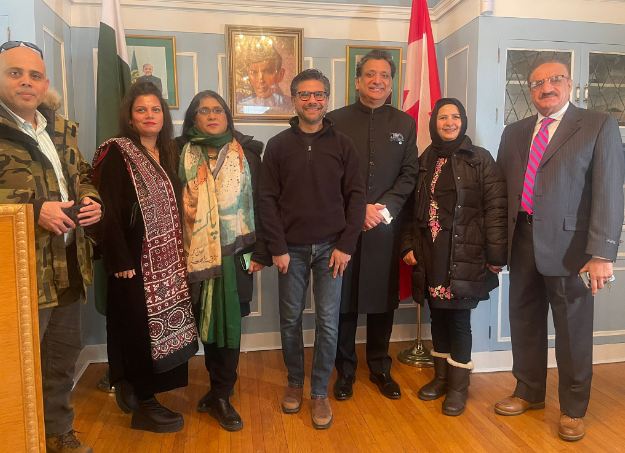
OTTAWA, MAR 24 /DNA/ – Pakistan Day was celebrated with zeal and fervour at the High Commission, Ottawa and the three Consulates in Toronto, Montreal and Vancouver.

The High Commissioner Mr. Zaheer A. Janjua hoisted the national flag to the tune of the national anthem. A large number of Pakistani diaspora and Canadians  including member of the parliament Mr. Yasir Naqvi, attended the ceremony.

Messages of the President and the Prime Minister of Pakistan were also read out. In his message, Ambassador Janjua, paid rich tribute to the nation’s founding fathers, especially Quaid-e-Azam Mohammad Ali Jinnah and Allama Mohammad Iqbal,for their vision and untiring struggle for the creation of Pakistan.

Underscoring the significant strides the country has made over the decades across multiple fields, the High Commissioner highlighted the resilience and resolve of the Pakistanis to bounce back stronger in the face of challenges.

He alsolauded the contributions of dynamic and vibrant Pakistani diaspora across Canada for serving as a bridge between the two countries and promoting Pakistan in their adopted homeland.

Privatization: A Path to Success or Another False Start?

Qamar Bashir

By: Qamar Bashir

Press Secretary to the President(Rtd)

Former Press Minister at Embassy of Pakistan to France

Former MD, SRBC

Since its inception, the new government has displayed a crucial optimism towards the prosperity and growth of the nation, characterized by an unparalleled determination labeled as “Iron determination” (Fouladi Azm) by the Prime Minister. Backed by the strength and support of the establishment, the unelected finance team is poised to make fundamentally critical and highly challenging decisions. These decisions, which even former dictators refrained from due to political ramifications, demonstrate a readiness to tackle obstacles that could deter progress.

The consistent backing from the establishment, which sustained the former coalition government led by Shahbaz Sharif and the interim government led by Anwar Kakar, has primed public sentiment to an extent where the time is now ripe to confront challenges head-on and progress without hesitation. These imminent decisions, projected to yield savings of PKR 6,828 billion per year, are poised to significantly benefit the nation.

The digitalization of FBR is projected to generate over Rs. 3000 billion annually by curbing pilferage and halting the distribution of illicit gains among tax officials. Currently, a predetermined portion of tax evasion, with 50% going to the taxpayer and their lawyer, while the remaining 50% is distributed from the lowest-ranking peon to the regional commissioner. This same ratio is observed within the sales tax and customs departments, from the bottom to the top echelons of the hierarchy.

The privatization of PIA, even if it doesn’t generate a single penny, could result in savings of over Rs. 800 billion in terms of debt and an annual subsidy of Rs. 294.5 billion allocated to sustain the inefficient, unprofessional, and sluggish airline. Likewise, privatization or outsourcing airports could save the national treasury approximately Rs. 21.4 billion annually.

The privatization of state-owned enterprises, despite potentially yielding no revenue from their sale, would result in significant savings for the state. With accumulated losses exceeding 500 billion, divesting these entities would save over Rs. 500 billion annually in subsidies and transfer the entities’ Rs. 1100 billion debt burden to the purchaser.

Similarly, privatizing the Distribution Companies (DISCOs) nationwide, even if they generate minimal proceeds from their sale, would yield substantial annual savings for the public. This includes Rs. 500 billion annually in electricity theft prevention and Rs. 639 billion in reduced line losses.

According to the Federal Footprint Consolidated SOE report for the fiscal years 2020-2022, published in December 2023, there are a total of 133 State-Owned Enterprises (SOEs), consisting of 88 commercially operated and 45 non-commercial entities. Remarkably, the commercial SOEs are making substantial contributions to the national economy through corporate taxes, dividend payments, and employment generation.

In the financial sector, which includes banks, insurance companies, Non-Banking Financing Companies (NBFCs), and Development Financial Institutions (DFIs), there has been significant growth and transformation since FY2022. The sector’s assets have surged to an impressive Rs. 8.9 trillion, indicating consistent growth over the past four fiscal years. Revenues have also seen a remarkable increase, reaching Rs. 614.648 billion, marking a 31% rise from the previous fiscal year. Additionally, net profits have soared to Rs. 72.569 billion, demonstrating a remarkable 46.5% year-on-year increase.

In the commercial sector, Infrastructure, Transport, and Communication (ITC) emerge as significant players, boasting an asset base of Rs. 7.983 trillion. Led by entities like the National Highway Authority and PIA, this sector experienced a notable 38% revenue growth. However, despite these gains, challenges persist, with PIA grappling with a substantial net loss of Rs. 294.500 billion. Nonetheless, subsectors such as Ports & Shipping and Communication show promise for sectoral recovery and efficiency improvements.

The Manufacturing, Mining, & Engineering sector showcased robust growth, with assets soaring by 49% to Rs. 904.515 billion. Notably resilient, this sector posted a significant net profit of Rs. 12.267 billion. Subsectors like Metals & Mining and Printing played pivotal roles in this transformation, contributing substantial profits and demonstrating operational stability. Such progress underscores the sector’s potential for sustained growth and profitability.

In the Oil and Gas sector, boasting assets worth Rs. 5.620 trillion, remarkable revenue expansion of 82% was witnessed, fueled by increased energy prices post-COVID. Despite challenges, SOEs in this sector exhibited operational excellence, exemplified by PARCO’s outstanding achievement of a 725% increase in net profit. However, the sector faces ongoing struggles in balancing revenue growth with operational efficiency, particularly in the Marketing & Distribution segment, which remains susceptible to market risks due to high leverage and narrow profit margins.

Even in the Power sector, substantial growth has been observed, with assets climbing to Rs. 6.480 trillion and revenue reaching Rs. 3,000 billion in FY2022. However, operational margins remain a concern, particularly for Electricity Distribution Companies (DISCOs). Strategies must be devised to enhance revenue collection and mitigate operational inefficiencies to address losses effectively.

The Estate Development and Management sector exhibited impressive growth, with assets rising by 38% to Rs. 36.7 billion. Strong revenue growth of 57% to Rs. 6.256 billion and a robust profit margin of 36.8% underscored the sector’s resilience and profitability, positioning it well for sustained success.

In contrast, the Trading and Marketing sector saw a 47% increase in assets to Rs. 446.119 billion, largely driven by agricultural storage. However, challenges in revenue and profitability persisted due to socio-economic obligations, such as subsidized essential food commodities, necessitating a delicate balance between commercial operations and broader strategic objectives.

Despite revenue growth in the Media and Entertainment sector, operational hurdles led to a net loss in FY2022. Entities like PTV sustained losses of Rs. 2.72 billion, while SRBC faced liabilities of Rs. 10 billion.

The commercial portfolio of SOEs plays a crucial role in driving economic activity, contributing over Rs. 430 billion through corporate taxes and dividends. However, from an accounting perspective, a net loss of Rs. 161.820 billion was recorded, primarily due to significant depreciation charges and increased finance costs associated with borrowing, despite the extensive asset size.

In contrast, the non-commercial portfolio of SOEs, comprising 45 entities, including 39 independent companies, displayed a more positive economic outlook. Total assets amounted to Rs. 224.762 billion, with total revenue generated during the year reaching Rs. 34.420 billion and net profits standing at Rs. 8.313 billion.

However, to remain competitive and sustainable in the long run whether SOEs are currency profit or loss making, they must continually enhance their capacity, efficiency, and human resource productivity. This involves establishing a robust framework for research and development, innovation, and product/service enhancement. Regular upgrades to infrastructure, machinery, and technology, including the integration of Artificial Intelligence, Internet of Things, big data analytics, and computing power, are essential to stay ahead.

My own experience at the helm of State-Owned Shalimar Recording and Broadcasting Corporation highlighted the challenges of bureaucratic hurdles and resistance from worker unions, hindering the perpetual upgrades necessary for competitiveness. In contrast, private sector TV channels, unencumbered by bureaucratic red tape, have outpaced public broadcasters in various sectors and disciplines.

Privatization is a strategic imperative, regardless of whether State-Owned Enterprises (SOEs) are currently profitable or operating at a loss. Unlocking their full potential through privatization can attract strategic investors, alleviate fiscal burdens, and foster market competition in today’s fiercely competitive environment.

Hence, the government should prioritize full-throttle privatization of all SOEs, irrespective of their profitability status. Profitable entities are attractive to investors due to their strong financial performance, market presence, and potential for returns. Conversely, privatizing loss-making enterprises presents an opportunity for restructuring, reallocation of resources, and reducing fiscal liabilities.

While some SOEs are vital for national interests, such as those related to infrastructure, national security, and social services, the decision to privatize should be carefully weighed based on economic considerations and long-term developmental implications.

Chairman Bilawal condemns terror attack in Moscow

Chairman Bilawal condemns terror attack in Moscow

Islamabad, MAR 23 /DNA/ – Chairman Pakistan Peoples Party and the former Foreign Minister of Pakistan, Bilawal Bhutto Zardari condemned terrorism in Moscow.

Bilawal Bhutto Zardari expressed deep sorrow over the killing of innocent people. He extended sympathy and condolences to the government and people of Russia.

The people of Pakistan share the grief of the people of Russia in this devastating tragedy, Chairman PPP said. The world would have to come to one page regarding terrorism and combat it unitedly, Bilawal Bhutto Zardari resolved.

Pakistan, Saudi Arabia to work together, further enhance bilateral cooperation

Pakistan, Saudi Arabia to work together, further enhance bilateral cooperation

DNA

ISLAMABAD, MAR 23: Pakistan and the Kingdom of Saudi Arabia have reiterated their resolve to work together and further enhance bilateral cooperation for the mutual benefit of the two brotherly countries.

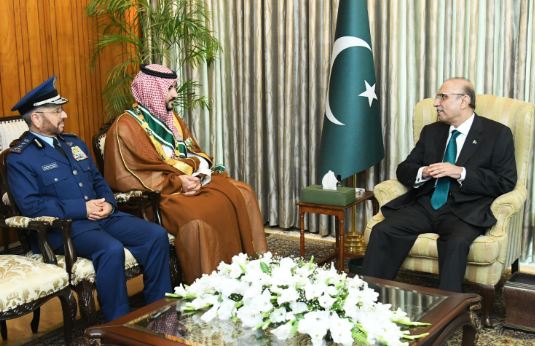
This was discussed at a meeting between President Asif Ali Zardari and the visiting Defence Minister of the Kingdom of Saudi Arabia (KSA), His Royal Highness Prince Khalid bin Salman bin Abdul Aziz Al Saud, who called on him at Aiwan-i-Sadr today. Prime Minister, Muhammad Shehbaz Sharif, Federal Minister for Defence and Defense Production, Khawaja Muhammad Asif, Chief of Army Staff, General Syed Asim Munir, and the Saudi Ambassador to Pakistan, Nawaf bin Said Al-Malki, were also present during the meeting.

While welcoming the visiting dignitary, the President said that Pakistan accorded utmost importance to its relations with Saudi Arabia as both countries enjoyed a fraternal bond, marked by shared faith and historical relations. He underscored the need for further increasing bilateral cooperation in various fields. The President deeply thanked KSA for the support provided to Pakistan during challenging times. He lauded the leadership of His Majesty King Salman bin Abdul Aziz Al Saud and the vision of the Crown Prince His Royal Highness Mohammed bin Salman Al Saud that would propel Saudi Arabia towards remarkable progress.

The Saudi Defence Minister highlighted that Pakistan and Saudi Arabia enjoyed strong historical, strategic and defence cooperation. He further stated that both countries should work together and support each other to further deepen bilateral relations. He highlighted that his country believed in regional prosperity and had succeeded in increasing economic integration.

Earlier, the President of Pakistan, Asif Ali Zardari, conferred the Nishan-i-Pakistan award, during a Special Investiture Ceremony, on His Royal Highness Prince Khalid bin Salman bin Abdul Aziz Al Saud, Minister for Defence of the Kingdom of Saudi Arabia in recognition of his meritorious services towards further strengthening bilateral cooperation and his contribution towards peace in the region.

The President congratulated His Royal Highness Prince Khalid bin Salman bin Abdul Aziz Al Saud on the conferment of the award and thanked him for his role in promoting defence ties.

PAF Leaps Ahead of its Adversaries

PAF Leaps Ahead of its Adversaries

Air Marshal Asim Suleiman (Retd)

In an era characterised by rapid technological advancements and evolving geopolitical landscapes, the Pakistan Air Force (PAF) is actively engaged in a comprehensive effort aimed at indigenisation, modernisation, restructuring, and enhancing operational efficiency to transform itself into a next-generation air force. As the intricacies of modern warfare prompt conventional forces to adapt swiftly, the PAF is taking a leading role in incorporating cutting-edge technologies to ensure full-spectrum readiness for the challenges of the 21st Century, led by its top command.

Operational Excellence

The PAF is committed to operational excellence and actively engages in international air exercises to enhance its capabilities, fortify partnerships, ensure heightened preparedness, and foster interoperability and coordination with friendly air forces. A pertinent example of this dedication is evident in the recent Operation Marg Bar Sarmachar undertaken against Iran at very short notice, showcasing PAF’s operational efficiency. Additionally, the PAF conducts operations against terrorist outfits on an asand-when-required basis with punitive and accurate deliveries, further exemplifying its prowess and effectiveness in diverse operational scenarios.

Combat and Support Aircraft

Under the Smart Induction Programme spearheaded by the military command, the acquisition of the fifth-generation J-31 Gyrfalcon stealth aircraft has been announced. PAF, under its present leadership, has also operationalised various combat and combat support systems equipped with advanced technologies. Notable examples include the J10C and JF-17 Block III, showcasing the PAF’s commitment to technological prowess.

Upgrading existing assets such as the F-16 and JF-17 Block I and II aircraft with the latest avionics suite ensures a balanced fiscal approach and operational efficiency. Spadework for acquiring the L-15 trainer from China has also been completed. Moreover, to boost operational support capabilities, it has also inducted air mobility platforms C-130H, Airbus 319 (Cargo and Air Ambulance), Boeing 737 cargo version, BKA-350i and Piper M-600.

2

Electronic Warfare and UAVs

For electronic warfare, the PAF has inducted Global-6000 SOJ, Electronic Air Defence System (EADS), Multi-function Integrated Ground-to-Air EW System (MIGAES) and AntiDrone Systems. It has also acquired and operationalised unmanned aerial platforms TB2 and Wing Loong Medium-Altitude Long-Endurance (MALE) and Akinci High-Altitude Long-Endurance (HALE), and loitering munitions. PAF will have the region’s first HALE platform, which will be equipped with AESA Radar and EW payloads in the coming months, and is also expected to perform in an Air-to-Ground role. The PAF has additionally acquired Shahpar-II and plans to induct Shahpar-III this year, besides, being actively involved in indigenous efforts to design and develop killer drones.

Integrated Air Defence

For an Integrated Air Defence System, PAF has fortified the outermost tier with the Highto-Medium Altitude Air Defence System (HIMAD), followed by the deployment of Closein-Weapon Systems in the subsequent tier, culminating in anti-swarm/anti-drone systems forming the innermost ring through the incorporation of advanced technologies such as HQ-9B, HIMADS, HQ-16, and Skydome/JN 614 anti-swarm systems, PAF is poised to deliver the essential safeguarding of vulnerable assets. Radar capabilities are also being upgraded with the introduction of the YLC-8E Mobile UHF Radar System, MMR and YLC18, contributing to maintaining a robust air defence environment.

Cyber and Space

Recognising the significance of the cyber and space domains in modern conflict, the PAF has established a Cyber and Space Command, equipped with state-of-the-art capabilities for both defence and offence. This dual focus on cyber and space capabilities positions the PAF as a comprehensive and forward-thinking force.

Restructuring and Development of Human Resource

Human resource development remains central to the PAF’s modernisation strategy. It has, therefore, initiated substantial organisational restructuring aimed at enhancing its agility and operational efficiency. In order to become lean and mean, PAF is right-sizing

3

Its force to cut off the fat and have the right numbers to accomplish tasks effectively. This restructuring also prioritises equipping its personnel with the skills and knowledge required for modern air warfare, emphasising education and training from nurseries to academies and through dedicated hubs such as the Jinnah Centre of Character and Leadership and other higher seats of learning in the service.

Centres of Excellence and Rejuvenating Policies

Revamping centres like the Airpower Centre of Excellence, and adding the UAV Centre of Excellence, and Centre of Excellence for Air Mobility and Aviation Safety, besides the College of Air Defence, along with updated personnel policies, contribute to a culture of excellence within the PAF.

Development of Aerospace Industry (NASTP)

A cornerstone of the PAF’s modernisation efforts is the drive towards indigenisation and self-reliance. The National Aerospace Science and Technology Park (NASTP) serves as the flagship initiative in this regard, with clusters in Kamra and techno-parks in Rawalpindi, Karachi, Lahore, and Kharian. These technology divisions span aerospace, cyber, IT, AI, training, certification, and incubation domains, fostering innovation and collaboration with the private sector. The private sector’s integration, with over 75 cohorts, start-ups, and SMEs, underscores the PAF’s commitment to leveraging external expertise and resources. The Aerospace Design and Innovation Centre, scheduled for inauguration shortly, will further enhance capabilities in designing and developing advanced aerospace technologies. Furthermore, to provide security for these initiatives, NASTP has been placed under the Special Investment Facilitation Council (SIFC), highlighting the integral role it is expected to play in Pakistan’s economic revival.

Self-Reliance

The indigenisation effort extends to the development of Pakistan’s first indigenous fighter aircraft. The JF-17 PFX programme, set to be formally launched alongside the Aerospace Village during the first half of 2024, represents a significant milestone in the PAF’s pursuit of self-reliance. It has progressed to 30 to 40 percent into the design phase, alongside other development and modernisation initiatives.

4

Conclusion

Based on the pillars of indigenisation, modernisation, restructuring, and operational efficiency, the PAF’s transformation under Air Chief Marshal Zaheer Ahmed Baber Sidhu’s leadership is a testament to his forward-thinking approach to addressing the challenges of contemporary warfare. The commitment to the operationalisation of other niche technologies required for the development of the aerospace industry in Pakistan, and self-reliance will not only bolster the PAF’s capabilities but also contribute significantly to Pakistan’s economic growth.

Air Marshal Asim Suleiman (Retd) is President at the Centre for Aerospace and Security Studies (CASS), Lahore.

One minute silence observed at embassy of Pakistan for the victims of Moscow attacks

One minute silence observed at embassy of Pakistan for the victims of Moscow attacks

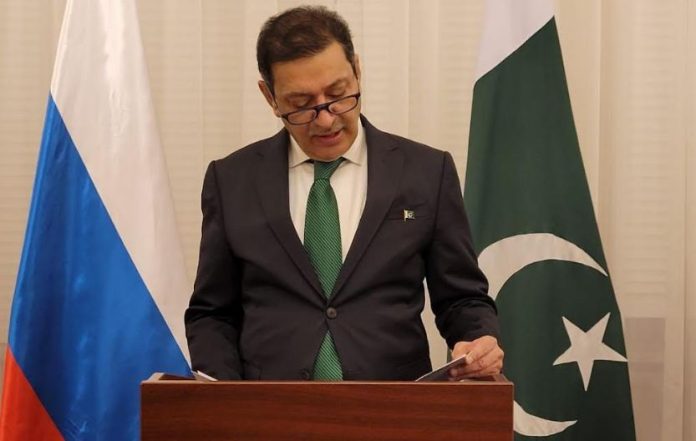
MOSCOW, MAR 23 /DNA/ – Pakistan Day ceremony  at Pakistan Embassy Moscow was cut short with solemn observances due to the highly condemnable Terrorist attacks in Moscow.

A minute silence was observed in order to pay homage to the victims and those wounded in the incident.

Pakistan Ambassador Muhamamd Khalid Jamali on the occasion condemned the incident and said that since Pakistan has been facing the menace of terrorism for a long time and we know the pain associated with such activities.

“I offer my condolences in connection of the loss of precious lives last evening. We share the grief of the people of Russia. We can imagine the horror and pain it brings, as Pakistan has sacrificed more than 100,000 lives fighting this horror – terrorism,” the Ambassador stated.

Messages of the President and Prime Minister of Pakistan were read by the Ambassador and second secretary respectively while the flag was also hoisted to commemorate the 23rd March as Pakistan Day.

President confers military awards

President confers military awards

ISLAMABAD, MAR 23 /DNA/ – The President of Pakistan has been pleased to grant the Military awards to the officers and soldiers of Pakistan Army, Navy and Air Force. 1 Sitara-i-Basalat, 135 Tamgha-i-Basalat, 45 Imtiazi Asnad, 148 COAS Commendation Cards, 23 Hilal-i-Imtiaz (Military), 109 Sitara-i-Imtiaz (Military) and 137 Tamgha-i-Imtiaz (Military) were awarded to officers and soldiers.

Following soldier has been conferred with Sitara-i-Basalat:

Sepoy Israr Muhammad, SSG.

Following officers and soldiers have been conferred with Tamgha-i-Basalat:

Brig Mustafa Kamal (Shaheed), CMI, Lt Col Safdar Ali Khan, NLI, Maj Muhammad Jawad (Shaheed), FF, Maj Mian Abdullah Shah (Shaheed), Arty, Maj Saqib Hussain (Shaheed), Sigs, Capt Sagheer Abbas (Shaheed), AD, Sub Sikandar Ali (Shaheed), Punjab, Sub Asghar Ali (Shaheed), FC KP (S), Sub Azhar Hussain (Shaheed), FC Bln (S), N/Sub Gul Sher (Shaheed), Arty, N/Sub Minhaz Ahmed Shakir (Shaheed), FF, N/Sub Sahib Khan (Shaheed), FF, N/Sub Qasim Khan (Shaheed), AK, N/Sub Taj Mir (Shaheed), AK, N/Sub Muhammad Zafaryab (Shaheed), EME, N/Sub Muhammad Asif Khan (Shaheed), FC Bln (N), Dfr Muhammad Zakar (Shaheed), AC, Hav Muhammad Ameer (Shaheed), Punjab, Hav Muhammad Anwar (Shaheed), Baloch, Hav Muhammad Azhar Iqbal (Shaheed), FF, Hav Muhammad Changaiz Chughtai (Shaheed), AK, Hav Ghulam Mehdi (Shaheed), NLI, Hav Umer Hayat (Shaheed), FC KP (S), Hav Ferosh Khan (Shaheed), FC KP (S), Hav Saleem Khan (Shaheed), FC KP (S), Hav Zamin Hussain (Shaheed), FC KP (S), Hav Abdul Rahim (Shaheed), FC Bln (N), Hav Rashid Mehmood (Shaheed), FC Bln (N), Hav Nadeem Iqbal (Shaheed), FC Bln (N), Hav Shadi Ullah (Shaheed), FC Bln (N), Hav Muhammad Irfan (Shaheed), FC Bln (N), L/Hav Saqib Mahmood (Shaheed), Engrs, NK Sajid Hussain (Shaheed), Arty, NK Muhammad Attique (Shaheed), Punjab, NK Rajjab Ali (Shaheed), Punjab, NK Javed Ali (Shaheed), Punjab, Nk Muhammad Ibrahim (Shaheed), FF, NK Zaheer Abbas (Shaheed), FF, NK Abid (Shaheed), FF, NK Muhammad Asad (Shaheed), FF, NK Muhammad Atif (Shaheed), AK, NK Maweez Khan (Shaheed), FC KP (S), NK Hamayum Khan (Shaheed), FC KP (S), NK Fazal Janan (Shaheed), FC KP (S), NK Javed Iqbal (Shaheed), FC KP (S), NK Sher Muhammad (Shaheed), FC Bln (S), NK Baqir Ali (Shaheed), FC Bln (S), ALD Amin Ullah (Shaheed), FC Bln (N), ALD Waqar Ali (Shaheed), AC, ALD Muhammad Pannah (Shaheed), AC, L/Nk Muhammad Shahid (Shaheed), Engrs, L/Nk Taj Ali (Shaheed), FF, L/Nk Haleem Khan (Shaheed), AK, L/Nk Hazrat Ullah (Shaheed), FC KP (S), L/Nk Shoaib Ali (Shaheed), FC KP(S), L/Nk Tella Jan (Shaheed), FC KP(S), L/Nk Miraj Ud Din (Shaheed), FC KP(S), L/Nk Muhammad Sadeq Amin (Shaheed), FC KP(S), L/Nk Ihsan Ullah Khan (Shaheed), FC KP(S), L/Nk Muhammad Sabir (Shaheed), FC KP(S), L/Nk Asghar Ali (Shaheed), FC Bln (S), L/Nk Muhammad Ibrahim (Shaheed), FC Bln (S), L/Nk Fareed Ullah Khan (Shaheed), FC Bln (S), L/Nk Abdul Razzaq (Shaheed), FC Bln (S), L/Nk Muhammad Younas Khan (Shaheed), FC Bln (S), L/Nk Zahid Ullah (Shaheed), FC Bln (S), L/Nk Mubarak Shah (Shaheed), FC Bln (S), L/Nk Abdul Rauf (Shaheed), FC Bln (S), L/Nk Abdul Manaf (Shaheed), FC Bln (N), L/Nk Abdul Qadeer (Shaheed), FC Bln (N), L/Nk Fahim Mushtaq (Shaheed), FC Bln (N), L/Nk Abdul Manan (Shaheed), FC Bln (N), Swr Abid Hussain Khan (Shaheed), AC, Swr Muhammad Israr (Shaheed), AC, Swr Aijaz Ali (Shaheed), AC, Spr Asif Ali (Shaheed), Engrs, Sep Hamid Rasool (Shaheed), SSG, Sep Jawad Khan (Shaheed), Punjab, Sep Saeed Ullah Shah (Shaheed), Punjab, Sep Tanveer Ahmed (Shaheed), Punjab, Sep Saleem Khan (Shaheed), Punjab, Sep Imran Ullah (Shaheed), Punjab, Sep Shamas Ur Rehman (Shaheed), Punjab, Sep Saqib Ur Rehman (Shaheed), Punjab, Sep Afzal Khan (Shaheed), Punjab, Sep Muhammad Waseem (Shaheed), Baloch, Sep Jehangir Khan (Shaheed), FF, Sep Muhammad Essa (Shaheed), FF, Sep Qayyum Javed (Shaheed), AK, Sep Raja Muhammad Zaheed Khan (Shaheed), AK, Sep Zia Alam (Shaheed), NLI, Sep Khizar Abbas (Shaheed), NLI, Sep Babar Ayoub (Shaheed), ASC, Sep Saeed Ahmed (Shaheed), ASC, Sep Nasir Khan (Shaheed), FC KP (S), Sep Hazrat Bilal (Shaheed), FC KP (S), Sep Nauman Khan (Shaheed), FC KP (S), Sep Irshad Ullah (Shaheed), FC KP (S), Sep Gul Rauf Khan (Shaheed), FC KP (S), Sep Naseem Khan (Shaheed), FC KP (S), Sep Nazir Khan (Shaheed), FC KP (S), Sep Rafi Ullah (Shaheed), FC KP (S), Sep Muhammad Alam (Shaheed), FC KP (S), Sep Abid Ullah (Shaheed), FC KP (S), Sep Gul Nawaz Khan (Shaheed), FC KP (S), Sep Syed Rajab Hussain (Shaheed), FC KP (S), Sep Muhammad Zaman (Shaheed), FC KP (S), Sep Bismallah Jan (Shaheed), FC KP (S), Sep Gul Raza (Shaheed), FC KP (S), Sep Basit Ali (Shaheed), FC KP (N), Sep Naid Ullah (Shaheed), FC KP (N), Sep Atta Ur Rehman (Shaheed), FC KP (N), Sep Haider Ali Bukhari (Shaheed), FC Bln (S), Sep Muhammad Imran (Shaheed), FC Bln (S), Sep Waheed Ullah (Shaheed), FC Bln (S), Sep Talal Ahmed (Shaheed), FC Bln (S), Sep Inayat Ullah (Shaheed), FC Bln (S), Sep Husnain Ishtiaq (Shaheed), FC Bln (S), Sep Sajid Ullah (Shaheed), FC Bln (S), Sep Abdul Rasheed (Shaheed), FC Bln (S), Sep Zulfiqar Ali (Shaheed), FC Bln (S), Sep Irfan Ullah (Shaheed), FC Bln (S), Sep Sajjad Iqbal (Shaheed), FC Bln (S), Sep Asad Ali (Shaheed), FC Bln (S), Sep Mudassar Hameed (Shaheed), FC Bln (N), Sep Zaheer Ahmed (Shaheed), FC Bln (N), Sep Saeed Aslam (Shaheed), FC Bln (N), Sep Haq Nawaz (Shaheed), FC Bln (N), Sep Rehmat Ullah (Shaheed), FC Bln (N), Sep Talha Jami (Shaheed), FC Bln (N), NCsE Shan Masih (Shaheed), FC Bln (N), NCsE Sabir Masih (Shaheed), FC Bln (N), Lt Cdr Naeem Ahmed Khan, Navy, Lt Cdr Imran Haider, Navy and Lt Cdr Badruddin Khilji, Navy.

Following officers and soldiers have been conferred with Imtiazi Sanad:

Brig Tauqir Anwar Khan, Punjab, Col Humayun Mujtaba, CMI, Lt Col Ali Ahmed, CMI, Lt Col Fahad Zaman, AC, Lt Col Syed Ali Moosa, EME, Maj Atif Razzaq Joyya, FF, Maj Umer Siddique, AK, Maj Salahud Din, FF, Maj Qaisar Nisar, AK, Maj Waqar Ul Hassan, AC, Capt Sardar Zargham Rahim, Punjab, Capt Sayad Ahmad, AC, Capt Muhammad Bilal, Baloch, Capt Ehsan Danish Abbasi, EME, Capt Waseem Ullah Khan, EME, SM Shah Muhammad Ali FC, Bln (N), N/Sub Shern Khan, FF, Hav Muhammad Usman (Shaheed), Punjab, Hav Muhammad Ijaz, FC KP (S), Up/Nk Sana Ullah, Engrs, Sep Syed Hammad Ali Shah, FF, Maj Syed Shahzad Babar, Avn, Maj Hassan Shafique Kayani, Avn, Maj Muhammad Uzair, Avn, Commander Atif Iqbal, Navy, Lt Commander Ali Raza, Navy, Lt Commander Muhammad Faizan, Navy, Lt Commander Naeem Ahmed, Navy, Squadron Leader Muhammad Khurram Khan, GD(P), Air Force, Squadron Leader Hamza Mirza, GD(P), Air Force, Group Captain Aizaz Farooq, Engg, Air Force, Group Captain Haroon Rasheed, Engg, Air Force, Wing Commander Faizan Ali, Engg, Air Force, Squadron Leader M Usman Ashraf, Engg, Air Force, Wing Commander Jamshed Iqbal, AD, Air Force, Wing Commander Salman Ul Haq, AD, Air Force, Wing Commander Aamir Sultan, AD, Air Force, Squadron Leader Syed Hassnat Hussain Shah, AD, Air Force, Squadron Leader Shah Fahad, AD, Air Force, Group Captain Ahmad Bilal, A&SD, Air Force, Squadron Leader Asif Jalil, A&SD, Air Force, Squadron Leader Khurram, IT, Air Force, Squadron Leader Touseef Iqbal Bhatti, IT, Air Force, Wing Commander Muhammad Abdullah Maqbool, Edu, Air Force and Wing Commander Fakhr-Ul-Islam, Edu, Air Force.

Following officers and soldiers have been conferred with COAS Commendation Card:

Brig Zahid Ali Shah, Sind, Brig Muhammad Sajid Mahmood, Baloch, Col Hafiz Kashif Rashid, Punjab, Col Muhammad Siddique, HCA, Lt Col Adnan Hassan, CMI, Lt Col Muhammad Jamal Khalid, Engrs, Lt Col Muhammad Saeed Tareen, CMI, Lt Col Farhan Rasheed, Sigs, Lt Col Balal Karim, CMI, Lt Col Imran Khan, CMI, Lt Col Nisar Hussain, CMI, Lt Col Qasim Zia Ghumman CMI, Lt Col Hamid Ali Khan, FF, Lt Col Shahryar Nasim Khan, Baloch, Lt Col Usman Humayun, ICTO, Lt Col Ajlaan Bin Mamoon, TSO,  Lt Col Khurshid Ali Bangash, AMC Spec, Maj Muhammad Aadil Bukhari, Sigs, Maj Hamid Riaz, Avn, Maj Abdur Rauf Khalid, AD, Maj Mudassir Saleem Khan, CMІ, Maj Muhammad Umar Khan, Sigs, Maj Umair Khan, AK, Maj Khalid Ahmad Bangash, Avn, Maj Omer Saeed, Arty, Maj Hammad Ul Hassan, ICTO, Maj Muhammad Tauseef Khan Khattak, FF, Maj Ahmed Khan Alyana, Avn, Maj Farrukh Rafique, CMI, Maj Raja Arslan Zafar, FF, Maj Adnan Mustafa, NLI, Maj Faisal Mehmood, EME, Maj Umar Waqas, Sigs, Maj Osama Bashir, Punjab, Maj Ali Akbar Azeem, CMI, Maj Syed Basit Haider, AK, Maj Ahsan Farooq, Baloch, Maj Ukasha Bin Asim, EME, Maj Raham Dad, FF, Maj Taimoor Khan, Baloch, Maj Ahmed Ahsen Pervaiz Khan, FF, Maj Muhammad Zeeshan Tariq, Punjab, Maj Ahsan Mumtaz, AK, Maj Waqas Zafar, Punjab, Maj Maaz Abdullah Khan, ICTO, Maj Muhammad Ammad, ICTO, Maj Osaf Ayaz Khan, EME, Maj Muhammad Abdullah Bin Arif, EME, Maj Asma Maroof, AFNS, Maj Samina Kousar (ISD), AFNS, Capt Masroor Ali, Arty, Capt Muhammad Haroon Tariq, FF, Capt Mahad Ali, Avn, Capt Muhammad Kamran Khan, Baloch, Capt Azhar Ud Din Akbar, FF, Capt Sami Ullah, FF, Capt Muhammad Mustafa Khan, AK, Capt Muhammad Nauman, Baloch, Capt Kamal Sajid, EME, Capt Hammad Bin Haseeb, FF, Capt Abdul Majeed, Baloch, Capt Muhammad Aftab Ashraf, FF, Capt Ali Waleed Awan, Punjab, Capt Muhammad Behram Baz Khan, AK, Capt Muhammad Taha Khan, FF, Capt Muhammad Zeeshan Mohiuddin, EME, Capt Muhammad Adnan Bashir, Sind, Capt Arslan Gohar, Punjab, Capt Muhammad Shahbaz Majeed, Arty, Lt Hasaan Akbar, FF, Lt Raja Hassan Raza, Punjab, Lt Muhammad Awais Usman, Punjab, Lt Humza Humayun, Sind, Sub Muhammad Abdul Qayyum, AK, Sub Khad Ali, FC KP (N), N/Sub Muhammad Ahmed, Arty, N/Sub Mohsin Akhtar Khan, Punjab, N/Sub Muddasar Sohail, Baloch, N/Sub Qader Nawaz, AK, N/Sub Mirbaz Khan, AK, N/Sub Asif Ali, AD, N/Sub Ijaz Ahmed, CMI, N/Sub Amir Ahmad Khan, FC KP (S), N/Sub Sufi Jan, FC KP (S), N/Sub Fazal Khaliq, FC KP (S), N/Sub Tasweer Nawaz Khan, FC Bln (N), Hav Manzoor Ahmed, Punjab, Hav Hamid Nawaz, Baloch, Hav Shaukat Ali Khan, FF, Hav Aziz Ur Rehman, Sind, Hav Muneeb Iqbal, SSG, Hav Tanveer Hussain, SSG, Hav Sabir Hussain, AD, Hav Muhammad Mudasir Raza Khan, CMI, Hav Muhammad iqbal, CMI, Hav Nadeem Abbas, CMI, Hav Shahid Khan, FC KP (S), Hav Muhammad Anis, FC Bln (N), L/Hav Aftab Ahmed, FF, Nk Muhammad Imran, Arty, Nk Naveed Hakim, Engrs, Nk Abdullah, SSG, Nk Ali Haider, SSG, Nk Muhammad Shahbaz, SSG, Nk Irfan Mehmood Bhatti, CMI, Nk Moeen Shah, FC KFP (N), Nk Muhammad Israr, FC KP (S), ALD Nadir Hussain, AC, L/Nk Sohail Jabran, Engrs, L/Nk Sami Ullah, Engrs, L/Nk Muhammad Nadeem, Baloch, L/Nk Umer Ijaz, Baloch, L/Nk Shahadat Ali, Baloch, L/Nk Sajjad Naseem, AK, L/Nk Waheed Ullah, SSG, L/Nk Qaiser Mehmood, SSG, L/Nk Sheraz Arshad, EME, L/Nk Suleman Hussain, FC KP (S), L/Nk Jamil Rahman, FC KP (S), L/NK Laiq Hussain, FC KP (S), L/Nk Muhammad Ayaz, FC KP (S), Swr Asif Hayat, AC, Spr Shaukat Ali, Engrs, Spr Taimoor Ahmed, Engrs, Sep Ali Haider, Punjab, Sep Abdul Rauf, Baloch, Sep Ahmed Mujtaba, SSG, Sep Zahid Wali, SSG, Sep Muhammad Nazir, SSG, Sep Karamat Ali, SSG, Sep Karam Ali, SSG, Sep Ubaid Shabbir, SSG, Sep Muhammad Yaseen, SSG, Sep Aqib Shahzad, SSG, Sep Ahmed UI Ddin, Sind, Sep Shah Muhammad, Sind, Sep Zaheer Ahmed, Sind, Sep Sajid Ullah, AK, Sep Waqar Hussain, AD, Sep Bait Ullah, FC KP (S), Sep Zubair Khan, FC KP (S), Sep Anwar Saeed, FC KP (S), Sep Muhammad Khurram, FC KP (S), Sep Muhammad Tariq, FC KP (S), Sep Baid Ullah Jan, FC Bln (S), Sep Muhammad Wasim, FC Bln (N), Sep Idrees Khan, FC Bln (N), Mali Suhrab (Shaheed), FC KP (S).

Following officers have been conferred with Hilal-i-Imtiaz (Military):

Maj Gen Saeed Ur Rehman Sarwar, TSO, Maj Gen Shahid Pervaiz, NLI, Maj Gen Muhammad Asim Khan, Arty, Maj Gen Nadeem Yousaf, Avn, Maj Gen Ghulam Muhammad, Arty, Maj Gen Noor Wali Khan, Baloch, Maj Gen Muhammad Naeem Akhtar, AK, Maj Gen Raja Muhammad Nadeem Ashraf, Arty, Maj Gen Naseem Anwer, FF, Maj Gen Umar Ahmad Shah, Sigs, Maj Gen Muhammad Shahid Siddeeq, Sigs, Maj Gen Adeel Haider Minhas, Sigs, Maj Gen Nadeem Fazal, TI(M), AMC Spec, Maj Gen Tahir Masood Ahmad, AMC Spec, Maj Gen Sohail Sabir, AMC Spec, Maj Gen Zaheer Akhtar, HCA, Maj Gen Mahmood Sultan, HCA, Rear Admiral Shifaat Ali Khan, SI(M), Navy, Rear Admiral Amir Mahmood, SI(M), Navy, Rear Admiral Muhammad Hussain Sial, SI(M), Navy, Air Vice Marshal Nadeem Akhtar Khan, GD(P), Air Force, Air Vice Marshal S Fauad Masud Hatmi, GD(P), Air Force and Air Vice Marshal Shakeel Safdar, GD(P), Air Force.

Following officers have been conferred with Sitara-i-Imtiaz (Military):

Brig Imran Masood Kashfi, Punjab, Brig Muhammad Shareef, FF, Brig Saqib Ali Cheema, CMI, Brig Riffat Ali Khan, AK, Brig Shahid Mahmood, CMI, Brig Aamir Saleem, Arty, Brig Amir Shahzad Awan, Ord, Brig Tanveer Ahmad, Arty, Brig Waqas Zafar Raja, Punjab, Brig Amjad Iqbal, Sind, Brig Zia Riaz, Baloch, Brig Imran Ahmed Khan, Arty, Brig Aziz Ahmad, Arty, Brig Rehan Aqil Khan, Punjab, Brig Ahmad Fawad, Sind, Brig Muhammad Zaheer Akhtar, FF, Brig Obaid Ullah Anwar, T Bt, FF, Brig Shaharyar Saleem Khan, Arty, Brig Akhlaq Ahmad, AC, Brig Sohail Sabir, Ord, Brig Mohammad Tariq, FF, Brig Shaban Shafi, AC, Brig Muhammad Muneeb Sharif, Arty, Brig Salman Nazar, Punjab, Brig Sajid Majeed, AK, Brig Tahir Hafeez, AD, Brig Rehman Tahir, Arty, Brig Imran Kashif Chaudhry, Arty, Brig Ikram Ul Haque, FF, Brig Muhammad Awais Majeed, Arty, Brig Basharat Ali, Arty, Brig Asghar Ali Jatoi, NLI, Brig Suhail Abbas, AD, Brig Rashid Mehmood Malik, Arty, Brig Syed Nadir Hussain Shah, Punjab, Brig Ghulam Murtaza, FF, Brig Muhammad Umar, Arty, Brig Muhammad Ahsan, Punjab, Brig Abrar Akhtar Buttar, AC, Brig Nadeem Haider, Arty, Brig Muhammad Irfan Khan Lodhi, Engrs, Brig Rana Shaukat Shabbir, S Bt, FF, Brig Chaudhry Saeed Ullah, Punjab, Brig Munsoor Ahmad Javaid, Engrs, Brig Raja Shozab Majeed, AC, Brig Arif Moin Fakhruddin, T Bt, Arty, Brig Muhammad Moeen Arshad, Arty, Brig Ahsan Ul Haq Qazi, Avn, Brig Muhammad Bilal Yunus, Punjab, Brig Azhar Ali Tunio, Arty, Brig Khalid Iqbal Muzafar, Avn, Brig Muhammad Ameen Dharejo, AC, Brig Rekhman Kadir Khan, Sind, Brig Syed Iqbal Hussain, NLI, Col Khawar Mehmood, PhD, ICTO, Col Raja Balal Ahmed, NLI, Col Junaid Ahmed, Arty, Col Imran Ahmad, Engrs, Col Waheed Alam, Baloch, Col Muhammad Raza Ayub, Avn, Col Imran Khan, FF, Col Tariq Mahmood, Punjab, Col Khalid Ashraf, ASC, Col Muhammad Arshad Mustafa, Arty, Col Asim Saleem Khan, AD, Col Shafi Ullah Khan, S St, CMI, Col Ahmad Awais, AC, Col Rao Hameed Ur Rehman, CMI, Col Imran Ahmed, Arty, Col Muhammad Zeeshan Asghar Ch, Arty, Col Naeem Ullah, CMI, Col Muhammad Shabbar Ali Saeed, EME, Col Syed Muhammad Ali, Sigs, Col Abdul Saleem Alias Baboo, RV&FC, Col Amer Jadoon, HCA, Col Nayyar Ahmed, AMC Spec, Col Shahida Nusrat, AFNS, Commodore Raja Muhammad Nasir, Navy, Commodore Syed Muhammad Abbas Naqvi TI(M), Navy, Commodore Rashid Mahmood Sheikh, Navy, Commodore Jawad Haider Khawaja S Bt, TI(M), Navy, Commodore Tasawar Iqbal TI(M), Navy, Commodore Aamir Iqbal, Navy, Commodore Aamer Rasheed Malik, Navy, Commodore Rashid Nazir, Navy, Captain Jawad Malik, Navy, Captain M Zahid Zaheer, Navy, Captain Syed Atif Hussain Bukhari, Navy, Air Commodore Syed Fayyaz Mehboob, GD(P), Air Force, Air Commodore Imran Aslam, GD(P), Air Force, Air Commodore Muhammad Hassan Afzal, GD(P), Air Force, Air Commodore Adeel Shahab Qureshi, GD(P), Air Force, Air Commodore Muhammad Noman Ali Khan, GD(P), Air Force, Air Commodore Syed Nabeel Masood, GD(P), Air Force, Air Commodore Omair Ahmed Najmi, GD(P), Air Force, Air Commodore Irfan Rasul Ghauri, GD(P), Air Force, Air Commodore Mudassar Arshad Malhi, GD(P), Air Force, Air Commodore Riaz Alam Khan, Engg, Air Force, Air Commodore Farhan Masood Butt, Engg, Air Force, Air Commodore Muhammad Asif Iqbal, Engg, Air Force, Air Commodore Shahzad Saleem, Engg, Air Force, Air Commodore Syed Farrukh Ali, Engg, Air Force, Air Commodore Saqib Rahman, AD, Air Force, Air Commodore Azfar Khleeq, AD, Air Force, Air Commodore Kashif Akhtar Qureshi, Air Force, Air Commodore Sohail Imran Cheema, A&SD, Air Force, Group Captain Adnan Mahmood, A&SD, Air Force, Air Commodore Amir Raza, LOG, Air Force and Air Commodore Nafees Ahmed Cheema, JAG, Air Force.

Following officers have been conferred with Tamgha-i-Imtiaz (Military):

Lt Col Muhammad Sohail Aslam, Punjab, Lt Col Ahmer Nisar Satti, Sind, Lt Col Bilal Muhammad, AK, Lt Col Wajahat Ali Khan Utman, Punjab, Lt Col Malik Haider Ali, Avn, Lt Col Mazhar Hayat, Sigs, Lt Col Khurram Abbas, FF, Lt Col Sajjad Mohammad Khan, CMI, Lt Col Muhammad Qasim Manzoor, FF, Lt Col Ijaz Ahmed, Arty, Lt Col Muzammil Ather, Ord, Lt Col Tariq Mahmood, Punjab, Lt Col Tallat Mahmood, Avn, Lt Col Faisal Malik, T Bt, Arty, Lt Col Zeeshan Asghar, Arty, Lt Col Faisal Nasim, ICTO, Lt Col Muhammad Fayyaz, AD, Lt Col Muhammad Yasir Iqbal, CMI, Lt Col Muhammad Ejaz, Baloch, Lt Col Khurrum Irfan, Ord, Lt Col Sikandar Hayat, AK, Lt Col Shahzad Iqbal, FF, Lt Col Umer Zeeshan, Arty, Lt Col Irfan Ali Khan, FF, Lt Col Niaz Hussain, Baloch, Lt Col Syed Asad Hussain Shah, Punjab, Lt Col Muhammad Jawad Hanif, Avn, Lt Col Nasir Saleem, Sigs, Lt Col Humayun Zubair Khan, PhD, Sigs, Lt Col Muhammad Mohsin Akhtar Malik, AC, Lt Col Usman Khurshid Khawaja, AK, Lt Col Umar Zaman, AC, Lt Col Rab Nawaz, AC, Lt Col Muhammad Asif Jamal, ASC, Lt Col Zaka Ullah Rahi, Avn, Lt Col Muhammad Farooq Hayat, Engrs, Lt Col Waqar Yahya, Engrs, Lt Col Asad Ali Mirza, Engrs, Lt Col Usman Pervaiz, Engrs, Lt Col Rizwan Zafar, Arty, Lt Col Awais Abdullah, Arty, Lt Col Syed Ali Raza Hasnain, AD, Lt Col Nasir Mehmood Malik, Sind, Lt Col Umar Farooq, NLI, Lt Col Muhammad Junaid Ather, Baloch, Lt Col Waqas Qureshi, AK, Lt Col Mudassar Mushtaq Mirza, AC, Lt Col Nokhaiz Maroof, Arty, Lt Col Muhammad Tariq, Sind, Lt Col Aziz Ud Din, NLI, Lt Col Nasir Jan, ASC, Lt Col Akhtar Hussain, AK, Lt Col Tariq Rabbani, EME, Lt Col Kawan Iqbal, EME, Lt Col Junaid Ahmad, EME, Lt Col Uneeb Ahmad Khan, EME, Lt Col Shakoor Ahmed, Arty, Lt Col Muhammad Ali Raja, ICTO, Lt Col Usman Saif Cheema, Sigs, Lt Col Awais Khurshid, AD, Lt Col Sameer Saeed Janjua, Arty, Lt Col Faisal Shahzad Raja, Engrs, Lt Col Shahid Rasool, CMI, Lt Col Rizwan Aamir, Baloch, Lt Col Farooq Ijaz Tarar, Sind, Lt Col Atique Ur Rehman, AC, Lt Col Muhammad Shahid Khan, AEC, Lt Col Jawad Ahmed, AEC, Lt Col Rizwan Wadood, RV&FC, Lt Col Syed Ehtasham Haider Naqvi, AMC Spec, Lt Col Bushra Asmat, AFNS, Lt Col Nasim Akhtar, AFNS, Lt Col Zaib Un Nisa, AFNS, Lt Col Farah Diba, AFNS, Maj Kashif Siddique, GL, Maj Syed Ali Adil Naqvi, Avn, Maj Shahid Ashfaq, Arty, Maj Rizwan Raouf Malik, FF, Maj Atif Farooq, AC, Maj Dawood Saleem Choudhry, Sigs, Maj Muhammad Shuaib, ASC, Maj Mumtaz Ali, ASC, Maj Muhammad Zulfiqar, AD, Maj Nasir Ud Din, Engrs, Maj Inayat Ullah, AEC, Maj Khurram Sheraz, Avn, Maj Hassan Ali, Ord, Maj Adeel Ahmad Khan, Arty, Maj Abdul Rafay Khan, AC, Maj Talha Naik, Arty, Maj Mirza Hammad Ghazanfar Baig, Engrs, Maj Raja Bilal Hayat Janjua, Ord, Maj Muhammad Haroon Younus, EME, Maj Hammad Arif, EME, Maj Shujaat Zahir, RV&FC, Maj Mrs Zahida Parveen, AFNS, Maj Mrs Amtan Nasir, AFNS, Maj Mrs Bushra Bashir, AFNS, Maj Mrs Islam Bibi, AFNS, Maj Mrs Shamim Akhtar, AFNS, Maj Mrs Sajida Parveen, AFNS, Maj Nargis Bano, AFNS, Maj Mrs Farah Zaiba, AFNS, Maj Mrs Shahnaz Kousar, AFNS, Maj Mrs Nazia Amanullah, AFNS, Maj Mrs Sabiha Begum, AFNS, Commander Naveed Ahmed, Navy, Commander Hassan Ali Chauhan, Navy, Commander Babar Ibne Saleem, Navy, Commander Abdullah, Navy, Lt Commander Umair Hafeez, Navy, Lt Commander Waleed Arif, Navy, Lt Commander Shahnawaz Abbasi, Navy, Lt Commander Talha Naveed, Navy, Lt Commander Nazish Javid, Navy, Lt Commander Muhammad Naeem, Navy, Lt Commander Muhammad Ali Shah, Navy, Surg Lt Commander Mohsin Raza Khan, Navy, Lt Commander Muhammad Umar, Navy, Wing Commander Zeeshan Ali, GD(P), Air Force, Wing Commander Farrukh Naveed, GD(P), Air Force, Wing Commander Muhammad Zahid Jamal, GD(P), Air Force, Wing Commander Hasan Mahmood Siddiqui, GD(P), Air Force, Wing Commander Usman Saeed, GD(P), Air Force, Wing Commander Wajeeh Ullah Mian, GD(P), Air Force, Wing Commander Earaj Jamal Tahir, GD(P), Air Force, Wing Commander Umair Hassan, GD(P), Air Force, Wing Commander Shamshair Abdullah Kayani, GD(P), Air Force, Wing Commander Tuaha Umair Nomani, Engg, Air Force, Wing Commander Shuja Ud Din, Engg, Air Force, Wing Commander Muhammad Zeeshan Iqbal Cheema, Engg, Air Force, Wing Commander Tofeeq Ahmed, AD, Air Force, Wing Commander Usman Aziz, AD, Air Force, Wing Commander Yasir Afaque, A&SD, Air Force, Squadron Leader Anis Safdar, A&SD, Air Force, Group Captain Waqar Ali Khan, Log, Air Force and Wing Commander Nadia Irum, Med, Air Force.

The Indispensable Role of Peace in National Advancement

The Indispensable Role of Peace in National Advancement

By Imran Ghaznavi

In the intricate tapestry of a nation’s progress, peace stands as the foundational thread, weaving together the fabric of prosperity and stability. Its significance transcends mere tranquility; it is the cornerstone upon which the edifice of societal advancement is erected. A nation embarks on the journey of development only when it nurtures an environment conducive to peace and harmony.

The attainment of peace hinges upon several key pillars, each indispensable in fostering a climate of tranquility and progress. Foremost among these is a robust justice system, one that upholds the principles of fairness, equality, and accountability. A society where justice is swift and impartial breeds confidence among its citizens, instilling a sense of security and trust in the governing institutions.

Coupled with a sound justice system is the imperative of good governance. Effective governance ensures that the machinery of the state operates efficiently, serving the interests of all segments of society equitably. Transparency, accountability, and participation are the cornerstones of good governance, engendering a sense of ownership and responsibility among citizens.

Furthermore, peace finds fertile ground in the provision of basic civic services to the populace. Access to essentials such as healthcare, education, clean water, and sanitation is not just a matter of human rights but also a catalyst for societal harmony. When the basic needs of individuals are met, they are more likely to contribute positively to the collective well-being, fostering a virtuous cycle of peace and progress.

Beyond institutional frameworks, the fabric of peace is woven with threads of mutual respect, tolerance, and empathy. A society that cherishes diversity and fosters inclusivity is inherently more resilient to the forces of discord and division. By embracing differences and celebrating plurality, communities can forge bonds of solidarity that transcend barriers of ethnicity, religion, or ideology.

The dividends of peace extend far beyond the realm of social cohesion; they permeate into the very fabric of individual well-being. Mental peace, often overshadowed in discussions of national progress, is a vital component of human flourishing. In a peaceful environment, individuals are afforded the opportunity to pursue their aspirations without the burden of fear or uncertainty. This psychological stability not only enhances productivity but also nurtures creativity and innovation, driving economic growth and prosperity.

Moreover, peace serves as the bedrock upon which a robust social safety net is constructed. By mitigating the risks associated with poverty, inequality, and disenfranchisement, societies can ensure that no individual is left behind in the march towards progress. A safety net that provides for the vulnerable and marginalized segments of society fosters social cohesion and solidarity, fortifying the bonds of community resilience.

In conclusion, the centrality of peace in the trajectory of national advancement cannot be overstated. It is the fulcrum upon which the wheels of progress turn, propelling societies towards prosperity and resilience. By nurturing an environment characterized by justice, good governance, and access to basic services, and fostering values of mutual respect and empathy, nations can lay the foundation for enduring peace and sustainable development. In doing so, they unlock the boundless potential of their citizens, ensuring a future defined by harmony, prosperity, and shared prosperity.

Dar holds strategic meetings with UK officials in London

Dar holds strategic meetings with UK officials in London

LONDON, MAR 22 /DNA/ – Foreign Minister Mohammad Ishaq Dar has held separate meetings with the UK Minister of State for South Asia and Commonwealth, Lord Tariq Ahmad, and with the Minister of State for Development, Andrew Mitchell at the Foreign Commonwealth and Development Office in London today.

Pakistan-UK relations, regional and global security, Pakistan’s role at the UN and other multilateral forums as well as Pakistan’s economic and development vision came under discussion.

Lord Ahmad felicitated Foreign Minister Dar on assuming the position of Foreign Minister, and expressed the desire to work closely with the new government going forward.

The two sides underscored the deep bonds of friendship and amity that exist between Pakistan and the UK. Next steps for further deepening of relations including leveraging the untapped potential of the British Pakistani diaspora to further expand trade and investment opportunities, were also discussed.

In response to Foreign Minister Dar’s call for early resumption of PIA flights to the UK, the UK side assured that it was working closely with Pakistan at the technical level to support resumption of flights at the earliest possible. The Foreign Minister assured the UK side that all technical issues on Pakistan’s side would be resolved at the earliest, enabling PIA to resume flights to the UK.

Discussing Afghanistan, the Minister of State for South Asia thanked the Foreign Minister for Pakistan’s continued support on resettlement of Afghan nationals. The Foreign Minister apprised him about the current situation.

Foreign Minister Dar expressed wishes for complete health and recovery for His Majesty, King Charles III as well as the Princess of Wales.

The Foreign Minister extended cordial invitations to Foreign Secretary Lord Cameron, Minister Lord Ahmad and Minister Mitchell to visit Pakistan, which were received with appreciation.

Stay Connected

64FansLike
60FollowersFollow

Latest Reviews

Exchange Rates

USD - United States Dollar
EUR
1.17
GBP
1.35
AUD
0.67
CAD
0.73