Home Blog Page 755

Pakistan, Kazakhstan discuss regional geopolitical developments

Pakistan, Kazakhstan discuss regional geopolitical developments

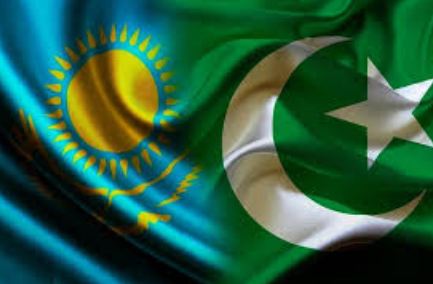
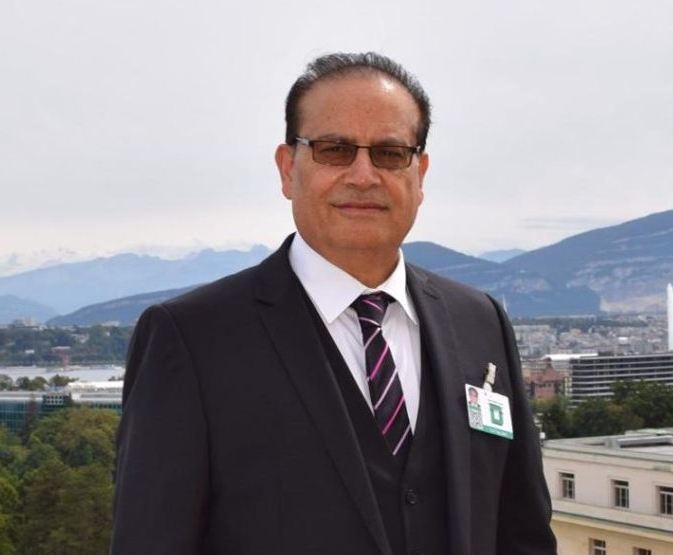
ISLAMABAD, NOV 19 /DNA/ – Pakistan and Kazakhstan held the Third Round of Bilateral Political Consultations in Islamabad today. Additional Foreign Secretary (Afghanistan & West Asia) Ambassador Ahmad Naseem Warraich led the Pakistan side while the Kazakh side was led by Deputy Minister for Foreign Affairs, Ambassador Alibek Bakayev.

The two sides comprehensively reviewed the bilateral cooperation between Pakistan and Kazakhstan, including political relations, inter-parliamentary exchanges, economic & trade ties, connectivity, education, information technology, telecommunication, culture and tourism.

Expressing satisfaction at the current trajectory of bilateral relations, the two sides reaffirmed their commitment to maintaining the momentum in bilateral cooperation, and to collaborate closely at multilateral fora. It was agreed to enhance bilateral trade and economic relations and to expand collaboration in tourism and information technology.

Important regional and global developments, including the situation in Ukraine, Afghanistan and Indian Illegally Occupied Jammu & Kashmir were also discussed.

State of Palestine joins the Global Alliance against Hunger and Poverty

State of Palestine joins the Global Alliance against Hunger and Poverty

Rio de Janeiro, NOV 19 /DNA/ – The State of Palestine has joined the “Global Alliance against Hunger and Poverty”, which was launched during the G20 Summit in Rio de Janeiro, Brazil, on November 18-19, 2024. This accession comes as a result of joint efforts by the Ministry of Foreign Affairs and Expatriates and the Ministry of Social Development, within the framework of strengthening the presence of the State of Palestine and representing the needs of the Palestinian people in all international forums, and in light of the increasing challenges facing them as a result of the Israeli occupation. This alliance aims to enhance international cooperation to eliminate hunger and poverty by 2030, through the exchange of experiences and coordination of efforts between member states.

The participation of the State of Palestine in this alliance comes to emphasize the importance of implementing international law and international humanitarian law and preventing the use of hunger as a means of war, which Israel practices in the context of its war and aggression, in completion of its colonial project and the extermination of the entire Palestinian people. It indicated that this membership will contribute to achieving the goals of sustainable development, especially the first and second goals related to eliminating poverty and hunger.

Through this step, the State of Palestine seeks to enhance social protection programs, improve food security, and support the most needy groups in Palestinian society, by focusing on implementing national policies aimed at reducing poverty and hunger, enhancing international cooperation, and benefiting from the financial and technical resources available within the alliance.

It also aims to improve and expand the implementation of local programs to suit the Palestinian reality, while sharing its experiences with the member states of the alliance to develop effective policies.

The State of Palestine stressed that ending Israeli practices that hinder development, such as the blockade imposed on Gaza and policies that prevent access to agricultural land and basic services, is a prerequisite for achieving the sustainable development goals. With this accession, Palestine confirms its determination to move forward towards eliminating poverty and hunger, promoting human rights, and building international partnerships that contribute to achieving a more just and sustainable future. It called on the international community to pressure Israel to stop its arbitrary policies and enable Palestinians to access food, health care, and economic opportunities.

This participation is expected to contribute to enhancing cooperation with the member states of the alliance, which are more than one country, and exchanging experiences and best practices in the fields of sustainable development, which will positively reflect on national efforts to eliminate poverty and hunger in Palestine.

Trump’s Bureaucracy Cuts: A Daunting Task

Qamar Bashir

By: Qamar Bashir

Macomb, Detroit Michigan

The stunning results of the USA elections surprised both Democrats and Republicans alike. Trump’s unprecedented victory was accompanied by Republican wins in the U.S. Senate and House of Representatives. Before the 2024 elections, Democrats controlled the Senate with 51 seats to Republicans’ 49, while Republicans held a narrow majority in the House with 220 seats to Democrats’ 212. After the elections, Republicans gained control of the Senate with 53 seats, and in the House, they retained their majority with 220 seats to Democrats’ 213, with 2 races undecided. This outcome resulted in unified Republican control of both chambers of Congress.

This has emboldened President-elect Donald J. Trump to undertake one of the boldest policy and administrative decisions in U.S. history, which could be a potential game changer. Mr. Trump has established the Department of Government Efficiency (DOGE), to streamline federal operations by identifying wasteful spending, reducing regulatory burdens, and restructuring or potentially abolishing certain agencies to enhance government efficiency.

He is poised to substantially reduce the size of the U.S. civilian and military bureaucracy, which, according to the strategic reform team led by Elon Musk and Vivek Ramaswamy, has grown excessively large. They argue that the bureaucracy has become a de facto “fourth branch” of government, assuming overriding control over decision-making processes and diminishing the power of the democratically elected political leadership.

The rationale behind this initiative is that the federal bureaucracy has grown disproportionately large, with hefty perks and benefits, while many departments, despite their significant size and employment levels, are either underperforming or have lost sight of their original purpose. This has led to an unsustainable diversion of government funds to sustain a bloated bureaucracy rather than focusing on essential public services.

The composition of the team leading this significant reform effort is noteworthy. Both Elon Musk and Vivek Ramaswamy come from private-sector backgrounds and have no prior experience in government bureaucracy. However, as highly successful corporate entrepreneurs, they bring a proven track record of building organizations from scratch and transforming them into success stories.

For instance, Vivek Ramaswamy, born in Cincinnati, Ohio, to Indian immigrant parents, is a biotech entrepreneur and a prominent Republican figure. A Harvard graduate in biology and a Yale Law School alumnus, he founded Roivant Sciences in 2014, spearheading groundbreaking pharmaceutical ventures. Ramaswamy gained national prominence through his criticism of “woke” corporate culture, as outlined in his 2021 book *Woke, Inc.* Recognized for his conservative principles and innovative thinking, he was appointed by Trump to co-lead DOGE.

His vision includes reducing the federal workforce by up to 75%, abolishing redundant agencies, and implementing eight-year term limits for unelected federal employees to prevent the entrenchment of power. He supports rescinding Executive Order 11246 to shift to a merit-based system and advocates utilizing Schedule F to streamline the removal of “deep-state” actors. These reforms aim to streamline government operations, reduce costs, and ensure a more responsive and meritocratic system.

Like Vivek, Elon Musk is a visionary entrepreneur, engineer, and inventor, known for founding and leading several transformative companies. Born on June 28, 1971, in Pretoria, South Africa, Musk moved to the U.S. to pursue higher education. He earned degrees in physics and economics from the University of Pennsylvania. Musk co-founded Zip2, an online business directory, and PayPal, a digital payments platform, before venturing into ambitious projects like SpaceX, Tesla, Neuralink, and The Boring Company. Through these ventures, Musk has revolutionized industries such as space exploration, electric vehicles, artificial intelligence, and infrastructure, earning a reputation as one of the most influential and innovative leaders of the 21st century.

Elon Musk has consistently called for a drastic reduction in federal bureaucracy, advocating for the elimination of redundant agencies and unnecessary regulations. In a November 2024 interview, he proposed cutting the number of federal agencies from 428 to 99, effectively reducing the government by 77%. The proposed slicing include several agencies, including the Department of Education, FBI, ATF, IRS, CDC, and the Nuclear Regulatory Commission.

Musk has criticized overlapping responsibilities and entrenched bureaucratic elements, often referred to as the “deep state,” which he believes hinder efficiency and innovation. Comparing excessive regulation to having more referees than players in a game, he emphasizes the need for a streamlined, responsive government that fosters progress.

According to the concept, reducing federal bureaucracy by 70% to 77% can promote self-governance, efficiency, and potential tax reductions. By decentralizing power to state and local governments, it would foster greater accountability and responsiveness while empowering communities to address their unique needs.

Moreover, streamlining operations eliminates redundancies will enhance decision-making agility, and will integrate modern technologies to reduce costs. Savings from reduced expenditures can lower taxes, address national debt, and boost public investment in critical areas like infrastructure and social welfare. This leaner structure would encourage economic growth, reduce dependence on centralized systems, and builds trust in a fiscally responsible government, benefiting both individuals and the private sector.

In an hypothetical scenario, if the civil and military bureaucracy is reduced by 77%, it would generate savings of approximately $815.24 billion, and economic growth would add another $260 billion, the total additional funds available would be $1,075.24 billion annually.

If this amount is used to reduce taxes for the common people, it could result in a tax reduction of approximately $3,239 per person annually, significantly easing the financial burden on households across the United States, besides the higher growth rate would amplify the benefits of deregulation and tax cuts, driving economic dynamism, fostering business expansion, and enhancing government revenue through increased overall economic activity.

Though the concept and ideal looks great on paper and  while reducing bureaucracy would promise cost savings, improved efficiency, and enhanced self-governance, its practical implementation most likely would face  significant challenges.

Political resistance from entrenched interests, legislative hurdles, and opposition from the bureaucracy itself could impede progress. Downsizing risks substantial job losses, economic disruption, and potential service gaps in critical public functions, including national security.

Administrative complexities, such as restructuring workflows and maintaining morale among remaining employees, add further difficulties. The anticipated economic growth from deregulation and tax reductions may not materialize quickly, and regional economies dependent on federal jobs could suffer. Legal and ethical concerns, including labor lawsuits and equity issues, also pose significant risks.

To succeed, such reforms would require a phased, strategic approach, stakeholder engagement, and meticulous planning to avoid unintended consequences and ensure sustainable outcomes.

By: Qamar Bashir

Press Secretary to the President(Rtd)

Former Press Minister at Embassy of Pakistan to France

Former MD, SRBC

Pakistan launches three-month winter energy plan to optimize power generation

Pakistan launches three-month winter energy plan to optimize power generation

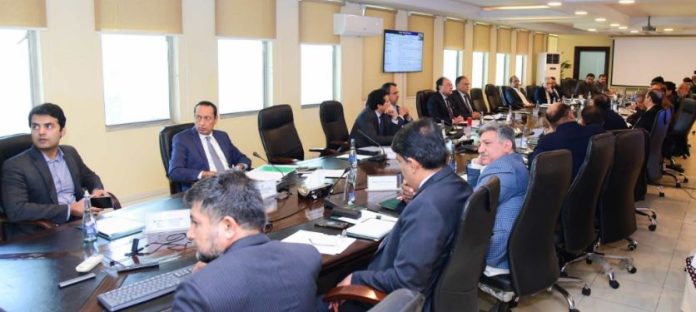
ISLAMABAD, NOV 19 /DNA/ – Federal Minister for Finance and Revenue, Senator Muhammad Aurangzeb, chaired a meeting of the Economic Coordination Committee (ECC) of the Cabinet held at Finance Division, today.

The meeting was attended by Minister for Power Sardar Awais Ahmed Khan Leghari, Minister for Planning, Development & Special Initiatives Mr. Ahsan Iqbal, Minister for Commerce Mr. Jam Kamal Khan (virtual), Economic Affairs Mr. Ahad Khan Cheema (virtual), Minister of State for Finance and Revenue Mr. Ali Pervaiz Malik, federal secretaries, and senior officers from concerned ministries and departments.

The ECC considered proposal submitted by the Ministry of Energy (Power Division) regarding a winter demand initiative for the industrial, domestic (ToU and non-ToU consumers exceeding 200 units, commercial and general services consumers of discos and K-Electric to enable optimum use of system generation capacity besides reducing gas demand due to shifting of favourabe demand towards electricity.

It was proposed that under the initiative, a tariff of 26.07 Rs/kWh shall be charged to all eligible consumers on the respective incremental consumption, above the benchmark consumption in the corresponding months. The initiative shall remain applicable for a three-month billing period effective from December 2024 to February 2024. The benchmark consumption will be the higher of either the relevant month’s consumption in FY2024 or the historical consumption over the past 3 years for the relevant months, based on a formula and terms and conditions laid before the ECC.

The ECC discussed the proposal and approved it, calling the subsidy-neutral interim relief initiative worked out by the Power Division as being timely and relevant in view of recent surge in electricity tariffs and the reduced demand across various consumer categories.

The ECC also considered a proposal submitted by National Disaster Management Authority (NDMA) for transfer of Rs 3.140 billion balances of erstwhile Emergency Relief Cell (ERC) into NDMA Fund to carry out its inland as well as overseas rescue and relief operations in line with the statutory mandate of the Authority.

The proposal was discussed and approved with the proviso that since the balances in the ERC were made up of public donations and were granted for the purpose of relief, rescue and rehabilitation of floods and earthquake victims, NDMA would spend these balances for the stated purpose.

Tajik Envoy underscores need to fully restore former glory of Karachi

Tajik Envoy underscores need to fully restore former glory of Karachi

DNA

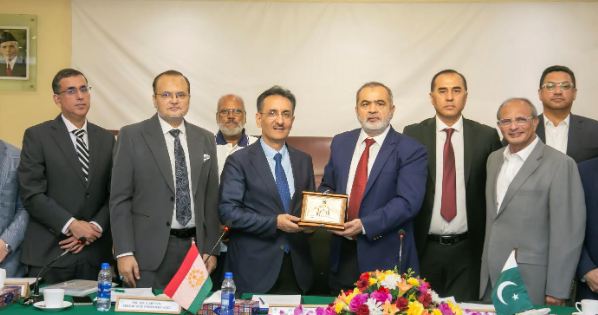
KARACHI: Ambassador of Tajikistan Sharifzoda Yusuf, while highlighting the glorious history of Karachi which was a completely peaceful and secure city for foreign tourists in the 80s and 90s, stressed the need to fully restore the former glory of Karachi to attract the same number of tourists and even more not only from Tajikistan but also from Uzbekistan, Azerbaijan, Georgia, and Russia.

Exchanging views at a meeting during his visit to the Karachi Chamber of Commerce and Industry (KCCI), the Envoy added that the influx of tourists from Tajikistan, along with other countries in the region was a significant source of revenue in the 90s with Tajik tourists spending an estimated US$10 to US$15 million in Karachi.

Honorary Consul General Tajikistan Irshad Kassam, President KCCI Muhammad Jawed Bilwani, Senior Vice President Zia ul Arfeen, Vice President Faisal Khalil Ahmed, Chairman Diplomatic Missions & Embassies Liaison Subcommittee Ahsan Arshad Sheikh, Former President KCCI Majyd Aziz and KCCI Managing Committee Members attended the meeting.

While highlighting his experience in Karachi in 1992, when he attended a course at the Institute of Business Administration (IBA), the Ambassador reminisced about a time when Karachi was thriving — a bustling metropolis where commercial activity in Saddar continued until the early morning hours and the entire city had no security issues at all. “At that point in time, Karachi had become a magnet for tourists from Central Asia, including Tajikistan, Uzbekistan, Azerbaijan, Georgia, and Russia. In the 90s, direct flights from these countries to Karachi were frequent, bringing visitors who spent millions on Karachi’s high-quality textiles, leather goods, and other products”, he added.

He stated that the relations between Tajikistan and Pakistan have always been marked by historical brotherhood and the deep cultural and historical connections between the two nations are reflected in shared sites of significance, including the mausoleums of Sufi saints in Karachi and the Makli Graveyard in Badin, where many Tajik ancestors were laid to rest.

He was of the view that Pakistan has much to offer Tajikistan and its neighbours, including world-class textiles, seafood, and other high-quality products. “Until 2003, 85 percent of Tajiks wore Pakistani-made clothing and shoes”, he said while stressing the need to restore this trade.

He particularly underscored Pakistan’s competitive edge in seafood, including lobsters, king prawns, and tiger prawns, which could be exported to Tajikistan, Uzbekistan, and Kazakhstan. The Ambassador encouraged investors to explore these markets, which are highly receptive to quality Pakistani products.

“Tajikistan offers significant opportunities for investment, particularly in the textile industry. The country has abundant cotton yarn and a steady supply of electricity at just 2 cents per kilowatt-hour — one of the most affordable rates in the region”, Tajik Envoy said while inviting the business community to consider setting up textile manufacturing units in Tajikistan where foreign investors can own 100% of their businesses without the need for a local partner.

“Additionally, Tajikistan’s position as one of the top three most peaceful countries globally, with excellent law enforcement practices, makes it an attractive investment destination. The country is just a 52-minute flight from Islamabad, making it easily accessible for Pakistani investors”, he added.

He further hinted that direct flights between Karachi and Tajikistan were set to be launched soon whereas a Joint Ministerial Committee meeting between the two countries was scheduled for November 28th in Islamabad. Key discussions will focus on looking into the possibility of completing the CASA-1000 project by 2025 which would bring electricity from Tajikistan to Pakistan.

“The pharmaceutical sector in Tajikistan also presents significant potential for Pakistani companies. With 85% of the medicines used in Tajikistan being imported, the market for locally produced pharmaceuticals is vast”, said Sharifzoda Yusuf, “Tajikistan’s 11 million-strong population provides a large customer base, and pharmaceutical companies setting up manufacturing units in the country can enjoy full VAT exemption. Additionally, there are no tax or customs duties on industrial machinery for such ventures.”

Earlier, President KCCI Jawed Bilwani, while welcoming the Tajik Ambassador, stated that despite their friendly relationship, the trade volume between the two countries was below potential, and Pakistan hardly exported goods worth $14.66 million to Tajikistan in FY24. Hence, both countries need to work together with a strong emphasis on diversifying trade to enhance bilateral exports and promote economic cooperation.

He believed that Tajikistan, one of Central Asia’s largest cotton producers with key regions in Khatlon and Sughd, could attract Pakistani investors by offering incentives for setting up textile mills. Exempting textile machinery imports and providing tax relaxations would boost textile integration and promote large-scale manufacturing between the two countries in the textile sector.

He further noted that the Central Asia-South Asia Electricity Transmission & Trade Project (CASA-1000) is a major energy project that will transport 1,300 MW of surplus electricity from Central Asia to South Asia, including Pakistan, enhancing cooperation and connectivity between the countries. “Tajikistan uses a larger share of renewable energy sources than other countries in the Region, while Pakistan faces high energy tariffs which is restricting its GDP potential. Collaborating with Tajikistan and learning its expertise in renewable energy, could help Pakistan expand its hydropower sources, reduce its reliance on costly fuels, and ensure reliable energy for industries leading to sustainable economic growth”, he added.

NUML literature fest showcases Pakistan’s rich culture and artistic spirit

NUML

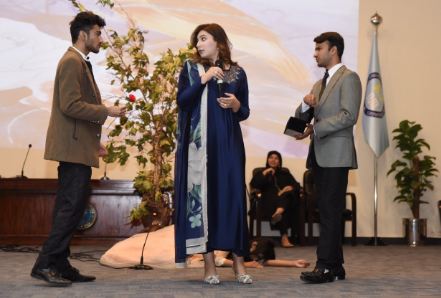
ISLAMABAD, NOV 19 /DNA/ – The English Literary Society (ELS) of the National University of Modern Languages hosted the annual Literature Fest 2024; full of vim and vigour, celebrating Pakistan’s rich cultural heritage and literary brilliance. The event brought together students, faculty, and distinguished guests for a colourful display of creativity, unity, and patriotism, leaving an ineradicable impression on all attendees.

At the outset, Dr. Muntazar Mehdi, Head of the English Department, welcomed the audience, emphasizing the importance of literature and culture in shaping identities. “Through events like the NUML Literature Fest, we aim to reconnect our students with their roots, noting that such efforts play a vital role in promoting Pakistan’s rich cultural heritage”.

The event was attended by Pro-RectorAcademics, Dr Safeer Awan, Head of English Department Dr. Muntazar Mehdi along with a renowned literary critic, short-story and fiction writer Muhammad Hameed Shahid (Tamgha-e-Imtiaz) as a Chief Guest; the festival celebrated the unfaltering spirit of Pakistan’s traditions and literature. They hailed NUML’s commitment to preserving cultural identity in a fast-changing world. “In today’s era, where it is increasingly difficult for individuals to remain connected to their cultural values, NUML has always taken steps to keep our traditions’ essence alive. This initiative has stirred up love and pride for Pakistan’s culture in the hearts of every individual,” remarked Muhammad Hameed Shahid.

The festival was a kaleidoscope of events including soulful recitations of Hamad and Qalam-e-Iqbal, a lively Rabab performance, and a thought-provoking theatrical act, “Nightingale and the Rose”. The vivacious Bait Bazi competition and cultural poetry performances added a lively charm to the event, showcasing the cultural heritage of all the provinces, while modern elements such as beatboxing and comic literary news showcased the versatility and creativity of NUML’s students.

The aesthetics of the festival were equally captivating, with the art corner displaying vibrant and imaginative works by students. The enthusiastic applause, lighting, and cheers from the audience resonated throughout the performances, reflecting their engagement and pride in the cultural showcase.

The NUML Literature Fest 2024 emphasized the importance of reconnecting with cultural values while fostering artistic expression. Each activity symbolized a different facet of Pakistan’s heritage, from the poetic depth of Ghazals to the dynamic energy of beatboxing. These performances not only marked the diversity of Pakistan’s culture but also inspired the students to carry forward this legacy with pride and creativity.

Speaking on the occasion, Muhammad Hameed Shahid highlighted the festival’s significance: “This event is more than a celebration; it is a call to remember who we are and where we come from. Through literature and arts, we can keep our culture alive and inspire the next generation to contribute to Pakistan’s vibrant identity.” He commended the performances presented by the students, adding that such events help to keep the youth aware of their rich traditions.

The festival concluded with souvenir presentations and a group photo.

US ambassador calls on DPM Ishaq Dar

US ambassador calls on DPM Ishaq Dar

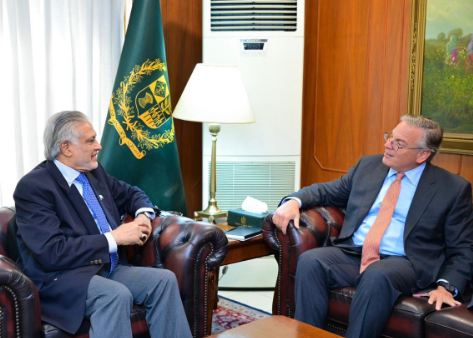
ISLAMABAD, NOV 19 /DNA/ – U.S. Ambassador to Pakistan, Donald Bloom, called on Deputy Prime Minister and Foreign Minister, Senator Mohammad Ishaq Dar, today at the Foreign Office.

During the meeting, both dignitaries engaged in discussions focusing on matters of bilateral interest between Pakistan and the United States.

The meeting underscored the ongoing diplomatic engagement between the two countries.

Dar, UK minister falconer hold talks on strategic partnership enhancement

Dar, UK minister falconer hold talks on strategic partnership enhancement

ISLAMABAD, NOV 19 /DNA/ – Deputy Prime Minister / Foreign Minister Senator Ishaq Dar today received Hamish Falconer, the UK Parliamentary Under Secretary of State (Middle East, North Africa, Afghanistan and Pakistan). They reviewed the entire gamut of bilateral relations and discussed regional issues of common interest.

Deputy Prime Minister Dar and Parliamentary Under Secretary Falconer noted the strong convergence between Pakistan and the United Kingdom on a wide range of bilateral and regional issues. They reaffirmed the importance of strong Pakistan-UK relations and underscored the shared interest in promoting cooperation in trade, investment and climate action.

The Deputy Prime Minister emphasized the importance of transforming the close relationship between the two countries into an enhanced strategic partnership, commensurate with the rich history of Pakistan-UK cooperation and in line with the aspirations of the 1.7 million-strong British Pakistani community.

The Deputy Prime Minister also briefed the Parliamentary Under Secretary Falconer on Pakistan’s perspective on Afghanistan and the evolving situation in South Asia. He stressed that the resolution of longstanding disputes, including the core Jammu and Kashmir dispute, was critical to achieving lasting peace and stability in South Asia.

Parliamentary Under Secretary Falconer thanked the Deputy Prime Minister for receiving him and underlined the importance accorded by the United Kingdom to its relations with Pakistan. He added that the UK was looking forward to working with Pakistan at the UN Security Council.

Saudi Deputy Interior Minister meets PM Shehbaz

Saudi Deputy Interior Minister meets PM Shehbaz

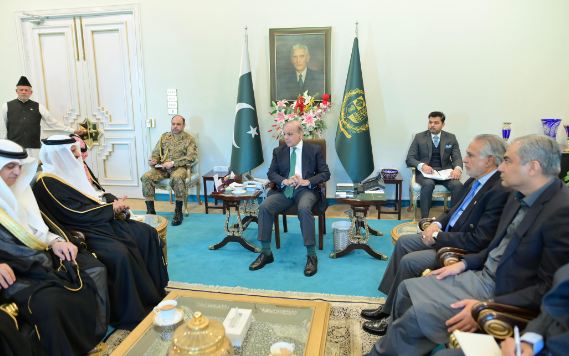
ISLAMABAD, NOV 19 /DNA/ – Deputy Interior Minister of Saudi Arabia, Dr. Nasser bin Abdul Aziz Al Dawood, called on Prime Minister Muhammad Shehbaz Sharif today at the Prime Minister’s Office in Islamabad.

KP CM to present PTI demands at today’s Apex Committee meeting

KP CM to present PTI demands at today's Apex Committee meeting

ISLAMABAD, NOV 19: Adviser to Khyber Pakhtunkhwa Chief Minister on Information Barrister Mohammad Ali Saif has said that Ali Amin Gandapur will table the Pakistan Tehreek-e-Insaf’s (PTI) demands before the Central Apex Committee set to be chaired by Prime Minister Shehbaz Sharif today.

Speaking on Geo News‘ programme “Aaj Shahzeb Khanzada Kay Sath” on Monday, Barrister Saif confirmed that CM Gandapur will take up PTI’s demands, which are essentially the core of its “do-or-die” November 24 Islamabad protest, in the high-level meeting.

The KP government’s spokesperson’s confirmation comes after Gandapur told The News that the PTI founder Imran Khan and the party were bound to be discussed in a meeting revolving around the law and order situation and the National Action Plan.

The chief minister, while referring to the ongoing tensions between the PTI and the establishment, underscored that the situation was neither in the interest of the party, the country or the institution (army).Play Video

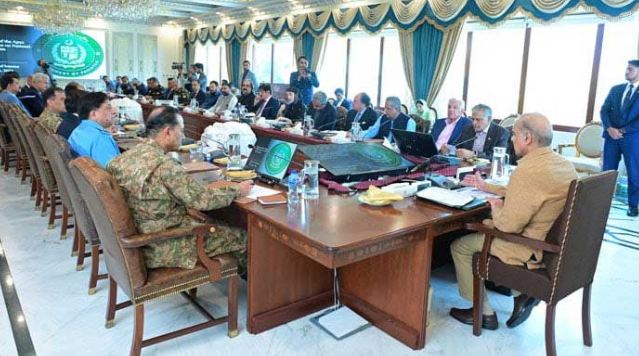
Today’s meeting, initially slated for a day earlier, will be chaired by Prime Minister Shehbaz Sharif and will be attended by civilian and military leadership including Chief of Army Staff General Asim Munir, Inter-Services Intelligence (ISI) chief, Military Intelligence DG, Intelligence Bureau DG, all provincial chief ministers, key federal ministers, and others to discuss the security situation in light of surge in terror attacks in the country.

The high-level huddle might arguably also provide an opportunity for the government and the PTI to hold talks in light of heightened political tensions between both sides which have seen the Khan-founder party marching onto Islamabad on multiple occasions in recent months — which resulted in authorities launching a crackdown on the party’s leadership and workers.

According to party leader Waleed Iqbal, there’s a chance that the protest might turn into a sit-in. However, he maintained that the demonstration would be peaceful.Play Video

Meanwhile, the former ruling party on Monday ruled out talks with the stakeholders prior to their November 24 protest.

“There is no possibility of negotiations with the government or the establishment before the protest,” said PTI spokesperson Sheikh Waqas Akram.

However, in a contrasting development to Akram’s statement, The News on Tuesday, while citing an informed source, reported that an initial contact has been established between the PTI and an important member of the government to work on a possible breakthrough.

The government’s contact person will take the powers that be into confidence and if things proceed positively the PTI may call off its November 24 protest march in return for some assurances for meeting their demands, said the source.

The reports regarding prospective talks between the two sides follow Defence Minister Khawaja Asif’s remarks wherein he said that the federal government’s offer for dialogues with the Khan-founded party was still on the table.

With Khan’s wife and former first lady Bushra Bibi reportedly playing a key role in mobilising the party for its upcoming protest, the federal government, as per the publication, has started preparations to deploy Rangers and additional Frontier Constabulary (FC) force in Islamabad.

The Islamabad police have sought the services of 5,000 personnel of Rangers and 4,000 FC personnel in the federal capital where Section Section 144 has already been imposed for a period of two months.

Security situation

Apart from the apparent political significance, the Apex Committee meeting comes amid an increase in terrorist attacks in the country in recent months which have seen scores of civilian and law enforcement agencies (LEAs) personnel being targeted.

Last week, seven Pakistan Army soldiers embraced martyrdom while successfully thwarting a terrorist attack on a security check post in Balochistan’s Kalat district.

At least six terrorists were killed and four others wounded during the intense exchange of fire, said the Inter-Services Public Relations (ISPR).

Before that, over 25 people, including security personnel, were killed and more than 60 were wounded in a suicide attack at Quetta Railway station.

As per a Centre for Research and Security Studies (CRSS) report, the third quarter of 2024 saw a sharp increase in fatalities of terrorist violence and counter-terrorism campaigns, with a 90% surge in violence.

A total of 722 people were killed, including civilians, security personnel, and outlaws, while 615 others were wounded in as many as 328 incidents recorded during the period under review. Nearly 97% of these fatalities occurred in Khyber KP and Balochistan.

The total fatalities from three quarters of this year have now surpassed the total fatalities recorded for the entire 2023.

The number of fatalities rose to at least 1,534 in the first three quarters compared to 1,523 in 2023.

Stay Connected

64FansLike
60FollowersFollow

Latest Reviews

Exchange Rates

USD - United States Dollar
EUR
1.18
GBP
1.36
AUD
0.73
CAD
0.73