RAWALPINDI, Feb 07 (APP):Rawalpindi District Police have arrested two kite sellers and recovered over 400 kites, six kite flying string rolls and other items from their possession.
According to a police spokesman, Rawalpindi district police on the directives of City Police Officer, Rawalpindi are making efforts to control kite flying and conducting raids to net kite sellers and flyers.
He informed that Pirwadhai police arrested a kite seller namely Shabbir for having 400 kites and 4 kite flying string rolls. Waris Khan police also rounded up a kite seller namely Rehan with 20 kites and two string rolls.
Separate cases have been registered against the accused and further investigations are under process.
SSP Operations Rawalpindi ordered the police teams to accelerate operations against kite sellers and flyers.
Sick and tired of the nosy, manipulative, and self-serving American media, Donald Trump is perhaps the only president in the country’s history who has had the tenacity, courage, and guts to confront the dreadful and all-powerful media head-on. He has boldly defied the influence of traditional media, demonstrating that it no longer holds the sole power to elevate or demolish any president, regardless of their power. By harnessing the power of social media, Trump has successfully shattered the long-held notion that the media controls the narrative and the fate of leaders.
Unlike his predecessors, Trump is unafraid to take actions he deems necessary to expose the manipulative influence of the American media, showing no fear of potential backlash. His determination to bypass traditional media channels has revolutionized political communication. Special arrangements were even made for the direct live broadcast of President Donald J. Trump’s historic inauguration on platforms like TikTok and YouTube. This strategic move paid off as the live telecast of the inauguration ceremony set a new “All-Time Viewership Record” with 9.6 million viewers. Additionally, the live stream on President Trump’s X account garnered an impressive 36.7 million views. In total, the ceremony reached an estimated 80.7 million viewers, surpassing the previous record of 42 million set during Ronald Reagan’s inauguration in 1981.
Through his innovative use of social media, Trump has stripped traditional media of its exclusive role as the primary news disseminator. He now directly reaches out to the American people and audiences worldwide, unfiltered and unmediated. For researchers and writers like me, this shift is liberating. No longer do we have to navigate the paywalls and restrictions of mainstream media outlets that prioritize profit over public access. Instead, platforms like X and TikTok offer direct, unfiltered access to Trump’s statements and updates straight from his official handles.
In one of his recent posts, shared just a few hours ago on February 6, Trump exposed what he described as the manipulative misuse of taxpayer money. He claimed that billions of dollars have allegedly been misappropriated at USAID and other agencies, with substantial sums reportedly funneled to specific media outlets as “payoffs” for producing favorable coverage of the Democratic Party. Among those implicated, Politico is alleged to have received $8 million, raising questions about whether other major media organizations, such as The New York Times, also benefited. This situation is being framed as potentially the largest scandal in history, with its scale and implications too significant to ignore. Critics argue that the Democrats cannot evade scrutiny over these allegations, which are described as both extensive and deeply troubling.
Without relying on the crutches of traditional media, Trump has effectively used the power of social media to directly broadcast significant events, including the signing of executive orders on far-reaching issues. This approach allows the public to receive unmanipulated, unfiltered information straight from the president, free from biased interpretations or commercial restrictions. Just a day before, while surrounded by young schoolgirls, Trump signed an executive order that redefined gender recognition in the U.S., limiting it to only two categories: male and female. In his tweet, he described this decision as historic and far-reaching, aimed at protecting families and the country from what he views as psychological and social confusion. The signing ceremony was streamed live on platforms like X, TikTok, and YouTube, ensuring the message reached millions before traditional media could even report it.
In another significant executive order, also broadcast live, Trump announced the NCAA’s policy change banning men from competing in women’s sports. He proudly declared, “This is a great day for women and girls across our country. Men should have NEVER been allowed to compete against women in the first place, but I am proud to be the president to SAVE Women’s Sports.” He urged the Olympics Committee to adopt similar measures, emphasizing that this policy is popular not just in America but worldwide. Through these direct communications, Trump continues to challenge the traditional media’s gatekeeping role, reinforcing his commitment to transparency and public engagement.
Further challenging the conventional media landscape, Trump proposed a bold geopolitical solution regarding the Gaza Strip. In his tweet, he suggested transferring the Gaza Strip to the United States by Israel following the conclusion of hostilities. According to the proposal, Palestinians, including individuals like Chuck Schumer, would be resettled in significantly safer and more attractive communities with modern homes, providing opportunities for happiness, safety, and freedom. Together with global development teams, the U.S. would slowly build what is thought to be one of the world’s most amazing projects, without sending U.S. troops there, which would help keep the region stable for a long time.
Trump’s strategy extends beyond media influence to leveraging the economic and military might of the United States to achieve his objectives. He has compelled countries like Colombia, Venezuela, Brazil, and Mexico to accept deportees, using diplomatic pressure effectively. His strong stance on the Panama Canal prompted the Panamanian government to withdraw from China’s Belt and Road Initiative and waive transition fees for American ships. Trump’s bold proposal concerning Gaza played a role in pushing both Hamas and Israel towards a ceasefire agreement. Additionally, his assertive approach regarding Greenland influenced the European Union to assume greater financial responsibilities within NATO.
His unconventional and fearless approach with the media, allies, neighbors, and adversaries alike is producing tangible results. By proposing out-of-the-box solutions that appeal to common sense while defying bureaucratic red tape, Trump sets a new standard for geopolitical actors. His methods challenge the status quo, exposing the unnecessary complexities often created to justify bureaucratic dominance and financial gain.
Through these bold moves, Trump has not only reshaped political communication but also redefined the role of the presidency in an era dominated by digital connectivity. His unfiltered engagement with the public through social media platforms represents a seismic shift in how leaders connect with citizens, challenge traditional narratives, and assert their policies on both national and international stages. Trump’s combination of economic power and direct communication strategies has positioned him as a transformative figure in modern politics, establishing new standards of media management and geopolitics.
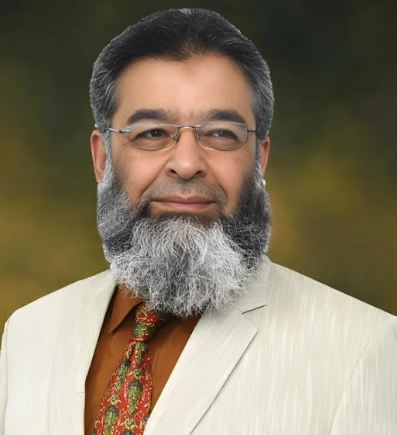
By: Qamar Bashir
Press Secretary to the President (Rtd)
Former Press Minister at Embassy of Pakistan to France
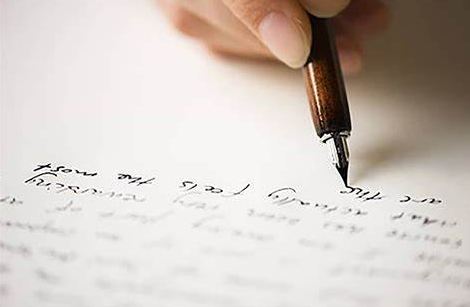
The practice of political correspondence has long been an essential facet of governance in Pakistan, serving as a formal means of communication between state institutions and key officeholders. Whether it is the Prime Minister addressing the President, a Chief Minister writing to the Prime Minister, or judicial authorities exchanging correspondence with executive officials, the written word remains a formidable instrument in the administration of state affairs. Such letters fulfill multiple functions, ensuring procedural propriety, shaping policymaking, upholding constitutional mandates, and fostering diplomatic engagement. This tradition, deeply rooted in political history, continues to underscore the solemnity and weight of official discourse in Pakistan.
The origins of written political correspondence in Pakistan can be traced back to the formative years of the nation’s independence. Quaid-e-Azam Muhammad Ali Jinnah, as the first Governor-General, set a precedent for formal written exchanges by frequently corresponding with his Prime Minister, Liaquat Ali Khan, and other key government figures. Among his significant letters was one addressed to Lord Mountbatten in 1947, articulating Pakistan’s firm stance on the Kashmir issue. Similarly, the letters exchanged between Liaquat Ali Khan and Indian Prime Minister Jawaharlal Nehru during the late 1940s regarding communal violence and refugee repatriation exemplified the pivotal role of written communication in diplomatic negotiations and interstate relations.
One of the most historically significant correspondences that influenced the ideological foundation of Pakistan was the exchange of letters between Quaid-e-Azam Muhammad Ali Jinnah and Allama Muhammad Iqbal. Between 1936 and 1937, Allama Iqbal wrote to Quaid-e-Azam, urging him to assume leadership of the Muslims of the Indian subcontinent and work towards an independent Muslim state. Quaid-e-Azam, in his responses, acknowledged Iqbal’s concerns and appreciated his unwavering commitment to the Muslim cause. These letters remain among the most important historical documents, serving as evidence of how intellectual and political discourse through correspondence helped in articulating and realizing the dream of Pakistan.
In the present-day political landscape of Pakistan, written correspondence remains a fundamental practice within the corridors of power. When the Prime Minister writes to the President, it is often in pursuit of constitutional approvals—whether for key appointments, legislative enactments, or executive decisions of national significance. A notable instance of this occurred in August 2023 when Prime Minister Shehbaz Sharif formally communicated with President Dr. Arif Alvi to seek approval for the appointment of a caretaker Prime Minister, a step of profound consequence in the transition of governance. Similarly, Chief Ministers frequently address the Prime Minister to seek federal intervention in matters of provincial concern, ranging from financial allocations to disaster management.
The judiciary, too, has long engaged in the practice of written correspondence with the executive, often in pursuit of legal and administrative reforms. Such exchanges reaffirm the judiciary’s autonomy and ensure that matters of constitutional import are duly acknowledged by the state. This form of communication remains a testament to the delicate balance of power between the executive and judicial branches of government.
The roots of this tradition, however, extend far beyond Pakistan’s political history, tracing back to the earliest days of Islamic governance. Among the most celebrated instances of diplomatic correspondence in Islamic history are the letters written by the Holy Prophet Muhammad (PBUH) to various rulers, inviting them to embrace Islam. Around the year 628 CE, the Prophet dispatched formal letters to Emperor Heraclius of Byzantine, Chosroes II of Persia, the Negus of Abyssinia, and Muqawqis of Egypt. These letters, documented in historical chronicles, exemplified the role of written diplomacy in fostering dialogue, conveying religious and political messages, and forging alliances.
In later centuries, the Islamic world continued to witness the profound impact of political correspondence. During the Abbasid era, the Caliph Harun al-Rashid famously exchanged letters with Charlemagne, the King of the Franks, thereby establishing diplomatic ties between the Muslim empire and medieval Europe. Similarly, Sultan Suleiman the Magnificent maintained extensive written correspondence with European monarchs, solidifying alliances and articulating the Ottoman Empire’s foreign policy objectives.
Some letters exchanged at the diplomatic level have held great historical significance. One such instance was the letter written by US President Gerald Ford to Pakistani Prime Minister Zulfikar Ali Bhutto on March 19, 1976. In this correspondence, President Ford expressed deep concerns over Pakistan’s plans to acquire sensitive nuclear facilities, particularly those related to uranium enrichment, heavy water production, and chemical reprocessing. While acknowledging the strong and cordial relationship between the two nations, Ford emphasized the global apprehension regarding nuclear proliferation and appreciated Pakistan’s assurances that its nuclear efforts would be directed exclusively towards peaceful purposes. However, he cautioned that the establishment of such facilities could undermine international confidence and stability, particularly in the absence of a compelling economic justification. Ford also highlighted the broader geopolitical implications, warning that the acquisition of these technologies might erode public and congressional support for US-Pakistan cooperation. His letter reflected the delicate balancing act between diplomatic relations and global nuclear non-proliferation concerns. Recently such kind of a similar diplomatic note that sparked controversy in Pakistan and raised doubts about its authenticity.
Pakistani political correspondence has also played a critical role in shaping the country’s history. The exchange of letters between President Ghulam Ishaq Khan and Prime Minister Nawaz Sharif in 1993 ultimately led to the dissolution of the government, marking a decisive moment in Pakistan’s political trajectory. Similarly, the refusal of Prime Minister Yousaf Raza Gilani in 2012 to write a letter to Swiss authorities regarding corruption allegations against President Asif Ali Zardari resulted in his dismissal by the Supreme Court. These instances underscore how correspondence between high-ranking officials can serve not only as instruments of governance but also as catalysts for political upheaval.
Beyond the realm of executive and judicial communications, political letters have also served as tools of public engagement and advocacy. Open letters addressed to the judiciary, civil society, or the general populace have often been employed to convey critical policy positions or shape public opinion. In some cases, these letters have played a pivotal role in galvanizing public support for pressing national issues, thereby influencing the broader political discourse.
The continued relevance of written correspondence in Pakistan’s political and administrative affairs underscores its enduring utility as a formal instrument of governance. By serving as records of state decisions, mechanisms for institutional engagement, and vehicles for diplomatic outreach, such letters play an indispensable role in the functioning of the state. However, the efficacy of political correspondence ultimately hinges upon its reception and execution; where letters are heeded with due diligence, they fortify the foundations of governance, but where they are disregarded or politicized, they become little more than symbolic gestures devoid of substantive impact.
The written word, therefore, remains a defining feature of political practice in Pakistan, carrying with it the weight of history and the promise of continuity. Whether exchanged between the highest offices of the state or directed toward the wider citizenry, political correspondence persists as a cornerstone of institutional integrity and a vital instrument of democratic governance. In an era of digital transformation, while electronic communication has largely supplanted traditional handwritten letters, the essence of political correspondence endures, continuing to shape Pakistan’s administrative, legal, and diplomatic landscape.
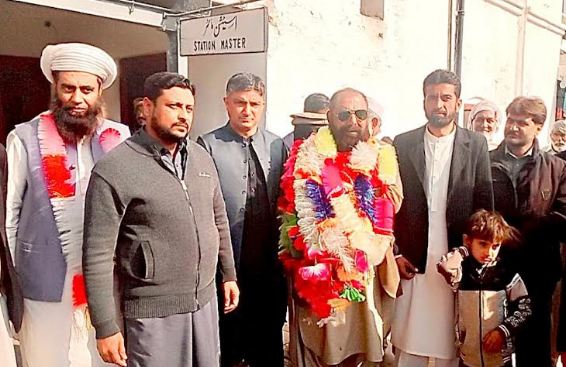
ATTOCK , FEB 7 (DNA): Pakistan Railways’ Station Master of Attock, Malik Ghulam Mustafa Awan, has retired after completing his distinguished service. On the occasion of his retirement, a grand farewell ceremony was organized by railway employees and officials, where his invaluable services were acknowledged, and he was given a heartfelt tribute.
During the ceremony, railway employees adorned Mustafa Awan with beautiful flower garlands and danced to the beat of drums. He was also presented with gifts and commemorative shields. Employees and officials reminisced about their time with him and praised his dedication, honesty, and hard work throughout his career. They highlighted how he always strived to uphold the prestige of the institution.
Railway officials and colleagues stated that Malik Ghulam Mustafa Awan’s services would always be remembered and that his hard work would serve as an example for the organization. They acknowledged his commitment to his duties and recognized him as a great mentor for new employees.
At the end of the ceremony, Station Master Mustafa Awan expressed his gratitude to all his colleagues, stating that he would always cherish the moments spent with Pakistan Railways. He bid farewell to his fellow workers with best wishes and expressed hope for the continued progress of the railway sector.
The event was filled with emotional moments, as colleagues conveyed their love and best wishes for him. On the occasion of his retirement, his friends and colleagues remarked that they would deeply miss him, but they also extended their heartfelt wishes for success in this new chapter of his life.
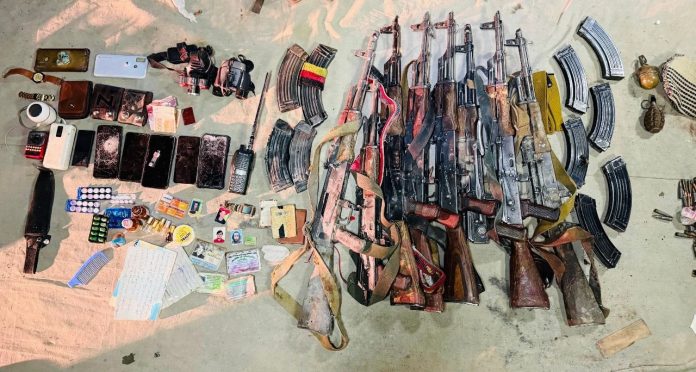
Rawalpindi, 6 February 2025: On 5-6 February 2025, security Forces conducted an intelligence based operation in general area Hassan Khel, North Waziristan District on reported presence of khwarij.
During the conduct of operation, own troops effectively engaged the khwarij location, as a result of which, twelve khwarij were sent to hell.
However, during intense fire exchange, Lance Naik Muhammad Ibrahim (age: 34 years, resident of District Hangu), having fought gallantly, paid the ultimate sacrifice and embraced shahadat.
Weapons and ammunition were also recovered from the killed khwarij, who remained actively involved in numerous terrorist activities against the security forces as well as target killing of innocent civilians.
Sanitization operation is being conducted to eliminate any other Kharji found in the area, as security forces of Pakistan are determined to wipe out the menace of terrorism and such sacrifices of our brave soldiers further strengthen our resolve.
Iranian Envoy recalls high-level diplomatic exchanges between Tehran and Islamabad
Saifullah Ansar
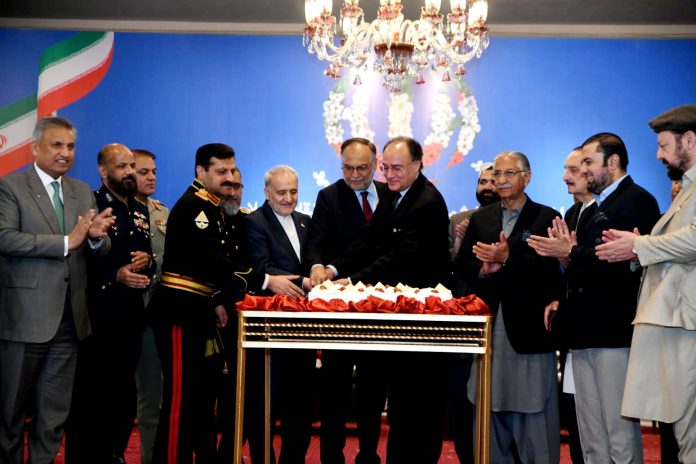
Islamabad: Iran’s Ambassador to Pakistan, Reza Amiri Moghaddam, reaffirmed Tehran’s commitment to strengthening relations with Pakistan during a ceremony marking the 46th anniversary of the victory of the Islamic Revolution. The event, arranged by the Iranian Embassy in Islamabad, was attended by distinguished guests, including Pakistan’s Finance Minister Muhammad Aurangzeb, who graced the occasion as Chief Guest.
In his address, Ambassador Moghaddam highlighted the profound impact of the 1979 Islamic Revolution, describing it as one of the most defining events of the 20th century. “The revolution introduced a new political discourse based on the principles of independence, freedom, and the Islamic Republic,” he noted, adding that it fostered self-reliance and sovereignty in Iran, leading to significant advancements in various fields despite external pressures and sanctions.
The Ambassador emphasized Iran’s longstanding policy of fostering strong ties with neighboring countries, particularly Pakistan. “Our brotherly bond with Pakistan holds a special place and has been consistently emphasized by the Supreme Leader,” he said.
He highlighted key initiatives undertaken to bolster economic and political collaboration, including the opening of border crossings and trade markets. “These steps have significantly contributed to the economic prosperity of both nations and the wider region,” he added.
Ambassador Moghaddam pointed to the numerous high-level visits exchanged between the two countries in the past year as evidence of deepening ties. He recalled the visit of the late Iranian President Ebrahim Raisi to Pakistan, as well as the visits by Pakistani leaders, including former Prime Minister Muhammad Shehbaz Sharif and Deputy Prime Minister Ishaq Dar, to Iran. Other significant visits by senior Iranian officials further underscored the growing diplomatic engagement between the two nations.
Discussing economic collaboration, the Ambassador highlighted the complementary nature of Iran and Pakistan’s economies. “Iran, with the world’s largest oil and gas reserves, and Pakistan, with its rich agricultural and livestock resources, are natural partners,” he said, stressing the potential for increased economic integration.
Iran has always supported efforts to enhance regional connectivity, particularly through transportation networks like the ITI rail route. The Ambassador underscored the importance of expanding port and infrastructure cooperation, which he said would foster prosperity, stability, and sustainable development for both nations.
“The Iran-Pakistan relationship, rooted in geographical ties, shared interests, and mutual respect, continues to move towards a brighter future,” he remarked, urging both nations to maximize their potential for regional development and economic growth.
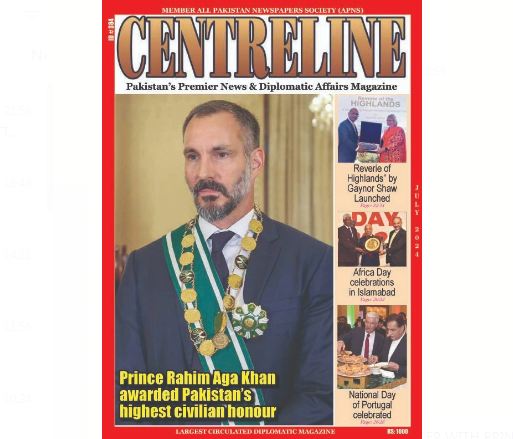
LISBON, PORTUGAL, 5 FEB /DNA/ – Prince Rahim Al-Hussaini Aga Khan V was today named the 50th hereditary Imam (spiritual leader) of the Shia Ismaili Muslims, following the unsealing of the Will of his late father, Prince Karim Al-Hussaini Aga Khan IV, who died in Lisbon, Portugal yesterday, aged 88.
Prince Rahim Aga Khan V is a direct descendant of the Prophet Muhammad (peace be upon him and his progeny) through his daughter, Hazrat Bibi Fatima, and the Prophet’s cousin and son-in-law, Hazrat Ali, the fourth Rightly Guided Caliph of Islam and the first Shia Imam.
Throughout their 1,400 year history, the Ismailis have been led by a living, hereditary Imam. The Ismailis live in over 35 countries and number approximately 12 to 15 million.
Prince Rahim Aga Khan V is the 50th hereditary Imam of the Shia Ismaili Muslims, as designated by his late father, Prince Karim Aga Khan IV, in accordance with historical Shia Imami Ismaili tradition.
Born on 12 October 1971, Prince Rahim is the eldest son of the late Prince Karim Aga Khan and his first wife, Princess Salimah. Prince Rahim was educated at Phillips Academy Andover and graduated in 1995 from Brown University with a Bachelor of Arts in Comparative Literature.
Prince Rahim has two sons from his former wife, Princess Salwa: Prince Irfan (b. 2015) and Prince Sinan (b. 2017).
He serves on the boards of many agencies of the Aga Khan Development Network, and has closely followed the work of The Institute of Ismaili Studies and the Ismaili community’s social governance institutions.
Prince Rahim has been particularly concerned with the AKDN’s drive to protect the environment and mitigate the effects of climate change, serving as Chairman of its Environment and Climate Committee. He has also given sustained attention to the work of AKDN and the Ismaili community institutions in addressing the needs of those living in the greatest poverty and supporting the improvement of their livelihoods through education, training and enterprise.
Prince Rahim meets regularly with leaders of government, international organisations, and civil society to strengthen their relations with the Ismaili Imamat and to advance the AKDN’s efforts to improve the lives of marginalised and vulnerable communities.
PML-N senator calls letter “charge sheet” against jailed PTI founder
Mehtab Pirzada
ISLAMABAD: Pakistan Muslim League-Nawaz (PML-N) Senator Irfan Siddiqui has asserted that jailed PTI founder Imran Khan’s letter to Chief of Army Staff (COAS) Gen Asim Munir was proof of the former’s “despair and frustration”.
In a statement on Wednesday, the senator termed Imran’s letter to the army chief a “charge sheet,” saying that the former prime minister had also sent a letter to COAS via former president Arif Alvi in 2023.
“They [PTI] did not receive a receipt or a reply to the previous letter, and will not receive this time as well,” Siddiqui added.
Two days earlier, PTI Chairman Barrister Gohar Ali Khan and lawyer Faisal Chaudhry confirmed that Imran, who is incarcerated in Adiala jail, penned a six-point letter to the army chief urging for review of policies while explaining the reasons for what he called the widening gulf between public and the army.
He clarified that writing a letter by the party founder to the army chief was not a policy shift and that the jailed party founder wrote the letter as a former prime minister.
The 71-year-old cricketer-turned-politician has been behind bars since August last year after he was booked in multiple cases ranging from corruption to terrorism since his ouster from power via opposition’s no-trust motion in April 2022.
However, security sources, a day earlier, claimed that no letter from the incarcerated former premier was received by COAS Munir. Sources added that the news about Khan’s letter came to the military brass via the media.
The letter comes weeks after PTI leaders — Khyber Pakhtunkhwa Chief Minister Ali Amin Gandapur and PTI Chairman Barrister Gohar Ali Khan — met the army chief, with the party’s chairman saying that they discussed the overall security situation.
It also holds importance as the former ruling party ended its negotiations with the PML-N-led coalition government last month, in which the PTI had demanded two things — the formation of judicial commissions on events that transpired on May 9, 2023, and November 24-27 as well as the release of “all political prisoners”, including Khan.
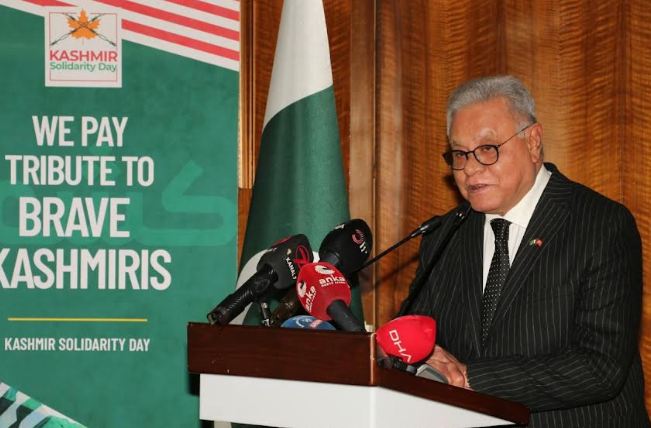
ANKARA, FEB 5: /DNA/ – The Embassy of Pakistan in Ankara observed Kashmir Solidarity Day (05 February) to reaffirm support to the legitimate Kashmiri struggle for realization of their right to self-determination.
Former Turkish deputy Prime Minister Recep Akdag, former Turkish Minister for Agriculture Mehmet Mehdi Eker, former Turkish Minister of Family and Social Services, currently DG SESRIC Ms. Zehra Zumrut, Member Parliament Burhan Kayaturk, Member Parliament Mustafa Kaya, Vice Mayor Ankara Municipality Mr. Faruk Koyluoglu, President Geostrategic Foresight Institute Gen. (R) Guray Alpar, Vice President Institute of Strategic Thinking Mr. Alpar Tan, Ambassador (R) Numan Hazar, representatives of media, think tanks and civil society attended the event.
While reiterating Turkish support for Kashmiri legitimate cause of self-determination, Former Turkish deputy Prime Minister Recep Akdag stated that Turkiye has always supported peaceful resolution of Kashmir dispute as per the desire of the Kashmiri people and will continue to do so. He emphasized that international community needs to play its due role in putting an end to human rights atrocities in IIOJK.
Former Turkish Minister for Agriculture Mehmet Mehdi Eker, stated that Kashmir dispute is the issue of everyone with conscience, an issue of human rights and justice and the resolution of Kashmir dispute is vital for the peace and stability in South Asia.
Turkish Member Parliament Burhan Kayaturk stated that the right to self-determination was promised to the Kashmiri people by the United Nations and the Indian leadership itself, but still after seven decades the promise remained unfulfilled. In the just cause of freedom, Turkish nation would always keep standing shoulder to shoulder with their Kashmiri brethren, he added.
Turkish Member Parliament Mustafa Kaya stated that international community needs to play its due role in putting an end to human rights atrocities in IIOJK and implementation of relevant UN resolutions to ensure peace and stability in the region.
Former Turkish Minister of Family and Social Services, currently DG SESRIC Ms. Zehra Zumrut stated that Kashmir issue should be resolved within the framework of UN resolutions and aspirations of the Kashmiri people.
Vice Mayor Ankara Municipality Mr. Faruk Koyluoglu highlighted that Pakistani and Turkish peoples have been in solidarity throughout history and this unity would continue forever. He reiterated Turkish support to Kashmiri struggle for the legitimate right of self-determination.
President Geostrategic Foresight Institute, Gen. (R) Guray Alpar stated that the indifference of international community to Kashmir and Palestine is surprising; Kashmiris deserve the basic human right of self-determination, as promised to them by the United Nations
Vice President Institute of Strategic Thinking (SDE) Mr. Alpar Tan stated that in current era of disinformation, it is important that the actual situation and status of disputed territories is reflected objectively in media.
While underscoring the importance of international peace Ambassador(R) Numan Hazar stated that resolution of Kashmir dispute is vital for the establishment of regional and global peace.
In his concluding remarks, Ambassador Dr. Yousaf Junaid thanked the audience and stated that the cross-sectional representation consisting of former ministers, present parliamentarians, representatives of political parties, Ankara Mayor office, academia and media clearly demonstrated Turkiye’s unflinching support to Kashmir’s just struggle for the right of self-determination. Ambassador Junaid explained the genesis of the Kashmir dispute, current status and alluded to atrocities and genocidal actions committed by India in Indian Illegally Occupied Jammu and Kashmir, which had stepped up ever since 05 August 2019 illegal act of the Indian government.
Ambassador Junaid further stated that the Kashmir dispute was far more than a regional conflict—it was a litmus test for the international community’s commitment to justice and human rights. He called upon global leaders and institutions to take decisive action: hold India accountable for its systematic human rights abuses in IIOJK, reverse the illegal actions of 5th August, 2019, and ensure the Kashmiris exercise their inalienable right to self-determination.
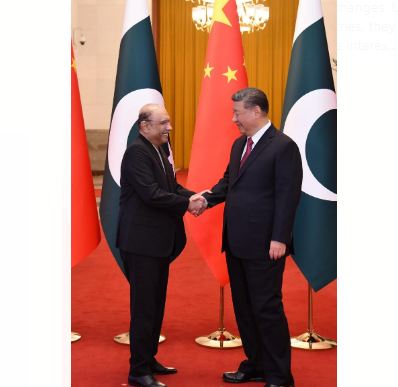
ISLAMABAD, FEB 5: /DNA/ – President Asif Ali Zardari met his Chinese counterpart, President Xi Jinping, at the Great Hall of the People in Beijing on Wednesday.
The two leaders discussed strengthening bilateral ties, accelerating China-Pakistan Economic Corridor (CPEC) projects, and security measures for Chinese nationals in Pakistan.
The high-level meeting was attended by Interior Minister Mohsin Naqvi, Sindh Chief Minister Murad Ali Shah, and other officials from Pakistan’s delegation.
President Zardari also met with Chairman of the Standing Committee of the National People’s Congress Zhao Leji, where they underscored the enduring and all-weather China-Pakistan friendship, which has deepened over the decades.
The two sides also discussed the high-quality development of CPEC 2.0, with a particular emphasis on promoting cooperation in science and technology, renewable energy, infrastructure and agriculture sectors.
They described CPEC as a shining example of people-centric development, with its focus on win-win cooperation, shared benefits and common prosperity.
The two sides discussed the opportunities to strengthen institutional linkages, including through parliamentary exchanges and participation in the CPEC Political Parties Joint Consultative Mechanism, to further solidify the bilateral cooperation.
President Zardari arrived in Beijing on Tuesday for a five-day state visit at the invitation of President Xi Jinping. He is accompanied by Deputy Prime Minister and Foreign Minister Ishaq Dar, and Interior Minister Naqvi, among other officials.
During his visit, Zardari is set to hold meetings with top Chinese political leaders to discuss trade, investment, regional security, and economic cooperation.
Over the past several decades, China has emerged as Pakistan’s largest trading partner and a major investor, particularly in infrastructure and energy projects.