Home Blog Page 753

PM Shehbaz set to embark on first foreign visit to Saudi Arabia

PM Shehbaz set to embark on first foreign visit to Saudi Arabia

ISLAMABAD, APR 5 /DNA/ – Prime Minister of Pakistan Muhammad Shehbaz Sharif will visit the Kingdom of Saudi Arabia from 6 to 8 April 2024, during the last days of Ramadan. This would be the Prime Minister’s first foreign visit since his election.

The Prime Minister will be accompanied by Ministers for Foreign Affairs, Defence; EAD, Finance, Information and Economic Affairs. He will perform Umrah and offer prayers at the Masjid Nabwi Al-Sharif.

The Prime Minister is expected to meet the Crown Prince and Prime Minister HRH Mohammad bin Salman bin Abdulaziz and discuss issues of mutual interest. The leaders will also exchange views on regional and global developments.

Pakistan and KSA have longstanding fraternal relations rooted in religious and cultural affinity. The people of Pakistan have the deepest respect and regard for the Custodian of the Two Holy Mosques, His Majesty King Salman bin Abdulaziz Al-Saud.

The leadership of both countries is committed to advancing the fraternal ties and mutually rewarding economic and investment relations.

Eid ul Fitr 2024: Govt announces 4-day holiday

Eid ul Fitr 2024: Govt announces 4-day holiday

ISLAMABAD, APR 3: The federal government has announced a four-day holiday on the occasion of Eid ul Fitr, starting from April 10. As per the official announcement on Wednesday, Prime Minister Shehbaz Sharif approved holidays from April 10 to 13.

The Met Office on Monday predicted that the first day of Eid ul Fitr would fall on April 10 as the Shawwal moon was expected to be sighted on April 9.

The Pakistan Meteorological Department (PMD) said the crescent would be born on April 8 at 11:21pm and it would be aged between 19 and 20 hours the next day around Maghrib prayer.

The crescent could be spotted for over 50 minutes around the sundown, it said.

The PMD said the sky in most parts of the country would be clear on April 9. However, it added that the sky might be cloudy in northern areas.

The crescent for the holy month of Ramadan was sighted on March 11 in Pakistan and the first day of the holy month was observed the next day. So, Pakistanis would observe 29 days of fasting, if the PMD’s forecast turns out to be true.

Eid ul Fitr is observed by Muslims across the world after Ramadan culminates and Shawwal begins. The Islamic month of Ramadan teaches to practice patience and self-control while also promotes charity and welfare, while Eid serves as a festive and joyous occasion immediately after that.

Islamic months last 29 or 30 days and the beginning or end of a month depends on the appearance of the crescent, so Ramadan is not set on any specific day annually.

The month of Ramadan is the ninth of the 12 months of the Islamic calendar. Despite having as many months as the Gregorian calendar, the Islamic calendar is nearly 10 days shorter due to it being based on the lunar orbit.

This is why Ramadan falls at a different time every year according to the Gregorian calendar.

Bushra Bibi facing serious life threats: PTI

Bushra Bibi facing serious life threats: PTI

DNA

ISLAMABAD, APR 3: Pakistan Tehreek-e-Insaf (PTI) leadership expressed alarmed that PTI Founding Chairman Imran Khan’s wife Bushra Bibi was facing serious life threats, who was being slow poisoned solely under the ‘Khan Elimination Project’; however they vowed they would not tolerate any laxity relating to her safety and security come what may.

They demanded that their serious apprehensions regarding the slow poisoning and threats to her life should be addressed sans any further delay or else they would chalk out a strategy within few days to give a strong reaction to this inhuman and shameful treatment being meted out with Bushra Bibi.

Speaking at a press conference along with PTI senior leaders Khalid Khurshid, Shaukat Basra and Kanwal Shauzab, PTI Central Information Secretary said that they were really concerned about the safety and security of Bushra Bibi, as he was given poisonous food that badly damaged her health.

He said that despite lapse of five weeks, Bushra Bibi did not recovery rather her health deteriorated further.

Raoof reiterated that the current rulers crossed all limits of barbarism and fascism as they are worst of the worst autocracy, which could be judged from their ham-handed approach towards the women.

PTI CIS made it clear that they demanded that instant orders should be given regarding medical examination of Bushra Bibi and her blood sample should be sent abroad because no such laboratory existed in Pakistan to prepare a blood report of slow poisoning. “We demanded that she should be shifted to Adila Jail immediately,” he demanded.

Moreover, Raoof recalled that they demanded that Bushra Bibi medical examination should be conducted by doctors from Shoukat Khanum hospital.

However, he lamented that despite lapse of months, not a single of their demands was met even in the face of her deteriorating health condition.

PTI SIC made it clear that it was part of the “Khan Elimination Project” under which they first tried to eliminate him politically but they fell flat and then they attempted to eliminate him physically but Allah protected him.

He went on to say that under the third phase, they implicated him in terrorism cases in the name of May 9 incidents, adding that it series of the notorious London Plan.

“We demanded judicial inquiry into May 9 incidents but instead of holding an inquiry into the incidents, PTI leadership and workers were being punished without digging out the related facts and events of May 9 incidents,” he added.

Talking about judges’ letters, Raoof said that Chief Justice of Pakistan did not have any justification and logic to have meeting with the executive over the letter episode since they addressed the letter to Supreme Judicial Council and the premier himself accomplice in the matter.

He lamented that CJP spent much time during hearing of the judges’ letter case to explain and justify his meeting with Shehbaz Sharif because efforts were being made at SC level to put the thing under carpet.

“We believed that the CJP made the case and his own conduct controversial by holding meeting with PM,” Raoof maintained.

Talking about suspected letters laced with anthrax powder, he said that letters with power sent to IHC judges yesterday and today the judges of apex courts and LHC received similar threatening.

Raoof said that the government did not Rishma because she would have been in safe haven because the government was doing all shameful acts to pressurize judges so as no one could talk about the destruction they inflicted on the country.

He went on to say that judges should not criticize PTI social media because they should bear in mind it was not PTI guilt but of PML-N goons who raided SC building, adding that similarly neither PTI leaders were held responsible for Justice Qayyum and Shehbaz phone call nor for buying Balochistan High Court (BHC).

Talking about judges’ helplessness, he said that Iman Khan told media that judges who gave decisions against him sent message of their helplessness, adding that the judges should disclose the forces pressuring them to give decisions against Imran Khan who hijacked the country system in totality.

He said that there was no constitution and no rule of law in the country and even morality had been buried altogether.

“We should be informed about the forces that virtually hijacked the entire system of the country and even the judges were helpless before them” Raoof demanded, adding that if they wanted to play a game they should come in the open so as we could know them.

About grant alliance, Raoof said that a grant alliance of six political parties believed in democracy decided to fight the war of supremacy of constitution and upholding the rule of law together.

Therefore, he said that they united at one platform and they would launch their political struggle after eid and they would hold thier first public meeting on April 12 in Pishin.

Speaking on the occasion, former GB CM Khalid Khurshid lashed out at the authorities concerned for denying facilities of medical examination to Bushra Bibi despite his fast deteriorating health condition.

He demanded formation of media penal comprising of reputed medical doctors immediately to examine her health condition.

Khalid stated that she was kept in jail just to hurt Imran Khan, demanding that she should be shifted to Adila jail instantly.

He warned that if their demands were not fulfilled that would give strong reaction and would come to the roads.

Speaking on the occasion, Shaukat Basra said that there was a law of jangle in the country.

Pakistan extends condolences to Türkiye after tragic Istanbul fire claims lives

Pakistan extends condolences to Türkiye after tragic Istanbul fire claims lives

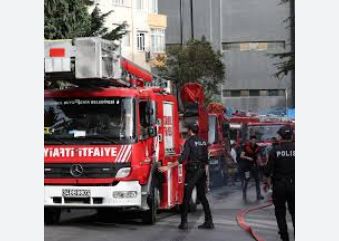
ISLAMABAD, APR 3 /DNA/ – Pakistan sends its deepest condolences and heartfelt grief over the loss of precious lives in a deadly fire in central Istanbul, Türkiye yesterday. Our thoughts and prayers are with the victims and their bereaved families. The people and government of Pakistan stand with their Turkish brothers and sisters in this hour of grief.

Seminar highlights urgent need for FED hike to tackle tobacco-related health crisis

Seminar highlights urgent need for FED hike to tackle tobacco-related health crisis

ISLAMABAD, APR 3 /DNA/ – Speakers for increase in FED to mitigate pervasive health hazards Islamabad: Speakers at a seminar highlighted the impact of increase on tobacco taxation and its effect on health cost, economic and social factors and demanded increase the Federal Excise Duty (FED) on tobacco products in 2024 to mitigate the pervasive health hazards associated with tobacco.

Speaking on this occasion, Mehboob Ul Haq, CEO Human Development Foundation (HDF) said that tobacco consumption remains a formidable challenge for Pakistan, imposing a grave toll on both public health and the economy. With 31.9 million adults, roughly 19.7% of the adult population, currently using tobacco, the nation faces a significant health crisis.

In tandem with efforts to address tobacco consumption, recommendations from the International Monetary Fund (IMF) underscore the importance of rationalizing excise duties in Pakistan. Streamlining the excise structure and focusing on goods with significant negative externalities could enhance both public health outcomes and revenue generation. Aligning taxation policies with the quantified level of externalities and prioritising luxury goods for excise duty increases are key aspects emphasized by the IMF. Moreover, the IMF highlights the necessity of taxing e-cigarettes& novel products, similarly to tobacco products, given their equivalent impact on public health.

Zahid Shafiq (Programme Manager -HDF) stated that the previous hike in FED, observed after a three-year hiatus, yielded tangible benefits. By 2022-23, the FED share in retail prices reached 48% and 68% for low and high-tier cigarettes, respectively. However, momentum slowed in 2023-24, underlining the urgent need for sustained efforts in tobacco taxation to safeguard public health and fiscal prosperity.

Crucially, the proposed 26.6% FED increase in 2024 presents a triple-win scenario. It is projected to deter approximately 517,000 individuals from smoking, thereby reducing cigarette consumption by 5.8% and adult smoking prevalence by 0.31%. Moreover, this measure is anticipated to save 181,000 adult lives, underscoring its life-saving potential.

Malik Imran, country director (CTFK) call attention to that economically, the tax hike is poised to generate an additional revenue of Rs17 billion, comprising Rs15.4 billion in FED and Rs1.6 billion in GST, marking a 12.1% increase. Such revenue augmentation is critical for funding essential public services and healthcare initiatives. Additionally, gradual implementation of a uniform FED rate across all cigarette brands fosters fair competition and prevents market distortions

President, COAS discuss matters of national security and defense

President, COAS discuss matters of national security and defense

ISLAMABAD, APR 3 /DNA/ – Chief of Army Staff (COAS), General Syed Asim Munir NI (M), met with President Asif Ali Zardari today at Aiwan-e-Sadr.

During the meeting, matters of national security and defense were discussed.

France ambassador meets PM Shehbaz Sharif

France ambassador meets PM Shehbaz Sharif

ISLAMABAD, APR 3 /DNA/ – Ambassador of the Republic of France, Nicolas Galey  met with Prime Minister Muhammad Shehbaz Sharif on 3 April 2024.

Unveiling Dynamics: Safeguarding Chinese Interests in Pakistan

Unveiling Dynamics: Safeguarding Chinese Interests in Pakistan

Economic cooperation between China and Pakistan has undoubtedly advanced, yet we must remain vigilant as security challenges persist, posing significant concerns for Chinese investments and personnel within the country

Prime Minister Shehbaz Sharif’s upcoming visit to Beijing will undoubtedly prioritize discussions on enhancing security measures to safeguard our bilateral interests

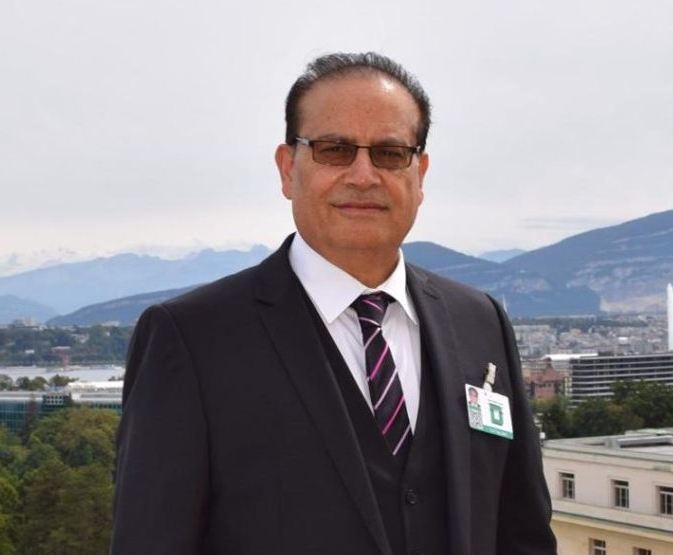
Syed Ali Nawaz Gilani

The recent focus on safeguarding the safety and security of Chinese nationals and investments within Pakistan underscores the enduring partnership between the two nations. As the China-Pakistan Economic Corridor (CPEC) continues to serve as a cornerstone of their cooperation, it is imperative to prioritize the protection of Chinese interests in Pakistani territory.

Recent events have highlighted the evolving security challenges facing Chinese nationals and projects in Pakistan. In response, Pakistani authorities have recognized the urgent need for proactive measures to mitigate risks and enhance the environment for Chinese engagement. This includes fostering trust and collaboration between the two nations to sustain bilateral cooperation and advance mutual prosperity and stability.

The commitment of Pakistani authorities to upholding the safety of Chinese investments reaffirms the depth of the partnership and its dedication to mutual prosperity and stability. By emphasizing the importance of close collaboration with Chinese counterparts, Pakistan is demonstrating its proactive stance towards ensuring the security of Chinese nationals and projects within its borders.

The strategic alliance between Pakistan and China remains strong, with both nations committed to creating a safe and secure environment for Chinese engagement in Pakistan. As the partnership continues to evolve, it is crucial for both countries to work together to address security challenges and uphold the principles of mutual prosperity and stability. In doing so, the enduring partnership between Pakistan and China will only grow stronger, laying the foundation for continued cooperation and economic development in the region.

Worth mentioning that Pakistan and China share a longstanding relationship marked by cooperation in various domains, including trade, infrastructure development, and strategic alliances. Recent developments, however, have unveiled both opportunities and challenges in this bilateral partnership. This article delves into three significant developments shaping Pakistan-China relations, ranging from the reopening of the Khunjerab border to security challenges faced by Chinese nationals and projects in Pakistan.

The Khunjerab border, situated at a staggering altitude of approximately 15,000 feet above sea level, serves as the sole land crossing connecting Pakistan with China. After four months of closure due to snowfall, the border reopened for traffic, facilitating bilateral trade and tourism. This development not only signifies the resumption of economic activities but also underscores the resilience of Pakistan-China relations despite seasonal challenges. As per the protocol agreement of 1985, the border remains closed from December 1 to March 31 annually. However, the recent reopening indicates the commitment of both nations to bolster connectivity and foster economic exchanges.

Pakistan and China are on the verge of finalizing modalities for third-party participation in the China-Pakistan Economic Corridor (CPEC), aimed at enhancing the project’s regional scope and attracting additional investors. The draft shared by the Chinese side outlines general principles and objectives for third-party involvement, emphasizing inclusivity, mutual benefits, and government-led steering of CPEC. This move reflects a strategic shift towards broader regional connectivity and economic integration, with CPEC serving as an open platform for cooperation. The establishment of the Joint Working Group on International Cooperation and Coordination underscores the collaborative efforts to streamline third-party participation and ensure sustainable development.

While economic cooperation between China and Pakistan has made great progress, security challenges continue to be a significant concern for Chinese investments and personnel in the country. The recent suicide bombing targeting Chinese engineers at the Dasu hydropower project in Khyber Pakhtunkhwa province serves as a grim reminder of the risks faced by foreign nationals. The attack, claimed by the Baloch Liberation Army (BLA), underscores the complex security environment in Pakistan, plagued by insurgency and jihadist activities.

Additionally, the thwarted attempt to breach the Gwadar Port Authority compound further highlights the diverse threats facing Chinese interests in Pakistan. To ensure the safety of their investments and personnel, it is crucial for Chinese companies to implement robust security measures and conduct a strategic reassessment of their operations in the region.

The recent attack targeting Chinese nationals and projects in Pakistan has implications for Prime Minister Shehbaz Sharif’s upcoming visit to Beijing. It is likely that the focus of the visit will shift towards evaluating the effectiveness of current security measures for Chinese residents and projects in Pakistan. Additionally, the summary highlights the grievances of Baloch separatists towards Chinese involvement in projects like the China-Pakistan Economic Corridor (CPEC). These grievances stem from concerns about marginalization, economic deprivation, and inadequate development in Balochistan despite its resource richness. The lack of tangible benefits from CPEC in Balochistan has fueled resentment and enabled separatist groups to exploit local grievances for recruitment and propaganda. Moreover, the targeting of Chinese interests by jihadist groups and Baloch separatists poses challenges for Pakistan’s government in convincing Beijing to initiate new projects. To address these challenges, the summary suggests that addressing Baloch grievances and collaborating with the Taliban regime in Afghanistan to tackle security threats are essential steps towards improving the situation.

The recent developments in Pakistan-China relations underscore both the opportunities and challenges inherent in this strategic partnership. While the reopening of the Khunjerab border signifies resilience and cooperation, security concerns pose formidable obstacles to economic development and regional connectivity, particularly within the ambit of CPEC. As Pakistan navigates these complexities, addressing security imperatives, fostering inclusive growth, and mitigating grievances will be crucial in sustaining the momentum of bilateral cooperation and realizing the shared vision of prosperity and stability in the region.

(The author is the Secretary General of the Pakistan-China Friendship Association, serving in the Khyber Pakhtunkhwa Chapter, and is also a foreign affairs analyst and media advisor based in Peshawar. For further inquiries or correspondence, he can be contacted via email at [email protected].)

Big names missing as New Zealand announce squad for Pakistan tour

Big names missing as New Zealand announce squad for Pakistan tour

With major players unavailable due to the Indian Premier League (IPL), New Zealand on Wednesday announced the squad for a five-match T20 series against Pakistan.

Michael Bracewell has been appointed as the captain for the series scheduled for later this month.

Bracewell, who will captain the team for the first time, has been side-lined since his most recent international appearance in March last year, firstly with a ruptured Achilles and then with a broken finger.

Since recovering he’s made a spectacular return to cricket, claiming his best first-class figures with the ball in his first match back in the Plunket Shield.

The all-rounder will lead a group featuring seven members of previous T20 World Cup squads, balanced by two players in Wellington’s Tim Robinson and Canterbury’s Will O’Rourke — selected in a Black Caps T20I squad for the first time.

O’Rourke impressed on debut with the test side against South Africa in February, while Robinson earned his spot with a torrent of runs for Wellington in the domestic Super Smash competition.

The Kiwis will face Pakistan in three matches in Rawalpindi and two in Lahore from April 18. The T20 World Cup runs from June 1 to 29.

IPL hits T20 series
Top ranking NZ players Trent Boult, Devon Conway, Lockie Ferguson, Matt Henry, Daryl Mitchell, Glenn Phillips, Rachin Ravindra, Mitch Santner and Kane Williamson were all unavailable due to IPL commitments.

Will Young was also unavailable for selection as he takes up a winter contract with Nottinghamshire County Cricket Club, as was Tom Latham, who is awaiting the birth of his second child.

Tim Southee, the team’s leading T20 wicket taker since the last T20 World Cup, wasn’t considered for selection to allow him a period of prolonged conditioning following a busy playing schedule across formats.

Colin Munro was also unavailable for selection.

Kiwis’ coach Gary Stead will lead a support staff group in Pakistan featuring batting coaching Luke Ronchi, and Canterbury’s High Performance Development Coach, Brendon Donkers, as bowling coach.

The coaching group will be assisted by former England international James Foster, who most recently worked with the team in the UK and India.

The playing group and support staff depart for Pakistan next Friday (April 12), with the first match against the Green Shirts in Rawalpindi on Thursday (April 18).

Squad
Michael Bracewell (captain), Finn Allen, Mark Chapman, Josh Clarkson, Jacob Duffy, Dean Foxcroft, Ben Lister, Cole McConchie, Adam Milne, Jimmy Neesham, Will O’Rourke, Tim Robinson, Ben Sears, Tim Seifert, Ish Sodhi.

Threatening letters: The Perilous Path of Pakistan’s Judges

Qamar Bashir

By: Qamar Bashir

In a pivotal moment in Pakistan’s history, the seven-member Supreme Court bench commenced hearings on the serious allegations raised by six judges regarding attempts to intimidate them into favorable rulings. At the outset, the Chief Justice and the government exchanged mutual praise for addressing the matter seriously, with the constitution of a one-man commission. Expressing regret over conspiratorial statements against Syed Tassadaq Jilani, who felt intimidated, recused himself from this significant responsibility.

The initial two hours of the session were dedicated to providing a thorough explanation, aimed at dispelling any perception that the Supreme Court was avoiding its responsibility. Despite this, the Chief Justice unequivocally affirmed the independence of the judiciary and vowed to defend it vigorously. The discussion also addressed long standing issues that have been overlooked, including instances where the Supreme Court’s orders have been obstructed. Specifically, recent bail orders issued by the Supreme Court were frustrated by frivolous and illogical Magistrate’s Preventive Orders (MPOs) issued by deputy commissioners.

One judge made a striking statement, acknowledging the intimidation, coercion, and blackmail faced by the judiciary to sway decisions according to certain interests. This candid admission highlighted the need to confront the reality of these challenges rather than turning a blind eye. Although the attorney general reflected the full cooperation of the government to proceed with the impugned case, it was evident that the jurisdiction of the civil government is severely limited when it comes to holding intelligence agencies accountable.

While the Chief Justice attempted to navigate the complexity of the situation at hand, other judges were resolute in their stance, emphasizing that this presents a rare opportunity to emancipate the judiciary. They urged the court to seize this moment without getting bogged down in legal technicalities as a pretext to evade responsibility. Despite the Chief Justice’s view that the matter pertained to the High Court and therefore fell outside the Supreme Court’s jurisdiction according to the constitution, a fellow judge intervened. He pointed out that the aggrieved judges had brought the issue to the attention of the Chief Justice of the Islamabad High Court, but no remedial action had been taken. Consequently, the judges sought guidance from the Supreme Judicial Council on how to proceed if the High Court proved incapable of addressing the matter, highlighting the urgency and gravity of the situation.

The supreme court took up the matter after receiving a letter from six judges who alleged that they have been facing blatant and open unconstitutional intimidation, coercion, and arm-twisting from certain unscrupulous elements within the country’s all powerful intelligence agency.

Their bravery, however, was met with a chilling response. Anonymous letters filled with threatening poisonous powder arrived, targeting all judges of the Islamabad High Court and today two judges of the Lahore High Court also received the same threatening letters, adding to the atmosphere of fear and intimidation.

This disturbing development coincided with a suo moto action taken by the Supreme Court and an appeal being heard by the Islamabad High Court on the Cipher case against the Founder of PTI, Mr. Imran Khan. Mr. Shah Mahmood Qureshi, another stalwart of PTI, sent a clear message: submit or face dire consequences.

However, conveniently, during the hearing of the suo moto case, the Supreme Court did not make even a passing reference to this stunning development. It is evident that such serious threats are not only targeting the judges of the High Court but also the judges of the Supreme Court who are currently hearing the impugned case.

It serves as a brazen warning that any attempt by the Supreme Court to challenge or investigate alleged interference from powerful entities will be met with intimidation and threats. This act seeks to undermine the authority and independence of the judiciary, signaling that even the highest echelons of the legal system are not immune to coercion and intimidation tactics.

Additionally, it reflects a broader assault on the rule of law and the principles of democracy, as it seeks to silence judicial scrutiny and accountability. The message is clear: any attempt to uphold justice and transparency will be met with severe consequences, creating a climate of fear and intimidation within the judicial system.

My sympathies also go to the CJSC who finds itself in an extraordinarily challenging position, torn between the imperative to safeguard the judiciary’s independence and credibility and the immense pressure exerted by various political interests seeking to exploit the situation for their own gains. With the integrity of the judiciary hanging in the balance and the hopes of 250 million citizens relying on the court’s ability to deliver justice, the Chief Justice bears the weighty responsibility of liberating the judiciary from the grip of intimidation and restoring its capacity to administer impartial justice.

However, he is keenly aware of the delicate equilibrium necessary to maintain positive relations with the establishment, crucial for ensuring the safety of judges and their families. Yet, the Chief Justice faces an unparalleled dilemma: how to address the presence of unscrupulous elements within the intelligence agencies when no individual, entity, or institution possesses the authority to compel these operatives to adhere to the constitution and the law of the land.

Before delving further into the complexities of the situation, it’s crucial to provide clarity on the term “Establishment.” When the judiciary refers to alleged interference from intelligence agencies in its core functions of dispensing justice fairly, transparently, and without bias or fear, it pertains to a small faction within these agencies. These individuals may disregard the constitution, the rule of law, and the welfare of the Pakistani people. Their actions aim to manipulate the judiciary for what they perceive as the greater good and in the greater national interest, but they overlook that true progress and prosperity of any country can only be achieved through a judiciary that operates freely, fairly, and transparently and without facing any undue influence.

The six judges who bravely stepped forward as whistleblowers have rendered invaluable service to both the judiciary and the nation. Their decision to speak out, despite the grave risks to their own lives and those of their loved ones, underscores the immense pressure they must have endured in carrying out their duties. Ultimately, they reached a point where they could no longer bear the burden alone and turned to the Chief Justice of the Supreme Court for assistance. It’s essential to recognize that the Chief Justice, like any human being, is vulnerable to the same dangers faced by those who spoke out. Moreover, while the constitution of Pakistan ostensibly extends its protections nationwide, analysts suggest there are areas where its authority is challenged, posing additional complexities and risks.

By: Qamar Bashir
Press Secretary to the President (Rtd)
Former Press Minister at Embassy of Pakistan to France
Former MD, SRBC

Stay Connected

64FansLike
60FollowersFollow

Latest Reviews

Exchange Rates

USD - United States Dollar
EUR
1.17
GBP
1.35
AUD
0.67
CAD
0.73