Home Blog Page 752

Militiary role in Pakistani politics

Militiary role in Pakistani politics

Aleesha Shafique

Pakistan’s political landscape has long been defined by the pervasive influence of its military establishment. The recent transition of power, which saw Shahbaz Sharif ascend to the prime ministerial office following the suspension of Imran Khan, underscores the enduring role of the military in shaping governance. This change, widely perceived as orchestrated by then-Chief of Army Staff General Qamar Javed Bajwa, reflects the systemic entanglement between Pakistan’s civilian political institutions and its military. Central to this crisis was a growing rift between Imran Khan and General Bajwa, exacerbated by disagreements over key national issues, including the contentious appointment of the Inter-Services Intelligence (ISI) chief. Such developments illuminate the military’s continuing dominance, a trend deeply rooted in Pakistan’s historical and institutional frameworks.

The military’s involvement in Pakistan’s politics dates back to the nation’s early years following independence in 1947. A combination of weak civilian institutions, political instability, and external security challenges created an environment where the military emerged as a central powerbroker. This dominance was formalized with Pakistan’s first military coup in 1958, led by General Ayub Khan. The coup dismantled the constitutional order established by the 1956 Constitution and set a precedent for repeated military interventions. Over the decades, Pakistan has witnessed three significant coups—in 1958, 1977, and 1999—each of which underscored the fragility of its democratic framework.

Under General Ayub Khan and his successor General Yahya Khan, the military institutionalized its control over governance. Ayub Khan’s era saw an effort to legitimize military rule through economic and administrative reforms, yet his regime failed to address the growing political and regional disparities within Pakistan. Yahya Khan’s tenure culminated in the catastrophic loss of East Pakistan in the 1971 war, a defining moment that marked the limits of military rule and exposed the vulnerabilities of Pakistan’s political and military structures.

The return to civilian rule in 1972 under Zulfikar Ali Bhutto was short-lived. General Zia-ul-Haq’s coup in 1977 marked the beginning of a prolonged period of military dominance, characterized by the expansion of the military’s influence beyond defense into civil administration, education, infrastructure, and economic planning. Zia’s regime also entrenched the military’s role in shaping Pakistan’s ideological and foreign policy direction, particularly through its support for the Afghan jihad against Soviet forces, which deepened ties with Islamist groups and fostered a complex security landscape.

The third military intervention in 1999, led by General Pervez Musharraf, reinforced the army’s grip on Pakistan’s political institutions. Musharraf’s rule institutionalized mechanisms that entrenched the military’s role in policy-making, such as the establishment of the National Security Council. Simultaneously, the National Accountability Bureau was used as a tool to marginalize opposition leaders, further consolidating military control. Despite Musharraf’s promises of economic growth and modernization, his tenure exemplified the challenges of military rule, including political suppression, lack of accountability, and weakened democratic institutions.

The recurring involvement of the military in civilian governance has significant ramifications for Pakistan’s democracy. The military’s primary mandate is to safeguard the nation’s sovereignty and defend its borders. However, its frequent incursions into civil administration undermine this role and lead to a range of adverse consequences. Excessive military involvement in governance diverts its focus from national security, dilutes professionalism, and increases the risk of corruption. Furthermore, military dominance fosters mistrust between civilian leaders and military officials, weakening state institutions and national cohesion.

The political implications of military rule extend far beyond administrative inefficiencies. Military interventions erode public trust in democratic institutions such as the judiciary and parliament. The suppression of democratic freedoms, including press liberties and civil rights, creates an environment where dissent is stifled, and accountability is absent. This authoritarian culture not only weakens the rule of law but also hampers the development of a robust and participatory political culture. Moreover, the military’s involvement in areas like bureaucracy, law enforcement, and intelligence consolidates its influence, further marginalizing civilian oversight and creating a parallel power structure.

Economically, prolonged military dominance has detrimental effects. Military regimes, often operating without legislative oversight, lack the accountability mechanisms necessary for transparent governance. This lack of accountability facilitates corruption and mismanagement, resulting in economic stagnation. Internationally, military takeovers damage Pakistan’s credibility, leading to diplomatic isolation and economic sanctions. These external pressures exacerbate domestic challenges, including poverty, unemployment, and social unrest, which undermine long-term development.

The recent political developments in Pakistan, culminating in the installation of Shahbaz Sharif as prime minister, highlight the enduring challenge of civil-military relations. While the military does not directly govern, its influence over political transitions and key policy decisions underscores its entrenched role in the political system. This dominance poses a significant obstacle to Pakistan’s democratic consolidation. Civilian governments often struggle to assert authority over military institutions, creating an imbalance that perpetuates cycles of political instability and authoritarianism.

Addressing the military’s role in politics requires comprehensive reforms aimed at strengthening civilian institutions. Efforts must focus on enhancing the capacity and independence of democratic structures, including the judiciary, parliament, and electoral bodies. Institutional reforms should also ensure transparency and accountability within the military, limiting its involvement in non-military domains. Additionally, fostering a political culture that prioritizes dialogue and consensus-building is essential to reducing the appeal of military intervention as a solution to political crises.

The military’s dominance in Pakistan’s politics reflects broader structural challenges that have defined the country’s post-independence history. While the military has played a central role in shaping national security and foreign policy, its involvement in governance has often come at the expense of democratic development. The events surrounding the recent transition of power underscore the pressing need for Pakistan to redefine its civil-military relations. Achieving this balance is critical not only for democratic consolidation but also for ensuring long-term stability and prosperity. In the absence of meaningful reforms, the cycle of political instability and military dominance is likely to persist, undermining Pakistan’s potential as a democratic state.

Aleesha Shafique

Student BS English at University of Sahiwal
[email protected]

Iran’s Strategic Patience is Transforming into Nuclear Deterrence, Iranian expert

Iran’s Strategic Patience is Transforming into Nuclear Deterrence

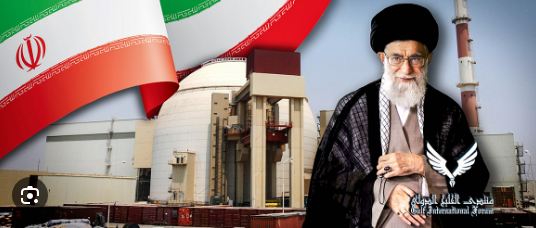
TEHRAN, NOV 22 /DNA/ – “Gaza War has led to the transformation in Iran’s strategic thinking which is increasingly inclined towards nuclear deterrence”, said Dr. Nabi Sonboli, an international affairs expert at Institute of Politics and International Studies (IPIS), Tehran. He was speaking on an event organized by Institute of Regional Studies (IRS) on “Gaza War and Transformative Nature of Iran-Israel Conflict” in Islamabad. Dr. Nabi, while discussing a wide array of issues, mentioned that Gaza War debunked the myth of Iran as a destabilizing state in the region. Instead, it tarnished the Israeli image which had disrupted the regional peace and stability, he added. Dr. Nabi pointed out that region had observed the political realignment where Arab states were joining hands with Iran in condemning the Israeli actions and advocating for Palestinian statehood. Dr. Nabi was pessimistic about the future as he forecasted temporary ceasefire instead of any permanent solution of this ongoing conflict.

Mr. Dmitry Stefanovich, Research Fellow and a renowned weapon technology expert at Center for International Security, Moscow, laid emphasis on Iran-Russia technological cooperation. He argued that Iran and Russia were the only two states that resisted against the western arms technology and their partnership was mutually beneficial in the fields of system engineering and information sharing. Mr. Stefanovich also added that the relative power of the US was diminishing and hence, cooperation between Russia and Iran was also crucial for global military stability. Mr. Stefanovich defended that Russo-Iranian military collaboration in Syria equipped both these states with the knowledge of using advanced technological weapons by avoiding civilian casualties.

Mr. Pooya Mirzaei, a renowned foreign affairs correspondent in Tehran, highlighted that Iran employed ‘Parthian Model of Fighting’ which was based upon exploiting hidden underground facilities. He refuted the claims of success made by Israeli officials and argued that Israeli strikes on Iran were successfully thwarted by Iranian missile defense system. Mr. Pooya also raised doubts on Israeli capabilities by questioning the absence of any footages of Israeli attack. Mr. Pooya celebrated Iran’s “Operation True Promise II” against Israel and likened Hamas with French resistance during WWII. In the end, Mr. Pooya argued that Iran’s nuclear strategy might change in the wake of any external pressure.

Earlier, Amb. Jauhar Saleem, President IRS, shared his concerns regarding the expansion of the conflict in the Middle East. He stressed on the ceasefire and shared his optimism towards de-escalatory efforts by the US. Amb. Jauhar also mentioned that the ongoing crisis could lead to nuclear proliferation, supply lanes disruption, mass migration and terrorism surge in the Middle East.

In the end, Mr. Fraz Naqvi, Head of Iran Program at IRS, thanked the speakers and concluded that both Iran and Israel were likely to continue their confrontation in various ways which had the potential to engulf the entire region into its flames.

Army Chief reaffirms resolve against terrorism during KP security brief

Army Chief reaffirms resolve against terrorism during KP security brief

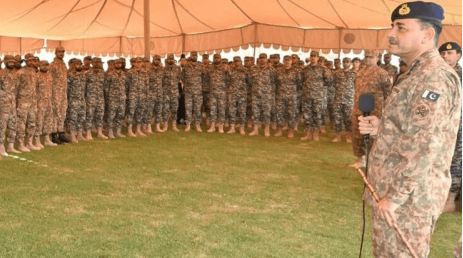
RAWALPINDI, NOV 22 /DNA/ – General Syed Asim Munir, NI(M), Chief of Army Staff (COAS), visited Peshawar today, as a follow up of the National Apex Committee meeting held on 19 November 2024 and prelude to Provincial Apex Committee Meeting to be held soon. COAS was provided a comprehensive briefing on the prevailing security situation and the progress of ongoing counter-terrorism operations in the region. Chief Minister KPK and field commanders were also present at the occasion.

Paying profound tribute to the Shuhada and Ghazis, COAS emphasized the unparalleled sacrifices being rendered for the defense of the motherland. He remarked that these sacrifices serve as a cornerstone of national resilience, inspiring and unwavering dedication of the Armed Forces and of Law Enforcement Agencies.

COAS commended the high morale, operational readiness, and unyielding commitment of the troops in effectively countering all forms of threats. He reiterated the Army’s firm resolve to dismantle hostile terrorist networks and eradicate the illegal spectrum undermining national security.

Highlighting the collective determination of the nation and its security forces to combat terrorism, COAS stressed that thwarting the nefarious designs of inimical elements remains a top priority. He assured that through synchronized and robust operations, Pakistan Army in collaboration with Law Enforcement Agencies (LEAs) will relentlessly hunt down the enemies of peace to ensure lasting stability and security.

Upon his arrival, COAS was received by the Corps Commander Peshawar.

US condemns deadly Kurram Attack, pledges support to Pakistan

US condemns deadly Kurram Attack, pledges support to Pakistan

ISLAMABAD, NOV 22 /DNA/ – The United States joins the Government of Pakistan in condemning the horrific attack in Kurram that killed dozens of innocent Pakistanis and critically injured many more.  Our sympathies and condolences go out to the families and loved ones of those who lost their lives, and we wish the injured a full and speedy recovery.

The Pakistani people deserve to live free from harm, danger, and threat, and to feel protected and secure in their daily lives.  The United States will remain a steadfast partner as Pakistan works to ensure the safety and security of all its citizens.  We stand in solidarity with Pakistan and the people of Khyber Pakhtunkhwa in this difficult time.

Iran’s President, FM express solidarity with Pakistan after Kurram attack

Iran's President, FM express solidarity with Pakistan after Kurram attack

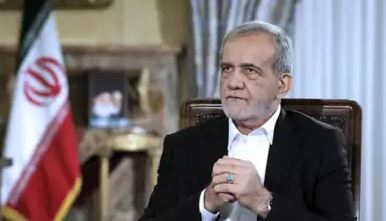
ISLAMABAD, NOV 22 /DNA/ – President Masoud Pezeshkian of Iran, Foreign Minister Dr. Seyed Abbas Araqchi, and Government Spokesperson Fatemeh Mohajerani, in separate statements, strongly condemned the heinous terrorist attack in Kurram, Pakistan.

The Foreign Minister emphasized that the fight against terrorism is a common goal of Iran and Pakistan.

President Pezeshkian said that Iran stands with the government and people of Pakistan.

Four militants eliminated in multiple Balochistan operations: ISPR

Security forces kill four terrorists in D.I.Khan

RAWALPINDI, NOV 22 /DNA/ – Four terrorists sent to hell in three separate engagements in Balochistan. An intelligence based operation was conducted in Awaran District on reported presence of terrorists. During the conduct of operation, after intense fire exchange, two terrorists were successfully neutralized; both high value targets identified as Niaz @ Ghuman and Zareef @ Shah Jahan.

In another operation in Dera Bugti District, own troops effectively neutralised one terrorist.

In yet another engagement in Kech District, own troops, while conducting an intelligence based operation, killed another terrorist in Kech District.

The killed terrorists were involved in numerous terrorist activities against security forces as well as the innocent civilians and were highly wanted by the law enforcement agencies.

Security forces of Pakistan, in step with the nation, remain determined to thwart attempts at sabotaging peace, stability and progress of Balochistan.

Mohsin Naqvi commends security feorces for eliminating 3 terrorists in Bannu

Mohsin Naqvi

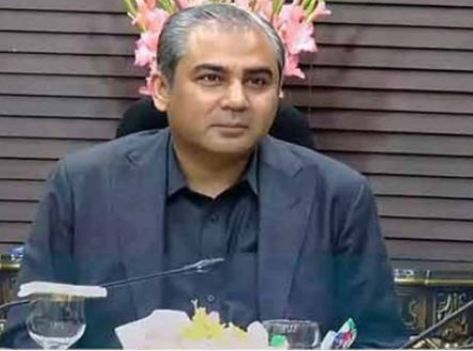
ISLAMABAD, NOV 22 /DNA/ – Federal Interior Minister Mohsin Naqvi has commended the security forces for their successful operation in Bannu, which resulted in the elimination of three terrorists. The Interior Minister praised the security forces for their bravery and professionalism in thwarting the nefarious designs of the terrorists.

He said that he is proud of the professionalism of the security forces who brought 3 Khawarji terrorists to an exemplary end in Bannu. He further said that Khawarji terrorists are a burden on the holy land. He reiterated that with nation’s support, the scourge will be eradicated forever.

Security forces neutralize three militants in Bannu district operation: ISPR

Security forces kill four terrorists in D.I.Khan

RAWALPINDI, NOV 22 /DNA/ – In the early hours of 22 November 2024, Security Forces conducted an intelligence based operation in Bannu District on reported presence of khwarij.

During conduct of the operation, own troops effectively engaged khwarij location, as a result of which, three khwarij were sent to hell while two khwarij got injured.

Weapons, ammunition and explosives were also recovered from killed khwarij, who remained actively involved in numerous terrorist activities against security forces as well as target killing of innocent civilians.

Sanitization operation is being carried out to eliminate any other Kharji found in the area, as security forces of Pakistan are determined to wipe-out the menace of terrorism from the country.

‘Health Week’ Observance Begins In Attock

Pakistan: A Pivotal Bridge Aligning Economic Interests Between China and the Middle East

By Malik Faisal Munir

ATTOCK, Nov 20 (DNA): The three-day ‘Health Week’ started here on Wednesday aimed at raising awareness and providing free diagnostic services to the public.

The event was inaugurated at the Government Esfandyar Bukhari District Hospital Hospital by Additional Deputy Commissioner General Anil Saeed.

The ceremony was attended by CEO health Dr. Asad Ismael, Medical Superintendent Dr. Jawad Elahi, paramedical staff and others relevant officer’s.

The Health Week, which would continue till November 22, features diagnostic counters established across government hospitals in the district. These counters offer free screening and diagnosis for a variety of illnesses, including diabetes, hepatitis (A, B, and C), blood pressure, gynecological conditions, and asthma.

Additional Deputy Commissioner General Anil Saeed praised the revolutionary measures being implemented under the leadership of Chief Minister Maryam Nawaz Sharif.

He stated that the initiative aims to identify undiagnosed diseases among the population and provide timely treatment and awareness. At DHQ Hospital, specialized counters have been set up and daily diagnostic targets have been established including 1,000 individuals at DHQ Hospital.

CEO Dr Asad Ismael said that Citizens will be able to visit screening camps for diabetes, tuberculosis, pulmonary health and haematology screening. Pregnant women will undergo checkups and children under two years of age will be vaccinated.

CEO Dr Asad Ismael said that citizens will be formally registered at the screening camps during the Health Week. “These camps will provide all necessary medical treatment facilities, including free medicines, in order to allow citizens to take nine steps forward towards a healthy life,” he said.

They will also counsel citizens by providing them with guidelines on living a healthy life. “While no one can fully protect themselves from diseases, in the case of illnesses, they can get rid of the disease by following the doctor’s guidelines,” said the CEO.

French ambassador hosts reception for global polio eradication initiative board

French ambassador hosts reception for global polio eradication initiative board

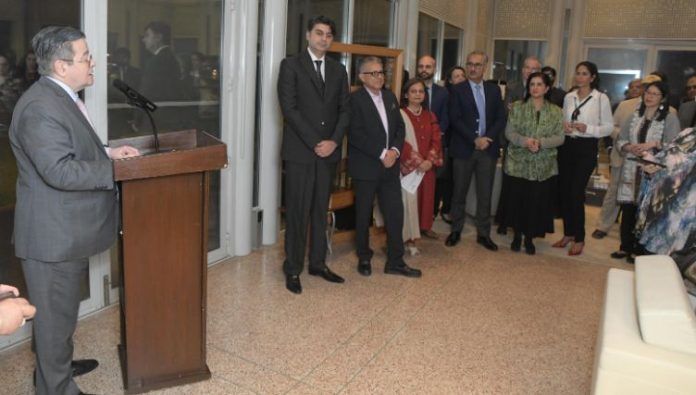
ISLAMABAD, NOV 20 /DNA/ – The Polio Oversight Board (POB), the highest decision-making body of the Global Polio Eradication Initiative, is currently visiting Pakistan to engage with government officials, diplomatic representatives, and donor communities regarding the current polio outbreak.

French Ambassador Nicolas Galey hosted a reception to welcome the POB delegation, highlighting the international community’s commitment to polio eradication efforts in Pakistan.

The visit aims to:

  • Assess current polio eradication progress
  • Identify key challenges
  • Develop strategic interventions to address the nationwide outbreak

The POB’s regular visits are critical in providing strategic oversight and maintaining momentum in Pakistan’s fight against polio.

The Embassy of France and the Agence Française de Développement (AFD) are proud to support the global effort to eradicate polio. While the current polio outbreak in Pakistan poses significant challenges, we remain steadfast in our commitment to the program. This includes the $55 million concessional loan, which comprises a $20 million grant from the Bill & Melinda Gates Foundation. This funding, announced by the AFD in 2023 and finalized in July 2024, was made possible through a partnership with the Government of Pakistan and the Bill & Melinda Gates Foundation. Today, this financial support helps WHO and other partners implement core components of the polio eradication program in Pakistan, including paying frontline workers and supporting monitoring and surveillance activities. 

The Polio Oversight Board consists of the heads of agencies from the leading partners of the Global Polio Eradication Initiative (GPEI): the Bill & Melinda Gates Foundation, WHO, UNICEF, US CDC, Rotary International, and Gavi, the Vaccine Alliance. During this November visit, the Board is joined by senior representatives from the Kingdom of Saudi Arabia, which recently pledged $500 million to the global polio initiative. 

The Board’s delegation includes Dr. Chris Elias, Chair of the Polio Oversight Board and President of Global Development at the Bill & Melinda Gates Foundation; Dr. Hanan Balkhy, Regional Director for WHO Eastern Mediterranean; Mr. Sanjay Wijesekera, Regional Director for UNICEF South Asia; Mr. Aziz Memon, Rotary International Trustee and Chairman of the National PolioPlus Committee; and representatives from the US Centers for Disease Control and the King Salman Humanitarian Aid and Relief Center (KSRelief), along with Saudi dignitaries. 

Stay Connected

64FansLike
60FollowersFollow

Latest Reviews

Exchange Rates

USD - United States Dollar
EUR
1.18
GBP
1.36
AUD
0.73
CAD
0.73