Home Blog Page 750

Uzbek President urges national environmental action: ‘Every home, every enterprise must protect nature

Uzbek President urges national environmental action: 'Every home, every enterprise must protect nature

President of Uzbekistan: It is essential for every home and every enterprise to contribute to the preservation of nature

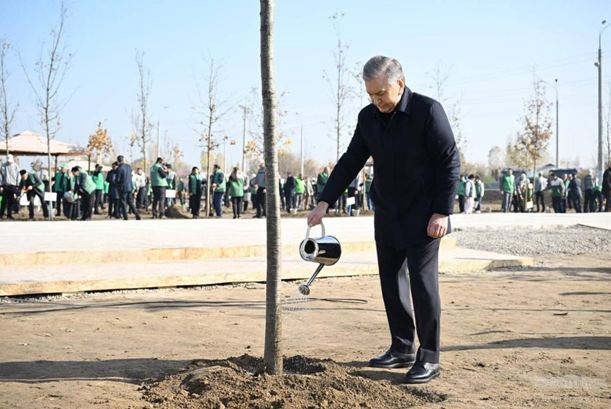
TASHKENT, NOV 23 /DNA/ – President of the Republic of Uzbekistan Shavkat Mirziyoyev planted a tree in a new garden created as part of the “Yashil Makon” (Green Space) nationwide project.
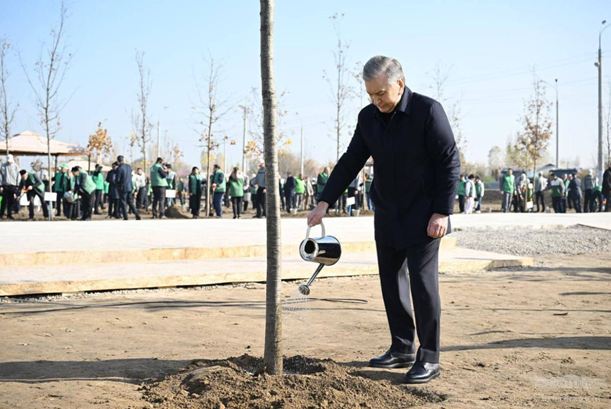
Ecology has become the most pressing problem in Uzbekistan. Air and water pollution, land degradation, desertification, and global warming damage the natural balance and human health. In the country, we realized the consequences of this problem in advance and began to take measures to protect the environment.

The “Yashil Makon” nationwide project, launched three years ago on the initiative of the Head of state, has become a real people’s movement. The tradition of planting trees every spring and autumn is being revived.

The President sets a personal example in this. He planted seedlings in New Tashkent, Sergeli, and Chilanzar districts in previous years. This year, a green belt was laid in Bektemir district of the capital along the Tashkent Ring Road.
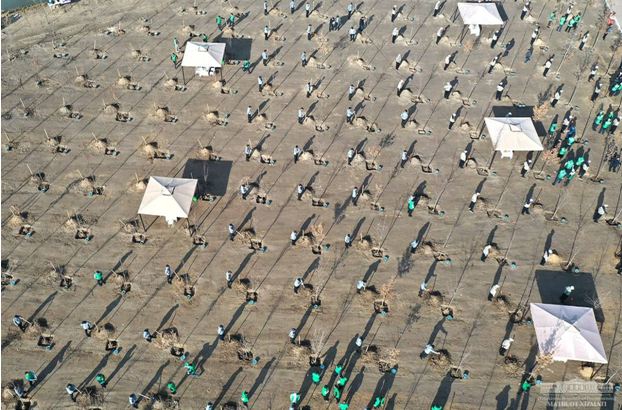
One hundred hectares of land have been allocated for this purpose, and 100,000 tree and shrub seedlings will be planted in two years. Three artificial reservoirs and 12 wells have been created for their irrigation.

As is known, the “Yashil Makon” project aims to increase the level of greening of cities to 30 percent, in particular by creating green belts around them. This area along the ring road will become part of the Tashkent green belt. Another notable feature is that a natural forest ecosystem will be created here.

President talked to representatives of the public and foreign diplomats and expressed gratitude for their contribution to this noble initiative.

“This tradition is deeply rooted in our people. We call nature “mother”, we treat the land and water with respect. Today, against the backdrop of urgent environmental problems, this truth is becoming especially obvious. That is why the “Yashil Makon” project was initiated, and next year has been declared the Year of Environmental Protection and Green Economy. These initiatives must be widely disseminated and deeply rooted, especially among young people. Every family and every enterprise should make its contribution to the preservation of nature”, Shavkat Mirziyoyev emphasized.

The event was watched by the public of the Republic of Karakalpakstan and the regions via video link. Trees were also planted there. This autumn season, within the framework of the “Yashil Makon” project, 80 million seedlings of trees and shrubs are planned to be planted.
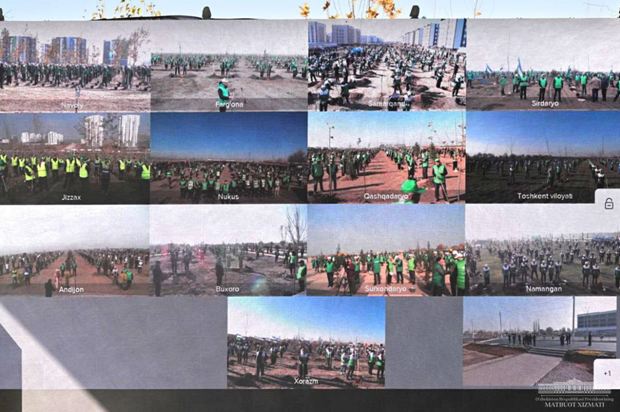
In spring, 138 million seedlings were planted. Ministries and hokimiyats created 257 parks. Trees are also being planted around large industrial enterprises and landfills, and green belts are being created.

Almost 10,000 residents and entrepreneurs have been allocated land adjacent to roads, railways, rivers, and canals for planting trees based on a lease agreement. The phased planting of 215 projects recognized as winners within the framework of the “My Garden” project has begun.

In total, 646 million tree and shrub seedlings have been planted throughout the country over the past three years. In the Aral Sea region, the area of green spaces has exceeded 2 million hectares.
ICCI, FTO host awareness session on taxpayers’ rights

ICCI, FTO host awareness session on taxpayers’ rights

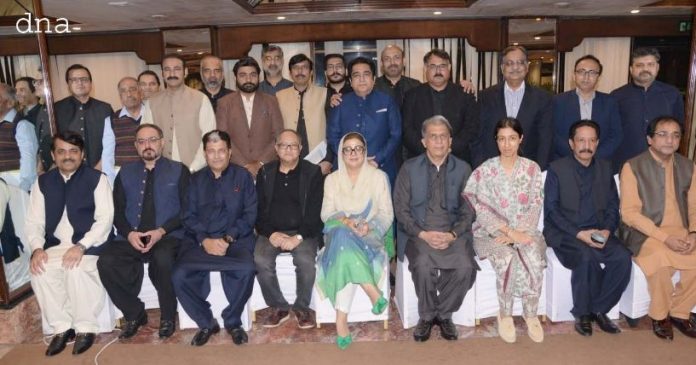
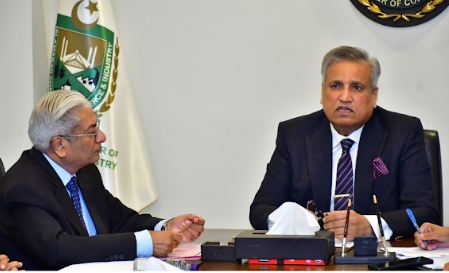
ISLAMABAD, NOV 23 /DNA/ – The Islamabad Chamber of Commerce and Industry (ICCI), in collaboration with the Federal Tax Ombudsman (FTO), organized an awareness session highlighting taxpayers’ rights and the pivotal role of the FTO in providing relief to aggrieved taxpayers.

Muhammad Nazim Saleem, Advisor Sales Tax at the FTO, delivered an insightful presentation, shedding light on the tax system and the FTO’s commitment to safeguarding taxpayers against harassment and unwarranted litigation. He underscored the FTO’s Outreach Campaign, designed to enhance public awareness about its role in delivering prompt and cost-free justice.

The FTO has made remarkable progress in resolving complaints, adjudicating 8,128 cases filed by taxpayers against the Federal Board of Revenue (FBR) in 2023. Furthermore, the President of Pakistan upheld 96.01% of the FTO’s decisions in appeals filed by the FBR, demonstrating the institution’s efficacy and credibility.

Notably, the FTO has taken measures to curb unnecessary litigation. The federal cabinet has directed the FBR to avoid filing appeals against FTO rulings in high courts, and the FBR has instructed its field formations to refrain from initiating frivolous legal actions.

ICCI President Nasir Mansoor Qureshi emphasized the need to foster a conducive environment for the business community. Praising the FTO’s exemplary performance, he suggested its inclusion in the formulation of tax policies to prevent anti-taxpayer measures. He also called for leveraging electronic media, which is mandated to allocate 10% of its airtime to public welfare initiatives, to amplify awareness about the FTO’s objectives and complaint resolution mechanisms.

President Qureshi described the FTO as a beacon of hope for taxpayers facing grievances and advocated for the promotion of Alternative Dispute Resolution (ADR) mechanisms to ensure swift and effective settlement of tax disputes, reducing burdens on both taxpayers and the judicial system.

The session also featured valuable input from Asad Hussain Ghalib, President of the Islamabad Tax Bar Association, who shared insights into streamlining processes for taxpayers. The event was moderated by ICCI member Naeem Siddiqui and attended by ICCI Vice President Nasir Mehmood Chaudhry, along with Executive Members Naveed Akhtar Satti, Malik Mohsin Khalid, Zulqurnain Abbasi, Chaudhry M. Waseem, Chaudhry Irfan, and other prominent stakeholders.

The session highlighted the importance of collaboration between institutions to uphold taxpayers’ rights and strengthen confidence in the tax system, ultimately fostering a more business-friendly environment.

ICC arrest warrants Netanyahu and Gallant open a Pandora’s Box

ICC arrest warrants Netanyahu and Gallant open a Pandora’s Box

JAMES M. DORSEY

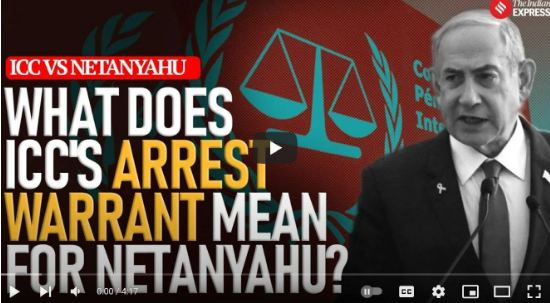
Israeli Prime Minister Binyamin Netanyahu’s world just shrunk considerably. An International Criminal Court (ICC) arrest warrant on charges of war crimes and crimes against humanity in Gaza obliges the Court’s 124 members, or two-thirds of the world’s countries, to arrest Mr. Netanyahu on sight.

Russian President Vladimir Putin’s world contracted similarly when the Court ordered his arrest in 2023 for alleged war crimes in Ukraine.

Even so, Mr. Netanyahu and Israel are likely to feel far more than Mr. Putin the impact of the warrant against the prime minister and his former defence minister, Yoav Gallant, whom Mr. Netanyahu fired earlier this month.

Israel has more allies than Russia among ICC members that feel obliged to uphold the rule of law by honouring the Court’s warrant should Messrs. Netanyahu or Gallant be within their jurisdiction.

Israel’s allies include European Union member states, some of whom continue to sell arms to Israel. They are among a minority of countries where Israeli officials are still welcome.

The Court’s move marked the first time the ICC has issued arrest warrants against leaders of a democratic country.

ICC Chief Prosecutor Karim Khan sought the warrants on charges that Messrs. Netanyahu and Gallant allegedly targeted civilians in Gaza and used starvation as a method of war.

Credit: NIAC Action
The court also issued a warrant for Hamas military chief Mohammed Deif, who Israel says it killed in Gaza in July.

The ICC charged Mr. Deif with war crimes in last year’s October 7 Hamas attack on Israel in which some 1,200 people, mostly civilians and non-combatants, were killed and 250 others kidnapped.

Hamas never confirmed Mr. Deif’s killing in contrast to Israel’s assassination of two of the group’s other leaders, Yahya Sinwar and Ismail Haniyeh, whom Mr. Khan had also targeted.

The ICC has no independent mechanism to enforce the warrants. It depends on the 125 signatories of the Rome Statute that established the ICC in 1999 to execute its warrants.

A host of Western officials, including EU foreign affairs czar Josep Borrel, Canadian Prime Minister Justin Trudeau, Belgian Deputy Prime Minister Petra de Sutte, Dutch Foreign Minister Caspar Veldkamp, and French Foreign Ministry spokesman Christophe Lemoine, were quick to acknowledge the warrant and suggest they would arrest the Israelis if the opportunity arose.

Far-right European leaders appeared split on the arrest warrants despite Mr. Netanyahu’s investment in building relations over the years.

While Italian Prime Minister Georgia Meloni’s government said it would have to arrest the prime minister if he were on Italian soil, Hungary’s leader, Victor Orban, in an act of defiance invited Mr. Netanyahu for a visit.

Europe’s honouring of the arrest warrants will likely increase Israel’s international isolation and condemnation as a pariah state.

Israeli reports warned the warrants could lead to a European arms embargo.

Some EU members, including Italy and Britain, have already curtailed arms sales to Israel. France has twice barred Israeli companies from participating in defence exhibitions.

The warrants potentially call into question the German government’s recent controversial approval of US$ 100 million in military exports to Israel.

The government, which is struggling with its response to the arrest warrants, submitted to the court in August a legal brief arguing that the ICC had no jurisdiction over Israel regarding the Gaza war.

As a result, the ICC may have opened a Pandora’s Box by issuing the arrest warrants.

Source: Instagram
Not only do the warrants complicate, but they also potentially prevent Messrs. Netanyahu and Gallant from traveling to Europe.

Furthermore, they will likely make other Israeli officials think twice about visiting Europe. The officials fear that the ICC has issued secret warrants for their arrest or that they could see their freedom of movement restricted by local courts.

In theory, the warrants could make Messrs. Netanyahu and Gallant’s travel to the United States, the one country that has condemned the ICC’s actions, more difficult because their plane could be forced to land in an ICC member state whose airspace their plane traverses.

Moreover, the warrants could further muddle Europe’s already potentially troubled relations with US President-elect Donald J. Trump as Republicans and Democrats line up in support of Israel and threaten to sanction the Court and its judges and prosecutors.

Trita Parsi, the executive director of the Washington-based Quincy Institute for Responsible Statecraft, noted, “It is reasonable to expect that once Trump comes in, he will go after the ICC and the ICJ (International Court of Justice) in ways that profoundly damages the multilateral system.”

Michael Waltz, Trump’s nominee as his national security advisor, echoed Mr. Netanyahuand Gallant in his response to the Court’s move, saying, “You can expect a strong response to the antisemitic bias of the ICC & UN come January” when the president-elect takes office.

South Carolina Republican Senator Lindsey Graham, a staunch Trump supporter, said he would introduce legislation “that puts other countries on notice – If you aid and abet the ICC after their action against the State of Israel, you can expect consequences from the United States. Any nation that joins with the ICC after this outrage is a partner in a reckless act that tramples the rule of law,” Mr. Graham said.

Haaretz headline 22 November 2024
Mr. Netanyahu may see a silver lining at home in the ICC issuing the arrest warrants.

Israelis have rallied behind Mr. Netanyahu, a controversial leader, whom many blame for Hamas’ October 7 attack and Israel’s failure to free some 100 captives still held hostage by the group, in their rejection of the ICC move.

As a result, Mr. Netanyahu will likely use calls by his ultra-nationalist coalition partners to annex the West Bank and administer Gaza in response to the ICC as a license to delay and sabotage Gaza ceasefire efforts and prolong the war.

Mr. Netanyahu “has an overpowering personal interest in the mayhem continuing so as to buy time after the Oct. 7 debacle, until people forget or still bigger tragedies occur,” said Dan Perry, a pro-Israel pundit with little regard for the prime minister.

Dr. James M. Dorsey is an Adjunct Senior Fellow at Nanyang Technological University’s S. Rajaratnam School of International Studies, and the author of the syndicated column and podcast, The Turbulent World with James M. Dorsey.

ISSI, PIPS sign MoU on mutual collaboration

ISSI, PIPS sign MoU on mutual collaboration

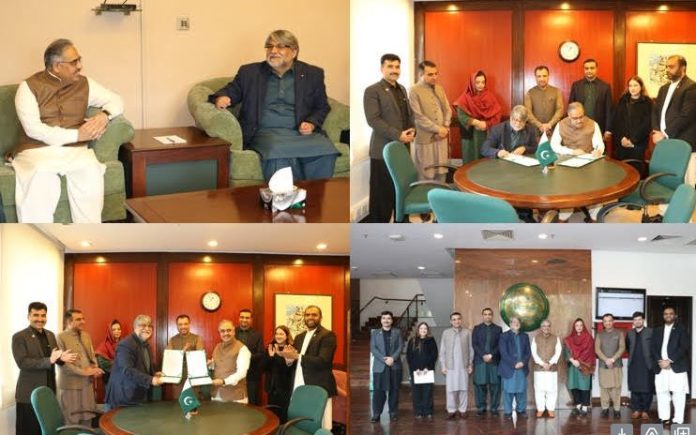
ISLAMABAD, NOV 23 /DNA/ – The Institute of Strategic Studies Islamabad (ISSI) and Pakistan Institute for Parliamentary Services (PIPS) have signed a comprehensive Memorandum of Understanding (MoU) for mutual collaboration. This partnership aims to enhance collaborative efforts in providing credible research-based analysis to key decision-makers and policymakers in Pakistan.

The MoU was signed by Ambassador Sohail Mahmood, Director General, ISSI and Mr. Muhammad Rashid Mafzool Zaka, Executive Director, PIPS. The ceremony was attended by senior representatives from the two Institutes.

Within the framework of this partnership, ISSI and PIPS will work together on a range of areas such as parliamentary affairs, legislation, governance, policy-making processes, foreign affairs, climate change, public health, Sustainable Development Goals (SDGs), National Action Plan, violent extremism, strategic communication, and other subjects relevant to development, prosperity, and foreign policy. By combining the strengths of both institutions, the partnership aims to contribute significantly to the discourse on governance and policy formulation in Pakistan.

The collaboration envisaged under this MoU is expected to facilitate knowledge-sharing and joint research initiatives that will help empower policymakers with informed insights on critical national issues. The two institutions also aim to more deeply engage the Next Generation (NextGen) by fostering youth-inclusive dialogue and amplifying their voices in the policy process.  

The signing of the MoU further enhances ISSI’s outreach to national counterparts, particularly research institutions with niche areas of specialisation. In recent weeks, ISSI has also concluded MoUs with the National Institute of Maritime Affairs (NIMA) and the Commission on Science and Technology for Sustainable Development in the South (COMSATS).

A Gamble for Peace

A Gamble for Peace

Dr. Muhammad Akram Zaheer

The prospect of  Donald Trump’s return to the White House has generated significant discourse in Tehran, where the primary concern is not what policy trajectory the incoming administration might adopt toward Iran but whether the Islamic Republic should engage in negotiations with the former president. Prominent Iranian officials, including experienced diplomats, argue that Tehran must exercise its agency and signal a willingness to negotiate. This perspective posits that Trump’s strong mandate, as evidenced by the electoral outcome, provides him with the political latitude to broker a mutually beneficial agreement with Iran. However, whether such calls will influence Tehran’s posture in the wake of Trump’s inauguration remains uncertain.

In 2018, during Trump’s first term, his administration’s withdrawal from the 2015 Joint Comprehensive Plan of Action (JCPOA) and the subsequent imposition of a “maximum pressure” sanctions campaign devastated Iran’s economy. Supreme Leader Ayatollah Ali Khamenei categorically dismissed the possibility of negotiations with Trump, labeling the American president as unworthy of engagement. Khamenei’s assessment relied on the belief that Trump’s presidency represented an anomaly in U.S. politics. This gamble, however, backfired as U.S.-led sanctions decimated Iran’s oil revenue and international trade, while escalating tensions culminated in the assassination of General Qassem Soleimani in January 2020.Today, the geopolitical landscape has shifted markedly. Trump’s political position appears stronger, and Iran faces increasingly severe domestic and international challenges. The prevailing sentiment in Iranian media underscores an urgent need for recalibration. As one commentator observed, “The era of no war, no peace is over. It’s now the era of either war or peace.” With the Republican Party controlling all three branches of the U.S. government, proponents of negotiation assert that a potential agreement with Trump would carry more durability than the JCPOA, which faced resistance from congressional Republicans.

Iranian commentators also highlight Trump’s unpredictability. While his rhetoric often aligns with anti-war sentiments, his unconventional governance style leaves the possibility of military confrontation open. A Republican-controlled Congress affords Trump significant latitude in foreign policy, potentially allowing him to initiate military action without the constraints faced by previous administrations. This dynamic poses a significant risk to Iranian strategic assets, including its nuclear facilities, should Tehran resist engagement.At the same time, the possibility of a negotiated settlement remains on the table. Figures close to Khamenei suggest a cautious approach, advocating for a wait-and-see strategy to evaluate Trump’s intentions. For instance, Ali Larijani, a moderate advisor to Khamenei, has suggested that Trump may adopt a more constructive approach in his second term. Similarly, Foreign Minister Abbas Araghchi has encouraged Trump to abandon his “maximum pressure” campaign in favor of “maximum wisdom,” signaling that Tehran could reciprocate constructively to avoid conflict.

The Iranian government harbors deep-seated grievances from Trump’s first term, which saw measures such as the “Muslim ban,” the designation of the Islamic Revolutionary Guard Corps (IRGC) as a terrorist organization, and the targeted killing of Soleimani. Despite these hostilities, Trump consistently expressed willingness to negotiate with Iran albeit on terms perceived as highly unfavorable by Tehran. Iranian officials as tantamount to a call for capitulation dismissed his administration’s infamous 12-point demand list.Nonetheless, there are signs that Trump’s second administration might adopt a different approach. His decision to exclude former Secretary of State Mike Pompeo, a staunch Iran hawk, from his new team has been interpreted in Tehran as a potential olive branch. However, the composition of Trump’s national security team remains fluid, leaving uncertainty about the influence of hawkish versus isolationist elements within his administration.

A straightforward compromise between Trump and Khamenei could center on Iran’s nuclear program. Trump’s primary demand is the prevention of Iranian nuclear weaponization, a position ostensibly aligned with Khamenei’s 2012 fatwa declaring nuclear weapons un-Islamic. However, tensions extend beyond nuclear issues, encompassing Iran’s regional activities and its role in supporting allied groups across the Middle East. Addressing these broader concerns will likely require concessions from both sides.In this context, regional developments could play a pivotal role. Tehran is reportedly optimistic that Trump might pressure Israel into accepting a ceasefire in conflicts involving Gaza and Lebanon, potentially creating space for dialogue on select regional issues. Larijani’s recent visits to Damascus and Beirut, where he conveyed reassurances to Iran’s allies while advocating for a ceasefire, suggest that Tehran is exploring options to de-escalate regional tensions.

Despite these overtures, Tehran faces a profound strategic dilemma. Should it prioritize preserving the Axis of Resistance a network of regional proxies—or pursue a reorientation of its regional agenda to align more closely with international expectations? While immediate priorities appear to favor the former, growing domestic and international pressures may necessitate a broader rethinking of Iran’s strategic framework.Khamenei’s reluctance to engage with Trump during his first term reflected confidence in Iran’s ability to withstand external pressures. However, the cumulative impact of sanctions, regional setbacks, and domestic unrest has significantly eroded Tehran’s position. Consequently, there is increasing recognition within Iranian policymaking circles that negotiations with Trump, while fraught with uncertainty, may offer a pragmatic pathway to alleviating external pressures.The return of the maximum pressure campaign, albeit under a different guise, remains a central concern for Tehran. While the Biden administration maintained existing sanctions, it did not enforce them with the same vigor as Trump’s first administration. Tehran anticipates that Trump’s renewed emphasis on sanctions could lead to the reactivation of snapback provisions under the JCPOA, particularly if European powers frustrated by Iran’s support for Russia in the Ukraine conflict align with Washington.

At the same time, Tehran sees potential opportunities in the shifting geopolitical landscape. China, a critical buyer of Iranian oil, is unlikely to abandon its partnership with Tehran given its own tensions with Washington. Similarly, Arab states appear inclined to avoid entanglement in U.S.-Iran conflicts, prioritizing regional stability over alignment with American strategies.

Establishment, PTI talks in progress

Pakistan hockey team not invited to Azlan Shah Cup 2025

Mahnoor Ansar

ISLAMABAD: The key PTI leader and member of the think-thank Rauf Hassan has claimed that talks between the Establishment and the PTI are in progress.

While talking a TV talk show on Friday Rauf said that the talks were taking place at a very high level. He dispelled the impression as if the Interior Minister was leading the talks.

He said it was something beyond the limits of the interior minister. He added that if talks success then the protest date may be changed from November 24 to some other date.

Sri Lankan High Commissioner honored at MoFA farewell lunch

Sri Lankan High Commissioner honored at MoFA farewell lunch

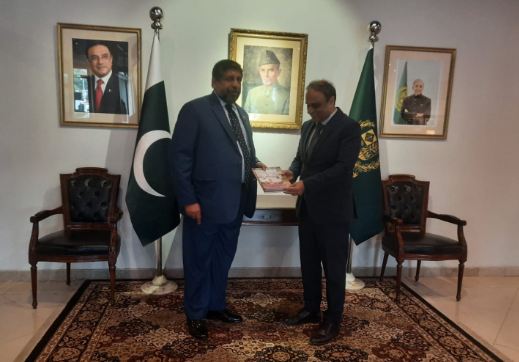
ISLAMABAD, NOV 22 /DNA/ – The Ministry of Foreign Affairs (MoFA) of Pakistan hosted a farewell lunch in honor of the outgoing High Commissioner of Sri Lanka, Admiral Ravindra C. Wijegunaratne on 21 November 2024, in Islamabad.
Mr. Imran Ahmed Siddiqui, Additional Secretary (Asia & Pacific) at MoFA, conveyed his deep appreciation for Admiral Wijegunaratne’s significant contributions in strengthening the cordial and cooperative relationship between Pakistan and Sri Lanka during his tenure.
In his remarks, Admiral Wijegunaratne highlighted the enduring and brotherly bond between the two nations and expressed his gratitude to MoFA and other officials for their unwavering support in facilitating his duties.
The reception was graced by Mr. Ilyas Mehmood Nizami, the Director General of South Asia Division, and Mr. Shahnawas Khan Director South Asia from the Ministry of Foreign Affairs of Pakistan and Mr. Christy Ruban- DHM and Brigadier Kaminda Silva- Minister Counsellor (Defence) from the Sri Lankan High Commission.

Parachanar massacre: who is responsible

Parachanar massacre: who is responsible

Shamim Shahid

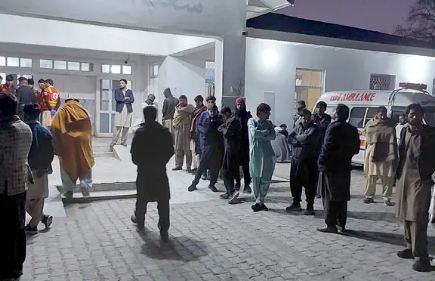
PESHAWAR: Stock of questions arises as not only banned militants disowned targeting of innocent civilians including women and children who were on way to home in Kurram but also the convoy was escorted by personnel of security forces. All personnel of security forces remained safe and sound but the helpless and innocent civilians shot killed for undone sin.

.

Retired Inspector General Police Syed Irshad Hussian Shah is right in his words that no other than state organs are involved when the innocent civilians including women and children are being killed in presence of security forces personnel.

Similarly, only people from Shia school of thoughts have been targeted after confirmation of their identity. Syed Irshad Hussain Shah is a noble and decent person and he was never witnessed in such a distress as he was shown in releasing the video message. He is right in his demand for a judicial inquiry into this recent massacre.

Sectarian tension  in Kurram is not new or sectarian unrest is confined to this part of the country. Earlier couple of years ago similar massacres of Shia Hazara in Quetta remained routine but the Shia people came out on roads.

They denounced and held no other than custodians of law and order responsible for such massacres. As a result of Shia Hazara community protests now the situation is normal. Unless coming out on roads, forging unity amongst their ranks and getting rid of external hands and influence, people from all over Kurram would face such massacres also in future.

Civil administration and confused policies on the part of military leadership now converted the sectarian unrest into massacres of innocent and minority Shia people in Kurram. Economically, socially and politically, the Shia community of Kurram are depending in Sunni people. The Shias are surrounded by Sunnis.

Commodore Ateeq ur Rehman Abid promoted to rear admiral

Commodore Ateeq ur Rehman Abid promoted to rear admiral

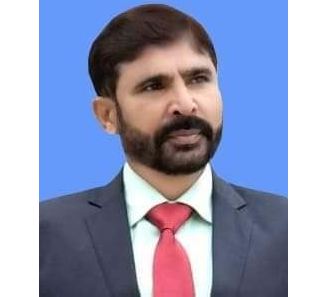
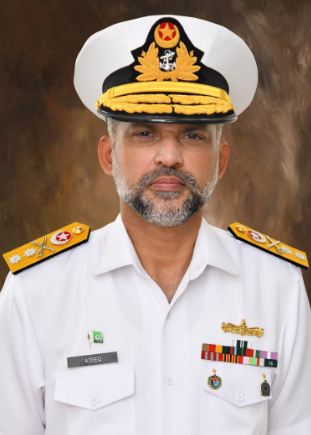
KARACHI, NON 22 /DNA/ – Commodore Ateeq ur Rehman Abid has been promoted to the rank of Rear Admiral with immediate effect. Rear Admiral Ateeq ur Rehman Abid got commission in Operations Branch of Pakistan Navy in 1995. The Flag Officer is a graduate of Pakistan Naval Academy, Karachi, Naval War College, USA, and Royal College of Defence Studies, UK.

The Flag Officer has completed various professional courses from national and international institutes. He has done International Security and Strategic Leadership Studies Course from UK, Naval Staff Course from USA, Pakistan Navy Staff Course from PN War College Lahore and National Security and War Course from National Defence University, Islamabad.

The Admiral has an illustrious career covering vast experience of various Command and Staff appointments. His major command appointments include Commanding Officer PNS MUJAHID, Commanding Officer PNS TARIQ, Commander 18th Destroyer Squadron, Captain Training at Headquarters FOST, Director Operations at HQ PMSA, Chief Staff Officer to Commander Pakistan Fleet and Assistant Chief of Naval Staff (Developmental Plans) at Naval Headquarters, Islamabad. In recognition of his meritorious service, the Admiral was awarded Sitara-e-Imtiaz (Military).

APNS welcomes Punjab government’s advertising policy move

APNS welcomes Punjab government's advertising policy move

LAHORE, NON 22 /DNA/ – Azma Bukhari, Minister of Information, Punjab in a meeting with APNS executive committee announced that the Chief Minister Punjab has acceded to APNS request to withdraw the amendment in the PPRA Rules and restore tender notice advertisements in newspapers.

 The APNS executive committee thanked the Chief Minister Maryam Nawaz Sharif and stated that the decision will help the newspaper industry to brave the economic crunch. The information minister stated that the Chief Minister Punjab is clear in her resolve to support the Print media. She further stated that the Punjab Govt.

has cleared all payments of the Print Media pertaining to the current tenure of the PML N government. She said that an amount of Rs. 1.18 billion has been cleared by the DGPR, Punjab. The APNS executive committee appreciated the efforts of the information minister and her team.

The APNS office bearers apprised the minister about the issues relating to the purposed payment mechanism for Punjab Govt advertisements. She assured the Executive Committee that Punjab Govt. will review the proposed payment mechanism.

She further stated that the Govt. of Punjab is in the process of devising a long-term comprehensive advertising policy with the consultation of the stake holders.

Stay Connected

64FansLike
60FollowersFollow

Latest Reviews

Exchange Rates

USD - United States Dollar
EUR
1.18
GBP
1.36
AUD
0.73
CAD
0.73