Home Blog Page 747

Bushra Bibi-led PTI convoy reaches D-Chowk amid army deployment, heavy shelling

PTI

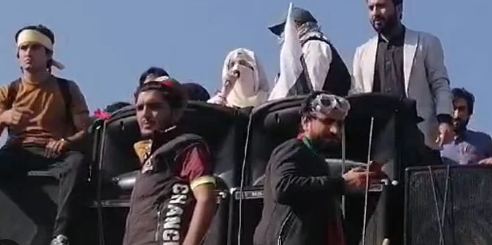
ISLAMABAD, NOV 26: The protest convoy of Pakistan Tehreek-e-Insaf (PTI) – led by Bushra Bibi – has reached D-Chowk in Islamabad after traveling from Khyber Pakhtunkhwa, where it has encountered intense resistance.

In response to escalating violence, police have begun heavy shelling to disperse the protesters, while PTI workers are retaliating by pelting stones at the law enforcement officials. Tear gas is being fired in an attempt to control the crowd, but the situation continues to deteriorate as clashes intensify.

Police given full powers

Interior Minister Mohsin Naqvi addressed the media, emphasising that the government’s first priority remains the protection of the Red Zone, which includes D-Chowk.

He asserted that the police have been given full authority to deal with the situation, aiming to avoid any loss of life, despite the protesters’ heavy resistance.

— فوٹو: اے ایف پی

Naqvi also highlighted that the protests were jeopardizing the safety of high-profile foreign dignitaries, including the President of Belarus, who is in the capital for official engagements.

Army deployed

The Pakistan Army, which had already been deployed to safeguard key government buildings in the Red Zone under Article 245 of the Constitution, has now taken full control of D-Chowk.

RELATED: Army given shoot-on-sight orders

Army personnel have positioned themselves on top of containers to monitor the situation, and all media teams and DSNGs have been evacuated from the area to ensure safety. Security forces, including the Rangers and police, have been called in from Rawalpindi to bolster the response.

— فوٹو: اے ایف پی

The federal capital is now in a state of high alert, with all key routes, including those leading to the Red Zone, blocked. Shops in the nearby Aabpara Market have been closed due to the effects of the tear gas, and vehicles have been removed from the roads to prevent further congestion. The district administration has also taken precautionary measures by sealing major shopping areas, including the Aabpara Market and Supermarket, as well as blocking access to the Blue Area adjacent to D Chowk.

Throughout the day, announcements have been made via loudspeakers urging PTI supporters to remain peaceful. However, the tense standoff between the protesters and the police continues to escalate. The authorities have warned of strict action against those who disrupt the peace or take the law into their own hands.

Despite the heavy resistance, the PTI convoy has continued its march, now pushing towards Jinnah Avenue, with a final destination at D Chowk. The situation remains volatile, with the future of the protest uncertain as both security forces and PTI workers brace for what could be a decisive showdown.

Zimbabwe win toss, elect to bat in second ODI against Pakistan

Zimbabwe

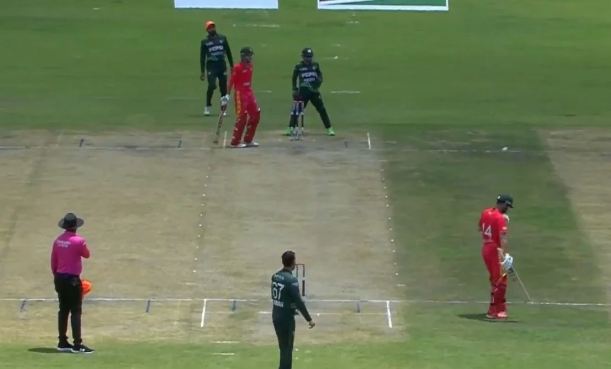
Bulawayo, NOV 26: Zimbabwe won the toss and elected to bat first in the do-or-die second match of three-match One Day International (ODI) series against Pakistan in Bulawayo on Tuesday.

The Green Shirts face losing their first-ever three-match ODI series to Zimbabwe, a team generally regarded as the underdog in this game, following a startling 80-run loss in the rain-hit series opener.

Zimbabwe have never been able to win a three-match ODI series, despite having some noteworthy wins over Pakistan, such as a one-off ODI victory in 1995, an ODI victory in 2015, and an exciting Super Over victory in 2021.

Sunday’s conclusive defeat served as a warning call to Pakistan, particularly following their recent victory against Australia on their home turf, The News reported.

The pressure is mounting on newly appointed white-ball head coach Aaqib Javed, whose debut series has started on a sour note.

Skipper Mohammad Rizwan stood out with an unbeaten knock in the first ODI, but the rest of the batting order faltered against Zimbabwean spinners Sikandar Raza and Sean Williams, who ruthlessly exploited the visiting side’s vulnerabilities.

Zimbabwe win toss, elect to bat in second ODI against Pakistan
Squads

Pakistan: Mohammad Rizwan (captain), Abrar Ahmed, Aamir Jamal, Abdullah Shafique, Ahmed Daniyal, Faisal Akram, Haris Rauf, Haseebullah, Kamran Ghulam, Mohammad Hasnain, Muhammad Irfan Khan, Salman Ali Agha (vice-captain), Shahnawaz Dahani, Saim Ayub, and Tayyab Tahir

Zimbabwe win toss, elect to bat in second ODI against Pakistan
Zimbabwe: Craig Ervine (captain), Brian Bennett, Blessing Muzarabani, Brandon Mavuta, Clive Madande, Dion Myers, Faraz Akram, Joylord Gumbie, Richard Ngarava, Sean Williams, Sikandar Raza, Tadiwanashe Marumani, Tashinga Musekiwa, Tinotenda Maposa and Trevor Gwandu.

A Grim Diagnosis

Global Misperceptions

By Amal Kamal

Imagine a ship caught in a storm—its sail tattered as waves crash relentlessly against its hull. This is Pakistan’s healthcare system, steering a sea of crises, only to find itself sinking under the weight of long-term neglect, inadequate resources, and systemic inefficiencies. For a country of over 240 million people, the condition of healthcare reflects a disturbing tale of mismanagement, where millions are left without access to necessary medical services, and Sustainable Development Goals (SDGs) remain an outlying dream.

According to the World Bank, Pakistan spends merely 2.9% of its GDP on healthcare, one of the lowest in South Asia. This distinct underinvestment has resulted in glaring disparities, which include a lack of well-equipped hospitals, deficient healthcare workers, and a scarcity of basic medicines. Almost 70% of the Pakistani population lives in underserved rural areas, where healthcare services are hindered by the lack of medical personnel, sparse facilities, and the high cost of treatments. According to UNDP, (The three Ps of inequality: Power, People and Policy) access to basic health services is similarly limited and highly unequal.

Low-income families have little or no access to the health care they need; if they face a serious illness, they are often compelled to take out loans to pay for health care. Ill-health can cause heads of households to lose their jobs or suffer a permanent loss of income, with catastrophic consequences for themselves and their dependants.

Despite being a signatory to the United Nations’ Sustainable Developmental Goals, particularly SDG 3, which emphasises good health and well-being, unfortunately we remain woefully behind in achieving its targets. The challenges confronting Pakistan’s healthcare system are countless and deeply embedded. With just one doctor for every 1,000 people and fewer than one hospital bed per 1,600 individuals, as noted by the World Bank, the system is stretched beyond its capacity. The situation is compounded by a lack of financial accessibility; over 70% of healthcare expenses in Pakistan are out-of-pocket, according to the World Bank Data Indicators (WDI). This burden leaves millions of citizens unable to afford quality health care and pushes countless households into poverty each year.

Behind the dingy numbers lie tragic stories of lives ruined and cut short due to the unavailability of affordable and quality healthcare. An unhealthy population with numerous condensed capabilities cannot considerably contribute to the economy. Health indicators suggest that it is the lack of accessible healthcare. And although healthcare is certainly linked to problems of corruption and security, there is no reason why healthcare should not be made an immediate priority rather than placed on the back burner of policy discourse. Furthermore, the governance of the healthcare system is equally troubling. Corruption, mismanagement, and a lack of accountability have impeded progress for decades. Funds allocated to healthcare are often exploited, and projects fail to deliver due to bureaucratic inefficiency. Moreover, preventive healthcare is largely ignored, as evidenced by the WHO and the US Centers for Disease Control and Prevention (CDC)’s report showing that only 66% of children in Pakistan receive essential vaccinations. This neglect leaves the population vulnerable to outbreaks of preventable diseases such as measles, polio, and hepatitis, while emerging threats like dengue fever further strain an already crumbling system.

Mexico and Thailand are two developing countries that have made political dedications towards universal healthcare with very promising results. In 2002, the government of Thailand introduced a “30-baht universal coverage scheme” that covered the entire population, guaranteeing that the concerned patient would not have to pay more than 30 baht per visit for medical care. In addition to this, Thailand’s ‘Health Assembly’ entitles citizens to actively participate in shaping their healthcare system. Similarly, Mexico’s ‘System of Social Protection in Health’ has made substantial strides in improving access to healthcare for millions of Mexicans, demonstrating the positive impact of well-designed health policies.

In order to achieve SDG 3 and provide equitable healthcare for its citizens, Pakistan must undertake comprehensive and sustained reforms. The government must seriously increase healthcare expenditure to at least 5% of GDP, as recommended by the WHO, with a focus on building modern infrastructure and expanding services to underserved rural areas.

Universal Health Coverage initiatives like the Sehat Sahulat Program need to be strengthened and expanded to ensure that all citizens have access to affordable healthcare.

Moreover, addressing workforce shortages is critical; this can be achieved by incentivizing rural postings for doctors and nurses and by collaborating with institutions like Aga Khan University to train healthcare professionals.

Sustainable development is indeed achievable if devolution is involved. If implemented effectively, the SDGs will serve the citizens by bringing accountability and decision-making within provincial jurisdiction. The reality is that poverty will not be eradicated by 2030, and the state may not be able to feed around 215 million children or ensure healthy living for all, but what can be achieved is chiselling programs to the demographics of different regions by keeping in view the contextual formulas for efficient delivery.

Although the storm is fierce, there is hope that Pakistan’s healthcare system can steer toward calmer waters. Strategic reforms, political will, and a commitment to prioritizing health as a fundamental right can realign the system with the needs of its people and the aspirations of the SDGs. The journey will undoubtedly be arduous, but the lives at stake demand urgent action. As Amartya Sen and Jean Dreze rightly urge in their book, An Uncertain Glory: India and Its Contradictions, that issues of healthcare should be brought closer to democratic politics.

By Amal Kamal

The author is a research writer and policy analyst with a focus on social policy, governance, and sustainable development.

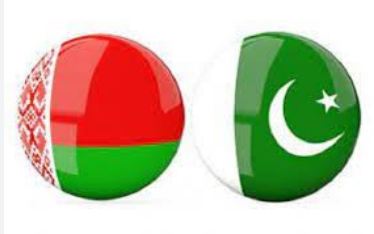
Pakistan, Belarus agree to cooperate for strengthening of justice system

Dar-Ryzhenkov meeting sets stage for Belarus President's Pakistan visit

ISLAMABAD, Nov 25 (APP): Pakistan and Belarus have agreed to share experiences and cooperate for betterment of law and justice system through digitalization, capacity building for prosecutors and attorneys, legal education and awareness and legislative drafting.

A meeting between Federal Minister for Law and Justice, Azam Nazeer Tarar, and Minister of Justice for Belarus, Kovalenko Evgeny took place on Monday. The meeting was marked by a spirit of warmth and mutual respect, as both leaders expressed their ardent desire to further fortify the existing bilateral relations between the nations.

The Belarusian Minister elaborated on the purview and mandate of the Ministry of Justice in Belarus, highlighting the potential for a bilateral accord. The key discussion points included digitalization of the legal system, capacity building for prosecutors and attorneys, legal education and awareness, legislative drafting and international cooperation, exchange of Bar councils/associates, International Mediation and Arbitration Center (IMAC), and Case Assignment and Management System (CAMS).

The meeting yielded significant outcomes, including an invitation extended by the Minister of Justice for Belarus to the Federal Minister for Law and Justice, Pakistan, and his team to visit Belarus, which was warmly reciprocated. The Federal Minister for Law and Justice, Pakistan, provided a comprehensive briefing on previous treaties and MOUs, laying the groundwork for future cooperation.

Both Ministers expressed enthusiasm for collaboration in legal education and exchange of Bar councils/associates, and explored potential areas for future collaboration in IMAC and CAMS. The meeting concluded with a unanimous vote of thanks, as both dignitaries expressed their profound appreciation for the productive dialogue and warm hospitality.

As a symbol of their mutual esteem, the Ministers exchanged commemorative Shields and memos, sealing their commitment to furthering the bilateral relationship between their nations. With a shared vision for a brighter future, the meeting marked the beginning of a new chapter in Pakistan-Belarus relations.

COMSTECH, Gourmet announces Industrial Internship Program

COMSTECH, Gourmet announces Industrial Internship Program

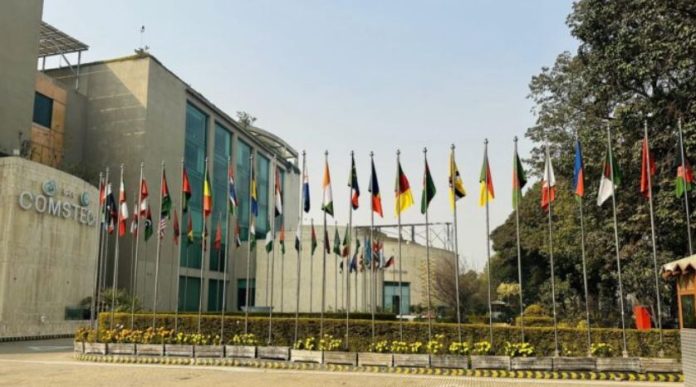
ISLAMABAD, Nov 25 (APP): The OIC Standing Committee on Scientific and Technological Cooperation (COMSTECH), in collaboration with Gourmet Industries, has announced the COMSTECH-Gourmet Industrial Internship Program for its first batch in January 2025.

This program aims to promote innovation, research, and skill development across various industrial sectors, offering participants practical training and exposure to advanced technologies and industrial processes.

According to COMSTECH, the internship is open to applicants from OIC member countries holding a BS/BSc or MS/MSc in relevant fields and under the age of 40.

Hosted by Gourmet Industries, the largest food processing complex in Pakistan, the program offers 10 internships lasting four weeks. The selected candidates will receive accommodation, meals, and return economy-class air travel.

The objective of the COMSTECH-Gourmet Industrial Internship Program is to foster innovation and research and development (R&D) across diverse industrial sectors, including food processing, engineering, plant operations, recycling, and so forth.

This program aims to provide interns with hands-on experience and exposure to cutting-edge technologies and methodologies, thereby enhancing their practical skills and theoretical knowledge.

By engaging in real-world projects, interns will contribute to the advancement of industrial processes and the development of sustainable solutions, ultimately driving technological innovation and improving operational efficiencies in the fields of human nutrition and value addition.

The program focuses on key areas including food industry operations such as bakery, dairy, and beverages, plant utilities, recycling through innovative RPET methodologies, shrink-wrap production, sugar mill logistics, and media training in journalism and broadcasting. Participants will gain hands-on experience in supply chain management, production processes, and sustainability practices.

This initiative underscores COMSTECH’s mission to empower youth in OIC nations and advance technological development for socio-economic progress.

The applicants must complete the application form and upload the requested documents (CV, Research Proposal, etc.) at: (https://form.jotform.com/243101366016444) till November 30. The applicants can contact [email protected] for further information.

‘Nation has rejected politics of ‘chaos and anarchy’

‘Nation has rejected politics of ‘chaos and anarchy’

The minister said the people of Pakistan wanted the politics of progress and welfare which is manifested by the people-friendly initiatives of the government led by Prime Minister Shehbaz Sharif.

DNA

RAWALPINDI: Minister for Information, Broadcasting, National Heritage and Culture Attaullah Tarar on Monday called out the Pakistan Tehreek-e-Insaf for pursuing the politics of “chaos and anarchy”, citing its violent conspiracy of May 9 arson.

Talking to the media at the Nur Khan Airbase, the minister said the people of Pakistan wanted the politics of progress and welfare which is manifested by the people-friendly initiatives of the government led by Prime Minister Shehbaz Sharif.

He said the national economy is taking off with the Pakistan Stock Exchange crossing the historical milestone of 100,000 points, and inflation plummeting to 6.9 per cent from 32 per cent, while foreign exchange reserves are swelling with a significant increase in exports, and also remittances that jumped to $8.8 billion in the first quarter.

He said two major commodities including electricity and petrol are cheaper than previous years, while interest rate and KIBOR stood at 15 per cent and 13 per cent, respectively. “This shows the economy is progressing and attracting foreign investment,” he added.

The minister said a high-level delegation from Belarus has already arrived in Pakistan the other day, while its President Alexander Lukashenko has just arrived in Islamabad. He said this is a historical visit for the bilateral relations of the two countries that enjoyed three decades of diplomatic ties.

Tarar called the two countries’ friendship and partnership “exemplary” while lauding the sentiments of the President for the people of Pakistan.

The visit of the President of a friendly country to Pakistan is welcoming development, he said, adding a number of business-to-business Memoranda of Understanding (MoUs) would be signed during the visit to enhance the cooperation in multiple areas which would eventually benefit the masses.

He said the defence cooperation between Pakistan and Belarus is exemplary, while cooperation in other areas such as agriculture, agro processing, pharmaceutical, and textile will see an increase in the coming days.

He said today Deputy Prime Minister and Foreign Minister Senator Mohammad Ishaq Dar had welcomed the Foreign Minister of Belarus and both had discussed matters of mutual interest.

The minister said the current visit is the follow-up to a productive meeting between Prime Minister Shehbaz Sharif and President Alexander Lukashenko at the Astana during the SCO Summit.

He said the Belarusian President had visited Pakistan during the tenure of former Prime Minister Nawaz Sharif who also visited Belarus on official visit. He said a warm welcome has been accorded to the President on behalf of the government and the people of Pakistan.

PTI adamant to reach D-Chowk

With eyes on D-Chowk, Gandapur-led PTI convoy enters 'within limits of Islamabad'

Ali Amin Gandapur caravan reaches Islamabad; Bushra BiBi directs workers to be ready for a long battle

Ansar M Bhatti

ISLAMABAD, NOV 25 /DNA/ – Negotiations between leaders of the Pakistan Tehreek-e-Insaf (PTI) and the government committee regarding the location for sit-in were underway till filling of this report. The PTI leaders were adamant to reach the D-Chowk come what may. The Government has offered PTI to stage its sit-in at the Peshawar Morr. The sources claim the PTI leaders have rejected the proposal.

The government’s committee, which includes National Assembly Speaker Ayaz Sadiq, Interior Minister Mohsin Naqvi, Amir Maqam, and Rana Sanaullah, is in talks with PTI representatives, including Asad Qaiser and Shibli Faraz.

Sources suggest that the negotiations are taking place at the Speaker’s residence in the Minister’s Enclave.

However, Shibli Faraz clarified that he was not part of the negotiations, stating, “I am not directly involved in the talks, and I have not been able to reach out to Barrister Gohar or Asad Qaiser.”

Faraz further stated that any future talks would be in line with the latest instructions from PTI founder Imran Khan, and confirmed that no communication has taken place on the matter as of yet. He also reiterated that PTI’s peaceful protests would continue until the release of their party leader.

JCP names nine judges for Sindh high court constitutional benches

JCP names nine judges for Sindh high court constitutional benches

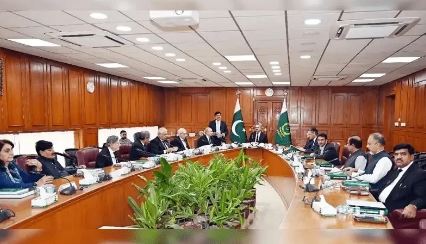
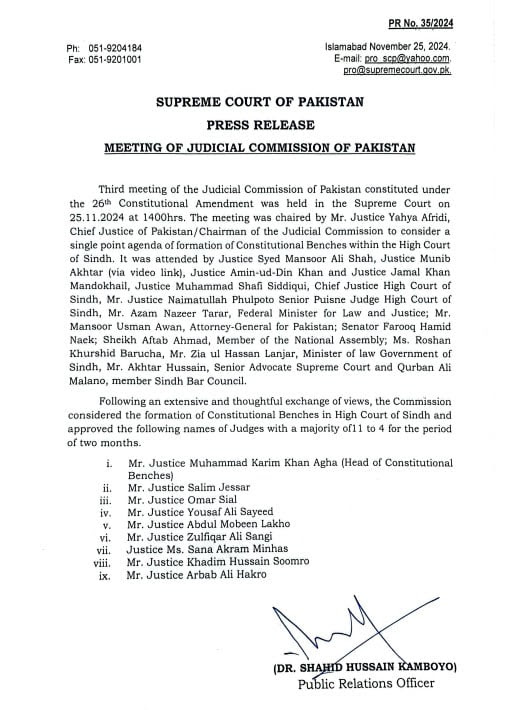
ISLAMABAD: In a major development, the Judicial Commission of Pakistan (JCP) on Monday named nine judges for the constitutional benches in the Sindh High Court (SHC) by a majority of eleven to four.

The third meeting of the JCP under the 26th Constitutional Amendment was held with Chief Justice of Pakistan (CJP) Yahya Afridi in the chair at the top court in Islamabad.

The sole agenda of the meeting was formation of constitutional benches with the SHC.

“Following an extensive and thoughtful exchange of views, the commission considered the formation of constitutional benches in SHC and approved names of 9 judges with a majority of 11 to 4 for the period of two months,” read a statement issued by the Supreme Court.

JCP names 9 judges for constitutional benches in SHC

SHC Justice Muhammad Karim Khan Agha was nominated as head of the constitutional benches.

He was picked as the chairman of the thee-member constitutional committee. The committee would be responsible for constituting constitutional benches in the SHC.

SC senior puisne judge Justice Mansoor Ali Shah, Justice Munib Akhtar and SHC Chief Justice Muhammad Shafi Siddiqui opposed the majority decision. CJP Afridi, however, did not vote on the matter.

Justice Muhammad Saleem Jessar, Justice Omar Sial, Justice Yousuf Ali Sayeed, Justice Abdul Mobeen Lakho, Justice Zulfiqar Ali Sangi, Justice Ms. Sana Akram Minhas, Justice Khadim Hussain Soomro, Justice Arbab Ali Hakro and justice KK Agha were picked for the constitutional committees, read the statement.

Earlier this month, the JCP formed a seven-member constitutional bench under Justice Amin-ud-Din Khan in line with the 26th Amendment.

CJP Afridi-led judicial commission constituted the bench in 7-5 split decision, with a majority of the members voting in favour of the constitutional bench.

The constitutional bench includes judges from all provinces; Justice Amin-ud-Din and Justice Ayesha Malik from Punjab, Justice Muhammad Ali Mazhar and Justice Hassan Azhar Rizvi from Sindh, Justice ⁠Jamal Khan Mandokhail and Justice Naeem Akhtar Afghan from Balochistan and Justice Musarrat Hilali from Khyber Pakhtunkhwa (KP).

The meeting was attended by senior puisne judge Justice Shah, Justice Akhtar, Justice Amin-Ud-din, Senator Farooq H Naek, MNA Sheikh Aftab Ahmad, MNA Omar Ayub, Roshan Khursheed Bharucha, Law Minister Azam Nazeer Tarar, Senator Shibli Faraz, Attorney General for Pakistan Mansoor Usman Awan, and Pakistan Bar Council representative Akhtar Hussain.

At the outset of the meeting, Opposition Leader in the National Assembly Omar Ayub objected to the quorum of the commission highlighting the absence of one member.

“This objection was later put to a vote and by majority, the meeting affirmed that the proceedings are in consonance with the Constitution and can continue in the absence of one member,” said the statement.

The commission also discussed the establishment of a dedicated secretariat to support and perform its functions and, after thorough consideration, the body authorised the chairman (CJP) to proceed with its rule making and establishment.

The judicial commission is mandated to appoint judges to the Supreme Court, high courts, and the Federal Shariat Court (FSC).

Spanish artist presents a mesmerizing performance

DNA

ISLAMABAD: The event in Islamabad, which showcased renowned Spanish artist Sara Calero’s performance, was a celebration of Flamenco Dance, an expressive and captivating art form deeply rooted in Spanish culture. Held at the luxurious Serena Hotel, the event was a collaboration between the Spanish Embassy and Serena Hotels, aimed at promoting cultural exchange and appreciation between Spain and Pakistan.

Sara Calero, a prominent figure in the Flamenco dance world, brought an authentic and mesmerizing experience to the stage, highlighting the deep emotional and artistic elements of Flamenco. Known for her passion and intricate choreography, Calero’s performance likely captivated the audience with the intensity, rhythm, and elegance that define Flamenco, blending music, dance, and storytelling.

The event not only offered a rare opportunity for Islamabad’s art enthusiasts to experience a traditional Spanish cultural form but also strengthened ties between Spain and Pakistan by promoting cross-cultural understanding. Through such celebrations, the Spanish Embassy and Serena Hotels foster a platform for showcasing global art forms and encouraging international dialogue.

Flamenco, with its powerful movements and soulful music, is more than just a dance; it represents a centuries-old tradition that blends influences from various cultures. This celebration at the Serena Hotel was an immersive experience that likely allowed the attendees to not only watch but also feel the profound cultural heritage of Spain through the medium of Flamenco.

With eyes on D-Chowk, Gandapur-led PTI convoy enters ‘within limits of Islamabad’

With eyes on D-Chowk, Gandapur-led PTI convoy enters 'within limits of Islamabad'

ISLAMABAD, NOV 25: Police fire teargas at protesters trying to enter Rawalpindi; Islamabad fortified by authorities.

Stay Connected

64FansLike
60FollowersFollow

Latest Reviews

Exchange Rates

USD - United States Dollar
EUR
1.18
GBP
1.36
AUD
0.73
CAD
0.73