Home Blog Page 745

Belarus President meets army chief

Belarus President meets army chief

DNA

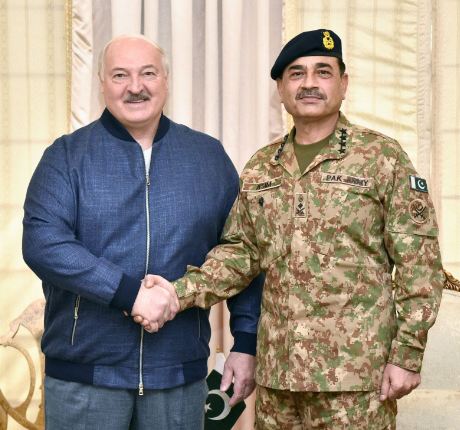
ISLAMABAD, NOV 27: The President of the Republic of Belarus, Aleksandr Lukashenko, met with General Syed Asim Munir, NI(M), Chief of Army Staff (COAS), in Islamabad today.

The discussion encompassed matters of mutual interest, prospects for defense cooperation, and regional security dynamics.

The COAS emphasized Pakistan’s appreciation for Belarus’s contributions to global and regional affairs, expressing a desire to strengthen and expand bilateral ties.

President Aleksandr Lukashenko praised the Pakistan Armed Forces for their significant role in fostering regional peace and stability, as well as their sacrifices in the fight against terrorism.

Trump names lawyer Jamieson Greer his US trade envoy

Trump names lawyer Jamieson Greer his US trade envoy

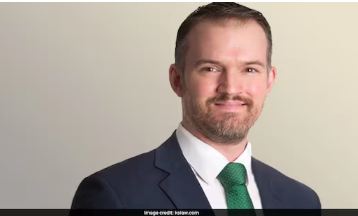
Washington, Nov 27 (AFP/APP): Donald Trump on Tuesday named Jamieson Greer his trade envoy, a key figure in rolling out the US president-elect’s economic agenda — in which tariffs are set to play a significant role.

                  “Jamieson played a key role during my First Term in imposing Tariffs on China and others to combat unfair Trade practices,” said Trump of Greer, who served as chief of staff to US Trade Representative Robert Lighthizer during Trump’s first administration.

                  Trump also cited Greer’s experience in helping to see through a trade deal between the United States, Mexico and Canada.

                  Greer was most recently a partner at law firm King & Spalding.

                  During Trump’s first term from 2017 to 2021, the United States introduced tariffs on billions of dollars worth of imports — notably on China but also America’s allies.

                  In particular, the Trump administration imposed levies on some $300 billion in Chinese goods, as Washington and Beijing engaged in an escalating tariff war.

                  Lighthizer emerged as the US strongman in trade talks at the time, as he sought to force changes in Beijing’s economic policies.

                  If confirmed by the Senate, Greer, who is viewed as Lighthizer’s protegee, will be charged with rolling out Trump’s tariff policy and negotiating trade deals.

Canada AI project hopes to help reverse mass insect extinction

Canada AI project hopes to help reverse mass insect extinction

MONTREAL, NOV 27 (AFP/APP): Researchers in Canada are using artificial intelligence to monitor the ongoing mass extinction of insects, hoping to collect data that can help reverse species collapse and avert catastrophe for the planet.

“Of all the mass extinctions we have experienced in the past, the one affecting insects is happening a thousand times faster,” said Maxim Larrivee, director of the Montreal Insectarium.

    The decline is occurring so quickly it can’t be properly monitored, making it impossible “to put in place the necessary actions to slow it down,” he told AFP.

    For the Montreal-based project, called Antenna, some of the data collection is happening inside the insectarium under a large transparent dome, where thousands of butterflies, ants and praying mantises are being studied.

  Solar-powered camera traps have also been installed in several regions, from the Canadian far north to Panamanian rainforests, snapping photos every 10 seconds of insects attracted to UV lights.

  Larrivee said innovations like high-resolution cameras, low-cost sensors and AI models to process data could double the amount of biodiversity information collected over the last 150 years in two to five years.

   “Even for us, it sounds like science fiction,” he said, a grin stretched across his face.

                  Scientists have warned the world is facing its biggest mass extinction event since the dinosaur age.

The drivers of insect species collapse are well understood — including climate change, habitat loss and pesticides — but the extent and nature of insect losses have been hard to quantify.

    Better data should make it possible to create “decision-making tools for governments and environmentalists” to develop conservation policies that help restore biodiversity, Larrivee said.

There are an estimated 10 million species of insects, representing half the world’s biodiversity, but only a million of those have been documented and studied by scientists.

David Rolnick, a biodiversity specialist at the Quebec AI Institute working on the Antenna project, noted that artificial intelligence could help document some of the 90 percent of insect species that remain undiscovered.

“We found that when we went to Panama and tested our sensor systems in the rainforest, within a week, we found 300 new species. And that is just the tip of the iceberg,” Rolnick told AFP.

At Antenna, testing to advance AI tools is currently focused on moths.

With more than 160,000 different species, moths represent a diverse group of insects that are “easy to identify visually” and are low in the food chain, Rolnick explained.

“This is the next frontier for biodiversity monitoring,” he said.

The Montreal project is using an open source model, aiming to allow anyone to contribute to enriching the platform.

  Researchers eventually hope to apply their modeling to identify new species in the deep sea and others harmful to agriculture.

  Meanwhile, the Montreal Insectarium is using its technology for educational purposes. Visitors can snap pictures of butterflies in a vivarium and use an app to identify the exact species.

  French tourist Camille Clement sounded a note of caution, saying she supported using AI to protect ecology provided “we use it meticulously.”

      For Julie Jodoin, director of Espace Pour La Vie, an umbrella organization for five Montreal museums including the Insectarium: “If we don’t know nature, we can’t ask citizens to change their behaviour.”

Of disjointed and ‘compromised’ PTI leadership

Of disjointed and ‘compromised’ PTI leadership

Comment
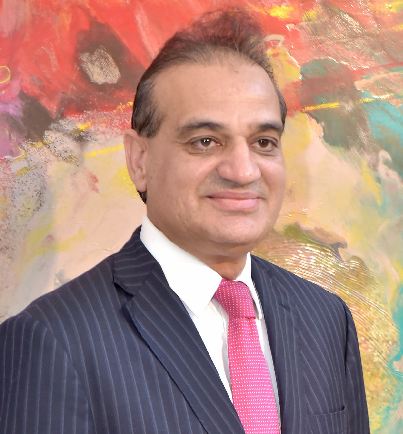
Ansar Mahmood Bhatti

There is a saying that behind every successful man, there is a woman. However, in the case of Imran Khan, it appears the opposite might be true. It is widely believed that during his three and half year tenure as Prime Minister, his wife, Bushra Bibi, played a significant role in decision-making. Allegedly, under her influence, close associates such as Farah Gogi and others benefited immensely through questionable practices involving transfers, postings, land acquisitions, housing schemes, and more.

One prominent controversy linked to this dynamic is the Toshakhana case, which has landed the PTI founder in jail. Reports suggest that it was Bushra Bibi who insisted on retaining valuable gifts, including the high-profile watch gifted by Crown Prince Mohammed bin Salman, and later suggested selling it. This decision not only tarnished Imran Khan’s reputation but also provided the government with a strong basis to initiate legal action against the former prime minister.

The recent D-Chowk debacle is closely tied to Bushra’s intransigent stance. Despite clear instructions from Imran Khan to avoid the location, she insisted on marching towards D-Chowk. PTI leaders claim that Imran Khan had agreed to hold a sit-in at Sangjani, but Bushra reportedly compelled Ali Amin Gandapur to head to D-Chowk at all costs. What unfolded at D-Chowk is now part of history—tragically, numerous lives were lost on both sides, and many others suffered serious injuries. Notably, both Bushra and Gandapur managed to make a safe exit from the scene, leaving others to bear the consequences.

The statement highlights allegations and perceptions within Pakistan’s political landscape, particularly regarding the internal dynamics of Pakistan Tehreek-e-Insaf (PTI). It reflects a growing belief among certain PTI circles and political opponents that key figures such as Bushra Bibi, the wife of PTI Chairman Imran Khan, and Ali Amin Gandapur, a prominent party leader, are not independently influencing party decisions. Instead, they are accused of taking cues from entities or individuals outside the party’s formal hierarchy.

Interior Minister Mohsin Naqvi explicitly alleged that these figures are acting under the direction of so-called “hidden hands”—a term often used in Pakistan’s political lexicon to refer to unseen forces, frequently implying elements of the establishment or other influential actors operating behind the scenes. This rhetoric suggests a deep mistrust in PTI’s leadership autonomy, insinuating that the party is being manipulated to serve external agendas.

Naqvi’s remarks further frame Bushra and Gandapur as symbolic rather than substantive leaders, portraying them as “puppets” whose actions are controlled by these unseen forces. This perspective not only undermines the credibility of PTI’s internal decision-making but also casts doubts on the role of Imran Khan as the central figure of the party. It implies a dilution of his authority, raising questions about who truly holds power within the party and the motivations of those allegedly pulling the strings.

The broader implication of this narrative is the perception of political maneuvering by shadowy entities to destabilize or redirect PTI’s trajectory, potentially to align with their strategic interests. Such allegations, if unsubstantiated, may be viewed as politically motivated rhetoric aimed at discrediting PTI leadership during a period of heightened political tension. However, for PTI supporters, such claims are likely to be dismissed as part of a broader campaign to weaken the party’s position and its influence over its voter base.

The noticeable absence of PTI Chairman Barrister Gohar and Secretary General Salman Akram Raja from key protests, including the recent D-Chowk episode, raises questions about the leadership’s commitment to leading from the front during pivotal moments. Their absence is not just a matter of optics but one that directly impacts the morale and enthusiasm of party workers and supporters on the ground.

In any political movement, especially one reliant on mass mobilization, the visible presence of the top leadership is crucial. It not only energizes the participants but also sends a strong message of unity and resolve to opponents and onlookers. Without the leadership at the helm during such critical junctures, the movement risks appearing disorganized or lacking resolve.

The situation in Punjab further compounds these challenges. The provincial leadership, instead of effectively mobilizing supporters or presenting a robust challenge, opted to get arrested—a move that, while symbolically significant, failed to sustain the momentum or advance the party’s objectives. Arrests can serve as a political statement, but without strategic follow-through or visible leaders directing the narrative, they lose their impact and leave the movement floundering.

The government’s handling of the PTI protests has drawn widespread criticism, with many condemning the excessive use of force employed to suppress the dissent. This approach not only resulted in the tragic loss of numerous lives but also severely damaged the reputation of the country’s security forces, both domestically and on the global stage. The brutality witnessed during the crackdown on protesters has reinforced the narrative that coercive measures fail to address underlying political or social grievances, often exacerbating tensions instead of resolving them.

This situation raises a critical question: will the PTI step back and accept this suppression, or will the movement gain renewed momentum? Historical and cultural dynamics suggest that such repression is unlikely to subdue dissent entirely. In fact, it may fuel further resistance, particularly given the cultural ethos of Pashtoons, who have a deep-seated tradition of standing up against perceived injustices and “settling scores” when wronged. This could lead to an escalation in confrontations, making the political landscape increasingly volatile in the days ahead.

It is imperative for the government to reconsider its approach and prioritize dialogue and reconciliation over force. A failure to address the root causes of discontent risks deepening the divide, potentially pushing the country into further turmoil.

Whether one likes it or not, Pakistan Tehreek-e-Insaf (PTI) has established itself as a dominant political force with substantial support both domestically and internationally. Despite the challenges and controversies surrounding the party, recent events have seemingly bolstered its political standing and enhanced its public appeal. PTI’s ability to galvanize massive public support, even in difficult times, reflects its deep-rooted influence and connection with the masses.

Excluding PTI from the political landscape or decision-making process poses significant challenges for governance and policy implementation. The party’s influence is such that neglecting its role in national politics may lead to instability or difficulty in managing day-to-day state affairs effectively. It is in the best interest of the country for the decision-makers and the “powers-that-be” to acknowledge and engage with PTI constructively. A collaborative approach that includes PTI in the political framework would likely foster greater national harmony, ensuring political stability and progress. The sooner this reality is embraced, the better it will be for the country’s overall wellbeing and democratic health.

The writer is the newspaper editor

Former Conservative leader William Hague appointed Oxford University chancellor

Former Conservative leader William Hague appointed Oxford University chancellor

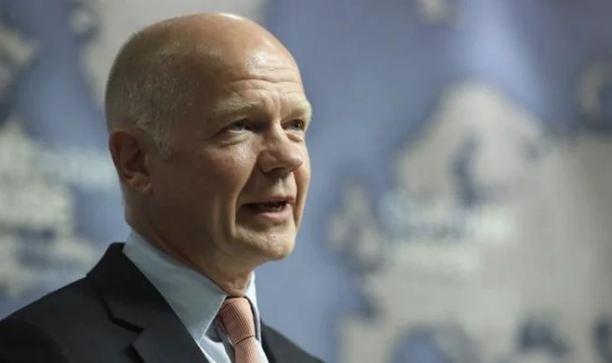
LONDON: William Hague, a former leader of the Conservative Party and England’s foreign minister, was elected on Wednesday as the next chancellor of the University of Oxford, a largely ceremonial role which dates back centuries.

Hague was named as successor to Chris Patten, Britain’s last governor of Hong Kong and a former senior Conservative politician, for what is seen as one of the grandest positions in higher education.

He beat off competition from the former Labour minister Peter Mandelson and three other candidates.

The university said Hague “won a majority of support in the final round of voting for the post” and he will be 160th recorded chancellor in the university’s history, a role that dates back at least 800 years.

Pakistan Tehreek-e-Insaf (PTI) founder Imran Khan had also applied for the position of chancellor in September at the prestigious university despite being incarcerated in corruption and other cases relating to incitement of violence during May 9 protests last year.

The seat had become vacant after the resignation of 80-year-old Lord Patten who stepped down from the post after serving for 21 years.

However, in October, the former PM’s bid was rejected, his adviser had said.

Oxford had released a shortlist of 38 candidates who were in the running for the first round of voting with Imran’s name not among them.

The list included names of former prime ministers of England Sir Tony Blair and Boris Johnson were among the candidates to become the university’s chancellor.

NA Speaker welcomes Russia’s stance on Islamofobia

NA Speaker welcomes Russia’s stance on Islamofobia

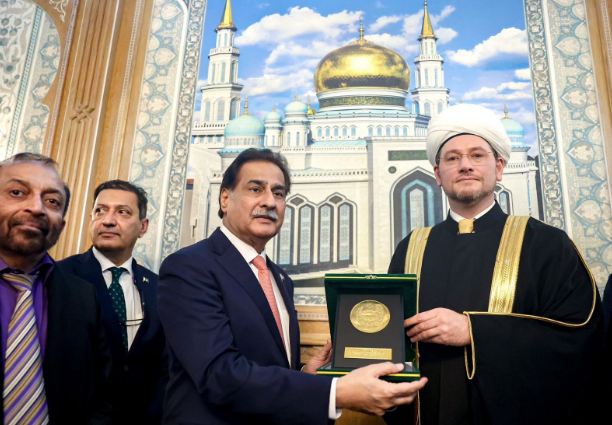
MOSCOW, NOV 27: /DNA/ – The Speaker of the National Assembly of Pakistan, Sardar Ayaz Sadiq today held a meeting with the Deputy Chairman of the Council of Muftis, Damir Mukhetdinov at the Moscow Cathedral Mosque.

The Speaker, while highlighting the positive momentum in Pakistan-Russian relations, appreciated Russia’s growing relations with the Muslim world. The Speaker welcomed Russia’s stance on Islamophobia and President Putin’s statement on respect for holy religious personalities.

The Speaker further expressed admiration for inter-faith harmony and peaceful coexistence of multiple faiths in Russia.

On the topic of Palestine issue, both sides expressed solidarity with the Palestinian people.

Both sides also agreed to continue cooperation in the religio-cultural sphere.

Speaker of the National Assembly of Pakistan, Sardar Ayaz Sadiq, is undertaking an official visit to Moscow from 27-29 November on the invitation of his Russian counterpart.

Pakistan outfox China in Men’s Junior Hockey Asia Cup

Junior Asia Cup Hockey: The Pakistan team makes an impressive start by defeating China 7-2

MUSCAT, NOV 27: Pakistan hockey team had started off the proceedings in a boisterous fashion by beating China by 7-2 in the Men’s Junior Hockey Asia Cup in Oman on Wednesday.

According to details, Fayyaz Hamza and Sufiyan Khan had netted two goals each for providing to the Green Shirts’ winning cause.

Rana Waleed, Muhammad Ammad, and Muhammad Mugheera had scored one goal each.

Pakistan will lock horns against Bangladesh tomorrow.

PNS Zulfiquar conducts exercise with Korean Navy Ship in Arabian Sea

PNS Zulfiquar conducts exercise with Korean Navy Ship in Arabian Sea

DNA

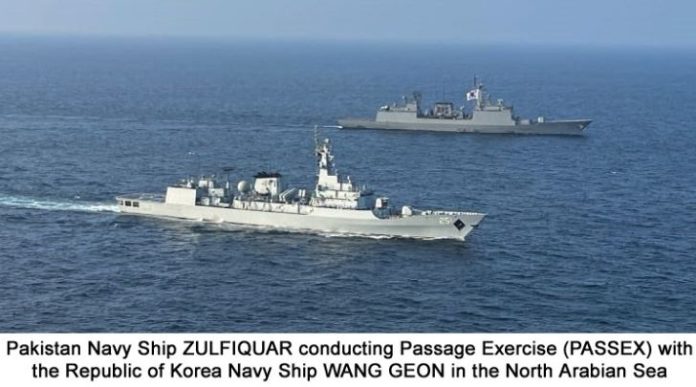
ISLAMABAD, NOV 27: Pakistan Navy Ship PNS ZULFIQUAR conducted a Passage Exercise (PASSEX) with Republic of Korea Navy Ship WANG GEON in the North Arabian Sea. Both ships operated under the task forces of Combined Maritime Forces (CMF), CTF-150 and CTF-151, respectively.

The exercise included tactical maneuvers and communication drills, aimed at enhancing operational interoperability and fostering professional ties between the two navies. CTF-150 and CTF-151 focus on deterring illicit maritime activities such as drug trafficking and piracy, which threaten security in international waters.

The successful conduct of this joint exercise underscores the commitment of both navies and their respective Task Forces to upholding maritime security, supporting lawful activities at sea, and promoting stability and cooperation in this strategically vital region.

Pakistan and the Republic of Korea consistently contribute ships and aircraft to maritime security efforts under the CMF banner. This collaboration is particularly valuable for building mutual understanding and operational synergy.

PM Shehbaz Sharif sees off Belarusian President following state visit to Pakistan

PM Shehbaz Sharif sees off Belarusian President following state visit to Pakistan

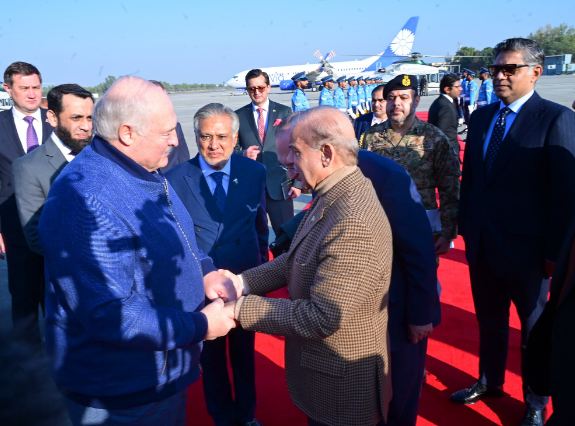
RAWALPINDI, NOV 27: /DNA/ – Prime Minister Muhammad Shehbaz Sharif sees off President of Belarus Aleksandra Lukashenko at PAF Nur Khan Airbase on 27 November 2024. President of Belarus Aleksandr Lukashenko concluded his three-day visit to Pakistan. He was seen off at the airport by Prime Minister Muhammad Shehbaz Sharif and Deputy Prime Minister/Foreign Minister Muhammad Ishaq Dar.

During the visit, the two leaders comprehensively reviewed the full range of bilateral relations and reaffirmed their mutual commitment to deepening friendly ties between the two countries across political, trade, economic, cultural, social, and other areas. The two sides signed fifteen important agreements and MOUs, including the Roadmap for Comprehensive Cooperation for the period 2025-2027. The roadmap focuses on enhancing bilateral economic cooperation between Pakistan and Belarus.

Aisam ul Haq visits ICCI

Aisam ul Haq visits ICCI

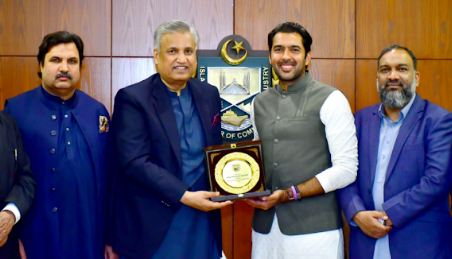
ISLAMABAD, NOV 27: Aisam ul Haq Qureshi, former tennis star and President of the Pakistan Tennis Federation (PTF), visited the Islamabad Chamber of Commerce and Industry (ICCI), where he was warmly welcomed by ICCI President Nasir Mansoor Qureshi, Senior Vice President Abdul Rehman Siddiqui, Vice President Nasir Mehmood Chaudhry and  Executive Members.

 Aisam ul Haq shared his vision for developing tennis in Pakistan, outlining plans to establish a gym, renovate the Players Tennis Hut, remodel the guest rooms for players, and enhance the live coverage of matches on YouTube. He also highlighted upcoming national-level tournaments.

He also sought the corporate sector’s cooperation and collaboration for the promotion of the game and conduct of national and international tournaments for enhancing the global image of the country.

President Nasir Mansoor Qureshi emphasized the critical role of sports in maintaining both physical and mental well-being. He stated that regular participation in physical activities not only fosters a healthy body but also sharpens the mind, contributing to improved productivity and success. He praised Aisam ul Haq for his remarkable achievements in international tennis and acknowledged the significant contributions of his family in promoting the game. He also acknowledged national sports heroes as key motivators for the youth.

 On behalf of ICCI, Nasir Qureshi assured Aisam ul Haq Qureshi of full support for the promotion of tennis, including the adoption and grooming of promising players. He also expressed the Chamber’s willingness to assist in other areas crucial for the sport’s development.

Aisam ul Haq was accompanied by PTF Secretary General Col. Zia ud Din Tufail (R), Senior Vice President Sohail Khawaja, and Director of Complex and Security Col. Gul Rehman (R). ICCI Executive Members Shumaila Siddiqui, Malik Mohsin Khalid, Ishaq Sial, Zulqurnain Abbasi, Rohail Anwar Butt, Aftab Gujjar, Umer Khayyam, ICCI members Naeem Siddiqui, Khalid Chaudhry, TWAs leaders Assad Aziz, Shahzad Shabbir Abbasi, and other were also present on the occasion.

Stay Connected

64FansLike
60FollowersFollow

Latest Reviews

Exchange Rates

USD - United States Dollar
EUR
1.18
GBP
1.36
AUD
0.73
CAD
0.73