Home Blog Page 743

Pakistan wins toss, opts to bat first in opening T20 against Zimbabwe

Pakistan wins toss, opts to bat first in opening T20 against Zimbabwe

BULAWAYO, DEC 1: Pakistan won the toss for the first Twenty20 international of a three-match series against Zimbabwe, held at Queens Sports Club in Bulawayo on Sunday. Salman Ali Agha to take lead national side.

Speaking at the toss, Agha said that his team is keen to post a substantial score. The strategic decision to bat first gives a chance to the Pakistani batting lineup to get momentum early in the series.

The national squad comprises a blend of experienced and emerging talents, including Saim Ayub, Umair Bin Yusuf, Osman Khan, Tayyab Tahir, Muhammad Irfan Khan, Jahandad Khan, Muhammad Abbas Afridi, Haris Rauf, Abrar Ahmed, and Sufyan Muqeem.

Two soldiers martyred while eliminating terrorists in Bannu and Khyber Districts: ISPR

Two soldiers martyred while eliminating terrorists in Bannu and Khyber Districts: ISPR

RAWALPINDI, DEC 1 /DNA/ – Eight khwarij have been sent to hell in two separate operations conducted in Khyber Pukhtunkhwa Province from 29 November to 1 December 2024.

An intelligence based operation was conducted in general area Baka Khel, Bannu District on reported presence of khwarij. During the conduct of operation, own troops effectively engaged the khwarij location and resultantly killed five khwarij, while nine khwarij got injured.

However, during the operation, Sepoy Iftikhar Hussain (Age: 29 years, resident of: District Jhang), having fought gallantly, embraced shahadat.

In another operation conducted in general area Shagai, Khyber District, three Khwarij were sent to hell, while two were apprehended by the security forces.

During intense fire exchange, Captain Muhammad Zohaib Ud Din (Age: 25 years, resident of: District Lahore), who was leading his troops from the front, fought bravely, paid the ultimate sacrifice and embraced shahadat.

These khwarij were involved in numerous terrorist activities against the security forces as well as innocent civilians.

Sanitization operations are being conducted to eliminate any other kharji found in the area as security forces of Pakistan are determined to wipe out the menace of terrorism from the country and such sacrifices of our brave soldiers further strengthen our resolve.=DNA

Uzbek envoy, PCMEA discuss bilateral trade

Uzbek envoy

LAHORE, DEC 01 (APP): Uzbekistan’s Ambassador in Pakistan Alisher Tukhtaev discussed with Pakistan Carpet Manufacturers and Exporters Association (PCMEA) ways to enhance bilateral trade, particularly in the carpet industry, and emphasized increasing mutual trade between the two countries.

During his visit to PCMEA head office here, he also highlighted the importance of strengthening partnerships in all fields, including trade, and expressed his commitment to facilitating visa processes for trade delegations. He was accompanied by Trade Consul Bakhrom Yusupov and other officials. The meeting was also attended by PCMEA Patron-in-Chief Abdul Latif Malik, Chairman Mian Atiqur Rehman, Vice Chairman Riaz Ahmed and Carpet Training Institute (CTI) Chairperson Ejazur Rehman.

Tukhtaev’s visit underscores Uzbekistan’s efforts to bolster economic ties with Pakistan, and the carpet industry is a significant sector with vast potential for growth and cooperation.

Alisher Tukhtaev hailed the launch of direct flights from Tashkent to Lahore as a “historic development” in Pak-Uzbek relations. This move is expected to significantly boost trade and cultural ties between the two nations.

With Uzbekistan’s population of 40 million and a GDP growth rate of 6-7 percent per annum, the ambassador emphasized the vast potential for cooperation in various sectors, including energy, logistics, agriculture, and culture. He noted that Uzbekistan’s special economic zones offer extremely competitive gas and electricity rates, making them an attractive proposition for Pakistani businesses.

The ambassador also highlighted the importance of enhancing bilateral trade, which is expected to reach new heights in the near future. Discussions are already underway with Pakistan’s Ministry of Commerce on various matters, and the direct air service between Tashkent and Lahore is expected to play a key role in promoting trade partnerships.

PCMEA Chairman Mian Atiqur Rehman and Vice Chairman Riaz Ahmed welcomed Uzbekistan’s Ambassador and his delegation. They proposed organizing single-country exhibitions in Uzbekistan to promote Pakistani handmade carpets and requested full support for the event. The exhibitions should allow the carpets to be sold in the local market as well.

They suggested reducing import tariffs on handmade carpets from Pakistan to facilitate trade in this sector. They also proposed holding single-country exhibitions every six months to promote bilateral trade and cultural exchange.

Uzbekistan’s Trade Consul, Bakhrim Yusupov, noted that Uzbekistan also has a handmade carpet industry, but Pakistan’s experience in this sector is more extensive. He expressed interest in joint ventures and proposed that PCMEA arrange a delegation to meet with Uzbekistan’s carpet producers.

He mentioned that Pakistan and Uzbekistan have agreements covering 17 items and two memoranda of understanding on transit trade logistics. However, he emphasized the need to further enhance trade cooperation between the two countries.

During the meeting, PCMEA officials requested that the Uzbek delegation to provide information on wool and silk prices and import procedures in Pakistan. The association also presented a handmade carpet and a special shield to the Uzbek ambassador, who reciprocated with a shield for the PCMEA Chairman.

==========

Role of Youth in Pakistani politics

Role of Youth in Pakistani politics

Ayesha Arshad

The active participation of youth in the political landscape of Pakistan holds profound implications for the nation’s democratic development and socio-economic progress. As a country with over 63% of its population under the age of 30, Pakistan possesses a unique demographic advantage that, if effectively harnessed, can drive transformative changes. The youthful energy, innovation, and perspectives embedded within this demographic make them a critical asset for national growth. However, realizing this potential requires overcoming systemic barriers and creating an environment conducive to meaningful youth engagement in politics.

The youth have historically played a significant role in shaping Pakistan’s political narrative. During the Pakistan Movement, young individuals were instrumental in the struggle for independence, participating actively in rallies, protests, and campaigns. Their enthusiasm and commitment were pivotal in galvanizing public support for the cause. This pattern of active involvement has persisted in subsequent decades.For instance, the 1968 student uprising against the Ayub Khan regime marked a defining moment in Pakistan’s political history. Students organized large-scale protests that contributed significantly to the eventual resignation of Ayub Khan. Similarly, youth participation in the 2014 Azadi March, led by Pakistan Tehreek-e-Insaf (PTI) under Imran Khan’s leadership, highlighted their enduring influence. These examples underscore the critical role young people have played in challenging oppressive regimes, advocating for reforms, and pushing for greater accountability in governance.

Despite their historical significance, the youth in Pakistan face numerous obstacles that hinder their full participation in the political process. These challenges are multifaceted, encompassing structural, economic, and cultural dimensions.The lack of youth representation in decision-making bodies is a glaring issue. Political parties often prioritize senior leaders, sidelining the voices of younger members. This exclusion perpetuates a cycle where the concerns and aspirations of youth remain unaddressed in policymaking.Widespread unemployment and underemployment among the youth exacerbate their political disillusionment. Economic insecurity limits their ability to actively engage in political activities, attend rallies, or dedicate time to political advocacy.Traditional cultural values often discourage youth from actively participating in politics. The perception of politics as a corrupt and untrustworthy arena further dissuades young individuals from pursuing political careers. Family pressures and societal expectations also act as deterrents.Many young Pakistanis view the political system as corrupt, ineffective, and disconnected from their realities. This perception breeds cynicism and apathy, further diminishing their motivation to participate.Outdated power structures and an incomplete democratic framework limit opportunities for youth to engage meaningfully in politics. The lack of institutional support for youth-led initiatives and the absence of mentorship programs within political parties further compound this problem.

Opportunities for Youth Engagement in Politics

While challenges persist, numerous opportunities exist to enhance youth engagement in Pakistani politics. The digital revolution has opened new avenues for political participation, providing platforms for young people to voice their opinions, mobilize support, and influence public discourse.Social media has emerged as a powerful tool for political engagement. Platforms like Twitter, Facebook, and Instagram allow young individuals to discuss political issues, organize online campaigns, and shape public opinion. Movements like PashtunTahafuzMovement and JusticeForZainab have demonstrated the impact of youth-led online activism in raising awareness and driving change.Several organizations and initiatives are actively working to promote civic engagement and political activity among young Pakistanis. These organizations provide training, capacity-building opportunities, and networking platforms to empower youth as active citizens and leaders.Comprehensive civic education programs can play a crucial role in equipping young people with the knowledge and skills needed for effective political participation. By fostering a deeper understanding of democratic processes and rights, such programs can cultivate a generation of informed and engaged citizens.Introducing youth quotas in political parties and legislative bodies can ensure better representation and visibility. Such reforms can help dismantle the barriers that prevent young people from entering the political sphere.The participation of youth in recent political movements highlights their potential to drive change. A prominent example is their involvement in Imran Khan’s “final call” protest on November 24, where students and young supporters played a central role in mobilizing support for the Pakistan Tehreek-e-Insaf (PTI). Khan’s direct appeal to students to stand up for their rights exemplifies the growing recognition of youth as a key demographic in shaping political outcomes.These movements not only amplify the voices of young people but also underscore their ability to influence the democratic process. The energetic participation of youth in such protests reflects their commitment to addressing systemic issues and advocating for a more equitable political framework.

To utilize the potential of Pakistani youth, it is imperative to create an environment that encourages and facilitates their involvement in politics. This requires a multi-pronged approach involving government, civil society, and political parties.Educational institutions should integrate civic education into their curricula to promote political awareness and active citizenship among students.Providing platforms for youth to interact with policymakers, participate in debates, and contribute to policy discussions can foster a sense of ownership and responsibility.Economic reforms aimed at reducing unemployment and poverty among the youth can enhance their capacity to engage in politics. Scholarships, internships, and mentorship programs can further support their development.Political parties should adopt inclusive policies that prioritize youth representation. Establishing youth wings within parties and encouraging young candidates to contest elections can bridge the generational gap in politics.Harnessing the power of digital platforms can enhance youth participation by providing accessible and inclusive spaces for political discourse.

The participation of youth in Pakistani politics is not merely a matter of representation; it is a prerequisite for the nation’s democratic progress and development. By addressing the structural, economic, and cultural barriers that hinder their involvement, Pakistan can unlock the transformative potential of its younger generation.The role of youth in historical and contemporary political movements demonstrates their capacity to drive change and shape the nation’s future. However, realizing this potential requires concerted efforts to create an inclusive and participatory political framework. Collaborative efforts among government, civil society, and political organizations are essential in this regard.As Pakistan navigates the complexities of the 21st century, the energy, creativity, and ideals of its youth will be instrumental in building a brighter and more prosperous future. By empowering young people to actively participate in politics, Pakistan can not only strengthen its democratic institutions but also ensure sustainable development and social cohesion. Indeed, as the saying goes, “The youth are the future of the nation.” It is time to harness their potential for the greater good of society.

Ayesha Arshad

BS English

University of Sahiwal

Trump’s Comeback and Saudi Arabia’s Yemen Strategy

Trump’s Comeback and Saudi Arabia’s Yemen Strategy

Dr. Muhammad Akram Zaheer

The Kingdom of Saudi Arabia’s recent shift towards a more restrained approach to the Houthi rebels in Yemen.  The former U.S. President Donald Trump’s return to the political stage holds significant implications for regional security and U.S.-Saudi relations. This development matters as it could potentially affect the Kingdom’s security posture against Iranian influence in the region, while U.S. support may prove pivotal in shaping the outcomes of this conflict. This essay explores the strategic rationale behind Saudi Arabia’s moderated stance, the potential ramifications for regional stability and the influence Trump’s return to the political stage might exert on Saudi policies.

Historically, Saudi Arabia has taken a firm stance against the Houthis, viewing them as an extension of Iranian influence in Yemen and a direct threat to its security. The Kingdom has engaged in years of military action to curb Houthi advances and prevent a consolidation of Iran-backed groups along its borders. However, recent diplomatic developments signal a shift in Saudi strategy. Instead of seeking to militarily defeat the Houthis, Riyadh has opted for a muted, more cautious approach that focuses on maintaining a controlled stability along its southern border. This reflects a broader trend in Saudi foreign policy, prioritizing short-term stability over an all-out conflict that could result in severe economic and political costs.This strategy is reminiscent of Israel’s policy toward Hamas in Gaza, which has often involved managing conflict levels rather than pursuing complete military victory. While this approach might create a temporary quiet, it leaves unresolved tensions and risks a future escalation. The decision to de-escalate also appears to be influenced by the broader Saudi vision of economic reform and diversification under Vision 2030, which depends on a stable regional environment. Engaging in prolonged military confrontations with the Houthis could compromise these economic goals, especially as Saudi Arabia aims to attract foreign investments and reduce its dependency on oil revenue.While Saudi Arabia’s softened approach may allow for short-term stability, it could also inadvertently embolden Iranian influence in the region. Iran’s support for the Houthis has allowed it to maintain a foothold on the Arabian Peninsula, enabling the projection of power and influence close to Saudi borders. A less confrontational Saudi approach might be perceived by Tehran as a weakness, potentially encouraging further Iranian support for its allies and proxies throughout the Middle East. Moreover, the Kingdom’s de-escalation could undermine its deterrence capabilities, which were largely predicated on its ability to respond assertively to threats along its borders.This softer stance may also complicate U.S.-Saudi relations. The United States has traditionally supported Saudi Arabia’s efforts to counter Iranian influence, recognizing the Kingdom as a critical ally in maintaining the balance of power in the Middle East. However, the dynamics of this partnership could be influenced by changes in U.S. leadership. President Trump, who had previously strengthened ties with Saudi Arabia, returns to the political arena with a reputation for favoring assertive foreign policies and could potentially push for a return to a more forceful Saudi posture against the Houthis and Iran.The re-entry of Donald Trump into U.S. politics may introduce a shift in the American approach to Middle Eastern affairs, particularly in relation to Saudi Arabia and Iran. Trump’s administration had emphasized “maximum pressure” on Iran, leading to increased sanctions and a more confrontational stance against Iranian allies across the region. Under Trump’s potential return to the White House, there could be renewed U.S. support for a stronger Saudi stance against the Houthis. This approach would signal to Iran and other regional actors that the United States remains committed to countering Iranian influence, bolstering Saudi Arabia’s position.Trump’s potential influence on U.S.-Saudi relations could also manifest through increased support for Saudi defense initiatives. During his previous term, Trump facilitated significant arms sales to Saudi Arabia, reinforcing the Kingdom’s defense capabilities. A renewed alignment of U.S. strategic goals with Saudi interests could shift the current balance of power, encouraging Saudi Arabia to adopt a more assertive stance towards the Houthis, while also containing Iranian influence. This could lead to a resurgence of military engagements in Yemen, altering the regional power dynamics in favor of U.S.-aligned actors.

Given the complex interplay between Saudi Arabia’s cautious diplomacy and the potential for heightened U.S. support under Trump, the Kingdom faces a critical juncture. Maintaining a posture of cautious diplomacy may stabilize the immediate situation but is unlikely to resolve the underlying threats posed by Iranian influence. The Kingdom must reassess its approach, balancing its immediate need for stability with the longer-term goal of countering Iranian expansionism.For Saudi Arabia, a robust stance against Iran and its proxies in Yemen is crucial for ensuring its security and maintaining its role as a regional leader. This approach, however, requires external support to be sustainable, particularly in terms of intelligence, military aid and political backing from the United States. Trump’s potential influence could provide the Kingdom with a renewed opportunity to realign its strategy with a broader U.S.-led regional policy, countering Iranian influence more effectively.

Syria war monitor says rebels control most of Aleppo

Syria war monitor says rebels control most of Aleppo

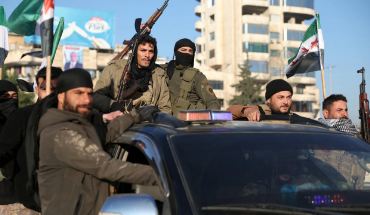
                BEIRUT, DEC 1 (AFP/APP): Rebels seized Aleppo’s airport and dozens of nearby towns on Saturday after overrunning most of Syria’s second city, a war monitor said.

                  Damascus ally Moscow responded with its first air strikes on Aleppo since 2016 as the militants and their allies pressed a lightning offensive they launched on Wednesday as a ceasefire took effect in neighbouring Lebanon.

                  In a telephone call with his Emirati counterpart, President Bashar al-Assad vowed to defeat the “terrorists” however big their attacks.

                  The fighting has killed at least 327 people, most of them combatants but also including 44 civilians, according to the Syrian Observatory for Human Rights.

                  “Hayat Tahrir al-Sham (HTS) and allied factions… took control of most of the city and government centres and prisons without meeting great resistance,” the Britain-based war monitor said.

                  They also overran Aleppo airport after government forces withdrew, and took control of “dozens of strategic towns without any resistance”, it added.

                  The Observatory reported that the army had pulled out of Syria’s fourth largest city Hama, around 140 kilometres (90 miles) south of Aleppo, in the face of the rebel advance.

                  But a military source cited by state media denied the army had withdrawn, insisting units were still holding their positions in the rebels’ path.

                  In the heart of Aleppo, an AFP photographer saw rebel fighters outside the city’s landmark citadel.

                  The army confirmed that the rebels had entered “large parts” of the city of around two million people, adding that “dozens of men from our armed forces were killed and others wounded”.

CG COMSTECH for knowledge-driven socioeconomic development

CG COMSTECH for knowledge-driven socioeconomic development

Faisal Sheikh

ISLAMABAD, DEC 1: The 23rd Science Council of Asia Conference (23rd SCAC) held in Dhaka, Bangladesh from November 30 to 3 December, was organized by the Bangladesh Academy of Sciences and the Science Council of Asia, with support from the Ministry of Science & Technology, Bangladesh.

The theme of the conference, “Fourth Industrial Revolution and Future Society,” resonated deeply with the challenges and opportunities facing societies in this era of rapid technological advancement.

Coordinator General COMSTECH Prof. Dr M. Iqbal Choudhary emphasized knowledge-driven socioeconomic development at the Conference 2024 in Bangladesh

Addressing the 23rd Science Council of Asia Conference 2024, CG COMSTECH and Vice President of the World Academy of Sciences (South and Central Asia), emphasized that in today’s world, socioeconomic development is no longer reliant on natural resources but rather on knowledge and its applications.

During his speech, referencing a 2019 report by the McKinsey Global Institute, Prof. Choudhary noted that 12 disruptive technologies are expected to generate over $33 trillion in wealth by 2025.

These include advancements in mobile internet, artificial intelligence, IoT, advanced robotics, genomics, nanotechnology, and regenerative medicine. However, he pointed out that much of this progress is concentrated in the Global North, while many developing nations continue to grapple with superstition and ignorance.

He quoted Klaus Schwab, founder of the World Economic Forum, who stated, “We stand on the brink of a technological revolution that will fundamentally alter the way we live, work, and relate to one another.”

Prof. Choudhary emphasized that the Fourth Industrial Revolution is evolving at an exponential pace, disrupting industries and transforming systems of production, management, and governance globally. The theme of the conference directly aligned with this rapidly changing landscape, where technological innovation is reshaping not just economies but entire societies.

During his visit to Dhaka, Prof. Choudhary also held productive meetings with senior officials from Bangladesh’s Ministry of Science & Technology and other key stakeholders. These discussions reaffirmed Bangladesh’s keen interest in fostering collaboration with COMSTECH and Pakistani institutions. Both sides expressed a shared commitment to working together for the advancement of science, technology, and innovation, aiming to bring tangible benefits to the people of both brotherly nations.

To ensure that developing nations can benefit from these technological advancements, Prof. Choudhary called for bipartisan political support for education, science, and technology.

He stressed the need for increased investment in education, research, and development, as well as greater female participation in science. He also highlighted the importance of protecting intellectual property rights and fostering global collaboration in science and technology to address global challenges.

As Coordinator General of the OIC Standing Committee on Scientific and Technological Cooperation, Prof. Choudhary underscored the importance of nurturing the youthful population in the OIC region, with 50% under the age of 25.

He highlighted COMSTECH’s initiatives to promote science, technology, and innovation (STI) within its member states, including scholarships, research grants, and training programs.

He expressed COMSTECH’s readiness to collaborate with the Asian Science Council to launch joint programs that will empower young scholars and foster sustainable development.

DPM Dar inaugurates Charity Bazaar at Foreign Office

DPM Dar inaugurates Charity Bazaar at Foreign Office

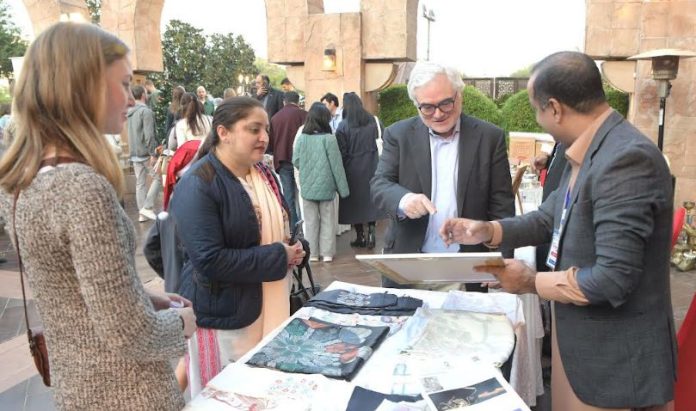
ISLAMABAD, Dec 01 (APP): Deputy Prime Minister and Foreign Minister Mohammad Ishaq Dar on Sunday inaugurated the Charity Bazaar organized by the Pakistan Foreign Office Women’s Association (PFOWA).

Cultural stalls from various foreign embassies were displayed at the event held at the Foreign Office.

The Bazaar, aimed at supporting underprivileged communities, brought together diplomats and their families, showcasing the rich cultural heritage of different countries.

Men’s junior Asia Cup 2024: Pakistan beat Oman 7-0, qualify for semi-finals

Men's junior Asia Cup 2024: Pakistan beat Oman 7-0, qualify for semi-finals

MUSCAT, NOV 30 /DNA/ – Men’s junior Asia Cup 2024. Pak beat Oman 7-0.. qualify for semi-finals. The tournament will run until December 4.

German Christmas Market 2024 attracts huge audiences

Germany

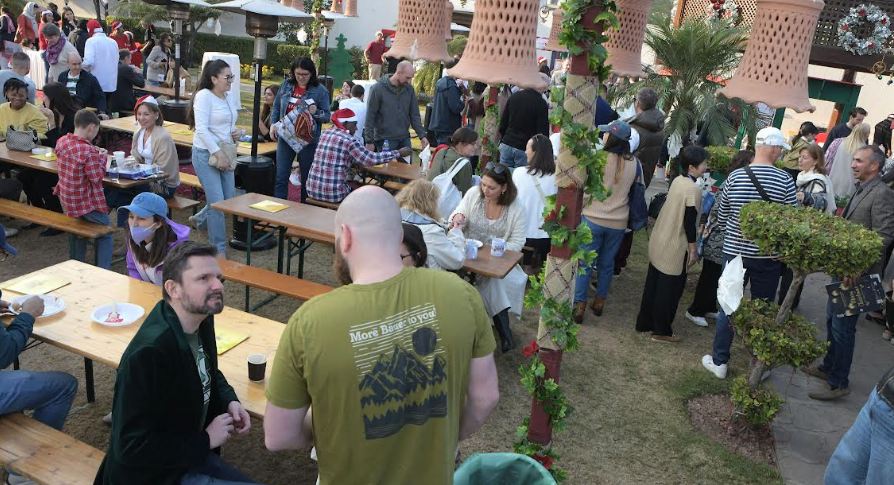
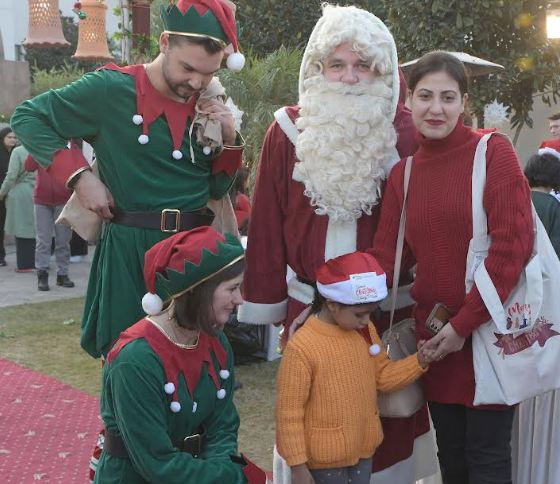
ISLAMABAD, /DNA/ – The Embassy of the Federal Republic of Germany in  Islamabad orchestrated a festive extravaganza by hosting a annual Christmas Market at Islamabad Serena Hotel. This enchanting event immersed attendees in the rich traditions of German Christmas celebrations, offering a delightful blend of culinary delights, shopping, and joyous merriment.

The market showcased an array of authentic German delicacies that tantalized the taste buds of visitors, including homemade cakes and cookies meticulously crafted to capture the essence of German holiday traditions. Attendees were treated to a sensory journey, experiencing the warmth and flavors synonymous with Christmas in Germany.

The air was filled with the spirit of the season as visitors strolled through the market, discovering unique treasures and handcrafted gifts that reflected the artistry and craftsmanship of German culture. From charming ornaments to exquisite trinkets, the shopping experience transported attendees to a winter wonderland brimming with festive cheer.

The ambiance was further heightened by the vibrant atmosphere, resonating with laughter and the joyful sounds of the season. Families and friends came together to partake in the festivities, creating cherished memories against the backdrop of the embassy’s beautifully adorned Christmas Market.

In organizing this event, the Embassy of the Federal Republic of Germany aimed to share the magic of German Christmas traditions with the local community, fostering cultural exchange and promoting the universal spirit of joy and togetherness during the holiday season. The Christmas Market served as a testament to the enduring bonds of friendship and goodwill between Germany and Pakistan, as both nations came together to celebrate the most wonderful time of the year in true German style.

The German Ambassador to Pakistan, Alfred Grannas, said on this occasion: “With this bazaar we want to welcome the merriest time of the year – especially for all those away from their homes. Christmas is all about sharing our joy. This is why the proceeds from this event will be donated to families in need.”

The German ambassador also visited various stalls and showed keen interest in items displayed on the stalls. He interacted with the stalls owners as well and got first hand information about their experiences.

Earlier the German Defence Attache Christian Ziese spelled out salient features of the Christmas bazaar. He welcomed the audience.

Last year, the German embassy successfully hosted a bazaar at the same venue. The event garnered significant attendance, with diplomats and the general public alike participating in large numbers. Their presence reflected a shared commitment to supporting the German embassy’s commendable initiative, which aims to provide substantial assistance to those in need.

Stay Connected

64FansLike
60FollowersFollow

Latest Reviews

Exchange Rates

USD - United States Dollar
EUR
1.18
GBP
1.36
AUD
0.73
CAD
0.73