Home Blog Page 740

Central Asia’s Transport Revolution: How new railway corridors are reshaping global trade

Central Asia's Transport Revolution: How new railway corridors are reshaping global trade

TASHKENT, DEC 4 /DNA/ – In recent years, thanks to Uzbekistan’s proactive regional policy, Central Asia has become consolidated, stable and sustainable, becoming one of the important centres of economic growth and regaining its historical role in connecting the West with the East and the North with the South.
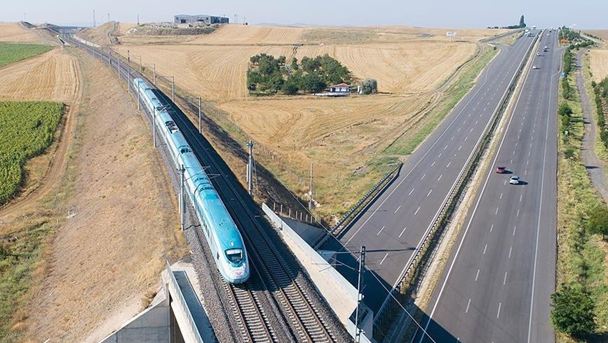
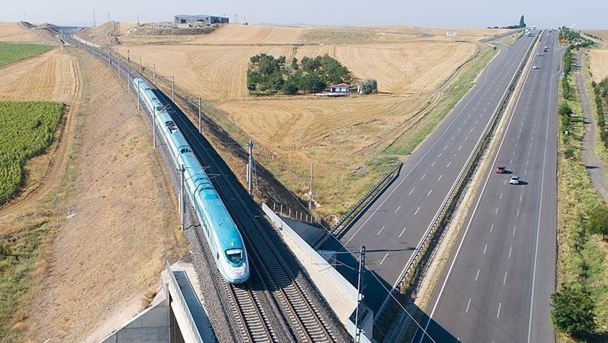
Today, more than 10 international transport corridors pass through the territory of Central Asian countries, including 3 of the 5 corridors of the Eurasian transport framework: the Central Eurasian Corridor, TRACECA and the Eastern Route of the ITC “North-South”. In addition, the process of implementing new railway corridors has begun, such as “China – Kyrgyzstan – Uzbekistan”, “Uzbekistan – Afghanistan – Pakistan”, as well as multimodal corridors “Uzbekistan – Turkmenistan – Iran –Turkiye” and “Belarus – Russia – Kazakhstan – Uzbekistan – Afghanistan – Pakistan” for the development of trade between Asia – Europe and North – South.

At the same time, the specified current and ongoing projects will make a major contribution to the creation of favorable conditions for long-term and multilateral cooperation on issues of forming an interconnected regional transport and communication system of the countries of the region.

This will also ensure the connectivity of Central Asia with the largest sea ports and world markets, which is very important for the region due to the significant distances to the nearest sea ports.

For example, the distance to the seaport of Karachi is 1.5 thousand km from Tajikistan, to Bandar Abbas – 1.6 thousand km from Turkmenistan and 2.7 thousand km from Uzbekistan, to Lianyungang – 3.7 thousand km from Kazakhstan and to St. Petersburg – 4.5 thousand km from Kyrgyzstan.

In this regard, interaction in the formation of an extensive transport and communications system will allow to fully realize the transport and transit potential of Central Asia and create conditions for access to seaports.

Firstly, today more than 80% of the total volume of world trade is carried out by sea, and according to UNCTAD, the share of countries far from it accounts for less than 1% of world exports, and the Central Asian countries – even lower (on average 0.43%): Uzbekistan – 0.1%, Kazakhstan – 0.3%, Tajikistan – 0.007%, Kyrgyzstan – 0.03%.

In order to compete in foreign markets, Central Asian countries are forced to reduce prices and enter into rather expensive import transactions to the detriment of their own interests. In the long term, this may put additional strain on the regional economy.

Secondly, without access to the sea, Central Asian countries cannot actively integrate into the international transport services market, which is growing faster than the global economy as a whole.

Over the past 10 years, global GDP has grown 1.3 times to $105 trillion by the end of 2023, and the international transport market has grown almost 3 times and reached $6 trillion. The share of the international transport market in the global economy increased from 2.5% to 6% in 2013-2023.

Thirdly, according to estimates by international organizations and experts, by 2050 the demand for freight transportation in the world will grow threefold, and in the region – even more, taking into account demographic growth. If in the next 25 years the world population grows by 15%, then in Central Asia – by 25%.

Of course, sea transport will still dominate with a share of 70-80%, but at the same time, a gradual capture of the market by rail and road transport is expected, since land corridors have a competitive advantage – delivery speed, which is two to three times higher than on sea routes.

Taking this into account, strengthening the transport and communication interconnectivity of the Central Asian states is one of the important factors in achieving the general economic prosperity of the region and a key condition for its integration into the global transport system.

The main thing is that Central Asia has formed a common understanding of this trend and there is a demand for the creation of new promising transport and transit corridors in order to enter foreign markets.

In this context, the relevance of the initiative to establish under the auspices of the UN Regional Center for the Development of Transport and Communications Links in Central Asia, put forward by the leader of Uzbekistan in September 2020 at the 75th session of the General Assembly, which was immediately supported by the heads of state during the Consultative Meeting in Turkmenistan in August 2021, is increasing.

This initiative is a logical continuation of the policy of President Shavkat Mirziyoyev aimed at further strengthening regional cooperation and ensuring high transport connectivity, which contributes to the dynamic growth of intraregional trade, the volume of which increased by 4.5 times by the end of 2023 from $2.4 billion in 2016.

In this regard, further implementation of the above initiative will create a unified transport network in Central Asia with high quality standards, and in general will become a prerequisite for sustainable development of the region.

Such a result can only be achieved with a comprehensive approach to improving the transport infrastructure in Central Asia.

For its part, Uzbekistan has been taking proactive measures in recent years to strengthen the transport connectivity of Central Asian countries.

Since 2016, Tashkent has unblocked and established transport and communication links with neighboring republics. At the same time, the Turkmenabad-Farab railway and road bridges across the Amu Darya, the Galaba-Amuzang-Khoshadi railway line connecting the Surkhandarya and Khatlon regions were opened, a high-speed train Tashkent-Almaty and high-speed passenger service along this route were established. Thus, Uzbekistan has made its feasible contribution to ensuring the interconnectedness of the region, eliminating various barriers to international transportation across the border.

At the same time, measures are being taken in Uzbekistan to improve the transport infrastructure. In recent years, thanks to an active investment policy in the transport sector:

1) new electrified railway lines Guzar – Boysun – Kumkurgan, Bukhara – Misken, Yangiyer – Jizzakh, Yangiyer – Farhad, Shavat – Karauzak, a railway and road bridge across the Amu Darya, as well as 11 international airports have been built;

2) high-speed passenger train service Tashkent – Samarkand – Navoi – Bukhara and Tashkent – Samarkand – Karshi has been organized; it is planned to launch such routes in the directions Tashkent – Bukhara – Khiva and Tashkent – Chirchik – Khodjikent;

3) the economic activity of the river port “Termez”, which carries out cargo transportation along the Amu Darya River to Afghanistan, has been improved;

4) the Tashkent-South railway station has been reconstructed and the Tashkent passenger bus station has been modernized.

A historic event was the creation of the Angren-Pap electrified railway line, with a total length of 123 km, including a 19.2 km tunnel on high-mountainous sections reaching 1,400 km above sea level. The new line will be part of the China-Kyrgyzstan-Uzbekistan transport corridor.

Role and significance of the China-Kyrgyzstan-Uzbekistan railway in achieving common economic prosperity of Central Asian countries

The existing transport corridors in the region undoubtedly have great potential for the development of Central Asia.

However, the existing difficulties in carrying out transportation through major world ports and the exhaustion of the Suez Canal’s capacity as a whole indicate an urgent need to develop qualitatively new land transport communications between global markets.

Today, the countries of Central Asia have an exceptional chance and strategic opportunities to become not only a link between the huge markets of the East, West and Southeast Asia, but also to rethink their place in the world transport systems.

In this context, the China-Kyrgyzstan-Uzbekistan railway project, proposed by China back in 1997 at the TRACECA meeting in Paris, is very beneficial for the development of the economies of both Central Asia and Eurasia as a whole.

It should be noted that at the initial stage there were controversial issues regarding the choice of routes; the parties could not reach an agreement on the width of the railway track for 20 years.

Thanks to the strong political will of the heads of Uzbekistan and Kyrgyzstan, negotiations on the construction of the China-Kyrgyzstan-Uzbekistan railway project have significantly intensified since 2016, and the basis for its implementation was China’s “One Belt – One Road” initiative, first announced in Kazakhstan in 2013.

On June 6 of this year, in Beijing, Uzbekistan, Kyrgyzstan and China solemnly signed an intergovernmental agreement on the implementation of the railway construction project.

The new route, which runs along the historic Great Silk Road, will become the shortest land link connecting China with the Central Asian region.

The corridor will run along the route Kashgar – Torugart – Makmal – Jalalabad – Andijan, with a total length of about 454 km. At the Makmal transshipment station, it is planned to change the gauge from 1435 mm to 1520 mm.

To date, China, Kyrgyzstan and Uzbekistan already have experience of mutually acceptable cooperation in the field of transport.

Since 2018, the parties have been successfully using the Tashkent-Andijan-Osh-Irkeshtam-Kashgar highway (920 km), which allowed road carriers from Uzbekistan and Kyrgyzstan to directly access China. In 2023, the volume of cargo via the highway reached about 750 thousand tons, an increase of 7.5 times compared to 2018. The launch of this route reduced the delivery time of goods from Uzbekistan to China by 4 times from 8-10 days to 2 days. If necessary, urgent cargo can be delivered in 24 hours.

Taking this into account, the China-Kyrgyzstan-Uzbekistan railway project is in high demand, reliable and promising.

Firstly, currently the bulk of cargo to Europe from eastern China is sent by sea, which takes six weeks. At the same time, it is cheaper for Chinese manufacturers to deliver goods to the West by land routes than by air, and faster than by sea. In this regard, the highway will shorten the route from East Asia to Europe by about 900 km, and the time frame will be reduced by 7-8 days. According to the ADB, reducing travel time by one day along this corridor could increase the volume of trade between the countries by 5.7%;

Secondly, the corridor will ensure the development of the transport infrastructure of the Central Asian countries and provide them with convenient access to the ports of the Persian Gulf and the Pacific Ocean. It is expected that about 15 million tons of cargo and about 300 thousand passengers will be transported by rail annually.

Direct access to Chinese markets and tourist attractions will be opened for citizens of the Central Asian states.

Thirdly, the implementation of the project has undeniable advantages for the development of the multimodal route “China – Kyrgyzstan – Uzbekistan – Turkmenistan – Iran –Turkiye– Europe”. The corresponding protocol on the formation of this corridor was signed by the ministries of transport of Uzbekistan, Turkmenistan, Iran and Turkiye in November 2023 in Tashkent.

The new corridor can become the shortest monomodal railway line, up to 5.5 thousand km long, connecting China and Europe.

Fourthly, the implementation of the China – Kyrgyzstan – Uzbekistan railway project gives impetus to all Central Asian countries to create a single transport hub between Europe, China and the countries of Southeast Asia. Thus, the region is turning into a kind of international driver for the development of the economy, science, culture, technology and industry, and this is more than 10 thousand jobs.

Fifthly, the China-Kyrgyzstan-Uzbekistan railway line is of particular importance in the development of the Afghan economy, as it can attract additional cargo flow to the Trans-Afghan route. This will be one of the first practical steps aimed at improving the socio-economic situation in this country in the new realities and integrating Afghanistan into the Central Asian transport system.
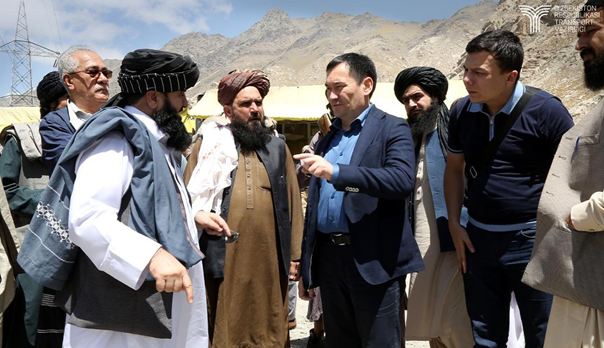
In September 2022, in Tashkent, a protocol was signed between logistics companies and the railway administrations of China, Kyrgyzstan, Uzbekistan and Afghanistan on the formation of a multimodal route “China – Kyrgyzstan – Uzbekistan – Afghanistan” with discounts for the transportation of container trains through the territory of Kyrgyzstan and Afghanistan up to 50%, Uzbekistan – up to 70%.

The Uzbekistan-Afghanistan-Pakistan railway will open a completely new and shortest route to promising markets of South Asia and sea ports

Given the important geostrategic position of Central Asia, which historically serves as a link between the largest world markets via the Silk Road route, in modern conditions there is an increasing need to unite the efforts of the countries of the region in order to accelerate their integration into the southern transport systems through the territory of Afghanistan.

In this regard, the special resolution of the UN General Assembly on strengthening the connectivity between Central and South Asia, adopted in July 2022 at the initiative of Uzbekistan, plays an important role.

The document, co-authored by all Central Asian countries, reflects provisions on establishing close cooperation between the regions to expand transport infrastructure and form new international transport corridors that open up convenient, sustainable and safe routes to seaports.

According to UN estimates, due to effective transport cooperation with Afghanistan, the total GDP of Central Asian countries can grow at least 2-fold in the next 10 years. Taking this into account, this issue comes to the fore as a point of direct access for Uzbekistan and other Central Asian countries to the seaports of India.

For these purposes, in May 2023, a Project Office for the Coordination of the Construction of the Uzbekistan-Afghanistan-Pakistan Railway Line was opened in Tashkent, and its branches were also opened in the cities of Kabul and Islamabad.

In July 2023, the final route of the corridor was agreed upon in Islamabad –“Termez-Naibabad-Logar-Kharlachi” and a roadmap for coordinating the work of the project office was adopted.

In August 2024, a ceremonial opening of the Naibabad railway station, restored by the Uzbek side, took place. On August 7, the first freight cars arrived at this station, symbolizing the beginning of a new stage in the development of regional infrastructure and strengthening of economic ties between the countries of Central and South Asia.

As part of the entire project, the estimated length of the railway from Naibabad to Kharlachi will be 647 km with a 1520 mm gauge and a transition to a 1676 mm gauge at the Afghan-Pakistani border. It is planned to build about 25 railway stations and sidings, 69 km of station tracks, 135 km of tunnels, 62 km of bridges and overpasses.

The key advantages of the Uzbekistan-Afghanistan-Pakistan corridor are:

First, the new route will unite the entire Eurasian railway network into a single whole for the first time.

When implementing the railway construction project, it will be possible to connect: 1) the countries with the largest populations in the world – India and China along the route “India – Pakistan – Afghanistan – Uzbekistan – Kyrgyzstan – Western China” and 2) India with Belarus along the new multimodal route “Belarus – Russia – Kazakhstan – Uzbekistan – Afghanistan – Pakistan – Indian Ocean ports”, on the formation of which a memorandum was signed between Uzbekistan, Kazakhstan and Russia in Tashkent in November 2023. In April of this year, Belarus joined the memorandum, and in September Pakistan.

Secondly, the construction of the trans-Afghan corridor will diversify transport flows in Central Asia. In particular, the countries of the region will have two routes to the southern seas. On the one hand, the existing corridors to the ports of Chabahar and Bandar Abbas, on the other –“Termez–Naibadat– Logar –Harlachi” with subsequent access to the ports of Karachi and Gwadar by the shortest route.

Thirdly, after the launch of the railway line, the logistics of transporting export-import cargo from Afghanistan will be improved, which will significantly reduce the delivery time of goods to Central Asia, China, the CIS and Europe. For example, with the full implementation of the project, it will take only 3-5 days to transport goods from Pakistan to Uzbekistan instead of 35.

The new railway will also reduce the cost of transporting goods to and from the Indian Ocean ports by 30-40%. The estimated volumes of annual transportation along the new railway could reach 22 million tons by 2030, and 34 million tons by 2040. More than 20% of the cargo will go to Afghanistan.

Fourth, with the launch of the railway, new technologies and innovations in various fields will come to Afghanistan. The multiplier socio-economic effect will be expressed in the creation of new jobs, the construction of roadside infrastructure, and dozens of mineral deposits along the railway route may be involved in economic turnover. More than 5 million jobs will also be created, new highly paid professions for the country will be formed, including those related to the operation of railway transport.

In a word, the railway construction project will make a real contribution to the development of the Afghan economy and the improvement of the socio-economic well-being of the Afghan people.

In general, despite the geographical isolation of Uzbekistan and the region, the Central Asian countries skillfully use their logistics potential to strengthen intra-regional and inter-regional connectivity, which increases the transport and transit attractiveness of the region.

The implementation of the China-Kyrgyzstan-Uzbekistan and Uzbekistan-Afghanistan-Pakistan railway projects, which are the “projects of the century” for our countries, will undoubtedly allow the region to take an important place in world trade.

In our opinion, with the construction of these corridors, which play a major role in the more rapid economic development of Central Asia and the formation of the transport framework of Eurasia, the formation of full-fledged Transcontinental transport corridors “China – Central Asia – South Asia – Middle East” and “China – Central Asia – South Caucasus – Europe”, “South Asia – Central Asia – CIS – Europe” will be completed.

Continuing this logical thought, we can already confidently state that the collaboration of all these corridors is a key condition not only for the withdrawal of the Central Asian countries from transport isolation, but also the revival of the historical transit role of the region in the very center of the Great Silk Road, which connected East Asia with the Middle East and Europe for three millennia.

All this predetermines the need for continuous development and improvement of the transport sector. In this direction, it seems important to continue diversifying the logistics capabilities of the Central Asian countries, which could master part of the transit cargo turnover on land routes between different regions of the Eurasian continent. It is important not to miss the chance to take advantage of these, to intensify the dialogue on them with all interested parties.

In this regard, the initiative of the President of Uzbekistan Shavkat Mirziyoyev, voiced in June of this year at the informal summit of the Organization of Turkic States on the formation of the Council of Railway Administrations within the organization and the placement of its directorate in Tashkent, is relevant.

The Council could act as a regulator for the integration of railways of China, the Asia-Pacific region, South and Southeast Asia with the countries of Central Asia, the Caucasus and the European Union.

To summarize, it can be stated that interaction in the transport sector is acquiring a strategic nature for all Central Asian countries.

Uzbekistan, which strictly adheres to the position of integrating the countries of the region into the global transport system as a single whole, will continue proactive transport diplomacy, which will allow synchronizing the national projects of the states of the region with the international transport corridors East-West and North-South.

To do this, it is necessary to pursue a policy of convergence of the transport and communication systems of neighboring countries, which is mentioned in the draft conceptual document entitled “Strategy for the Development of the Transport System of the Republic of Uzbekistan until 2035”.

Jasur Rakhmatov,

Head of the Department, ISRS under the President of the Republic of Uzbekistan
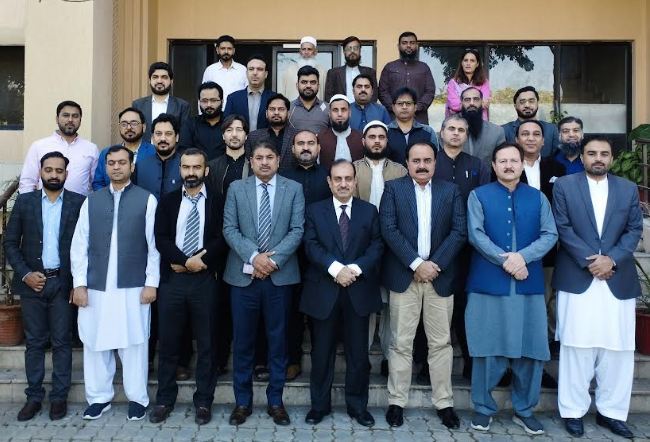
HEC committed to bringing best of global technologies to Pakistan

HEC committed to bringing best of global technologies to Pakistan

ISLAMABAD, DEC 4: /DNA/- Five more universities sign up with the Higher Education Commission (HEC) to automate their entire operations from announcement of student admission to graduation. The HEC via its Higher Education Development Program in Pakistan (HEDP) project is bringing the world’s best technology solutions ’Maktab’ to Pakistani universities.

By automating their entire student life cycle, Maktab will reduce operational costs and provide state-of-the-art academic experience at remarkably subsidized costs. As many as 11 universities have already signed up for Maktab and post-system training sessions were conducted in September and November, respectively.

Recently, five more universities including the University of Narowal, Narowal; Emerson University, Multan; Women University, Mardan; Shuhada-e-Army Public School, University of Technology, Nowshera; and the University of Buner have joined-in too.

The senior management of these universities attended the training session at HEC main office, Islamabad. The closing session of this training was graced by Dr. Jameel Ahmed, Member IT and Mr. Awais Ahmed, Program Coordinator HEDP/Advisor global engagement. They encouraged the universities to take advantage of these investments and join HEC in the journey to equip their institutions with the best tools and technologies. All the leading global universities have already adopted automation including the entire student life cycle and HEC is committed to bringing Pakistani universities to par with global standards.

HEC has signed up with TMC for Maktab, as its technology partner to automate universities’ operations. Maktab is the state-of-the-art Student Lifecycle Systems (SLC) and Enterprise Resource Planning (ERP) that will completely digitize their administrative, accounting, operations, and end-to-end student lifecycle processes from admission to degree completion. The systems enhance efficiency, and transparency and promptly provide key higher education data for decision making.

HEC via HEDP is making significant investments to deliver the best of global tools and technologies to higher education institutions in Pakistan. HEC’s strategic IT initiatives further include developing robust high-end Data Centers, High-Performance Computing, Pakistan higher education’s own indigenous local and secure cloud infrastructure that are already in progress at different stages of completion.

Two state-of-the-art Data Centers named Astrolabes have already been set up in Lahore and Karachi – one in University of Engineering and Technology, Lahore and the other in NED University of Engineering and Technology, Karachi. The HEDP IT team is now working on setting up cloud and high-performance computing in the same facilities. The idea is to make these high-end & secure data repositories available to Pakistani universities locally. In addition, the HEIs needing additional computing power didn’t have to pay heavy sums in foreign currencies to private businesses as the same services are available to these at subsidized rates along with local support.

HEDP is a 400 Million USD flagship project of HEC, funded by the World Bank, aimed to support research excellence in strategic sectors of the economy, improve teaching and learning, and strengthen governance in higher education.

Is Trump’s Threat to BRICS a Hoax?

Qamar Bashir

By: Qamar Bashir

I recently contributed an article titled “Looming Challenge to Dollar Dominance,” and soon after its publication, the U.S. President-elect Donald J. Trump issued a bold and threatening statement. He warned that if any or all members of BRICS pursued business in any currency other than the dollar, he would impose a 25% tariff on imports from those countries. This is an extremely loaded and alarming statement, seemingly made without thorough background research, consultation, or evaluation.

It appears that Trump may be either overestimating the power of the mighty U.S. economy or underestimating the collective strength of the BRICS member countries. Alternatively, it is possible that, deep down, he had no real intention of implementing such a drastic measure, fully aware that in an interconnected global economy, exports are just as critical as imports to maintain economic stability. Such a move would risk destabilizing commodity prices, exacerbating inflation, and igniting public discontent. History shows that economic mismanagement of this scale can lead to widespread protests, creating immense pressure on the government, and, in the worst-case scenario, result in its downfall.

He must be knowing that BRICS is one the most powerful block. The BRICS nations—Brazil, Russia, India, China, and South Africa—represent approximately 3.7 billion people, nearly 46% of the global population. Together, they hold a combined GDP of $27.6 trillion as of 2023, accounting for 26.3% of the world’s economic output. In global trade, the BRICS countries contributed 20.2% of merchandise exports in 2022, with China leading as the largest exporter, and collectively they play a significant role in global imports.

In 2023, the BRICS nations—collectively exported approximately $578 billion worth of goods to the United States, with China accounting for the majority at around $427 billion. Conversely, the U.S. exported goods valued at about $151 billion to these countries, with significant exports including pharmaceutical preparations, gem diamonds, crude oil, and cotton apparel.

If the U.S. imposed a 25% tariff on imports from BRICS countries, it would significantly impact inflation, industrial costs, and overall economic output. The higher tariffs would increase the cost of goods like electronics, machinery, textiles, and agricultural products, driving up consumer prices and fueling inflation. U.S. industries reliant on imports from BRICS countries would face higher production costs, reducing profitability and competitiveness in global markets. The ripple effect would likely slow economic growth as consumer spending diminishes and industrial output declines due to costlier inputs.

Conversely, if BRICS countries imposed reciprocal tariffs on U.S. exports, it would reduce the competitiveness of U.S. goods in key BRICS markets, leading to a decline in export volumes. This would particularly affect industries such as agriculture, pharmaceuticals, and machinery, which rely heavily on BRICS consumers. The combined tariffs would disrupt global supply chains, increase costs for businesses, and create logistical challenges. In the U.S., these changes could lead to job losses in export-driven sectors, further dampening economic activity and reducing GDP growth.

BRICS countries would also face economic setbacks, as reduced access to the U.S. market would hurt their export-driven industries, particularly in China and Brazil. Higher tariffs on U.S. goods, such as advanced technology and pharmaceuticals, would raise costs for consumers and industries in BRICS nations. Additionally, these countries might experience slower GDP growth and job losses in export-oriented sectors.

This strategy represents a clear lose-lose situation where both the U.S. and BRICS countries would suffer significant economic harm, with ripple effects lowering the quality of life for people in both regions. By resorting to tariffs, the U.S. and BRICS nations would effectively exacerbate inflation, disrupt global supply chains, and reduce industrial output, ultimately undermining their own economic strength. For the U.S., industries reliant on BRICS imports would face higher production costs, while reduced exports to BRICS markets would hurt key sectors like agriculture and technology. Similarly, BRICS nations would lose access to the lucrative U.S. market, damaging their export-driven economies and slowing growth. The resulting global price wars, market distortions, and overcapacity would not only strain businesses but also erode consumer purchasing power, worsening living standards across the board.

If the U.S. and BRICS countries imposed 25% tariffs on each other’s imports, both sides would face a surplus of goods, leading to aggressive dumping in other markets. This competition to offload surplus products would trigger price wars in global trade, compressing profit margins for U.S. and BRICS exporters. Key industries, such as U.S. agriculture and BRICS manufacturing, would experience reduced revenues, overcapacity, and potential job losses. The economic strain would slow industrial output and GDP growth in both regions, while geopolitical tensions could escalate as global trade dynamics become more fragmented.

Other countries, particularly in Africa, Latin America, Southeast Asia, and Europe, would benefit from lower prices and increased access to surplus goods, stimulating economic activity and lowering input costs for local industries. However, this influx of cheap goods might pressure local businesses unable to compete, risking closures and job losses in vulnerable sectors. Over time, the short-term benefits of affordable goods could give way to global economic imbalances and market volatility, highlighting the interconnected nature of trade and the long-term risks of protectionist policies.

Trump’s  approach is also akin to conceding defeat, reflecting a lack of proactive and forward-thinking measures to enhance the U.S. economy and address global economic concerns. Instead of imposing tariffs, which are regressive and self-defeating, the U.S. should focus on strengthening its economic resilience, boosting industrial innovation, and reinforcing the dollar’s position as the preferred currency for international transactions.

Addressing the legitimate concerns of BRICS countries regarding the dominance of the dollar in global trade through dialogue and reforms could foster greater economic cooperation and stability. Investing in infrastructure, renewable energy, advanced manufacturing, and technology-driven solutions would not only bolster the U.S. economy but also demonstrate leadership in addressing global economic challenges. Such an approach would encourage mutual prosperity rather than deepening divisions, making it a more effective and sustainable strategy than the imposition of tariffs.

“One of my learned journalist colleagues, Agnes Zhao, while commenting on Trump’s statement, said, ‘Trump always says much; let us see what he will do.'”

By: Qamar Bashir

Press Secretary to the President (Rtd)

Former Press Minister at Embassy of Pakistan to France

Former MD, SRBC

Macomb, Detroit, Michigan

Afghan refugees not involved in Pakistan tension, IEA embassy

Afghan refugees not involved in Pakistan tension, IEA embassy

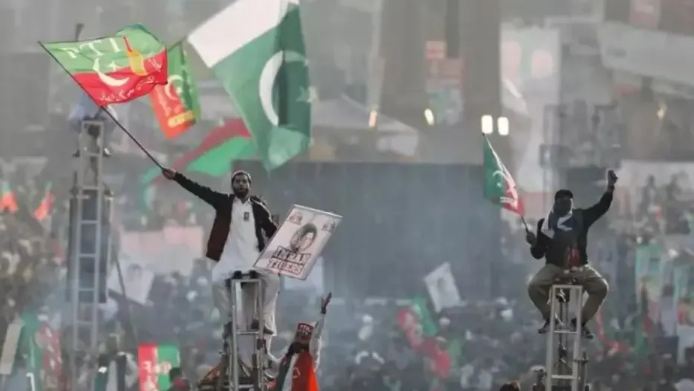
KABUL: The country’s embassy in Islamabad, in a statement the other day, rejected the claim of the Pakistani government over the involvement of Afghan nationals in the political and criminal activities in that country. The Afghan migrants in Pakistan have never participated in any political activities or criminal events, the statement said, expressing concerns over allegations by the Pakistani Interior Ministry and other officials that Afghan nationals were involved in recent protests in Islamabad.

The statement also noted the growing restrictions, which have caused anxiety among Afghan migrants, fearing that they may face wrongful harassment by Pakistani authorities under these circumstances. The embassy reiterated that Afghan migrants have always lived peacefully in Pakistan, contributing positively to the country’s economic development.

Calling on the Pakistani government to prevent the creation of an environment of distrust that could lead to unjust treatment and forced displacement of Afghan migrants, the embassy stressed that such baseless statements and accusations would not only harm Afghan citizens but could also further harm the relations between the two neighboring countries. The Kabul Times

Thailand National Day celebrated in Islamabad

Thailand National Day celebrated in Islamabad

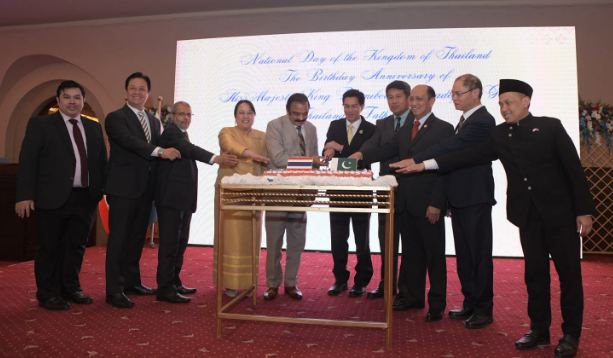
ISLAMABAD, DEC 3 /DNA/ – Prime Minister’s Adviser on Political Affairs Rana Sanaullah Khan, along with Thailand’s Ambassador-designate Rongvudhi Virabutr and Heads of ASEAN Mission States, celebrated Thailand’s National Day in a symbolic cake-cutting ceremony.

The event highlighted the strong diplomatic relations between Thailand and Pakistan, showcasing the mutual respect and friendship between the two nations and the broader ASEAN region.

PM Shehbaz Sharif participates in One-Water Summit in Riyadh

PM Shehbaz Sharif participates in One-Water Summit in Riyadh

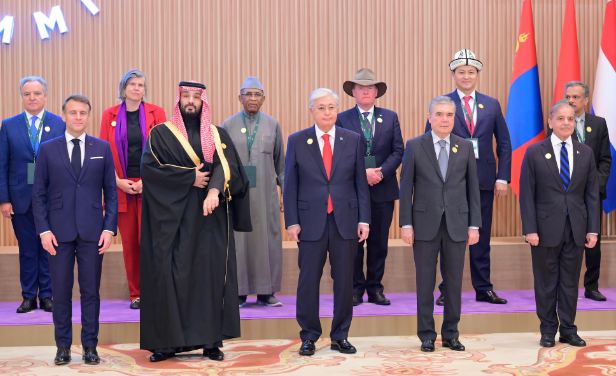
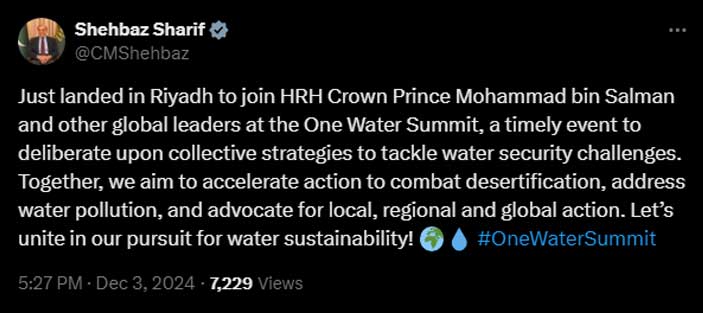
RIYADH, DEC 3 /DNA/ – Prime Minister Shehbaz Sharif has arrived in Riyadh on a two-day official visit to participate in the “One Water Summit”, scheduled to be held on December 3-4.

Upon his arrival at Riyadh’s Royal Airport Terminal, the premier was warmly received by Prince Muhammad bin Abdul Rahman bin Abdulaziz, the Deputy Governor of Riyadh, along with Pakistan’s Ambassador to Saudi Arabia and other senior diplomatic staff.Play Video

Minister for Information and Broadcasting Attaullah Tarar and Special Assistant to Prime Minister Tariq Fatemi are part of the premier’s delegation.

“Just landed in Riyadh to join Crown Prince Mohammad bin Salman and other global leaders at the One Water Summit, a timely event to deliberate upon collective strategies to tackle water security challenges,” he wrote on his X official handle.  

“Together, we aim to accelerate action to combat desertification, address water pollution, and advocate for local, regional and global action. Let’s unite in our pursuit for water sustainability!” he added.

PM Shehbaz reaches Riyadh to attend One Water Summit

At the summit, the prime minister will deliver a keynote address at a roundtable focusing on restoration, preservation, and adaptation in the context of fresh water resources and wetlands.

He will also highlight the steps being taken by Pakistan to promote water conservation, strengthen climate resilience, improve water quality, create livelihoods, and conserve biodiversity.

PM Shehbaz will underline the importance of international cooperation to tackle the impact of climate-induced floods, erratic and extreme weather patterns, and heat stress on water resources and ecosystems.

He will also call for meaningful international collaboration for sustainable water resource management.

On the sidelines of the event, the prime minister is expected to hold bilateral meetings and engagements. 

‘Remarkable progress on Saudi investments’

A day earlier, PM Shehbaz expressed satisfaction over the progress in cooperation and investment projects between Pakistan and Saudi Arabia, hailing the longstanding friendship between the two nations.

Chairing a review meeting, the prime minister highlighted that Pakistan’s collaboration with Saudi Arabia continued to grow across various sectors, underscoring the strategic partnership between the two countries.

“Saudi Arabia has been a reliable partner in Pakistan’s challenging times, and we are committed to deepening this cooperation,” the premier said.

The meeting also included a briefing on the remarkable progress of bilateral investments.

The meeting was briefed about the progress on bilateral cooperation in various fields in the second meeting of the Pakistan-Saudi Arabia Joint Task Force held in November.

It was informed that within a short span of time, both countries had signed 34 memoranda of understanding (MoUs), seven of which have already been formalised into agreements. These agreements were valued at $560 million.

The meeting was attended by Deputy Prime Minister and Foreign Minister Ishaq Dar, Finance Minister Muhammad Aurangzeb, Minister for Petroleum Dr Musaddik Malik, and National Coordinator of the Special Investment Facilitation Council Lieutenant General Sarfaraz Ahmed. 

British diplomat explores cooperation with CDA in urban development and social sectors

British diplomat explores cooperation with CDA in urban development and social sectors

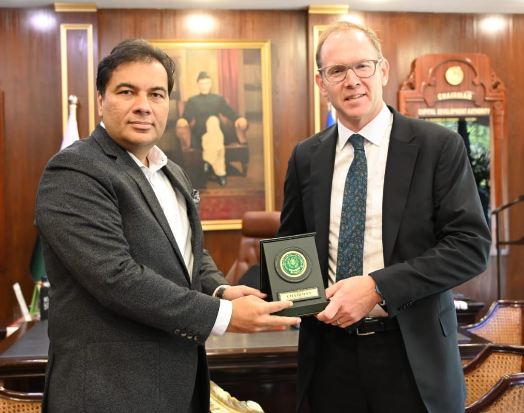
ISLAMABAD, DEC 3: /DNA/ – British Deputy High Commissioner Matt Cannell called on Chairman Muhammad Ali Randhawa to Discuss areas of mutual interest and cooperation

Islamabad – December 3, 2024: British Deputy High Commissioner Matt Cannell called on Chairman of the Capital Development Authority (CDA), Muhammad Ali Randhawa at CDA headquarters to discuss areas of mutual interest and enhanced cooperation.

Chairman CDA Muhammad Ali Randhawa formally welcomed British Deputy High Commissioner Matt Cannell. He expressed his hope to further strengthen the partnership with UK. He offered his full support for cooperation in the key areas of education, healthcare, climate change and sustainable urban development.

Chairman CDA Muhammad Ali Randhawa further highlighted the importance of promoting cooperation through people to people contact and collaboration in the social sector especially for the welfare of the poor. The conversation also included other areas of mutual interest.

Mr. Cannell commended the natural beauty and development of Islamabad and appreciated the efforts to make it a modern and sustainable city. He emphasized the UK’s interest in strengthening close ties through knowledge sharing, people to people contact, and cultural exchanges.

Chairman Randhawa reiterated CDA’s commitment to strengthening strong partnerships that align with Islamabad’s development goal. The meeting concluded with both sides reaffirming their commitment and resolve to furthering Pakistan-UK relations, emphasizing shared goals of sustainable development, cultural exchange, and strong partnership.

Northern Cyprus Ambassador attends Raja Changez Sultan Himalayan Odyssey Award Ceremony

Northern Cyprus Ambassador attends Raja Changez Sultan Himalayan Odyssey Award Ceremony

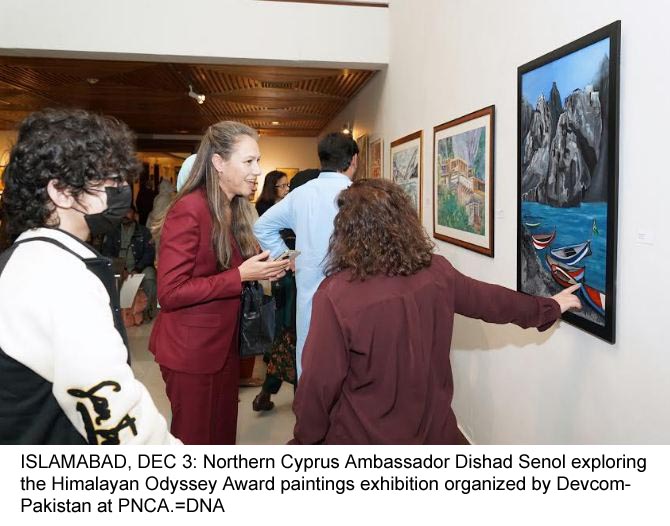
ISLAMABAD, DEC 3 /DNA/ – Northern Cyprus Ambassador Dishad Senol visited the Raja Changez Sultan Himalayan Odyssey Award paintings exhibition and distribution certificates and award, organized by Devcom-Pakistan at National Art Gallery PNCA on Tuesday. 

ISLAMABAD, DEC 3: Northern Cyprus Ambassador Dishad Senol exploring the Himalayan Odyssey Award paintings exhibition organized by Devcom-Pakistan at PNCA.=DNA

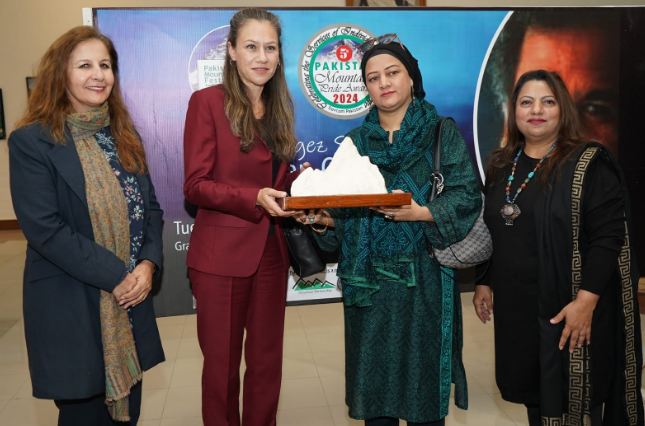
Legendary artist Raja Changez Sultan gave away the award to the winner Beenish Azam at the opening ceremony of  the Raja Changez Sultan Himalayan Odyssey Award paintings exhibition, organized by Devcom-Pakistan at National Art Gallery PNCA on Tuesday.  

Devcom-Pakistan opens “Raja Changez Sultan Himalayan Odyssey Award Painting Exhibition

Devcom-Pakistan opens “Raja Changez Sultan Himalayan Odyssey Award Painting Exhibition

ISLAMABAD, Dec 3 /DNA/ – Devcom-Pakistan, as part of the 14th Pakistan Mountain Festival, organized the “Raja Changez Sultan Himalayan Odyssey Award” painting exhibition at the National Art Gallery on Tuesday. The exhibition celebrated the theme of Mountain Heritage, showcasing the breathtaking beauty, cultural richness, and environmental significance of Pakistan’s mountains.

Raja Changez Sultan was the chief guest who presented the award to the winning artist Beenish Azam. Pakistan National Council of the Arts (PNCA) Director General Mohammad Ayub Jamali was the guest of honour. He distributed certificates among the participating artists.

A total of 32 artists from across Pakistan participated in the exhibition, presenting a diverse array of works that captured the essence of the Himalayas, Karakoram, and Hindu Kush mountain ranges. The event paid homage to Raja Changez Sultan, a legendary artist and poet renowned for his lifelong dedication to documenting the mystique and grandeur of mountain landscapes through his art and literary works. The participating artists included Agha Shahid, Akmal Hameed, Ambreen Anjum, Areej Batool, Asma Shahid, Attiqa Malik, Beenish Azam, Dr. Farrukh Seir, Fadhil Yousafzai, Fatima Afzal, Fatima Ejaz, Fauzia Khan, Hadia Khanam, Hatice Omar, Kanwal Nafees, Kiran Mughal, Maryam Mustafa Mazhary, Niala Abrar, Saba Hameed, Saffia Mughees, Saima Aamir, Saleha Faisal, Shafqat Mehmood, Shahnaz Akram, Shehlla Moazzam, Sidrah Iqbal, Silvat Hijazi and Tasnima Sajid.

Speaking on the occasion, Munir Ahmed, Executive Director of Devcom-Pakistan and Founder of the “Raja Changez Sultan Himalayan Odyssey Award,” highlighted the deep cultural and ecological significance of mountains and their unique place in Pakistan’s heritage.

“Our mountains are the cradle of our rivers, the lungs of our environment, and the heart of our cultural diversity. Through this award and exhibition, we aim to create a nexus between art and environmental conservation, reminding us all of our responsibility to preserve the beauty and heritage of these majestic landscapes,” Munir Ahmed remarked. He also paid tribute to Raja Changez Sultan, whose artistic vision and dedication to documenting the mountains of Pakistan continue to inspire and guide generations.

Ahmed emphasized the transformative power of art in bridging gaps between culture and conservation. “Artists have a unique way of presenting the beauty and challenges of our natural world. Their work helps us see what we often overlook and motivates us to take necessary measures. This exhibition is not just about celebrating art but about awakening a collective consciousness for protecting our mountain ecosystems.”

The showcased artworks included paintings, mixed media, and digital creations, each narrating a unique story of mountain heritage. The themes ranged from the vibrant culture of mountain communities to the rugged beauty of snow-capped peaks and the environmental threats posed by climate change. Several pieces were lauded for their exceptional creativity and depth, earning recognition under the “Raja Changez Sultan Himalayan Odyssey Award.” These works embodied the spirit of mountain heritage, showcasing an extraordinary blend of skill, emotion, and environmental awareness.

The event also featured brief talks by participating artists and environmentalists who underscored the need to preserve the cultural and natural heritage of mountains. “Art has the power to inspire action and foster a deeper connection with nature. Through these works, we hope to ignite a sense of responsibility towards protecting our mountain ecosystems,” one of the artists remarked.

The exhibition attracted a large and diverse audience, including art enthusiasts, students, environmentalists, and members of the diplomatic community. Visitors were captivated by the visual narratives and praised the artists for their efforts to bring attention to mountain heritage through their craft.

The exhibition was also a tribute to Raja Changez Sultan, whose Himalayan Odyssey series has become a timeless celebration of mountain landscapes. His dedication continues to inspire generations of artists and environmentalists alike.The exhibition is part of the ongoing activities of the 14th Pakistan Mountain Festival, which will continue to celebrate mountain ecosystems and their importance through diverse events.

Scholars and Diplomats examine emerging global order at Two-Day Islamabad Conference

Scholars and Diplomats examine emerging global order at Two-Day Islamabad Conference

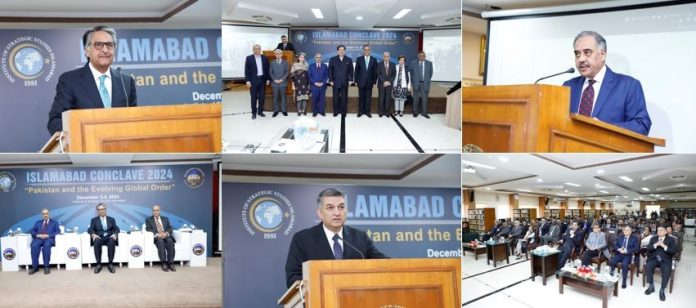
ISLAMABAD, DEC 3 /DNA/ – The 4th edition of ISSI’s Islamabad Conclave, with thematic focus on “Pakistan and the Evolving Global Order,” commenced today. Former Foreign Minister Jalil Abbas Jilani was the chief guest at the inaugural session.

In his welcome remarks, DG ISSI Ambassador Sohail Mahmood highlighted ISSI’s position as a premier think-tank dedicated to informed research and policy advocacy on foreign policy as well as regional and global issues. He also highlighted the Institute’s achievements in the arena of multi-stakeholder dialogue, narrative-building, and regional and international outreach.

Evaluating the evolving global order, Ambassador Sohail Mahmood highlighted the twin processes of turbulence and transformation. He highlighted the growing trend towards multipolarity, the high incidence of wars and armed conflict, genocide in Gaza, erosion of adherence to international law and principles of UN charter, existential threats like climate change, role of Middle Powers and the Global South, and their quest for a just and equitable world order.

He underlined that Pakistan — both as a Middle Power and an influential voice in the ‘Global South’ — espouses important priorities. Averse to bloc politics, Pakistan envisions a world in which cooperation, rather than confrontation, is the primary driver. He added that Pakistan also places greater premium on UN-centered multilateralism, as opposed to creation of smaller cliques or exclusive groupings.

Equally, Pakistan favours such reform of the multilateral institutions that would make them more democratic, transparent, and accountable; not one that further fortifies the existing bastions of privilege, exclusivity, and immunity from reasonable scrutiny. As an elected member of the UN Security Council for the term 2025-26, Pakistan is poised to make its rightful contribution to the issues of peace and security on the global agenda, he concluded.

Chief Guest Former Foreign Minister Jalil Abbas Jilani, in his address, lauded ISSI for transforming the Islamabad Conclave into a vital platform for policy dialogue and its contribution to research and outreach. On the Conclave’s theme, he outlined the challenges posed by major-power contestation, the escalating climate crisis, the ongoing genocide in Gaza and its tragic humanitarian consequences.

He emphasized Pakistan’s power potential, strategic relevance, nuclear capability and the opportunity offered by its upcoming membership of the United Nations Security Council. Ambassador Jilani outlined four major priorities for Pakistan: unshakeable commitment to international law and UN Charter, avoiding bloc politics, building a peaceful neighbourhood, and advocating for a fair and equitable global order. Going forward, he said that for Pakistan, the task is clearly cut out. “Our best way forward remains in pursuing a vision of “comprehensive security” that is human-centered and helps realize the full potential of our people. Further, we must continue to prudently manage the complex geopolitics and accentuate our pivot to geo-economics.

And, to optimally promote these objectives, we must have proactive, imaginative and nimble diplomacy. All this would contribute to Pakistan’s emergence as a prosperous and pivotal nation in the 21st century and entail a whole range of opportunities for our spirited and enterprising youth and coming generations.”

The inaugural session concluded with Ambassador Khalid Mahmood, Chairman ISSI’s Board of Governors, presenting a memento to Ambassador Jilani. The two-day conclave features interactive discussions, expert analyses, and policy recommendations on Pakistan’s geopolitical, economic, and environmental challenges and opportunities in the 21st-century global order. The Track 1.5 forum is being attended by practitioners, scholars, academics, experts, and University students.

Stay Connected

64FansLike
60FollowersFollow

Latest Reviews

Exchange Rates

USD - United States Dollar
EUR
1.18
GBP
1.36
AUD
0.73
CAD
0.73