Home Blog Page 739

Pakistan unveils pioneering Silk Road Culture Centre

Pakistan unveils pioneering Silk Road Culture Centre

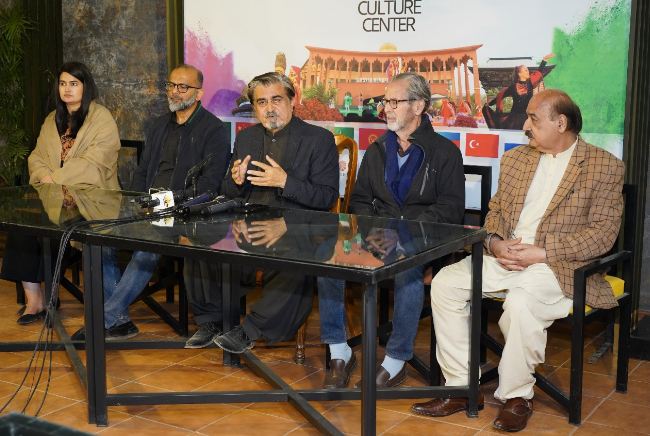
ISLAMABAD, DEC 6: /DNA/ – Brief about the Grand Launch of Silk Road Culture Centre Pakistan as a curtain raiser for media on December 6, 2024.

1.            We are thrilled to announce the grand launch of the Silk Road Culture Centre Pakistan (SRCC), a landmark initiative poised to transform cultural exchange and diplomacy in the region. This groundbreaking platform celebrates the rich tapestry of cultures that converge along the historic Silk Road, while reinforcing Pakistan’s commitment to global harmony and mutual understanding.

2.            Fostering Ties with Cultural Pact Nations

The SRCC is an embodiment of Pakistan’s dedication to strengthening bonds with countries it has signed cultural agreements with. By showcasing shared heritage, fostering creativity, and hosting collaborative events, the center will play a pivotal role in deepening ties and facilitating meaningful cultural interactions.

3.            A Unique Opportunity for the Diplomatic Community

The launch of SRCC provides an unparalleled opportunity for the diplomatic community in Pakistan to promote cultural diplomacy. It offers an avenue for embassies and cultural missions to showcase their nation’s art, traditions, and heritage in a collaborative environment, fostering mutual respect and understanding.

4.            A Private Sector Pioneer in Cultural Promotion

The SRCC stands as the first-of-its-kind private-sector initiative in Pakistan dedicated to promoting international art and culture. Through exhibitions, performances, workshops, and dialogues, the center aims to project a positive image of Pakistan as a culturally rich, progressive, and welcoming nation.

5.            Promoting Regional and Global Synergy

In a time when global connections are more critical than ever, the SRCC seeks to act as a bridge, bringing together artists, scholars, and cultural practitioners from diverse backgrounds to engage in meaningful dialogue and collaboration.

6.            Encouraging Community Engagement

Beyond diplomacy, the SRCC is designed to engage local communities, inviting them to participate in events and gain exposure to diverse cultures. This inclusivity ensures that cultural exchange reaches all levels of society, fostering greater awareness and appreciation.

7.            The launch of the Silk Road Culture Centre Pakistan marks a new chapter in Pakistan’s cultural narrative—one of openness, collaboration, and celebration of diversity. We invite the media, diplomatic missions, artists, and the public to join us in this historic journey, as we unveil a beacon of cultural unity and creativity.
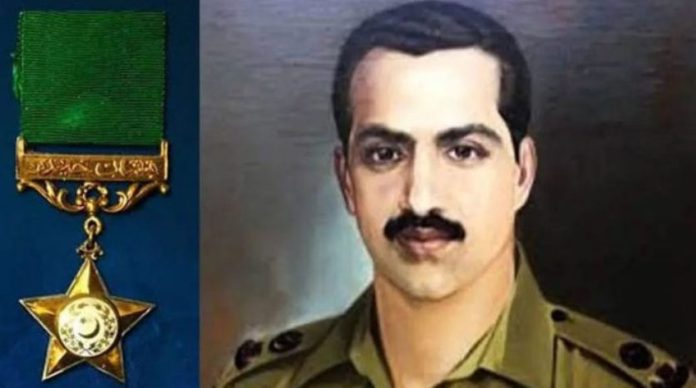
President, PM pays tribute to Major Shabbir Shareef on his 53rd martyrdom anniversary

President, PM pays tribute to Major Shabbir Shareef on his 53rd martyrdom anniversary

ISLAMABAD, Dec 06 (APP):President Asif Ali Zardari and Prime Minister Shehbaz Sharif on Friday paid tribute to Major Shabbir Sharif Shaheed (Nishan-i-Haider) on the 53rd anniversary of his martyrdom, recognising his gallantry and sacrifice to safeguard the country.

The president and prime minister, in their separately issued statements, lauded the valor of Major Shabbir Shaheed while fighting the enemy in the 1971 war without caring about his own life.

They said that the whole nation was proud of martyred Major Shabbir for his gallantry and sacrifice and reiterated that the people of Pakistan would never forget the sacrifices of their soldiers. They also prayed to Allah Almighty for the elevation of Major Shabbir Sharif Shaheed and other martyrs in paradise.

“The entire nation is proud of brave officers like Major Shabbir Sharif who sacrificed his life for the defense of the motherland. The nation recognizes the sacrifices of all the martyrs and will not forget them,” the president remarked.

Calling Major Shabbir Sharif a model of courage and bravery, Prime Minister Shehbaz said that in the 1971 war, he held back the enemy’s advance at Sulemanki.

“Major Shabbir Sharif Shaheed not only defended his position but also disabled enemy tanks with an anti-tank rifle and eliminated the enemy, including their company commander. Despite its numerical superiority, the enemy could not withstand the effective defense of Major Shabbir Sharif,” he remarked.

He said that Major Shabbir Sharif Shaheed laid down his life to protect the motherland. His patriotism and the spirit of self-sacrifice for the country’s defense, by offering his own life, is an inspiring example for the younger generation, he added.

“The entire nation, including myself, is proud of Major Shabbir Sharif Shaheed and his family. His dutifulness and loyalty to the nation will continue to inspire future generations,” the prime minister said.

Govt committed to ensuring Red Zone’s security

FM says no federating unit has right to march on Islamabad, slamming KP govt for using “state resources”

Ansar M Bhatti

ISLAMABAD: Rejecting the Pakistan Tehreek-e-Insaf’s (PTI) allegations of “straight firing” at civilians during its “do-or-die” protest in Islamabad, Foreign Minister Ishaq Dar has clarified that the law enforcement agencies (LEAs) were not provided with live ammunition, but water cannon, tear gas and batons.

“Police and Rangers were deployed in the first two tiers, with the army as the third line of defence to protect the Diplomatic Enclave, Parliament House and other important buildings,” he said while briefing members of the diplomatic corps on the recent situation after the PTI protest.

The former ruling party’s much-hyped protest in Islamabad, aimed at securing PTI founder Imran Khan’s release who has been behind bars for more than a year, culminated in PTI’s hasty retreat after the government’s midnight crackdown on the protesters.

The Imran Khan-founded party has since claimed that at least 12 of its workers were killed and 1,000 were arrested. However, the government has categorically denied using live ammunition against the protesters and said that four law enforcers including three Rangers personnel and policeman were martyred during the protest.

Briefing the foreign diplomats, Dar — who is also the deputy prime minister — said that the government had enacted a new law “Peaceful Assembly and Public Order Act, 2024” that barred the protest demonstrations in the Red Zone and required permission from a magistrate for any public gatherings.

Explaining why the government resorted to certain actions against the protestors, he said the Islamabad High Court (IHC) had barred the PTI from holding any protest gathering in the Red Zone area of the federal capital.

In pursuance of the court ruling, the government had tasked Interior Minister Mohsin Naqvi to engage with the party but to no avail. 

He said the federal government always prioritised the Red Zone’s security which housed Parliament House, the Supreme Court of Pakistan, federal institutions and the diplomatic corps.

Dar informed the diplomats that PTI had chosen to hold a protest on November 24, which coincided with the planned visit of the Belarusian president.

He added that this was consistent with the party’s past “malafide practice” of scheduling protests on significant dates, such as the SCO summit earlier this year and in 2014, when their protest led to the postponement of the Chinese president’s visit.

He recalled that the Supreme Court had dismissed PTI’s claims of rigging in 35 National Assembly seats — the primary reason behind the 2014 sit-in — yet the party never apologised, despite having committed to do so in a written agreement with the government.

Dar explained that PTI stubbornly attempted to march into the Red Zone, despite the government’s offer of an alternative protest site in Sangjani. He emphasised that human rights should not be exercised in ways that cause lawlessness and endanger the lives and property of both Pakistanis and the diplomatic corps.

The foreign minister highlighted that the government had shown restraint, as LEAs were only equipped with water cannons and tear gas, not live ammunition.

Japan Self Defense Forces Day celebrated in Islamabad

Japan Self Defense Forces Day celebrated in Islamabad

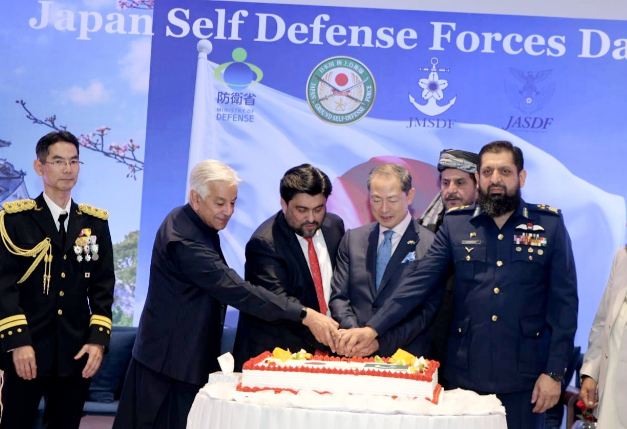
ISLAMABAD, Dec 4 /DNA/ – TAKANO Shuichi, Chargé d’ Affaires A.I. of the Embassy of Japan in Pakistan, and Mrs. TAKANO Asako hosted a reception on Wednesday, December 4th, 2024, to celebrate the 70th anniversary of the Japan Self-Defense Forces (JSDF) Day.  Defense Attaché, Colonel ABE Kazuo represented the Japan Self-Defense Forces (JSDF) at the Embassy. AKAMATSU Shuichi, Ambassador-designate of Japan to the Islamic Republic of Pakistan, and Mrs. AKAMATSU Yumiko were also present at the occasion.

Air Marshal Muhammad Sarfraz, HI(M), Deputy Chief of Air Staff (Projects), Air Headquarters, was the chief guest on the occasion. 

The reception was attended by the military officials as well as Ministers, parliamentarians, senior members of the Government of Pakistan, members of the diplomatic community and other dignitaries from the public and private sectors.

In his remarks, Mr. TAKANO stated, “I am pleased to see the progress in defense exchanges and cooperations between Japan and Pakistan” and “I believe that the deepening of the exchanges and cooperation between the JSDF and Pakistan Armed Forces will lead to strengthening the Japan-Pakistan relations.” 

In August this year, the Pakistan Navy PNS YARMOOK together with Japan’s Counter Piracy Enforcement Unit, JS SAMIDARE, conducted a goodwill exercise in the Gulf of Oman that contributed to deterring pirate activities and ensuring the safe navigation of merchant vessels navigating in the Gulf of Oman.

Next year in February, the multilateral joint exercise “AMAN25” will be hosted by the Pakistani Navy.  Japan is participating in AMAN25.  We regard it as an important exercise, contributing to the realization of a “Free and Open Indo-Pacific” in cooperation with like-minded navies.

With regard to disaster relief cooperation, Mr. TAKANO mentioned that in the earthquake in 2005 and the floods in 2010 in Pakistan, the JSDF dispatched helicopter units to transport relief supplies and affected people as part of the Japan Disaster Relief Team. He paid gratitude to the Pakistani people residing in Japan who had extended immense support to the Japanese people during the Great East Japan Earthquake in 2011 by giving food and distributing relief supplies to the affected people.

In his brief remarks, AKAMATSU stated that he feels very fortunate to have been appointed as the Ambassador to this wonderful country and expressed his desire of working together to further strengthen the ties between Japan and Pakistan. “Japan and Pakistan share a long-standing friendship, built on mutual respect and cooperation. Together, we can build a future that fosters mutual growth and understanding”, said the Ambassador-designate.

The JSDF Day was originally celebrated when the Japan Defense Agency (upgraded to the Ministry of Defense in 2007) and the JSDF were established on July 1st, 1954, but the date has been changed to November 1st as the JSDF are expected to respond to natural disasters such as frequent typhoons in summer season in Japan.

Rwanda High Commissioner meets Commerce minister, new business horizons unveiled

Rwanda High Commissioner meets Commerce minister, new business horizons unveiled

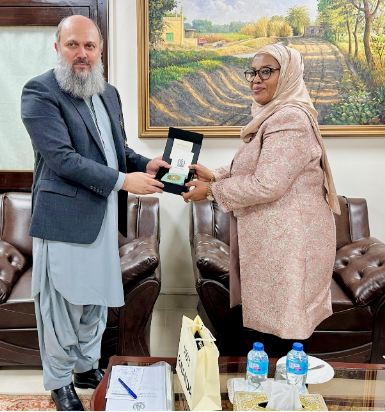
ISLAMABAD, DEC 4 /DNA/ – The High Commissioner of Rwanda to Pakistan, Fatima Harerimana on Wednesday called on Federal Minister for Commerce Jam Kamal Khan, discussed the opening of new trade markets and strengthening bilateral ties between the two nations.
This meeting marks a significant milestone as Rwanda’s first High Commissioner to Pakistan aims to foster economic cooperation following the establishment of Rwanda’s embassy in Islamabad, said a press release issued here.
Highlighting the economic potential of Rwanda, the commerce minister observed that while direct trade with Pakistan has yet to be established, Rwanda’s growing GDP is comparable to that of Ethiopia. This makes it an attractive market for bilateral engagement.
Minister Jam emphasized the need for a broader East African Community (EAC) trade forum in Islamabad, suggesting that the event could be Co-chaired by the President of the EAC and Prime Minister Shehbaz Sharif ,attended by trade ministers from member states. “There is tremendous scope for mutual trade benefits. For instance, Rwanda could export tea to Pakistan, while Pakistan can supply rice to Rwanda,” noted Minister Jam Kamal Khan. He proposed identifying key business areas and bringing together stakeholders under Pakistan’s “Look Africa Policy.” The minister highlighted opportunities in sectors like power, agricultural machinery, food, and pharmaceuticals.
He suggested fostering collaboration between the chambers of commerce of Rwanda and Pakistan to facilitate matchmaking among business communities.
He also stressed that a high-level interaction involving heads of states would be pivotal for strengthening ties.
Minister Khan proposed that during the planned EAC Business Forum, multiple Memorandums of Understanding (MoUs) and agreements could be signed, paving the way for long-term partnerships. Rwanda’s High Commissioner ,Fatima Harerimana expressed interest in Pakistan’s electric bikes and the automobile sector, signaling a new avenue for bilateral trade.
The minister informed her of Pakistan’s significant strides in mobile phone manufacturing, with 13 companies currently operating in the sector.
Additionally, he pointed out Pakistan’s expertise in electric bikes, footwear, and textiles, all of which could be promising industries for trade with Rwanda. “Pakistani tractors, known for being both cost-effective and energy-efficient, are already making an impact in Africa. These could be a valuable export to Rwanda,” the minister added.
Both sides reiterated their commitment to exploring new markets and enhancing economic cooperation. Jam Kamal pledged to write to EAC member states and the President of the EAC to ensure the proposed business forum becomes a reality.
The meeting underscored the potential for Pakistan and Rwanda to establish a dynamic trade partnership, leveraging each other’s strengths and opening new avenues for economic growth.

Pakistan’s Top Diplomats Gather: Dar leads critical foreign policy consultation

Pakistan's Top Diplomats Gather: Dar leads critical foreign policy consultation

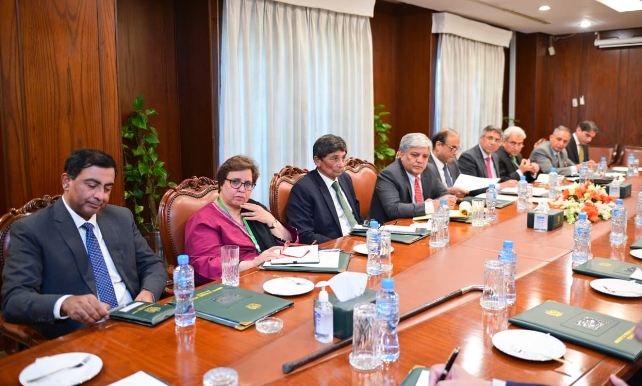
ISLAMABAD, DEC 4 /DNA/ – Deputy Prime Minister/Foreign Minister Senator Muhammad Ishaq Dar @MIshaqDar50 chaired a consultation meeting with the former Foreign Secretaries to discuss regional and global developments and their input on foreign policy maters. Those in attendance were: Mr Inam ul Haq, Mr Salman Bashir, Mr Jalil Abbas Jilani, Mr Masood Khan, Mr Aizaz Chaudhry, Ms Tehmina Janjua, Mr Sohail Mehmood and Mr Syrus Qazi.

Former Naval Chief Admiral Yastur ul Haq Malik laid to rest in Lahore

Former Naval Chief Admiral Yastur ul Haq Malik laid to rest in Lahore

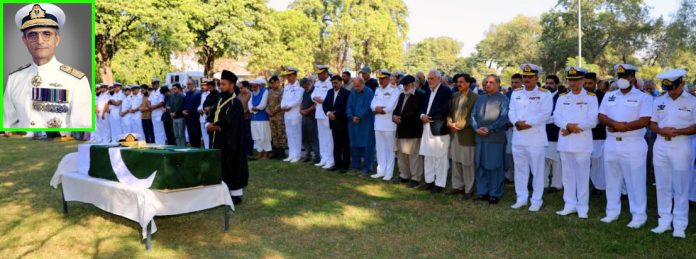
LAHORE, DEC 4 /DNA/ – Former Chief of the Naval Staff, Admiral Yastur-ul-Haq Malik, was laid to rest in Lahore. A large number of retired and serving armed services officials, as well as civilians, attended the late Admiral’s funeral prayers. The Chief of the Naval Staff, Admiral Naveed Ashraf, expressed his condolences to the deceased’s family and prayed for the departed soul.

Admiral Yastur-ul-Haq Malik had a distinguished naval career spanning over four decades. He had the honor of participating in the 1965 and 1971 Pakistan-India wars. He served as the Chief of the Naval Staff from 1988 to 1991. Throughout his career, the Admiral displayed dynamic leadership, impeccable moral character, exceptional professional competence, and the highest sense of responsibility.

He joined the Pakistan Navy in September 1951 and completed his initial training at Britannia Royal Naval College, Dartmouth, UK. He was a graduate of the PAF Staff College and the National Defence University. Admiral Yastur-ul-Haq Malik held an illustrious record in command and staff assignments, both afloat and ashore. Notably, he commanded Pakistan Navy Fleet and served as Vice Chief of the Naval Staff. Additionally, he served as Chairman of the Pakistan National Shipping Corporation.

In recognition of his meritorious services and outstanding performance, the Admiral was awarded Nishan-e-Imtiaz (Military) and Sitara-e-Basalat.

Floral wreaths, on behalf of the President of Pakistan, the Prime Minister, the Chairman Joint Chiefs of Staff Committee, Chief of the Naval Staff, other services chiefs, senior naval officers, and notable civilians, were laid on the Admiral’s grave.

Pakistan announce playing XI for final T20I against Zimbabwe

Pakistan announce playing XI for final T20I against Zimbabwe

BULAWAYO: The Pakistan Cricket Board (PCB) on Wednesday announced the Green Shirts’ playing XI for the third and final T20I against Zimbabwe scheduled for tomorrow (Thursday) at Queens Sports Club in Bulawayo.

The Men in Green have clinched the three-match series against Zimbabwe by 2-0. The national side won the first match by 57 runs and the second match by 10 wickets.

The final XI, led by Salman Ali Agha, includes Omair bin Yousuf, Sahibzada Farhan, Usman Khan, Tayyab Tahir, Qasim Akram, Arafat Minhas and Jahandad Khan.

The picture shows Pakistans Playing XI. — PCB
The picture shows Pakistan’s Playing XI. — PCB
The bowling side features Mohammad Abbas Afridi, Mohammad Hasnain and Sufyan Moqim.

In the first T20I of the series, Abrar Ahmed and Sufyan spun Pakistan to a 57-run victory over Zimbabwe at the Queens Sports Club on Sunday. Both of them claimed three wickets each while Haris Rauf bagged two and Jahandad Khan one.

Chasing a 164-run target, Zimbabwe’s batting unit unfolded on a meagre 108 in the 15.3 overs despite brisk knocks by skipper Sikandar Raza and opener Tadiwanashe Marumani.

In the second match, the Green Shirts bagged a dominating victory by 10 wickets on Tuesday.

Chasing a modest 58-run total, Pakistan knocked the winning runs inside the batting powerplay without losing a single wicket.

Left-handed opener Saim Ayub was the core aggressor of the match-winning stand, courtesy of his quickfire 36-run knock from 18 deliveries, studded with six fours and a six.

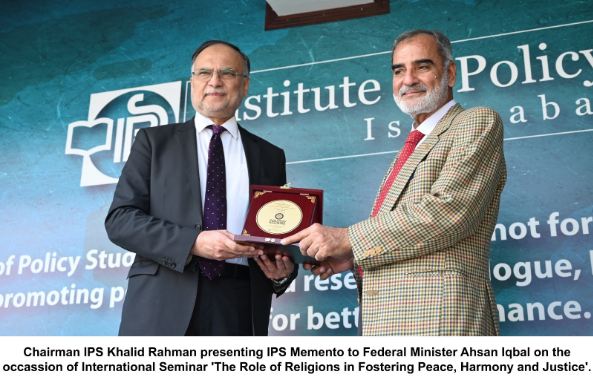
Ahsan Iqbal underlines interconnection of religions, peace, and development

Ahsan Iqbal underlines interconnection of religions, peace, and development

ISLAMABAD, DEC 4 /DNA/ – There is an inseparable link between the role of religions and peace and development, as no society can flourish without the foundations of harmony, justice, and mutual respect. This connection has global significance, with particular relevancy for Pakistan, as collective efforts are essential to bridge divides, foster inclusivity, and pave the way for sustainable development and equitable growth.

These views were shared by Ahsan Iqbal, federal minister for Planning, Development, and Special Initiatives while speaking as chief guest at the inaugural session of an international seminar, “The Role of Religions in Fostering Peace, Harmony, and Justice,” organized by the Institute of Policy Studies (IPS), Islamabad, on Wednesday. The seminar was addressed as keynote speaker by Dr Tamara Sonn, professor emerita, Georgetown University, Washington D.C., while Prof Khurshid Ahmad, founder and patron-in-chief of IPS, Khalid Rahman, chairman IPS, and Khurshid Ahmad Nadeem, chairman National Rahmatul-Lil-Aalameen Wa Khatamun Nabiyyin Authority, also spoke on the occasion.

The day-long event gathered international and local speakers, scholars, religious leaders, policymakers, and civil society to discuss religion’s transformative role in tackling humanity’s key challenges.

The seminar was held in collaboration with Allama Iqbal Open University, National University of Modern Languages, Islamabad, University of Management & Technology, Lahore, Gift University, Gujranwala, The Islamic Foundation, UK, and Markfield Institute of Higher Education, UK.

Ahsan Iqbal highlighted the enduring wisdom of faith traditions, emphasizing their universal principles of human dignity, non-violence, and compassion. Drawing on teachings from Islam, Christianity, Judaism, Hinduism, Buddhism, and Sikhism, he noted that these shared values underpin harmonious and progressive societies. However, he expressed concern over rising intolerance and hate, which fuel extremism and hinder harmony and inclusivity. He underscored the importance of fostering a narrative rooted in tolerance.

Prof Khurshid Ahmad emphasized religion’s role in addressing spiritual needs, calling it a fundamental necessity throughout history. He warned that modern civilization’s departure from religion has led to injustice, oppression, and discord. As humanity grapples with materialism, nationalism, and neocolonialism, Prof Ahmad urged faith communities to foster harmony through moral appeal rather than coercion, offering ethical guidance to counter today’s challenges. He described Islam’s principles as fostering progress, justice, and harmony.

Dr Tamara Sonn highlighted religion’s paradoxical role in conflicts, noting its unparalleled potential to resolve disputes despite often being seen at their core. She warned against religious nationalism, calling it manipulative and destabilizing, and urged societies to embrace universal values of justice, humanity, and equality. Stressing the importance of values over identities, she remarked, “It is not the faith we are born into but the values we embody that define a person’s merit.” Dr Sonn advocated interfaith collaboration through a “dialogue of action” to address shared challenges.

Khurshid Nadeem underscored religion’s enduring relevance, highlighting secularism’s failure to provide a comprehensive moral framework. He stressed that religion remains essential to addressing fundamental human needs for meaning and guidance, especially in today’s moral crises.

Khalid Rahman accentuated the decisive role of human behavior in shaping religion’s influence, emphasizing that “religions are not inherently divisive; their impact depends on how they are practiced and interpreted.” He highlighted how religion is often misused to incite violence and exclusion, overshadowing its core values of compassion and justice.

Rahman pointed out that clashes often arise not because of inherent differences but due to mismanagement of diversity, personality clashes, and competing group interests. Rahman stressed the need for inclusive strategies to resolve conflicts, bridge divides, and address socioeconomic disparities, emphasizing that humanity’s strength lies in its diversity.

Ethiopia, Pakistan agree on enhancing aviation cooperation

Ethiopia

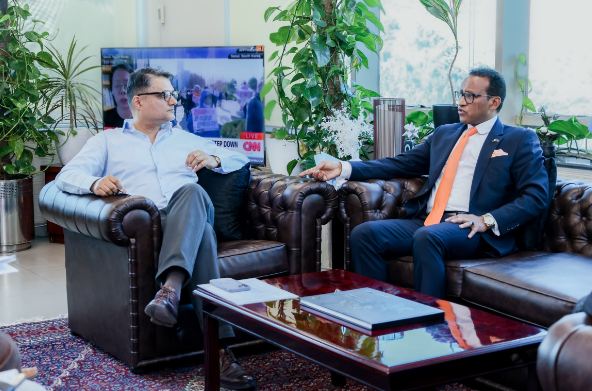
ISLAMABAD, DEC 4 /DNA/ – The Federal Democratic Republic of Ethiopia (FDRE) and the Islamic Republic of Pakistan on Wednesday agreed to bolster the bilateral relations by expanding their cooperation in the aviation sector.

Both sides agreed to this end during a meeting between H.E. Dr. Jemal Beker Abdula, Special Envoy and Ambassador Extraordinary and Plenipotentiary of the FDR Ethiopia to Pakistan, and H.E. Ahsan Ali Mangi, Federal Secretary for the Ministry of Aviation.

During the meeting, they had a detailed discussion on the matters of mutual interests including the bilateral cooperation for increasing air connectivity between the two countries, and also transferring knowledge and technology. 

During the meeting, H.E. Ambassador Dr. Jemal expressed his gratitude for the crucial support extended by the Government of Pakistan in the commencement of the Ethiopian Airlines’ operations in Karachi.

He underscored the significance of launching the Ethiopian Airlines in other cities of Pakistan to increase mobility not only between Ethiopia and Pakistan, but also Africa and Pakistan.

The Ambassador briefed the Federal Secretary on the pivotal role being played by Ethiopian Airlines in the effective implementation of the “Look Africa and Engage Africa” policies of Pakistan that were aimed at strengthening government-to-government, people-to-people, and business-to-business relations between both Pakistan and African countries.

He said the Ethiopian Airlines have been brought to this country under the “Enter and Operate in Africa through Ethiopia” policy launched by the Ethiopian Embassy Islamabad.

The Ambassador also highlighted the growing popularity of Ethiopian Airlines among the people of Pakistan who have been fully appreciating the services offered by one of the largest airlines in the world.

On the other hand, H.E. Ahsan Ali Mangi acknowledged the critical role being played by Ethiopian Airlines in bringing Africa closer to Pakistan and assured the Ambassador of his institution support in advancing the bilateral cooperation in the Aviation Sector.

Stay Connected

64FansLike
60FollowersFollow

Latest Reviews

Exchange Rates

USD - United States Dollar
EUR
1.18
GBP
1.36
AUD
0.72
CAD
0.73