Home Blog Page 734

Chief Commissioner Islamabad assumes office, sets vision for development

ISLAMABAD, MAY 3 /DNA/ – Chaudhry Muhammad Ali Randhawa has officially assumed the role of Chief Commissioner Islamabad, marking a new chapter in the capital’s development trajectory.

In his inaugural visit to Faisal Mosque, Chief Commissioner Randhawa, accompanied by officers from the engineering wing, underscored his commitment to the city’s landmarks. He issued directives for immediate renovation and construction work, ensuring that necessary repairs are completed today, with comprehensive maintenance to follow promptly.

During discussions with the Capital Development Authority (CDA) board members, Chief Commissioner Randhawa was briefed on ongoing projects and the administrative structure of the CDA. Emphasizing a proactive approach, he urged swift completion of all projects within stipulated timelines and the enhancement of administrative efficiency.

“Completing ongoing projects and improving administrative processes are key priorities,” stated Chief Commissioner Randhawa. “We are committed to ensuring timely completion of all development initiatives, including the restoration of our iconic landmarks.”

Under his leadership, Islamabad looks forward to a future of progress and development, with a renewed focus on efficiency and excellence.

Mrs. Farrukh Khan hails Pakistan’s first space mission as sign of progress and innovation

Mrs. Farrukh Khan hails Pakistan's first space mission as sign of progress and innovation

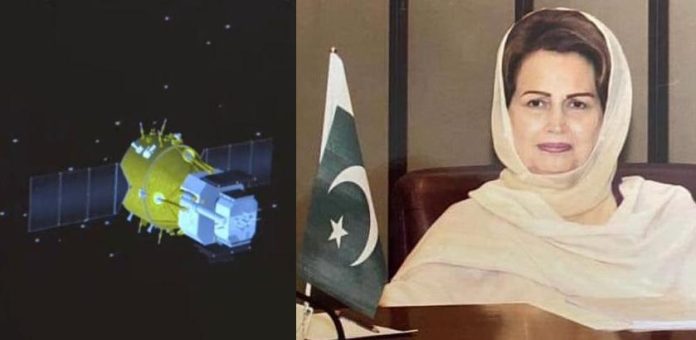
ISLAMABAD, MAY 3 /DNA/ – The central leader of Pakistan Muslim League, Working National Assembly Mrs. Farrukh Khan has congratulated the nation on the departure of Pakistan’s first space mission “IQB”. It is the day of putting, we pay tribute to the pioneers, in the future we will have to count the light instead of measuring the darkness.

Mrs. Farrukh Khan said that this wonderful achievement is due to the dedication, skill and vision of our scientists, engineers and technicians. It is a proof that today Pakistan has also turned this dream into reality. He said that it is a sign of progress and innovation of our nation.

The member of the National Assembly said that this success will start a new era in space exploration, scientific research and technological development. He said that the appreciation of Pakistan-China friendship.

The China-Pakistan partnership not only underlines the strength of our diplomatic ties but also highlights the role of unity in achieving extraordinary goals.

Punjab wins Prime Minister National Talent Hunt Table Tennis League

Punjab wins Prime Minister National Talent Hunt Table Tennis League

AFZAL JAVED

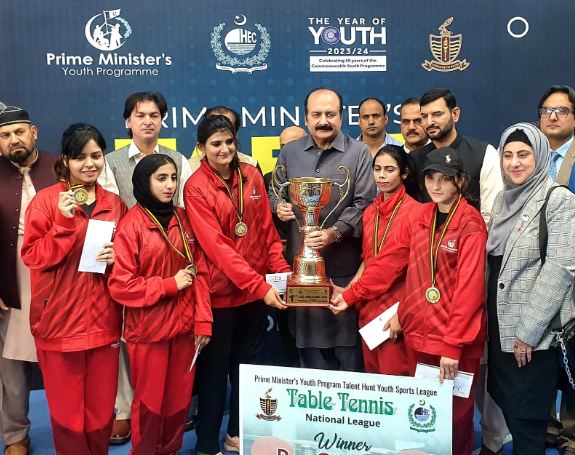
ISLAMABAD: Punjab Men’s and women’s team won the finals of Prime Minister’s National Talent Hunt Table Tennis League at the Rodham Hall, Pakistan Sports Complex Islamabad on Friday.

The six day event is being organised by the Higher Education Commission (HEC), Punjab B defeated Punjab A by 3-0 in the women’s team event final. Punjab A Captain Ramsha Niaz defeated Tayyaba Latif after a tough match by 11-7, 6-11, 11-4, 8-11, 11-9. In the second match Saba Syed defeated Tania Khan 11-7, 6-11, 11-2, 8-11, 11-8 while Shamila Javed defeated Laila Nayab 9-11, 12-10, 8-11 11-5, 11-7. Khyber Pakhtunkhwa won the third position in the women’s team event.

In the final men’s team event, Punjab A defeated Khyber Pakhtunkhwa by 3-1 games. Punjab A Atta Ul Mannan defeated Awais Khan 11-6, 8-11, 11-7, 11-4. KPA’s Obaid Shah defeated Punjab’s Paras Azam 10-12, 11-8, 11-6, 11-7 while Punjab’s Usman Nawaz defeated Haroon Khan 11-7, 11-9, 6-11, 11-8 and Atta Ul Mannan won the game by defeating Ubaid Shah 11-7, 11-5, 11-8.

Chairman Prime Minister’s Youth Program Rana Mashhood Ahmed Khan was the chief guest of the closing ceremony, who along with the host Government College University Lahore Director of Sports Wasim Akhtar, Pakistan Sports Board Deputy Director General Shahid Salam and officials of the Higher Education Commission distributed prizes to the players.

Speaking on the occasion Rana Mashhood, has reiterated the government’s commitment to provide a platform for young talent to shine in various fields, including sports, health, culture and art, adding that PM’s vision was to identify and groom talented young players to represent Pakistan at international levels.

He expressed his excitement about the abundance of talent in every province of Pakistan, which he witnessed during his travels across the country. He emphasized the importance of merit-based selection and the development of young talent to propel the country forward.

Chairman PMYP announced plans to organize leagues like the Pakistan Super League (PSL) in other sports, ensuring a comprehensive approach to talent development. He assured that players identified through the Talent Hunt Program would receive world-class training and grooming, enabling them to make Pakistan proud on international platforms. He predicted that within a year, Pakistani players will be making a mark globally, thanks to the government’s initiatives.

Rana also commended the Higher Education Commission, Pakistan Sports Board, and Table Tennis Federation for their support of the PM’s Youth Programme.

Pakistani lunar payload successfully launches aboard Chinese moon mission

Pakistani lunar payload successfully launches aboard Chinese moon mission

HAINAN, MAY 3: In a historic first, a Pakistani satellite will orbit the moon as part of China’s historic Chang’e-6 lunar mission, which was launched from Hainan, China, on Friday.

The mission, which aims to explore the moon’s “dark side”, will employ lunar research payloads from multiple countries, including Pakistan’s iCube Qamar satellite.

The Institute of Space Technology (IST) on Tuesday said Pakistan’s “historic” lunar module iCube-Q, which was designed by IST in collaboration with China’s Shanghai University (SJTU) and Pakistan’s national space agency Suparco, will be aboard Chang’e-6.

The mission, dubbed Chang’e, is named after the mythical Chinese moon goddess.

Chang’e-6 aims to collect around two kilogrammes of lunar samples from the far side of the Moon and bring them back to Earth for analysis. Chinese state news agency Xinhua hailed it as “the first endeavour of its kind in the history of human lunar exploration”.

“Chang’e-6 will collect samples from the far side of the Moon for the first time,” Ge Ping, vice director of China’s Lunar Exploration and Space Engineering Centre, told journalists.

China will send a robotic spacecraft in the coming days on a round trip to the moon’s far side in the first of three technically demanding missions that will pave the way for an inaugural Chinese crewed landing and a base on the lunar south pole.

The probe is set to land in the immense South Pole-Aitken Basin, one of the largest known impact craters in the solar system. Once there, it will scoop up lunar soil and rocks, and carry out other experiments in the landing zone.

With no direct line of sight with the Earth, Chang’e-6 must rely on a recently deployed relay satellite orbiting the moon during its 53-day mission, including a never-before-attempted ascent from the moon’s “hidden” side on its return journey home.

On Chang’e-6, China is carrying payloads from France, Italy, Sweden and Pakistan, while Chang’e-7 will bear payloads from Russia, Switzerland and Thailand when it launches in 2026.

Nasa is banned by US law from any collaboration, direct or indirect, with China.

Under the separate Nasa-led Artemis programme, US astronauts will land near the south pole in 2026 — the first humans on the moon since 1972.

iCube Qamar
The iCube-Q orbiter carries two optical cameras to image the lunar surface. The module is a cube satellite or CubeSat — miniature satellites typically characterised by their small size and standardised cubic design.

Due to their compact size and relatively low cost compared to traditional satellites, CubeSats offered opportunities for universities, research institutions and commercial entities to participate in space missions and gather valuable data for scientific advancement and innovation.

Beijing’s “space dream”
Plans for China’s “space dream” have been put into overdrive under President Xi Jinping.

Beijing has invested heavily in its space programme over the last decade, targeting a string of ambitious undertakings to close the gap with the two traditional space powers — the United States and Russia.

The country has notched several notable achievements, including building a space station called Tiangong, or “heavenly palace”, to which it sent a fresh crew of three astronauts last month.

Beijing has landed robotic rovers on Mars and the moon and made China the third country to independently put humans in orbit. China aims to send a crewed mission to the moon by 2030, with further plans to build a base on the lunar surface.

Reactions
President Asif Ali Zardari and Prime Minister Shehbaz Sharif congratulated the nation on the successful launch of Pakistan’s maiden lunar mission.

State-run broadcaster Radio Pakistan reported that the president congratulated the IST, Suparco and the China National Space Administration on the achievement.

He said the successful launch would be a “milestone” for Pakistan’s space programme. The president also commended the cooperation between Pakistan and China in aerospace.

PM Shehbaz hailed the iCube-Q satellite as “Pakistan’s first step in space” and said that Pakistani scientists and engineers were “proving their mettle … like the expertise they exhibited in the nuclear technology [programme]”.

The prime minister said that Pakistan and China’s friendship, which was “higher than Himalayas, deeper than ocean, and sweeter than honey” had now “crossed the frontiers of space”.

The premier watched the live launch of the mission.

The acceptance of Pakistan’s mission among eight countries was the recognition of the capabilities of the country’s scientists and experts, he added.

“This is a historic milestone in the technological development. By this achievement, Pakistan has entered a new era of exploring space for productive purposes,” the prime minister remarked.

PM Shehbaz said the achievement would help build Pakistan’s capacity in the satellite communications besides opening up new avenues for scientific research, economic development and national security.

“Our sons of soil have proved that they have the capability، passion and expertise to explore space. God willing, Pakistan will achieve excellence in the fields of space and economy too as it had done in the field of nuclear technology on May 28, 1998.”

By realising the dream of self-dependence in the communications infrastructure, Pakistan will “join the comity of nations playing a leading role in the sector”, he remarked.

Calling Pakistan’s development in science and technology, modern sciences and skill development the need of the hour, the prime minister reiterated the resolve to uplift the country’s youth in the said fields to ensure that the country achieved “excellence” in the field of inventions.

Deputy Prime Minister and Foreign Minister Ishaq Dar took to X to “congratulate the young Pakistani students and scientists on the launch” of the lunar mission.

“Today’s launch from Hainan … is a good example of countries and organisations coming together for space cooperation and shared benefits,” he added.

Jam Kamal highlights deep-rooted friendship between Pakistan, Australia

Jam Kamal

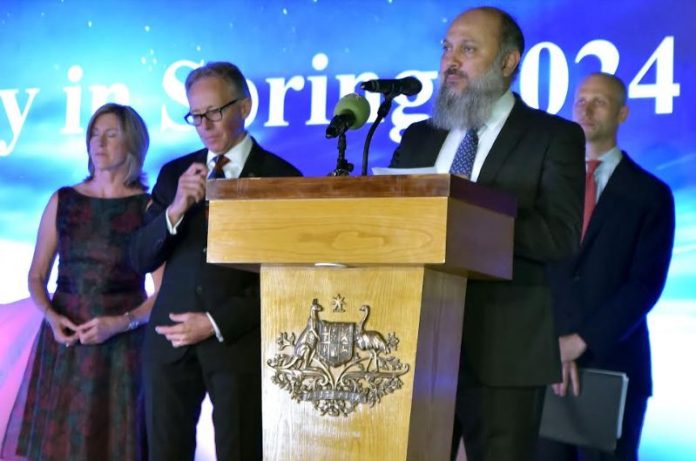
ISLAMABAD, May 3 (DNA): Minister for Commerce Jam Kamal Khan on Friday highlighted the deep-rooted friendly relations between Pakistan and Australia, which spanned over political, economic, and defence sectors.

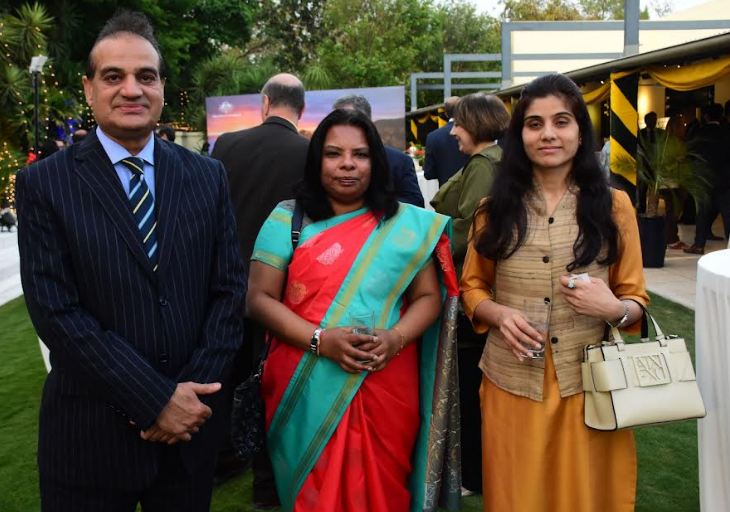
He was speaking as a chief guest at a ceremony held to celebrate ‘Australia Day in Spring’ to mark the enduring ties between the two nations, a news release said.

Prominent among those who attended the ceremony was Australia’s High Commissioner in Pakistan Neil Hawkins.

The minister emphasized the significance of sports, particularly cricket, squash, and hockey in fostering mutual recognition between Australia and Pakistan, noting Neil Hawkins’ enthusiasm for hockey.

Turning to bilateral ties, Jam Kamal underscored Pakistan’s commitment to strengthening its relationship with Australia and emphasized mutual respect and cooperation.

He praised Australia’s role as a development partner, especially in sectors such as agriculture and education.

Addressing trade relations, the minister acknowledged the existing trade surplus enjoyed by Australia and emphasized the untapped potential for further collaboration.

He outlined Pakistan’s major exports to Australia, including textiles rice, surgical equipment and steel products, noting recent increases in imports of Canola and other commodities from Australia.

Proposing new steps to enhance bilateral cooperation, Jam Kamal called for intensified efforts to deepen agro-trade and urged the reduction of trade barriers.

He highlighted the need for a level playing field in textiles and encouraged exploration of new avenues such as agro-tech industries and fruit exports.

Expressing gratitude for the Pakistani diaspora in Australia, the minister praised their contributions across various fields and commended the Australian Government’s recognition of their efforts.

He also thanked Australia for offering scholarships to Pakistani students under various education schemes.

Japan announces MEXT (Ministry of Education, Culture, Sports, Science and Technology) Scholarships 2025

Japan announces MEXT (Ministry of Education, Culture, Sports, Science and Technology) Scholarships 2025

ISLAMABAD, MAY 3 /DNA/ – The Government of Japan has announced its MEXT Scholarships 2025 for the talented Pakistani students to apply for their Undergraduate and graduate studies (Masters & PhD)and get a chance to study in the prestigious universities of Japan.

The Embassy of Japan in Pakistan is now accepting applications for the MEXT undergraduate and Research Scholarships (Masters & PhD) 2025. Every year the Ministry of Education, Culture, Sports, Science and Technology (MEXT) of Japan offers scholarships to international students who wish to study in under-graduate and graduate courses at the Japanese universities.

MEXT research scholarship is fully funded by the Government of Japan and provides an excellent opportunity for the aspiring students in Pakistan to  apply and get a chance to study at the high-quality universities in Japan.

The Army Knows its Constitutional Limits…

Qamar Bashir

By: Qamar Bashir

The army chief said that while the army understands its constitutional limits, those who criticize the army should also be aware of the constitutional boundaries set by Article 19 of the constitution which subjects all citizens to reasonable restrictions imposed by law which inter alia include  the integrity, security, or defense of Pakistan, public order, decency and  morality.

The army chief’s speech at the passing-out parade of cadets at Pakistan Air Force (PAF) in Risalpur on May 2nd, 2024 was seen as a calculated and well-timed response to politicians, media personnel, and social media activists who have been unjustly criticizing the army and called for the army to uphold its oath, which includes respecting the Constitution of the Islamic Republic of Pakistan and refraining from engaging in any political activities.

The army chief’s words can be interpreted as a rebuke to those who are using traditional and social media to condemn the army. He seems to be implying that the army knows its responsibilities and no one has the right to dictate its actions. Instead, individuals should be mindful of their own actions and avoid crossing the boundaries set by Article 19 of the constitution.

Interestingly, the abuse and condemnation of the army on social media platforms are not unique to Pakistan. For example, in countries like the United States, United Kingdom, India, and others, the military has been subjected to criticism and abuse on social media on account of political differences, human rights concerns, and accountability issues. These countries have also implemented various remedial actions.

In the United States, the Communications Decency Act of 1996 includes provisions related to online harassment and obscenity. Additionally, the Uniform Code of Military Justice (UCMJ) includes provisions that address disrespectful behavior towards the military.

The Malicious Communications Act 1988 in the United Kingdom criminalizes the sending of electronic communications with the intent to cause distress or anxiety. Similarly, the Communications Act 2003 includes provisions related to offensive and menacing messages sent over electronic communications networks.

In India, the Information Technology (Intermediary Guidelines and Digital Media Ethics Code) Rules, 2021, require intermediaries to take down certain types of content, including those that threaten public order or national security. Additionally, the Indian Penal Code includes provisions related to defamation, hate speech, and incitement to violence that can be applied to online behavior.

In Pakistan, there are 52 media laws, rules, regulations, and codes of conduct primarily aimed at imposing reasonable restrictions on the freedom of the press and social media. These can be used against any person found disseminating biased, baseless, false, and venomous propaganda against the armed forces of Pakistan. However, if there is a need to enact new laws, it should be done only after conducting a nationwide debate and benchmarking the best practices globally, involving all stakeholders to ensure their complete buy-in.

Additionally, social media platforms should be engaged proactively to implement policies, refine the existing tools and invent new ones  to combat abusive behavior on these platforms to combat hate speech and harassment and holding accountable those  who violate these policies.

Conscious efforts should be made to strengthen support for and promote traditional media, operated by seasoned, experienced, and highly refined professionals. These individuals are adept at the art and science of making difficult, sensitive, and critical communications in the best interests of our institutions, the people of Pakistan, and the country as a whole. This will enhance credibility in traditional media and discourage the spread of misinformation that often occurs in the unregulated jungle of social media. In social media, facts and reality are distorted with total impunity, often driven by the prime objective of increasing views, which translates to higher revenue. This creates added incentive for social media activists to create sensationalism, anarchy, and chaos in society. Therefore, the public should be incentivized to turn to traditional media by weaning them off social media.

However, the most important intervention which will address this issue comprehensively lies in  correcting the misconceived perception about the Pakistan army and its alleged involvement  in non-traditional roles such as anti-narcotic duties, anti-smuggling duties, and engaging in commercial activities like housing schemes, construction, large scale manufacturing and banking and serving general are appointed against civilian posts  which lead to the perceptions of overreach and a deviation from army core mandate of national defense.

Secondly, a misconceived perception which needs correction is the army’s alleged involvement in politics, victimizing disfavored politicians and rewarding  favored ones, including raising and eliminating political parties, influencing election results, and intimidating judges and election commissions, while the army time and again has assured that it has no role to play in the politics maneuvering.

Thirdly, misplaced perception is that army and institution under it are involved in human rights abuses, including abductions, torture, and intimidation of citizens, journalists and political activists to suppress free speech and dissent.

While it is paramount that the false and malicious propaganda against Pakistan’s most important and vital institution must stop, equally important is to take steps to improve Pakistan’s ranking on the Freedom of Press Index which currently rests at 150 out of 180 countries.

To dispel misperceptions about the Pakistan Army, an immediate and comprehensive strategic communication plan must be put into action. This plan should start by identifying the key misperceptions. Messaging should be crisp, clear, and consistent, emphasizing the Pakistan Army’s core mandate of national defense, its contributions to security, and its unwavering commitment to democratic values.

Engaging with stakeholders, including government officials, civil society organizations, and the general public, and forging partnerships with credible allies such as respected public figures and scholars, are crucial steps. Continuous monitoring and evaluation, coupled with transparency and sustained engagement, are fundamental elements for successfully dispelling misperceptions and fostering positive relationships with the public in Pakistan.

By: Qamar Bashir

Former Press Secretary to the President

Former Press Minister to the Embassy of Pakistan to France

Former MD, SRBC

US Ambassador meets new Punjab officials

US Ambassador meets new Punjab officials

LAHORE, MAY 3 /DNA/ – U.S. Ambassador Donald Blome met with new Punjab officials to explore opportunities to strengthen the U.S.-Pakistan partnership in Punjab province.  He also held meetings and events focused on U.S.-Pakistan collaboration in the fields of IT, health, and culture.  U.S. Consul General in Lahore Kristin Hawkins joined Ambassador Blome for his series of engagements.

As part of his routine interactions with Pakistani officials, Ambassador Blome met with Punjab Chief Minister Maryam Nawaz Sharif, Acting Governor and Speaker of the Punjab Assembly Malik Muhammad Ahmad Khan, and Punjab Assembly Leader of the Opposition Malik Ahmad Khan Bhachar.  The Ambassador highlighted U.S. interest in strengthening our trade and investment relationship with Pakistan, discussed the positive impacts of initiatives under the U.S.-Pakistan “Green Alliance” framework, and explored additional areas for future collaboration.

The Ambassador visited the offices of Systems Limited and Remington Pharmaceuticals to learn more about ongoing U.S.-Pakistan collaborations in the IT and health sectors.  “The U.S. government is providing nearly $85 million in funding to address the issue of malnutrition in Pakistan, including $12 million to treat severely malnourished children,” Ambassador Blome said.  “I appreciated the opportunity to hear about the work Remington Pharmaceuticals is doing to combat malnutrition and other global health challenges, including in collaboration with U.S.-based partners.”  

The Ambassador visited Forman Christian College to see a USAID-constructed women’s dormitory and to visit the U.S. government-funded EducationUSA office, which provides free advising services on study abroad opportunities in the United States.  Another highlight of his trip was attending a concert at the Lahore Fort by Raining Jane, a band comprised of four American women.   

“Back home in the United States, Raining Jane has played a leadership role in supporting girls’ dreams of becoming musicians, by establishing a Rock n’ Roll Camp for Girls in Los Angeles,” Ambassador Blome said.  “I’m so pleased they are able to be here to inspire the next generation of Pakistani musicians, both women and men, to be influential leaders in their own communities.”

Making Saudi investment a success is critical

Saudi investment

ISLAMABAD, MAY 3 /DNA/ – Muhammad Hanif Mughal, Chairman of Pakistan Tehreek-e-Shadbad, said on Friday that Pakistan has lost numerous chances to grow economically. 

Politicians and bureaucracy tend to scare away investors, which should be changed; that is critical for the success of Saudi investment, he added. 

In a statement issued today, Dr Muhammad Hanif Mughal said that no other country has as many opportunities as Pakistan to boost the economy, but all such opportunities have been wasted due to vested interests.

He observed that our politicians and bureaucracy are experts in driving away investors, a major obstacle to investment and national development. 

He said that now, the friendly country of Saudi Arabia wants to invest billions of dollars in Pakistan, which should be allowed to succeed. 

Riyadh is particularly interested in investing in the agricultural sector; nevertheless, energy projects were also addressed during the discussions between the high-ranking officials of both countries. 

He said Saudi investors and investments should be protected and allowed to work freely so other countries could also follow suit to invest in Pakistan.

Apart from this, people and institutions who have stopped investments in Pakistan should be consulted to find and correct the problems discouraging investors. 

He said Saudi investors and their investments should be protected from problems, which is crucial for the economic stability of Pakistan. 

With Saudi investment, the relations between the two countries will be more stable, while the reputation of Pakistan will grow, the economy will prosper, and employment opportunities will increase. 

He noted that some hostile countries and negative elements are worried about Saudi investment in Pakistan. They may target Saudi investors like the Chinese working are targeted. 

Therefore, the foolproof security of investors be ensured so they can work with peace of mind, he demanded.

Hanif Mughal observed that there is a realization at the top in Pakistan that we need to modify our internal dynamics to attract foreign investment.

The government is trying to make Pakistan an attractive destination for capital from other countries. Still, much must be done before making the country an investment destination. 

He said that Pakistan is facing revenue, energy, and security issues, which require attention. It is also essential to put an end to corruption and bureaucratic red tape and establish a regulatory and administrative environment that emphasizes the simplicity of conducting business. 

In the meantime, the Saudi offers are likely to be realized shortly and additional foreign investors from the Gulf region and beyond may start to investigate the investment potential in Pakistan. 

On the other hand, it is essential to ensure an environment of domestic political stability which is necessary to attract huge foreign investments. 

It should not be overlooked that FDI allows the transfer of technology and it can also promote competition in the domestic input market. Recipients of FDI often gain employee training for operating new businesses, which contributes to human capital development and profits generated by FDI contribute to tax revenues.

World Bank, PIDE set to debate fiscal and governance reforms

PIDE

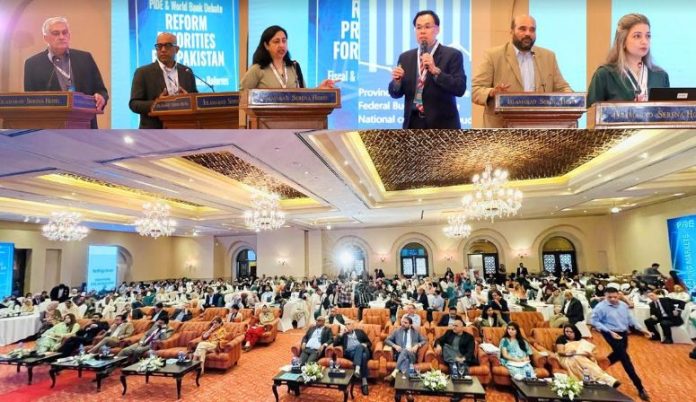
ISLAMABAD, MAY 3 /DNA/ – A collaborative event between The World Bank Group (Pakistan) and the Pakistan Institute of Development Economics (PIDE) concluded successfully, bringing together an array of stakeholders committed to shaping Pakistan’s economic endeavours. This pivotal gathering, designed to support the nation’s new economic development agenda over the next five years, was marked by rich discussions and a shared commitment to actionable reforms.

Dr. Nadeem ul Haque, Vice Chancellor of the Pakistan Institute of Development Economics (PIDE), spearheaded a pivotal economic reform initiative titled “ISLAAH: Immediate Reform Agenda – IMF and Beyond,” beginning with his opening remarks at this significant event. This strategy emerges in response to Pakistan’s pressing need for substantial external financing, highlighted by an IMF report which necessitates over USD 120 billion in the next five years. Dr. Haque’s comprehensive reform agenda addresses crucial sectors including regulatory modernization, tax reform, market liberalization, energy efficiency, and enhancements in agriculture and banking. A key feature of the reforms is the introduction of a ‘Regulatory Guillotine’ aimed at eliminating burdensome regulations that hinder business growth and innovation. These reforms are designed to rejuvenate Pakistan’s economic landscape, facilitating a more business-friendly environment, optimizing export strategies, improving import regulations, and enhancing overall sectoral efficiencies. The goal is to catalyze investment, create jobs, and promote higher GDP growth, thus steering Pakistan towards long-term economic stability and prosperity.

While talking on “Reforms for a Brighter Future: Time to Decide,” Mathew Verghis, Regional Director of the World Bank Group (South Asia) stated that Pakistan’s economic model is unsustainable due to its reliance on borrowing to finance its fiscal and current account deficits, leading to a growing debt level, which has reached 80% of GDP. He further added that Pakistan’s spending exceeds its revenue, and it imports more than it exports, resulting in increased domestic and external borrowing. However, he also noted that Pakistan has the potential for a brighter future, leveraging its youth, natural resources, and strategic location to achieve 7-8% annual GDP growth, and emphasized the need to prioritize reforms addressing the current economic crisis.

Dr. Durre Nayab, Joint Director, PIDE talked about “Public Administration for the 21st Century”. She addresses critical inefficiencies in Pakistan’s governance system, proposing comprehensive reforms across various sectors including the cabinet, civil bureaucracy, judiciary, and local government. It highlights the necessity to reduce the size of the federal cabinet, limit political appointments, and emphasize expertise and performance in governance roles. The reforms aim to professionalize and streamline public administration by eliminating outdated practices, introducing competitive hiring processes, digitalizing operations, and enabling greater autonomy at the local government level. Additionally, the presentation calls for the restructuring of ministries and autonomous agencies to enhance transparency, accountability, and effectiveness in public service delivery, thereby aligning with modern governance standards and promoting a more responsive and efficient administrative framework.

Mr. Derek H.C. Chen, Senior Economist at the World Bank, outlines a comprehensive review of Pakistan’s federal tax system, aiming to enable a modern and efficient tax structure. It discusses the need for substantial reform due to Pakistan’s low revenue collection compared to international standards and the complexities within the current tax system marked by numerous special provisions and concessional rates. The review provides detailed analyses of specific taxes such as sales tax, personal income tax, and corporate income tax, revealing inefficiencies and the potential for broadening the tax base. Key recommendations include rationalizing concessions, enhancing tax policy and administration, and leveraging potential revenue from provincial sources. The chapter emphasizes the critical role of systematic and phased reforms to increase tax collection efficiency, support fiscal sustainability, and ensure equitable economic growth.

Dr. Ahmad Waqar Qasim, Senior Research Economist, PIDE extensively critiques the existing regulatory framework in Pakistan, highlighting it as a significant impediment to economic activity due to its complexity and the burdensome nature of obtaining permissions. It identifies the pervasive regulatory burden as an “invisible tax” that stifles economic initiatives across all sectors. The review underscores the necessity of a “Regulatory Guillotine” approach, which has been successful in various countries, to streamline regulations by eliminating unnecessary permissions and simplifying the process through digital governance. This approach is advocated as essential for fostering investment, enabling efficient markets, and reducing the bureaucratic inclination towards excessive control. The presentation also calls for the implementation of regular Regulatory Impact Analyses (RIA) to ensure new regulations are justified by clear cost-benefit analyses, thereby promoting transparency and accountability in regulatory practices. Overall, the document argues for substantial deregulation to remove the barriers currently hindering economic growth and investment in Pakistan.

Ms. Maliha Haider, Education Specialist at the World Bank, highlighted significant strides made in Pakistan’s educational system, including expanding access to free and compulsory education and introducing innovative reforms such as merit-based teacher recruitment and public-private partnerships. Despite these efforts, Pakistan still faces substantial challenges, underscored by its low education spending relative to South Asia, which contributes to high dropout rates and learning poverty. The document ‘Spend Better, Spend More: How to Make Education Expenditure Count for Children in Pakistan’ outlines a comprehensive reform agenda aimed at enhancing efficiency in public education expenditure to improve children’s learning outcomes. It emphasizes the need for increased spending to at least 4.3% of GDP, improving spending efficiency, equity, management, coordination, and greater involvement of parents and civil society. The proposed reforms are designed to address systemic inefficiencies and are supported by evidence-based approaches that promise enduring benefits and a foundation for continuous improvement in the education sector.

As the debate concluded, the participants expressed optimism about the adoption and implementation of the proposed reforms and the positive impacts they are expected to bring to Pakistan’s economy.

Stay Connected

64FansLike
60FollowersFollow

Latest Reviews

Exchange Rates

USD - United States Dollar
EUR
1.17
GBP
1.35
AUD
0.67
CAD
0.72