Home Blog Page 731

National Day of Romania celebrated

National Day of Romania celebrated

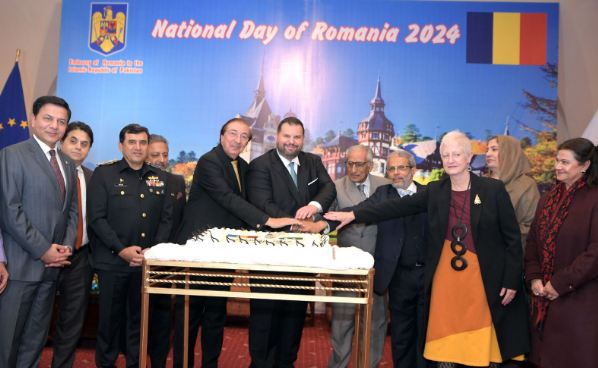
ISLAMABAD, DEC 11 /DNA/ – Romania marked a historic milestone on December 1st, 2024, celebrating 106 years since the realization of the Great Union, a defining moment in the nation’s history that symbolizes the unity, strength, and resilience of the Romanian people.

In an address commemorating the occasion, Minister of State Tariq Fatemi, alongside distinguished guests and diplomats, emphasized the significance of the Great Union in fostering national consciousness and unity. The landmark event of December 1, 1918, continues to inspire confidence and determination as Romanians, at home and abroad, reaffirm their commitment to building a prosperous future together.

ALSO READ: Romania’s path to progress, National Day highlights achievements: envoy

Reflecting on the contemporary global context, the minister highlighted Romania’s role as a steadfast ally in addressing international challenges, including the illegal aggression by the Russian Federation against Ukraine and the growing complexities of global instability. Romania remains deeply committed to supporting Ukraine and enhancing security in the Black Sea region and NATO’s Eastern Flank.

“Romania is part of the strongest collective security alliance, NATO, which protects a billion people, and the European Union, a visionary union of sovereign states championing democracy, prosperity, and cultural collaboration,” the minister stated.

Romania’s commitment to advancing European values extends to supporting EU accession negotiations for the Republic of Moldova and Ukraine, as well as fostering partnerships in the Western Balkans. These efforts aim to strengthen democratic resilience, stability, and economic growth across the region.

Strengthening Bilateral Relations with Pakistan

This year, Romania and Pakistan proudly celebrate 60 years of diplomatic relations, underscoring a longstanding partnership rooted in mutual respect and shared goals. The collaboration between the two nations has flourished over the decades, with a robust political dialogue and cooperation in areas of mutual interest.

Romania recognizes Pakistan as a vital partner in South Asia and remains committed to advancing bilateral ties through pragmatic engagement, both within the EU-Pakistan framework and multilateral platforms, including the United Nations.

During the event, the minister extended special thanks to the honorary consuls of Romania in Pakistan for their unwavering support and efforts in strengthening this relationship.

“I would like to express my gratitude to Mr. Tariq Saud, our honorary consul in Karachi, Mr. Faiq Javed, our honorary consul in Lahore, and Mr. Masood Ahmad Qazi, our future honorary consul in Peshawar, for their dedication and friendship,” the minister concluded.

The event showcased Romania’s vision of unity, resilience, and solidarity as it continues to foster strong international partnerships while celebrating its proud heritage.

Pakistan Navy Ship MOAWIN conducts maiden visit to Comoros

Pakistan Navy Ship MOAWIN conducts maiden visit to Comoros

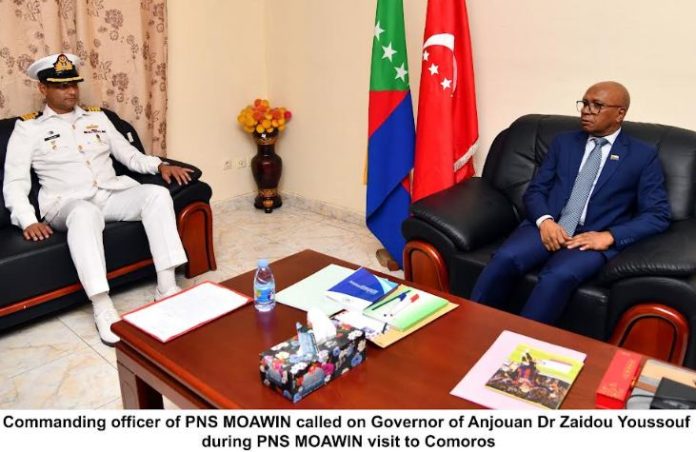
ISLAMABAD, 11 DEC /DNA/ – Pakistan Navy Ship MOAWIN conducted its maiden visit to Comoros and established a free medical camp for the local populace. Upon arrival at Port Mutsamudu, Anjouan Island, the ship was warmly welcomed by Commander of the Comorian Coast Guard, along with other senior military and government officials.

During its stay at the port, the Commanding Officer of PNS MOAWIN called on the Governor of Anjouan, Dr. ZaidouYoussouf, Deputy Chief of the Army Staff Colonel S.B. Dailami, and other civil and military leaders of Comoros. Various matters of mutual interest and opportunities for bilateral cooperation were discussed during these meetings. The Commanding Officer also conveyed warm greetings from Chief of the Naval Staff, Admiral Naveed Ashraf, to the Comorian authorities for their support extended to the visiting ship. Additionally, shipboard exercises and discussions on various operational matters were held onboard to enhance interoperability.

In Comoros, PNS MOAWIN established a medical camp where Pakistan Navy surgeons and medical specialists provided free medical consultations, treatments, and medicines to patients. The medical camp was widely appreciated by the local populace, who benefited from the high-quality medical care provided.

The maiden visit of PNS MOAWIN to Comoros stands as a testament to the Pakistan Navy’s commitment to fostering friendly relations and delivering essential medical services to communities in need.

Diplomatic Dialogue: UK High Commissioner discusses regional developments with DPM Ishaq Dar

Diplomatic Dialogue: UK High Commissioner discusses regional developments with DPM Ishaq Dar

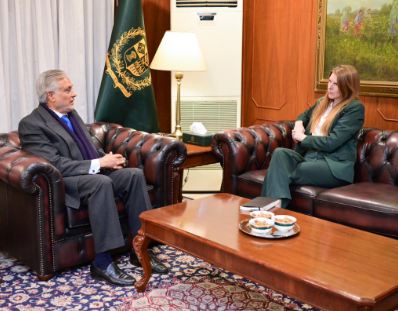
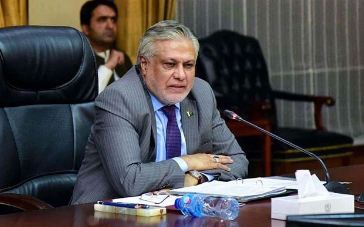
ISLAMABAD, DEC 11 /DNA/ – The UK High Commissioner to Pakistan Jane Marriott called on Deputy Prime Minister of Pakistan, Ishaq Dar today.

They discussed bilateral relations and regional developments. They reaffirmed commitment to further enhance bilateral cooperation between Pakistan and the United Kingdom.

Outgoing High Commissioner of Bangladesh pays a farewell call on PM Shehbaz Sharif

Outgoing High Commissioner of Bangladesh pays a farewell call on PM Shehbaz Sharif

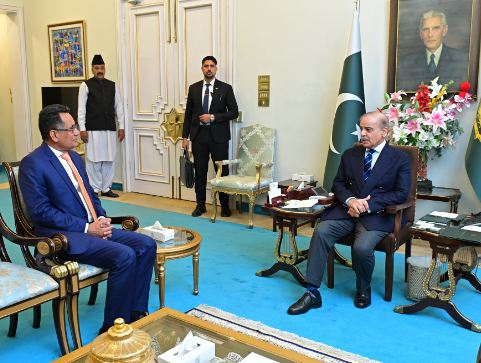
ISLAMABAD, 11 DEC /DNA/ – The outgoing High Commissioner of Bangladesh to Pakistan, Ambassador Muhammad Ruhul Alam Siddique, paid a farewell call on the Prime Minister of Pakistan, today. The High Commissioner is returning to Bangladesh, on completion of his four-year tenure in Pakistan.

Prime Minister Muhammad Shehbaz Sharif appreciated the remarkable contributions made by the High Commissioner for promotion of Pakistan-Bangladesh relations. He stressed that Pakistan greatly valued its relations with Bangladesh, which were rooted in shared history, common faith and cultural similarities. While conveying his warm wishes to Chief Advisor Dr. Muhammad Yunus, the Prime Minister remarked that the existing goodwill between Pakistan and Bangladesh needed to be translated into tangible cooperation. He wished the High Commissioner success in his future endeavors.

The High Commissioner thanked the Prime Minister for the facilitation, courtesies and privileges extended to him during his stay in Pakistan.

Diplomatic Engagement: UAE outlines steps to simplify visa procedures for Pakistanis

Diplomatic Engagement: UAE outlines steps to simplify visa procedures for Pakistanis

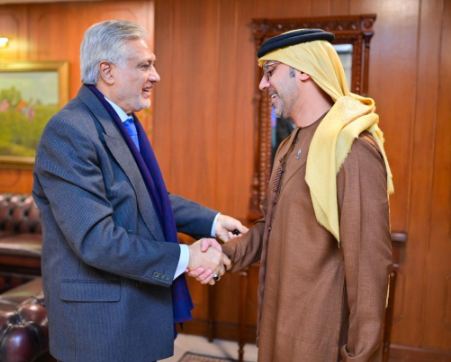
ISLAMABAD, 11 DEC /DNA/ – Ambassador of the UAE, Hamad Obaid Ibrahim Al Zaabi, called on Deputy Prime Minister/ Foreign Minister Senator Mohammad Ishaq Dar today. They discussed areas of cooperation between Pakistan and the UAE.

DPM/FM and Ambassador Al Zaabi also discussed visa issues for Pakistani nationals. The ambassador briefed the DPM on the steps being taken to streamline the visa processes including augmenting human resource. These steps will cut the delays and expedite the visa processing.

Pakistan condemns terrorist attack in Kabul, expresses deep condolences

Pakistan condemns terrorist attack in Kabul

ISLAMABAD, 11 DEC /DNA/ -The Deputy Prime Minister of Pakistan, Ishaq Dar, today expressed profound shock and sorrow over the tragic terrorist attack at the Afghan Refugee Ministry in Kabul, which resulted in the death of Acting Afghan Minister Khalil ur Rehman Haqqani and multiple other precious lives.

Key Points:

  • Pakistan extends heartfelt condolences to the families of the victims
  • Strong, unequivocal condemnation of terrorism in all its forms and manifestations
  • Active diplomatic engagement with the Interim Afghan Government to obtain further information

Quote from Deputy Prime Minister Ishaq Dar:

“We are deeply shocked by this heinous act of terrorism and the loss of innocent lives. Pakistan stands firmly against all terrorist activities and extends its deepest sympathies to the Afghan people during this difficult time.”

The Ministry of Foreign Affairs continues to monitor the situation closely and remains committed to regional peace and counter-terrorism efforts.

Warrior-VIII: Pakistani, Chinese troops showcase professional skills in counter-terrorism training

Pakistan-china joint military exercise

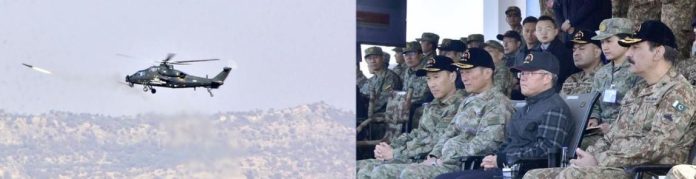
RAWALPINDI, 11 DEC /DNA/ – Pak-China Joint Exercise Warrior-VIII between Pakistan Army and Peoples Liberation Army of China was conducted from 19 November to 11 December 2024.

Three weeks’ long Exercise in Counter Terrorism domain is 8th in the series of bilateral exercises being held annually.

Distinguished Visitor’s Day (DVD) Ceremony of the Exercise was conducted at Tilla Field Firing Range on 10 December 2024.

Commander Rawalpindi Corps, Lieutenant General Shahid Imtiaz, HI(M) graced the ceremony as Chief Guest while, Chinese Ambassador to Pakistan along with dignitaries from China were also present.

Dignitaries appreciated high standards of professionalism displayed by troops during the Exercise.

CASS hosts launch of Book on Technology Governance

CASS hosts launch of Book on Technology Governance

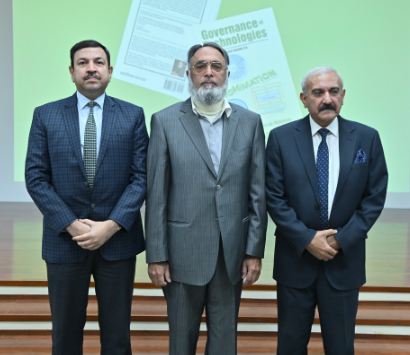
ISLAMABAD, 11 DEC /DNA/ – The Centre for Aerospace & Security Studies (CASS), Islamabad, organised the launch of Azhar Zia-ur-Rehman’s new book, ‘Governance of Technologies in Industrie 4.0 and Society 5.0,’ which focuses on addressing challenges and strategies for technology governance in the modern era.

In his opening talk, Air Commodore Raza Haider (Retd), Director at CASS, highlighted the transformative impact of emerging technologies on aerospace, emphasising the critical role of drones, AI, and space economy advancements. He discussed cutting-edge innovations such as swarm drones, stealth capabilities, and generative AI applications in cybersecurity and aerospace. Stressing the significance of digital transformation, he outlined the need for policies fostering STEM education, digital startups, and industry digitisation in Pakistan to remain competitive in the global arena.

The author of the book, Mr Azhar Zia-ur-Rehman, an international governance consultant, outlined the need for structured governance frameworks to manage the risks and opportunities presented by emerging technologies. He explained his methodology for navigating digital ecosystems, focusing on aligning technology with strategic organisational goals through the DIGI4MATION, FOURAMEWORK and the PENTRIUM Model, emphasising the need for synergy among diverse technologies. Furthermore, he stressed the importance of governance frameworks that ensure ethical practices, particularly in fields such as Artificial Intelligence and biotechnology, to mitigate risks and promote responsible innovation.

President of CASS, Islamabad, Air Marshal Javaid Ahmed (Retd) delivered concluding remarks and congratulated the author on his publication. He underscored the critical need for integrating governance practices with technology, highlighting that organisations must develop systems enabling the effective and ethical use of emerging technologies to stay competitive in today’s rapidly evolving landscape.

The launch concluded with a discussion where participants explored how industries and governments can use the insights from the book to adapt to technological changes and strengthen governance systems.

Anti-Assad Militias Turn Their Guns on Israel

Qamar Bashir

Qamar Bashir

Macomb, Detroit, Michigan

The USA, in recent history, has committed grave strategic blunders and, interestingly, managed to make others pay for these mistakes while cleverly insulating itself from the consequences. In the wars against Iraq and Libya, the USA, often with its allies coerced into joining under false pretexts, fabricated reasons, and manufactured evidence of weapons of mass destruction, invaded Iraq. This invasion destroyed the country, killed hundreds of thousands of people, and reduced what was once one of the richest and fastest-developing nations in the Middle East to rubble.

Not satisfied with the devastation in Iraq, the USA turned its attention to Libya, orchestrating the overthrow and eventual killing of Muammar Gaddafi. Gaddafi had kept Libya’s society, composed of many warring and independent tribes, united and stable. Under his leadership, Libya prospered, and its people enjoyed a relatively high standard of living. Moreover, the country provided employment to thousands of workers from other nations to support its rapid development. The removal of Gaddafi plunged Libya into chaos, destabilizing the region and unleashing a wave of violence and tribal conflicts that persist to this day.

Like Iraq, Libya was reduced to rubble, and the entire Middle East was destabilized. Poverty became rampant, and in search of better lives, people began migrating to Europe on unsafe, overcrowded boats. Many of these boats sank in the middle of the sea, killing their passengers, while the few that reached European shores created a refugee crisis in multiple European countries. Meanwhile, the USA, far beyond the reach of these small boats, remained largely unaffected by the consequences of this crisis.

Similarly, the predatory nature of the USA led to the so-called conquest of Afghanistan, where it remained for over a decade before suffering a humiliating retreat. This withdrawal left behind all Afghans who had sided with the USA in grave danger. Afghanistan was plunged into the darkness of the dark ages, destabilizing the entire region. Tons of lethal weapons were left behind, falling into the hands of the Taliban, insurgent groups, and factions like TLP, which are now destabilizing the social fabric of Pakistan and other countries in the region. Meanwhile, the USA and its European allies remained largely insulated from the aftermath of their humiliating defeat in Afghanistan.

While the USA and its allies in Europe and the Middle East were gleefully celebrating the success of Anti Assad Militias their own creation, they perhaps did not anticipate that the leaders of the militias, after conquering Syria, would announce their next target: the liberation of Al-Quds (Jerusalem), avenging the deaths of hundreds of thousands of civilians in Gaza and elsewhere, and pledging not to rest until Israel is reduced to a position where it has no ability to impose its hegemony in the region.

These statements are likely giving sleepless nights to Middle Eastern countries like Saudi Arabia, the United Arab Emirates, and Turkey. They must also be deeply concerning to Israeli leadership and to leaders in the USA, who likely never imagined that the very forces they helped raise—with their sweat, blood, and hard-earned money—to insulate Israel from the Syrian threat under Assad, would turn their guns with lightning speed toward Israel. This turn of events is the very outcome the USA and its allies sought to avoid when they intervened to remove Assad, who was supported by Russia and Iran.

While building the anti-Assad militias, the USA and its allies, in their haste, empowered various groups with money and weapons, overlooking their deeply entrenched and divergent ideologies and objectives. The militias were led by figures with different goals: Riad al-Asaad and Salim Idris of the Free Syrian Army (FSA) advocated for a secular, democratic Syria; Abu Mohammad al-Julani of Jabhat al-Nusra, aligned with al-Qaeda, aimed to establish an Islamic state; Zahran Alloush of Jaish al-Islam sought a Sunni Islamic government; and Hassan Aboud of Ahrar al-Sham pursued an Islamic state under Sharia law. Leaders like Abu Bakr al-Baghdadi of ISIS aimed for a global caliphate. Although their common goal was to overthrow Bashar al-Assad’s Alawite-dominated regime, their ideological divides—ranging from secular democracy to hardline Islamism—led to fragmentation and competition, complicating their ability to present a united front.

The anti-Assad militias, after conquering Syria, have redirected their focus toward attacking Israel to avenge Palestinian casualties in Gaza and “liberate” Jerusalem (Al-Quds). This would, like Afghanistan, Iraq and Lybia,  would create a significant security and geopolitical crisis. Israel would face an unprecedented threat from a coalition of Islamist forces operating close to its borders, particularly in the Golan Heights. Such attacks would likely escalate into a broader regional conflict, potentially drawing in actors like Hezbollah from Lebanon and Iran, further destabilizing the region. For Israel, this would necessitate a robust military response, including preemptive strikes and heightened defense measures, leading to a protracted and destructive confrontation.

For the United States, the scenario would highlight the blowback of supporting anti-Assad factions during the Syrian Civil War. Having indirectly empowered groups now attacking its closest ally, U.S. credibility and regional strategy would come under severe scrutiny. The U.S. would face pressure to provide military and diplomatic support to Israel, entangling itself further in Middle Eastern conflicts. This could strain relations with Arab allies, many of whom might face domestic unrest as public sentiment in their countries sympathizes with actions against Israel, challenging their governments’ ties with the U.S. and Israel.

Regionally, the conflict could destabilize Arab states that have normalized relations with Israel, such as the UAE, Bahrain, and Saudi Arabia, putting agreements like the Abraham Accords at risk. Iran, already an opponent of Israel, might exploit the situation to bolster its influence by aligning with militias or intensifying its rhetoric of resistance. The ensuing instability could disrupt global oil supplies, escalate terrorist recruitment worldwide, and embolden extremist movements. Ultimately, this scenario would deepen divisions between pro- and anti-Western factions, jeopardizing regional and global peace.

The history of mankind, which we meticulously document for various purposes, serves as a tool for learning and avoiding the strategic, tactical, and ideological errors that have led to the destruction of societies and civilizations. Yet, our own recent history suggests that even nations at the apex of civilization fail to learn from their past mistakes. Despite the lessons of history, these uncalculated blunders continue to wreak havoc on societies and communities worldwide, leaving a trail of chaos and suffering that may persist for generations to come.

Qamar Bashir

Press Secretary to the President(Rtd)

Former Press Minister at Embassy of Pakistan to France

Former MD, SRBC

ICCI hosts ‘Academia Linkages Conference’

ICCI hosts ‘Academia Linkages Conference’

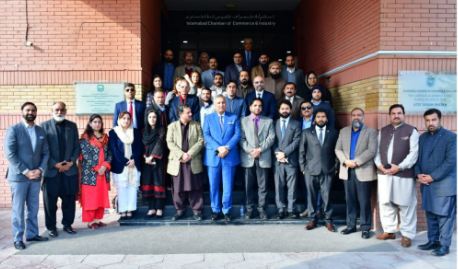
ISLAMABAD, 11 DEC /DNA/ – Industry-academia-government collaboration is crucial to overcoming the economic challenges facing the country. On Wednesday, this was the consensus at the ‘Industry-Academia Linkages Conference’ held at the Islamabad Chamber of Commerce and Industry (ICCI). Over thirty-five representatives from regional universities attended the important event.

In his welcome address, Nasir Mansoor Qureshi, President of ICCI, emphasized the Chamber’s commitment to boosting economic growth, innovation, and collaboration between academia and industry. He outlined several initiatives, including startup expos, a competition for university students to promote entrepreneurship, skill development programs, industrial automation, and an upcoming Energy Conference. He also revealed plans for conferences on topics such as Green Initiatives, Economic Development, Health, and Tourism, which would bring all stakeholders together to provide key recommendations to the government for implementation. He stressed that universities must align curricula with industry needs, foster joint research, and facilitate the commercialization of research.

Qureshi also called for proactive initiatives to develop long-term economic policies that address the needs of the next 15 to 20 years. ICCI member Naeem Siddiqui stressed the importance of a focused approach to analyze challenges and develop sustainable solutions.

Participants praised ICCI for taking initiatives in the best interest of the country and the business community. They suggested that by bridging the gap between academia and industry, the Chamber could create a more conducive business environment, promote entrepreneurship, and drive economic development. The suggestion was made to establish ICCI desks at various universities to facilitate research on specific targets.

Notable attendees included Dr. Muhammad Mukhtar, Vice Chancellor of National Skill University, Dr. Arshad Zia of the International Islamic University, Brig. (R) Salman Zafar from NUTECH, Air Commodore (R) Fawad Waheed of Air University, Huma Akbar from HEC, Dr. Asif Naeem from FAST, Sana Maqbool from NUST, Ahmed Rafi from IST, and Dr. Serish Saba from STMU.

Adnan Mukhtar, Convener of the Higher Education Commission ICCI, highlighted a roadmap for bridging the gap between industry and academia, emphasizing the need for skill-based education to meet industrial requirements.

ICCI Vice President Nasir Mehmood Chaudhry, Executive members Waseem Chaudhry, Zulqurnain Abbasi, Ishaq Sial and former SVP Khalid Chaudhry were also present.

Stay Connected

64FansLike
60FollowersFollow

Latest Reviews

Exchange Rates

USD - United States Dollar
EUR
1.18
GBP
1.36
AUD
0.72
CAD
0.73