Home Blog Page 730

Netherlands Embassy hosts event in Karachi to highlight human rights

Embassy

KARACHI, DEC 13 (DNA): The Embassy of the Netherlands hosted an important event in Karachi focused on the theme of human rights by Henny Fokel de Vries, Ambassador of the Kingdom of the Netherlands and Tarek Khan honorary consul general in Karachi.

The gathering featured esteemed guests, including Anthony Naveed, Deputy Speaker of the Sindh Assembly, Rajvir Singh Sodha, Special Assistant to the Chief Minister Sindh on Human Rights.

This event coincided with the conclusion of the 16 Days of Activism campaign, a global initiative aimed at raising awareness about gender-based violence and advocating for the fundamental rights of individuals worldwide. The Netherlands is committed to promoting human rights as a cornerstone of its values and international engagement.

Ambassador Henny Fokel de Vries addressed attendees, emphasizing that for the Netherlands, human rights are not merely a policy priority but an essential element of a just and inclusive society. The ambassador also acknowledged the appointment of Anthony Naveed as Deputy Speaker of the Sindh Assembly, underscoring the significance of increased minority representation in leadership roles.

Ambassador de Vries said that the embassy has been actively engaged in youth empowerment initiatives, recognizing that fostering dialogue among young people is vital for building a future where human rights are universally respected. “We must remember that the strength of societies lies in diversity and our shared commitment to upholding the dignity of every individual,” the ambassador added.

Sindh Minister Makhdoom Mehboob uz Zama,

Sindh Assembly Deputy Speaker Anthony Naveed, Special Assistant to CM Sindh on Human Rights Rajvir Singh Sindh, and MNA Mirza Ikhtiar Baig,  also addressed the event and shared their views.

Sindh Minister Makhdoom Mehboob uz Zama, Begum Nasreem Jalil, Imran Ismail, former governor, Mehmood Molvi, present also Human rights defenders, the business community, government officials and members of the public were invited to join in meaningful conversations aimed at reaffirming collective commitments to human rights and exploring pathways for further advancements in this critical area.

Beyond Boundaries: Australia empowering girls through cricket

Australia

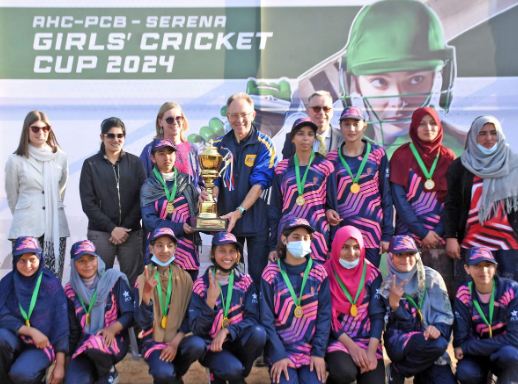
ISLAMABAD, DEC 13 (DNA): The Australian High Commission (AHC) and the Pakistan Cricket Board (PCB), with the support of Serena Hotels, today hosted the 8th AHC-PCB Girls’ Cricket Cup in Islamabad.

The event brought together young players from Islamabad’s schools, celebrating girls breaking barriers and batting for gender equality.

Australia’s High Commissioner to Pakistan, Neil Hawkins, joined 60 girls from four schools to watch the final match of the tournament. In the week leading up to the final match, PCB first-class coaches conducted an intensive five-day coaching clinic, preparing the girls to shine on the field and feel more confident off the field.

High Commissioner Hawkins celebrated the enthusiasm and confidence of the players and congratulated the schools, and all involved for making this event possible.

“The smiles on the girls’ faces says it all. Sport is a great motivator – it builds teamwork and confidence. Of course, cricket is a passion that binds Australia and Pakistan, it makes perfect sense for us to support this wonderful event.”

The Australian High Commission has been sponsoring girls’ cricket in Pakistan since 2016, starting with one tournament in Islamabad. Today it has grown to Lahore and Karachi, empowering girls across the nation.

“It’s not just about boundaries on the pitch but also overcoming boundaries in life. Every ball bowled, every catch taken, helps promote gender empowerment. Pakistan faces many challenges as we all know, but they can only be overcome if the potential of ALL Pakistanis – men and women – is utilised.” Mr Hawkins said.

Aziz Boolani, CEO of Serena Hotels, echoed the sentiment: “This is an outstanding platform that empowers young girls by providing access to professional coaching and opportunities to develop their cricketing skills. This initiative not only nurtures future talent but also serves as a launchpad for their cricketing careers. Serena Hotels, in collaboration with the Australian High Commission and the Pakistan Cricket Board, conceived this idea seven years ago to inspire and empower young girls through the transformative power of sports.”

The AHC-PCB Girls’ Cup Islamabad featured teams from four schools: Mashal Model School Bari Imam, SOS Children’s Village H-11, Islamabad Model School for Girls – F-6/1 and Islamabad Model School for Girls I-9/1 Islamabad.

With cheers echoing through Islamabad, these girls showcased not just their cricketing skills but also the promise of a brighter, more inclusive future.

Experts call for empowering the mountain communities

Experts call for empowering the mountain communities

Serena Hotels, Swiss, Canadanin mission jointly host Raabta panel discussion on preserving mountain ecosystems

Mahnoor Ansar

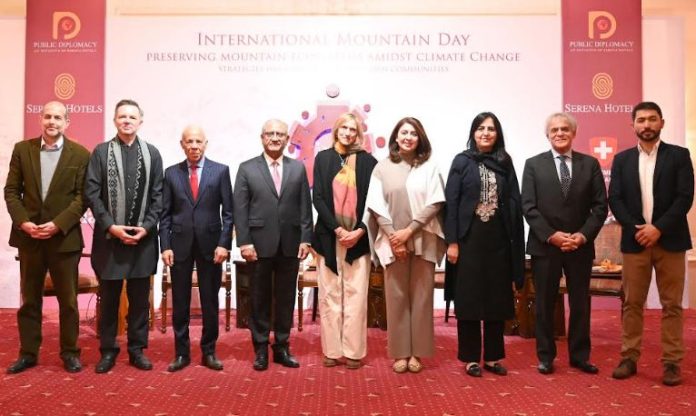
ISLAMABAD, Dec 13 /DNA/ – Serena Hotels, in collaboration with the Embassy of Switzerland and the Canadian High Commission in Pakistan, hosted a Raabta panel discussion to commemorate International Mountain Day.

The event, titled “Preserving Mountain Ecosystems Amidst Climate Change – Strategies for Adaptation and Empowering Mountain Communities,” brought together experts at Islamabad Serena Hotel to address the pressing challenges faced by mountain ecosystems and communities.

Canada, as a global leader in climate action, reiterated its commitment to combating climate change and supporting vulnerable communities, with a particular focus on empowering women and youth through initiatives like Eco-Leaders and partnerships with Booni Environmental Academy Chitral. Similarly, the Swiss Embassy highlighted its sustainability initiatives to reduce carbon footprints in various industries, aligning with global climate goals.

Moderated by renowned journalist Sidra Iqbal, the panel featured notable speakers, including Billi Bierling, a Swiss climber and author, who shared insights on balancing human activity with environmental preservation. Nazir Sabir, the first Pakistani to summit Mount Everest, reflected on the visible impact of climate change on mountain environments. Nusrat Nasab, CEO of the Aga Khan Agency for Habitat (AKAH), discussed community-driven solutions to enhance climate resilience for mountain populations.

Daniel Arsenault, Canada’s Political, Economic, Public Affairs, and Commercial Counselor, emphasized Canada’s partnerships in Pakistan, promoting grassroots climate solutions and gender-inclusive strategies.

The event also spotlighted Sirbaz Khan, the first Pakistani to summit all 14 peaks over 8,000 meters, whose expeditions Serena Hotels proudly supports. Serena’s sustainability efforts were further highlighted through initiatives like the Green Impact Cleanup Drive at Rakaposhi Base Camp, where 130 kilograms of litter were removed in collaboration with local communities and mountaineers.

Speaking on the occasion, Aziz Boolani, CEO of Serena Hotels, reaffirmed the organization’s dedication to promoting sustainable tourism and empowering mountain communities. “Through initiatives like this panel discussion and our support for mountaineers such as Sirbaz Khan and Samina Baig, we remain committed to safeguarding our mountains and the livelihoods they sustain,” he said.

The Raabta panel concluded with a call to action, urging collaboration among governments, NGOs, international organizations, and local communities to implement sustainable practices and strengthen resilience in mountain regions. Serena Hotels continues to lead efforts to foster meaningful dialogue and inspire collective action to protect these vital ecosystems for generations to come.

Crisis in South Korea and Regional Tension

Crisis in South Korea and Regional Tension

Dr. Muhammad Akram Zaheer

On December 3, 2024, South Korean President Yoon Suk Yeol took the extraordinary step of declaring martial law, accusing the opposition Democratic Party of engaging in “anti-state activities” and attempting to obstruct governmental operations. This sudden decision sparked an immediate response from lawmakers, with 190 of South Korea’s 300 parliamentarians convening to demand its revocation. Under the South Korean Constitution, the president is obligated to respect such an order, and Yoon ultimately rescinded the declaration within hours. This event posed a critical test of South Korea’s democratic resilience, its regional geopolitical role, and the durability of its alliances.

Martial law in South Korea suspends civilian authority and grants broad powers to the military. Under such a regime, the president can dissolve parliament, restrict public demonstrations, and impose additional measures deemed necessary to restore order. In this case, Yoon’s declaration included the dissolution of parliament, a ban on public demonstrations, and an order for striking medical interns and residents to return to work within 48 hours.The president justified these measures by citing a constitutional crisis and accusing the opposition of undermining the state. However, the opposition Democratic Party argued that the declaration was an overreach, designed to stifle dissent and consolidate executive power. The swift parliamentary vote against the declaration underscored the strength of South Korea’s democratic institutions and the commitment of its lawmakers to preserving constitutional norms.At the heart of Yoon’s decision was the political impasse between his administration and the opposition-controlled parliament. The Democratic Party had blocked critical legislation, including the 2025 budget bill, which left the government unable to address urgent economic and social issues. Additionally, efforts to impeach prosecutors who had declined to charge Yoon’s wife with alleged investment fraud further exacerbated tensions.Beyond political gridlock, labor unrest, particularly in the healthcare sector, contributed to the sense of crisis. Striking junior doctors and other medical workers disrupted essential medical services, creating public discontent. By declaring martial law, Yoon sought to reassert control and compel a return to normalcy. However, his framing of these issues as “anti-state” activities drew criticism for conflating legitimate political opposition with subversive threats.

While Yoon’s declaration did not explicitly reference North Korea, developments on the Korean Peninsula likely influenced the decision. Pyongyang’s increased military activities, including missile tests and rhetorical threats, have heightened security concerns in South Korea. By linking domestic opposition to North Korea sympathizers, Yoon attempted to portray martial law as a safeguard against both internal and external threats.This strategy, however, risked deepening domestic divisions. Critics argued that equating political dissent with national security threats undermined democratic freedoms and diverted attention from genuine security challenges posed by North Korea. Moreover, a government preoccupied with internal disputes would be less effective in addressing external threats, potentially emboldening Pyongyang to exploit the situation.The invocation of martial law had significant implications for South Korea’s regional and international standing. Domestically, it threatened to erode public trust in democratic institutions and revive memories of past authoritarian regimes. Internationally, it raised concerns about the stability of a key U.S. ally in East Asia and its ability to uphold democratic values.The United States, with approximately 28,500 troops stationed in South Korea, has a stake in the country’s stability. A prolonged period of martial law could have strained the U.S.-South Korea alliance, complicating joint efforts to counter North Korean aggression. It could also have disrupted trilateral cooperation with Japan, which is critical for maintaining the regional balance of power.Moreover, South Korea’s democratic backsliding could have undermined its credibility as a proponent of liberal values in the Indo-Pacific region. This, in turn, could have provided propaganda fodder for authoritarian regimes seeking to challenge the global democratic order.The swift parliamentary response to Yoon’s declaration demonstrated the resilience of South Korea’s democratic institutions. Lawmakers from across the political spectrum united to defend constitutional norms, forcing the president to revoke martial law within hours. This outcome reinforced the principle that executive power is subject to legislative oversight, even in times of crisis.

Civil society also played a crucial role in resisting the imposition of martial law. Protests and statements from advocacy groups highlighted the importance of safeguarding democratic freedoms and holding the government accountable. These efforts underscored the maturity of South Korea’s democracy and its capacity to withstand challenges to its constitutional order.The December 3 declaration of martial law serves as a cautionary tale about the limits of executive authority in a democratic system. It underscores the importance of maintaining a clear distinction between legitimate political dissent and threats to national security. It also highlights the risks of using extraordinary measures to address routine political disputes.For South Korea, the incident underscores the need for continued vigilance in protecting democratic norms and institutions. It also points to the importance of dialogue and compromise in resolving political and social conflicts. In the absence of such mechanisms, crises are likely to recur, with potentially destabilizing consequences for the nation and the region.

43 terrorists neutralized in major security forces operations across KP, Balochistan

43 terrorists neutralized in major security forces operations across KP

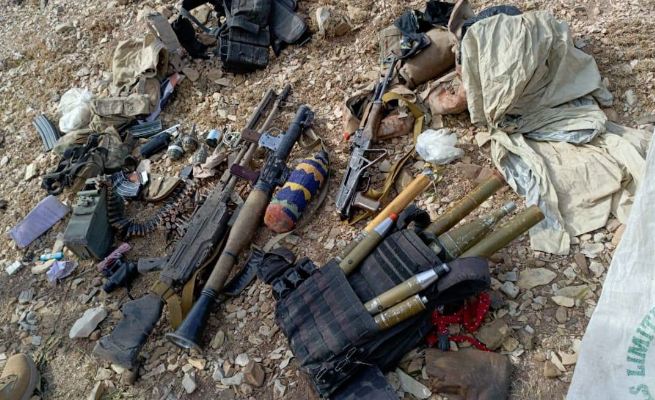
RAWALPINDI, 13 Dec /DNA/ – Since 9 December 2024, 43 terrorists have been sent to hell by the Security Forces during extensive Intelligence Based Operations (IBOs) conducted in Khyber Pakhtunkhwa (KP) and Balochistan causing a major setback to Fitna-Al- Khwarij & other terrorist groups operating in Balochistan.

On night 12-13 December, security forces conducted an IBO in Lakki Marwat District. Own troops effectively engaged the khwarij location and resultantly six khwarij were killed. Since 9 December 24, eighteen khwarij have been sent to hell in KP Province.

In Balochistan, on 13 December, the security forces, after an intense fire exchange, successfully neutralized ten terrorists in two separate IBOs conducted in Musa Khel and Panjgur Districts. Since 9 December, twenty five terrorists have been sent to hell in Balochistan.

These operations will continue till peace in the area is restored and khawrij are eliminated, as the security forces of Pakistan are determined to wipe out the menace of terrorism from the country.

CJ PHC seeks security for all judges

CJ PHC seeks security for all judges

                PESHAWAR, Dec 13 (APP/DNA): Chief Justice of the Peshawar High Court, Justice Ishtiaq Ibrahim, on Friday called for provision of security to all judges, criticizing instances where police withdraw security from judges following rulings against them.

During a special hearing on security issues in Khyber Pakhtunkhwa he noted that all judges must be provided with security, adding that the Deputy Commissioners and Assistant Commissioners were enjoying security, but when a judge rules against the police, his/her security is withdrawn due to resentment.

He said that such practice must be shunned.

A two-member special bench, comprising Chief Justice Ishtiaq Ibrahim and Justice Ejaz Anwar, was hearing a petition concerning security conditions in the province.

The petitioner’s counsel informed the court that three meetings had been held in compliance with the court’s previous orders.

He highlighted the significant workload in Peshawar, noting that 55,000 to 60,000 FIRs are registered annually in the city.

Additional Advocate General Inam Yousafzai informed the court that SOPs had been drafted for judges’ security.

He told the court that as per the orders of the Home department, security measures have been put in place for judges in high-risk areas.

However, he acknowledged that judicial magistrates were not included in the current notification for security provision.

A representative from the Home Department mentioned that police resources would be occupied next week due to polio vaccination campaigns.

Justice Ejaz Anwar suggested forming a separate force for polio campaigns to alleviate the burden on the police, ensuring their availability for other pressing security duties.

The court emphasized the importance of addressing these issues promptly and ensuring adequate security measures for all judicial officers.

Former Nepalese diplomat welcomes Pakistani legislator in Kathmandu

Former Nepalese diplomat welcomes Pakistani legislator in Kathmandu

KATHMANDU, NEPAL, DEC 13 (DNA) – Former Ambassador of Nepal to Pakistan, Tapas Adhikari, warmly received Isphanyar Bhandara, Member of the National Assembly of Pakistan and Chief Executive Officer of Murree Brewery, in Kathmandu.

The meeting between the two friends was marked by a nostalgic walk through the streets of Kathmandu, during which they reminisced about their shared experiences in Islamabad.

Bhandara, known for his strong connections with Nepal, was greeted by Adhikari in a cordial reunion that highlights the friendly relations between Nepal and Pakistan.

The visit underscores the ongoing people-to-people connections and diplomatic goodwill between the two nations.

Pakistan calls for Gaza ceasefire, discusses regional security with European Union

Pakistan calls for Gaza ceasefire

ISLAMABAD, DEC 13 (DNA): The 14th Pakistan-European Union (EU) Joint Commission took place on 21 November 2024 in Islamabad. The discussions took stock of recent political developments, including electoral processes in both Pakistan (parliamentary elections of 8 February) and the EU (elections to the European Parliament of 6-9 June and the ongoing formation of the new College of Commissioners).

Pakistan and the EU recognized the importance of their cooperation and sustained engagement, particularly in areas such as trade, migration, human rights, political, economic and development cooperation with a focus on the Global Gateway strategy. The sides agreed to continue cooperation on emerging challenges of food, energy security, and climate change.

Pakistan-EU Sub-Group meeting on Democracy, Governance, Rule of Law and Human Rights

The Joint Commission was preceded by the Sub-Group on Democracy, Governance, Rule of Law and Human Rights on 19 November 2024 and was co-chaired between the Ministry of Foreign Affairs and the European External Action Service. The two sides reviewed the post-elections political developments in Pakistan and the EU. They agreed on the need for continued efforts to strengthen the electoral process. The EU reiterated the importance of political pluralism, democratic values, independent media, vibrant civil society, judicial independence, and international human rights standards, which are key for democratic elections.

Both sides reaffirmed their commitment to the protection of all human rights, including women and children’s rights, labour and migrant rights, as well as fundamental freedoms, such as freedom of expression and opinion including growing problem of disinformation.

Pakistan presented its reform agenda, including in the framework of the National Action Plan on Human Rights, National Action Plan on Business and Human Rights, as well as actions towards the full implementation of 27 international conventions related to GSP+. Pakistan and the EU also exchanged views on freedom of religion or belief and the rights of persons belonging to minorities and vulnerable groups and concerns about anti-Muslim hatred. Both sides reiterated the importance of continued dialogue on these shared concerns.

The EU reiterated its position on the abolishment of death penalty and emphasised the need to pursue the reform process of the mercy petition.

Pakistan-EU Sub-Group on Trade

The meeting of the Pakistan-EU Sub-group on Trade also preceded the Joint Commission and was held on 20 November 2024 between the Ministry of Commerce and DG Trade of the European Commission.

The EU is Pakistan’s second-largest trading partner, with the Generalised Scheme of Preferences Plus (GSP+) arrangement contributing significantly to the growth of bilateral trade. During the Pakistan-EU Sub-group on Trade meeting, discussions covered a wide range of topics. Both sides acknowledged the importance of a robust multilateral trading system and exchanged views on recent developments at the multilateral (WTO), plurilateral, and bilateral levels.

The Pakistan-EU bilateral trade relations were discussed at length, covering a wide range of topics including market access challenges for both sides. Among other areas of specific interest, cooperation on the implementation of the GSP+ was prominent. Both sides acknowledged that since the grant of GSP status in 2014, the bilateral trade relations have made significant strides.

The EU remains committed to providing information on its upcoming legislative developments to facilitate Pakistan’s compliance with EU’s regulatory framework. Pakistan and the EU reiterated the importance of continued collaboration to promote sustainable growth and trade development.

Pakistan-EU Sub-Group on Development Cooperation

The meeting of the Sub-Group on Development also took place on 20 November 2024 between the Ministry of Economic Affairs and the International Partnerships DG of the European Commission.

Pakistan and the EU agreed on the continued relevance of key priority areas under the on-going Multi-annual Indicative Programme (MIP):

i) Green Inclusive Growth,

ii) Human Capital/TVET, and

iii) Governance including Rule of Law and Human Rights.

These priorities remain well aligned with the National Development agenda and development priorities of the Government of Pakistan. In this context, Pakistan welcomed the EU’s continuous support to Pakistan’s Resilient Recovery, Rehabilitation, and Reconstruction Framework (4RF), in a Team Europe approach.

The EU presented the details of the projects for the period 2025-2027 following the Mid-Term Review of the MIP and updated on the EU’s policy framework and the Global Gateway. Pakistan appreciated the recent visit of the European Investment Bank in Pakistan held in September 2024 and agreed on the opportunity to enhance engagement within the framework of the Global Gateway by identifying new investments.

The EU expressed its continued support to Pakistan in developing green and clean energy. The two sides also discussed regional programmes and recognized their importance to strengthen regional collaboration in areas of common interest.

In the area of governance and rule of law, the critical role of civil society in the country’s socio-economic development, as well as support to an enabling environment for Global Gateway investments to thrive (public financial management, rule of law) were discussed.

Other issues of common interest

Reiterating their commitment to the Pakistan-EU Strategic Engagement Plan (SEP) signed in 2019, Pakistan and the EU reviewed the state of its implementation, five years on. Pakistan presented proposals to expand bilateral cooperation in additional areas, among others in agriculture, taxation, and disaster risk reduction.

The Joint Commission discussed the progress on joint commitments in the context of the Pakistan-EU comprehensive Migration and Mobility Dialogue, including in the area of return and readmission in the framework of Pakistan-EU Joint Readmission Agreement, as well as in the area of legal migration under the Pakistan-EU Talent Partnership.

The EU reiterated its appreciation for Pakistan’s generosity in hosting Afghan refugees over the decades and welcomed the decision to extend the validity of Proof of Registrations cards of Afghan nationals residing in Pakistan until 30 June 2025. The EU also reiterated its support to the Solution Strategy for Afghan Refugees (SSAR), aimed at providing lasting solutions for Afghan refugees and their host communities in neighbouring countries.

Pakistan and the EU acknowledged the importance of regional cooperation on security matters, including counter-terrorism and counter-narcotics. Concerning regional developments, Pakistan underlined its deep concern on the human rights and humanitarian situation in Jammu and Kashmir.

Pakistan also called for an immediate and unconditional ceasefire in Gaza and complete withdrawal of Israeli troops from the occupied Arab territories. The EU reiterated its call for an urgent ceasefire in Gaza; the unconditional release of all hostages; and the urgent and unimpeded humanitarian access and distribution at scale of humanitarian assistance; as well as an enduring end to hostilities in line with UN Security Council Resolution 2735. The EU further restated its position concerning Russia’s war of aggression against Ukraine. Both Pakistan and the EU stressed the need to find peaceful solutions to all conflicts, in full respect of the principles of international law and the UN Charter.

The Joint Commission was co-chaired by Dr. Kazim Niaz, Secretary, Ministry of Economic Affairs of Pakistan and Ms Paola Pampaloni, Deputy Managing Director for Asia and the Pacific in the European External Action Service. It was agreed to hold the next session of the EU-Pakistan Joint Commission in Brussels in 2025.

TTP could become al-Qaeda’s arm to destabilize Afghanistan’s neighbours: Pakistan warns

TTP could become al-Qaeda's arm to destabilize Afghanistan's neighbours: Pakistan warns

UNITED NATIONS, DEC 13 (APP): Pakistan has warned the international community that the Tehrik-e Taliban Pakistan (TTP), “the largest terrorist group” operating in Afghanistan, could emerge as al-Qaeda’s arm with a regional and global terrorist agenda.

“Terrorism within and from Afghanistan poses the single most serious threat to the country, to the region, and to the world,” Ambassador Usman Jadoon, acting permanent representative of Pakistan to the United Nations, told the UN Security Council on Thursday.

“While the AIG (Afghan Interim Government) is fighting ISIL-K (Daesh), the threat from various other terrorist groups such as al-Qaeda, the TTP and others has yet to be addressed,” he said while speaking in a debate on the situation in Afghanistan.

Highlighting the ranking of 6,000-fighters strong TTP as the largest, listed terrorist organization, Ambassador Jadoon said, “With safe havens close to our border, it poses a direct and daily threat to Pakistan’s security.”

“In countering the TTP’s cross border operations, our security and border officials have confiscated some of the modern weapons acquired by the AIG from stocks left behind by foreign forces,” the Pakistani envoy said, adding that the terrorist group also receives external support and financing “from our adversary” — an obvious reference to India.

The TTP, he said, was fast emerging as an umbrella organization for other terrorist groups, aimed at destabilizing Afghanistan’s neighbours.

“We have evidence of its collaboration with other terrorist groups like the Majeed Brigade that is utilizing terrorism to disrupt Pakistan’s economic cooperation with China, especially CPEC,” Ambassador Jadoon said.

“Given its long association with al-Qaeda, the TTP could emerge as Al-Qaeda’s arm with a regional and global terrorist agenda.”

Pakistan, he declared would take all necessary national measures to eliminate these threats, cooperating with regional and international efforts to root out the menace of terrorism.

About Taliban’s new directive prohibiting women and girls from attending public and private medical institutes in Afghanistan, Ambassador Jadoon said the international community expects the AIG to fulfill its declared commitments on human rights and political inclusion.

“Instead of easing earlier restrictions, the AIG has intensified the restrictions on women and girls. These restrictions are contrary to Islamic precepts, jurisprudence and the Sharia.”

The Pakistani envoy also called for the Doha Process framework to go beyond counter-narcotics and the private sector; Afghanistan’s challenges, including terrorism, human rights and widespread poverty, are also affecting the region.

He said the international community is obliged to help the 23.7 million Afghans who need urgent aid and to take adequate measures to bolster Afghanistan’s economy — including reviving the national banking systemm and restoring commercial activity.

Pakistan, Ambassador Jadoon said, enjoys close bonds of ethnicity, history, faith, language and culture with Afghanistan.

“The suffering of our Afghan brothers and sisters affects the Pakistani people deeply. There is no country that is more eager than Pakistan to see Afghanistan return to the international community’s fold.”

Opening the debate, Roza Otunbayeva, Special Representative of the Secretary-General and Head of the United Nations Assistance Mission in Afghanistan (UNAMA), said she has “strongly urged the de facto authorities to reconsider” the latest female-related restriction, which would have deadly implications for women and girls.

She said that the implementation of the “Propagation of Virtue and Prevention of Vice Law ” has led to people choosing to self-regulate rather than risk punishment. The law also imposed other repressive measures, including a greater enforcement of requirements regarding men’s beards and Western-style haircuts that has led to the closures of barbershops.

Citing a November report on widening media restrictions, Otunbayeva noted that political decision-making by the de facto authorities is increasingly opaque, due to threats to the country’s stability, such as this week’s suicide attack on its Ministry of Refugees and Repatriation.

Outlining her Office’s engagement with the Taliban on issues such as human rights norms and detainee access, as well as on counter-narcotics, she stressed: “Engagement is not normalization or recognition.”

Engagement serves to prevent Afghanistan’s isolation or — worse — a return to conflict, the UN envoy said, underscoring the need to build trust for the benefit of the Afghan people.

Routes closure causing hardship for Kurram people

Routes closure causing hardship for Kurram people

A A Alizai

PESHAWAR: Due to the closure of transportation routes in Kurram district for two months, food items, oil, gas and medicines have run out in the area, while the Grand Aman Jirga, which has been going on for a week in Kohat, has come to an end.

Due to incidents of firing on convoys of passenger vehicles in Kurram district and tribal clashes, traffic routes have been closed for two months due to the closure of the main highway and the Afghan border. Edible oil, gas and medicines have run out due to which Citizens are suffering from severe problems

Former IG Syed Irshad Hussain has said that due to the closure of the roads, the shops of edible fruits and vegetables are empty in the markets and patients especially children are dying due to lack of medicines, therefore it is safe to open the roads immediately. Sayed Irshad Hussain says that in Kurram district, land andDue to the closure of the airways, millions of inhabitants have been trapped in the area and people are facing a painful situation

On the other hand, the Grand Jirga which has been going on for a week in Kohat to end the peace and unrest in Kurram district has reached its conclusion and according to Jirga sources, the negotiations of the district administration and forces authorities with the elders of the parties have been completed and now. The final decision is awaited

Apart from the grand jirga consisting of the parliamentarians of the parties belonging to Kurram district and the grand jirga consisting of the elders of Kohat, Orkzai and Hangu, representatives of the district administration and the provincial government are also participating in the jirga.

Stay Connected

64FansLike
60FollowersFollow

Latest Reviews

Exchange Rates

USD - United States Dollar
EUR
1.18
GBP
1.36
AUD
0.72
CAD
0.73