Home Blog Page 73

Nuclear inspectors will visit Iran’s nuclear sites

Nuclear inspectors will visit Iran’s nuclear sites

News Desk

TOKYO: The head of the UN’s nuclear agency signaled Wednesday that Iranian nuclear enrichment sites would be visited by his inspectors, a key component in the interim deal between the United States and Iran to reach an end to the war.

The comment by International Atomic Energy Agency head Rafael Mariano Grossi was the firmest yet from the United Nations agency, which is viewed as key in determining the status of Iran’s nuclear stockpile.

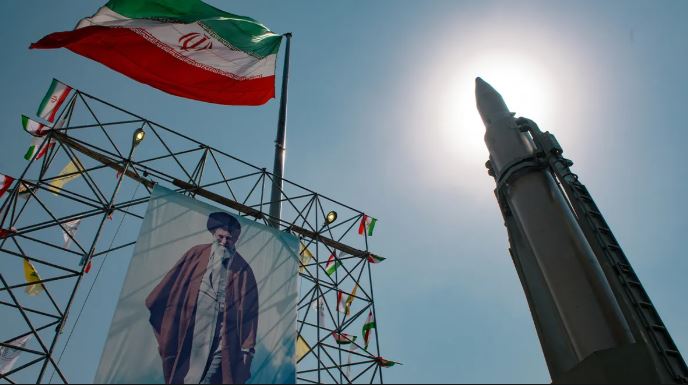
Since Israel launched a 12-day war on Iran in 2025, the IAEA has been blocked by Tehran from visiting enrichment sites where the Islamic Republic is believed to store enough highly enriched uranium to potentially build as many as 10 nuclear weapons, should it choose to rush for the bomb. Iran long has maintained that its program is peaceful, though it is the only country in the world to have uranium enriched up to 60 percent purity without a weapons program.

The US and Iran offered contradictory remarks Tuesday about whether those sites would be inspected.

“I can understand political statements, they are part of the reality, but the fundamental thing I would like to remind you and draw your attention to is that there has been a Memorandum of Understanding, signed by both presidents,” Grossi told journalists at a news conference at the tsunami-hit Fukushima Daiichi nuclear power plant.

The accord “explicitly states that the nuclear activities that are going to be carried out with the regards of the nuclear material facilities will be supervised by the IAEA — in all letters,” he said.

Grossi added: “Obviously, to do that, we have to inspect. Whether this happens the day after tomorrow or in one week or in ten days, it’s important, but not essential. This is going to happen.”

Those inspections are key for the deal, which calls for Iran’s stockpile of uranium to be “downblended” from highly enriched levels.

South Korea hockey team to tour Pakistan

South Korea hockey team to tour Pakistan

DNA

ISLAMABAD: The Pakistan Hockey Federation (PHF) has confirmed that the South Korean national hockey team will tour Pakistan from July 27 to August 9, 2026.

During the visit, the South Korean squad will hold a training camp in Islamabad and play a series of practice matches against local teams. The detailed schedule of the camp and matches will be announced shortly, according to PHF officials.

PHF Interim President Mohyuddin Ahmad Wani stated that a 25-member South Korean delegation will arrive in Pakistan for the tour. He emphasized that the arrival of one of Asia’s leading hockey teams will provide valuable exposure and experience for Pakistani players.

“This visit is a significant opportunity for our athletes to compete against a top-tier Asian side. It will help raise the standard of our game and inspire our players,” Wani said.

He further noted that the tour reflects the international community’s confidence in Pakistan’s sporting environment and security arrangements. “The presence of South Korea’s team is living proof of the excellent sporting atmosphere and world-class security measures in place in Pakistan,” he added.

The PHF believes the tour will not only strengthen hockey ties between Pakistan and South Korea but also showcase Pakistan’s ability to host international sporting events successfully.

North Korea boosts Navy nuclear capability

North Korea boosts Navy nuclear capability

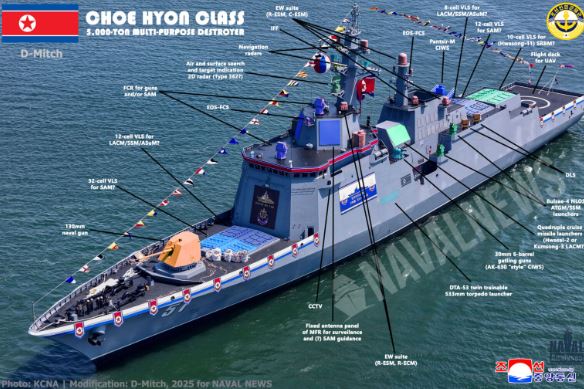
SEOUL: North Korea has commissioned a 5,000-ton destroyer that leader Kim Jong Un touts as a symbol of the country’s growing naval and nuclear capabilities, state media reported Wednesday, as Pyongyang seeks to expand its ability to project military power at sea.

North Korea’s official Korean Central News Agency said Kim told a commissioning ceremony Tuesday at the western port of Nampo that warships such as the Choe Hyon show that the nuclear armament of his navy is progressing as planned.

KCNA said the Choe Hyon was formally placed into service with North Korea’s navy after the ceremony and will be tasked with defending the country’s western coast.

Since unveiling the ship in April 2025, Kim has portrayed the Choe Hyon as a major step toward expanding his military’s operational reach and preemptive strike capabilities. KCNA has said the warship is equipped with a range of systems, including anti-aircraft and anti-ship weapons as well as nuclear-capable ballistic and cruise missiles.

South Korean officials and experts say the vessel was likely built with Russian assistance amid deepening military ties between the countries, but some analysts have questioned whether it’s ready for active service.

North Korea has put the Choe Hyon through a series of tests in recent months ahead of its deployment, including launches of what it described as nuclear-capable cruise missiles from the vessel.

“It has clearly become a thing of the past when our navy existed as a force for defending the sea off our land,” Kim said in a speech at Tuesday’s ceremony. “It is rising into a full-fledged service equipped with strategic means as the program of equipping the Navy with nuclear weapons is following its planned course unerringly.”

After years of spurring ballistic missile development, Kim has shifted his focus more toward naval capabilities, including the ongoing construction of a nuclear-powered submarine. Naval capabilities were also a key focus when Kim outlined his five-year military goals at February’s Workers’ Party congress, which included calls for intercontinental ballistic missiles capable of underwater launches.

Kim, following a missile test aboard the Choe Hyon in March, claimed that his efforts to arm his navy with nuclear weapons would “constitute a radical change in defending our maritime sovereignty, something that we have not achieved for half a century.” State media didn’t elaborate on what Kim meant, but some analysts say North Korea may be preparing to formally declare a maritime boundary that could encroach on waters controlled by rival South Korea.

As inter-Korean tensions worsen, Kim has repeatedly said he does not recognize the Northern Limit Line in the western sea, drawn by the US-led UN Command at the end of the 1950-53 Korean War. The poorly drawn sea boundary has been the site of several deadly skirmishes in past years.

Next round of US–Iran talks may take place in Pakistan

Next round of US–Iran talks may take place in Pakistan

Analysts argue that Islamabad must now capitalize on this diplomatic success by urging the United States and other countries to enhance investments in Pakistan, rather than relying solely on loans and grants

Ansar Mahmood Bhatti

ISLAMABAD, JUN 23 /DNA/ – Well-placed diplomatic sources have revealed to this correspondent that the next round of United States–Iran talks may be convened in Pakistan, following the successful negotiations recently held in Switzerland. According to insiders, the proposal was seriously considered during the Iranian President’s visit to Pakistan, where both Washington and Tehran reportedly agreed to the idea of Islamabad hosting the next phase of dialogue.

Pakistan’s role in brokering the initial understanding between the two sides has been described as central and praiseworthy, with particular acknowledgment of the efforts of Field Marshal Asim Munir. His behind-the-scenes diplomacy is said to have created the environment necessary for constructive engagement. Observers now await to see whether the process and the Memorandum of Understanding (MoU) reached earlier can prove sustainable in the long run.

Diplomatic circles also point to the significant contribution of Qatar, which played a parallel role in facilitating communication between Washington and Tehran. However, Pakistan’s involvement has opened a unique window of opportunity. Analysts argue that Islamabad must now capitalize on this diplomatic success by urging the United States and other countries to enhance investments in Pakistan, rather than relying solely on loans and grants.

Another key suggestion emerging from policy experts is for Pakistan to negotiate the purchase of cheap oil from Iran, passing on the benefits directly to the people. Such a move would not only ease economic pressures but also ensure that ordinary citizens feel included in the broader diplomatic developments.

Yet, while Pakistan’s diplomatic achievements are being praised internationally, domestic political challenges threaten to undermine these gains. The treatment of the opposition has raised concerns, with critics pointing out that in the National Assembly, speeches by the Prime Minister and cabinet ministers are broadcast live, but when opposition leaders take the floor, there is a complete blackout on national hookup. This practice, they warn, sets a troubling precedent and risks alienating a sizeable portion of the population whose voices deserve representation.

For Pakistan to fully benefit from its emerging role as a mediator in global diplomacy, it must also focus on healing internal political wounds. Ensuring inclusivity and transparency at home will strengthen the credibility of its foreign policy abroad.

The coming weeks will reveal whether Pakistan can successfully host the next round of US–Iran talks. If managed wisely, this development could mark a turning point, positioning Islamabad as a trusted facilitator in international diplomacy while simultaneously delivering tangible benefits to its people.

Rubio arrives in UAE, says US won’t accept tolls in Strait of Hormuz

Rubio arrives in UAE, says US won’t accept tolls in Strait of Hormuz

“It’s an international waterway. No country is allowed to charge tolls or fees on an international waterway. That’s existing international law,” he said as he arrived in the United Arab Emirates.

Centreline Report – Abu Dhabi

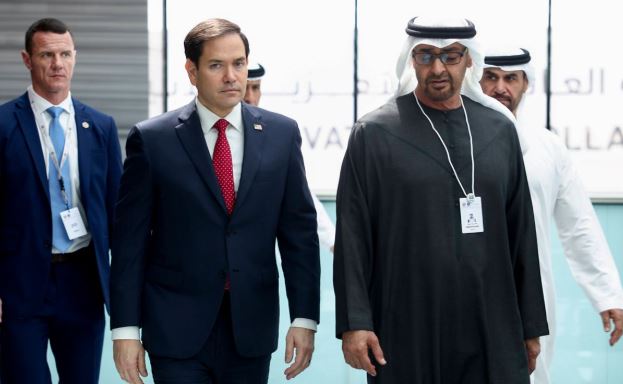
ABU DHABI: U.S. Secretary of State Marco Rubio on Tuesday firmly rejected Iran’s reported attempts to impose tolls or fees on vessels transiting the Strait of Hormuz, declaring such measures illegal under international law. Speaking to journalists upon his arrival in the United Arab Emirates, Rubio underscored that the strategic waterway must remain free for global commerce.

“It’s an international waterway. No country is allowed to charge tolls or fees on an international waterway. That’s existing international law,” Rubio stated. He added that the United States does not believe regional partners need convincing on this matter, noting, “I think all the countries in this region would agree with us.”

The Strait of Hormuz, a narrow passage connecting the Persian Gulf with the Gulf of Oman and the Arabian Sea, is one of the most critical maritime chokepoints in the world. Roughly one-fifth of global oil trade passes through the strait, making its security and accessibility vital for international energy markets. Any disruption or unilateral restrictions could have far-reaching consequences for global supply chains and economic stability.

Rubio’s remarks come amid heightened tensions between Washington and Tehran, with Iran signaling its intent to seek revenue from vessels using the strait. Analysts warn that such a move could escalate regional friction and invite strong responses from Gulf states and international stakeholders. The U.S. position, as reiterated by Rubio, is that freedom of navigation must be preserved without exception.

Regional observers note that Gulf countries, including the UAE and Saudi Arabia, have long opposed any unilateral Iranian control over the strait. They view attempts to levy fees as a challenge to international norms and a potential threat to their economic lifelines. Rubio’s comments are expected to reassure allies that Washington remains committed to safeguarding maritime routes and countering any unilateral measures.

The Secretary of State’s visit to Abu Dhabi highlights ongoing U.S. engagement with Gulf partners on security and trade issues. Discussions are likely to focus on maritime cooperation, regional stability, and collective efforts to deter threats to international waterways. Rubio’s firm stance signals Washington’s readiness to confront challenges to global navigation rights and reinforces its alignment with regional allies.

US agencies have seized more than 300 drones near World Cup sites, TSA says

US agencies seized more than 300 drones near World Cup sites, TSA says

WASHINGTON, JUN 23: US agencies have seized over 300 drones near FIFA World Cup sites since the start of play on June 11, the Transportation Security Administration said Thursday.

During match days, all aircraft operations, including drones, are prohibited within a radius of three nautical miles and up to 3,000 feet above ground level around the stadiums unless specifically authorized by air traffic controllers.

Trump says Iran agreed to nuclear inspections, Tehran denies US claims

Trump says Iran agreed to nuclear inspections, Tehran denies US claims

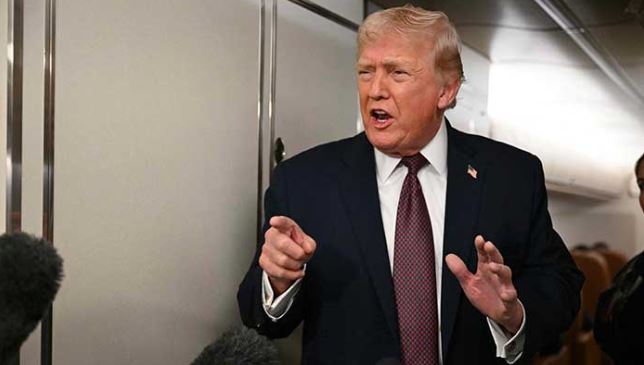
WASHINGTON, JUN 23: US President Donald Trump said on Tuesday Iran had agreed to nuclear inspections into “infinity,” despite Tehran’s denials, and that unfrozen Iranian assets would be used to buy humanitarian supplies from the United States.

Washington agreed to waive sanctions on Iran for 60 days from Monday after the first round of talks under a nascent peace deal agreed last week on ending more than three months of war.

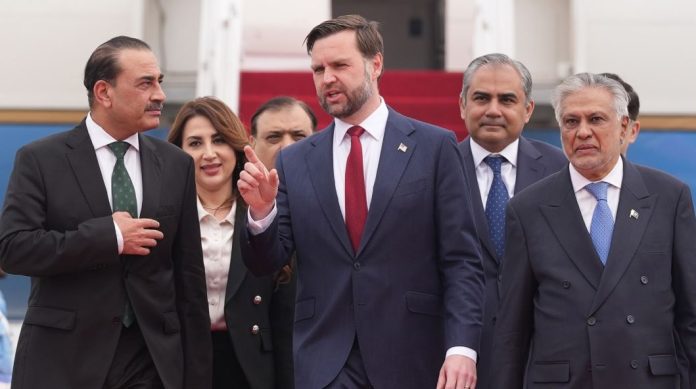
US Vice President JD Vance said the talks with Iranian officials in the Swiss mountain resort of Burgenstock laid a good foundation for a final accord and that Tehran had agreed to allow nuclear inspectors back into the country.

But Iran denied it had begun discussions on its nuclear program at the talks, mediated by Qatar and Pakistan, and said it had not agreed to invite back International Atomic Energy Agency inspectors.

Iran says it will decide alone on assets’ use
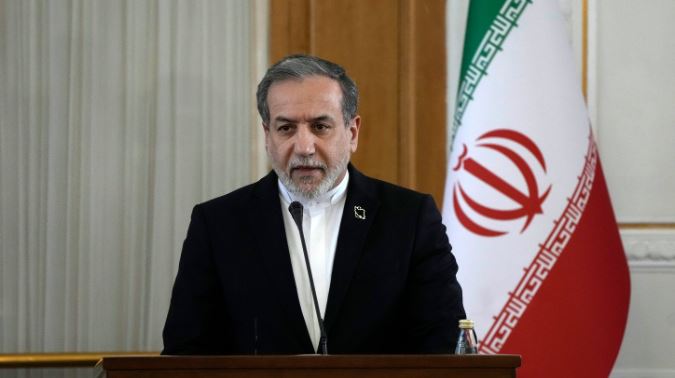
Foreign ministry spokesperson Esmail Baghaei said on Tuesday Iranian officials had not held a meeting with IAEA chief Rafael Grossi in Switzerland and had no plans for the UN nuclear watchdog to inspect Iran’s damaged nuclear facilities.

Trump hit back on Tuesday at what he said were Iran’s “protestations and false statements.”

“Iran has fully and completely agreed to highest level Nuclear inspections long into the future (Infinity!!!),” Trump said in a post on Truth Social.

He also said any Iranian assets unfrozen under the deal would be placed in an escrow account and used to buy food and medical supplies from the US “including Corn, Wheat, and Soybeans from our great American Farmers.”

Iran’s ambassador to the UN in Geneva had earlier on Tuesday denied there had been any such agreement.

“Iran is the only country to decide what to do with its assets, which are going to be defrozen, and so I reject any claim about that if there would be any role for any other country to have an influence on those decisions or on those processes,” Ali Bahreini told reporters.

Roadmap for talks
The conflicting statements highlighted the uncertainty facing efforts to halt a war that has upended the Middle East.

On Monday, the sides agreed on a mechanism to end fighting between US ally Israel and Iran-backed Hezbollah in Lebanon, and opened a communications line to help ensure safe passage for commercial ships through the Strait of Hormuz, a vital waterway for global oil supplies blockaded by Iran during the war.

In the first of several steps to provide economic relief to Iran, the US Treasury announced a waiver until August 21 on sanctions, allowing Tehran to sell oil and related products and receive payment for them.

Bahreini said “good progress” had been made in the talks and that two working groups would be established in coming days to focus on the removal of sanctions and Iran’s nuclear activities.

He told reporters five parts of the initial deal need to be fully implemented before negotiations begin on the nuclear dossier and any role for the IAEA.

Conflict in Lebanon
The ambassador said Lebanon was an “unquestionable” part of the interim accord between the US and Iran, and that it included the withdrawal of Israeli troops from Lebanon.

A ceasefire has largely held in southern Lebanon since Sunday, but Lebanon’s Civil Defense and state media said Israeli gunfire had killed two people there on Tuesday. Hezbollah said the incident violated the ceasefire.

Israel has said it will maintain a security zone in southern Lebanon and continue to act to “neutralize” threats against Israeli soldiers and citizens. Israeli strikes against Hezbollah in Lebanon have killed thousands of people and displaced millions.

Israel and Lebanon began a new round of talks in Washington on Tuesday, with Beirut determined to press ahead with direct negotiations even as they appear to be overshadowed by Iran’s decision to make Lebanon part of its talks with the US

Lebanon’s presidency said Vance and Secretary of State Marco Rubio told Lebanese President Joseph Aoun in a call that Washington was following up on agreements reached in Switzerland, including plans to establish a joint cell comprising the US, Lebanon and Iran to help consolidate the Lebanon ceasefire and monitor implementation of related steps.

The presidency said arrangements for a mechanism to firm up the truce and monitor its implementation were being discussed.

Tanker traffic through Hormuz started to pick up on Monday, although Iran and Oman suggested in a joint statement that there may be costs involved in using the strait, whose closure pushed up oil prices and global inflation.

Oman and Iran said a joint working group would seek agreement on administrating navigation in the strait, the services provided and associated costs. Any arrangement, they said, must respect their “sovereignty and sovereign rights.”

Political liability for Trump
Oil prices have fallen since the interim deal was reached, with crude prices dropping further on Tuesday after settling 3 percent lower on Monday.

The war with Iran, which started with joint US-Israeli strikes on Iran, has become a political liability at home for Trump and his fellow Republicans in Congress as midterm elections loom in November.

Opinion polls have shown public frustration over a rise in gas prices since the war began, and Trump faces pressures from Republicans who want Iran’s nuclear program shut down.

Iran has limited IAEA inspections since the US and Israel launched their first airstrikes last year, and suspended them when war broke out. Iran says its nuclear program is peaceful.

Trump claims Tehran agreed to ‘infinity’ nuclear inspections

Trump says US military studying 'very strong options' for Iran

News Desk

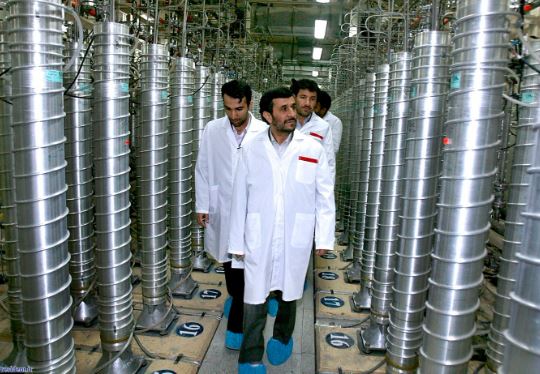
WASHINGTON: U.S. President Donald Trump has insisted that Iran has agreed to allow nuclear inspections “for infinity,” describing the arrangement as a major achievement in ensuring transparency. Speaking to reporters, Trump said that Tehran had committed to unlimited oversight of its nuclear facilities, a move he portrayed as a safeguard against any clandestine weapons development.

According to Trump, the agreement means international inspectors will have unrestricted access to Iran’s nuclear sites indefinitely. “They’ve agreed to inspections for infinity,” he declared, adding that such a commitment was unprecedented and would guarantee long-term monitoring. He argued that this level of openness would prevent Iran from pursuing nuclear weapons while allowing it to maintain a peaceful nuclear program.

The statement comes amid ongoing debates over Iran’s nuclear activities and the future of international agreements governing them. Trump’s remarks suggest that Washington views the inspection framework as a cornerstone of its policy toward Tehran, even as questions remain about the scope and enforcement of such commitments.

Iran has consistently maintained that its nuclear program is for civilian energy purposes and has denied seeking nuclear weapons. The country has also expressed willingness to cooperate with international watchdogs, though disputes over access and sanctions have often complicated the process.

Observers note that Trump’s characterization of “infinity” inspections may reflect political messaging rather than a formal treaty clause. Verification mechanisms typically involve agreements with the International Atomic Energy Agency (IAEA), which conducts inspections under defined protocols. Whether Iran has formally agreed to unlimited inspections remains subject to clarification.

The announcement is likely to spark reactions across the region, where Iran’s nuclear program has long been a source of tension. Allies and rivals alike will be watching closely to see how the claim translates into practice and whether it leads to greater stability or renewed disputes.

Sharif defends Iran’s right to ballistic missiles

Sharif defends Iran’s right to ballistic missiles

The Iranian President, during his official visit to Islamabad, expressed gratitude to Pakistan’s leadership and people for their wholehearted support during recent regional tensions

Ansar M Bhatti

ISLAMABAD: Prime Minister Shehbaz Sharif has said that Iran has every right to possess ballistic missiles, stressing that there should be no double standards in the global community. Speaking during the visit of Iranian President, Sharif noted that if other states can maintain missile programs, Iran should not be singled out. He emphasized that at no stage had Iran’s nuclear program come up for discussions with Pakistan, underscoring that the matter was not on the agenda.

Sharif described Iran as a “great nation” that fought bravely during its war years and highlighted Pakistan’s deep respect for its resilience. He reaffirmed that Pakistan values its relations with Iran and considers them vital for regionalNews Report – Pakistan-Iran Relations Strengthened

Prime Minister Shehbaz Sharif has reaffirmed Pakistan’s strong support for Iran’s sovereign right to develop its defense capabilities, including ballistic missiles. Speaking at a joint press appearance with the visiting Iranian President, Sharif emphasized that there should be no double standards in the global community. “If other states can possess missiles, then why not Iran? Iran has every right to strengthen its defense,” he stated. He further clarified that Iran’s nuclear program was never raised for discussion at any stage, underscoring Pakistan’s consistent stance on the matter.

Sharif praised Iran as a “great nation” that fought bravely during times of war and highlighted the deep historical and cultural ties between the two neighbors. He stressed that Pakistan values its relations with Iran and remains committed to enhancing cooperation across political, economic, and security domains.

The Iranian President, during his official visit to Islamabad, expressed gratitude to Pakistan’s leadership and people for their wholehearted support during recent regional tensions. He noted that he had productive meetings with President of Pakistan, Prime Minister Shehbaz Sharif, and Chief of Army Staff General Asim Munir. “I especially came to thank the Pakistani leadership and the people of Pakistan for their solidarity and support,” the Iranian President remarked.

Earlier in the day, the Iranian President was accorded a ceremonial welcome at the Prime Minister’s House. He was received with a guard of honor, and Pakistan Air Force JF-17 Thunder jets escorted his aircraft upon arrival, symbolizing the importance of the visit. The two sides discussed strengthening bilateral cooperation, regional stability, and mutual support in international forums.

The visit marks a significant moment in Pakistan-Iran relations, showcasing mutual respect and a shared vision for regional peace and cooperation. Both leaders reiterated their commitment to deepening ties and working together to address common challenges.

India hopes Hormuz traffic will provide energy relief

India hopes Hormuz traffic will provide energy relief

NEW DELHI, 23 JUN (DNA) —     Resumed shipping flows through the Strait of Hormuz would ease energy and fertilizer supply bottlenecks, India’s security chief said during a BRICS security meeting in New Delhi on Tuesday.

The current state of the crucial waterway for oil and gas transport is uncertain — it reopened last week, after Iran and the United States reached an agreement, but Tehran announced on Saturday it had closed it again in response to Israeli attacks in Lebanon.

Indian National Security Adviser Ajit Doval said its reopening would be a “highly welcome development,” as security chiefs of the BRICS bloc of nations met. India is heavily reliant on imported energy, and its fuel supplies were hit hard during the US-Iran war. “It will help ease supply chain bottlenecks, and many of the shortages in fertilizers, chemicals, and other essential commodities may be alleviated,” Doval said.

Doval on Monday met with Iranian official Ghadir Nezamipour, a senior member of Tehran’s Supreme National Security Council, as well as China’s Foreign Minister Wang Yi. Other BRICS representatives, including Russia, South Africa, and Brazil, are also in New Delhi. Maritime traffic in the strait flowed at a faster pace than before the US-Iranian agreement on talks to end the war, according to tracking firms.

At least 35 commodity carriers transited the Strait of Hormuz on Monday, a record level since the start of the Middle East war in late February, according to data from the maritime tracking firm Kpler. The 35 passages represent nearly a third of normal peacetime traffic (around 120 per day) through the strait, which normally sees around a fifth of the world’s oil and gas exports.

The total count for Monday crossings is expected to rise further as ships are detected later by maritime trackers. India’s Commerce Minister Piyush Goyal meanwhile began a fresh round of meetings with visiting US Trade Representative Jamieson Greer in New Delhi. “Ongoing discussions on finalizing the trade deal between the US and India,” US ambassador to India Sergio Gor said, in a social media post.— DNA

Stay Connected

64FansLike
60FollowersFollow

Latest Reviews

Exchange Rates

USD - United States Dollar
EUR
1.15
GBP
1.35
AUD
0.70
CAD
0.71