Home Blog Page 728

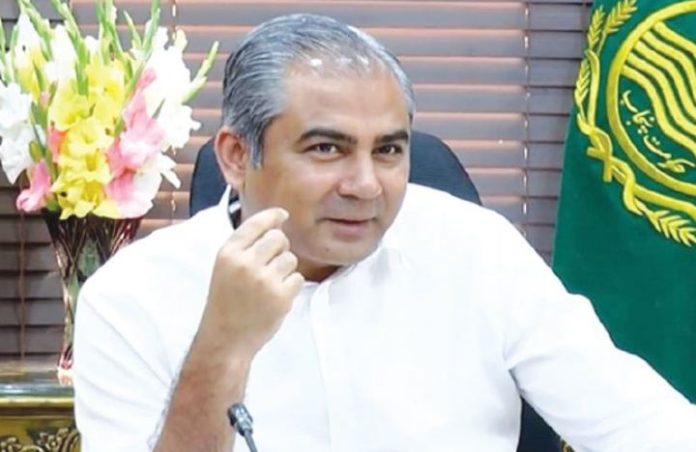
Naqvi visits Saudi Safe City Center, impressed by modern crime control methods

Naqvi visits Saudi Safe City Center

RIYADH, DEC 15 /DNA/ – Federal Interior Minister Mohsin Naqvi visited the Public Security Police Headquarters of Saudi Arabia. Chief of Public Security Lt. Gen. Mohammed Al-Bassami welcomed Federal Interior Minister Mohsin Naqvi on his arrival.

Interior Minister Mohsin Naqvi inspected various departments of the state-of-the-art Public Security Headquarters. He also visited Saudi Arabia’s Safe City Center. While reviewing the system equipped with modern technology to prevent crimes, he appreciated the system of controlling crimes and traffic accidents through the use of modern technology.

Interior Minister Mohsin Naqvi also held a meeting with Chief of Public Security Lt. Gen. Muhammad AlBassami. During the meeting, it was agreed to activate the joint task force between Pakistan and Saudi Arabia soon. Mohsin Naqvi said that he was happy to see the excellent public security system of Saudi Arabia. He further said that both sides can benefit from the experience of each other through enhancing cooperation in the field of police training. He highlighted that Pakistan is establishing a Special Protection Unit for the protection of diplomats.

Interior Minister Mohsin Naqvi was given a special briefing at the Public Security Headquarters. It was apprised in the briefing that a system has been developed to control crimes and traffic accidents through artificial intelligence. Moreover, special forces also perform duties during Hajj and Umrah. It was also informed that all special forces in Saudi Arabia are controlled from the Public Security Headquarters.

Bilawal demands strict action against human trafficking networks

Bilawal

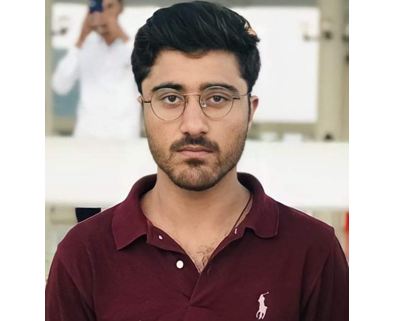
KARACHI/ISLAMABAD/LAHORE, Dec 15: /DNA/ – Chairman Pakistan Peoples Party (PPP) Bilawal Bhutto Zardari has expressed profound sorrow over the tragic loss of lives in the migrant boat accident off the coast of Greece.

In a press release issued by the Media Cell Bilawal House, Chairman PPP conveyed his relief upon learning about the rescue of 47 Pakistani nationals and urged the federal government to collaborate fully with Greek authorities to expedite search and rescue operations for the missing individuals. He also emphasized the importance of facilitating communication and providing accurate information to the families of those impacted by this devastating incident.

Chairman Bilawal Bhutto Zardari called for strict action against the culprits involved in human trafficking and advocated for strengthened global cooperation to address the growing menace of trafficking crimes. He highlighted the need to address the underlying causes driving migration in developing countries, underscoring the importance of replacing unjust political and economic systems, conflicts, and wars with peace and sustainable development.

Chairman also conveyed his deepest sympathies and heartfelt condolences to the families grieving the loss of their loved ones in the Greece boat tragedy.

PM Shehbaz formally launches polio eradication drive

PM Shehbaz formally launches polio eradication drive

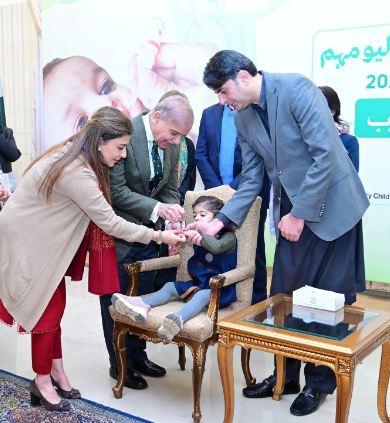
ISLAMABAD, DEC 15: Prime Minister Shehbaz Sharif formally launched the last polio eradication drive of the year by administering anti-polio vaccine to children.

Addressing the launching ceremony in Islamabad on Sunday, he expressed the commitment to eradicate the poliovirus from Pakistan with the help of provincial governments and the international partners.

The Prime Minister urged the parents to ensure vaccination of their children to protect them from polio.

Speaking on the occasion, Prime Minister’s Focal Person on Polio Eradication Ayesha Raza Farooq said around 400,000 polio workers across 143 districts of the country will visit every household to administer polio drops to the children below five years.

She requested the parents to open their doors and fully cooperate with the polio teams in this campaign.

Coordinate on Health Dr Mukhtar Bharath said around 44 million children will be reached out across Pakistan during this last polio eradication drive of the year.

One Pakistani dead, 47 others rescued in Greek boat mishap: FO

One Pakistani dead, 47 others rescued in Greek boat mishap: FO

ISLAMABAD: The Ministry of Foreign Affairs (Mofa) confirmed on Sunday that 47 Pakistani nationals had been rescued from the site of the boat capsizing near Greece while another one was confirmed to be among the migrants who died in the mishap.

In response to speculation regarding the casualties, MoFA clarified the situation but also indicated the possibility of additional casualties, as the rescue operation is still ongoing.

“At this stage, we are unable to confirm the number of deceased or missing Pakistani nationals,” the ministry stated.

Play Video
According to the coastguard on Saturday, at least five migrants drowned after their wooden boat capsized off the southern Greek island of Gavdos, while witnesses reported that many others were still missing as search operations continued.

The Ministry of Foreign Affairs stated that the Pakistani Embassy in Athens has been in contact with both the Hellenic Coast Guard and the Coast Guard of Chania, who are directly managing the search and rescue operation.

“Embassy officials have travelled to Crete to meet with the rescued Pakistanis and provide any necessary assistance,” the ministry said.

The ministry also confirmed that its Crisis Management Unit (CMU) have been activated to assist Pakistanis in Greece.

Pakistani nationals in Greece and their families are urged to contact the CMU via telephone at 051-9207887 or by email at [email protected].

Families of the missing Pakistanis can reach the Embassy of Pakistan in Greece to provide details at +30-6943850188.

The CMU will oversee the rescue operation and the identification of affected Pakistanis, ensuring that the families of the deceased are given access to their loved ones for identification.

Following the Prime Minister’s directive, the Pakistani embassy has written to all relevant Greek authorities regarding the matter.

Earlier, Reuters reported that 39 men — most of them from Pakistan — had been rescued by cargo vessels in the area. These individuals have been transferred to the island of Crete. The number of missing individuals has yet to be confirmed.

Coastguard boats, merchant vessels, an Italian frigate, and naval aircraft have been searching the area since Greek authorities were alerted to the incident on Friday night.

This tragic event has renewed calls for stricter measures to combat human smuggling and protect vulnerable individuals from exploitation by criminal networks.

In response to the casualties resulting from illegal migration attempts to Europe, Federal Minister for Interior Mohsin Naqvi directed the Federal Investigation Agency (FIA) to launch nationwide operations against human smuggling networks. He stressed that the mafias responsible for destroying countless families must be eradicated.

Play Video
On the directive of Prime Minister Shehbaz Sharif, the security czar has formed a committee, led by the additional secretary of the Ministry of Interior, to investigate the incident. The committee has been tasked with conducting an inquiry and submitting its findings within five days.

Prime Minister Shehbaz Sharif has expressed sorrow and condolences over the loss of Pakistani lives in the tragic boat capsizing.

Describing human smuggling as a heinous crime that destroys numerous lives each year, he stressed the need for strict punishments and concrete measures to prevent such incidents in the future.

The Prime Minister added that deceptive tactics were being used by smuggling mafias to exploit vulnerable individuals for money through false promises.

PM Shehbaz also directed Interior Minister Mohsin Naqvi to conduct a thorough inquiry into the incident and present a report at the earliest. He emphasised the importance of identifying and punishing those responsible to ensure such actions are not repeated. “Concrete steps must be taken to prevent such tragedies in the future,” he added.

Meanwhile, President Asif Ali Zardari also expressed sorrow over the deaths of Pakistani migrants in the boat capsizing incident, condemning human smuggling as a despicable act that leads to the loss of loved ones.

He called for expedited measures to eradicate human smuggling and condoled with the families of the victims, praying for their patience.

On the other hand, Pakistan Peoples Party Vice President and Senator Sherry Rehman expressed her grief over the incident, remarking that another case of human smuggling had claimed multiple precious lives.

She recalled that at least 400 Pakistanis lost their lives in a similar boat tragedy near Greece last year.

“To prevent human trafficking, its perpetrators should be punished severely,” she added.

New Realities in the Middle East

New Realities in the Middle East

Muhammad Wali Jan

The breakdown of Bashar al-Assad’s regime in Syria marks a pivotal moment in Middle Eastern geopolitics, reshaping the balance of power and highlighting vulnerabilities in key regional and global alliances. Described by Middle East expert Dr. James Dorsey in his interview as a “tectonic shift,” the regime’s collapse has exposed the brittle nature of Assad’s military, which faltered rapidly to recent rebel offensives in key cities such as Hama, Homs, and Aleppo. This unexpected disintegration shows the internal fragility of the Syrian state, exacerbated by years of Economic stagnation, war fatigue, and dwindling popular support.As the Assad regime fell, the focus turned to the broader implications for regional stability. Syria’s Future ruling framework remains uncertain, with rebel factions facing the challenge of navigating ethnic and sectarian divides. Despite the chaos, the recent offensives were notably free of widespread violence against minority groups, signaling a potential shift toward Holistic political solutions for post-conflict stability. However, the absence of a unified vision among the opposition threatens to prolong instability, complicating efforts to establish a harmonious government.For Iran, the fall of Assad implies a major strategic loss. Syria has long served as a backbone of Iran’s regional influence, providing a vital land route for supplying arms to Hezbollah in Lebanon. With this lifeline severed, Iran’s forward defense strategy faces significant disruption, leaving Iran more relying on its ballistic missile program and nuclear capabilities. Hezbollah, already weakened by years of involvement in the prolonged Syrian conflict, now faces further challenges as its supply chains are cut off. The loss of Syria as a reliable ally weakens Iran’s ability to project power in the Levant region, forcing the reconsideration of its partnerships with non-state actors and its broader regional strategy.Russia, another key actor in the Syrian Conflict, also faces a significant Strategic setback. Despite its significant military funding and direct support for Assad’s regime, Moscow’s Incapability to prevent the regime’s collapse exposed the limitations of its influence in the region. Dr. Dorsey resembled the situation to the U.S. withdrawal from Saigon in 1975,suggesting that a Russian retreat from Syria would symbolize significant damage to reputation. The reliance on local Syrian forces, which lacked the resolve to sustain prolonged resistance, further exposes the vulnerability of Russia’s standing in the Middle East. While speculation about Ukrainian involvement in helping the rebels remains unconfirmed, the collapse not only complicates Russia’s broader interest in the region, particularly as it juggles ongoing challenges in Ukraine.Türkiye stands poised to play a key role in shaping Syria’s post-Assad dynamics. Positioned as a potential player, Ankara may use its influence to support the Creation of an Islamist-leaning government in Damascus, aligning with its regional interest. But this strategy comes with risks, particularly concerning tensions with Kurdish groups and decentralized rebel factions like Hayat Tahrir al-Sham. Balancing these competing interests will test Türkiye’s ability to address the complexities of Syria’s fractured political dynamics.As for the United States, the downfall of Assad presents both challenges and opportunities. Washington’s primary focus has been on counterterrorism and containing the Islamic State, but Assad’s fall may provoke a reassessment of its broader strategy in Syria. Dr. Dorsey highlighted the uncertainty surrounding U.S. policy, especially under the upcoming government, which has sent ambiguous signals on its approach to the conflict. The potential for a more disintegrated Syria raises concerns about the resurgence of jihadist groups, which may adapt their strategies to exploit the vacuum left by Assad’s collapse.The ripple effects of Assad’s collapse reach beyond Syria, influencing the strategic calculations of regional powers, global jihadist factions, and international stakeholders. While the accelerated breakdown of the regime has exposed weaknesses in long-standing alliances, it also offers a ray of hope for a more inclusive political future in Syria. However, realizing this potential will require navigating deep-seated divisions and managing competing interests both within Syria and among external actors, making the road to stability as uncertain as ever.

Muhammad Wali Jan

Student of International Relations at NUML Islamabad

PIDE unveils ambitious electric vehicle roadmap for Pakistan by 2040

PIDE unveils ambitious electric vehicle roadmap for Pakistan by 2040

ISLAMABAD, DEC 15 /DNA/ – ‘Technology Transfer, Global Value Chain Integration, Export Oriented Production and Reducing Upfront Cost’ – these are the priority areas identified by the Pakistan Institute of Development Economics (PIDE) in its recommendations for the upcoming Electric Vehicle (EV) Policy. The Prime Minister of Pakistan in September 2024 directed the government to present a new policy for accelerating EV manufacturing and increase user adoption across the country. In response to the Prime Minister’s call for a robust EV policy, PIDE has presented its set of recommendations ‘Future on Wheels’ to support the development of an effective policy framework. These insights are based on PIDE’s recently published two books on the automobile industry of Pakistan ‘Driving Backwards: What is Wrong with Pakistan’s Automobile Industry?’ and ‘Wheels of Change: Tracing Pakistan’s Automotive Evolution through Political Economy and Technology Acquisition’.

PIDE recommends devising a long term policy for development of EV Industry in Pakistan with short term goals for 2030, medium term targets till 2035 and long term targets set to be achieved by 2040. These include 10% of all new 4-wheelers and 25% of all new 2/3 wheeler sales to be EVs by 2030, while increasing the shares of the former to 50% and latter to 75% by 2040. PIDE also recommends increasing production of EVs in Pakistan to produce 50% of all new 4 and 2/3 wheelers in Pakistan as EVs by 2035.

The policy recommendations by PIDE emphasize integrating the country’s automobile industry into the global value chain of automobiles, and EVs in particular. This is possible only when the custom duties on import of EV inputs are lowered, while production of EVs and EV parts and components is increased manifolds to enhance exports. PIDE recommends targeting 10% of all EVs and 5% of auto parts produced to be exported by 2030 while 50% of all EVs and auto parts both produced in Pakistan must be exported by 2040.

For this purpose, the government must take steps to facilitate joint ventures between existing automotive firms in Pakistan and foreign firms to enhance production of EVs, parts and components through Transfer of Technology and Capital Investment. G2G and G2B basis engagement must be carried out for attracting investment and manufacturing in Pakistan. The State Bank of Pakistan is also encouraged to devise a Green Financing Plan for provision of financing through commercial banks to support the growth of EVs and EV parts and components manufacturing in Pakistan, with keen focus on establishment of new or expansion of existing manufacturing facilities and setting up of charging facilities.

PIDE also stresses on the need for conducting Research & Development in EV and associated areas so Pakistan becomes a global player in the transition towards EVs. Consequently, PIDE recommends establishing a research fund to facilitate targeted research activities with particular focus on but not limited to reducing the cost of production of EVs, reuse of batteries after completion of initial life cycle and environmentally safe battery waste disposal.

Future on Wheels, PIDE’s Policy Viewpoint, emphasizes that the adoption of EVs is not just an environmental imperative but also an economic opportunity. A well rounded and effective policy, building on the lessons learned from previous policies will set the stage for Pakistan to leapfrog into a sustainable future.

The complete Policy Viewpoint can be accessed through PIDE’s website or by visiting the following web address: https://pide.org.pk/research/future-on-wheels/

Pakistan urges global action to halt Israeli settlements and protect Palestinian rights

Pakistan urges global action to halt Israeli settlements and protect Palestinian rights

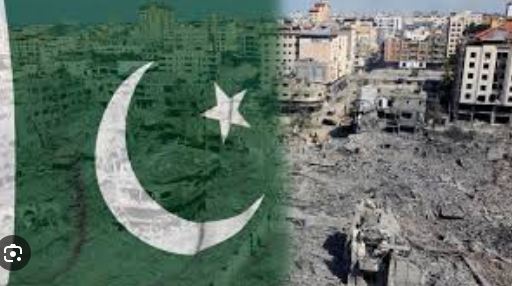
ISLAMABAD, DEC 15 (APP/DNA): The Ministry of Foreign Affairs and Expatriates views with great concern the Israeli escalation in the unilateral and illegal occupation measures in the occupied West Bank with the aim of deepening and expanding the crimes of ethnic cleansing and gradual annexation and accelerating its pace, whether confiscating tens of thousands of dunams and exterminating the Palestinian presence in all its manifestations from all areas classified as (C), or starting to install Israeli watchtowers and communications, or the provocative calls launched by the extreme Israeli right regarding the deployment of more barriers and their installation at main road junctions, which leads to paralyzing the movement of Palestinian citizens and dismembering the occupied West Bank, as well as giving settler militias a free hand and arming them to commit more attacks against Palestinian citizens.

 The Ministry believes that these measures come in light of the ongoing war of extermination and displacement and official Israeli boasting about annexing the West Bank to undermine any opportunity to embody the Palestinian state on the ground and liquidate the Palestinian cause, and exploit the regional developments taking place to monopolize the Palestinian cause and abuse our people and deny their just and legitimate national rights.

The Ministry stresses that the international community’s inaction and failure to provide international protection for our people and its failure to implement its decisions, and its sufficiency in diagnosing the situation and some expressions of condemnation and directing demands to the occupying state and double standards have all become a cover that the Israeli government exploits to deepen the crimes of extermination, displacement, settlement and annexation.

The Ministry calls on the international community to implement its resolutions, especially Security Council Resolution No. 2735 and the United Nations General Assembly resolution that adopted the advisory opinion issued by the International Court of Justice, and reaffirms once again that resolving the Palestinian issue and ending the occupation is the only key to achieving security, stability and prosperity in the region and the world.

Massive FOECHS scam, FIA launches inquiry

Massive FOECHS scam

According to the documents available with this correspondent, the management committee, which once operated with the aim of serving Ministry of Foreign Affairs (MOFA) employees, was infiltrated by individuals from the real estate sector who exploited their positions for personal gains. Among them, real estate agents and other external parties indulged in embezzlement and illegal land acquisitions of hundreds of kanals of land for an unapproved extension of the society.

Staff Report

ISLAMABAD, DEC 15 /DNA/ – A mega scandal has come to light involving financial irregularities, illegal land acquisitions and embezzlement within the Foreign Office Employees Cooperative Housing Society (FOECHS).

The society, originally established in the early 1980s to provide affordable housing for employees of the Ministry of Foreign Affairs (MOFA), has been marred by corruption, mismanagement, and abuse of power, particularly under the previous management committee, which was largely taken over by the property dealers.

The FOECHS, which was originally reserved for MOFA employees, opened its membership to the general public in January 2012. This decision, however, resulted in a major crisis.

According to the documents available with this correspondent, the management committee, which once operated with the aim of serving Ministry of Foreign Affairs (MOFA) employees, was infiltrated by individuals from the real estate sector who exploited their positions for personal gains. Among them, real estate agents and other external parties indulged in embezzlement and illegal land acquisitions of hundreds of kanals of land for an unapproved extension of the society.  The documents reveal that despite a clear rejection of the extension proposal by the President of the society in August 2022, the former management committee proceeded with the expansion, acquiring land without approval from the Annual General Meeting (AGM). The additional land was later sold as residential plots in the market, generating substantial illicit profits for the perpetrators.

The society’s former management committee also engaged in a series of unethical practices, including awarding contracts to favoured contractors at inflated rates for personal kickbacks. These actions led to significant financial losses for the society. As a result, much-needed projects, such as road construction and maintenance of essential infrastructure were left incomplete or neglected. A road that was previously in good condition was even scrapped and replaced with low-quality material, causing inconvenience to residents.

Further exacerbating the situation, the boundary wall of various blocks in the society, including Blocks A, B, C, and D, were dismantled and removed in recent months without any prior notice. This left the residents vulnerable to security breaches.

Members or residents of FOECHS perturbed over the situation told this correspondent that despite the dissolution of the previous management committee in November 2023, former members are still involved in meetings with government officials, attempting to influence the upcoming elections for the new committee. This ongoing interference has raised questions about the fairness of the election process and the possibility of continued corruption under a new management. The members of the society have also raised the issues of irregularities and embezzlement at different forums and have also called for an external audit to assess the extent of the financial losses caused by the previous members of management committee.

In light of these serious allegations, the Federal Investigation Agency (FIA) has launched an inquiry into the irregularities within FOECHS. Notices have been issued to several key members of the previous management committee, including Khalid Hussain Memon, the former President; Israr Hussain, the former Vice President; Hashim Kiyani, the former Secretary; Faheem Khan, the former Treasury Member; and Khalid Bashir Tabassum, Muhammad Akram, Muhammad Ishtiaq, Imtiaz Aziz and Irshad Ahmad, all of whom were members of the committee during its tenure. These individuals are under investigation for their alleged involvement in fraudulent activities.

The society members demand that the FOECHS be restored to its original purpose of providing affordable housing to MOFA employees without the interference of unscrupulous outsiders, and those involved in fraudulent activities are taken to task as per the law.

South Korea’s Yoon impeached: what happens next?

Seoul, Dec 15 (AFP/APP/DNA): South Korean lawmakers have voted to impeach President Yoon Suk Yeol over his shock decision to declare martial law last week, which plunged the country into some of its worst political turmoil in decades.
AFP takes a look at what lies ahead for the vibrant East Asian democracy.

              - Who is running the country? -


              Technocratic Prime Minister Han Duck-soo has stepped in as interim leader and will govern the country for a maximum of eight months, depending on how long the court deliberates on the impeachment motion and what it decides to do.
              In his first address to the nation as acting president, Han vowed to "ensure stable governance."
              "I will devote all my strength and efforts to ensure stable governance," the 75-year-old career bureaucrat said.


              - How will impeachment proceed? -


              In its last such deliberation involving former president Park Geun-hye -- impeached by parliament over corruption and incompetence allegations -- the Constitutional Court took 92 days to review the motion and remove her from office.
              The court requires six votes in favour of impeachment from its nine-member bench.
              But with three seats vacant due to disagreements between the ruling and opposition parties, the court must vote unanimously to support the impeachment motion -- unless it fills the empty positions in the coming weeks.
              Legal experts say it is very likely the judges will remove him given the clear constitutional violations involved in his martial law declaration.
              It is clear Yoon "aimed to paralyse the state's functions," Kim Hyun-jung, a researcher at the Korea University Institute of Law, told AFP.
              "Even the most conservative scholars acknowledge this has caused a crisis in constitutional order," Kim said.
              If the court confirms Yoon's removal, a snap election will be held within 60 days.
              And unlike in typical elections, there will be no 60-day transition period for the president-elect: the victor will be inaugurated the day after the vote.


              - Will protests continue? -


              The vast protests both for and against Yoon that have rocked the South Korean capital are likely to continue in a push to pressure the Constitutional Court.
              "Those in favour of Yoon's removal are likely to rally at Gwanghwamun Square near the Constitutional Court," Bae Kang-hoon, a co-founder of the political think tank Valid, said.
              Protesters on both sides have told AFP they would keep coming to the streets until the court delivers its ruling.
              "I will certainly protest at the court to demand it reject the impeachment," Cho Hee-sun, a Yoon supporter, told AFP at a rally on Saturday before the parliamentary vote.
              Kim Cho-rong, who marched on Saturday urging MPs to impeach Yoon, said she would "keep coming out for the next few weeks to make my voice heard by the judges."


              - Who might be the next president? -


              Lee Jae-myung, leader of the main opposition Democratic Party, is the clear frontrunner for the presidency, analysts say.
              "Lee has demonstrated strong leadership during the turbulent days since the martial law declaration and played a key role in passing the impeachment motion," said attorney and political columnist Yoo Jung-hoon.
              Lee, who rose from humble beginnings as a "factory boy" and a teenage school dropout supporting his family, has leveraged his rags-to-riches story to build political stardom.  
              In the 2022 election, Lee lost to Yoon by the narrowest vote margin in South Korea's electoral history, with a gap of around 0.7 percent.
              But his bid for the presidency has been overshadowed by a series of scandals, including a court ruling in November finding him guilty of election law violations, resulting in a suspended sentence.
              If the verdict is upheld, it would strip him of eligibility to run for office.
              From Yoon's conservative People Power Party, party leader Han Dong-hoon and Seoul Mayor Oh Se-hoon are seen as potential contenders.
              Despite his legal challenges, Lee "stands far ahead" in the potential race, Yoo said.
              "While uncertainty lingers over his ongoing trial, it remains to be seen whether an appellate court will uphold the suspended sentence and deliver its ruling before an election," he said.
              "Legal proceedings against Lee will come to a halt if he wins the election, granting him immunity as president."
              A poll last week showed more than 52 percent of eligible voters favour Lee as the next president, with all other potential contenders trailing in single digits.

China and USA: Pillars of Global Prosperity

Qamar Bashir

By: Qamar Bashir

Macomb, Detroit, Michigan

In December 2024, the United States and China renewed their government-to-government Science and Technology Agreement (STA) with a five-year protocol, continuing a collaboration first established in 1979. Over the decades, the STA has yielded significant mutual benefits, with the U.S. leveraging China’s biodiversity to advance agriculture, medicine, and environmental science, besides joining hands in climate science, renewable energy, AI, and quantum computing. For China, the STA facilitated modernization in biotechnology, aerospace, and telecommunications while enabling its researchers to gain expertise at U.S. institutions, fueling domestic advancements in agriculture, environmental policy, and clean energy.

The deep-rooted cooperation between the United States and China defies the prevalent perception of adversarial bilateral relations. In reality, their economies are so deeply intertwined and interdependent that further strengthening their economic, financial, trade, and investment ties seems inevitable.

Bilateral trade surpasses $700 billion annually, making it one of the most significant economic relationships in the world—larger than the entire GDP of over 150 countries. As of 2023, U.S. investment in China totaled approximately $126.9 billion, focused on sectors like manufacturing, healthcare, and consumer goods, while China’s investment in the U.S. stood at about $28 billion, concentrated in real estate, technology, and infrastructure.

If all economic, political, and legal irritants between the United States and China were resolved, their trade and investment relationship could grow exponentially, potentially doubling trade volumes to over $1.5 trillion annually and increasing bilateral foreign direct investment (FDI) to $500 billion or more, transforming them into a global trade powerhouse.

However, significant roadblocks hinder this potential, including a persistent trade imbalance, tariffs, and mutual accusations of unfair practices. Intellectual property concerns, forced technology transfers, and restrictive regulations challenge U.S. businesses in China, while national security fears limit Chinese investments in sensitive U.S. sectors. Geopolitical tensions over Taiwan, the South China Sea, and human rights issues in Xinjiang and Hong Kong exacerbate mistrust.

In an ideal scenario, where the United States and China have resolved their longstanding differences, established a partnership that have prioritize global development, technological innovation, and peace, diplomatic resolutions have address security issues in Taiwan and human rights concerns, while fair trade policies and the removal of investment barriers have created open markets and foster mutual trust, in such a scenario, the two nations could lead efforts to upgrade road, air, and port infrastructure worldwide, adding an estimated $2 trillion in global trade capacity annually and boosting GDP growth by $500 billion across developing regions.

 This mutually beneficial collaboration could extend to defense and space research, yielding advancements in security, space exploration, and renewable energy technologies, with an estimated combined annual investment of $300 billion generating global benefits.

This partnership will ensure peaceful and secure sea, air, and land routes, paving the way for sustained economic growth and global stability, estimated to contribute $1 trillion annually to global economic activity.

For the citizens of both nations, this cooperation will bring significant dividends. Open markets and seamless trade, estimated to exceed $2 trillion annually, will boost GDP growth by $1 trillion combined and create millions of new jobs in sectors like manufacturing, agriculture, and technology.

Joint investments in clean energy, valued at $500 billion over a decade, will make renewable technologies affordable and accessible, reducing energy costs for households and businesses by as much as 20%-30%.

Defense collaboration will reduce tensions, reallocating an estimated $100 billion annually to critical sectors like healthcare, education, and infrastructure.

Increased cultural exchanges and educational opportunities, valued at $30 billion annually through student and tourism contributions, will further strengthen mutual understanding and nurture global talent.

Globally, this partnership will drive transformative changes. Modernized infrastructure projects across Asia, Africa, and Latin America, worth an estimated $1.5 trillion in investment, will unlock economic potential, reduce poverty, and foster regional development, adding $500 billion annually to regional GDP.

Affordable renewable energy initiatives and global climate efforts will mitigate environmental risks, contributing $200 billion annually in savings from reduced emissions and energy efficiency gains.

Collaborative trade and economic policies will stabilize markets, reduce volatility, and enhance global supply chains, contributing an estimated $1 trillion annually to global economic efficiency.

Joint advancements in AI, quantum computing will add $300 billion annually in global technological value, addressing challenges like climate change and resource optimization.

A U.S.-China partnership in space exploration would revolutionize scientific discovery, technological innovation, and global economic growth, benefiting both nations and the world. By pooling resources, expertise, and infrastructure, they could achieve ambitious goals like establishing lunar and Martian bases, advancing satellite technology, and pioneering space-based industries such as asteroid mining and solar power.

This collaboration would lower costs, accelerate breakthroughs in medicine, energy, and materials science, and create millions of high-tech jobs. Beyond the economic and scientific dividends, a united front in space exploration would inspire humanity, reduce geopolitical tensions, and foster global cooperation, marking a transformative era for civilization.

By reallocating resources currently spent on military competition, trade restrictions, and geopolitical conflicts, both nations could instead foster global peace and channel investments into projects that uplift not just their citizens but also billions of people around the world.

The logic for such cooperation is compelling. Continued rivalry drains resources, creates uncertainty, and destabilizes global markets, harming not only the two nations but also the international community.

In contrast, collaboration would unleash the peace dividend, reducing global tensions and ensuring stability. Investments in infrastructure, clean energy, and technology could catalyze growth across developing regions, lifting millions out of poverty and fostering resilience against global challenges like climate change.

Ultimately, the realization of this vision depends on the leadership of both nations understanding that mutual upliftment is not just desirable—it is essential for the well-being of their own citizens and for global progress. The path to cooperation may require hard compromises, but the rewards—a peaceful, prosperous, and unified world—are undeniably worth the effort.

By: Qamar Bashir

Press Secretary to the President (Rtd)

Former Press Minister at Embassy of Pakistan to France

Former MD, SRBC

Stay Connected

64FansLike
60FollowersFollow

Latest Reviews

Exchange Rates

USD - United States Dollar
EUR
1.18
GBP
1.36
AUD
0.72
CAD
0.73