Home Blog Page 726

Pakistan urges regional unity at CICA ministerial meeting

Ishaq Dar

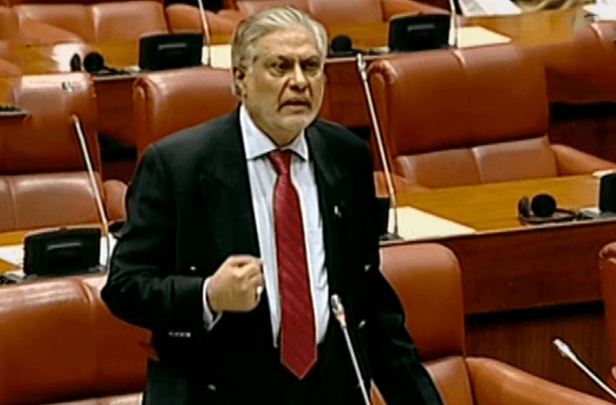
ISLAMABAD, DEC 17 /DNA/ – Deputy Prime Minister and Foreign Minister Senator Mohammad Ishaq Dar delivered a comprehensive statement at the 7th Ministerial Meeting of the Conference on Interaction and Confidence Building Measures in Asia (CICA), emphasizing the critical need for collective action and regional unity.

In his address, Senator Dar highlighted the strategic importance of Asia, home to over half the world’s population, and stressed the necessity of inclusive regional transformation. He called for strengthening political ties and ensuring economic growth reaches all segments of the continent.

Key points of Pakistan’s statement included:

Advocating for peaceful resolution of long-standing regional disputes, specifically highlighting the Palestinian and Jammu and Kashmir issues

Supporting regional connectivity initiatives like the Belt and Road Initiative (BRI) and China-Pakistan Economic Corridor (CPEC)

Emphasizing the role of dialogue, mutual respect, and adherence to international law in addressing regional challenges

Promoting people-to-people ties and cultural exchanges

“The challenges we face today demand collective action, shared responsibility, and unwavering commitment,” Senator Dar stated, expressing optimism about CICA’s potential to promote peace and prosperity in Asia.

Pakistan, a founding member of CICA, reaffirmed its commitment to the organization’s core principles of peaceful dispute settlement, respect for territorial integrity, and non-use of force.

The virtual ministerial meeting, hosted by Azerbaijan, brought together 28 member states to discuss strategies for enhancing regional cooperation, addressing economic disparities, and promoting sustainable development.

Deputy Prime Minister and Foreign Minister Senator Mohammad Ishaq Dar said that It is a great privilege to participate in the 7thMinisterial Meeting of the Conference on Interaction and Confidence Building Measures in Asia (CICA).

2.            On behalf of Pakistan, I extend warm greetings to Azerbaijan on assuming the CICA Chair. We are confident that under your leadership, the forum will continue to grow and explore new avenues of cooperation. I also thank Kazakhstan, the outgoing Chair, for its leadership in advancing CICA’s key objectives in recent years. My gratitude also goes to the Secretary-General and CICA Secretariat for organizing this important event.

3.            Asia is home to more than half of the world’s population and spans nearly a third of the earth’s landmass. As the global economic center of gravity shifts, it is essential that we seize this moment of opportunity to ensure inclusive regional transformation.

4.            Pakistan values CICA’s role in promoting cooperation and advancing peace, stability, and security in Asia. As we gather today, we are reminded of Asia’s vast potential and the challenges that hinder our shared goals.

5.            We must strengthen political ties, pool economic resources, and ensure growth benefits reach all corners of our continent. However, lasting progress cannot be achieved in isolation. Persistent challenges, including political disputes, conflicts, foreign occupations, and the denial of self-determination—along with poverty, illiteracy, and climate change—undermine our collective development.

6.            Sustainable peace and security can only be achieved by addressing the root causes of conflict. This requires inclusive political solutions based on dialogue, mutual respect, and adherence to international law. In this context, a just resolution of the Palestinian and Jammu and Kashmir issues, guaranteeing their right to self-determination, is key to fostering lasting peace and stability in the region.

7.            Regional frameworks like CICA play an indispensable role in advancing confidence-building, preventive diplomacy, and conflict resolution. Pakistan is a strong proponent of CICA’s core principles, particularly its commitment to the peaceful settlement of disputes, respect for territorial integrity, and the non-use of force. We call on all Member States to continue utilizing this platform for dialogue and cooperation.

8.            Pakistan fully supports CICA’s vision of advancing economic cooperation and regional connectivity. Investment in infrastructure, particularly transport and energy corridors, is crucial for integration and sustainable development. We are committed to enhancing connectivity through CICA and other regional frameworks. Initiatives like the Belt and Road Initiative (BRI), China-Pakistan Economic Corridor (CPEC), and the International North-South Transport Corridor (INSTC) highlight the transformative potential of such projects.

9.            It is important to view these initiatives not through narrow political lenses but as opportunities for shared growth. By strengthening collective connectivity, we can build an economically integrated and interconnected Asia for the benefit of all.

10.          Pakistan is equally committed to fostering people-to-people ties and promoting cultural exchanges under CICA’s framework. Mutual understanding and respect will lay the foundation for lasting cooperation, transcending borders and enriching our societies.

11.          Pakistan fully supports strengthening CICA’s institutions. Pakistan recently ratified the Convention on the Privileges and Immunities of the Secretariat and have established links between Pakistan’s key research institutions and CICA’s Think Tank Forum. These steps reflect our dedication to supporting CICA’s initiatives and promoting deeper regional cooperation.

12.          As a newly elected member of the UN Security Council for 2025-26, Pakistan looks forward to collaborating with UN Member States and regional organizations like CICA. We are committed to advancing the UN Charter’s vision—preventing conflicts, fostering prosperity, and promoting human rights. We also support greater cooperation between the UN Security Council and regional bodies to enhance global and regional peace efforts.

13.          The challenges we face today demand collective action, shared responsibility, and unwavering commitment. We are optimistic that, under Azerbaijan’s leadership and guided by our collective Asian Spirit, CICA will continue to grow stronger, making Asia a bastion of peace and prosperity.

ISSI, CSCCC host “Post-COP29 Dialogue on Analysis of Outcome and Strategy on Way Forward”

ISSI, CSCCC host “Post-COP29 Dialogue on Analysis of Outcome and Strategy on Way Forward”

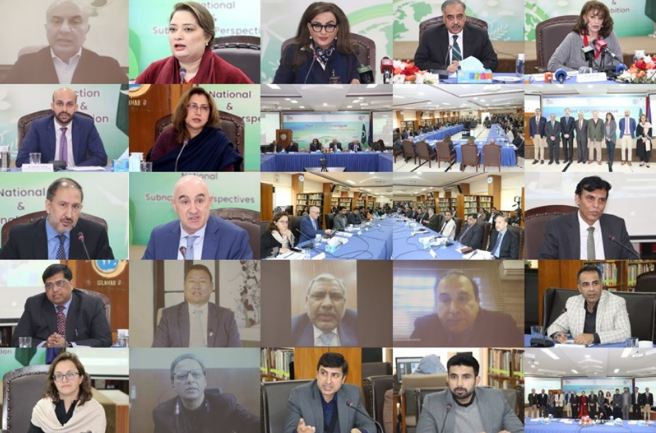
ISLAMABAD, DEC 17 /DNA/ – The Institute of Strategic Studies Islamabad (ISSI) along with the Civil Society Coalition for Climate Change (CSCCC) and Embassy of France organized a Dialogue titled “Post-COP29 Dialogue: Analysis of Outcome and Strategy on Way Forward.” The keynote speakers for the event included Senator Sherry Rehman, Chair of the Senate Standing Committee on Climate Change & Environmental Coordination, and Justice Mansoor Ali Shah of the Supreme Court of Pakistan. Other speakers in the opening sessions were Ms. Aisha, Moriani, Acting Secretary, MoCC & EC, and Mr. Zakaria Haffar, Cooperation and Culture Attaché, Embassy of France in Pakistan,  The thematic session featured prominent experts such as Syed Haider Shah, Additional Secretary (UN & OIC); Dr. Abid Suleri, Executive Director of the Sustainable Development Policy Institute (SDPI); Mr. Arif Goheer, Executive Director of the Global Climate-Change Impact Studies Centre (GCISC); Mr. Olivier Mahu, Global Practice Manager for Climate Finance Mobilization at the World Bank; and Dr. Pema Gyamisho Director General ICIMOD. At the subnational level, the speakers included Mr. Nadeem Ur Rehman, Secretary Climate Change & Environment, Balochistan; Mr. Mahmood Ghaznavi, Chief Conservator of Forests, Gilgit-Baltistan; Mr. Riaz Ahmed Wagan, Chief Conservator of Forests, Sindh Forest Department; Mr. Muhammad Shafique Abbasi, Director (HQ) AJK-EPA; and Mr. Muhammad Ibrahim, Deputy Project Director for the 10 Billion Tree Tsunami Project at the KP Climate Change Forestry, Environment & Wildlife Department. Additional contributions came from the Deputy Director of the Environmental Protection Agency (EPA), Punjab, and Ms. Pakiza Bukhari, Deputy Director (MEAs), Punjab.

Ambassador Sohail Mahmood, in his welcome remarks, described COP29 in Baku as a testament to the global community’s resolve to tackle the escalating climate crisis, emphasizing its importance for frontline nations like Pakistan, ranked among the top ten most climate-vulnerable countries. He highlighted the operationalization of the Loss and Damage Fund and the progress on Article 6 of the Paris Agreement as significant achievements. Stressing the centrality of climate finance, he pointed to the Baku Finance Goal’s $1.3 trillion target for developing countries by 2035, including a $300 billion annual commitment, while underscoring the need to address financing gaps, equitable disbursement, and private sector involvement. On energy, he welcomed the call to triple renewable energy capacity and double energy efficiency by 2030 but noted the lack of timelines for phasing out fossil fuel subsidies. Ambassador Mahmood emphasized Pakistan’s alignment of domestic policies with international commitments, citing the unveiling of Pakistan’s National Climate Finance Strategy (NCFS) as a key milestone. The NCFS identifies a $348 billion climate finance gap and proposes solutions such as green bonds and public-private partnerships to mobilize resources. He reaffirmed the importance of regional cooperation, particularly in water management and disaster preparedness, and underscored the private sector’s role in scaling up investments in renewable energy and green technologies.

Mr. Zakaria Haffar emphasized that climate action remains a top priority in France’s international cooperation agenda. He noted that since the Paris Agreement, France has maintained its commitment to the cause and contributed 7.2 billion Euros as of 2023. He underscored France’s steadfast efforts in advancing the agenda for gender equality and human rights within climate diplomacy and negotiations, both with the European Union and international partners. Furthermore, France has reiterated its support for an exit strategy from fossil fuels and remains a signatory to the EU-led initiative against the use of coal.

Ms. Aisha Moriani highlighted that COP serves as a crucial platform for Pakistan to engage with development and international partners on climate change issues while highlighting its policies and ongoing projects. However, she noted that significant uncertainties persist regarding transparency in climate finance. Addressing the importance of public-private partnerships, she emphasized the need to mobilize funds through the private sector and blended financing. At the same time, she underscored the critical role of public finance, particularly in the form of grants, for supporting adaptation efforts and assisting those most affected. Looking ahead to COP 30, Ms. Moriani stressed the importance of the findings from the Intergovernmental Panel on Climate Change (IPCC) report, which will be instrumental in charting a course correction trajectory for climate action.

In her keynote remarks, Senator Sherry Rehman emphasized that while collaboration with international bodies is essential, it is equally critical for Pakistan to build its capacity to address climate challenges at the national level. She underscored the need to revitalize the climate sector and take a proactive approach to achieving national climate goals through effective stocktaking. At the international level, Senator Rehman highlighted the importance of transitioning from reports to tangible action, recognizing where the world currently stands in its climate commitments. She further stressed that Pakistan must continue to voice its concerns and priorities at multilateral platforms such as the United Nations, as it successfully did for the Loss and Damage Fund, and take a leadership role in representing the Global South. She also stressed that global north-south financial transfers must accelerate, underlining the need for focusing on ‘Internationally Determined Contributions’ as well.

In his keynote address, Justice Mansoor Ali Shah discussed the judiciary’s perspective on climate justice, particularly about climate finance following COP29 in Baku. He highlighted that Pakistan’s constitution has been a pioneer in promoting environmental and climate justice within the country. While environmental justice tends to be more focused on domestic issues, climate justice is multi-sectoral, extending beyond national borders to address critical concerns such as health security, food security, human trafficking, and displacement. Justice Shah emphasized that climate justice is inherently more complex, with challenges rooted in the broader and more severe impacts of climate change. He stressed that this shift has introduced significant changes in jurisprudence, requiring a more sophisticated, multi-dimensional approach to address its wide-ranging effects across various sectors.

In the first thematic discussion, Syed Haider Shah highlighted the differing perceptions of climate vulnerability between developed and developing countries, often leading to national interests outweighing global objectives, and emphasized focusing on domestic strategies while using COP as a platform for negotiating frameworks. Mr. Olivier Mahu noted a $3 trillion annual gap in climate finance, with less than 20% reaching developing countries and private finance primarily targeting mitigation, stressing the role of organizations like the World Bank and Article 6 in mobilizing funds. Dr. Abid Suleri pointed to the shift in climate discussions from scientific debates to finance, urging countries to factor in global inflation and highlighting the role of geopolitics, particularly in light of U.S. elections, while suggesting Pakistan could fill potential leadership gaps. Mr. Arif Goheer emphasized Pakistan’s inclusive NDCs aligned with national climate policy, supported by committees focusing on adaptation, mitigation, and cross-sectoral efforts, displaying progress in solar energy, nature-based solutions, and projects like Recharge Pakistan. Dr. Pema Gyamisho underscored the critical importance of the Hindukush and Himalayan cryosphere for 2 billion people’s food, water, and energy security, calling for strengthened efforts to address the ongoing climate crisis.

In the second session on subnational discussion, Mr. Rehman stressed that for countries like Pakistan and areas like Balochistan, the challenge remains with adaptation while mitigation is important the major challenge remains adaptation and survival. Mr. Ghaznavi touched upon the increase in glacier melt in the northern regions of Pakistan which is harming the ecosystem of the region impacting not just human lives but the ecology. Mr. Wagan touched upon the support and interventions required by the federal government in the field of forestry and biodiversity. Mr. Abbasi in his remarks stated that COP 29 did not meet the expectations of many falling short of its commitment. Mr. Ibrahim touched upon the KPK government’s stance on the NDCs and greenhouse emissions at the provincial level, target allocation by the NDCs to the provinces on the greenhouse emissions at the level that is proportionate to the targets, and the basing of NDCs on real-time GDP. Mr. Noman in his remarks highlighted smog as the top major issue Punjab is facing while Lahore has been declared one of the most polluted cities for the past 3 years, hence, the majority of the policies and interventions in Punjab are focused on the improvement of air quality.

In her concluding keynote address, Ms. Romina Khurshid Alam emphasized the challenges faced by developing countries like Pakistan in advocating for their causes in international forums dominated by developed nations. She noted that Pakistan has remained resolute in its approach and trajectory at COP29, garnering significant recognition and praise for its efforts. Ms. Alam highlighted the establishment of a consortium at the Climate Vulnerable Forum (CVF) during COP 29, where vulnerable nations would unite to create a collective risk pool and develop strategies for managing climate finance. Pakistan played a key role in negotiations at COP 29, particularly regarding loans and grants for early warning systems to mitigate the impacts of natural disasters, in collaboration with like-minded countries. Ms. Alam pointed out that, in terms of mitigation, loans alone are not sufficient. There must be a focus on building capacity, providing adequate support, and addressing procedural delays to ensure effective action. She further stressed that developed countries must be held more accountable for their contributions to climate-related disasters, as they are major contributors to the crisis. Rather than following the dictates of developed nations, Ms. Alam argued, developing countries should take the lead in guiding the developed world on how to support them, raising their voices collectively to demand meaningful assistance. She also raised concerns about the actions of developed countries in fulfilling the pledges made during previous COPs, questioning whether they have followed through on commitments to support developing nations. Finally, Ms. Alam underscored the importance of exploring regional solutions to climate-related challenges, emphasizing the need for collaborative efforts that are tailored to the specific needs of different regions.

The Dialogue concluded with the presentation of ISSI’s memento to the esteemed keynote speaker by Chairman BoG ISSI Ambassador Khalid Mahmood.

ICLAPA opens registration for cleft lip, palate patients to get free check-up

ICLAPA opens registration for cleft lip, palate patients to get free check-up

                ISLAMABAD, Dec 17 (APP/DNA): Islamabad Cleft Lip and Palate Association (ICLAPA) has started registration for free checkups and necessary surgeries for cleft lip and cleft palate.

Specialized team of senior doctors will check the patients in Islamabad on 17th January 2025 (Friday) from 2:30 p.m. onward, said a press release issued on Tuesday.

The patients will be given the exact date and time of the surgery when their examination (OPD) takes place on Friday 17th January 2025. The surgeries, treatment, medicines, hospitalization, stay and food will be provided free to the patients.

Children with cleft lip and cleft palate will be operated upon, by a team of distinguished team of doctors and para-medical staff members who have been performing this task over several years.

Previously, the children were operated upon with 100 per cent success, and completely cured. Their entire lives have changed since then.

The patients who previously had difficulty speaking are now living normal lives. They are usually discharged about two days after surgery and stitch removal.

The ICLAPA operates as a registered charitable institution and is funded by purely private donations and contributions from ‘zakat’ and mainly from its own members.

The ICLAPA has also invited volunteers of all age groups, especially doctors, medical and other students, from all cities, to assist in its charitable work.

For more information and to schedule appointments, the organization can be contacted at 03005192490 and 03335157676.

Madrassa bill: Decision to be made on streets if demands not met, Fazl warns govt

Madrassa bill: Decision to be made on streets if demands not met

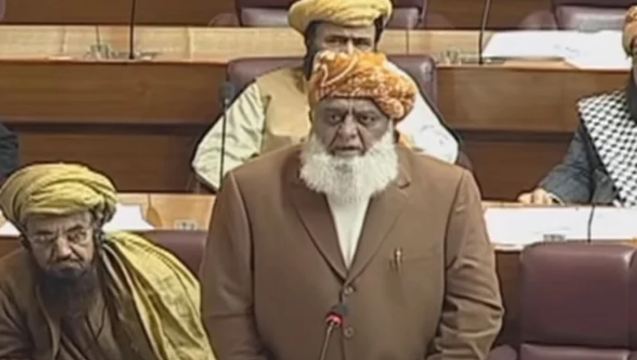
ISLAMABAD, DEC 17: Jamiat Ulema-e-Islam-Fazl (JUI-F) chief Maulana Fazlur Rehman on Tuesday threatened to launch a protest drive if the government further delayed the matter and refused to notify Societies Registration (Amendment) Act 2024 passed by both houses of parliament.

Addressing the National Assembly session, Fazl said legislation on the bill regarding madaris was made after the government expressed satisfaction on it. Whereas, the matter of registration of madaris in the Ministry of Education was part of an agreement, not an act, he added.

“As per the agreement, the government would cooperate in the registration of new madaris. There was an agreement that registration of those madaris that have been registered will be maintained.

“The agreement mentioned bank accounts of madaris will be opened and 3-year visas will be issued for foreign students of madaris,” however, he said, neither bank accounts were opened nor visas were issued for students. Hence, he said, that agreement was broken by the government.

Then they talked about the education ministry and President Asif Ali Zardari raised an objection in the bill on October 28, which was corrected by the NA speaker terming it a human error, before sending it back to the President House.

“Which meant the bill was received by the President’s House on October 28,” he added.

Play Video
Maulana Fazl emphasised the president had the right to raise objection once but not the second time. If the president did not sign the bill, then it became an act after 10 days, he maintained.

He also apprised the legislators that there was no mention of registration with the education ministry in the bill that was passed in the 26th Constitutional Amendment.

The JUI-F chief said madaris were earlier registered under the Societies Act of 1860.

He reiterated that the President House’s raising objection for a second time was unwarranted.

The speaker in an interview said, the JUI-F supremo apprised the House, the bill had become a law as per the books. The speaker cited an example from former president Arif Alvi’s tenure when a bill became law despite the then president’s not signing it, he noted.

In his remarks on the bill’s making an act will allegedly draw the anger of foreign powers, he said not a single parliamentarian was kept unaware regarding progress on the bill.

“Now they say that this will infuriate the FATF and others. If we are not free [nation] then let us know,” he said, adding that the cat was out of the bag that our legislations were made on “their” instructions.

“Are our legislations being made on other countries’ whims and desires? We are trying not to move towards bitterness. The religious seminaries have established in the last 24 years that they are with the law and constitution as well as the government,” he said.

Fazl said he was not against the modern education, noting the madaris students even achieved first, second and third positions in conventional educational institutes.

The politico said the Ittehad Tanzimat Madaris Deenia (ITMD) had given its stance that the bill had become an act. However, he said, the question was that why a gazette notification was not issued for it.

He also expressed anger over creating division among the religious scholars, saying the attempt would fail and they would not fight among themselves.

Reacting to Fazl’s remarks, Law Minister Azam Nazeer Tarar said the bill was definitely passed by both houses with the 26th Constitutional Amendment.

Nevertheless, as per the Constitution’s Article 50, he said, the president was a part of the parliament and no legislation could be completed without his signature.

“As per Article 75, the president either approves the bill within 10 days or returns it to the parliament. When the president returns the bill, then it is presented before a joint parliamentary session, as per the Constitution. Then, the bill is passed in the joint session, with or without amendments,” he said.

Fazl replied that the president did not raise any objection when the speaker said there was no need to convene a joint session of the parliament. “When he [the president] did not object to it then the discussion ended.”

“The speaker said the mistake had been corrected. You should let this become a law, after that we will discuss other things. Consider things separately and do not mix them,” he said.

The JUI-F chief also said not accepting the curriculum of religious schools was the mentality of bureaucracy and establishment. The real religious seminaries should not be destroyed for the khalai ones, he added.

Innovation and Security in the Era of Uncertainty

Innovation and Security in the Era of Uncertainty

Dr. Muhammad Akram Zaheer

The advent of new technologies has significantly heightened the risks posed by adversarial states and revisionist actors, thereby expanding the spectrum of potential threats to national security. Information and communication technologies, for example, not only augment military capabilities but also serve as potent instruments for propaganda and disinformation campaigns. Furthermore, advancements in the biosciences, while offering lifesaving interventions on the battlefield, simultaneously elevate the risks associated with biological warfare. The mysterious nature of unidentified aerial phenomena further underscores the possibility of sophisticated technologies that remain beyond the understanding of even the highest levels of U.S. officials. As Senator Marco Rubio of Florida recently emphasized, Anything that enters an airspace that’s not supposed to be there is a threat. The entrenched political dynamics in Washington exacerbate these security challenges, with the Pentagon, benefiting from a considerably larger budget than the State Department, finding it easier to secure funding for security initiatives over diplomatic efforts. In an era of constrained budgets, policy entrepreneurs frequently frame their concerns as national security issues to access resources from the Department of Defense, a process widely recognized in international relations as securitization.

At the turn of the century, U.S. officials classified HIV/AIDS as a national security threat, arguing that the disease undermined economies and threatened the stability of governments in Africa. Although this rationale may have been overstated, it succeeded in channeling substantial resources to combat the epidemic, notably through the President’s Emergency Plan for AIDS Relief, which has been credited with saving millions of lives in Africa since its inception during the George W. Bush administration. Economic and technological concerns often garner bipartisan support in national security debates. Since the Soviet Union’s launch of the Sputnik program in 1957, U.S. policymakers have been preoccupied with the fear of losing technological supremacy to other great powers. Initially, this concern centered on Moscow, shifted to Japan during the 1980s and 1990s and more recently, has focused on China. This apprehension has driven policymakers to prioritize technologies considered critical to maintaining economic dominance. In recent years, the spotlight has been on semiconductors and for the foreseeable future, artificial intelligence is expected to dominate national security discussions. These trends contribute to an ever-expanding list of national security priorities. As more issues are added to this agenda, it becomes increasingly difficult for policymakers to prioritize the most pressing threats.

During the Cold War, U.S. officials were able to assess global issues through a simplified lens, allowing them to distinguish the most significant foreign policy concerns. However, the recent tendency of administrations to declare a wide range of issues as national security concerns has the potential to obscure the most critical dangers. One approach to refining and clarifying national security doctrine lies in the shifting balance of power between the two major political parties. During the Cold War, presidential candidates often emphasized missile gaps or windows of vulnerability as central national security concerns. Republicans have traditionally highlighted threats from malevolent actors, while Democrats have focused more on diffuse threats such as climate change and pandemics. These differences often lead to conflicting views on key national security issues. For instance, conservatives tend to downplay the threat of climate change, whereas progressives argue that failing to address it poses a significant risk. Similarly, House Republicans contend that reducing U.S. production of coal, oil and natural gas undermines national security, while progressives warn that ignoring climate change is the greater danger. A shift in political power would likely lead to a corresponding change in Washington’s national security priorities. However, in practice, even with a new administration, the list of national security concerns tends to expand rather than contract. For example, the 2002 National Security Strategy under the George W. Bush administration went beyond the Clinton administration by identifying poverty, pandemic diseases, biological and genetic threats and environmental degradation as significant national security concerns. While the Bush administration’s strategy prominently addressed terrorism and weapons of mass destruction, it also retained many of the Clinton administration’s priorities. More recently, the Trump administrations focus on great-power competition, as articulated in the 2017 National Security Strategy, might have been viewed as an anomaly. However, the Biden administration’s 2022 strategy continued to prioritize competition with China and Russia, explicitly stating that the People’s Republic of China harbors the intention and, increasingly, the capacity to reshape the international order in favor of one that tilts the global playing field to its benefit.

Political prudence often prevents administrations from downplaying their predecessors’ national security concerns. Exaggerated threats can be justified as precautionary measures, while underestimating potential threats can lead to severe consequences if they escalate into crises. For example, the Trump administration’s inadequate response to the COVID-19 pandemic was partly due to its disbanding of the National Security Council’s Directorate for Global Health, Security and Biodefense in 2018, a decision that reflected a different perception of pandemic threats compared to many experts. Additionally, bureaucratic politics play a significant role in maintaining national security priorities. Issues that have been categorized as national security concerns continue to receive funding and bureaucracies are resistant to downgrading these priorities as it would impact their core missions and expertise. The perspectives of elites on future geopolitical developments can influence their willingness to downplay threats. When optimistic about the future, elites may propose long-term solutions to mitigate threats, as seen in the 1990s with the belief that the liberal international order would integrate Russia and China into a more U.S.-aligned framework. Conversely, when pessimistic, any potential threat is amplified, leading to an all-encompassing focus on national security. Given the current geopolitical climate, characterized by increased conflicts, rising protectionism and democratic recessions, it is impractical to expect a reduction in the list of national security priorities.

Several factors have contributed to the proliferation of new issues within the realm of national security. The continuous addition of threats has diluted the concept of national security, as evidenced by recent iterations of the National Security Strategy. This document often functions merely as a procedural formality for executive branch agencies, thereby limiting its utility in shaping foreign policy. This shortcoming has been evident in recent years, with successive administrations neglecting issues outlined in their respective National Security Strategies. For instance, officials from the Trump administration downplayed the threat of pandemics, while those from the Biden administration claimed that the Middle East was stable. Despite these criticisms, the national security issues identified in these annual reports are generally legitimate. Russia and China, as rival great powers, fundamentally diverge in their values from those of the United States. The past decade has clearly demonstrated how pandemics and climate change can severely affect American life. Emerging technologies, such as artificial intelligence, may also present critical threats to national security in the near future. However, if national security challenges cannot be easily downgraded or eliminated, they should at least be better organized. Even novices in foreign policy understand that national security concerns can be classified by country (e.g., Iran, North Korea) and by theme (e.g., nonproliferation, cybersecurity).

To better manage the ever-expanding list of issues, there are at least two strategies for improvement. First, U.S. officials should categorize national security issues by their timescale and urgency. Some issues, such as terrorism and Russian revanchism, present immediate and pressing risks. Others, like artificial intelligence and China’s rising power, are concerns of medium-term significance. Still, other issues, such as climate change, pose current challenges but will have their most profound impacts in the long term. By explicitly outlining the anticipated timing of specific threats, the government can more effectively allocate resources. This approach does not imply that urgent concerns should overshadow important but longer-term threats. Instead, it advocates for a reasoned basis for reallocating resources away from less immediate threats. Prioritizing urgency would also enable successive administrations to clearly define which initiatives they plan to pursue during their tenure. Another approach to clarifying the relative importance of national security threats is to determine whether an issue requires proactive measures, defensive responses, or a combination of both. New viruses with pandemic potential cannot be addressed until they emerge and are challenging to contain once they do, necessitating a preventive stance. Public health officials must be prepared for contact tracing and testing, while scientists should focus on developing tests and vaccines. Conversely, attempting to eradicate diseases that have already transitioned from animals to humans is often impractical and resource-intensive. Countering terrorist cells might necessitate offensive measures, such as covert operations or special forces interventions. Managing China’s growing economic and military power requires a balanced mix of offensive and defensive strategies to safeguard U.S. interests without unnecessarily escalating tensions to the point of armed conflict.

The government might consider implementing an annual scorecard to rank national security concerns according to their current significance. This method would allow policymakers to highlight the areas of national security they perceive as most pressing at present, while also providing the public with insights into how various threats have been evaluated over time. Additionally, scorecards would enable administrations to deprioritize certain threats without disregarding them entirely. This mechanism would compel U.S. officials to indicate which issues are comparatively less critical, even if the specific rankings are contentious. Such an approach would enhance focus in national security debates and assist in identifying threats that may be undervalued. The challenge of calibrating national security priorities has long been a difficulty for U.S. officials. In January 1950, Secretary of State Dean Acheson delivered a speech to the National Press Club in which he delineated the regions considered within the U.S. defense perimeter, notably excluding the Korean Peninsula. However, when North Korea invaded South Korea less than six months later, the Truman administration responded by deploying 300,000 troops, indicating that Korea was not a U.S. national security priority until it became one. Over the past 70 years, the concept of national security has expanded nearly beyond recognition. Advances in technology have multiplied the avenues through which external threats can impact the United States. Moreover, as security issues necessitate larger staffs and budgets, policy entrepreneurs are incentivized to present their interests as national.

Pakistan Navy ATR participates in exercise Mavi Balina- 2024 at Dalaman

Pakistan Navy ATR participates in exercise Mavi Balina- 2024 at Dalaman

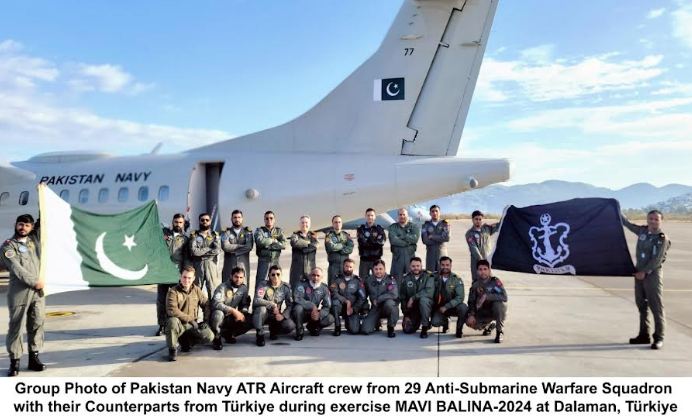
ISLAMABAD, DEC 17 /DNA/ -Pakistan Navy ATR Aircraft from the 29 Anti-Submarine Warfare Squadron participated in Exercise MAVI BALINA-2024 at Dalaman, Türkiye.

Exercise MAVI BALINA-2024 is a Turkish-led multinational Anti-Submarine Warfare (ASW) exercise, involving over 30 platforms, including ships, submarines, aircraft, and UAVs. The exercise was conducted in the Eastern Mediterranean and aimed at practicing submarine operations and ASW procedures. Naval and air force assets from Türkiye, NATO, the USA, Pakistan, Greece, and Special Operations Forces (SOF) teams from Türkiye and Azerbaijan participated in this multilateral exercise.

Pakistan Navy is a regular participant in Exercise MAVI BALINA. The interaction between Pakistan and other participating navies during the Harbour Phase included mutual visits, tabletop discussions, and planning sessions. The extensive Sea Phase culminated in detailed analysis sessions.

Pakistan Navy’s active participation in Exercise MAVI BALINA-2024 underscores its unwavering commitment to fostering relations between the two brotherly countries, Pakistan and Türkiye, and strengthening bonds with leading navies. These collaborative engagements enhance interoperability, provide mutual training opportunities, and contribute to resilience in safeguarding shared interests and promoting peace across the region.

Senior Russian military officer killed in Moscow terrorist attack

Pakistan: A Pivotal Bridge Aligning Economic Interests Between China and the Middle East

MOSCOW, DEC 17 /DNA/ – A terrorist attack in Moscow has claimed the life of Lieutenant General Igor Kirillov, a high-ranking official in the Russian Armed Forces, along with his driver.

Lieutenant General Kirillov, who served as the head of the radiation, chemical, and biological protection troops, was killed in a targeted explosion. The incident marks a significant loss for the Russian military’s specialized defense capabilities.

The attack occurred in Moscow, resulting in the immediate deaths of General Kirillov and his driver. Preliminary information suggests this was a deliberate and strategic terrorist action targeting a key military leader responsible for critical defense infrastructure.

General Kirillov was a senior military official with extensive expertise in nuclear, biological, and chemical protection, playing a crucial role in the Russian Armed Forces’ strategic defense mechanisms.

Authorities have launched a full investigation into the circumstances surrounding the terrorist attack. No immediate claims of responsibility have been reported.

This incident underscores the ongoing security challenges faced by military personnel and the persistent threat of terrorism.

Ambassador Jemal presents his credentials to President of Kyrgyz Republic

Ambassador Jemal presents his credentials to President of Kyrgyz Republic

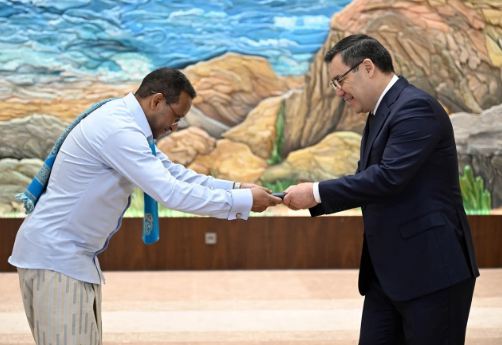
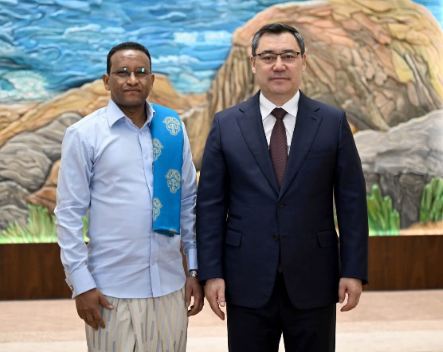
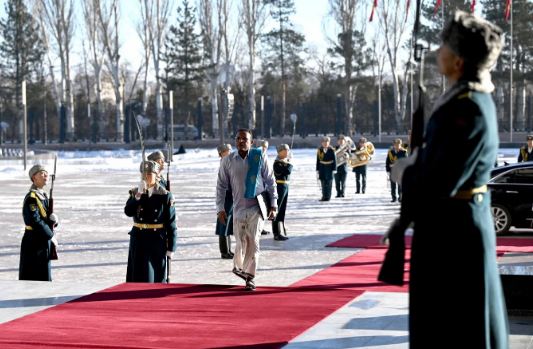
BISHKEK, DEC 17 /DNA/ -Jemal Beker Abdula, Ambassador Extraordinary and Plenipotentiary of the Federal Democratic Republic of Ethiopia (FDRE) Designated to Kyrgyzstan with residence in Islamabad formally presented his credentials to H.E. Sadyr Zhaparov, President of the Kyrgyz Republic, on 17th December, 2024.

Ambassador Dr. Jemal Beker, who is currently in Bishkek on a working visit, presented his credentials to the President during a ceremony held at the President House.

Last week, the Ambassador also presented his credentials to the Speaker of the Parliament of Turkmenistan. With residence in Islamabad, Ambassador Dr. Jemal Beker is a Non-Resident Ambassador of Ethiopia to the Kyrgyz Republic, Turkmenistan and Tajikistan.      

During the credentials’ submission today, Ambassador Dr. Jemal conveyed heartfelt greetings of H.E. Taye Atske Selassie, President of the FDR Ethiopia, to the President and people of the Kyrgyz Republic as well as his good wishes for prosperity and development of Kyrgyzstan.

In his remarks, Ambassador Dr. Jemal highlighted the significant reforms undertaken by the FDR Ethiopia in political, economic, social, and foreign policy spheres which have not only enhanced global outreach of Addis Ababa, but also helped achieve economic progress through green development.

He underscored Ethiopia’s commitment to addressing contemporary regional and international challenges and articulately explained Ethiopia’s role as a leading nation in African development, peacebuilding, and fostering economic, political, and social cooperation across the continent.

He specifically highlighted the Grand Ethiopian Renaissance Dam which was constructed on the basis of the principle of equitable and reasonable utilization of resources, and also with the spirit of pan-Africanism.

On top of that, the Ambassador said H.E. Dr. Abiy Ahmed, Prime Minister of Ethiopia, launched the Green Legacy Initiative to address climate change issues through the initiatives of afforestation, environmental restoration and food security.

He affirmed the commitment of the Government of the FDR Ethiopia to strengthen its bilateral relations with the Kyrgyz Republic by enhancing cooperation in diverse areas such as trade, investment, aviation, education and health.

On the other hand, H.E. Sadyr Zhaparov, President of the Kyrgyz Republic, appreciated the comprehensive reforms undertaken by Ethiopia, and commended Prime Minister H.E. Dr. Abiy Ahmed for addressing the climate issues through a multi-dimensional initiative like the Green Legacy.

He also appreciated the initiatives taken by H.E. Dr. Abiy Ahmed for promoting sustainable development of mountain ecosystem.

Such efforts should be supported and implemented globally, particularly in the countries directly affected by the climate change, the President remarked.

The President reiterated his Government’s desire to strengthen bilateral relations with Ethiopia.

He said the Kyrgyz Republic looks forward to a robust friendship and partnership with the FDR Ethiopia, and assured the Ambassador of his full support in this regard.

US ambassador launches Lincoln Corner at Quaid-e-Azam library in Lahore

US ambassador launches Lincoln Corner at Quaid-e-Azam library in Lahore

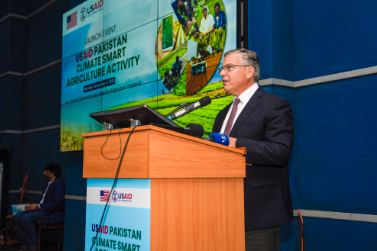
LAHORE, DEC 17 /DNA/ – U.S. Ambassador Donald Blome today officially opened the Lincoln Corner at the historic Quaid-e-Azam Library, marking a significant milestone in U.S.-Pakistan cultural diplomacy and educational cooperation.

Located in the iconic Bagh-e-Jinnah, the new Lincoln Corner represents a strategic initiative to foster understanding and mutual respect between the people of the United States and Pakistan. The library, a center of knowledge and culture in the heart of Lahore, will now offer enhanced resources for Pakistan’s youth.

“As we stand in this historic space, we embark on a new chapter of collaboration and cultural exchange,” Ambassador Blome stated during the inauguration ceremony. “Our two countries have enjoyed more than 75 years of cooperation, and this Lincoln Corner signifies our continued commitment to building bridges between our nations.”

The Lincoln Corner is designed to provide Pakistani students, researchers, and community members with access to educational materials, cultural resources, and opportunities for intellectual engagement. It stands as a testament to the United States’ investment in Pakistan’s bright and talented youth.

This initiative is part of the U.S. Embassy’s ongoing efforts to strengthen people-to-people connections and promote mutual understanding between the United States and Pakistan.

This Lincoln Corner will serve as a vibrant hub offering a range of programs and resources for visitors.  This new facility will provide opportunities and resources for young Pakistanis to learn new skills and open their eyes to new possibilities – including hands-on opportunities to explore 3D technology, access to more than 40,000 academic journals through our research databases, opportunities to practice their English skills, and have the latest information about study-abroad and exchange program opportunities in the United States.

This is also a free, welcoming space for Pakistanis and Americans to come together to increase mutual understanding.  Lincoln Corners not only connect Pakistanis and Americans through technology, cultural programs, and special events, but also by championing the healthy exchange of ideas, debate, and volunteerism.

Programs at Lincoln Corners range from entrepreneurship to education for girls to creative use of technology, and they all aim to inspire future leaders, bridge cultural divides, and empower individuals to become active participants in their communities, the democratic process, and the global landscape.

We are so grateful for our strong partnership with the Quaid-e-Azam Library and the Punjab Public Libraries Department to bring this Lincoln Corner from an idea to reality.  Their active collaboration in this project has been vital.

We look forward to collaborating with the entire team here to make this Lincoln Corner a success. Thank you, once again, for your presence and support.

KP Govt hosts road-show to showcase energy sector projects

KP Govt hosts road-show to showcase energy sector projects

                PESHAWAR, DEC 17 (APP/DNA): The Khyber Pakhtunkhwa (KP) Government in collaboration with the Sustainable Energy and Economic Development (SEED) programme, hosted a dynamic investment road-show in Islamabad, the other day, said an official press release issued here on Tuesday.

The event was part of the series of similar road-shows recently organized in Karachi and Lahore.

The event saw an impressive turnout, with active participation from women and robust representation from the federal capital’s business and multilateral community, further solidifying the KP’s growing appeal as an investment hub.

In the road-show, the provincial government showcased the KP’s diverse energy projects and investment opportunities, with a particular emphasis on the ability to provide affordable, green and efficient energy solutions tailored to meet the business community’s needs.

The participants also explored the KP’s economic zones, which offer competitively priced industrial plots and significantly lower electricity tariffs compared to other regions in the country.

Speaking at the occasion, the Advisor to KP Government on Finance, Muzzamil Aslam thanked the SEED for organizing the road-show and facilitating meaningful engagement between the business community and the province.

He underscored the global momentum toward green energy and climate finance, citing his recent discussions in the United States and at COP29 in Azerbaijan.

The advisor highlighted that institutions such as the World Bank are extending the repayment terms for climate finance loans to 50 years, signaling a strong global commitment to sustainable development.

He also emphasized Islamabad’s strategic importance as a hub for multilateral institutions, creating an environment conducive to collaboration, innovation, and sustainable growth in KP.

During his address, the Advisor on Energy and Power, Tariq Saddozai highlighted the critical importance of the energy sector for Pakistan’s economic growth, while outlining its challenges.

He stated, “Pakistan’s electricity sector is vital for its economic growth but faces significant challenges such as circular debt, poor performance of DISCOs, inefficiencies in generation sector and most of all NTDC’s failure to extricate the available power from the power stations to the end consumers.

The country’s power generation capacity is around 42,000 MW, generating 90-95 billion kWh annually. However, reliance on imported fuels, contributing 45-50 percent of electricity, places immense pressure on foreign exchange reserves and exposes the economy to volatile global fuel prices.

He said that renewable energy offers a viable solution to address these challenges, saying KP is strategically positioned to lead this transition, holding over 40 percent of Pakistan’s hydropower potential, estimated at 60,000 MW. Through innovative projects and focused initiatives, KP is making strides in hydropower, solar, and wind energy development to ensure sustainable energy solutions for the country.”

The event featured a detailed overview of the Pakhtunkhwa Energy Development Organization (PEDO)’s contributions to KP’s energy landscape. PEDO has completed 172 MW of hydropower projects and is advancing another 226 MW currently under development.

Major initiatives include the 300 MW Balakot Hydropower Project (supported by the Asian Development Bank), the 88 MW Gabral Kalam, and the 215 MW Madyan projects, both funded by the World Bank.

Collectively, these projects represent over PKR 321 billion in investment, underscoring the province’s commitment to sustainable energy and economic growth.

Hassan Masood, Vice Chairman of the KP Board of Investment and Trade (KPBOIT), further elaborated, “KP is not only a reservoir of renewable energy but also a province offering unmatched opportunities for investors. Our economic zones provide competitively priced industrial plots and significantly lower electricity tariffs compared to other regions, making KP a highly attractive destination for industries looking to expand.”

Niaz Akbar, Investment Lead at SEED, emphasized, “Khyber Pakhtunkhwa has immense investment potential and innumerable opportunities.

“The present government’s vision is to transform KP by leveraging its comparative advantage in key sectors like hydro energy. By presenting this potential to investors and development partners, we aim to forge mutually beneficial partnerships for economic growth and the betterment of the people, the province, and Pakistan as a whole.”

The road-show concluded with a vibrant Q&A session, where potential investors actively engaged with government and technical experts to explore KP’s business opportunities.

 The keen interest and enthusiastic participation of the participants, especially women and other diverse stakeholders has reaffirmed KP’s position as a promising destination for sustainable investment and inclusive economic development.

Stay Connected

64FansLike
60FollowersFollow

Latest Reviews

Exchange Rates

USD - United States Dollar
EUR
1.18
GBP
1.36
AUD
0.73
CAD
0.73