Home Blog Page 725

Ambassador Hashmi praises China’s new vocational education

Ambassador Hashmi praises China’s new vocational education

ISLAMABAD, DEC 23 (DNA) — Pakistan’s Ambassador to China Khalil Hashmi praised China’s introduction of new vocational majors in high-tech fields like artificial intelligence, robotics, and clean energy as a model for Pakistan’s technical education reforms. 

He was addressing China-Pakistan Technical and Vocational Education and Training (TVET) Forum 2024 that was held here at Pakistan’s Embassy, according to a report carried by China Economic Net.

He called for greater collaboration between academia and industry to align educational programs with market demands, ensuring a future-ready workforce capable of thriving in evolving industries.

The Forum 2024 was aimed at bringing together policymakers, educators, and industry leaders from both nations to discuss strategies for strengthening cooperation in skill development.  The event, a significant milestone in bilateral relations, focused on advancing technical and vocational training under the China-Pakistan Economic Corridor (CPEC) framework.

Ambassador Hashmi highlighted that only 25% of Pakistan’s workforce currently has access to formal technical training, despite over 64% of the population being under 30.  He stressed that bridging this gap is essential to empowering the nation’s youth and driving socio-economic development, particularly as Pakistan advances into the industrialization phase of CPEC.

Ahsan Iqbal, Minister Planning & Department & Special Initiatives proposed to establish a consortium of technical and vocational institutions to foster collaboration, exchange knowledge, and create a unified framework for skills development.

He also seeks to set up specialized TVET institutes in the fourth priority special department to provide tailored, high-quality training for industries operating in the Special Economic Zones, act as catalysts for industrial growth, and enhance local workforce employability.

Jia Peng, Deputy Director General Department of International Cooperation and Exchanges, Ministry of Education China said the Chinese government attaches great importance to vocational education, actively promotes the construction and reform of vocational education system, strengthens international cooperation in vocational education.

Xu Yan, Deputy Director General CPAFFC said at present, China and Pakistan have established 19 pairs of friendly provincial and city relations, ranking first among South Asian countries in terms of quantity. “For instance, Henan Medical and Health Technician College has participated in discussions on developing curriculum standards and digital courses for Pakistan’s national vocational education program in elderly care. 

It has also taken part in the development of curriculum standards and teaching resources for specialized training programs for elderly care capability assessors.  Similarly, Chongqing Vocational Skill Appraisal Center has been involved in the development of competition test questions for vocational standards in Pakistan,” he added. —DNA

PODA launches 41-district project to reduce early marriages in Punjab

PODA launches 41-district project to reduce early marriages in Punjab

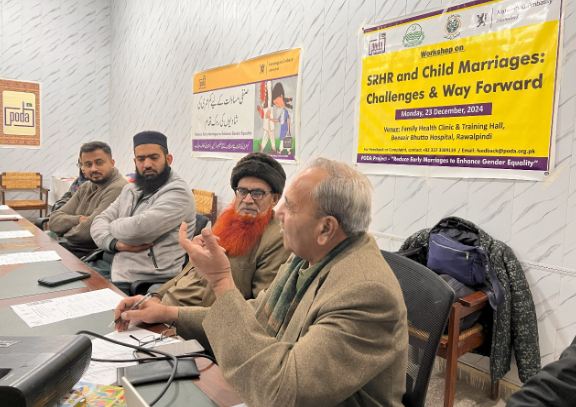
RAWALPINDI, DEC 23 /DNA/ – The participants at the “SRHR and Child Marriages: Challenges and Way Forward” workshop have unanimously endorsed a resolution calling for the minimum age of marriage for girls to be linked to their national identity card across Pakistan.

The resolution to leverage technology and national identity cards to prevent child marriages was supported by a diverse group of stakeholders, including health professionals, religious scholars, lawyers, academicians, media persons, and government officials from various departments including education, health, population welfare, women development and local government.

The resolution’s push for NADRA to register all marriages online is a significant step towards enforcing the minimum age of marriage for girls in Pakistan. By leveraging technology and national identity cards, the resolution aims to prevent underage marriages and ensure that girls are socially, mentally, and physically equipped to bear the responsibilities of marriage.

This collective effort emerged from a workshop jointly organized by PODA and the District Population Welfare Office, Rawalpindi, which brought together stakeholders to discuss the challenges and future directions in addressing child marriages.

The workshop was held at Family Health Clinic and Training Hall at Benazir Bhutto Hospital. PODA is implementing a 3-year project “Reduce Early Marriages to Enhance Gender Equality” in 41 districts of Punjab, supported by the Norwegian Embassy, Islamabad. The workshop was held at Family Health Clinic and Training Hall at Benazir Bhutto Hospital.

Advocate Khawaja Zahid Nasim, Legal Advisor to PODA and Chairperson of the Naheeda Mehboob Elahi Foundation, emphasized the need to uniformly define a minor as someone under 18 years of age across all laws. He pointed out a discrepancy in the Child Marriage Restraint Act 2015-Punjab, which sets the minimum marriage age for girls at 16, yet defines a “minor” as any child under 18 years old. A unified definition for all children, regardless of gender, is essential for protecting their rights, he added.

Nabeela Aslam, Project Manager at PODA, quoted the United Nations Convention on the Rights of the Child, which defines a child as any person under 18 years old. She emphasized that this definition ensures equal protection and rights for all children, regardless of gender, until they reach adulthood. She stressed that adopting a unified definition is crucial for promoting the well-being and safety of all children.

Azhar Mehmood, Deputy Director of the Population Welfare Office, emphasized the need for a mindset shift to consider underage marriage a socially unacceptable phenomenon. He praised the Punjab Chief Minister’s efforts and highlighted the importance of linking the minimum marriageable age of girls to their national identity card. He noted that while the law in Punjab sets the marriageable age at 16 for girls, it is not being implemented effectively. He also stressed that despite good literacy rates among girls, there is a need to change people’s perspectives on early marriages and associated health problems.

Dr. Asima Tariq, In-charge Family Health Clinic at Benazir Bhutto Hospital, Rawalpindi, Dr, Ayesha Zulfiqar and Dr. Mariam Ali highlighted the severe implications of child marriages on girls below 18 years of age. They emphasized that early marriage often leads to multiple abortions, which puts immense pressure on healthcare facilities, particularly in resource-constrained environments.

The experts stressed that delaying marriage until girls are at least 18 years old is crucial to prevent these health risks and ensure better outcomes for young women.

Dr. Samina Batool advocated for incorporating information on child marriages and their health consequences into the educational curriculum. She also emphasized the need to raise awareness about this critical issue in rural communities.

Maulana Hafiz Muhammad Iqbal Rizvi emphasized the importance of engaging with religious scholars to address child marriages. He suggested utilizing their influence to change public perception and promote girls’ education, ultimately upholding their fundamental rights, just as it was effectively done in the instances of polio vaccination campaigns.

Senator Mushahid Hussain exposes India’s global propaganda networks

Senator Mushahid Hussain exposes India's global propaganda networks

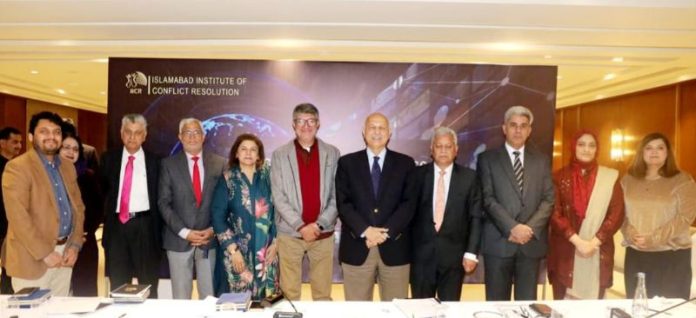
ISLAMABAD, DEC 23 /DNA/ – The Islamabad Institute of Conflict Resolution (IICR) convened an insightful seminar titled *“Decoding Media Influence: Global Perspectives on Information Perception and Society”. The event Seminar together prominent experts from academia, media, and public policy to discuss the profound impact of media on shaping societal and political landscapes in an increasingly interconnected world. 

Moderated by Dr. Shabana Fayyaz, Associate Professor at Quaid-e-Azam University, the seminar featured a distinguished panel, including Ex. Senator Mushahid Hussain Syed, Dr. Nazir Hussain, Air Marshal (Ret.) Farhat Hussain, Ex. Information minister Murtaza Solangi, media expert Dr. Furqan Rao, and investigative journalist Fakhar Kakakhel. 

In her opening remarks, Ms. Sabah Aslam, Executive Director and Founder of IICR, emphasized the critical relationship between media, public perception, and societal outcomes. She underscored the importance of fostering media literacy, promoting critical thinking, and encouraging responsible media consumption, particularly among youth. The seminar sought to examine media’s role in shaping narratives, countering misinformation, and fostering cross-cultural understanding. 

Senator Mushahid Hussain Syed highlighted the EU Disinfo lab role in exposing India’s global propaganda campaigns, citing examples like the activities of ANI and the Srivastava Group.He noted the transformative power of Western media in shaping historical and contemporary events, from the 1953 Iranian coup to the Iraq War. Reflecting on the shifting dynamics of media during the 2024 U.S. elections, Senator Hussain called for a coordinated media strategy in Pakistan to address emerging challenges. 

Murtaza Solangi, a seasoned journalist and ex federal minister, delved into the essence of journalism, advocating for the public’s right to know. He identified corporate influence, market forces, and non-state actors as significant challenges to media independence. He emphasized the global epidemic of misinformation, stressing the importance of digital literacy to combat fake news and prevent the suppression of voices through censorship. 

Fakhar Kakakhel, an investigative journalist, pointed to the proliferation of “keyboard warriors” and the Western-backed spread of misinformation, linking these issues to efforts to undermine Pakistan’s progress, particularly regarding the China-Pakistan Economic Corridor (CPEC). He called for better mechanisms to address the digital chaos resulting from censorship and misinformation. 

Dr. Furqan Rao, a media expert, warned against the dangers of political hate speech, which he said exacerbates social and cultural divisions. He advocated for a multidisciplinary approach to address media-related challenges and highlighted the need for widespread media information literacy to create an informed populace. 

In his keynote address, Air Marshal (Ret.) Farhat Hussain underscored the necessity of exploiting Indian vulnerabilities that are often masked as strengths through media manipulation. He called for equipping individuals with critical thinking skills to discern truth from propaganda and recommended rationalized media regulations to manage the cross-border influence of media narratives. 

Dr. Nazir Hussain, in his closing remarks, addressed the growing dominance of social media as a counterbalance to the restrictive practices of mainstream media. He attributed this trend to the corporate ownership of traditional media houses, which often limits the diversity of perspectives available to the public. 

Key Themes and Takeaways

The seminar shed light on pressing global and national challenges posed by media influence, including the rise of misinformation, the weaponization of narratives, and the role of social media as an alternative to mainstream platforms. Panelists collectively stressed the urgent need for digital literacy, media regulation reforms, and the cultivation of critical thinking to navigate the evolving media landscape. 

Realme launches waterproof smartphone, the realme C75

Realme launches waterproof smartphone, the realme C75

Nazir Siyal

KARACHI, DEC 23 /DNA/ – The world’s fastest growing smartphone brand realme has officially launched the realme C75, a revolutionary device with unparalleled water and dust resistance protection. It features the coveted IP69 rating, a rare inclusion across its price segment in Pakistan.

Realme launches waterproof smartphone, the realme C75

The device is available for PKR 49,999/-.

With the realme C75, the brand takes innovation to an entirely new level. Packed with features rarely seen in its price range, this device is designed to meet the demands of modern users:

•             IP69 Rating: Unprecedented water and dust resistance, capable of withstanding high-pressure and high-temperature water jets.

•             6000mAh Battery with 45W Fast Charging: Offering all-day power with quick recharge times, ensuring seamless connectivity.

•             ArmorShell Glass Protection: Enhanced shock resistance for durability in everyday and rugged conditions.

•             Helio G92 Max Chipset with 90Hz Display: A powerful 4G chip with an octa-core design and clock speeds up to 2GHz delivering smooth gaming and multitasking experiences with crystal-clear visuals. Up to 8GB + 16GB dynamic RAM provides enough memory for games and apps to run smoothly.

The realme C75 isn’t just about performance; it’s a revolutionary device designed for real-world durability. With its industry-leading IP69 rating, this phone redefines resilience by offering unparalleled protection against water and dust. Whether it’s accidental spills, rain, or even intentional cleaning, the realme C75 can handle it all. From rinsing it under running water to submerging it entirely, this device stands firm, giving users peace of mind in any environment. This level of physical safeguards are not even seen in most high-end smartphones.

Combined with its stylish Lightning Gold and Storm Black color options, the C75 seamlessly blends practicality and elegance, making it the perfect companion for your active lifestyle. The launch of the realme C75 marks a significant milestone for the brand, offering flagship-grade features in an entry-level smartphone.

By bridging the gap between affordability and premium functionality, realme continues to redefine what’s possible in the tech space. This strategic launch caps a year of extraordinary growth and innovation, signaling an exciting future for both the brand and its consumers.

A Year of Exceptional Milestones

Throughout 2024, realme launched several groundbreaking devices, each pushing the boundaries of performance and user experience.

•             realme GT 6: Hailed as the flagship killer, the realme GT 6 captivated tech enthusiasts across Pakistan with its premium specifications and cutting-edge features, delivering a top-tier smartphone experience at a highly competitive price. The GT series made its return to Pakistan after a two-year hiatus, and sold out within hours of its release.

•             realme 13+: Delivered flagship-level performance with enhanced gaming capabilities and sleek design.

•             realme 12+: Prioritized chipset power and gaming smoothness, making it a fan-favorite in the mid-range segment.

•             realme C67: realme expanded its C-series lineup in Pakistan with the introduction of the realme C67. This mid-range smartphone was officially launched in January 2024, and is available in two color options: Sunny Oasis and Black Rock.

•             Note 50: The realme Note 50 combined affordability and essential features for everyday use. With a sleek design, a 6.74-inch 90Hz display, and a 5000mAh battery, it offers smooth visuals and all-day power.

2024 also saw realme cementing its reputation for quality and durability by becoming the first smartphone brand to offer a 24-month extended warranty across its products, reflecting its unwavering trust in their reliability.

Taking this commitment further, realme is introducing a 1-year water damage warranty exclusively for the realme C75, confident in the phone’s industry-leading IP69 rating that ensures unparalleled water resistance. This bold initiative highlights realme’s dedication to providing users with peace of mind and a product they can truly rely on in any situation.

realme’s impressive YOY growth and the introduction of devices like the realme C75 reflect a brand that understands and responds to its consumers’ needs. As the C75 hits markets in Pakistan, it embodies the essence of realme’s philosophy of resilience, performance, and trustworthiness in every device. With its remarkable IP69 rating and unparalleled features, the realme C75 is not just a smartphone; it’s a testament to what the future of entry-level devices can achieve.

Govt announces public holidays schedule for 2025

Govt announces public holidays schedule for 2025

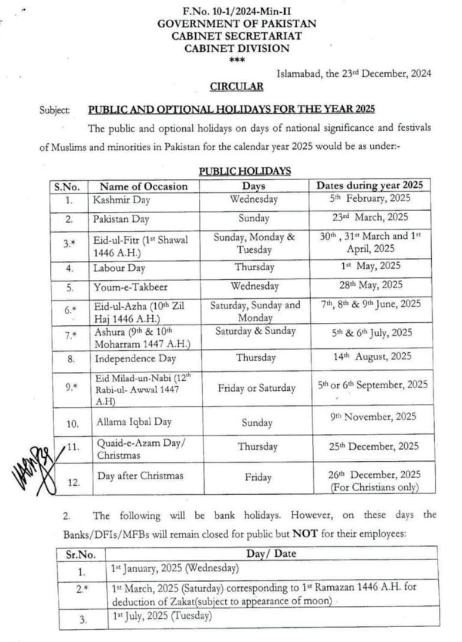
ISLAMABAD, DEC 23: The federal government has released the schedule for public holidays for the year 2025, including holidays for national, Islamic, and minority festivals.

The Cabinet Division has issued a notification detailing the dates of holidays to be observed on various occasions throughout the year.

The announcement provides clarity on public holidays for the upcoming year, allowing citizens to plan accordingly.

Middle East Braces for Unrest

Middle East Braces for Unrest

Dr. Muhammad Akram Zaheer

Recent events in Syria have triggered significant political transformations, notably the dismantling of statues of former President Hafez Assad in major cities—a symbolic act reminiscent of Baghdad’s 2003 upheaval post-Saddam Hussein’s ouster. The jubilant public reaction followed the sudden removal of President Bashar Assad after 24 years of rule. Despite these developments, Syria’s trajectory toward peace remains precarious. The militant group Hayat Tahrir al-Sham (HTS), led by the contentious Abu Mohammed al-Golani, faces challenges to its legitimacy due to its jihadist roots. While the majority of Syrians practice Islam, tolerance for religious extremism is limited. Syria’s ethnic and religious diversity further complicates national consensus-building, while regional powers are poised to exploit the emerging power vacuum.The Assad regime epitomized authoritarian governance characterized by systemic repression. Hafez Assad seized power through a military coup in November 1970, displacing Salah Jadid. His rule was sustained through an extensive propaganda apparatus that presented him as Syria’s eternal leader, symbolized by statues erected nationwide. Despite deteriorating economic conditions, his government combined brutal suppression with limited welfare policies. By 1980, Syria’s per capita income was $1,470, but it dropped to $990 by 1990, reflecting economic stagnation. Corruption became deeply entrenched, functioning as a political patronage mechanism.Upon Hafez Assad’s death in 2000, his son Bashar Assad assumed power at age 34, circumventing Syria’s constitutional age requirement of 40 for the presidency. The regime’s downfall appeared inevitable due to its entrenched corruption, inability to adapt to shifting political dynamics, and failure to provide essential services. By 2011, per capita income stood at $1,500 but fell to $745 by 2021 due to the prolonged civil war. Russian military intervention and Iranian-backed militias were pivotal in preventing the regime’s collapse in 2015.

The insurgency that eventually ousted Assad was led by HTS, classified as a terrorist organization by multiple Western nations. HTS’s leader, Abu Mohammed al-Golani, has a history of militant activities, having fought U.S. forces in Iraq after the 2003 invasion. His trajectory involved affiliations with al-Qaida, the Islamic State, and Salafist groups like Jund al-Sham. Following Syria’s 2011 uprising, he founded the al-Nusra Front, a transnational jihadist entity active in Syria, Iraq, Jordan, and Lebanon.After Assad’s forces recaptured Aleppo in 2016, al-Golani rebranded his organization as HTS, focusing on Syria’s internal conflict. He established the Syrian Salvation Government in Idlib, claiming to have abandoned transnational jihadist ambitions. However, his consolidation of power involved marginalizing both religious and secular opposition factions, reinforcing authoritarian control in HTS-administered territories.

Syria’s socio-political fragmentation, rooted in its post-independence history, re-emerged following Assad’s removal. Since gaining independence in 1943, Syria has served as a geopolitical battleground for regional and global powers. Hafez Assad’s strategic maneuvering elevated Syria’s regional influence, though Bashar’s alliance with Iran after the 2003 U.S. invasion deepened Syria’s dependency on Tehran.The Syrian military, weakened by years of conflict, disintegrated rapidly as the rebellion gained momentum. Rebel forces captured key cities, including Aleppo, Hama, and Homs, facing minimal resistance. Druze communities in Sweida and rebel factions in Daraa launched simultaneous uprisings, seizing strategic territories near Israel and Jordan. However, these groups operated under distinct command structures, underscoring Syria’s fragmented opposition landscape.Syria’s destabilization has elicited swift regional responses. Israel seized strategic positions on Mount Hermon and conducted airstrikes on military installations near Damascus. Turkey intensified military operations against Kurdish factions in northern Syria. Jordan, sharing a 320-kilometer border with Syria, remains on high alert, fearing conflict spillover and renewed drug trafficking linked to Captagon production in southern Syria.

Neighboring states may exploit Syria’s instability for territorial gains. Israeli Prime Minister Benjamin Netanyahu declared the 1974 ceasefire agreement obsolete, signaling potential annexations. Similarly, Jordan’s Hashemite rulers could pursue territorial expansion into southern Syria, driven by historical claims and strategic calculations.Assad’s fall could inspire unrest across the Arab world. In Lebanon, rival factions may challenge Hezbollah’s dominance, potentially reigniting sectarian conflict. In Iraq, anti-government protests suppressed by Iranian-backed militias in 2019 could resurface amid hopes of regime change. Egyptian President Abdel Fattah el-Sissi also faces potential challenges, given parallels between Assad’s downfall and Egypt’s history of political upheavals.

Syria’s future remains uncertain amid political fragmentation and competing foreign interests. The country’s complex societal divisions and unresolved historical grievances pose significant obstacles to establishing a unified national framework. As regional powers maneuver for strategic advantage, the prospects for long-term peace and stability in Syria remain uncertain. The evolving situation is likely to reshape the Middle East’s geopolitical landscape, with ramifications extending far beyond Syria’s borders.

9th Adab Festival celebrates literature’s role in building harmonious society at ISSI

9th Adab Festival celebrates literature's role in building harmonious society at ISSI

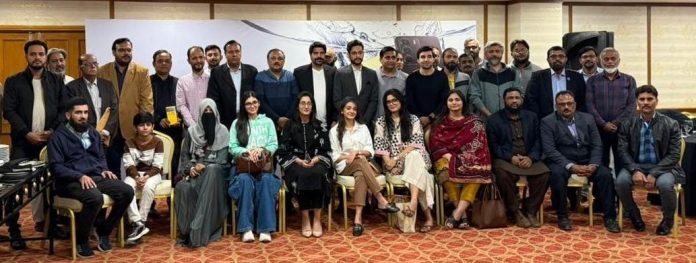
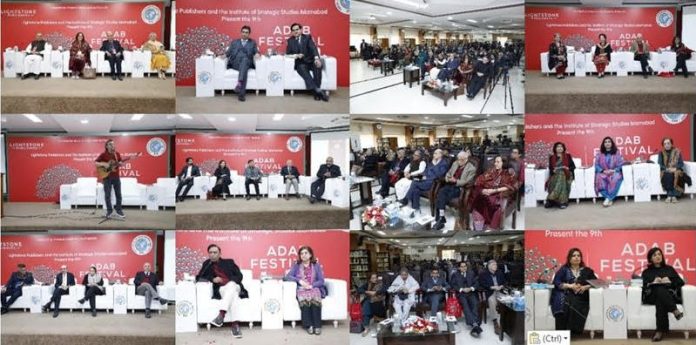
ISLAMABAD, DEC 23 /DNA/ – The 9th “Adab Festival Pakistan”, hosted by the Institute of Strategic Studies Islamabad (ISSI) in collaboration with Lightstone Publishers, had an engaging daylong sessions highlighting the role played by literature in building a harmonious society.

In his welcome remarks, DG ISSI Ambassador Sohail Mahmood emphasized Pakistan’s literary richness and ISSI’s commitment to fostering creativity through literature. He highlighted the Adab Festival’s role in promoting book reading, especially among youth, as a vital balancing factor in the digital age. Ambassador Sohail Mahmood lauded the festival as a platform to celebrate cultural pluralism, inspire dialogue, and explore creative ideas. He commended the festival’s diverse program, featuring book talks and discussions on topics such as Quaid-e-Azam’s vision, women empowerment, and education, showcasing its potential to inspire new perspectives. The event, he noted, serves as a bridge between emerging and established writers, fostering connections and nurturing literary aspirations. Ambassador Sohail Mahmood expressed gratitude to the participants and encouraged attendees to engage with the sessions, underscoring the festival’s power to connect, educate, and celebrate the enduring impact of words. He also affirmed ISSI’s resolve to systematically project Pakistan’s soft power inherent in its rich culture and arts and literature in active collaboration with literary institutions and civil society.

In her introductory remarks, Ms. Ameena Saiyid highlighted the transformative power of literature festivals in honoring writers, researchers, and poets, while addressing societal challenges and reinforcing cultural identity. Dr. Najeeba Arif, Chairperson Pakistan Academy of Letters, emphasized literature’s role in fostering humanity, hope, and soft power, stressing its influence in shaping a nation’s cultural and intellectual landscape. The session laid the foundation for a festival that celebrates creativity, intellectual exchange, and meaningful dialogue, underscoring the significant role of literature in societal progress.

The first session of the Adab Festival, titled “Jinnah’s Vision for Pakistan – A Call for Action,” featured insightful remarks by Barrister Yasser Latif Hamdani, author of the book, and was moderated by Professor Dr. Ilhan Niaz. Barrister Hamdani emphasized Jinnah’s role as a key legislator in Pakistan’s formation, contrasting his inclusive vision with Gandhi’s focus on religion in politics. He clarified that Jinnah envisioned a state, promoting harmony among diverse communities while fostering a modern Muslim society grounded in its religious roots. Hamdani dispelled misconceptions, stressing that Jinnah’s vision was not for a theocracy, but for a progressive Pakistan based on equality, justice, and tolerance. The session highlighted the need to realign contemporary discourse with Jinnah’s ideals, advocating for a more inclusive and harmonious society.

The second session of the Adab Festival, titled “Leadership and Legacy,” featured an engaging discussion with Dr. Maleeha Lodhi, Mr. Zahid Hussain, and Ms. Arifa Noor, moderated by Dr. Salma Malik. Mr. Zahid Hussain stressed the importance of history for the younger generation, reflecting on Pakistan’s challenges and sharing insights from interviews with figures like Khan Abdul Ghaffar Khan and Rajiv Gandhi. Dr. Maleeha Lodhi highlighted unlearned lessons from history; missed opportunities in land reforms, education etc.; and the role of individuals in shaping history. Ms. Arifa Noor explored the evolution of political leaders and the need for balanced journalism to capture complex realities. The session offered a thought-provoking exploration of Pakistan’s leadership, historical trajectory, and the lasting legacy of key figures and institutions.

Following an inspiring Sufi performance by Arieb Azhar, the third session of the Adab Festival, titled “Reimagining Education: New Frontiers and Opportunities,” moderated by Mr. Musharraf Zaidi, focused on critical challenges and innovative solutions in the education sector. Mr. Shakeel Durani highlighted illiteracy as a central issue, advocating for community schools and emphasizing that just Rs. 15 billion annually could enroll 26 million out-of-school children. He also called for technology and policy interventions in remote areas. Mr. Ehtesham Anwar stressed the need to prioritize education and address overpopulation and systemic issues. Ms. Uzma Yousuf highlighted the role of parents, economic relevance in education, and the importance of teacher training. Mr. Hassan Khan advocated for a shift towards Education 5.0, incorporating AI, augmented reality, and project-based learning to equip students with future-ready skills, urging a collective responsibility for systemic transformation.

The fourth session of the Adab Festival, titled “Her Story, Her Voice: Celebrating Women’s Empowerment,” moderated by Ms. Maliha Hussain, explored themes of activism, optimism, and collaboration. Dr. Fouzia Saeed, the author of the book, emphasized the need to highlight positive advancements in the country to foster a sense of hope. She shared insights from her book’s executive summary, discussing seven key strands of change over the last two decades: Political Awakening, Social Welfare, Political Collaboration, Reactive Confrontation, Development Orientation, Strategic Activism, and Virtual Activism. Ms. Fazila Aliani reflected on her tireless advocacy for Balochistan, calling for political collaboration and collective action to drive progress. She underscored the importance of empowering women and working together for the greater good of the nation. The session highlighted the pivotal role of women in shaping social, political, and cultural change, reinforcing the importance of their voices in driving societal transformation.

The fifth session, titled “Pakistan and the Changing Global Scenario,” moderated by Mr. Omayr Aziz Saiyid, focused on Pakistan’s strategic positioning amid global power shifts. Senator Mushahid Hussain Sayed discussed the “Asian Century,” emphasizing Pakistan’s “tactical” ties with the U.S. and “strategic” partnership with China. He called for political reconciliation and a strong counter-terrorism strategy. Ms. Nasim Zehra highlighted the importance of Pakistan-China relations, internal reforms, and Pakistan’s diminishing priority for the UAE and KSA. Ambassador Masood Khan examined the U.S.-China competition, trade ties with the U.S., and the need to recalibrate relations with China. He also stressed the importance of investing in regional ecosystems, including Central Asia, Iran, and MENA region, to ensure Pakistan’s strategic growth. The session provided valuable insights into Pakistan’s evolving role in a rapidly changing global environment.

The sixth session of the Adab Festival, titled “Indus Valley, Mysticism, Folk Traditions,” moderated by Mr. Tariq Bhatti, explored the region’s rich cultural and spiritual heritage. Ms. Sarwat Mohiuddin emphasized the interconnectedness of culture, humanity, nature, and folk traditions, highlighting the need for a deeper connection with nature for the well-being of humanity. She identified intolerance as a major challenge, stressing the importance of embracing diverse cultures and perspectives to promote peace and harmony. Mysticism, particularly Sufism, was presented as a path to self-awareness, equality, and universal compassion, reflecting the messages of folk literature.

The Adab Festival concluded with a discussion on Dr. Sania Nishtar’s book, Delivering Welfare at Scale: Ehsaas 2047, moderated by Ms. Amna Rizvan Ali. Dr. Sania Nishtar outlined the Ehsaas initiative as a transformative effort to develop Pakistan as a welfare state, addressing key areas such as education, health, poverty alleviation, and food security. She pointed to political patronage, transparency issues, and resistance from traditional politicians opposed to the program’s digital delivery mechanism as significant obstacles. Dr. Nishtar emphasized that Ehsaas reflected the struggles of those facing poverty, hunger, and inflation, particularly highlighting the role of the underprivileged, including 1.2 million exploited street vendors, in Pakistan’s economy. As the program’s impact became visible, she pointed out, border support among political segments and across institutions was also forthcoming. The session underscored the importance of welfare programs in addressing the needs of Pakistan’s most vulnerable populations.

North Korea suffers 1,100 casualties in Russia-Ukraine war: Seoul

North Korea suffers 1100 casualties in Russia-Ukraine war: Seoul

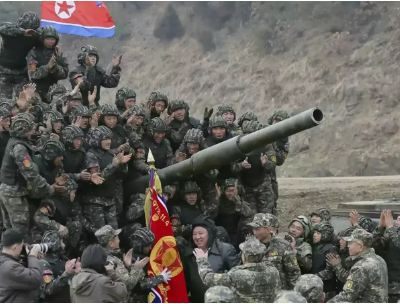
SEOUL, DEC 23 (AFP/APP): More than 1,000 North Korean soldiers have been killed or wounded in Russia’s war with Ukraine, South Korea’s Joint Chiefs of Staff (JCS) said on Monday.

                  The new figure follows a report by Seoul’s spy agency to MPs last week, which said at least 100 North Korean soldiers had been killed since entering combat in December.

                  Pyongyang has sent thousands of troops to reinforce the Russian military, including to the Kursk border region where Ukrainian forces seized territory earlier this year.

                  “Through various sources of information and intelligence, we assess that North Korean troops who have recently engaged in combat with Ukrainian forces have suffered around 1,100 casualties,” the JCS said in a statement.

                  “We are particularly interested in the possibility of additional deployments” of North Korean soldiers to aid Russia’s war effort, it said.

                  Pyongyang is reportedly “preparing for the rotation or additional deployment of soldiers”, the JCS said.

                  Intelligence also suggests that the nuclear-armed North is “producing and providing self-destructible drones” to Russia to further assist Moscow in its fight against Ukraine, it added.

                  The North was also supplying “240mm rocket launchers and 170mm self-propelled artillery” for the Russian army, the JCS said.

                  Seoul’s military noted that North Korea was aiming to modernise its conventional warfare capabilities based on combat experience in the Russia-Ukraine war.

                  “This could lead to an increase in the North’s military threat toward us,” it said.

                  The latest findings align with a report by the National Intelligence Service, which informed lawmakers that “Russia might offer reciprocal benefits” for North Korea’s military contributions, including “modernising North Korea’s conventional weaponry”.

                  North Korea and Russia have strengthened their military ties since Moscow’s invasion of Ukraine in February 2022.

                  A landmark defence pact between Pyongyang and Moscow, signed in June, came into force this month.

                  Experts say North Korean leader Kim Jong Un is keen to acquire advanced technology from Russia and battle experience for his troops.

                  Pyongyang lashed out on Thursday at what it called “reckless provocation” by the United States and its allies for a joint statement criticising North Korea’s support for Russia’s war in Ukraine, including the deployment of troops.

                  South Korea and Ukraine announced last month that they would deepen security cooperation in response to the “threat” posed by the deployment of North Korean troops, but there was no mention of potential arms shipments from Seoul to Kyiv.

                  South Korea’s suspended President Yoon Suk Yeol said in November that Seoul was “not ruling out the possibility of providing weapons” to Ukraine, which would mark a significant shift in its long-standing policy barring the sale of weapons to countries in active conflict.

                  North Korea’s military was also seen constructing a new fence stretching 40 kilometres (25 miles) along the border with the South, testing electric barbed-wire fences with what appeared to be goats.

                  A photo provided by the JCS shows a North Korean soldier holding what appears to be a goat in front of barbed-wire fences.

                  The North’s border security reinforcement had been underway “for eight months with as many as 10,000 soldiers mobilised”, a military official told reporters.

                  The stepped-up security measures aim to “prevent defections by North Korean civilians and soldiers southward”, the JCS said in the report.

                  The North has also launched around 7,000 trash-carrying balloons into the South on 32 occasions since May, Seoul’s military said.

                  Activist groups in South Korea have long sent propaganda northwards, typically carried by balloons, including leaflets, US dollar bills and sometimes USB drives containing K-pop or K-dramas, which are banned in the tightly controlled North.

                  Pyongyang rails at such activity and has said its trash-carrying balloon offensive is in retaliation for the activists’ propaganda efforts.

                  While Pyongyang has refrained from launching such balloons since November 29, “indications of their readiness for a surprise launch at multiple sites” have been observed, Seoul’s military said.

Kabul hails Saudi decision to resume activities at Afghanistan embassy

Kabul hails Saudi decision to resume activities at Afghanistan embassy

KABUL, DEC 23 (AFP/APP): The Afghan foreign ministry on Monday welcomed Saudi Arabia’s decision to resume its diplomatic operations in Kabul, more than three years after Riyadh withdrew its staff during the Taliban takeover of Afghanistan.

                  “We are optimistic about the possibility of strengthening relations and cooperation between Saudi Arabia and Afghanistan through the resumption of these activities,” said Afghan foreign ministry spokesman Zia Ahmad in a statement.

                  “We will also be able to respond to the problems of Afghans residing in Saudi Arabia.”

                  Riyadh had posted its decision to resume diplomatic operations in Kabul on social media platform X.

                  “Based on the desire of the government of the Kingdom of Saudi Arabia to provide all services to the brotherly Afghan people, it has been decided to resume the activities of the mission of the Kingdom in Kabul starting on December 22,” it said.

                  The Saudi Ministry of Foreign Affairs did not immediately respond to a request for comment about the level of Saudi representation in Kabul.

                  Riyadh on August 15, 2021 said it had withdrawn its diplomats from the Afghan capital because of the “unstable situation” created by the Taliban’s return to power following the United States’ withdrawal from the country.

                  In November 2021, Saudi Arabia said it was resuming consular services in Afghanistan. It also provides humanitarian aid in the country through its KSRelief organisation.

                  The Taliban government remains unrecognised by any country.

                  Saudi Arabia was one of only three countries, the others being Pakistan and the United Arab Emirates, that recognised the first Taliban government which came to power in 1996 and was overthrown by the US invasion of 2001.

Banks to remain closed on Wednesday

Banks to remain closed on Wednesday

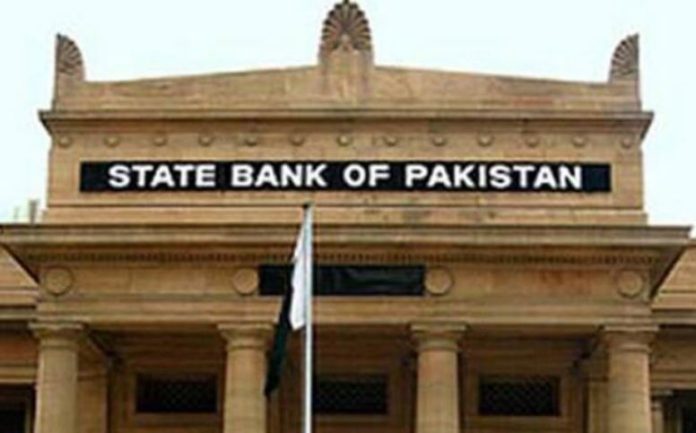
KARACHI, Dec 23 (DNA/APP):The State Bank of Pakistan and all the banking and financial institutions will remain closed on Wednesday, December 25, 2024 on the occasion of Quaid-e-Azam Day and Christmas.

The State Bank of Pakistan, in a statement issued here on Monday informed, “The State Bank of Pakistan will remain closed on December 25, 2024 (Wednesday) being public holiday on the occasions of Quaid-e-Azam Day and Christmas, as declared by the Government of Pakistan.”

Subsequently, all the banks, Micro Finance Banks (MFBs) and Development Finance Institutions (DFIs) will also remain closed to observe the public holiday on December 25, 2024.

Stay Connected

64FansLike
60FollowersFollow

Latest Reviews

Exchange Rates

USD - United States Dollar
EUR
1.17
GBP
1.35
AUD
0.72
CAD
0.73