Home Blog Page 724

Chief of Romanian Naval Forces visits newly commissioned PNS YAMAMA

Chief of Romanian Naval Forces visits newly commissioned PNS YAMAMA

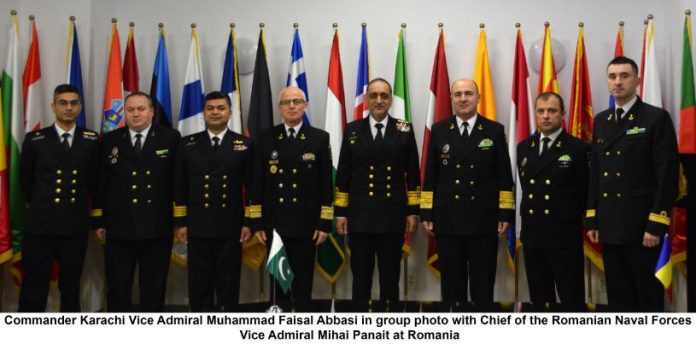
ISLAMABAD, DEC 24 /DNA/ – Chief of the Romanian Naval Forces, Vice Admiral Mihai Panait, visited the newly commissioned Pakistan Navy Ship YAMAMA at Constanta Port, Romania. The dignitary was given a detailed briefing on the ship’s capabilities.

PNS YAMAMA is the last of four Offshore Patrol Vessels built for Pakistan Navy by DAMEN Shipyards, Galati, Romania. These versatile, high-tech, and state-of-the-art platforms are designed to operate in contested maritime environments and are equipped to project deterrence across all domains of warfare. After its commissioning on 17 December 2024, PNS YAMAMA conducted its maiden Passage Exercise with a Romanian Navy ship to commence its operational readiness at sea.

Earlier, Commander Karachi, Vice Admiral Muhammad Faisal Abbasi, called on Chief of the Romanian Naval Forces, Vice Admiral Mihai Panait, in Bucharest. During their interaction, matters of mutual interest, Navy-to-Navy engagements, and cooperation in maritime security were discussed. Both Flag Officers expressed satisfaction with the growing ties between the two navies and pledged to continue strengthening the existing level of cooperation in operations and training.

PM Shehbaz reviews progress on Jinnah underpass project in capital

PM Shehbaz reviews progress on Jinnah underpass project in capital

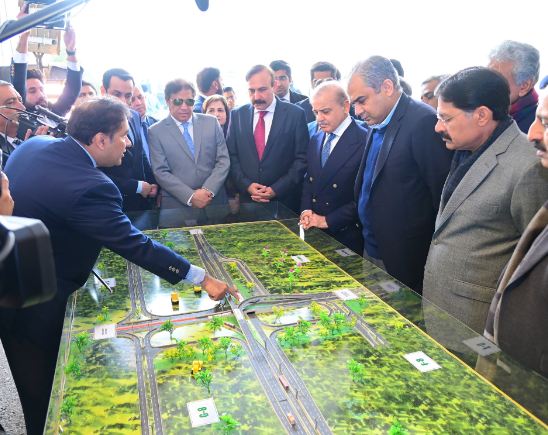
ISLAMABAD, DEC 24 /DNA/ – Prime Minister Muhammad Shehbaz Sharif being briefed on Jinnah Underpass at Sectors F-8/F-9 Junction on 24 December 2024.

Training certificate, toolkits distributed in 71 graduates

Training certificate, toolkits distributed in 71 graduates

PESHAWAR, Dec 24 (APP):Certificate and Toolkits Distribution under Sarhad Rural Support Program(SRSP), was held on Tuesday, here at the program head office at Hayatabad in Peshawar on Tuesday.

Special Assistant to Chief Minister Khyber Pakhtunkhwa on Industries and Commerce Abdul Karim Tordher was the chief guest in the ceremony.In the graduation ceremony 71 graduates,received trainings certificates and training toolkits in trades of mobile repairing, building electrician and plumbing.

Under a project with support of the Embassy of the Netherland and Implemented by Sarhad Rural Support Programme SRSP, in the event the graduates from Peshawar, Nowshera, Swabi and Haripur, total 34 host students and 37 Afghan students received their completion certificates.

On this occassion the chief guest, Special Assistant to Chief Minister Khyber Pakhtunkhwa for Industries and Commerce Abdul Karim Tordher distributed certificates and toolkits among the qualified trainers and congratulated them upon completion of the same training.

He commended SRSP and its leadership, particularly CEO Masood Ul Mulk, for their dedication to rural development and economic empowerment.

The Special Assistant emphasized the importance of adopting international certifications to align with global standards.

He highlighted the KP government’s initiatives, including interest-free loans provided by the Akhuwat Foundation for male entrepreneurs.

He also expressed regarding loans, ranging from PKR 100,000 to 500,000, are aimed at supporting woman entrepreneurs through the Social Welfare Department.

During the ceremony, Chief Executive Officer of SRSP, Masood Ul Mulk expressed gratitude to the chief guest for his presence and encouragement.

He underlined the significant contribution of remittances to Pakistan’s economy and emphasized the importance of skill development and economic empowerment initiatives in furthering economic growth.

He congratulated the graduates for successfully completing their training and encouraged them to utilize their skills for personal and community development.

The Project Coordinator Syed Asad Qadir on this occassion, provided an overview of SRSP’s rural development initiatives across Khyber Pakhtunkhwa (KP).

He elaborated on the same project, highlighting its objectives and implementation in eight districts.

Pakistan-Azerbaijan to enhance air force training cooperation; 70 Azeri personnel currently under training

Pakistan-Azerbaijan to enhance air force training cooperation; 70 Azeri personnel currently under training

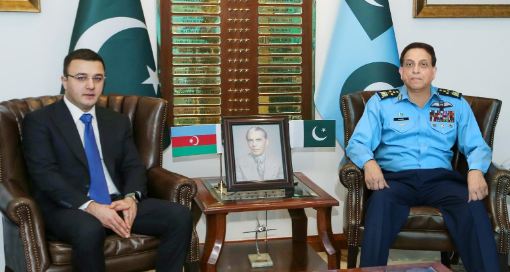
ISLAMABAD, DEC 24 /DNA/ – A high level defence delegation led by Deputy Minister of Defence of the Republic of Azerbaijan-Director General Mr. Agil Gurbanov, alongwith Lieutenant General Namig Islamzade, Deputy Minister of Defence-Commander of the Azerbaijan Air Force called on Air Chief Marshal Zaheer Ahmed Baber Sidhu, Chief of the Air Staff, Pakistan Air Force at Air Headquarters, Islamabad.

During the meeting, Chief of the Air Staff shared the recent achievements of Pakistan Air Force, symbolizing his vision of operational excellence in the realm of contemporary warfare domains. The Air Chief reiterated his resolve to further enhance the existing bilateral ties between the armed forces and particularly cooperation with Pakistan Air Force in operational and training domains. He also highlighted the importance of training cooperation; wherein, a large contingent of Azeri air and ground crew is currently undergoing training at an operational PAF base. He noted that the training program is on schedule, with over 50% of the training objectives successfully achieved. He further emphasized that the initiative is expected to culminate within one-month timeframe, reflecting the commitment of PAF to enhance the operational capabilities of Azerbaijan Air Force.

The visiting dignitaries lauded the historic & exemplary professionalism demonstrated by the personnel of Pakistan Air Force and praised PAF’s notable progress in developing a thriving domestic capability in the aviation industry in a short timeframe. The dignitaries expressed satisfaction on the training imparted to 70 aircrew & technicians getting trained in PAF and expressed their desire for enhanced Air Force to Air Force collaboration between the two sides. Emphasizing on the need to adapting to the evolving landscape of modern warfare, the Azerbaijan military leadership also proposed the establishment of a more comprehensive training regimen focusing on niche and disruptive technologies, as well as cyber and electronic warfare capabilities. Later the delegation visited PAF Cyber Command, established at Air Headquarters, where it was briefed about the operational capabilities and ongoing projects of PAF’s modernization drive.

The visit of this high level defence delegation from Azerbaijan to Air Headquarters Islamabad signifies a resolute commitment of both countries to reinforce their military partnership, fostering collaboration and promoting robust relations.

Two pilots among ex-PIA staffers who admit to using fake degrees

LAHORE: Four ex-employees of PIA, including two pilots and a stewardess, have confessed to furnishing fake degrees to get appointed or promoted in the national flag carrier, court documents revealed.

All of them had already been terminated or superannuated when the FIA booked them in 2022, following an audit that transpired the appointments of 457 PIA employees on the basis of fake degrees.

Initially, they denied the charges when they approached a special court seeking pre-arrest bail, which was subsequently granted. But after their indictment, they all pleaded guilty and wanted to record their confessional statements.

Judge Tanveer Ahmad Sheikh explained to the accused that they were “not bound to make any confessional statement”. In case, they opted to do so, the same might be used against them and they might be convicted on the basis of the confessions, the judge remarked.

He also gave them 30 minutes and made them sit in the corner of the court to think over their requests. Thereafter, they insisted upon their confessions being recorded.

In her confessional statement, Nazia Naheed from Karachi stated before the judge that she was appointed on July 5, 2001 as an air hostess on a five-year contract. She confessed to having submitted a bogus BA degree to get a promotion. However, she said, the degree was later found to be forged during a scrutiny that led to her termination from service on April 26, 2014.

She claimed she was jobless, while her husband had died in a road accident.

Mohsin Ali also confessed to using a fake BA degree at the time of his appointment as a co-pilot in 2006, while the basic requirement for the job was intermediate. He said he was terminated in 2014 after his fake degree came under scrutiny.

Arif Tarar said he was appointed as a peon in PIA in 1979 and used a fake degree of FA to get a job as data entry operator in the same department. He retired in 2018 after completing a service of 39 years. However, the audit also found his degree bogus and implicated him in the FIR registered by the FIA in 2022.

In his confessional statement, Kashan Aijaz Dodhy of Karachi stated that he was appointed on Nov 13, 1995 as a cadet pilot in PIA and used a BSc degree to get hired, though the basic requirement for the job was FSc. “I used my degree for BSc for showing extra qualification which later on found to be fake during the verification process and I was terminated from the service in 2019,” he recalled.

All the accused regretted their acts and tendered an apology, leaving themselves at the mercy of the court.

Finding the accused persons guilty in light of their confessions, Judge Sheikh convicted all of them for imprisonment “till rising of the court” in addition to imposition of fine of different amounts.

PTI-Government Parley: Success or Failure?

Qamar Bashir

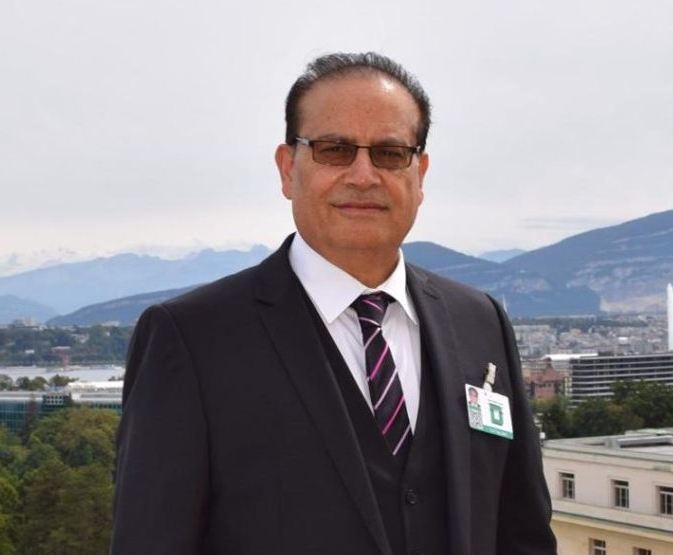
By: Qamar Bashir

Macomb, Detroit, Michigan

The recent initiation of dialogue between PTI and the broader political spectrum marks a pivotal and positive step toward resolving political conflicts through democratic means. This development reflects a notable shift in PTI’s earlier stance of isolating itself from political actors it had dismissed as powerless, illegitimate, and lacking public mandate. Previously, PTI sought engagement exclusively with the establishment, which it deemed the true power holder, undermining the democratic principle that governance should be conducted through civilian institutions and elected representatives. This shift suggests that PTI may have received assurances from the establishment to support its demands if it engages with civilian political forces, signaling a strategic recalibration.

PTI’s demands in these negotiations can be divided into short-term and long-term goals. In the immediate term, PTI is likely to prioritize the release of its leader, Imran Khan, and detained political activists, as well as the restoration of the February 8 election mandate, which it views as critical to reclaiming governance in the center and Punjab.

However, PTI’s far-sighted demands focus on systemic reforms to strengthen democratic governance, reduce military interference in civilian affairs, and establish a stable governance framework. Key reforms include an independent Election Commission with biometric voter verification, judicial independence through transparent appointments, and institutional accountability. PTI also seeks to redefine civil-military relations by confining the military to defense roles, removing military officers from civilian positions, and introducing parliamentary oversight of defense budgets. Additionally, fostering national unity through inclusivity, empowering marginalized communities, and addressing socio-economic issues like poverty, healthcare, and education forms a cornerstone of PTI’s vision.

Rather than seeking short-term concessions, PTI should demand the reversal of recent constitutional amendments and legislative changes enacted by the incumbent government. These amendments have drastically altered the balance of power, weakening the judiciary, reducing parliamentary authority, and enhancing military influence. For instance, the 26th Constitutional Amendment has increased parliamentary involvement in judicial appointments and altered the process of selecting the Chief Justice, replacing the seniority-based system with parliamentary discretion—a move widely criticized for undermining judicial independence. Similarly, amendments to the Pakistan Army Act extended the tenures of military chiefs, consolidating their authority, while legislative measures granted the Inter-Services Intelligence (ISI) unprecedented powers of communication interception, raising concerns about privacy and civil liberties. Additionally, the government’s perceived non-compliance with Supreme Court orders, including those opposing the trial of civilians in military courts, has further eroded democratic principles and institutional balance.

These recommendations align with a concept paper I presented to PTI leadership in May 2024, emphasizing the importance of resolving political issues on political platforms rather than relying on the establishment. The paper highlighted that PTI’s refusal to engage with other political parties weakened its ability to build consensus on national issues and reinforced a narrative that the military remains the ultimate arbiter of power. It urged PTI to shift from isolationist rhetoric to meaningful dialogue, recognizing that democratic governance rests on the strength of civilian institutions and collaboration among elected representatives.

However, the feasibility of these negotiations remains uncertain. If frivolous cases against PTI leadership and workers are withdrawn under due process, PTI would quickly regain its footing and mobilize its supporters, potentially crippling the government through street agitation. If the establishment remains neutral, the government might not last more than a few months. Similarly, conceding to PTI’s demand to restore the “stolen mandate” of the February 8 elections would immediately delegitimize the government, leading to its collapse. Furthermore, undoing constitutional and legislative amendments would strip the military and ISI of their enhanced powers, restore election tribunals, eliminate military courts, and reinstate the judiciary’s full authority. These changes would likely result in the government’s swift disintegration, as PTI’s restored position would render it ungovernable.

Under the current circumstances, the government is likely to offer limited and calculated concessions to PTI, aimed at placating the opposition without jeopardizing its own hold on power or antagonizing the establishment. These concessions may include the partial withdrawal of minor or frivolous cases against PTI leaders, the selective release of detained workers, and symbolic gestures reaffirming democratic principles without enacting meaningful reforms. Discussions on electoral reforms, such as biometric voter verification or improved oversight, might be entertained, but any implementation would likely be delayed. The government is unlikely to address demands that threaten its legitimacy, such as restoring the February 8 election mandate or reversing constitutional amendments that enhance establishment powers. These constraints highlight the delicate balance the government must maintain—appearing conciliatory enough to prevent unrest while avoiding concessions that could undermine its authority or provoke institutional backlash. As a result, any offered concessions are expected to be superficial, prolonging political instability without addressing PTI’s core grievances.

Interestingly, any or all concessions would not significantly dent the deeply entrenched establishment, which has consolidated unprecedented power since February 8. For the establishment, shifting support between political parties is routine. Regardless of the ruling party, the establishment’s authority remains unassailable. If it chooses to remove the incumbent government, it will do so decisively, installing a new party of choice and supporting it until it falls out of favor. This cyclical process underscores the disposable nature of civilian governments and the enduring dominance of the establishment in Pakistan’s power dynamics. Without addressing this imbalance, any progress toward genuine democratic governance will remain illusory.

By: Qamar Bashir

Press Secretary to the President (Rtd)

Former Press Minister at Embassy of Pakistan to France

Former MD, SRBC

Quaid-e-Azam’s Legacy: A Testament to True Leadership

Quaid-e-Azam’s Legacy: A Testament to True Leadership

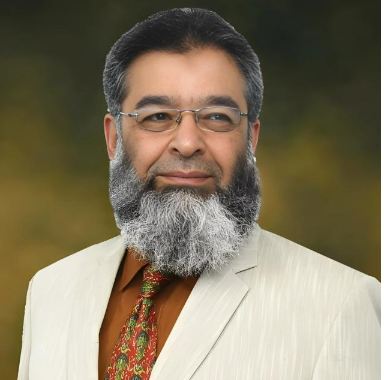
by Muhammad Mohsin Iqbal

The making of a true leader is an arduous journey, requiring clarity of thought, unwavering integrity, and unmatched perseverance. In history, there are rare individuals whose words and actions leave no ambiguity about their character and vision. Muhammad Ali Jinnah, later known as Quaid-e-Azam, stands as a shining example of such a leader. His struggle, sacrifices, and principles were not mere rhetoric but a practical demonstration of leadership. Muhammad Ali Jinnah earned the title of “Quaid-e-Azam” not by chance but through years of relentless effort and by proving that he was the only person who could command such respect and trust from his people.

Born on December 25, 1876, in Karachi, Jinnah began his professional journey as a brilliant lawyer. His rise to prominence was not an accident but the result of his commitment to hard work, honesty, and legal acumen. Early in his career, his character was already evident. He always refused to compromise his professional ethics despite financial pressures. His reputation as an upright lawyer who could not be bought or swayed earned him respect among his peers and society.

Jinnah’s transition into politics was driven by his desire to secure justice for Indians under British rule. Even when he joined the Indian National Congress, he was known for his balanced views and statesmanship. His speeches were marked by precision and clarity, leaving no room for ambiguity. Muhammad Ali Jinnah’s opposition to ill-considered measures such as the Rowlatt Act of 1919 exemplified his commitment to justice. This act allowed the British to imprison people without trial, and Jinnah stood firmly against it, demonstrating his unyielding resolve to defend fundamental human rights.

However, it was during the 1920s and 30s that Jinnah’s character truly shone. Faced with the growing communal divide and the rise of extremist narratives, Jinnah refused to compromise on his principles. His resignation from the Congress after Gandhi’s non-cooperation movement underscored his belief in constitutional struggle rather than emotional and violent means. Muhammad Ali Jinnah believed in achieving political goals through legal and democratic avenues, showcasing his deep respect for rule of law.

By the mid-1930s, Jinnah had emerged as the undisputed leader of the Muslim community. Yet, the title of “Quaid-e-Azam” was not conferred upon him overnight. It was his tireless efforts to secure the rights of Muslims that earned him the respect of millions. The example of the 1940 Lahore Resolution remains a defining moment in this regard. On March 23, 1940, Jinnah addressed the All-India Muslim League at Minto Park, Lahore, presenting the case for a separate homeland for Muslims. His words were clear, his arguments were logical, and his vision was compelling. He articulated the need for Pakistan with such clarity that it left no room for doubt in the minds of his followers. His powerful leadership during this time won him the title of Quaid-e-Azam, meaning the “Great Leader.”

Quaid-e-Azam’s character was tested repeatedly, but he never wavered. A significant historical example was his role in the Cabinet Mission Plan of 1946. Despite immense pressure, Jinnah stayed firm on his demand for Pakistan, knowing it was the only viable solution to safeguard Muslim identity. His calm demeanor and strategic brilliance during negotiations highlighted his qualities as a leader who prioritized the collective good over personal ambition. It was during these years that his followers saw a man of impeccable character, whose words matched his actions.

Another remarkable trait of Jinnah’s leadership was his simplicity and modesty. Despite his towering stature, he maintained a lifestyle that reflected humility. In one instance, during the partition in 1947, Jinnah traveled to Karachi on a commercial flight instead of a private one, reflecting his commitment to serving his people rather than indulging in personal luxuries. Even as the Governor-General of Pakistan, Jinnah chose to live in a modest house instead of the grand Governor’s residence, underscoring his character and dedication.

Quaid-e-Azam’s clarity of words and strength of character were further evident in his address to the Constituent Assembly of Pakistan on August 11, 1947. He stated unequivocally that religion was a personal matter and that every citizen of Pakistan would enjoy freedom and equality. This speech remains one of the most significant documents in Pakistan’s history, as it encapsulated his vision for a progressive and inclusive nation.

Jinnah’s final years were marked by ill health, yet his resolve never weakened. In 1948, despite being critically unwell, he continued to work for the nascent state of Pakistan. On July 1, 1948, while inaugurating the State Bank of Pakistan, Jinnah emphasized the need for Pakistan to develop its own economic system based on Islamic principles rather than imitating others. His speech reflected his foresight and his commitment to building a strong and independent nation.

Muhammad Ali Jinnah’s life is filled with countless examples of integrity, determination, and selflessness. Whether it was his steadfastness in the face of opposition, his belief in constitutional means, or his unmatched leadership during the struggle for Pakistan, Jinnah proved time and again that he deserved to be called Quaid-e-Azam. His clarity of words and strength of character left no ambiguity about his intentions and values. As his birthday anniversary approaches on December 25, it is imperative to remember and reflect on the principles he upheld. Pakistan was not merely the result of political maneuvering but a testament to the character of a leader who embodied honesty, courage, and vision. It is through such examples that we understand the true essence of leadership.

Today, as we face numerous challenges, the life of Quaid-e-Azam serves as a guiding light. His character reminds us that leadership demands sacrifice, integrity, and unwavering commitment to one’s cause. The search for such leaders continues, but Jinnah’s legacy remains unparalleled, inspiring generations to come.

US expresses deep concern over military tribunal sentencing of Pakistani civilians

US expresses deep concern over military tribunal sentencing of Pakistani civilians

ISLAMABAD, DEC 24 /DNA/ – The United States expressed profound concern regarding the recent sentencing of 25 Pakistani civilians by a military tribunal for their alleged involvement in the protests of May 9, 2023.

These proceedings, conducted through military courts, demonstrate significant deficiencies in judicial independence, transparency, and fundamental due process guarantees.

We emphasize that the right to a fair trial and due process protections are fundamental principles enshrined in Pakistan’s constitution. The United States strongly urges Pakistani authorities to uphold these essential legal protections for all citizens.

The United States remains committed to supporting democratic principles and the rule of law worldwide, including the fundamental right to a fair and transparent judicial process.

Open Court to be held in Chaman on Dec 26

Open Court to be held in Chaman on Dec 26

QUETTA, Dec 23 (APP):An open Court (Khuli Kehchari) to be held under the leadership of Deputy Commissioner Chaman Habib Ahmed Bangulzai on December 26 (Thursday) at Shaheed Advocate Muhammad Aimal Khan Achakzai Governoment Boys Degree College Support Complex.

According to official notification, the dignitaries and public of Chaman are informed that a tribal Jirga/open court to start from 10:00 to 12:00 at the area.

All the dignitaries/public is requested to participate fully and identify their problems for addressing them during the open court.

£190m case: People won’t tolerate if injustice committed against Imran, warns PTI

£190m case: People won't tolerate if injustice committed against Imran, warns PTI

ISLAMABAD, DEC 23: Terming the £190 million case against former prime minister Imran Khan and his spouse Bushra Bibi “worst example of political victimisation”, Pakistan Tehreek-e-Insaf (PTI) Information Secretary Sheikh Waqas Akram on Monday warned that people would not tolerate if injustice is committed against the incarcerated ex-premier.

His remarks came hours after an accountability court in Islamabad postponed its verdict, which was expected today, until January 6 in the corruption case.

Addressing a press conference in Peshawar, the former ruling party’s information secretary called the PTI founder the “biggest leader” of the country.

“The political revenge-based case will also draw global reaction,” he warned the government.

The PTI leader asked: “Why did the verdict in £190 case postpone?”

Terming the case a “fabricated story”, Akram said that the reference was aimed at forcing PTI founder to bow before the government.

“Why was the verdict [in the case] postponed? Where the judgment is being written that it is causing such difficulty.”

“There is nothing in the case,” he said, adding that the PTI founder was just a trustee of the trust Al-Qadir Trust.

Stay Connected

64FansLike
60FollowersFollow

Latest Reviews

Exchange Rates

USD - United States Dollar
EUR
1.17
GBP
1.35
AUD
0.72
CAD
0.73