Home Blog Page 721

Punjab to leverage tourism for better perception building

Punjab to leverage tourism for better perception building

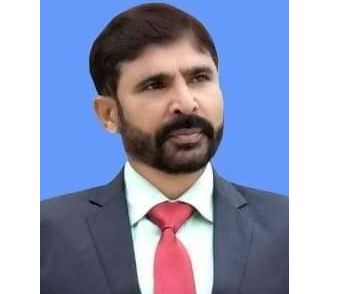
Abdul Rashid Shakir

Geographical diversity, archaeological heritage, architectural and historical landmarks, cultural tapestry and warm hospitality are the backbone of a thriving tourism industry. Political stability, continuity of tourism-friendly policies, reliable law & order, developed infrastructure and world-class hotels & hospitality provide the needed ecosystem for its growth.

Pine-studdedandsnow-cladtoweringmountains,minerals-richruggedhillsandplateaus,well-irrigatedfertilefields,stunningskylineoftheurbanmetropolis,andarguablythe most-fascinatingbeachesinthecoastalareasaresomeofthemostluringattractionsfortheleisure-hungrytourists.

Though Pakistan is blessed with a lot of tourist attractions, we couldn’t make a considerablemarkinthesectordespitethelapseofmorethansevendecadesnow.Itisquiteunfortunatethat it is mostly under-developed, rather untapped because of the political unrest, inconsistentgovernment policies, compromised law & order, dilapidated and under-developed infrastructure.Just for instance, if we compare in terms of annual tourist visits and revenue generated thereof,K2 and Nanga Parbat in Gilgit Baltistan with Mont Blanc on the Franco-Italian border in Europe,which is almost half of their height, we find a huge gap simply because of the latter’s peacefulenvironment,sereneambiance,well-developedinfrastructureandtourism-friendlypoliciesoftheFrench and Italian governments. Similarly, recreational points of KallarKahar Lake in Chakwal,Simly Dam Lake in Rawalpindi and Damas Lake in Fort Monroe are in the know of almost everytravel-enthusiast because they have developed infrastructure, but relatively very few peoplehave experienced the breathtaking scenery and refreshing swimming and boating in the sereneand pristinesetting ofSwaik Lakein Chakwalsimply becauseit hasavery roughapproachroad:abumpyjeepridefollowedbytrekkingonanarrowmountainoustrack.

Punjab, in particular, is blessed with abundant wealth of archaeological, historical, cultural,recreational and religious tourism sites. The archeological remains of Indus Valley Civilization inHarappa,andGandharacivilizationinTaxilaofferatreasuretroveforthearcheology-lovers.Historicalsites of Badshahi Mosque, Shalimar Garden, Lahore Fort, Minar-e-Pakistan, Jahangir Tomb, LahoreMuseum, Samadhi of Maharaja Ranjit Singh and Noor Jehan Tomb in Lahore; HiranMinar inSheikhupura and Derawar Fort in Bahawalpur represent a unique blend of Mughal, Sikh and Colonialarchitecture.

Hill resorts of Murree and Fort Munro in DG Khan; Lakes of Chakwal including KallarKahar, Swaik(Khandowa), Khabeki, Uchhali, DhokTalian and Dharabi; biggest man-made forest of South AsiaChanga Manga; and parks like Jallo Park in Lahore and Lal Suhanra National Park in Bahawalpur offerarevitalizingbreakfromtheheavychoresoflife.CholistanJeepRallyintheCholistanDesertinSouthernPunjabisnodoubtamuch-awaitedeventofthesport-lovers.

PunjabalsohasagreatpotentialforrligioustourismasitishometomanySufiShrines,HinduTemplesand holiest sites of Buddhism and Sikhism. Shrines of Hazrat Data GunjBukhsh, HazratMian Mir andHazrat Bibi Pak Daman in Lahore; Hazrat Baba Bulleh Shah in Kasur; HazratRukn-ud-Din, HazratBahauddinZakariya,HazratSyedMusaPakShaheedandHazrat Shah Shams Sabzwariin Multan; Hazrat Baba Fariduddin Masood GunjShakar in Pakpattan;Hazrat Khawaja Ghulam FaridKotMithen and HazratSakhiSarwar in Dera Ghazi Khan; and HazratJalaluddinSurkh-PoshBukhariinBahawalpurareplacesofgreatrespectandreverencewheredevoteesthrongtopayhomagetothesewell-acclaimedsaints.

TaxilainRawalpindiisareveredplaceforthefollowersofBudha;RohtasFortinJhelumandKatas Raj Temples Complex in Chakwal are the holy sites of Hindu community; whereasGurdawaraDarbarSinghinKartarpur(Narowal)andGurdawaraNankanaSahibinNankanaSahibarethemostsought-afterandrespectedplacesoftheSikhcommunity.

The Government of Punjab, under the leadership of its vibrant Chief Minister Madam MaryamNawaz Sharif, is taking proactive and impactful measures for the promotion of tourism in theprovince. Its ongoing projects for the purpose include operating Tourists Glass Train betweenRawalpindiandMurree;massivedevelopmentplanforMurreeanditsadjoiningareas;startingatram service in Lahore on 11 KMs-long track covering prominent localities like Main Boulevardfrom KalmaChowk, Liberty, Main Market, Mini Market, Hali Road, MM Alam Road and GaddafiStadium; laying an extensive network of EV buses for public transport in major cities; and aboveallrepairing, revamping and upgrading 600 arterial roads across Punjab besides theconstructionof05MotorwaysandHighwaysintheprovinceforhassle-freetravelexperience.

Mindful of the crucial role of tourism in projecting a softer image of a society besides earningrevenueandgeneratingemploymentforthelocalcommunity,theChiefMinisterhasrecentlytaken a remarkable step for reaping full potential of the tourism in Punjab by constituting a26-membersteeringcommittee.Withtheinclusionofdedicatedmembers,thesteering committeeispoisedtomakeimpactfulcontributionsforsustainabletourismdevelopmentintheprovince.

The steering committee is tasked with providing recommendations for the upgradation ofhistorical, religious, cultural, and commercial sites along with the development of enablingecosystem in order to attract more tourists, both local and foreigners. The steering committeewill also develop a comprehensive communication strategy to promote tourism through digital,electronic, print and social media platforms, besides developing a one-stop solution for thefacilitation of potential tourists in the province. It is also mandated to identify and eliminateobstacleshinderingthegrowthoftourism,andwillengagewithallstakeholderstodraftaviablesetofrecommendationsforupliftofthetourismsectorinPunjab.Itwillalsofocusonenhancingtheoverallvisitorexperiencebyprovidingthemworld-classhotelsandhospitality.

This historic initiative is aimed at coordinated planning for the construction, restoration, andmaintenanceofmajortouristattractionsintheprovince,sothatPunjabemergesasapreferreddestinationforbothlocalandinternationaltourists.

Towrapup,onecanfairlyhopeforthepromotionoftourismbydevelopingtheneededecosystemifanotherpoliticaladventuredoesnotmarthecontinuityofpolicies.

Abdul Rashid Shakir
[email protected]

Taiwan: A Flashpoint of Conflict between China and US

Turkey’s Dual-Track Strategy in Syria

Dr. Muhammad Akram Zaheer

After the Russian invasion of Ukraine, there were concerns in western capitals over whether China might take similar action in Taiwan. Against this backdrop, Speaker Pelosis’ visit to Taiwan has prompted some security scholars to predict a fourth cross-strait crisis.China will likely ensure that it punishes Taiwan enough to prevent future visits like Pelosis’s. This may include economic action, limited military signaling and selective diplomatic action in bilateral and multilateral fora, and aggressive cyber repression.In response, Taiwan and the United States are likely to continue building deterrent defense capabilities to deter Chinese aggression. The US may continue to signal its increased presence and commitment to the region through freedom of shipping operations in the Taiwan Strait and South China Sea, while keeping lines of communication open to avoid unintended tensions with Beijing.China and Russia believe the United States is playing the role of an arrogant player. This thinking has emerged in many parts of the world, including China. The People’s Republic of China places all responsibility for the violence and destruction in Europe on Washington. Russia supports Chinese principle and affirms that Taiwan is a part of China and opposes any form of Taiwan’s independence.

Russia’s aggression against Ukraine has shown that the world should take seriously what Xi and Putin are saying, especially when they speak in their own language. Both countries are determined to destroy the US alliance by force whenever it would be possible. Xi and Putin means that the US alliance has been formed over their opposition and they will oppose it. Statements by top Chinese diplomats should not be dismissed as mere propaganda. This is a clear warning to Washington to abandon its strategy in the Indo-Pacific, and Beijing reserves the option of resistance. From this point of view, Russia’s invasion of Ukraine sets an example. Beijing has also warned small countries such as Ukraine to stay away from US plots. According to Beijing, sympathy for Ukraine is good but it is not good to be used as a pawn in Washington’s efforts to maintain geopolitical dominance. These messages are also being heard in those countries that remain neutral in international politics. Russia and China continue to oppose any attempt by foreign powers to undermine security and stability in their respective territories. That why China and Russia also oppose further NATO expansion and have called on the North Atlantic Treaty Organization to abandon Cold War ideological methods. China and Russia also oppose the formation of a bloc in the Asia-Pacific region and remain wary of the negative effects of the US Indo-Pacific strategy on peace and stability in the region. The two countries also express deep concern over the trilateral security partnership between Australia, the United States and the United Kingdom, which provides deep cooperation between its members in the areas of strategic stability, especially in the nuclear field.

Both Beijing and Moscow believe that such measures contradict the security and sustainable development goals of the Asia-Pacific region and it will increase the risk of an arms race in the region, which also poses a serious threat to nuclear non-proliferation. Opposition to President Xi and Putin’s Biden administration’s new Australia-British-US (AUKUS) initiative has led to violations of non-proliferation treaties. This opposition is also echoing in the West. On the other hand, Australia, Korea, Singapore and Taiwan are committed to supporting Ukraine. Most Southeast Asian nations have supported NATO, Ukraine and the United States. The Philippines and Indonesia also voted in favor of condemning Russia but India, Pakistan, Sri Lanka and Vietnam did not.Indo-Pacific countries, such as Saudi Arabia, have also not backed coalition efforts against Russia. Such neutrality and indifference is a growing problem in international affairs and undermines counter-terrorism efforts. There is a growing sense in the West that a new Cold War is going to be start but most of the world does not see things that way.

China is a bigger threat to Asian countries than Russia, but in the absence of a comprehensive US-led diplomatic campaign, Washington cannot support Taiwan in the Taiwan crisis. Many analysts believe that if China invades the Democratic Republic of Taiwan, many countries will remain on the coast. Such a campaign by Beijing to tarnish Taiwan’s international image could be dangerous as if a dispute and erupts, it may signal Taiwan’s diplomatic isolation that Taiwan is the only province China will bring back.China also has strong economic ties with every country. The United States will need to defend Taiwan, and it often uses its diplomatic and other tactics to keep it at bay. Many countries and US allies do not necessarily agree with all Chinese statements about Taiwan and justify their neutrality. US diplomacy should highlight that China is backtracking on its commitment to peace and endangering the stability of law and order in the region while it is committed to maintaining peace under the Taiwan Relations Act.

 Washington needs to make sure that it does not distance itself from countries or regions that oppose China and Russia. However, the United States has also given China and Russia the opportunity to wield considerable influence in key regions such as the Persian Gulf. The lack of a US trade vision for Southeast Asia and the lack of a security system are obstacles to form a bloc. But Washington only sees how quickly military aid can be delivered and how quickly the right weapons system can get into the right hands in a crisis. Washington does not need to provoke China, but the two states must make promises and work for peace. There are lessons to be learned from Ukraine’s failed deterrence efforts. It should be noted that the prevention of war in Ukraine has failed. The United States has no military ties with Ukraine, so it could not help Ukraine directly except through rhetoric. Although the United States has armed Ukraine with disproportionate weapons that could destroy Russia’s major weapons system but it has not been able to stop Putin from going to war. On the other hand, Taiwan is also under threat from China and a similar approach will not work to stop China because the United States is not militarily engaged with the island. The United States must build Taiwan’s military so that it can work together as an ally to counter the various threats of repression. But that requires careful coalition management, as Washington has been practicing with other potential coalition partners. China relies on global markets for everything from technology and energy to food and agriculture, major metals, minerals and capital. In fact, China’s dependency on the global economy did not stop it from trading with Russia. Washington will have to maintain strong ties with all major suppliers in China.

In short, President Xi is using the war in Russia and Ukraine to forge a “new era” that will either destroy or weaken the US alliance. Putin has taught the world that the aggressive statements and threats can wreak havoc. Washington must also review itsstrategyand highlight the growing threats posed by Beijing to peace and security in Asia in order to protect thousands innocent people from the effects of war. It will take time for these two countries to come down from the mountain of arrogance to stand side by side. Though it is difficult to do so but they have to doto protect Asia from war and its consequences.

Turkey’s Dual-Track Strategy in Syria

Turkey’s Dual-Track Strategy in Syria

Dr. Muhammad Akram Zaheer

Gregg Roman, the director of the Middle East Forum (MEF), has outlined a comprehensive strategy for fostering a democratic transition in Iran. Central to his vision is the empowerment of internal resistance movements as a means of destabilizing the theocratic regime and paving the way for a more inclusive governance model. Roman emphasizes leveraging Iran’s ethnic and ideological diversity to weaken the central regime’s grip, particularly by supporting Kurdish, Baloch, and Arab minorities who have long been marginalized. This approach could not only accelerate the collapse of Iran’s current government but also create a domino effect in reshaping the geopolitical dynamics of the Middle East. A democratic Iran, as envisioned by Roman, could potentially align itself with Western powers, thereby counterbalancing the influence of Russia and China in the region. However, this strategy necessitates careful calibration to avoid unintended consequences, such as exacerbating sectarian conflicts or emboldening extremist groups.

Simultaneously, Turkey has adopted a two-pronged approach in post-Assad Syria that highlights its ambitions as a regional power broker. On one hand, Turkey seeks to establish a buffer zone along its southern border to neutralize perceived threats from Kurdish factions, whom Ankara views as extensions of the PKK, a designated terrorist organization. On the other hand, Turkey has invested in stabilizing opposition-held areas through infrastructure development and governance support, effectively creating a sphere of influence within Syria. This dual strategy serves multiple objectives: containing Kurdish aspirations for autonomy, curbing the influence of Iranian-backed militias, and positioning Turkey as an indispensable player in Syria’s reconstruction. However, this approach also complicates relations with U.S. allies, particularly the Syrian Democratic Forces (SDF), who have been pivotal in the fight against ISIS. The divergence in U.S. and Turkish priorities underscores the challenges of coordinating a cohesive strategy among NATO allies in the Middle East.

Turkish President Recep Tayyip Erdoğan’s rhetoric on Jerusalem further adds to the complexity of regional dynamics. By positioning himself as a defender of Palestinian rights and Islamic sanctities, Erdoğan seeks to bolster his domestic and international standing among Muslim-majority countries. His provocative statements, however, risk exacerbating tensions in an already volatile region. Jerusalem, a city of profound religious and political significance, has long been a flashpoint in the Israeli-Palestinian conflict. Erdoğan’s framing of the issue as a pan-Islamic cause not only alienates Israel but also complicates Turkey’s relations with Western powers. Furthermore, his rhetoric may embolden hardline factions within the Palestinian territories, undermining prospects for a negotiated settlement. The interplay between Erdoğan’s domestic political calculus and his foreign policy ambitions illustrates the intricate linkages between national and regional stability.

In Syria’s al-Suwayda’ province, local factions are carving out a new governance model in the wake of Assad’s waning authority. Predominantly populated by the Druze community, al-Suwayda’ has emerged as a unique case study in localized governance amidst the broader chaos of the Syrian civil war. Community leaders and local militias have increasingly assumed administrative and security responsibilities, creating a semblance of stability in a fractured state. This localized approach offers valuable insights into post-conflict governance, particularly in regions with diverse ethnic and sectarian compositions. However, the durability of this model remains uncertain, given the absence of robust institutional frameworks and the looming threat of external intervention. The developments in al-Suwayda’ underscore the potential for grassroots initiatives to fill governance vacuums, but they also highlight the risks of fragmentation in the absence of a cohesive national strategy.

Finally, Israel’s strategic pivot to counter the Houthis in Yemen marks a significant evolution in its regional security calculus. The Houthis, backed by Iran, have increasingly been viewed as a direct threat to Israeli interests, particularly due to their missile capabilities and proximity to key maritime routes. Israel’s engagement in Yemen underscores its broader strategy of countering Iranian influence across multiple theaters. By fostering alliances with Gulf states and supporting localized anti-Houthi forces, Israel aims to neutralize this emerging threat while strengthening regional coalitions. This approach aligns with the Abraham Accords’ vision of a united front against common adversaries, but it also carries risks. Escalating involvement in Yemen could draw Israel into a protracted conflict, diverting attention from other pressing security challenges. Moreover, the success of this strategy hinges on sustained cooperation among regional actors, which remains contingent on aligning diverse political and strategic interests.

The Middle East continues to be a theater of complex and interwoven dynamics, shaped by the ambitions and strategies of regional and global actors. Gregg Roman’s blueprint for Iran’s democratic transition, Turkey’s maneuvers in Syria, Erdoğan’s rhetoric on Jerusalem, the grassroots governance model in al-Suwayda’, and Israel’s counter-Houthi strategy collectively highlight the multifaceted nature of the region’s geopolitical landscape. Each of these developments carries significant implications, not only for the immediate stakeholders but also for the broader quest for stability and order in the Middle East. Navigating these challenges requires a nuanced understanding of local dynamics, as well as a commitment to fostering inclusive and sustainable solutions.

Indian citizen arrested in Mandi Bahauddin, case registered for illegal stay in Pakistan

Indian citizen arrested in Mandi Bahauddin

DNA

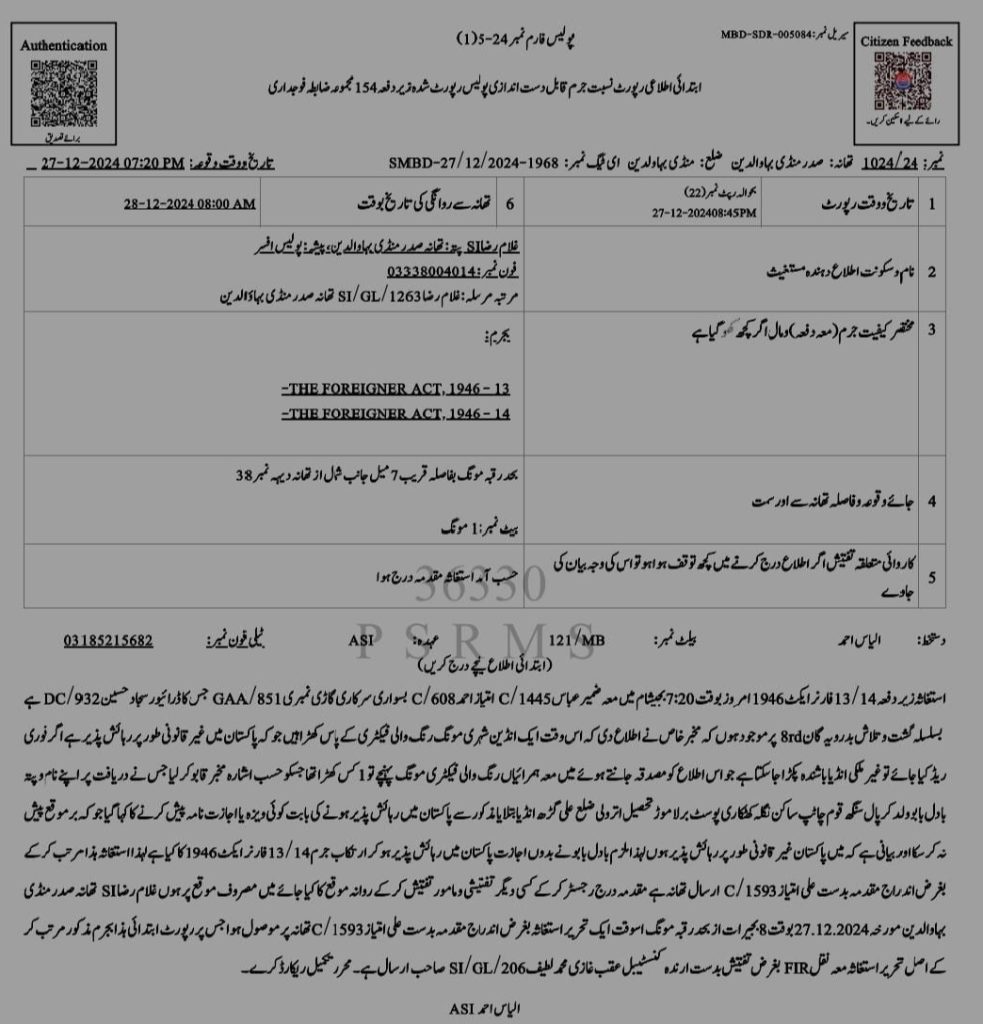
PUNJAB (Zaheer Sial) – An Indian citizen has been arrested in Mandi Bahauddin on charges of illegally entering and residing in Pakistan.

According to police sources, 30-year-old Badal Babu was apprehended near Moza Moong. The arrested individual hails from Nagla Khatkari, Post Barla Mor, Tehsil Atrauli, District Aligarh, India.

Badal Babu did not possess any legal visa or permission to stay in Pakistan. As a result, the Saddar Police Station promptly registered a case against him.

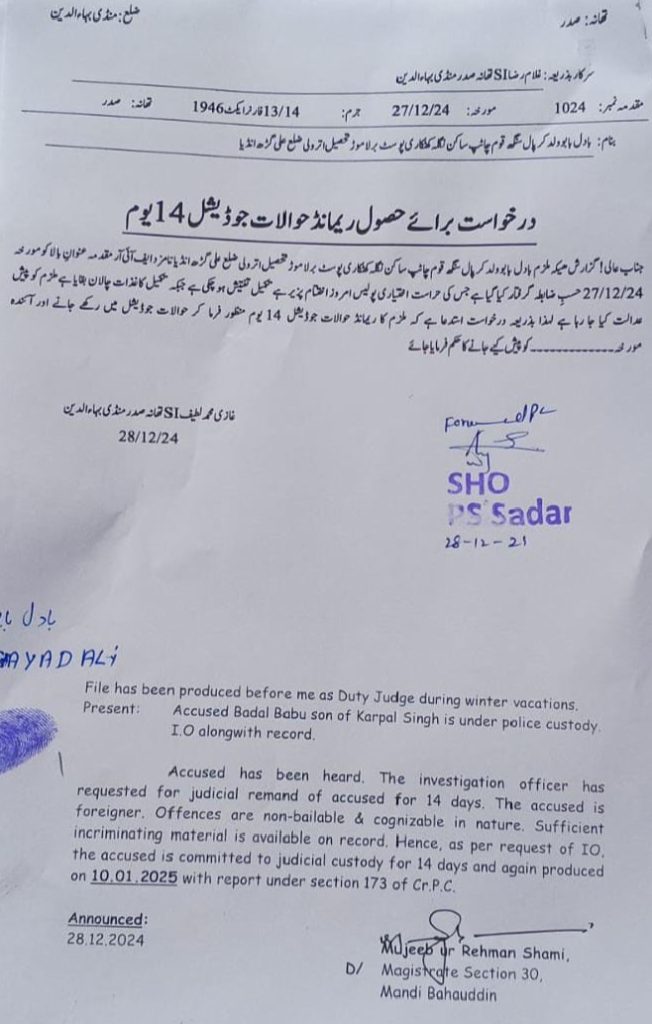
The police confirmed that a case has been filed against the accused under Sections 13 and 14 of the Foreigners Act, 1946. Following a court order, the accused has been sent to jail on a 14-day judicial remand.

Authorities have launched further investigations to determine the purpose of the accused’s entry into Pakistan and to identify any potential local connections.

Bilawal Bhutto criticizes unfulfilled PML-N commitments to PPP

Bilawal

LARKANA/KARACHI/ISLAMABAD/LAHORE, Dec 28: /DNA/ – Chairman Pakistan Peoples Party (PPP) Bilawal Bhutto Zardari has expressed dissatisfaction with the fulfillment of promises made by the Pakistan Muslim League-Nawaz (PML-N) to his party, saying that the government does not have the mandate to make unilateral decisions.

While speaking to the media in Ratodero, Chairman PPP said the massive turnout at the grand public gathering in Garhi Khuda Bakhsh clearly shows that even after 17 years, the people continue to stand firmly with the ideology of Shaheed Mohtarma Benazir Bhutto. He emphasized that resolving public issues remains his top priority, and despite limited resources, he strives to address as many problems as possible through hard work.

Chairman Bilawal Bhutto Zardari lamented that whether the PPP is in government or in opposition, the federal attitude toward smaller provinces has remained the same. He said that while PPP had supported the government to the extent of voting for the Prime Minister and had agreed that provinces should get their due rights, the agreed-upon commitments, such as forming a collective Public Sector Development Program (PSDP) for all provinces, were not fulfilled.

The PPP Chairman further mentioned that his party had established a committee with the federal government and PML-N to address key issues before presenting a report to the Central Executive Committee (CEC). However, meaningful progress was not made, and the commitments made on a political basis were not implemented effectively.

Chairman stressed that the federal government needs to work collaboratively with the provinces to ensure they receive their rights. He expressed hope that PPP’s grievances would be taken seriously and that constructive dialogue could help resolve provincial objections and fulfill political promises.

Responding to a question, Chairman Bilawal Bhutto Zardari said that the government does not have the mandate to make unilateral decisions, nor does it hold a two-thirds majority in Parliament akin to the 1990s. “They might think they don’t need to consult anyone, but the ground reality is different. They have the mandate to make collective decisions with political stakeholders, not unilateral ones, especially on critical issues like water rights, which violate the 1991 water pact.”

He urged the government to adopt an inclusive approach for the success of any project. “Ignoring objections and proceeding unilaterally will only make projects controversial. Collaborative planning, after understanding everyone’s perspective, is key to success. Otherwise, as with the Kalabagh Dam project, unilateral decisions will fail.”

Chairman Bilawal Bhutto Zardari stated that it is his responsibility to ensure access to clean drinking water for his people, despite not receiving a fair share under the NFC Award. Highlighting the PPP’s innovative solutions, he said the party has pioneered public-private partnerships in the region to address public needs despite resource constraints.

Regarding economic improvement and inflation, Chairman welcomed positive developments but emphasized that economic progress must be felt by the public. He pointed out the government’s ambitious goal of making Pakistan a trillion-dollar economy and questioned its feasibility without leveraging the agriculture sector, which he described as the backbone of Pakistan’s economy.

Chairman Bilawal Bhutto Zardari criticized the government’s approach to the internet and IT sector, urging them to enhance connectivity rather than restrict it. “Instead of slowing internet speeds or citing absurd excuses like cables being eaten by sea creatures, the government should focus on extending internet access to underserved areas.”

He highlighted the importance of digital stability for a youthful population, with 70% under the age of 30, and criticized unilateral decisions to disrupt internet access. “If the government had engaged stakeholders and addressed concerns like disinformation or the misuse of digital platforms by extremist organizations, we would have been willing to collaborate. But making decisions in isolation alienates the population, particularly the youth, which we cannot support.”

Chairman Bilawal Bhutto Zardari emphasized that public wants political stability and security, urging the government to adopt a collaborative approach in addressing national challenges.

Israeli actions in Gaza undermine international law, says Palestinian Ministry

Israeli actions in Gaza undermine international law, says Palestinian Ministry

JERUSALEM, /DNA/ – The Israeli occupation state is exploiting the failure of the UN Security Council to assume its legal responsibilities and is continuing to abuse our people in the Gaza Strip, racing against time to turn it into a scorched, uninhabitable land, by escalating its massacres, displacing its residents, destroying its hospitals, and mass bombing of citizens’ homes, especially in the northern Gaza Strip.

The Ministry of Foreign Affairs and Expatriates expresses its strong condemnation of the international community’s coexistence with scenes of genocide and displacement of our people, which have reached the point of public collusion with this massive amount of violations of international law without supervision or accountability, and stresses that the institutions of international legitimacy lose their credibility and their legitimacy erodes the longer the genocide continues, and as long as the UN Security Council is unable to stop it, and its inability to listen to the calls of the relevant international organizations, including the World Health Organization, the World Food Program, and UNRWA.

The Ministry calls on the UN Security Council to implement its Resolution 2735, which stipulates a ceasefire, the entry of aid into the Gaza Strip, the Israeli withdrawal from the Gaza Strip, enabling the State of Palestine to assume its full responsibilities in the Gaza Strip as well as in the West Bank, and stopping Israeli attacks in the occupied West Bank, including Jerusalem.

RCCI delegation led by Usman Shaukat visits Azerbaijan Embassy to offer condolences

RCCI delegation led by Usman Shaukat visits Azerbaijan Embassy to offer condolences

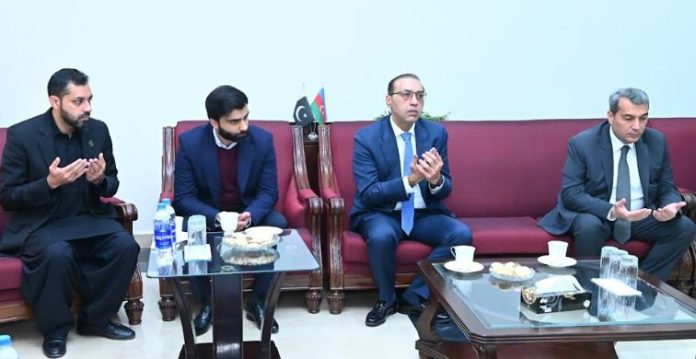
RAWALPINDI, DEC 28: /DNA/ – The Rawalpindi Chamber of Commerce and Industry (RCCI)President Usman Shaukat along with Executive Committee members, visited the Azerbaijan Embassy in Islamabad to express heartfelt condolences over the tragic crash of an Azerbaijani airliner near Aktau, Kazakhstan, which claimed numerous lives.

During his meeting with Azerbaijan’s Ambassador, Khazar Farhadov, President Usman Shaukat conveyed deep sorrow on behalf of RCCI and prayed for eternal peace for the departed souls. He also extended prayers for strength and patience for the bereaved families and wished a swift recovery for the injured.

The RCCI stands in solidarity with the people of Azerbaijan during this moment of profound grief and loss.

Mushaal fears Kashmir conflict a ticking time bomb to unlashed Indo-Pak war

Mushaal fears Kashmir conflict a ticking time bomb to unlashed Indo-Pak war

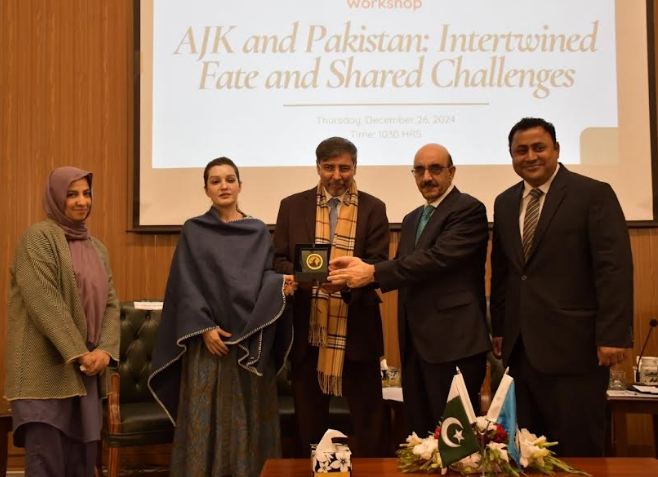
ISLAMABAD, DEC 28 /DNA/ – Ambassador Masood Khan, former President of AJK, called upon the youth of AJK , who have access to all opportunities and and enjoy all fundamental freedoms, to raise voice on behalf of those in IIOJK. He was speaking at a one-day workshop organized by the Institute of Regional Studies in collaboration with the Youth Forum for Kashmir, where deliberations were held on the root causes of the Kashmir dispute, the challenges faced by AJK residents, and the negative campaign waged by India against Pakistan. Intelligentsia and students from various universities of AJK participated in the event.

Mushaal Hussain Mullick, former SAPM for Human Rights and spouse of Jammu and Kashmir Liberation Front (JKLF) leader Yasin Malik, also urged the youth of Azad Jammu and Kashmir (AJK) to take lead in advocating for the right of self-determination of the people in IIOJK.

Earlier, at the workshop’s opening session, Ambassador Jauhar Saleem, President of the Institute of Regional Studies, emphasized the impact of India’s disinformation campaign on IIOJK’s ongoing struggle for freedom. He reaffirmed Pakistan’s solidarity with the people of Jammu and Kashmir in their pursuit for attaining the right of self-determination, in line with the United Nations resolutions.

In the closing session, Mr. Tariq Fazal Chaudhary, Member of the Parliamentary Kashmir Committee and Chief Whip of the National Assembly, endorsed youth involvement in discussions surrounding Jammu and Kashmir. He encouraged university students from AJK to participate in debates organized by the Kashmir Committee at the parliament house.

The well attended event reiterated  Pakistan’s commitment for advocating the aspirations of the people of Jammu and Kashmir while reinforcing the historical, religious and cultural ties that connect the two regions. Other notable speakers included Dr. Mujeeb Afzal , Mr. Altaf Hussain Wani, Dr. Mujahid Gillani, and Mr. Zaman Bajwa.

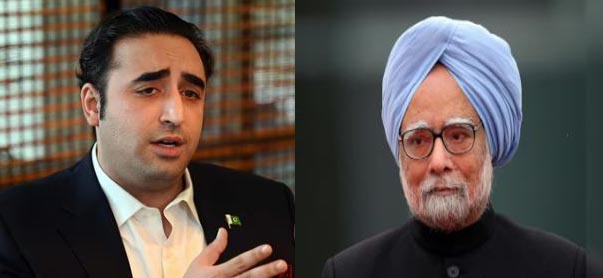
Bilawal Bhutto offers condolences to India on Manmohan Singh’s demise

Bilawal Bhutto offers condolences to India on Manmohan Singh’s demise

KARACHI: /DNA/ – Chairman Pakistan Peoples Party Bilawal Bhutto Zardari has expressed deep grief and sorrow over the death of former Indian Prime Minister Manmohan Singh and described him as a statesman, politician and economist who worked hard for his people.

In a condolence message, the PPP Chairman said that Manmohan Singh was born in a Chakwal village and he tried his best for better relationship between Pakistan and India during his tenures as the Prime Minister.

Bilawal Bhutto Zardari offered condolence to the bereaved family members and the people of India adding that villagers of his ancestral village Gah in Chakwal district in Pakistan are also mourning his death.

Chairman CDA chairs meeting on electric and feeder bus operations

Chairman CDA chairs meeting on electric and feeder bus operations

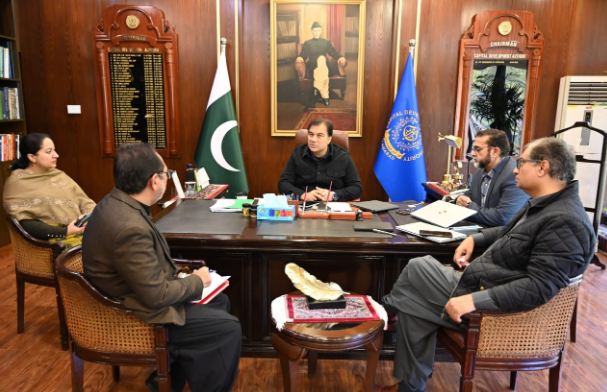
ISLAMABAD: /DNA/ – Chairman Capital Development Authority (CDA) Muhammad Ali Randhawa presided over a meeting at the CDA Headquarters on Saturday to discuss the operations of electric and feeder buses. The meeting was attended by Member Planning and Development, Member Technology, Member Finance, DG Works, Director BRT, Project Director BRT, and other senior officers.

During the meeting, a detailed briefing was given to Chairman CDA regarding the feeder electric buses. It was apprised that 160 electric buses have been allocated for all feeder routes, basically integrating and connecting them to various lines of the BRT network. In this project, 216 bus stops and 4 depots would be established at strategic locations, complemented by a robust charging infrastructure to support operations.

The meeting was briefed that 4 feeder routes, inaugurated in July this year, are already operational, with a significant increase in their daily ridership. Furthermore, on December 25 this year, an additional 4 routes were introduced, further expanding the network.
It was highlighted that charging infrastructure has already been established at Jinnah Convention Centre and Sector H-9, while the construction of a bus depot at Zero Point is in progress, with the project to be awarded soon.

Chairman CDA Muhammad Ali Randhawa expressed satisfaction with the progress made so far and directed that the remaining 13 feeder routes be launched soon, alongside the groundbreaking ceremony for the Zero Point bus depot. He also instructed the introduction of digital advertising boards in metro buses and terminals to enhance revenue streams and reduce reliance on subsidies, ensuring high-quality public service delivery.

Chairman CDA emphasized the need for a comprehensive policy regulations to transition all commercial and private transport in Islamabad to electric vehicles. He outlined that the CDA should lead by example, converting its entire bus fleet to electric vehicles in the first phase. Additionally, the CDA will engage with other public sector institutions and universities in Islamabad to facilitate the transition of their transportation systems to electric.

Chairman Muhammad Ali Randhawa directed Member Finance to develop strategies to minimize subsidy dependence and ensure financial sustainability while introducing electric buses for CDA. He urged the promotion of eco-friendly transport solutions in collaboration with citizens and stakeholders.

During the meeting, Chairman CDA Muhammad Ali Randhawa reaffirmed the CDA’s commitment to establishing a high-quality, affordable, and environmentally sustainable transport system for Islamabad.

Stay Connected

64FansLike
60FollowersFollow

Latest Reviews

Exchange Rates

USD - United States Dollar
EUR
1.17
GBP
1.35
AUD
0.72
CAD
0.73