Home Blog Page 720

President, PM express condolence over plane crash

President, PM express condolence over plane crash

Jeju Air Flight 2216 crashed at Muan International Airport on Sunday morning

DNA

ISLAMABAD: Prime Minister Muhammad Shehbaz Sharif on Sunday expressed his grief over the loss of many precious lives in a plane crash at Muan International Airport in Korea.

“In this hour of grief, our thoughts and prayers are with the bereaved families and with the people and the Government of Republic of Korea,” the prime minister posted on X account.

Meanwhile, President Asif Ali Zardari on also expressed his grief over loss of precious lives in a plane crash at Muan International Airport in South Korea. The president expressed his condolences with the people and the Government of South Korea, President Secretariat Press Wing said in a press release.  He also expressed his sympathies with the bereaved families.

According to foreign media reports, a Jeju Air Flight 2216 crashed at Muan International Airport on Sunday morning, resulting in at least 85 deaths.

The Boeing 737-8AS, which had departed from Bangkok with 181 people on board, including 175 passengers and six crew members, crashed as it attempted to land.

Azerbaijan says Russia shot at plane before crash, demands it admit guilt

Azerbaijan says Russia shot at plane before crash, demands it admit guilt

BAKU: Azerbaijani President Ilham Aliyev accused Russia on Sunday of firing at an Azerbaijan Airlines (AZAL) passenger jet before it crashed and of initially trying to cover up the cause of the fatal disaster, demanding that Moscow admit guilt.

Aliyev made the accusation in an interview with state media at Baku airport four days after the AZAL plane crashed in Kazakhstan, killing 38 people of the 67 people on board.

Azerbaijani officials have suggested the aircraft was hit by a Russian air defence system as it tried to land in Grozny, the capital of the Russian republic of Chechnya.

Aliyev’s unusually forthright accusation of his country’s traditional ally came a day after he spoke by phone to Russian President Vladimir Putin. A Kremlin statement on the phone call gave no indication that Putin had claimed responsibility for the crash.

“The facts are that the Azerbaijani civilian plane was damaged from the outside over Russian territory, near the city of Grozny, and almost lost control,” Aliyev told state television.

“We also know that electronic warfare systems put our plane out of control … At the same time, as a result of fire from the ground, the tail of the plane was also severely damaged,” he said.

Aliyev said that while “of course, our plane was hit by accident”, Baku was angry that Moscow had apparently tried to hide the cause of the crash and demanded its ally admit what happened.

He said it was “regrettable and surprising” that Moscow “put forward theories” that, he said, “clearly showed the Russian side wanted to cover up the issue”.

“For the first three days, we heard nothing from Russia except some absurd theories,” he said, adding that these included the plane hitting a flock of birds. He called the theory “completely removed” from reality, pointing out that the plane’s “fuselage is riddled with holes”.

Russia has said Grozny was being attacked by Ukrainian drones the day the AZAL flight tried to land.

Azerbaijani demands
Aliyev urged Moscow to issue a public apology to his country, saying Baku had made official “demands” to Russia two days ago.

“First, the Russian side must apologise to Azerbaijan. Second, it must acknowledge its guilt. Third, those responsible must be punished and brought to criminal responsibility, and compensation must be paid to the Azerbaijani state, as well as to the injured passengers and crew members.

“These are our conditions,” Aliyev said, in unusually strong language towards Moscow.

The Kremlin said on Saturday that during their phone conversation, Putin had apologised to Azerbaijan over the “tragic incident”. Putin said Russian air defence was operating in Grozny on December 25 when the plane tried to land, before diverting and crashing in western Kazakhstan.

The Kremlin statement gave no indication that Putin had said Russia was at fault. Later on Saturday, the Russian leader called for a “transparent” probe into the crash.

Aliyev’s office said on Saturday he had “emphasised” during the call that the plane had been subject to outside interference from Russia. Russian news agencies reported that Putin and Aliyev discussed the crash again on Sunday.

The United States said this week it had “early indications” that Russia was responsible for the crash but did not provide details.

The European Union called on Saturday for a “swift” and “independent” probe into the crash.

Wapda & Army to fight for National Women’s Basketball C´ship Title

Basketball

AFZAL JAVED

ISLAMABAD: Defending champion Pakistan Wapda will face Pakistan Army in the final of the ongoing National Women’s Basketball Championship in the decisive encounter will take place on Monday (today) at the WAPDA Sports Complex, organized by the Pakistan Basketball Federation (PBBF).

Wapda, who remain unbeaten throughout the championship, dominated Lahore in the first semifinal, winning 65-33. Wapda’s star player, Hijab Fatima, led the team with 24 points, while Kainat Zafar added 13 points. Aiman Mehmood scored 13 points for Lahore. The semifinal was officiated by referees Umer Mehmood, Gul Jamal, and Prem Shahzad.

In the second semifinal, Pakistan Army triumphed over Karachi with a commanding 59-19 victory, securing their spot in the final. Wearing red shirts, the Army girls were simply too strong for Karachi, who had performed well in the tournament but couldn’t upset the Army’s dominant play. Ayesha Dilshad was the standout player for Pakistan Army, scoring 20 points, while Zobia Shehnaz contributed 10 points. Referees for the second semifinal were Yasir Ghafoor, Adeel Raza, and M. Umer.

Wapda and Army will battle for the championship title on Monday (today), while Lahore and Karachi will compete for third place.

Islamabad Cup Snooker Championship Kicks Off

Islamabad

By our correspondent

ISLAMABAD: The Islamabad Cup Snooker Championship 2024 has officially begun at the Shender 41 Snooker Academy, organized by the Federal Billiard and Snooker Association.

Tournament Director Salim Akhtar Rana shared that over a hundred players are participating in the ongoing event. He added that top performers will represent Islamabad in the upcoming National Snooker Championship, which will be held under the auspices of the Pakistan Billiards and Snooker Association (PBSA).

In the ongoing matches, Mansoor Ahmed defeated Hasan Anwar 4-2 frames, Ali Dara triumphed over Azim Abbas 4-2 frames, Waqar Mir secured a 4-0 frames victory against Chaudhry Shahzar, and Faisal Masih beat Raja Manoor 4-2 frames to advance to the next round.

Tourist killed in Egypt Red Sea shark attack: environment ministry

Tourist killed in Egypt Red Sea shark attack: environment ministry

Cairo, Dec 29 (AFP/APP):A shark attack off Egypt’s Red Sea coast killed one tourist and injured another, the country’s environment ministry said on Sunday.
                  “Two foreigners were attacked by a shark in the northern Marsa Alam area, which led to the injury of one and the death of the other,” a ministry statement said.
                  The Egyptian government did not identify the victims’ nationalities.
                  Both tourists were moved to hospital in Port Ghalib, around 50 kilometres (30 miles) north of Marsa Alam, the environment ministry said.
                  Authorities have closed the area to swimmers for two days following the incident, which the ministry said occurred in “deep waters outside the designated swimming area”.
                  The Red Sea is a major tourist destination whose marine life make it popular with divers.
                  It is also a key employer and source of foreign currency for Egypt, a country of 107 million people trying to navigate out of its worst ever economic crisis.
                  Last month, at least four people died when a large wave hit and capsized a dive boat carrying more than 30 tourists of various nationalities off Marsa Alam.
                  Deadly shark attacks are a near-yearly occurrence in Egypt’s Red Sea, where marine experts warn unregulated construction, over-fishing, and irresponsible tourism practices contribute to changing the ecosystem and shark behavior.
                  In June 2023, a shark attack killed a Russian off the Red Sea resort city of Hurghada.

Pitfalls of misplaced priorities: some musings

Pitfalls of misplaced priorities: some musings

Analysis

Ansar Mahmood Bhatti

Politics in Pakistan continues to evolve with each passing day, but the challenges it faces are deeply rooted in its history. Since its inception in 1947, the country has been marked by persistent political upheavals, a phenomenon that has significantly hindered its ability to achieve steady progress and development. These disruptions have not only delayed nation-building efforts but also left Pakistan struggling to keep pace with other nations that gained independence around the same time, such as India and South Korea, which have made considerable strides in economic and political stability.

One of the fundamental reasons behind Pakistan’s stagnation lies in the entrenched feudal and autocratic mindsets that took hold in its early years. The dominance of feudal lords in politics has perpetuated inequality and slowed democratic reforms, as these elites prioritize their own interests over the welfare of the populace. Simultaneously, repeated military interventions and authoritarian regimes have further stifled the growth of democratic institutions, creating a cycle of instability and mistrust in civilian governance.

This blend of feudalism and dictatorship has left little room for inclusive policies, economic innovation, or robust institutional frameworks, preventing Pakistan from fully realizing its potential. Overcoming these challenges required concerted efforts to dismantle entrenched power structures, strengthen democratic institutions, and promote accountability and transparency in governance but unfortunately nobody either from the political or military side, ever endeavored to put things in order simply because none of them was ready to establish a system that adhered to constitutional principles. Despite the apparent need for reform and stability, efforts to bring order have been hindered by self-serving motives or power dynamics. Neither the political class nor the military appeared ready to relinquish their control or influence in favor of a governance model based on the rule of law and constitutional integrity. This reluctance perpetuated a cycle of instability, undermined public trust, and hampered the country’s progress toward democratic ideals and institutional accountability.

It is both fascinating and disheartening that, even after the passage of 77 years, the status quo continues to dominate the socio-political landscape of Pakistan. The enduring tug-of-war between the Establishment and politicians remains the defining feature of governance, perpetuating a cycle of power struggles that have stymied progress. This relentless pursuit of control, with each side seeking to assert its dominance over all facets of national life, has had far-reaching consequences.

The repercussions of this power imbalance are profound. The very essence of democracy—a system that thrives on representation, accountability, and the people’s will—has been compromised. Instead of fostering unity and prosperity, the ceaseless contest for authority has sown discord and stagnation. Meanwhile, the ordinary citizens, burdened by decades of neglect, corruption, and instability, find themselves trapped in a precarious state, grappling with economic hardships, social inequalities, and an uncertain future.

Even after more than seven decades of independence, the nation seems to be at a crossroads, uncertain about its trajectory. The question of what the future holds for Pakistan remains as pressing today as it was in the early years of its formation. Without meaningful reforms and a collective commitment to prioritise the needs of the people over the ambitions of a few, the country risks perpetuating this cycle of uncertainty and missed potential.

Recently, military courts convicted civilians involved in the May 9 incidents, a decision that appears to have deepened the already fragile civil-military relationship. The convictions lacked domestic and international support, raising questions about their legitimacy. Analysts argue that these individuals could have been prosecuted in civilian courts, leaving many to wonder why the military opted for its own tribunals, thereby inviting widespread public disapproval. The United States, European Union, and United Kingdom strongly criticised these trials, deeming them contrary to the spirit of Pakistan’s Constitution. While the sitting government appears unbothered by the rebuke from these nations, it is well aware of the potential long-term consequences if such criticism gains traction.

The challenges facing the incumbent ruling clique are expected to intensify once the Trump administration assumes office in the United States. Whether one likes it or not, the U.S. consistently plays a pivotal role in Pakistan’s major decision-making processes. It even has the ability to influence regime changes in the country. Therefore, any signals from advisors of the incoming U.S. administration—whether in favor of certain politicians or otherwise—should not be ignored and must be taken seriously.

Insiders familiar with these developments suggest that what has been observed so far is merely the tip of the iceberg. The real implications will become evident once the Trump administration is fully in charge.

The challenges faced by those in power are numerous and complex. The recent escalations at the Western border present yet another difficult issue for the security establishment to address. The situation in Kurram remains dire, with no resolution in sight. Meanwhile, any confrontation with the Taliban government under the current circumstances risks exacerbating the situation. This is particularly concerning as the Taliban have explicitly stated their intention to respond to Pakistani airstrikes within Afghan territory.

Political stability at home appears to be the only viable option to address both internal and external threats effectively. The ongoing discussions between PTI and the government hold the potential to contribute to this stability, provided they yield meaningful results. However, given the dismissive response from some government ministers to PTI’s offer for dialogue, the chances of these talks succeeding seem slim. Unfortunately, certain ministers, including the defense minister, appear determined to derail these negotiations, regardless of the consequences.

Even if talks between PTI and the government succeed, it is unlikely that political instability will dissipate anytime soon. The reasons are clear: the current setup lacks both credibility and public support. As I have emphasized in my earlier pieces, the only viable solution seems to be the holding of free and fair mid-term elections. Any other arrangement would likely prove counterproductive, especially in the current circumstances where politics is at its nadir, and the economy is in complete disarray.

After much ado, President Zardari signs contentious madrassa registration bill into law

After much ado, President Zardari signs contentious madrassa registration bill into law

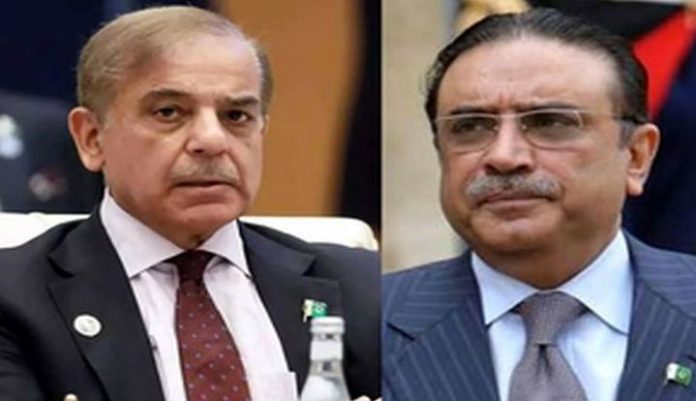
ISLAMABAD: President Asif Ali Zardari on Sunday signed the madrassa registration bill into law ending the weeks-long friction with the Jamiat Ulema-e-Islam-Fazl (JUI-F).

Meanwhile, the National Assembly Secretariat has issued a gazette notification for the said law according to which seminaries would be registered as per the Societies Act.

Furthermore, the president has also issued an ordinance concerning amendments to the Societies Registration Act 2024.

Play Video
As per the ordinance, applicable only to the Islamabad’s jurisdiction, madrassas will have the discretion to register either with the education ministry or the industries ministry.

The development follows the federal cabinet’s Friday’s approval of the tweaks to the Societies Registration Act 1860 after the government and the JUI-F resolved their differences.

Prime Minister Shehbaz Sharif had met JUI-F chief Maulana Fazlur Rehman wherein the former reportedly “accepted all demands of the Ittehad Tanzeemat-e-Madaris Deenia (ITMD)” regarding the bill.

The disputed madrassa bill, which has already been passed by both houses of parliament, had become a bone of contention between the Fazl-led party and the government.

Its enactment was part of an agreement between the government and the religio-political party for supporting the 26th Amendment, Fazl had said previously.

The bill required President Zardari’s assent to become law after he returned the bill, citing legal objections.

The said legislation, now an Act, amends the existing procedure for registration of madrassas with the education ministry, stating that the institutions should be affiliated with the industries ministry instead.

President’s objections
Previously, the president had reportedly raised eight objections over the-then bill regarding seminaries’ registration.

President Zardari, the sources had said, expressed fear that if the madrassa bill turns into a law, seminaries will be registered under the Societies Act, which may lead to the imposition of Financial Action Task Force (FATF), Generalised Scheme of Preferences Plus (GSP+), and other sanctions on the country.

He highlighted a potential conflict of interest arising from the registration process and expressed concerns about potential negative consequences for Pakistan’s international standing and internal stability.

According to the objections, the registration of religious seminaries under the law would lead to the spread of sectarianism and the establishment of many seminaries in the same society would lead to deterioration of the law and order situation. The president objected that there was a contradiction in the definition of madrassa in various provisions of the bill.

He objected that by registering madrassas as societies, they could be used for purposes other than education; there was a contradiction in the definition of madrassas in various clauses of the bill.

The registration of madrassas in the society would lead to a conflict of interest and such a conflict of interest would also lead to international criticism, while the approval of the bill could lead to a change in the FATF and other international organisations’ opinions and ratings of Pakistan, the objection by the president said.

The president suggested to the members of the assembly that international issues should be taken into account while drafting a bill related to madrassas.

Larkana: Bilawal Bhutto Zardari inaugurated Ratodero Water Supply Scheme

Larkana: Bilawal Bhutto Zardari inaugurated Ratodero Water Supply Scheme

The inauguration of the Ratodero Water Supply Scheme represents a significant step forward in addressing one of the most pressing needs of the people of Sindh

Mumtaz Ahmed Bhatti

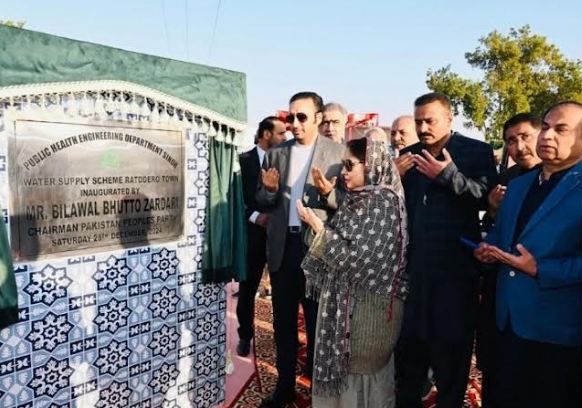
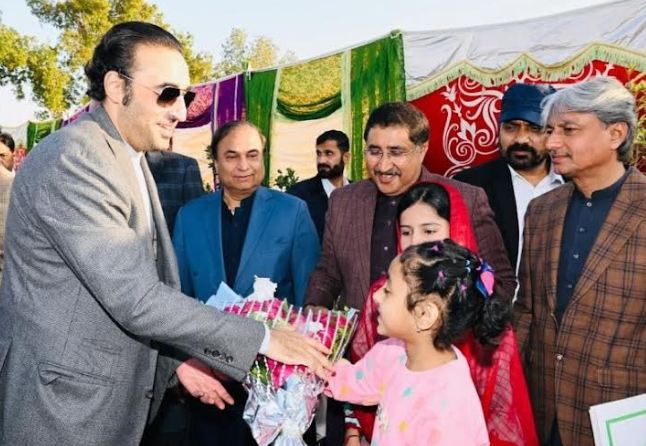
Access to clean drinking water is a fundamental human right and a cornerstone of public health. In the Sindh province of Pakistan, the Water Supply Scheme for Ratodero Town stands as a testament to the commitment of both local and provincial leadership in addressing this critical issue. The inauguration ceremony of the Water Supply Scheme for Ratodero Town was a momentous occasion, attended by prominent political figures and local residents. Bilawal Bhutto Zardari, Member of the National Assembly (NA-194) and Chairman of the Pakistan People’s Party (PPP), led the event, accompanied by Faryal Talpur, Member of the Provincial Assembly (PS-10), and Saleem Baloch, Minister for Public Health Engineering in Sindh.

Other dignitaries included Ijaz Ali Shah, Secretary of the Public Health Engineering Department (PHED) Sindh, Barkat Ali Khawaja, Chief Engineer of the Sukkur Region,Inayatullah Memon, Superintending Engineer of the Public Health Engineering Circle Larkana,Rashid Ali Rind Executive Engineer PHED,Ghulam Mohd Qureshi AEN Sub Division Ratodero and Nadir Ali Rind Sub Engineer Sub Division Ratodero. This assembly of PHED’s officials underscored the importance of the project and highlighted the collaborative efforts required to make it a reality.

The enthusiasm of the local population was palpable as they gathered in large numbers to witness the inauguration. Their participation symbolized a collective hope for a better future, one where access to clean drinking water would no longer be a luxury but a norm. The event was a celebration of progress, with residents expressing their gratitude and optimism for the positive changes the scheme would bring to their lives.The successful implementation of the Ratodero Water Supply Scheme was the result of visionary leadership and effective teamwork. Bilawal Bhutto Zardari’s special interest in the project served as a driving force, ensuring its prioritization and timely completion. His commitment to improving public health infrastructure across Sindh reflects the broader goals of the PPP, which seeks to enhance the quality of life for all citizens.

Saleem Baloch, as the Provincial Minister for Public Health Engineering, played a crucial role in mobilizing resources and overseeing the technical aspects of the project. His collaboration with senior officials like Ijaz Ali Shah and Barkat Ali Khawaja ensured that the scheme met the highest standards of quality and efficiency.One of the most remarkable aspects of the Ratodero Water Supply Scheme is its integration of advanced water filtration technologies. Ultra water filtration plant was deployed to ensure the provision of safe and clean drinking water.

These technologies are designed to remove contaminants and impurities, addressing the long-standing issue of waterborne diseases in the region.The rapid progress in establishing these filtration plants across Sindh reflects a strategic approach to public health engineering. By leveraging modern technology, the PHED has not only improved water quality but also built resilience against future challenges. This initiative aligns with global efforts to achieve the United Nations Sustainable Development Goal 6, which emphasizes clean water and sanitation for all.The successful implementation of the water supply scheme has significantly bolstered public confidence in the PPP’s governance. Access to clean drinking water is a basic yet transformative service that directly impacts the well-being of individuals and communities. By addressing this critical need, the PPP has reaffirmed its commitment to serving the people of Sindh.The project’s success also highlights the importance of transparency and accountability in public service delivery.

The collaborative efforts of various stakeholders, from engineers to policymakers, ensured that the scheme was completed efficiently and effectively. This model of governance serves as an example for other regions, demonstrating that public trust can be earned through tangible results.The Ratodero Water Supply Scheme is not an isolated success story; it is part of a broader effort to improve water access across Sindh. Under the leadership of Bilawal Bhutto Zardari, the PPP has prioritized the development of water infrastructure, ensuring that similar projects are undertaken in other regions. The rapid completion of ultra-filtration and RO plants is a testament to this commitment.This scaling-up of efforts reflects a strategic vision for sustainable development. By addressing water scarcity and quality issues, the PPP is laying the groundwork for long-term socio-economic growth. These initiatives also align with Pakistan’s national development goals, contributing to the broader objective of reducing regional disparities and fostering inclusive progress.

The inauguration of the Ratodero Water Supply Scheme represents a significant step forward in addressing one of the most pressing needs of the people of Sindh. Through visionary leadership, advanced technology, and effective collaboration, the project has transformed lives and strengthened public trust in governance. Its success serves as a model for sustainable development, demonstrating that even the most daunting challenges can be overcome with determination and teamwork.As Sindh continues its journey toward inclusive growth, the lessons learned from the Ratodero Water Supply Scheme will serve as a guiding light.

It is important to appreciate the hard work of the Minister and Secretary of Public Health Engineering including all engineers for completing the best quality water supply and sewerage projects.

Bangladesh HC keen to expand ties with Pakistan

Bangladesh HC keen to expand ties with Pakistan

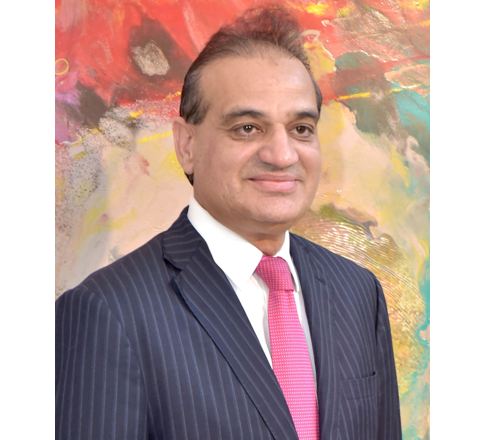
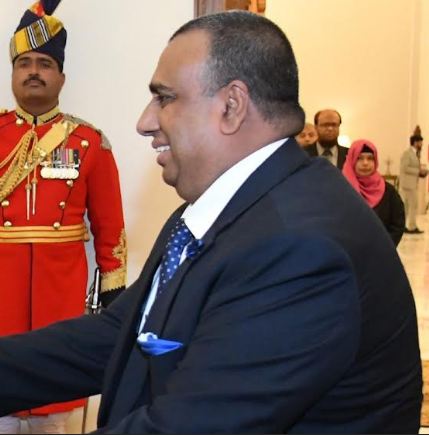
ISLAMABAD, DEC 29 /DNA/ – Central Chairman, EFP, former President ICCI, a distinguished industrialist, extended his warm congratulations to the newly appointed High Commissioner of Bangladesh, Mr. Md. Iqbal Hussain, during a special meeting.

On this occasion, he expressed his honor to be the first in Pakistan to congratulate the Bangladeshi High Commissioner on assuming this important role. He highlighted that the establishment of the current government in Bangladesh has infused new warmth into the bilateral relations between the two countries, fostering a stronger sense of brotherhood among the people of both nations.

High-level diplomatic engagement between Pakistan and Bangladesh commenced in September during the United Nations General Assembly when Professor Dr. Muhammad Yunus, the Chief Advisor of the interim government of the People’s Republic of Bangladesh, met with Pakistan’s Prime Minister Shehbaz Sharif.

In response, the High Commissioner of Bangladesh, Mr. Md. Iqbal Hussain, thanked Mian Akram and assured the Pakistani government and business community, on behalf of the Bangladeshi government and the High Commission, that the new government is committed to promoting bilateral trade and exploring new business opportunities with Pakistan.

South Africa defeat Pakistan in first match by two wickets

South Africa beat Pakistan by two wickets

CENTURION: Marco Jansen and Kagiso Rabada have led South Africa to inflict defeat on Pakistan by two wickets in the first Test at SuperSport Park Cricket Stadium, Centurion, on Sunday.

South Africa qualified for the World Test Championship (WTC) final after today’s victory.

Returning pacer Mohammad Abbas’ six-wicket haul went in vain as South Africa held their nerves calm to edge past Pakistan.

South Africa’s tailenders Rabada and Jansen displayed nerves of steel and put together a match-winning 51-run partnership to defy Pakistan’s comeback.

The duo batted sensibly to recover their side from 99/6 after Abbas’ six-fer.

The eventful day kicked off with the home side resuming their innings from 27/3 through Aiden Markram and skipper Temba Bavuma, while chasing a modest 148.

The duo stretched their overnight partnership to 43 runs until Abbas cleaned up Markram, who scored 37 off 63 deliveries with the help of six boundaries.

The returning pacer soon got rid of South Africa’s batting mainstay Bavuma to open the floodgates.

The skipper remained the top-scorer for the Proteas Men with a cautious 40 off 78 deliveries, comprised of four fours and a six.

The next over saw Naseem Shah finally opening his account by castling wicketkeeper batter Kyle Verreynne, who made just two.

Abbas further pushed South Africa to the backfoot by dismissing David Bedingham (14) and debutant Corbin Bosch (zero) on successive deliveries, reducing the home side to 99/8.

Following the catastrophic collapse, Jansen and Rabada fought well to take the hosts’ total to 116/8 with a crucial 17-run partnership.

When the lunch was taken, Rabada was unbeaten on 10, while Jansen had made five.

For Pakistan, Abbas took six wickets, while Naseem and Khurram Shahzad picked one.

Playing XIs

Pakistan: Shan Masood (captain), Saim Ayub, Babar Azam, Kamran Ghulam, Mohammad Rizwan, Saud Shakeel, Salman Ali Agha, Aamir Jamal, Naseem Shah, Khurram Shahzad and Mohammad Abbas.

South Africa: Tony de Zorzi, Aiden Markram, Ryan Rickelton, Tristan Stubbs, Temba Bavuma (captain), David Bedingham, Kyle Verreynne, Marco Jansen, Kagiso Rabada, Dane Paterson, and Corbin Bosch.

Stay Connected

64FansLike
60FollowersFollow

Latest Reviews

Exchange Rates

USD - United States Dollar
EUR
1.17
GBP
1.35
AUD
0.72
CAD
0.73