Home Blog Page 719

NPC, PFUJ to be Catalyst for promoting Pakistan and Türkiye bilateral economic, Culture ties: Türkish Ambassador

NPC, PFUJ to be Catalyst for promoting Pakistan and Türkiye bilateral economic, Culture ties: Türkish Ambassador

“NPC, PFUJ, Türkish embassy decide to organize trade, tourism conference”

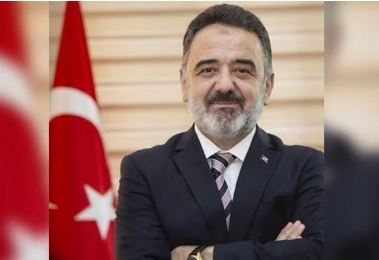
ISLAMABAD: DEC 30 /DNA/ – Ambassador of Türkiye to Pakistan Irfan Neziroglu on Monday said that Pakistan Union of Journalist and National Press Club Islamabad can be Catalyst for promoting Pakistan and Türkiye bilateral economic, diplomatic and cultural ties in future.

Pakistan and Turkish economic cooperation is needed for hours and National press Club Islamabad can play a pivotal role in this sector and other activities including international trade conferences from the platform of the National Press Club to be held in near future.

He expressed these views during a meeting with a representative delegation of the Pakistan Federal Union of Journalists (PFUJ), National Press Club Islamabad and Rawalpindi Islamabad Union of Journalists (RIUJ) at the Turkish here.

The delegation comprised included President , PFUJ Muhammad Afzal Butt, President National Press Club Azhar Jatoi, Secretary National Press Club, Nayyar Ali, Secretary Finance NPC,  Waqar Abbasi, President RIUJ,  Tariq Ali Virk, Finance Secretary Nadeem Chaudhry and Joint Secretary Gulzar Khan were present.

Ambassador of Türkiye said that the brotherly relations between Pakistan and Turkey have historical significance and bilateral ties are rooted in long history.

The envoy said the relations established after the independence of Pakistan but during the eras of Late Prime Minister of Pakistan, Zulfikar Ali Bhutto and Ex. President of Pakistan General Zia-ul-Haq has become stronger and deeper in later decades.

The Turkish envoy said the proportion of young people in the population of Turkey and Pakistan makes them common and this potential to impact on the future economic strength of both sides.

“We are working to strengthen bilateral cooperation, bilateral trade and tourism and enhance the connectivity between both sides of the young population to exploit the bilateral potential.”

He said people-to -people connectivity between both sides are stronger and “We have good ties with every school of thought and institution in Pakistan.

The Turkish Ambassador in a meeting with the media leaders delegation said that the Turkish Embassy Islamabad is in constant contact with the institutions of inter-institutional cooperation, Chamber of Commerce and trade and Higher Education of Pakistan.

The envoy said that the trade volume between Pakistan and Türkiye is not according to its true potential  and there is a dire need for increased bilateral trade.

He appreciated the offer of PFUJ and National Press Club to organize conferences on trade and tourism between the two countries along with other stakeholders and said that “We wish to meet people of every school of thought in Pakistan and work for their welfare.

The Türkiye Ambassador said that the Türkiye International Cooperation organization TEKA is playing its due role in this regard.

He also expressed his keen interest in the tourism and hospitality sector in Pakistan.

The Turkish ambassador also showed his interest in the activities organized for children and families at the National Press Club in the Ramadan Festival.

He also assured the delegation of playing its due role in other matters including the Journalist exchange program between Türkiye and Pakistan.

The Turkish ambassador welcomed the suggestions made by PFUJ President Afzal Butt, National Press Club President Azhar Jatoi and Secretary NPC Nayyar Ali in the meeting.

Ambassador of Türkiye to Pakistan Irfan Neziroglu on Monday said that Pakistan Union of Journalist and National Press Club Islamabad can be Catalyst for promoting Pakistan and Türkiye bilateral economic, diplomatic and cultural ties in future.

Pakistan and Turkish economic cooperation is needed for hours and National press Club Islamabad can play a pivotal role in this sector and other activities including international trade conferences from the platform of the National Press Club to be held in near future.

He expressed these views during a meeting with a representative delegation of the Pakistan Federal Union of Journalists (PFUJ), National Press Club Islamabad and Rawalpindi Islamabad Union of Journalists (RIUJ) at the Turkish here.

The delegation comprised included President , PFUJ Muhammad Afzal Butt, President National Press Club Azhar Jatoi, Secretary National Press Club, Nayyar Ali, Secretary Finance NPC,  Waqar Abbasi, President RIUJ,  Tariq Ali Virk, Finance Secretary Nadeem Chaudhry and Joint Secretary Gulzar Khan were present.

Ambassador of Türkiye said that the brotherly relations between Pakistan and Turkey have historical significance and bilateral ties are rooted in long history.

The envoy said the relations established after the independence of Pakistan but during the eras of Late Prime Minister of Pakistan, Zulfikar Ali Bhutto and Ex. President of Pakistan General Zia-ul-Haq has become stronger and deeper in later decades.

The Turkish envoy said the proportion of young people in the population of Turkey and Pakistan makes them common and this potential to impact on the future economic strength of both sides.

“We are working to strengthen bilateral cooperation, bilateral trade and tourism and enhance the connectivity between both sides of the young population to exploit the bilateral potential.”

He said people-to -people connectivity between both sides are stronger and “We have good ties with every school of thought and institution in Pakistan.

The Turkish Ambassador in a meeting with the media leaders delegation said that the Turkish Embassy Islamabad is in constant contact with the institutions of inter-institutional cooperation, Chamber of Commerce and trade and Higher Education of Pakistan.

The envoy said that the trade volume between Pakistan and Türkiye is not according to its true potential  and there is a dire need for increased bilateral trade.

He appreciated the offer of PFUJ and National Press Club to organize conferences on trade and tourism between the two countries along with other stakeholders and said that “We wish to meet people of every school of thought in Pakistan and work for their welfare.

The Türkiye Ambassador said that the Türkiye International Cooperation organization TEKA is playing its due role in this regard.

He also expressed his keen interest in the tourism and hospitality sector in Pakistan.

The Turkish ambassador also showed his interest in the activities organized for children and families at the National Press Club in the Ramadan Festival.

He also assured the delegation of playing its due role in other matters including the Journalist exchange program between Türkiye and Pakistan.

The Turkish ambassador welcomed the suggestions made by PFUJ President Afzal Butt, National Press Club President Azhar Jatoi and Secretary NPC Nayyar Ali in the meeting.
Wapda Clinches National Women’s Basketball Championship Title

Basketball

AFZAL JAVED

ISLAMABAD: Defending champion Wapda secured the National Women’s Basketball Championship title once again, defeating a strong Pakistan Army team 38-33 in a thrilling encounter at the Wapda Sports Complex on Monday.

Eight teams participated in the five-day championship, including Pakistan Wapda, Karachi, Faisalabad, Islamabad, Pakistan Army, Lahore, Hazara, and Bahawalpur. The event was organized by the Pakistan Basketball Federation (PBBF).

The closing ceremony was attended by General Manager of Wapda Sports, Imdad Ullah Memon, who was the chief guest, alongside Secretary General of the Pakistan Basketball Federation (PBBF), Khalid Bashir, and other dignitaries.

Wapda dominated the first half of the final, preventing their opponents from mounting any significant challenge. They took a commanding 12-point lead by halftime, with a score of 27-15.

In the second half, Pakistan Army fought hard to close the gap but was unable to overcome Wapda’s lead. The final score was 38-33 in favor of Wapda.

Key players for Wapda, Hijab Fatima and Kainat Zafar, played crucial roles in retaining the championship title. Hijab scored 12 points, while Kainat added 10 points. For Pakistan Army, Fajar Fatima was the top scorer with 9 points, followed by Aysha Dilashad and Kashifa Noreen, who both scored 8 points each.

In the third-place match, Lahore triumphed over favorites Karachi, securing a dominant 48-23 victory. Lahore led the match by 21 points at halftime, with a score of 33-12. Khadija Mushtaq and Aimen Mehmood led the scoring for Lahore, both contributing 13 points each.

The closing ceremony also featured the distribution of prizes, with General Manager of Wapda Sports, Imdad Ullah Memon, and Secretary General of the Pakistan Basketball Federation, Khalid Bashir, presenting awards to the players.

Pakistan records deadliest year for security forces in decade with 685 casualties

Pakistan records deadliest year for security forces in decade with 685 casualties

Security Landscape of Pakistan’s 2024

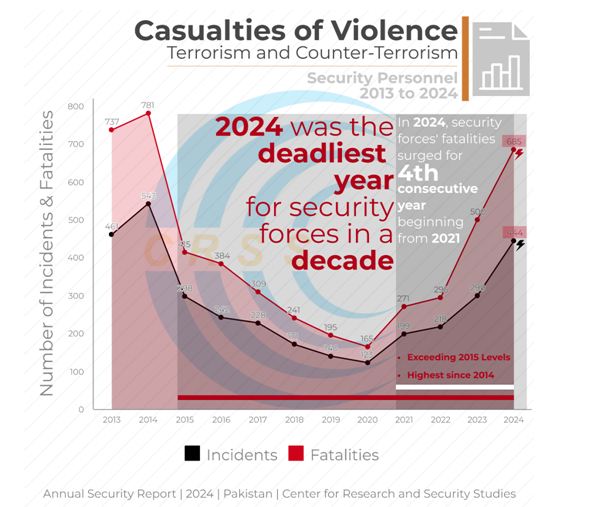
With at least 685 fatalities and 444 terror attacks suffered, 2024 turned out to be the deadliest year for Pakistan’s civil and military security forces in a decade.

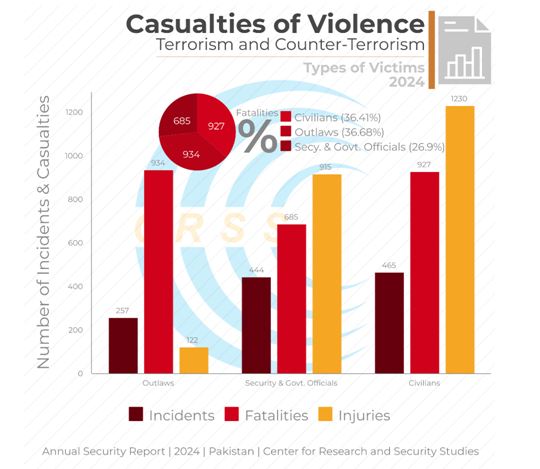
Equally alarming were the cumulative losses of civilians and security personnel, i.e. 1612 fatalities, accounting for over 63% of the totalrecorded this year and marking 73% more losses compared to 934 outlaws eliminated.

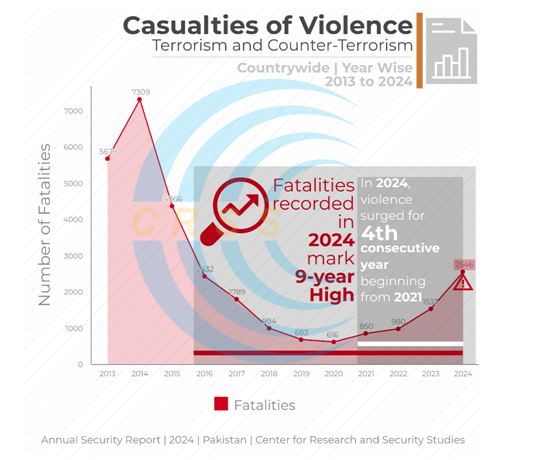
The overall fatalities recorded this year were a record 9-year high, and over 66% more than 2023. On average, nearly seven lives were lost daily, with November emerging as the deadliest month across all metrics, compared to all other months of the year.

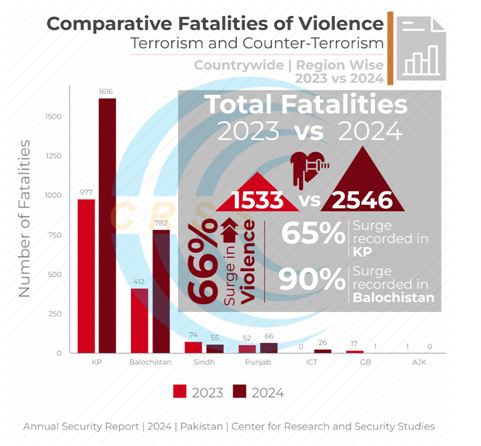
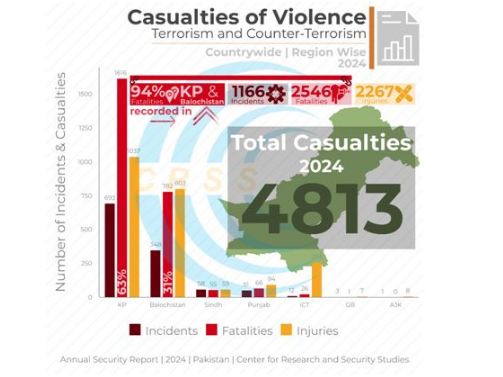
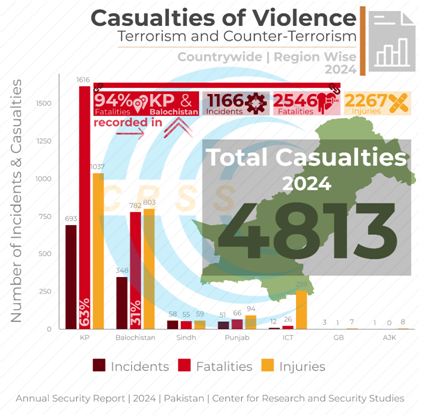
The violence took the heaviest toll onKhyber Pakhtunkhwa which topped in human losses with 1616 fatalities, followed by Balochistan with 782 fatalities.

Key findings of the Annual Security Report 2024 issued by the Center for Research and Security Studies (CRSS), Pakistan.

Overall Toll

In 2024, Pakistan suffered2546 violence-linked fatalities and 2267 injuries among civilians, security personnel, and outlaws. This tally of casualties stemmed from 1166 incidents of terror attacks and counter-terror operations, marking a grim year for country’s security landscape.

Comparison with 2023

Compared to last year, these figures mark, i) an over 66% surge in violence (2546 vs 1533 fatalities), ii) over 55% more injuries (2267 vs 1462), and iii) around 49% more incidents (1166 vs 784).

Regional Impact | KP & Balochistan – Battleground Provinces

KP and Balochistan accounted for 94% of all fatalities and 89% of all incidents across the country. While KP suffered most of fatalities (over 63%) recorded this year, followed by Balochistan (31%), the highest surge in violence, compared to last year, however was recorded in the latter province (90%), followed by the former (65%), and it disregards 260% surge in Islamabad as the number of fatalities remains very low in comparison (26).

The Deadliest Month

November was the deadliest month across all metrics; with the highest number of attacks (125), fatalities (450) and injuries (625) recorded compared to all other months of the year.

Shifting Trends Over the Decade

The fatalities recorded this year mark a record 9-year high, exceeding the 2016 level (2432) and highest since 2015 (4366). Moreover, the data collected over the last 10 years shows a sharp downward trend from 2015 to 2020, with fatalities declining each year by around 33% on average. This 6-year long declining and in fact, an encouraging trend in Pakistan’s security landscape, was followed by resurgence in 2021. This is evident from the fact that violence in Pakistan constantly surged by 38% spike in 2021, 15% in 2022, 56% in 2023 and 66% in 2024 (almost 44% yearly surge in violence on average since 2021).

District-Level Insights | Hotspots in KP and Balochistan

The highest number of violence and counter-violence-linked fatalities were recorded in KP’s newly merged districts bordering Afghanistan such as Kurram, North Waziristan, Khyber; other districts in KP with significant fatalities included Dera Ismail Khan, Bannu, and Lakki Marwat. These districts were followed by Balochistan’s districts of Quetta, Kech, Kalat, and Musakhail.

Moreover, the fatalities in these most severely affected districts of Balochistan in 2024 alone were nearly equal to their combined total recorded over the previous three years (2021–2023), while a similar trend was observed in the hardest-hit districts of KP.

Civilians, Security Forces and Outlaws Fatalities | Alarming Disparities

In 2024, an alarming disparity was observed between:

i) fatalities of civilians and security personnel vs outlaws:

Against 934 outlaws eliminated, the civilians and security personnel suffered 1612 fatalities, which account fornearly 73% more losses compared to outlaws. Their combined losses accounted for over 63% of all fatalities compared to outlaws’ making up 37% of total losses recorded this year.

ii) number of terror attacks against civilians and security forces vs counter-terror operations against outlaws: The terror attacks on security officials and civilians outnumbered the security operations conducted against the outlaws, by nearly four times i.e. 909 terror attacks vs 257 security operations.

Security Forces Under Siege

In 2024, the security forces personnel also suffered the highest number of terror attacks and fatalities in a decade, i.e. 444 terror attacks and 685 fatalities. This figure exceeds the 2015 level where they suffered 298 attacks and 415 fatalities, and is highest since 2014 (543 terror attacks and 781 fatalities).

The number of terror attacks against them and the resulting losses continued to decline from 2015 to 2020, for 6 consecutive years. Starting 2021, a resurgence was recorded across both these metrics which continued each successive year till the period under review.

Resurgence in Militancy and Insurgency

Historical data on militancy and insurgency-related fatalities, similar to the previous trend on overall fatalities, indicates a sharp upward trend since 2021. The fatalities resulting from militants’ attacks – after continuing to decline for 7 consecutive years (from 2014 to 2020) by a yearly average of around 29%, surged each year from 2021 onwards till the period under review, by the average of 38%.

The declining trend in insurgency observed since 2014 also reversed sharply in 2022, with the violence escalating by 38% in 2022, 118% in 2023, and 192% in 2024 (116% surge each year on average).

Sectarian Violence

Sectarian violence in 2024 claimed 182 lives and left 234 people injured. The majority of the victims were Shias, with 79 killed and 35 injured, followed by Sunnis, who suffered 21 fatalities and 72 injuries. Incidents involving both Shia and Sunni communities resulted in 79 deaths and 117 injuries. Additionally, the violence claimed the lives of 2 Ahmadis and 1 Christian.

Historical data on sectarian violence against Shia and Sunni communities reveals a deeply troubling trend, where between 2015 and 2020, sectarian violence claimed 467 lives. Alarmingly, this figure rose to 487 in the subsequent four years (2021–2024), underscoring the escalating nature of this threat and its growing impact on Pakistan’s security landscape.

Palestine Ministry urges UN action as Israel announces complete destruction of Jabalia Camp

Palestine Ministry urges UN action as Israel announces complete destruction of Jabalia Camp

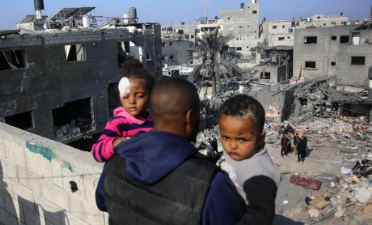
JERUSALEM: DEC 30 /DNA/ – In full view of the international community, the Israeli government boasted about completing the complete destruction of Jabalia camp, and announced its transition to the stage of destroying Beit Lahia and Beit Hanoun as is currently happening, in official confessions of committing the most heinous forms and manifestations of genocide, including mass killings, destroying hospitals, and using the policy of starvation as a weapon in the aggression. It publicly demands the evacuation of the remaining residents who have tasted all kinds of suffering over 15 months of genocide, hunger, and deprivation, to throw them into an endless cycle of displacement in a tight circle of death or forced displacement, especially in light of the winter and severe cold that has so far claimed the lives of 6 Gazan children.

It has become clear that the Israeli government is deliberately fabricating successive agendas and documenting them as a distraction to hide its plans and consecrate its occupation of the Gaza Strip and change its features, if not turn it into a scorched earth unfit for human life.

This is at a time when attacks by armed settler militias against Palestinians, their land, property and holy sites are escalating, as happened recently in the town of Silwad, in a practical translation of official Israeli incitement and racist calls issued by more than one Israeli official to expand the areas of settlement farms and pastoral settlement circles at the expense of citizens’ lands, as part of a blatant plan to complete the illegal unilateral measures to annex the West Bank under the slogan of imposing Israeli law on the settlements.

The Ministry calls on the UN Security Council to assume its responsibilities in putting an end to Israel’s disregard for relevant UN resolutions, especially Resolution 2735 and the General Assembly resolution calling for the implementation of the advisory opinion issued by the International Court of Justice within 12 months.

Pakistan appreciates Ankara declaration between Ethiopia, Somalia 

Pakistan appreciates Ankara declaration between Ethiopia, Somalia 

ISLAMABAD: DEC 30 /DNA/ – The Islamic Republic of Pakistan on Monday lauded the Ankara Declaration which would resolve the differences between the Federal Democratic Republic of Ethiopia (FDRE) and the Federal Republic of Somalia.

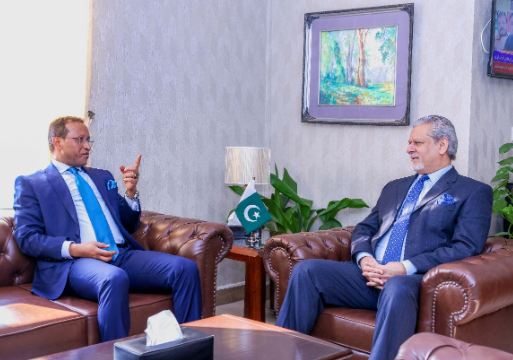
The Ankara Declaration came under discussion during a meeting between Dr. Jemal Beker, Special Envoy and Ambassador Extraordinary of the FDR Ethiopia to the Islamic Republic of Pakistan, Turkmenistan and the Kyrgyz Republic, and H.E. Ambassador Hamid Asghar Khan, Additional Secretary (Africa) for the Ministry of the Foreign Affairs of Pakistan.

During the meeting, Ambassador Dr. Jemal praised the crucial role played by the Republic of Türkiye in mediating the dialogue between the two sisterly countries for resolving their differences which would further integrate the region and ensure regional peace, prosperity and development.

He said the Ankara Declaration is a manifestation of the comprehensive foreign policy reforms undertaken by the Government of Ethiopia, which gives top priority and focus to its neighboring countries to integrate the region by ensuring lasting peace and sustainable development.

The Ambassador said the declaration is based on a win-win scenario and aimed at accomplishing peace and stability in the region, and providing Ethiopia an access to sea as enshrined in the international laws. 

The FDR Ethiopia has rendered numerous sacrifices for global peace by consistently participating in the United Nations Peacekeeping Missions in the region and beyond, the Ambassador remarked.

On the other hand, Ambassador Hamid Asghar Khan commended the Ankara Declaration as a crucial initiative for the regional peace, stability and development.

The dialogue is only solution for all the problems, he said while acknowledging the pivotal role played by the FDR Ethiopia in regional peace and stability. 

During the meeting, both sides also reviewed the full spectrum of the relations between the FDR Ethiopia and the Islamic Republic of Pakistan, and also discussed future initiatives for further strengthening their bilateral ties including the Single Country Exhibition scheduled for May, 2025 in Addis Ababa.

Islamabad meeting charts path for enhanced Pakistan-Somalia economic cooperation

Islamabad meeting charts path for enhanced Pakistan-Somalia economic cooperation

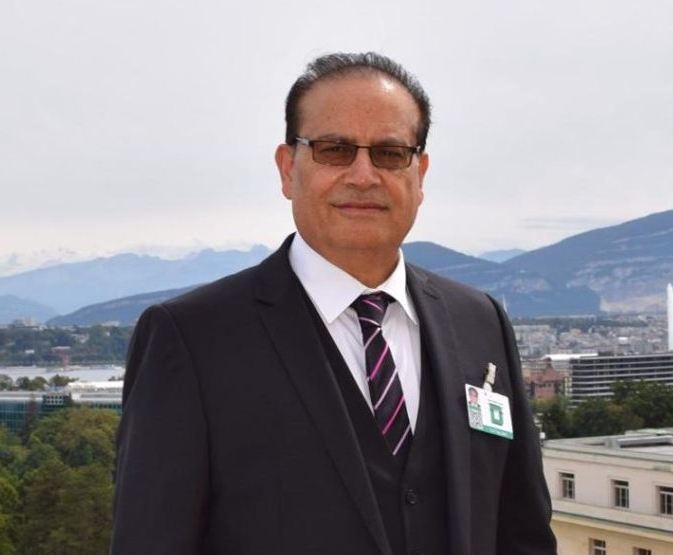
ISLAMABAD: DEC 30 /DNA/ – United Business Group (UBG, FPCCI) Secretary General Zafar Bakhtawari met with Somalia’s Ambassador, Sheikh Noor Muhammad Hassan, at the Somali Embassy in Islamabad on Monday. The meeting focused on strengthening bilateral trade and cultural ties. Also present on the occasion were former President of Chakwal Chamber of Commerce and Chairman of Ba-Waqar Pakistan, Waqar Bakhtawari; ICCI Executive Member Roohail Anwar Butt; Fatima Hassan; and the Deputy Head of Mission Yasin Mohamud Mire، Counsellor Jama Hassan and other officials from the Somali Embassy.

During the meeting, Somalia’s Ambassador shared that he has served as a minister in various ministries in Somalia and is primarily a politician. He expressed his commitment to enhancing relations, promoting trade, and strengthening diplomatic ties between the two countries during his tenure in Pakistan. Sheikh Noor Muhammad Hassan highlighted the significant improvement in Somalia’s security situation and extended an invitation to Zafar Bakhtawari to visit Somalia with a trade delegation.

The Ambassador emphasized Somalia’s strategic advantage as a seaport nation, which offers Pakistan the opportunity to expand its maritime trade with other African countries. He stated that strengthening trade relations between Somalia and Pakistan remains his top priority.

Zafar Bakhtawari remarked that Somalia is a vital and resource-rich country in Africa. Enhancing trade with Somalia would further deepen mutual relations. Introducing UBG, he explained that it is a representative organization of Pakistan’s business community, led by its Patron-in-Chief, S.M. Tanveer, a prominent industrialist. Bakhtawari highlighted the vast potential for fostering trade relations between the two countries and noted the growing demand for Pakistani products in the Somali market. He emphasized the need to establish platforms to bring the business communities of both countries closer.

Waqar Bakhtawari stated that Pakistan’s business community is ready to provide all possible cooperation to strengthen ties with Somalia. He expressed gratitude for the Ambassador’s interest and support, noting that fostering close relations between the people of both nations could open new avenues for global trade.

Roohail Anwar Butt highlighted the quality and popularity of Pakistani products in the Somali market. He stressed the importance of establishing direct connections between traders from both countries to make trade easier and more beneficial.

This meeting underscored the mutual commitment to fostering stronger trade and cultural relations between Pakistan and Somalia.

Urgent call for unity and actions to secure a better future for Pakistan 

Urgent call for unity and actions to secure a better future for Pakistan 

ISLAMABAD: DEC 30 /DNA/ – As Pakistan stands at a critical juncture, it is essential for the nation to address the deepening challenges threatening its future. Time is running out, and the people of Pakistan—custodians of the great Indus civilization—must not be allowed to sink into despair or delusion about the present or the future. Immediate action is needed to secure the fundamental human rights that every citizen is entitled to, including access to education, clean drinking water, healthcare, safety, and the freedom of expression within a thriving society, not merely one that survives.

The path forward requires the unity of all Pakistanis—young and old, rural and urban, privileged and marginalized, rich and poor, civilian and military. It is only through collective action that we can address the critical socio-economic issues that face the nation. We must dismantle all forms of discrimination, whether based on gender, religion, sect, class, caste, or geography, in order to meet the global, regional, and national challenges ahead.

This vision can only be achieved when people come together through a bottom-up approach, developing plans and programs for implementation within deliberative democratic processes. By fostering collaboration and ensuring active participation, we can create a knowledge-based society that provides opportunities for all and a safe, inclusive, and flourishing environment for future generations.

This will require building institutions that support strong local governance, provincial self-sufficiency, and effective federal coordination to ensure national harmony. We must create a society that eliminates the push factors which force individuals to risk their lives in search of better opportunities abroad.

Now is the time for action. Let us unite and begin working toward a brighter, more sustainable future for Pakistan—starting today.

Billions of microplastics present in tea bags may cause cancer: health experts

Billions of microplastics present in tea bags may cause cancer: health experts

LAHORE: Billions of nanoplastics present in tea bags may cause serious health issues, including fertility problems and increased risk of multiple cancers, warn health experts.

If a common person drinks tea with tea bags, then they should know that the microplastics present in it can cause multiple body disorders. A study presented by the University of Barcelona, Spain, alarmed the concerns in this regard.

In the study, experiments were conducted on tea bags made up of commercially available plastic polymers, which revealed that tea bags made of polypropylene released 1.2 billion microplastic particles in a drop of hot water.

Likewise, tea bags made of cellulose released 135 million, while tea bags made of nylon-6 released more than 8 million microplastic particles in a drop of water.

These small microplastics particles combine in hot water and release chemicals that are likely to cause cancer. Similar identical results were also revealed in a study conducted in Canada earlier.

Similarly, other concerns were raised, after a new study found the microscopic toxic particles are released by tea bags when they are immersed in hot water. The scientists from Universitat Autonoma at Barcelona warned that a single tea bag could release billions of dangerous microplastics into your body.

Microplastics are also found in a whole range of everyday use-items, including food containers and saucepans, can leech into food and drink and even the air we breathe. They then penetrate deep into the body, and tests show high levels of microplastics in breast milk among women, human blood, saliva and faeces.

Likewise, experts from the University of California San Francisco found that microscopic plastic particles in the air could be blamed for the rising tide of young people suffering colon cancers. Researchers further reviewed data from 3,000 studies and found once inhaled, they can pass into the blood via the lungs.

Experts pointed to several studies suggesting that microplastic exposure could increase the risks of structural changes to the colon and finally to cancer. Furthermore, a Chinese study found that lab-mice chronically exposed to microplastics had ‘remarkable colonic impairments’, such as damage to the colon walls. Another study published the same year suggested that microplastic exposure caused the colon to produce less mucus, which forms a protective layer around the colon. The Chinese team suggested this may link microplastics to an observed global decrease in fertility rates.

Meanwhile, other research published earlier in 2024, found cancer cells in the gut spread at an accelerated rate after contact with microplastics. 

‘A renewed fervour requires to tackle climate crises’, Experts

‘A renewed fervour requires to tackle climate crises’, Experts

 DNA

ISLAMABAD: “The narrative of climate change reveals deep-seated inequality,” remarked Ambassador Jauhar Saleem, President of the Institute of Regional Studies, during a webinar on ‘Navigating Frameworks of UNFCCC through the State of Climate Change in Asia’. Drawing from his experience representing Pakistan at forums like the UNFCCC, he noted the stark disparity in climate change effects between developing and developed nations. He emphasized the slow progress seen in past Conferences of Parties (COPs) and called for enhanced collaboration to address humanity’s greatest existential threat.

Dr. Liudmila Kolomeets, an expert from the World Meteorological Organization (WMO) Russia, emphasized key findings from WMO’s ‘State of the Climate in Asia 2023’ report in her keynote address. She highlighted concerning trends, including 2023’s mean temperature being the second highest recorded in Asia. Additionally, she noted anomalies in precipitation and snow coverage and the ongoing increase in glacial loss in the South Asian region.

Dr. Fahad Saeed, a South Asian Regional Climate Scientist from Climate Analytics, highlighted Pakistan’s pivotal geolocation, a convergence point for summer monsoons and winter western disturbances. ‘This positioning makes the country especially susceptible to climate variations, evident in events such as the 2022 floods, Glacial Lake Outburst Floods (GLOFs), and heatwaves’, he said adding that, there was a great need of integrating scientific insights into decision-making at national, subnational, and local levels.

Mr. Talha Tufail Bhatti, Climate Change Researcher at the IRS, noted that this year’s COP financial targets disappointed developing nations. With at least 10 countries experiencing extreme temperatures over 50°C and economic losses reaching $202.7 billion in 2023, the pledges were insufficient. He emphasized, “there is a need for swift and ambitious action from the international community,” based on the experts’ insights.

Afghanistan the Graveyard of Empires

Qamar Bashir

By: Qamar Bashir

Macomb, Detroit, Michigan

“Do not put your hand in the wolf’s den.” This famous saying emphasizes that those who heed its wisdom avoid deadly attacks and live longer, while those who ignore it often suffer. Unfortunately, our leadership seems to have disregarded the essence of this adage and has dared to reach into the wolf’s den of Afghanistan, hoping to emerge unscathed.

Earlier this year, Pakistan carried out airstrikes inside Afghanistan, which generated a strong reaction from the Taliban leadership. Their narrative was straightforward: Pakistan’s security agencies should focus on safeguarding their own frontiers, managing their internal law and order, improving intelligence capabilities, preventing their citizens from illegally crossing international borders, and refraining from blaming neighbors for their own shortcomings and weaknesses.

Their narrative carries a lot of weight, as millions of dollars from a poor nation, where 40% of the population lives below the poverty line, were spent to build a barbed-wire wall along the Afghanistan border to prevent cross-border movement. Unfortunately, this wall has proven to be ineffective, as if it does not exist. Smuggling across the border continues unabated, cross-border movement remains unstoppable, and terrorist activities have intensified more than ever before.

Perhaps we have only partially learned from cross-border attacks carried out by the USA in various countries and by India, particularly in Pakistan. These countries, while successfully eliminating cross-border threats, also strengthened and fortified their internal security. They did so by implementing foolproof border controls, creating effective surveillance systems, identifying internal threats before they could cause harm, and addressing internal political discontent. These measures ensured comprehensive reinforcement of both internal and external security.

One example is the USA after the 9/11 attacks. The country drastically revamped border control protocols worldwide. Security measures for air, rail, land, and sea travel were fortified on a global scale. Within the United States, the Department of Homeland Security was established to evaluate and strengthen the nation’s security apparatus. This department assessed civil and military installations, identified gaps, and implemented comprehensive security protocols to eliminate potential threats effectively.

Another example is India, which implemented drastic constitutional changes by bringing Indian-occupied Jammu and Kashmir under federal control. Since then, a foolproof security protocol has been established across the region. Since 2019, there have been no significant cross-border incursions into the Jammu and Kashmir valley, nor any major freedom movements. Under high-security measures, the Indian government has successfully implemented mechanisms to suppress any substantial freedom movements permanently.

Turning back to the situation in Afghanistan, we seem to have forgotten the well-known adage that Afghanistan is the “graveyard of civilizations.” This has been proven true in both the distant and recent past, with no evidence suggesting this will change in the foreseeable future.

I vividly recall an interview with an American general who was in charge of operations in Afghanistan after 9/11. He stated that while the adage might have been true for other nations in the past, it would not apply to the United States, given its superior technology and top-notch training. However, the world witnessed the humiliating withdrawal of Allied forces in 2021, leaving behind billions of dollars’ worth of military hardware, abandoning Afghan allies to the mercy of the Taliban, and fleeing on C-130 aircraft. The harrowing images of Afghan civilians clinging to the aircraft’s wings and falling to their deaths were etched into global memory.

Perhaps the Pakistani armed forces believe themselves to be better equipped and trained than the Allied forces, with superior strategies and tactics. This conviction might have led them to carry out airstrikes inside Afghanistan, aiming to eliminate cross-border threats. However, they have failed to stop the infiltration of the Pakistani Taliban—citizens labeled as Khawarij to foster further hatred against them—while disregarding Pakistan’s constitution, which forbids discrimination based on color, creed, or religion.

The first airstrike was unexpectedly absorbed by the Afghans, which was uncharacteristic given their history of never letting any humiliation go unavenged. However, the second airstrike appeared to exceed their tolerance.

This time around, their patience wore thin, and they retaliated in kind. However, unlike Pakistan, they added an interesting and calculated twist. Rather than claiming they attacked inside Pakistan, they stated their actions were directed across the hypothetical line, targeting elements they held responsible for planning attacks within Afghanistan. This subtle reframing allowed them to justify their actions without formally acknowledging the border they do not recognize.

With the perception of the Pakistan Army at an all-time low, the Afghan government’s commitment to establishing a direct trade link with China through the Wakhan border to reduce its reliance on transit trade through Pakistan, the separatist movement in Balochistan, and the alienation of the people of Khyber Pakhtunkhwa (KP) from the central government—combined with the prevailing popular narrative against the Pakistan Army—Pakistan finds itself in a precarious position. The ethnic linkage of the Pashtun population in KP and Balochistan with Afghanistan further complicates matters, alongside the country’s ongoing economic and financial meltdown.

Pakistan’s lack of sovereignty, exacerbated by its dependence on Saudi Arabia, the UAE, and China for maintaining critical reserves to avoid default, highlights its vulnerability. Given these challenges, it is in Pakistan’s best interest to improve relations with its neighbors, as its ties with Iran, India, and Afghanistan are perhaps at their lowest point. Instead of taking actions that further deteriorate peace and exacerbate belligerent behavior, Pakistan should focus on fostering better diplomatic and economic relationships to stabilize the region and ensure long-term security and prosperity.

If both sides fail to pursue a negotiated settlement, the consequences could be catastrophic. Continued airstrikes and retaliatory attacks risk escalating into open conflict, destabilizing the region and worsening humanitarian crises. For Pakistan, further escalation could strain its already fragile internal security, undermine its international standing, and deplete critical resources. For Afghanistan, emboldened by its ability to strike back, the conflict could cement its role as a destabilizing force in the region. A peaceful resolution through dialogue is urgently needed to prevent these dire outcomes.

By: Qamar Bashir

Press Secretary to the President (Rtd)

Former Press Minister at Embassy of Pakistan to France

Former MD, SRBC

Stay Connected

64FansLike
60FollowersFollow

Latest Reviews

Exchange Rates

USD - United States Dollar
EUR
1.17
GBP
1.35
AUD
0.72
CAD
0.73