Home Blog Page 716

Ambassador Saqib lauds Pakistan MMA’s global success

Ambassador Saqib lauds Pakistan MMA’s global success

By our correspondent

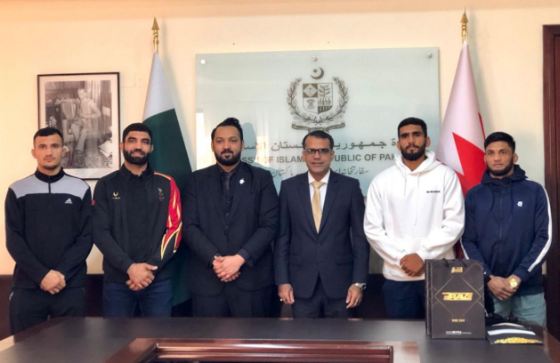
ISLAMABAD, JAN 3 /DNA/ – Pakistan’s Ambassador to Bahrain, Saqib Rauf, extended heartfelt new year greetings to the Pakistan Mixed Martial Arts (MMA) Federation and its athletes, commending their remarkable achievements in 2024 and expressing hope for even greater success in 2025.

“Happy New Year to the Pakistan MMA Federation and its incredible athletes,” the ambassador said. “Your dedication and hard work have brought immense pride to Pakistan on the global stage. We look forward to witnessing your continued excellence and success in 2025.” 

The year 2024 marked a turning point for Pakistan in mixed martial arts, with the federation, led by Omar Ahmed, delivering stellar performances that resonated on international platforms. Key achievements included Pakistan’s standout participation in Brave 92 in Bahrain and the IMMAF Championships, highlighting the nation’s growing dominance in in MMA, a proof to its athletes’ talent and resilience. 

Ambassador Saqib also praised Sheikh Khaled bin Hamad Al Khalifa, the founder of Brave Combat Federation, for his visionary leadership in creating opportunities that empower nations like Pakistan. “Sheikh Khaled’s commitment to promoting global talent has been transformative, and Brave CF’s partnership with Pakistan reflects a shared vision of mutual growth and unity,” the Ambassador added. 

Sharing his views, President of Pakistan MMA Federation Omar Ahmed said: “As the federation gears up for 2025, its focus remains on sustaining its upward trajectory by nurturing emerging talent and expanding the sport’s reach. With the ongoing partnership with Brave CF and platforms like the IMMAF Championships, Pakistan is poised to further solidify its position in the world of MMA.”

Pakistan-AKF agreement targets climate resilience in GB, KP, and Sindh

Pakistan

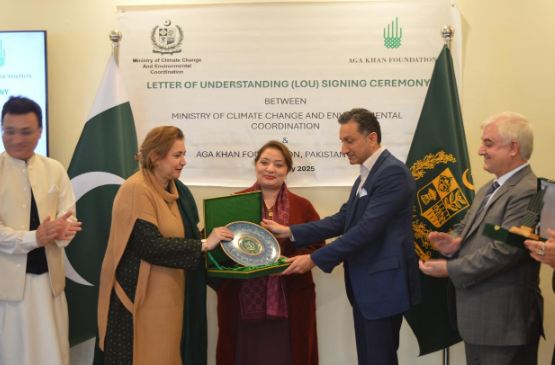
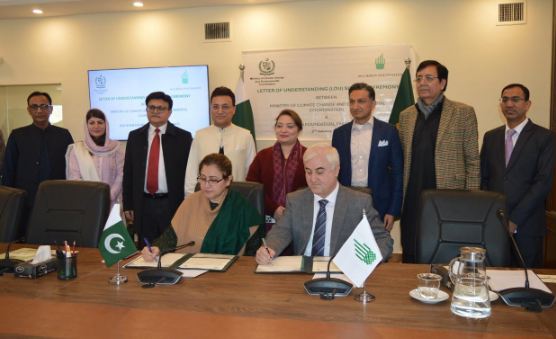
ISLAMABAD, JAN 3 /DNA/ – The Ministry of Climate Change and Environmental Coordination (MoCC),Government of Pakistan and the Aga Khan Foundation, Pakistan (AKF-P) signed a letter of Understanding to collaborate on livelihood security of the people living in rural areas of Pakistan including coastal areas of Sind and rural areas of Gilgit-Baltistan and Khyber Pakhtunkhwa.

The signing ceremony took place at theMinistry of Climate Change and Environmental Coordination where senior officials from the Ministry including Ms. Rumina Khurshid Alam- Coordinator to the Prime Minister on CC & EC, Secretary – Ms. Aisha Humera Ch. and from Aga Khan Foundation, Pakistan, Mr. Amin Feerasta, Chairman of National Committee AKF, Pakistan, Mr. Akhtar Iqbal, Chief Executive Officer of AKF, Pakistan, Ms. Laila Naz Taj, Director, Aga Khan Development Network (AKDN) Pakistan Communications, Mr. Irshad Khan Abbasi, Programme Advisor, Rural Development, Civil Society and Habitat and Mr. Naveed Sethi, Chief Financial Officer, AKF Pakistan participated in the event.Pakistan faces significant climate-related challenges, particularly in the coastal areas of Sindh and the mountainous regions of Gilgit-Baltistan and Chitral (GBC). These areas are grappling with extreme weather events, glacial melting, rise in sea-level, agricultural vulnerabilities, and water scarcity, all of which threaten the livelihoods and well-being of communities. The Ministry acknowledges the need for targeted action to mitigate these impacts and support the socio-economic development of these regions.Recognizing the urgent need to address the growing challenges of climate change in Pakistan’s vulnerable regions, the Ministry of Climate Change & Environmental Coordination (MoCC&EC) and the Aga Khan Foundation, Pakistan (AKF-P), have signed a Memorandum of Understanding (MoU) to enhance resilience and promote livelihood security in rural and underserved areas.

Through this agreement, the two entities will be able to strengthen cooperation on sustainable socio-economic development and address the challenges related to climate change.The partnership will focus on programmes to advance climate-related initiatives,promote knowledge sharing, coordination, research, joint activities, capacity building, policy support and joint resource mobilization. It will also create important synergies and opportunities through closer relations.Ms. Rumina Khurshid Alam Coordinator to Prime Minister on climate change while speaking at the ceremony, highlighted the critical role of this partnership in achieving Pakistan’s climate and development objectives. “This Letter of Understanding represents a significant stride toward addressing climate vulnerabilities and fostering sustainable livelihoods for communities most affected by climate change. Through this collaboration, the government’s efforts to promote inclusive, climate-resilient socio-economic development will be further bolstered,” she stated.Mr.Amin Feerasta, Chairman of National Committee AKF, Pakistan, noted,“On behalf of Aga Khan Foundation and broader Aga Khan Development Network (AKDN), we thank the Ministry of Climate Change and Environmental Coordination for this partnership which will build synergies to address the most pressing challenge of the time. Environment and Climate is a core strategic priority and crosscutting theme for Aga Khan Foundation and allAKDN agencies. Our environment and climate-related efforts are guided by the principle of responsible stewardship of the environment, ensuring that the Earth can sustainably support future generations.”Mr. Akhtar Iqbal in his concluding remarks thanked the Ministry and shared,“This partnership will open significant opportunitiesto collaborate on addressing climate change through joint efforts focused on mitigation and adaptation measures. This includes providing technical support, assisting in international climate processes, developing national and sub-national strategies, and implementing community-based projects.”

Strategic stability in South Asia at risk from US Sanctions, ISSI Panel warns

Strategic stability in South Asia at risk from US Sanctions, ISSI Panel warns

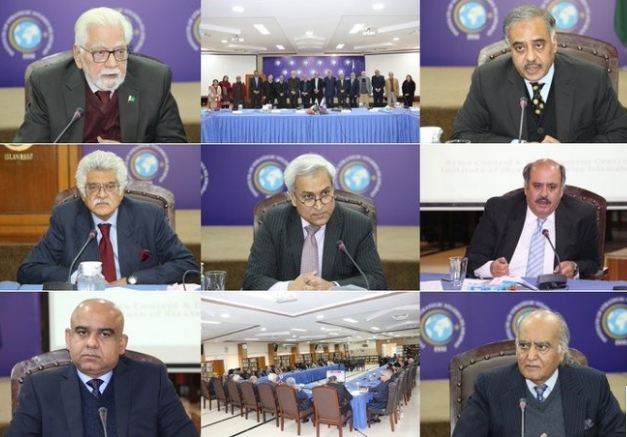
ISLAMABAD, JAN 3 /DNA/ – The Arms Control and Disarmament Centre (ACDC) at the Institute of Strategic Studies Islamabad (ISSI), hosted a Roundtable Discussion on “Latest Discriminatory U.S. Sanctions and Assertions about Pakistan’s Missile Program – Implications and Challenges.” Eminent speakers included Ambassador Zamir Akram, Advisor to the SPD; Dr. Zafar Nawaz Jaspal, Dean of Social Sciences and Professor at the School of Politics and International Relations, QAU; and Ambassador Tahir Hussain Andrabi, DG ACDIS, MOFA. The event brought together senior diplomats, renowned scholars, and practitioners to reflect on the nature of the U.S. sanctions and their implications.

In his welcome remarks, DG ISSI Ambassador Sohail Mahmood highlighted the recent U.S. sanctions against Pakistani entities and the surprising statement by a senior U.S. official, Jon Finer,  about Pakistan’s long-range ballistic missiles. Highlighting the Foreign Office’s response to these developments, he noted that the alleged threat perception from Pakistan was characterised as “unfortunate” and U.S. allegations as “unfounded, devoid of  rationality and sense of history.” The Foreign Office had also underlined that U.S.’s discriminatory policies accentuated military assymetries in South Asia and undermined strategic stability in the region. The Foreign Office had also affirmed that Pakistan’s strategic program and capabilities were a ‘sacred trust’ of the people, it enjoyed complete consensus in the country, and was not subject to any outside intrusion or compromise. Ambassador Sohail Mahmood stressed the importance of constructively engaging the U.S. in order to: (i) ensure that the U.S. recognized Pakistan’s legitimate security concerns and legitimate defence needs; (ii) stress the imperative of fair, equal and non-discriminatory treatment; and (iii) effectively address the unfounded claim made by Mr. Jon Finer. He concluded that, in the end, strategic clarity and national resolve would carry the day for Pakistan.

Earlier, in his introductory remarks, Malik Qasim Mustafa Director ACDC ISSI, highlighted the continuing challenges posed by the U.S.’s inconsistent approach towards Pakistan. He stated that by imposing these discriminatory sanctions the U.S. has ignored the fragile dynamics of strategic stability in South Asia. Pakistan has faced misperceptions about its strategic program in the past and it has always sought to address international concerns, while countering baseless allegations. Pakistan would remain committed to promoting peace and stability in South Asia.

Ambassador Tahir Hussain Andrabi argued that the parameters of the U.S. sanctions need to be understood. He stated that sanctions were not new but there has been a visible spike in the last two years. He noted that the sanctions are a manifestation of geopolitical contestations. Further, it also showed the gaps in export control regimes where the legitimate needs of states to access technology for peaceful purposes are being blocked. He underscored the challenges to engage constructively with the U.S. on the issue. He reaffirmed that Pakistan cannot accept caps on its missile capabilities. He also said that arms control negotiations would be meaningful only in the bilateral context and the U.S. should facilitate such a dialogue in our region.

Dr. Zafar Nawaz Jaspal discussing the implications of the sanctions, stated that these are part of a political chessboard and represent a practical measure to discredit Pakistan. He stated that essentially the U.S. was advocating that Pakistan must accept India as a major power in the region, which is not acceptable to Pakistan. The U.S. intent with the sanctions is to cap Pakistan’s nuclear program, and, if possible, to roll it back.  Dr. Jaspal stated that the U.S.-China strategic competition, which was likely to intensify in the coming year also plays a part in the political chessboard. India tried to cash in on the opportunities provided by geostrategic dynamics to put pressure on Pakistan. 

Ambassador Zamir Akram stated that the U.S. sanctions go back a long time. When India conducted a nuclear test in 1974, the U.S. imposed sanctions on Pakistan to prevent it from developing its nuclear programme. Pakistan-specific sanctions were also imposed after the 1998 Indian nuclear tests. He underscored that there has always been U.S. discriminatory treatment against Pakistan vis-à-vis nuclear and missile programs. Ambassador Akram also noted that the strategic partnership between Pakistan and China may have been a factor in shaping U.S. policy, including the decision to impose sanctions on Pakistan. The pressure on Pakistan was also part of the strategy to contain China. He argued that Pakistan cannot cap its missile capabilities. In addition, he emphasized the need to develop its missile program to counter the threat from India, and underscored the need to develop a robust space program. Ambassador Akram concluded by noting that the impact of these sanctions has been relatively limited, pointing out that Pakistan’s missile program is indigenous, a development that has been driven, in part, by the country’s proactive response to previous U.S. sanctions.

Participants engaged in a wide-ranging exchange of ideas during the interactive session, emphasizing the importance of engaging with the U.S. with prudence. They underscored the importance of making Pakistan’s legitimate security and defence needs clear and work on highlighting the discriminatory approach of the U.S.  It was discussed that the U.S. was perhaps looking at Pakistan from Indian lense. There was a unanimous resolve that Indian hegemony could not be accepted. At the same time, participants opined that prospects of normalization of Pakistan’s relations with India seemed bleak.

Ambassador Khalid Mahmood, Chairman Board of Governors ISSI, concluded that this is not the first time sanctions were imposed and will not be the last. However, sanctions will not affect Pakistan’s strategic program. He stated that the U.S. is not cognizant of Pakistan’s threat perceptions.

Ambassador Sajjad Haider Khan bids farewell to Igor Sergeenko

Ambassador Sajjad Haider Khan bids farewell to Igor Sergeenko

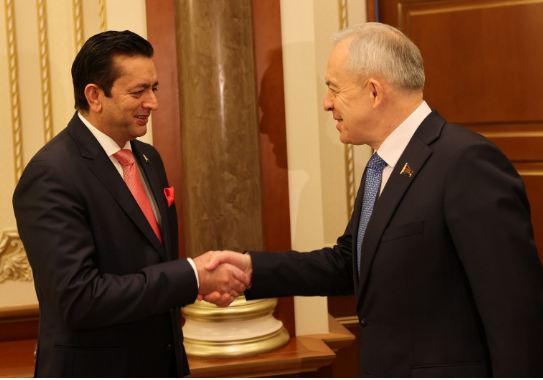
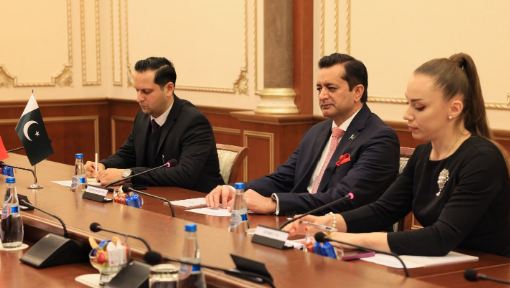
MINSK, JAN 3 /DNA/ – Ambassador Sajjad Haider Khan, the outgoing Ambassador of Pakistan to Belarus, paid a farewell call on H.E. Igor Sergeenko, Chairman of the House of Representatives of Belarus.

During the meeting, H.E. Sergeenko commended Ambassador Khan for his dedicated service over the past four years, acknowledging key diplomatic achievements under his tenure. These included the historic visit of Belarusian President Aleksandr Lukashenko to Pakistan and the signing of the Roadmap for Bilateral Cooperation 2025-2027. He also expressed gratitude for Pakistan’s steadfast support in Belarus’s accession to the Shanghai Cooperation Organization (SCO) and lauded the ambassador’s efforts in fostering cultural and humanitarian ties, which have significantly strengthened the foundation for future collaboration between the two nations.

In response, Ambassador Khan expressed his sincere gratitude to the Belarusian government for their support and cooperation throughout his tenure. He conveyed his best wishes for the continued growth and development of Pakistan-Belarus relations in the years ahead.

ICCI acting president commits to resolving security concerns in Tarnol

ICCI acting president commits to resolving security concerns in Tarnol

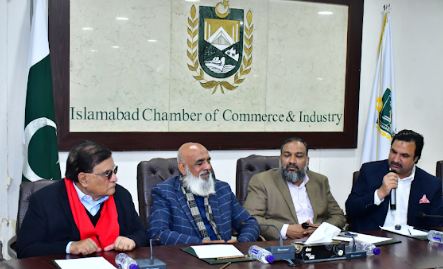
ISLAMABAD, JAN 3 /DNA/ – The business community is committed to contributing to the country’s economic development and prosperity through the growth of businesses. However, obstacles to creating a business-friendly environment must be addressed by those in positions of authority. The Islamabad Chamber of Commerce and Industry (ICCI) remains dedicated to overcoming these challenges. This statement was made by Abdul Rehman Siddiqui, Acting President of ICCI while addressing a large delegation from Tarnol, led by Malik Shabbir Awan, the founder President of the Talagang Chamber of Commerce and Industry, which visited ICCI to offer congratulations.

Siddiqui recognized Tarnol as an important business hub within the capital and emphasized that collective efforts could dismantle barriers, create opportunities, and lead the community toward greater prosperity. He assured the attendees that ICCI would address issues such as encroachments, water shortages, poor road conditions, inadequate street lighting, and especially the deteriorating law and order situation by bringing them to the attention of the relevant authorities for swift resolution to enable businesses to flourish in a peaceful and secure environment.

Zafar Bakhtawari, Secretary General of the United Business Group, praised ICCI’s commitment to improving the local business environment and expressed optimism that the Chamber would succeed in establishing a favorable business atmosphere in the region. On behalf of the former ICCI President, Chairman of the Clean and Green Islamabad Movement, and United Business Group core committee member Ahsan Zafar Bakhtawari, he announced that a water filtration plant would be installed in Tarnol to benefit both the business community and local residents.

Malik Shabbir Awan, the Talagang Chamber of Commerce and Industry’s founding President, acknowledged ICCI’s efforts to foster an environment that is enabling entrepreneurship. He stressed that collaboration within the business community could lead to transformative change. ICCI’s Acting Senior Vice President, Nasir Mehmood Chaudhry, committed to working closely with stakeholders to address key challenges and promote economic growth in the region. Malik Abdul Aziz, while expressing gratitude to the delegation for their visit, reaffirmed ICCI’s commitment to resolving the business community’s issues and supporting a conducive business environment.

The event was also attended by several ICCI members, including Executive Members Rohail Anwar Butt, Malik Mohsin Khalid, Zulqurnain Abbasi, as well as Tanzeel Awan, Malik Fayyaz Haider, Akhtar Tanoli, and others.

China’s approach to addressing ecological issues alongside industrial advancement serves as a role model

China's approach to addressing ecological issues alongside industrial advancement serves as a role model

ISLAMABAD, JAN 3 /DNA/ – Sabheen Ghoury, Parliamentary Secretary for Information Technology, called for consistent policies among governments to achieve sustainable progress, stating that environmental challenges were transnational and necessitate a collaborative approach.

She spoke at a roundtable on “Pak-China’s Vision for a Sustainable Future: Ecological Civilization, Environmental Security, and Global Harmony,” organized by the Institute of Regional Studies (IRS) in collaboration with China Global Television Network (CGTN) Urdu.

President IRS Ambassador Jauhar Saleem opened the session by stressing the roundtable’s significance amid major environmental changes. He commended China for its efforts to mitigate the adverse environmental impacts of rapid industrialization. He noted that, like their cooperation in economic and defense sectors, Pakistan and China also collaborate on critical issues such as climate resilience, mitigation, and adaptation.

Mr. Tasawar Zaman Babar, Program Coordinator at CGTN Urdu, commended Pakistan’s longstanding friendship with China, which has persisted through various administrations. He emphasized the importance of aligning economic development with environmental concerns in light of the current climate crisis.

Mr. Khalid Taimur Akram, Executive Director of the Pakistan Research Center for a Community with Shared Future (PRCCSF), echoed Ms. Ghoury’s sentiments, emphasizing that environmental hazards have regional, rather than national, implications. He argued that policies should reflect this regional scope and praised CPEC for its alignment with China’s Clean Green Energy initiative, which includes various renewable energy and water conservation projects. Mr. Asif Shuja Khan, former Director-General of Pakistan’s Environmental Protection Agency (EPA), highlighted the challenges of the 18th Amendment, which has led to a disconnect among provincial EPAs. He recommended focusing strategically on the transport and agriculture sectors and suggested measures such as utilizing low-sulphur coal, conducting Strategic Environmental Assessments (SEA) for the China-Pakistan Economic Corridor (CPEC), and planting trees along its route to promote carbon neutrality.

Dr. Shakeel Ahmad Ramay, CEO of the Asian Institute of Eco-civilization, Research, and Development (AIERD), discussed the Chinese notion of Ecological Civilization, rooted in Confucian teachings. He warned against hastily adopting Electric Vehicles (EVs) without sufficient infrastructure and emphasized the need to balance green transitions with livelihood concerns. Mr. Irfan Tariq, former Director-General of the Ministry of Climate Change, emphasized the need for Pakistan to focus on improving air quality and preserving glaciers by learning from China’s experiences.  Dr. Rizwan Naseer, Senior Research Fellow at IRS, discussed China’s role in global governance, especially concerning unconventional security challenges like climate change. He praised China’s Green Revolution and its commitment to green energy, noting that China was the largest producer of various renewable energy sources, including hydro, wind, and solar.

South Africa win toss, bat first in second Test against Pakistan

South Africa win toss, bat first in second Test against Pakistan

South Africa captain Temba Bavuma won the toss and elected to bat first in Friday’s second and final Test against Pakistan at a blustery Newlands as the home side seek to claim the series 2-0.

“It’s hot and we expect the wicket to break up, we want to finish (the series) on a good note,” Bavuma said.

Pakistan skipper Shan Masood said his side were happy to bowl first.

“A bit less grass than usual (on the wicket) but we would have had a bowl anyway,” he said. “Both teams got what they wanted.”

South Africa hand a debut to firebrand 18-year-old fast bowler Kwena Maphaka as one of three changes to their side from the tense two-wicket win in the first Test in Pretoria.

He will be the youngest player in the country’s Test history, taking over from former spinner Paul Adams.

Opening batter Tony de Zorzi has been ruled out with a left thigh strain and is replaced by all-rounder Wiaan Mulder, who will bat at number three with Ryan Rickelton moving to the opener position.

Spinner Keshav Maharaj has recovered from injury and replaces seamer Corbin Bosch.

Pakistan have made one change to their side with seamer Mir Hamza replacing Naseem Shah.

South Africa have already sealed their place in June’s World Test Championship final and while they await their opponents at Lord’s, this is scheduled to be their final five-day fixture for them before the marquee game.

Playing XI

South Africa: Aiden Markram, Ryan Rickelton, Wiaan Mulder, Tristan Stubbs, Temba Bavuma (captain), David Bedingham, Kyle Verreynne (wk), Marco Jansen, Keshav Maharaj, Kagiso Rabada, Kwena Maphaka

Pakistan: Shan Masood (captain), Saim Ayub, Babar Azam, Kamran Ghulam, Saud Shakeel, Mohammad Rizwan (wk), Salman Agha, Aamer Jamal, Khurram Shahzad, Mohammad Abbas, Mir Hamza.

Pakistan flag Installed at UNSC, as the country assumes non-permanent membership for 8th time

Pakistan flag Installed at UNSC, as the country assumes non-permanent membership for 8th time

By Iftikhar Ali

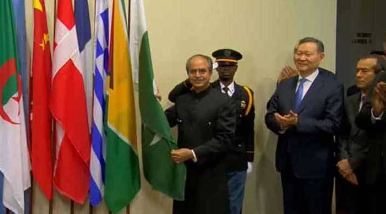
UNITED NATIONS, Jan 03 (APP): The Pakistani national flag was installed in front of the United Nations Security Council chamber on Thursday, as Pakistan began its eighth term as a non-permanent member (2025-26) of the 15-member body.

As part of the joining ceremony, flags of the five new incoming non-permanent members — Pakistan, along with Denmark, Greece, Panama and Somalia — were installed  at UNSC’s stakeout at the UN Headquarters in New York.

The new members replaced Japan, Ecuador, Malta, Mozambique and Switzerland whose terms ended on December 31, 2024.

Pakistan’s Alternate Permanent Representative, Ambassador Asim Iftikhar Ahmad, installed the national flag as part of the impressive ceremony.

In his brief remarks, he said  that Pakistan will continue to be guided by the purposes and principles of the UN Charter including maintenance of international peace and security and development of friendly relations among nations based on the principle of equal rights and self-determination.

“Pakistan will always remain a strong voice for peoples under foreign occupation and oppression and for the realization of their right to self-determination,” Ambassador Ahmad said.

Pakistan, he said, was convinced that cooperative multilateralism – with the UN at its core – was the best way of tackling today’s multifaceted challenges.

“We need to earnestly address the root causes of long-outstanding and new conflicts, prioritize dialogue and diplomacy, and support confidence building at regional and global levels – to reduce tensions, arrest the arms race, and enable an environment conducive for peace, stability and development,” the Pakistani envoy said.

Pakistan, he said, will partner with fellow members to actively pursue just and peaceful solutions to the issues on the Council’s agenda, and strive to make optimal use of the tools at our disposal – from conflict prevention to peacekeeping to peacebuilding – to achieve durable peace.

“Our success lies in upholding the UN Charter and international law under all circumstances, and in ensuring effective implementation of the Security Council’s own decisions,” Ambassador Ahmad said. 

“Never forgetting our solemn duty towards the millions of men, women and children suffering in conflicts, Pakistan is assuming this responsibility, fully resolved to our collective endeavour for a more peaceful and secure world.”

Pakistan will preside over the 15-member Council in July when it assumes its presidency according to alphabetical rotation of the member states’ official names. This will allow Islamabad to set the Security Council’s agenda.

In addition to this, Pakistan will get a seat on the Islamic State (ISIS) and Al Qaeda Sanctions Committee, which is responsible for designating individuals and groups as terrorists and imposing sanctions.

The Security Council has 15 members, five of which – Britain, China, France, Russia, and the United States – are permanent ones. The 10 non-permanent seats of the Council are allocated by geographic region, with five replaced each year.

The Security Council is considered to be the most powerful body of the United Nations. The council, which is tasked to maintain international peace and security, can make legally binding decisions and has the power to impose sanctions and authorize the use of force against states.

The tradition of the flag installation ceremony was introduced by Kazakhstan in 2018.

Kazakhstan’s permanent representative,  Kairat Umarov, who presided over the ceremony, voiced confidence that the five new council members will bring much depth and focus to the pressing issues of global peace and security.

“As we begin a new year, it is clear that the global situation continues to be marked by numerous challenges and crisis, from ongoing conflicts and humanitarian calamities to the negative impacts of climate change and the pandemic.”

Manshera Woman becomes trailblazer by introducing snail farming in Pakistan

Manshera

PESHAWAR, Jan 03 (APP/DNA): Inspired by international practices where snail mucus is highly valued for its cosmetic benefits, Sidra Sajjad, an ambitious female entrepreneur from Mansehra district in Khyber Pakhtunkhwa, has become a pioneer in introducing snail farming to Pakistan.

With prior experience in herbal business, Sidra was intrigued by the economic potential of snail farming after reading an article highlighting its benefits.

This spurred her to conduct extensive research online and convinced her father, Sajjad Akhtar Swati, a retired primary school teacher, to support her vision.

In 2021, she established a snail farming operation on a three-kanal (approximately 16,335 square feet) plot in her hometown.

“Snail farming is a burgeoning industry centered around the extraction of snail slime, which is a sought-after ingredient in cosmetics and skincare products,” Sidra explained while speaking with APP.

She noted that snail mucus contains antioxidants known to combat signs of aging, such as wrinkles, uneven skin tone, and sagging.

“I faced a lot of problems and became extremely worried at several stages after facing hardships and even failures, but remain committed as a result of which my experience proved successful,” she shared.

Her enterprise, branded as Prime Snail Mucus, has become a success story, thanks largely to the unwavering support of her family.

“Our farm houses over 500 kilograms of wild snails in a natural environment maintained by a team of 32 workers,” Sidra shared.

Initially, the extraction process caused stress to the snails, but persistent research enabled her to adopt a cruelty-free approach.

After doing continuous research and hard work we succeeded in carrying out the process of secretion in the `cruelty free’ mode and our snails are treated with care throughout the extraction process, she reiterated.

“For over three years, we have implemented a lyophilization process and developed a proprietary, chemical-free extraction method,” she revealed. “This innovative technique ensures superior quality and sets a new standard in the industry.”

On average, one kilogram of snail slime is extracted from 12 to 15 kilograms of snails. After resting for one to two months, the snails regenerate and produce new mucus.

The farm also features a dedicated laboratory where extracted slime undergoes filtration using ultraviolet (UV) light to eliminate bacteria. The purified slime is then supplied in both raw and serum forms based on demand.

The laboratory is equipped to manufacture creams and serums containing up to 90% pure snail slime.

Additional organic ingredients like aloe vera, glycol, and vitamin A are added to enhance the formulation.

The resulting products, rich in vital minerals, are used in a range of cosmetics, including serums, facial masks, moisturizers, and fading creams.

“The global market for snail-based beauty products is growing rapidly due to their multifunctional benefits,” Sidra observed.

“Snail cream is popular for its ability to absorb quickly, spread easily, and leave skin feeling non-sticky.”

Sidra emphasized the vast growth potential of snail farming in Pakistan, calling for official support to raise awareness and encourage investment in this innovative industry.

Sidra informed that snails in her farm are now a days in hibernation till March month and she is in Lahore for marketing of her product with different companies.

“I am now seeking strategic partnerships with forward-thinking companies. Together, we can harness the full potential of this innovative ingredient, elevating cosmetic formulations and setting new standards for skin care excellence,” she concluded.

Remarkable Growth of Asian Economies: China and Pakistan

Qamar Bashir

By: Qamar Bashir

Macomb, Detroit, Michigan

Among news of an economic slowdown in China and economic challenges in Pakistan, I was surprised to notice the outstanding ratings of both countries on the economic front based on the Purchasing Power Parity (PPP) method. According to the World Bank, China, with an economy of $34.66 trillion, assumed the first position, outperforming the US, which stood in second place with a PPP GDP of $27.72 trillion. According to the World Bank, Pakistan ranked 25th globally with a PPP GDP of $1.50 trillion, outperforming countries like the Netherlands, Argentina, Malaysia, South Africa, Singapore, Switzerland, Israel, Denmark, and many others.

The performance of both China and Pakistan was even more impressive according to data released by the International Monetary Fund (IMF) based on Gross Domestic Product (GDP) measured in Purchasing Power Parity (PPP). According to the IMF, China’s GDP (PPP) was projected at $39.44 trillion, positioning it as the world’s largest economy by PPP, while the United States trailed behind at $30.34 trillion, making it the second-largest economy by PPP. These projections highlight China’s significant economic lead over the United States in PPP terms, with China’s economy expected to be about 30% larger than that of the U.S. in 2025.

According to the IMF, though the prediction about Pakistan’s economy was not as optimistic as that of the World Bank, Pakistan’s projected GDP (PPP) for 2025 is approximately $1.66 trillion, ranking it 26th globally. This places Pakistan ahead of several European countries such as Portugal ($529.9 billion), Greece ($453.4 billion), and the Czech Republic ($645.5 billion), as well as Asian nations like Singapore ($918.4 billion), Malaysia ($1.46 trillion), and the Philippines ($1.48 trillion).

World Economics’ analysis and database provide a broader perspective on GDP figures by incorporating adjustments for the size of the informal economy and outdated base year data. According to World Economics, China’s GDP (PPP) is estimated to be $42.817 trillion for 2025, capturing the vast informal economy that significantly contributes to its economic activity. This adjusted figure underscores China’s position as the world’s largest economy by PPP, reflecting the expansive informal sector and its unregistered contributions to economic output. Such recalibrations highlight China’s global economic dominance and the scale of activities not captured in official datasets.

World Economics presented one of the most impressive predictions for the year 2025, estimating Pakistan’s GDP at $2.08 trillion, which is 46% larger than the official World Bank estimate of $1.347 trillion for 2023. This revised figure elevates Pakistan’s GDP (PPP) ranking for 2025 to approximately 24th place globally, surpassing many countries of Europe and Africa, South America, and Asia. The adjustment highlights an economy far larger than previously recognized, largely due to the inclusion of Pakistan’s substantial informal sector. This emphasizes the importance of integrating informal activities into formal structures to promote sustainable growth.

This adjustment accounts for Pakistan’s substantial informal economy, which includes unrecorded and untaxed transactions that significantly contribute to economic activity. By incorporating this informal sector and updating the base year for GDP calculations, the revised figure provides a more accurate and comprehensive assessment of Pakistan’s economic size. This re-evaluation strengthens Pakistan’s position in global rankings, highlighting its untapped potential and opportunities to formalize and expand its economic base for sustainable growth.

China’s economic prowess in 2025 is expected to solidify its position as the world’s largest economy by Purchasing Power Parity (PPP), with a projected GDP (PPP) of $34.66 trillion (WB) and 39.44 trillion (IMF) and $42.817 trillion (WE). This dominance is driven by its vast population of over 1.4 billion, providing a significant labor force and consumer market. As the “factory of the world,” China continues to excel in manufacturing, particularly in electronics, machinery, and textiles, while advancing its technological capabilities in robotics, artificial intelligence, and smart manufacturing. President Xi Jinping’s ideology to transition China’s industries toward quality-oriented production and fundamentally upgrade its industrial infrastructure ensures that the economy remains competitive and innovative. This vision counters predictions of a slowing growth trajectory, highlighting China’s resilience and adaptability in a rapidly evolving global economy. Moreover, initiatives like the Belt and Road Initiative (BRI) expand China’s trade networks, solidify geopolitical influence, and strengthen economic ties across Asia, Africa, and Europe.

China’s leadership in renewable energy, urbanization, and infrastructure development further boosts its economic clout. It leads the world in solar and wind energy production, aligning with global sustainability goals and ensuring energy security. The development of smart cities and the world’s most extensive high-speed rail network enhances connectivity and trade efficiency. Financially, China’s efforts to internationalize the yuan and its massive foreign currency reserves reinforce its global monetary influence. The inherent political stability and continuation of policies within China’s governance system serve as a foundational strength, enabling consistent long-term planning and execution of economic strategies. While challenges such as slowing population growth, economic rebalancing, and geopolitical tensions persist, the combination of forward-thinking industrial reforms and stable governance positions China to maintain its upward growth trajectory and dispel concerns about economic deceleration.

Pakistan’s economy demonstrates inherent strengths and resilience that have enabled it to secure rankings of 24th to 26th globally in GDP (PPP), outperforming many major economies. Its young and dynamic population, with over 60% under 30, drives economic growth and expands a rapidly urbanizing consumer market. The substantial contribution of its informal economy, which includes unrecorded and non-taxed transactions, reveals a larger economic footprint than official figures suggest. Strategically located at the crossroads of South Asia, Central Asia, and the Middle East, Pakistan serves as a critical transit route for regional trade, bolstered by the China-Pakistan Economic Corridor (CPEC). Its strong agricultural base, abundant natural resources, and emerging industries like IT services and textiles diversify its economy and enhance global competitiveness. Additionally, remittances from its large diaspora provide a steady inflow of foreign exchange, supporting economic stability. Despite global challenges, Pakistan has demonstrated resilience through structural reforms, adaptive governance, and efforts to attract foreign investment. These factors, coupled with its untapped potential and strategic initiatives, position Pakistan as a rising economy with opportunities for sustained growth and an improving global economic stature.

The claim that Pakistan’s GDP (PPP) is 5% of China’s GDP (PPP) is nearly accurate, with the actual figure being approximately 4.86%. Here’s the corrected statement:

China is the economic leader of the world on a PPP basis, and it is only a matter of time before it becomes the world leader in terms of nominal GDP growth. While Pakistan’s GDP (PPP) is approximately 4.86% of China’s GDP, it has the potential to achieve an influential economic role provided it brings political stability, sets the right direction, invests in research and development, and fosters innovation and creativity in its industrial, services, and agricultural sectors.

By: Qamar Bashir

Press Secretary to the President (Rtd)

Former Press Minister at Embassy of Pakistan to France

Former MD, SRBC

Stay Connected

64FansLike
60FollowersFollow

Latest Reviews

Exchange Rates

USD - United States Dollar
EUR
1.17
GBP
1.35
AUD
0.72
CAD
0.73