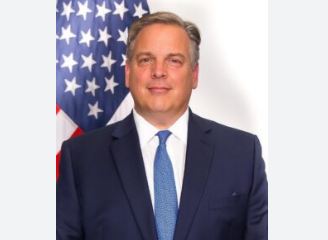
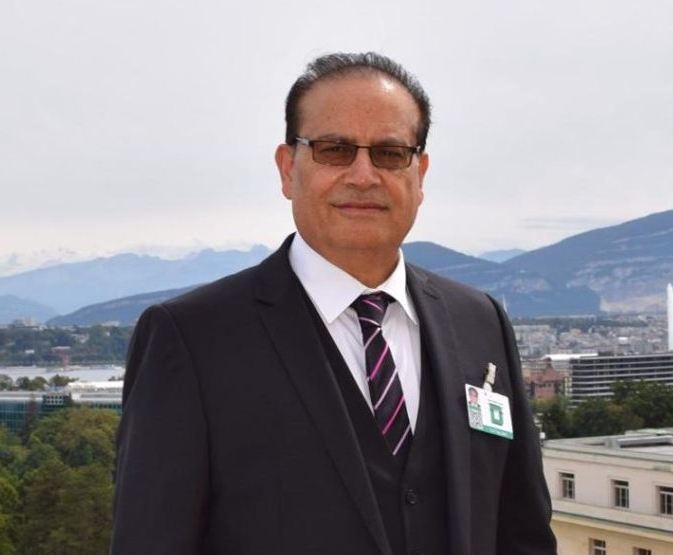
ISLAMABAD, Jan 10 (DNA): Upon completion of his diplomatic tenure as U.S. Ambassador to Pakistan for more then two years, Donald Blome is all set to return to home country on January 11, Saturday (today).
In his video message, Ambassador Blome reflected on the progress made during his three-year service, highlighting the shared challenges and successes that have strengthened the bond between the two nations.
“During my time as U.S. Ambassador to Pakistan, we have worked with our Pakistani friends to enter a new chapter in our partnership,” he said.
Ambassador Blome praised the joint efforts to combat the COVID-19 pandemic, rebuild after the devastating 2022 floods, and create opportunities through expanded access to healthcare, education, and technology.
From enjoying traditional chai and Qawwali performances to playing cricket, the Ambassador expressed his deep appreciation for Pakistan’s hospitality, calling Islamabad his “home away from home.”
Reflecting on his travels across the country, Ambassador Blome spoke of the vibrant culture of Lahore, the fertile fields of Punjab, and the entrepreneurial spirit of Karachi. “We’ve made expanding trade and investment our top priorities as Pakistan works to break free from debt and dependency,” he stated, emphasizing the importance of U.S.-Pakistan collaboration in fostering innovation and economic growth.
Ambassador Blome also shared his admiration for Pakistan’s diverse landscapes and rich heritage, having traveled from Gwadar to Gilgit and explored the stunning peaks of the north and the historic sites of Khyber Pakhtunkhwa.
Ambassador Blome is departing Pakistan on January 11, 2025. His transition comes as part of the normal U.S. Foreign Service rotation process. He has served as U.S. Ambassador to Pakistan since May 2022.
Under Ambassador Blome’s leadership, the U.S.-Pakistan relationship entered a new chapter focused on collaboration to meet shared goals and global challenges – partnering with Pakistan to promote economic growth and deepen the connections between the Pakistani and American people.
The Ambassador is immensely grateful for the warmth and hospitality he has experienced in every corner of Pakistan throughout his tenure.
As he signed off with a heartfelt “Phir Milein Ge,” the Ambassador expressed optimism for Pakistan’s future and pride in the progress achieved during his tenure.
Ambassador Blome’s departure marks the end of a significant chapter in U.S.-Pakistan relations, leaving behind a legacy of collaboration and mutual respect.
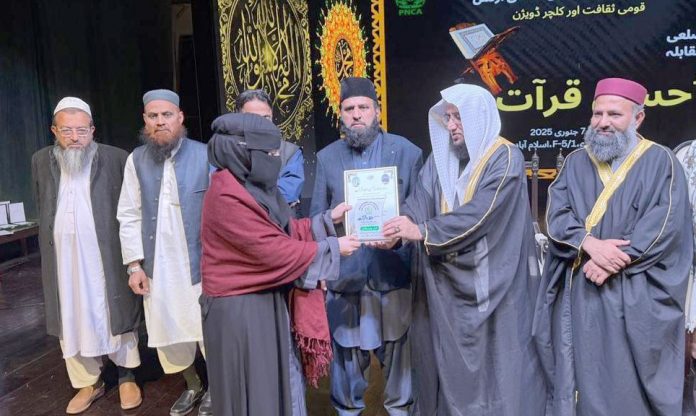
Islamabad, January 9, 2025: The ICT Administration, in collaboration with the Pakistan National Council of the Arts (PNCA), successfully organized two days prestigious “Mukabila Hifz Qirat” competition. This event, held at the PNCA Auditorium (F-5/1), brought together talented students from various madaris across Islamabad, showcasing their remarkable skills in Quranic recitation.
The competition aimed to promote the art of Qirat and inspire a deeper connection with the Holy Quran. Students from different madaris participated in this event, categorized based on their age and educational levels. The finalists demonstrated extraordinary talent, captivating the audience with their soulful recitations. The winners were honored during an award ceremony presided over by DG PNCA, Mr. Muhammad Ayoub Jamali, who appreciated the participants’ dedication and talent. Shields and certificates were distributed to the top performers in recognition of their outstanding achievements. Participants competed in two rounds, with separate categories for male and female students. The event concluded with prayers for the prosperity of the country and the promotion of Islamic education. The panel of judges included renowned Qaris and scholars from the Islamic community.
The winners of each category will represent Islamabad in upcoming national-level competitions.
The ICT Administration and PNCA reiterated their commitment to fostering platforms that encourage spiritual growth and cultural enrichment.
ISLAMABAD, JAN 9 (DNA)Pakistani passport has been ranked among the weakest, placed at the 103rd place in the Henley Passport Index for 2025.It falls alongside Yemen on the list. The list disclosed that Pakistani passport offers visa-free access to only 33 countries.
The Henley index ranks all the world’s 199 passports according to the number of destinations they can access visa-free. It is based on exclusive Timatic data from the International Air Transport Association (IATA).
For the year 2025, the top spot is secured by Singapore. with its passport allowing visa-free access to 195 countries. Japan has been ranked as the world’s second most powerful passport.
Several EU member states including France, Germany, Italy, and Spain, drop two places in the ranking to third position. They are joined by Finland and South Korea. Both the countries lost a place over the past 12 months and with no prior visa required, they now have access to 192 destinations.The fourth place is shared by a seven-nation EU cohort, all with visa-free access to 191 destinations — Austria, Denmark, Ireland, Luxembourg, Netherlands, Norway, and Sweden.
Moreover, only 22 of the world’s 199 passports have fallen down the Henley Passport Index ranking over the past decade.
In a surprise, the US is the second-biggest faller between 2015 and 2025 after Venezuela, plummeting seven places from second to its current ninth position.
The countries with weaker passports than Pakistan include Iraq (104th), Syria (105th), and Afghanistan (106th), whereas, Somalia, Nepal, Palestine, and Bangladesh are ranked just above Pakistan, with Somalia holding the 102nd spot.
Furthermore, India is ranked 85th, China at 60th, Iran at 96th, and Saudi Arabia holds the 58th position in the latest index.
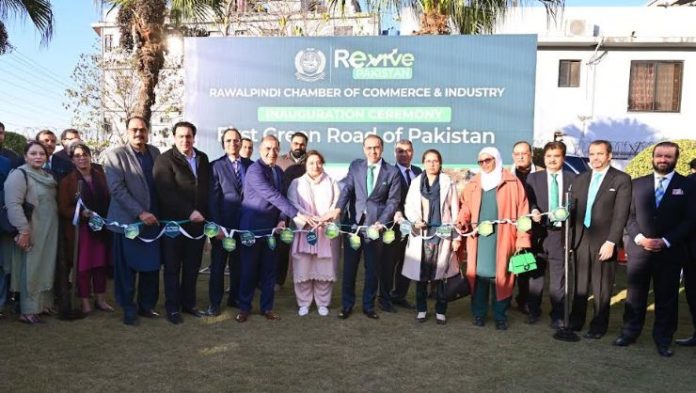
RAWALPINDI, JAN 8: /DNA/ – Prime Minister’s Coordinator for Climate Change, Romina Khurshid Alam, inaugurated the Rashid Minhas Green Road, marking a significant step towards environmental sustainability in the region. The inauguration ceremony was hosted by the Rawalpindi Chamber of Commerce and Industry (RCCI) and attended by distinguished guests including Fatou Harerimana, the High Commissioner of Rawanda, Azerbaijan’s Ambassador, Khazar Farhadov and Dr. Bushra Mirza, Vice Chancellor of Fatima Jinnah Women University.
The RCCI leadership, including President Usman Shaukat, Group Leader Sohail Altaf, Senior Vice President Khalid Farooq Qazi, Vice President Fahad Barlas, Former Presidents, Chairman Climate Change Committee, Tallat Awan, Executive Committee Members and other officials, extended a warm welcome to the esteemed guests.
In his welcome address, Chamber President Usman Shaukat underscored the importance of sustainable development, green energy initiatives, and collective action to mitigate these challenges. He informed the participants about the devastating effects of climate change on Pakistan. He emphasized that Pakistan is among the most vulnerable countries, facing severe challenges from natural disasters, floods, and agricultural crisis. Over 2 million acres of crops have been damaged, impacting 22% of the population dependent on agriculture. Additionally, floods and environmental changes have caused damages exceeding $3 billion, affecting more than 15 million people and destroying millions of homes.
Prime Minister’s Coordinator for Climate Change, Romina Khurshid Alam, commended RCCI for its First Green Road initiative, calling it a vital step in addressing climate concerns. She stressed that practical actions are more impactful than mere announcements and highlighted the crucial role of the private sector in combating climate change. Ms. Alam emphasized the need for collective responsibility, stating, “We must work together to leave behind a better environment for our children instead of wealth. Each individual must improve their homes, streets, and communities.” Ms. Alam expressed confidence in RCCI’s ability to lead impactful environmental initiatives and called for sustained collaboration between the government, private sector, and local communities.
A Memorandum of Understanding (MoU) was signed between the Rawalpindi Chamber of Commerce and Industry (RCCI) and Fatima Jinnah Women University (FJWU) to enhance cooperation and facilitate mutual assistance in promoting awareness campaigns under the Green Road Initiative as part of the Revive Pakistan program.
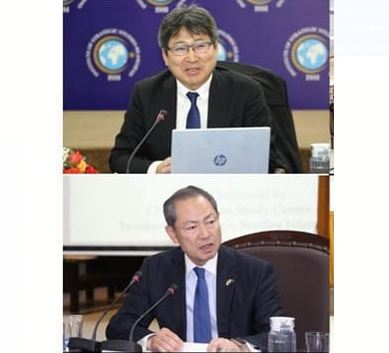
ISLAMABAD, JAN 8 /DNA/ – The China-Pakistan Study Centre (CPSC) at the Institute of Strategic Studies Islamabad (ISSI) hosted a guest lecture on “Japan’s Perspective on Regional Issues,” delivered by Prof. Dr. KAWASHIMA Shin, from the University of Tokyo. Ambassador Akamatsu Shuichi, Ambassador of Japan to Pakistan, also participated in the event.
Director General ISSI Ambassador Sohail Mahmood, in his welcome remarks, highlighted the enduring friendship between Pakistan and Japan. He underscored the historical and multifaceted ties between the two countries, rooted in mutual respect, shared interests, and commitment to peace and development. Ambassador Sohail Mahmood also noted Japan’s prominent role as a steadfast partner in Pakistan’s development journey and stressed growing collaboration in areas such as trade, investment, climate change, cultural and people-to-people exchanges, and regional stability. He also stressed the importance of enhanced academic and policy dialogues and think-tank collaboration between Pakistan and Japan.
Ambassador AKAMATSU Shuichi highlighted the long-standing Japan-Pakistan partnership and expressed hope for continued collaboration to address regional and global challenges. He also appreciated ISSI’s efforts to foster mutual understanding through scholarly exchanges.
Prof. Dr. KAWASHIMA Shin, in his lecture, focused on Japan’s modernization and its evolving role in regional geopolitics. Highlighting the transformative journey from the Meiji Restoration to its post-World War II economic resurgence, he underscored Japan’s commitment to peace, democracy, and regional cooperation. He reflected on the enduring partnership between Japan and Pakistan, noting the 70th anniversary of bilateral relations celebrated last year. Dr. KAWASHIMA emphasized Japan’s dedication to fostering economic and cultural ties within the region, reinforcing its role as a proactive contributor to East Asian stability and prosperity.
Dr. KAWASHIMA also discussed the challenges and opportunities in East Asia, focusing on the importance of balanced diplomacy and mutual cooperation. He highlighted Japan’s steadfast belief in maintaining open dialogues with neighboring countries to ensure regional stability. Stressing the necessity of economic interdependence, he acknowledged Japan’s efforts to strengthen trade and investment networks while respecting the sovereignty and diverse aspirations of its partners.
Earlier, Dr. Talat Shabbir, Director CPSC, highlighted Japan’s unwavering support for Pakistan’s development through Official Development Assistance (ODA) and cultural exchanges. He underscored the mutual commitment to strengthening bilateral ties and addressing shared regional and global challenges collaboratively.
The lecture was attended by a diverse audience, including practitioners, academics, and members of civil society and the media.
Whether Pakistan’s powerful circles acknowledge it or not, it has now become an undeniable fact that the policies crafted by the country both for Afghanistan and for the entire global community, have completely failed.
This is why Pakistan is now heading down the path of international isolation. If China, Saudi Arabia, the UAE, or any other states occasionally provide Pakistan’s ailing economy with financial aid, the purpose of this assistance is not to help Pakistan but to protect the interests of the donor countries themselves. As former Interior Minister Rana Sanaullah has mentioned, Mohsin Raza Naqvi is actively pushing forward all the steps taken by the powerful institutions and, at times, even goes a step further to secure their approval.
After Ashraf Ghani came to power in Afghanistan, when the U.S. began working on Plan B post-9/11, the funds allocated for this plan were decided to be utilized in a way that maximized benefits for Pakistan. From the late 1960s to 9/11, Pakistan’s civil bureaucracy benefited significantly from the situation in Afghanistan, with thousands of individuals reaping the rewards. Anyone who doubts this can easily conclude by looking at the assets of those in military positions after the late Nasirullah Babar’s time. Many of those who have passed away left billions of rupees in assets for their heirs, while the fortunate ones still living are enjoying more luxurious lives than the rulers and industrialists of Western countries.
It is a reality that the external aggression, interference, and internal chaos in Afghanistan have proved to be a great opportunity for Pakistan and those in influential positions within the country. The same situation persists today, with Mohsin Raza Naqvi playing a key role in trying to marginalize Afghan refugees fleeing the wrath of the Afghan government and the Taliban.
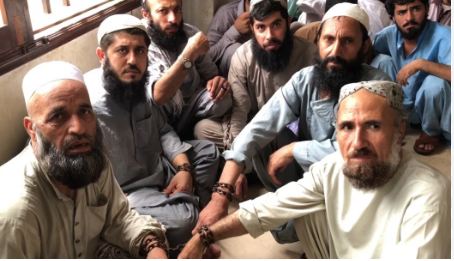
Following his orders, a crackdown began on Afghan nationals across the country from the beginning of this year, with over 2,000 arrests made in Islamabad alone over the past seven days. Those arrested, including women and children, have been detained in various police stations and lockups. Some of the detainees even had Afghan Citizen Cards issued by Pakistan’s NADRA or Proof of Registration cards provided by the UNHCR. Among the arrested were also unfortunate workers from Khyber Pakhtunkhwa and Balochistan who did not possess national identity cards during police raids.
While this crackdown provides opportunities for Pakistan’s police and law enforcement officials to exploit and rob the helpless Afghan nationals, it also facilitates Pakistan’s one-point demand from the Afghan Taliban leadership.
Meanwhile, the ongoing conflict and internal turmoil in Afghanistan have resulted in more harm than benefit for Pakistan. Once, Ahmad Shah Massoud was the apple of the eye for Pakistan’s visible and invisible powers, but later he was categorized as an enemy, and a significant portion of the financial and technical aid received from the U.S. and its allies for the Afghan war was redirected to Gulbuddin Hekmatyar.
However, in the second half of the 1990s, Hekmatyar was exiled in favor of winning the Taliban’s favor. After 9/11, the Pakistani government quickly denounced the Taliban, and any Taliban leadership present in Islamabad was swiftly handed over to American forces at Peshawar airport.
After 9/11, the majority of Taliban leaders no longer harbor the same sentiments toward Pakistan, although many of their close relatives remain in Pakistan. Once, the Haqqani Network was a tool for Pakistan to exert pressure on Afghanistan, but that is no longer the case. There is no doubt that, in light of the ongoing situation for the past four decades, Pakistan’s influential circles had an upper hand over other global powers and institutions. However, this supremacy has eroded due to increasing foreign interest in Afghanistan’s internal affairs. Today, important intelligence agencies and powers from around the world have established their networks in Afghanistan, and countries, particularly in the West, are investing heavily there, winning the hearts of displaced Afghan nationals.
By following ill-advised policies, Pakistan is losing a great deal in Afghanistan. It is still time for Pakistan to recognize its mistakes, or it may soon face significant changes in the region.
The views expressed in the article are writer’s own.
The intensifying pressure on democracy has emerged as a significant challenge for policymakers and practitioners, drawing considerable attention from scholars. There is widespread agreement among experts regarding a global decline in democratization alongside a rise in autocratization. The democratization wave that generated substantial optimism after 1989 began to wane in the mid-2000s, giving way to what some describe as a “new wave of autocratization” or “democratic regression”. While the idea of an autocratization wave remains contested (Skaaning, 2020), specific aspects warrant deeper examination. Alarmingly, the decline is not confined to weakly institutionalized democracies or low-income nations; even consolidated democracies such as Hungary and Poland EU members with strong middle-income economies have experienced democratic regression. More strikingly, large democracies like India and Brazil, as well as nations traditionally seen as resistant to such trends, including the United States, have also shown signs of democratic regression. The outcomes of these regressions vary, ranging from transitions from liberal to flawed democracies to outright authoritarianism.
One notable concern pertains to the international implications of this trend. The global distribution of liberal democracies versus autocracies has exacerbated competition between regime models on a global scale. Governments of eroding democracies increasingly challenge the liberal international order by abandoning multilateral frameworks, adopting counter-hegemonic strategies and either withdrawing from international institutions or refraining from joining significant international agreements. Additionally, autocratization is shifting the balance of global economic power and trade relations, as countries like India and Turkey align themselves with authoritarian regimes. The Russian invasion of Ukraine has further heightened security concerns and increased awareness among democracies of their vulnerabilities and dependencies on autocratic states.
The concept of “democratic regression” is pivotal in understanding this phenomenon. Erdmann and Kneuer categorize democratic regression into three forms: the decline of democratic quality within democracies, the erosion of democracy into hybrid regimes, and the breakdown of democracy into outright dictatorship. These processes are encapsulated under two primary trajectories: “rapid death” (breakdown) and “slow death” (loss of democratic quality and erosion). Since Lust and Waldner’s (2015) seminal work, the notion of “democratic backsliding” has gained significant traction, becoming a dominant term for describing the gradual decline of democracy. A search on Google Scholar reveals over 17,700 references to “democratic backsliding” in titles since 2010, with 16,500 of these appearing between 2020 and 2023. Despite its widespread adoption, the term has faced criticism. Scholars such as Bogaards (2018) and Lührmann and Lindberg (2019) argue that it implies an unintentional or unconscious reversal, which may not always align with the intentional actions observed in many cases of democratic decline. Moreover, the term suggests a return to a previous state, which may not accurately describe transitions from democracy to hybrid or authoritarian regimes without reverting to prior political systems.Alternatively, the term “democratic erosion” more precisely captures the gradual and agent-driven processes that undermine democratic structures. As Kneuer (2021) highlights, erosion conveys the involvement of an agent (such as political actors) and a structure (democracy) that is incrementally hollowed out, leaving behind a façade of its former self. This façade is often repurposed to support illiberal and anti-democratic governance. Although metaphors inherently carry ambiguity, “erosion” provides a clearer depiction of the process’s agents, subjects, and outcomes than “backsliding.”
A critical task for scholars is to define the starting point of these processes. Some researchers conceptualize these changes as “de-democratization,” emphasizing the movement away from democratic norms. Others prefer “autocratization,” which Cassani and Tomini (2019) describe as a “regime change toward autocracy,” encompassing shifts from democracy as well as from other regime types. Lührmann and Lindberg, however, broaden the scope of autocratization to include processes occurring in both democratic and autocratic contexts. This broad application has drawn criticism, as it risks conflating temporary and contingent losses of democratic quality with sustained and substantial transformations. For instance, France’s state of emergency following the 2015 terrorist attacks led to a temporary decline in civil liberties and democratic quality, as reflected in lower scores by Freedom House and the Democracy Index. However, France subsequently regained its status as a full democracy, demonstrating that not all declines signal long-term autocratization or democratic erosion.A more precise approach conceptualizes regime transformation along a democracy-autocracy continuum, where democratization and autocratization represent substantial and sustained improvements or declines in democratic attributes (Maerz et al., 2021). Within this framework, democratic regression pertains to declines within democratic regimes, while autocratic deepening describes further deterioration within autocratic states. Democratic erosion, therefore, encompasses processes such as the decline in democratic quality, transitions from liberal to electoral democracies, and eventual breakdowns into electoral authoritarian regimes. Distinguishing between democratic erosion and contingent losses of quality requires attention to the intentionality and normative commitments of political actors.
Agency plays a central role in driving democratic erosion. Scholars widely agree that democratic erosion results from deliberate actions by political leaders who exploit their control over executive and legislative branches to alter democratic norms. Leaders such as Hugo Chávez, Viktor Orbán, Recep Tayyip Erdoğan, and others have demonstrated the ability to change the rules of the game through legal and electoral means, thereby securing legitimacy while implementing illiberal agendas. These “erosion agents” act under three conditions: possessing the power to enact changes, the intention to undermine democracy, and the ability to mobilize support for their agenda.Normative commitment to democracy is another critical factor. Mainwaring (2022) emphasizes that the longevity of democracy often depends on the commitment of political actors to uphold democratic principles. Erosion agents, by contrast, lack such commitment, actively seeking to replace democratic norms with illiberal and anti-democratic alternatives. Leaders such as Chávez openly rejected representative democracy, portraying it as an outdated and oppressive system, and sought to establish alternative models like participatory democracy. However, these models often fail to meet the standards of democratic governance, undermining core principles such as representativeness and checks and balances.Ultimately, understanding democratic regression requires distinguishing between different processes and their underlying causes. While democratic erosion involves the gradual weakening of democratic norms and institutions, autocratization signifies a more profound transformation toward authoritarianism. Temporary and contingent declines, as seen in cases like France, highlight the importance of context in assessing the trajectory of democratic change. By examining the actions, intentions, and normative commitments of political actors, scholars can better identify the drivers of democratic regression and develop strategies to counteract these trends.
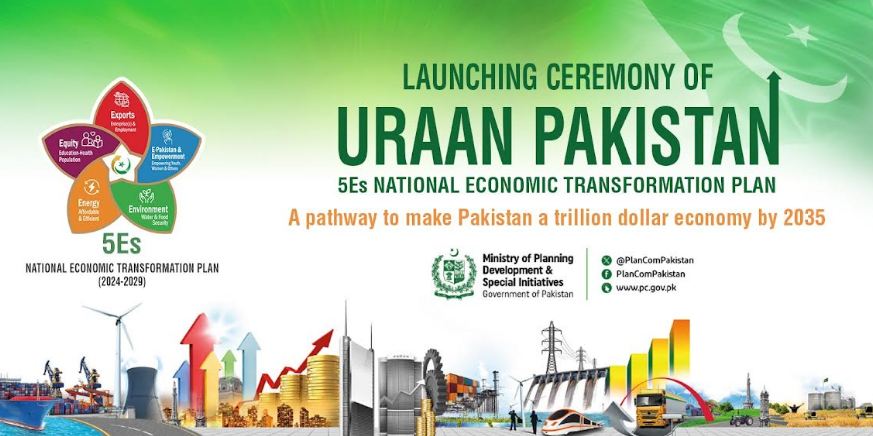
The 13th Five-Year Plan (2024-2029), aptly titled “Uraan Pakistan,” represents a bold and comprehensive strategy aimed at steering Pakistan towards sustainable development, economic resilience, and societal progress. At a critical crossroads in its history, Pakistan seeks to leverage lessons from earlier plans while addressing systemic obstacles that have previously impeded progress. By critically analyzing past shortcomings, this new plan aspires to achieve transformative growth and equitable development.
Among the most influential planning milestones in Pakistan’s history, the vision of Dr. Mehboob-ul-Haq stands out as a cornerstone. Dr. Haq’s Pakistan Five-Year Plan (1983-1988) is celebrated for its revolutionary approach to prioritizing human development over mere economic expansion. As an esteemed economist and architect of Pakistan’s developmental blueprint, Dr. Haq championed poverty alleviation, enhanced healthcare, better education, and equitable development as central tenets. His strategy aimed to foster inclusive growth, ensuring that industrial and agricultural advancements translated into tangible benefits for marginalized populations.Despite significant strides in literacy rates and healthcare access, Dr. Haq’s plan encountered formidable challenges. Political instability, frequent leadership changes, and governance inefficiencies stymied its full implementation. Nonetheless, the foundational ideas of poverty reduction and rural development laid during this era continue to influence contemporary policy-making.
The subsequent Five-Year Plans, particularly the 11th (2013-2018) and 12th (2018-2023), sought to build upon these earlier efforts by emphasizing economic growth, infrastructure development, and social welfare. The 11th Plan prioritized macroeconomic stability, industrial expansion, and human resource development. Reforms targeting energy, education, and health sectors yielded incremental successes, yet the plan’s broader objectives were hampered by political turbulence, economic unpredictability, and gaps in policy execution. Key areas such as energy crises, underfunded human capital, and delayed infrastructure projects remained unresolved.
The 12th Plan aimed to stabilize the economy, reduce poverty, and enhance governance. However, its ambitious target of achieving 7-8% annual GDP growth was derailed by external and internal factors, including the COVID-19 pandemic, which devastated the global economy. Inflation, rising fiscal deficits, and insufficient foreign direct investment further compounded these challenges. Despite setbacks, advancements in health and education provided a silver lining. Yet, structural flaws such as corruption, mismanagement, and ineffective policy implementation continued to hinder progress.
A recurring theme in the incomplete implementation of past plans has been political instability and lack of continuity in governance. Successive administrations often sidelined or revised existing plans, leading to fragmented efforts and inconsistent execution. Governance inefficiencies, bureaucratic red tape, and corruption have also played significant roles in undermining developmental initiatives. Delays in infrastructure projects, poor interdepartmental coordination, and inadequate resource allocation have been persistent obstacles. Moreover, the absence of robust accountability mechanisms allowed inefficiencies to persist unchecked.
Economic challenges have further exacerbated these issues. Pakistan’s reliance on foreign loans and aid has left it vulnerable to global economic fluctuations. High levels of external debt, an unstable currency, and an underdeveloped industrial base have constrained the country’s capacity for self-sustained growth. Persistent trade deficits and low export volumes have compounded these problems, making it difficult to achieve ambitious growth targets.
Despite these hurdles, the 13th Five-Year Plan, “Uraan Pakistan,” offers a renewed vision for a brighter future. Its central focus is on fostering a knowledge-based economy, promoting environmental sustainability, and enhancing social infrastructure. By prioritizing innovation, digital transformation, and sectoral advancements in information technology, renewable energy, and agriculture, the plan seeks to position Pakistan as a competitive player in the global economy. Key initiatives aim to improve healthcare and education systems, empowering youth to contribute meaningfully to the nation’s development.
A defining feature of the 13th Plan is its emphasis on inclusive growth. The plan aspires to ensure that developmental benefits reach all segments of society, particularly marginalized groups such as women and rural communities. By addressing issues of poverty, job creation, and social mobility, the plan aims to create a more equitable distribution of resources. Recognizing the pressing challenge of climate change, it incorporates measures to promote green technologies, water conservation, and sustainable agricultural practices. Environmental stewardship is central to the plan’s vision, reflecting Pakistan’s commitment to combating pollution, deforestation, and resource depletion.
However, the success of “Uraan Pakistan” hinges on addressing past mistakes and fostering a culture of accountability and good governance. The lessons from earlier plans underscore the importance of political stability and policy continuity. Achieving the plan’s objectives will require a unified approach involving federal and provincial governments, private sector stakeholders, and civil society organizations. Strengthening governance frameworks, combating corruption, and implementing transparent monitoring mechanisms are essential to prevent delays and inefficiencies.
Economic sustainability is another critical area that demands attention. Reducing reliance on foreign debt and promoting domestic industrial growth are imperative for long-term stability. The plan must prioritize building a robust, export-oriented economy driven by innovation and technology. Efficient and transparent allocation of financial resources, coupled with rigorous oversight, will be crucial for achieving the desired outcomes.
Moreover, the government must focus on fostering an enabling environment for private sector participation. Public-private partnerships can play a pivotal role in accelerating infrastructure development and technological innovation. Encouraging investments in renewable energy, digital infrastructure, and skill development will help create a more resilient and competitive economy.
Education and healthcare remain central to the 13th Plan’s vision. By investing in quality education and vocational training, the government can equip the workforce with the skills needed for a rapidly evolving global economy. Simultaneously, strengthening the healthcare system through increased funding, improved access, and better facilities will enhance overall societal well-being and productivity.
Environmental sustainability, a cornerstone of “Uraan Pakistan,” requires a concerted effort to address pressing challenges. Developing and implementing policies for water conservation, afforestation, and renewable energy adoption will help mitigate the adverse effects of climate change. Collaborating with international partners and leveraging global best practices can further strengthen Pakistan’s environmental strategy.
In conclusion, the 13th Five-Year Plan represents a beacon of hope for Pakistan’s future. By learning from past experiences and adopting a holistic approach, “Uraan Pakistan” has the potential to transform the nation into a model of sustainable development and inclusive growth. Achieving this vision will require unwavering political will, effective governance, and active participation from all sectors of society. Through collective effort and a commitment to progress, Pakistan can soar to new heights of prosperity, fulfilling the aspirations of its people and securing a brighter future for generations to come.
In his latest interview, Trump expressed his views on Islam and Muslim immigrants, stating, “Look at Paris. Look at London. Europe is no longer recognizable. I will never let that happen to the United States of America. There is unbelievable hatred against us in Islam, and we have to be very vigilant; we have to be very careful. We cannot allow people to come to our country who harbor this hatred of the United States.”
Since Elon Musk took over Twitter and rebranded it as X, the platform has shifted from being a space for balanced discourse to a tool increasingly used for political, religious, and propaganda purposes, spreading hatred, racial animosity, and extremist views. These extremist opinions promote division and sow discord in societies worldwide, exacerbating tensions and conflicts.
Elon Musk amplified Donald Trump’s sarcastic remarks about Prime Minister Trudeau, which had previously caused controversy, suggesting Canada could become the 51st state of the United States. Musk has also made other provocative statements, including a tweet insinuating the annexation of Greenland by the United States and another proposing a merger of the United Kingdom with the U.S. In yet another controversial tweet, Musk called for the King to dissolve the British Parliament over its alleged failure to address sex grooming gangs.
Emboldened by the momentum generated by figures like Trump and Elon Musk, particularly through X, the platform now serves as a channel for selective and biased hateful material. This skewed propaganda is gaining traction, generating significant pressure to push governments toward decisive actions against Muslims, including deportation. The targeted rhetoric against Islam and Muslims, often rooted in misrepresentation and prejudice, poses a severe threat to social harmony and the rights of individuals with origins in Islamic countries.
Encourged by Elon Musk and Trump, Geert Wilders, a leader of the Dutch Party for Freedom (PVV), used X to propagate his hateful five-step plan to address the “Islamization” of the Netherlands, reflecting his staunchly critical stance on Islam. His plan includes acknowledging Islam as incompatible with Dutch society, closing borders to immigrants from Muslim-majority countries, dismantling Islamic institutions such as mosques and schools, jailing or deporting Muslims who threaten violence, and refusing to give in to threats or intimidation from Islamist groups. He also proposed the publication of Cartoon portraying Mohammad (PBUH).
France has implemented stringent measures to regulate religious movements perceived as “cults,” primarily through the About-Picard Law of 2001. This law enables the dissolution of organizations deemed a threat to public order or individual freedoms and prosecutes leaders for offenses like fraud, psychological manipulation, or abuse. These laws unfairly stigmatize minority religions and restrict religious freedoms, often targeting smaller or newer movements.
Germany employs sect filters to monitor and restrict minority religious groups, most notably the Church of Scientology, citing concerns about their anti-democratic tendencies. These filters are used in employment, where job applicants, especially in businesses tied to government contracts, must declare they have no affiliation with targeted groups. Similar requirements exist in the public sector, including schools and civil service roles.
Under Elon Musk’s leadership, X has increasingly become a platform amplifying hate speech. This shift has provided fertile ground for hateful commentary and propaganda, emboldening extremists to spread venom against Muslims and their faith. Numerous comments highlight this disturbing trend, reflecting deeply entrenched animosity.
One user stated: “We want freedom, and it is our duty to speak out against rape, against grooming gangs, against Sharia law, against barbarism. Another added: ” GET RID OF THIS AWFUL MUSLIM LONDON MAYOR SADIQ KHAN; he is the reason for all this.”
The rhetoric escalates with blatantly racist remarks such as: “Let’s get RACE out of politics! WHITE COUNTRIES for WHITE PEOPLE! You can’t Make America (or Europe) GREAT Again unless you Make America (and Europe) WHITE Again!” Others propose extreme measures: “Destroy all mosques in Europe and ban Islam completely. Ban halal meat with immediate effect (they will deport themselves). Then, slowly, revoke citizenship and visas, deport them in groups. Freeze bank accounts, benefits, etc., to enforce.”
Some users invoked Geert Wilders’ five-step plan as a solution, with one warning: “Britain must start implementing Geert Wilders’ 5-step plan for Islam; otherwise, Prince William may probably be the last king of England (if at all), and Buckingham Palace will be converted into England’s (Islamland) Central Mosque.
One comment stated: “Some European countries can see the destruction of their nation, culture, values, and heritage by allowing Muslim immigrants to select their countries.” Asserting: “Anyone who openly seeks to impose Sharia law on a non-Muslim country is a TRAITOR and should be treated appropriately. Sharia would destroy all our hard-won freedoms and human rights.”
This vitriol extends to Muslims in Europe, with one comment demanding: “Muslims, get out of Holland! Leave for an Islamic country. The Netherlands is not an Islamic state. Go to an Islamic country and enjoy Islam.” Another cited the necessity of deportation: “Dutch authorities have no choice but to deport every Muslim thug who participated in the attack on peaceful soccer fans in Amsterdam.”
This flood of incendiary comments on X underscores how the platform has become a vehicle for fueling hatred, promoting division, and reinforcing dangerous stereotypes. By providing a space for such views to flourish unchecked, X risks becoming a catalyst for real-world discrimination, violence, and societal fragmentation.
Given that Muslims should be deported from Europe and the USA, European powers such as the Netherlands, Britain, and France had the “legitimate rights to destroy Muslim societies.” The Dutch controlled Indonesia, a predominantly Muslim region, for nearly 350 years (early 1600s–1949). Britain ruled over Muslim-majority regions like India, Pakistan, and parts of the Middle East for almost 200 years, while France dominated North Africa and parts of the Middle East for over 130 years, with Algeria under its control from 1830 to 1962. They killed over 6.95 million Muslims, leaving behind a legacy of instability, exploiting resources, dismantling local governance, and leaving many nations impoverished and divided.
By: Qamar Bashir
Press Secretary to the President (Rtd)
Former Press Minister at Embassy of Pakistan to France
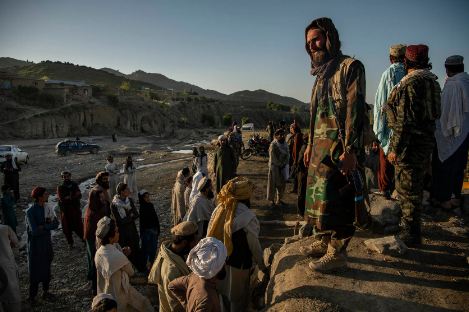
ISLAMABAD, JAN 7 /DNA/ – Afghanistan’s embassy in Pakistan said around 800 Afghans living in the capital have been detained by authorities, including some who are registered with the UN’s refugee agency.
It warned in a statement late on Monday that uncertainty around the visa process for Afghans in Pakistan has caused “troubling cases of arbitrary detention and deportation.”
Islamabad has cracked down on undocumented Afghans as political tensions with Kabul have increased, forcing more than 780,000 Afghans back across the border since the end of 2023 — including some who have lived in Pakistan for decades.
“The Embassy of Afghanistan expresses its deep concern over the recent detention of approximately 800 Afghan nationals in Islamabad,” it said on social media platform X.
“This has caused the tragic separation of families, including women and children, many of whom remain stranded in Pakistan.”
The statement said the number included 137 Afghans with pending visa extension requests or who are temporarily registered with the UNHCR, the UN’s refugee agency.
The embassy was “alarmed by reports of unwarranted arrests, home searches, and extortion targeting Afghan nationals,” it said.
Pakistan’s Foreign Ministry has not responded to requests for comment.
More than 600,000 Afghans have fled to Pakistan since the Afghan Taliban regained control of Kabul in August 2021, including tens of thousands on the advice of Western nations with the promise of relocation.
Many are forced by embassies to wait for months in guest houses in Islamabad while their cases are processed and have reported a rise in harassment by police in recent weeks.
The Pakistan government said its deportation campaign is a bid to improve security after a rise in militancy in the border regions.
But Afghans say they are being targeted because of a political falling-out between Islamabad and Kabul.
“The Afghans in Pakistan awaiting immigration are going through so much pain,” Umer Ijaz Gilani, a lawyer who represents Afghans, told foreign media.
Millions of Afghans have fled into Pakistan to escape successive conflicts over decades, becoming deeply ingrained in Pakistani society.
According to the UNHCR, Pakistan currently hosts some 1.5 million Afghan refugees and asylum-seekers, alongside more than 1.5 million Afghans of different legal statuses.
Pakistan has given a series of short-term extensions to Afghans with registered refugee status, currently due to expire in June 2025.