Home Blog Page 708

After meeting Imran Khan in ‘controlled environment’, PTI says ready for third round of talks

After meeting Imran Khan in 'controlled environment', PTI says ready for third round of talks

ISLAMABAD, JAN 12 /DNA/ – Following a much-awaited meeting with incarcerated Pakistan Tehreek-e-Insaf (PTI) founder Imran Khan in a “controlled environment”, the former ruling party on Sunday announced that they were ready for third round of talks with the government to defuse the political tensions in the country.

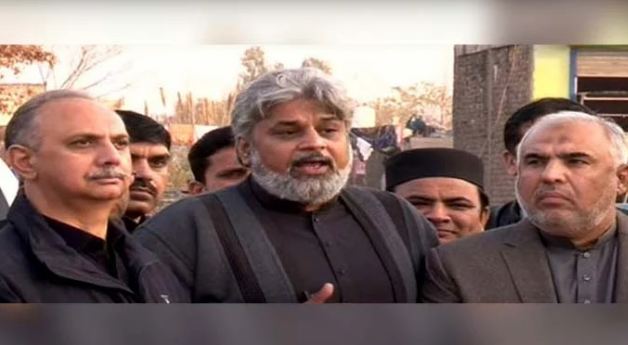
Addressing a joint press conference alongside PTI senior leaders Omar Ayub Khan and Asad Qaiser, Sunni Ittehad Council (SIC) head Sahibzada Hamid Raza, who also serves as the spokesperson for the negotiation team, urged the government to make progress on their demands during the upcoming round of dialogue.

He called on the government to establish an “impartial judicial commission” headed by a senior Supreme Court judge to investigate the events of May 9, 2023, and November 26, 2024.

Play Video
The May 9 riots erupted nationwide following the arrest of the deposed prime minister in the £190 million settlement case, leading to the detention of hundreds of PTI workers and senior leaders for their alleged involvement in violent incidents and attacks on military installations.

During the unrest, protesters targeted civil and military sites, including Jinnah House and the General Headquarters (GHQ) in Rawalpindi. The military condemned May 9 as “Black Day” and announced plans to try those involved under the Army Act.

In November, Khan issued a “final call” for protests, demanding the restoration of PTI’s “stolen mandate,” the reversal of the 26th Amendment, and the release of political prisoners.

PTI claims that at least 13 of its workers were killed and 1,000 others arrested during the protests. However, the government has firmly denied the use of live ammunition against demonstrators.

During his interaction with journalists today, Raza said, “We are ready for the third round of talks.” He urged the government’s negotiation team to work on forming a judicial commission before the next round of dialogue.

“No progress has been made in the negotiations so far,” he said, emphasizing the need for the government to act on their demands, particularly the establishment of the judicial commission.

Stressing that the release of political prisoners and the formation of a judicial commission were integral to their demands, Raza said that PTI would submit their two demands in writing to the government’s team during the upcoming session.

Raza warned that the dialogue would no longer continue if the judicial commission was not constituted and the former ruling party would not extend the deadline for talks with the government beyond January 31.

“Show the CCTV footage if you [the government] believe PTI is responsible [for the May 9 violence],” he demanded.

Responding to a question, Raza said their meeting with Khan was held in a “controlled environment” and that they were given go-ahead for the sitting late at night on Saturday.

To another query, he explained that two members of their team — Hamid Khan and Salman Akram Raja — were unable to reach the venue on time due to foggy conditions in the area.

Raza also remarked that the verdict in the £190 million corruption case could create bitterness, but Khan had directed them to ensure the ruling did not disrupt the ongoing negotiation process.

Stressing the need for practical steps, he said that their demands were “reasonable and viable”.
Security forces eliminate nine militants in North Waziristan operations: ISPR

Security forces eliminate nine militants in North Waziristan operations: ISPR

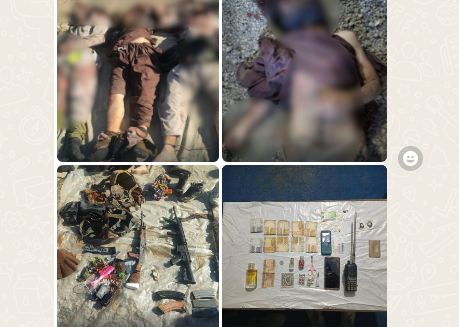
RAWALPINDI, JAN 11 /DNA/ – Nine Khwarij were sent to hell in two separate engagements in North Waziristan District. An intelligence based operation was conducted by the Security Forces in general area Dosalli, on reported presence of Khwarij.

During the conduct of operation, own troops effectively engaged the Khwarij location and resultantly, six Khwarij were sent to hell, while two Khwarij were apprehended.

Another intelligence based operation was conducted in general area Esham, North Waziristan District. After intense fire exchange, three Khwarij were neutralised by security forces, while two Khwarij got injured.

Weapons and ammunition were also recovered from killed khwarij, who remained actively involved in numerous terrorist activities against the security forces as well as target killing of innocent civilians.

Sanitization operations are being conducted to eliminate any other kharji found in the area, as security forces of Pakistan are determined to wipe-out the menace of terrorism from the country.

Families of Monal restaurant employees hold protest demonstration

Families of Monal restaurant hold protest demonstration

Monal Restaurant, an iconic eatery nestled in the hills of Islamabad, has long been a destination for families seeking a unique dining experience. Known for its picturesque views, especially at sunset, and its expansive menu offering a range of continental and Pakistani delicacies, it has drawn families from across the country

DNA

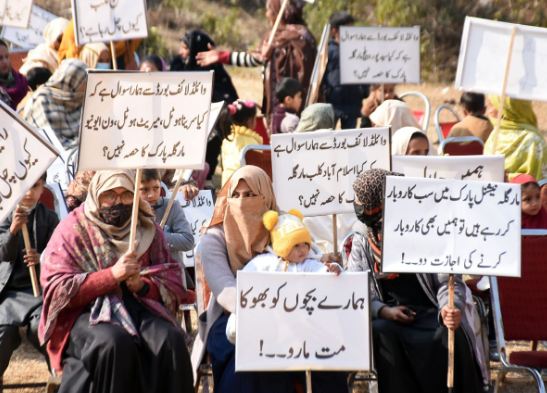
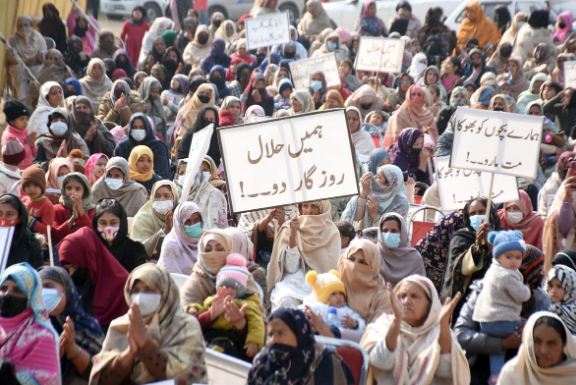
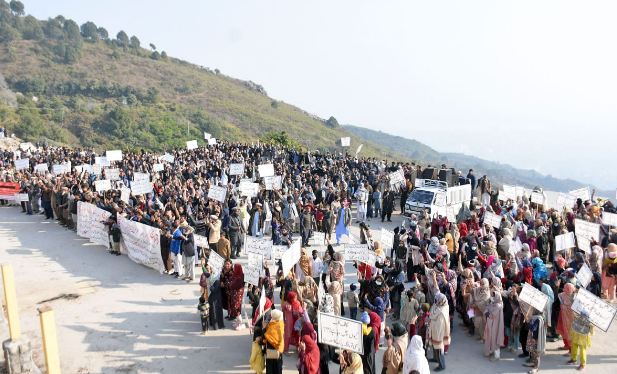
ISLAMABAD: The families of the employees of Monal restaurant on Sunday staged a protest demonstration in favour of their demands. Hundreds of employees were rendered jobless after apex court decision to close down the restaurant.

 Monal Restaurant, an iconic eatery nestled in the hills of Islamabad, has long been a destination for families seeking a unique dining experience. Known for its picturesque views, especially at sunset, and its expansive menu offering a range of continental and Pakistani delicacies, it has drawn families from across the country.

The closure of Monal restaurant has caused significant hardship for many of its employees and their families. As a popular and renowned establishment, Monal employed hundreds of staff members across various departments, including kitchen, service, management, and support. The sudden closure led to loss of income, disruption of livelihoods, and increased financial stress for employees and their families, especially those who had relied on the restaurant as their primary source of employment.

Such closures often have a ripple effect on local communities, where many workers may have spent years building relationships and gaining experience in the industry. In the absence of immediate alternative job opportunities, many faced difficulty finding similar employment. Additionally, if employees do not have financial safety nets, it may worsen their ability to meet basic needs such as rent, bills, and food.

CDA cancels PSO petrol pump lease in f-6 over Rs. 480m unpaid dues

CDA cancels PSO petrol pump lease in f-6 over Rs. 480m unpaid dues

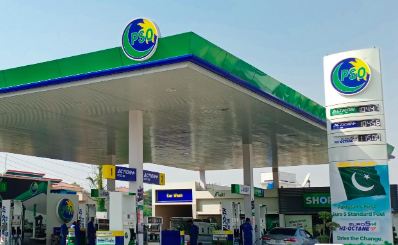
ISLAMABAD, JAN 12 /DNA/ – The Capital Development Authority (CDA) has canceled the lease of a petrol pump in Sector F-6, Islamabad, due to non-payment of dues by PSO and Awan Associates. After the cancellation of the lease, the CDA has taken possession of the petrol pump site.

According to the details, PSO and Awan Associates owed more than Rs. 480 million. Despite multiple notices, the companies failed to pay their dues. After serving several notices, the CDA took action and took possession of the petrol pump site.

Moreover, several violations were found on the petrol pump site, which were contrary to the agreement. The CDA had also issued notices for the removal of these violations, but they were not complied with. Due to non-compliance, the CDA canceled the lease and took possession of the site.

The CDA has decided to allot the petrol pump site through a transparent bidding process. In this regard, advertisements will be published in newspapers, and a committee headed by the DG Admin will be constituted to ensure transparency in the bidding process.

It is worth mentioning that the case related to the petrol pump site had been pending in the courts for a long time, but after effective follow-up, all cases have been disposed of.

Pakistanis can now obtain Bangladesh visa online after conditions relaxed

Pakistanis can now obtain Bangladesh visa online after conditions relaxed

LAHORE: Bangladesh Ambassador to Pakistan Muhammad Iqbal Khan has said that Pakistanis can now obtain visas for his country online as Dhaka has relaxed visa conditions for the country, The News reported on Sunday.

Speaking during his visit to the Lahore Chamber of Commerce and Industry (LCCI), the ambassador said that the people of Bangladesh want to have a loving relationship with the people of Pakistan and increasing cooperation between the two countries was the need of the hour.

Noting that the LCCI could play a role in increasing bilateral trade between Pakistan and Bangladesh, the envoy called for the strengthening of economic and financial cooperation between Islamabad and Dhaka.

The development comes in the backdrop of melting ice between the two countries ever since the incumbent interim government led by Bangladesh Professor Muhammad Yunus came to power in Dhaka following the ouster of PM Sheikh Hasina.

Last month, Prime Minister Shehbaz Sharif met Prof Yunus on the sidelines of the D-8 summit in Cairo and emphasised the need to make joint efforts to explore new avenues of economic cooperation.

During the meeting, he had stressed taking advantage of great potential to boost trade in different sectors including chemicals, cement clinkers, surgical goods, leather goods and IT.

He had also expressed his gratitude to Bangladesh for the recent steps taken for the facilitation of trade and travel between Pakistan and Bangladesh. This includes waiving off the condition of 100% physical inspection of the consignments from Pakistan and the abolishment of special security desk at the Dhaka airport earlier established to scrutinise Pakistani passengers.

PM Shehbaz had also thanked Bangladesh for doing away with additional clearance requirements for Pakistani visa applicants.

The two leaders expressed satisfaction over recent positive developments in bilateral relations and noted with satisfaction the increasing frequency of high-level contacts.

Furthermore, they had agreed to expand and deepen bilateral cooperation in all areas of mutual interest and emphasised the need to align efforts to achieve mutually beneficial development objectives.

Prior to this, PM Shehbaz had met Prof Yunus on the sidelines of the 79th Session of the UN General Assembly in September 2024 where he accentuated Pakistan’s strong fraternal ties with Bangladesh, based on common faith, history and culture and encouraged fostering relations through parliamentary exchanges, people-to-people contacts, and interactions among academics, artists, students, etc.

Following the meeting, the first-ever direct maritime link was established between the two countries after a cargo vessel reached Chittagong Port from Karachi.

This was followed by the purchase of 25,000 tons of high-quality sugar by Bangladesh from Pakistan, as reported by the publication in the first week of December which said that Dhaka had usually been importing sugar from India.

Apart from common economic interests, Islamabad and Dhaka share mutual concerns relating to Indian aggression.

America First to America Everywhere

Qamar Bashir

By: Qamar Bashir

Macomb, Detroit, Michigan

Intoxicated by a landslide victory in the presidential elections and securing a majority in the U.S. Congress and Senate, flanked by business magnates and entrepreneurial billionaires, the U.S. President-elect, who is just a week away from taking the oath of office to become one of the most powerful individuals in the modern world, has wasted no time in signaling a dramatic shift in policy. Contrary to his campaign rhetoric of non-interventionism, he has begun to outline bold expansionist policies that, if implemented even partially, could alter the geography and history of the world for generations to come.

While he had promised to withdraw the U.S. from foreign wars and conflicts, it now appears his vision was not about reducing global entanglements but rather reshaping them. His policies suggest a pivot from participating in the wars of other nations to initiating conflicts of his own—starting with the immediate neighbors of the U.S. and potentially extending to other parts of the world. This ambition for a “new America” includes a significant expansion of the U.S. defense forces to facilitate territorial acquisitions, the enlargement of federal bureaucracies to manage newly acquired territories, and the bolstering of homeland security forces to address the inevitable backlash of terrorism and unrest resulting from these policies.

He is particularly serious about annexation of Canada. In his latest press conference, he said “We have a massive trade deficit with Canada, reaching up to $250 billion. We don’t need their milk, cars, lumbers, or energy and other products, yet we provide them with subsidies. Moreover, the USA is responsible for Canada security, Canada has little or no military. They donot pay to NATO as much as they should. I asked Prime Minister Trudeau what would happen if the U.S. withdrew its economic and military support, and he admitted that Canada would face severe challenges and will be obliterated. I told him that we would continue our support, if Canada were a U.S. state, not as a separate country.” He further added that the people of Canada loved the idea.

His second hot target is Greenland while addressing the preinaugural Press Conference,  the President-elect was hawkish. He said acquiring Greenland is an “absolute necessity” for U.S. national and economic security. He emphasized Greenland’s strategic importance for global freedom and stated that if Denmark resisted, the U.S. could impose “very high” tariffs or consider other actions, including military measures”.

According to him, Greenland holds immense strategic importance for the United States. Its location between North America and Europe makes it critical for Arctic defense, monitoring Russian and Chinese activities, and securing emerging Arctic shipping routes as ice melts. The U.S. operates Thule Air Base in Greenland, a vital part of its missile early warning and space surveillance systems, contributing to NATO and NORAD operations. Economically, Greenland is rich in rare earth minerals, oil, gas, and fishing resources, which are essential for reducing reliance on adversaries like China and boosting U.S. energy independence.

In his press conference, he vowed to regain control of the Panama Canal, citing its strategic and economic importance. Historically, the U.S. built and controlled the canal from its opening in 1914 until its transfer to Panama in 1999 under the Panama Canal Treaties signed by President Carter. The canal was a vital asset for U.S. trade and military mobility, particularly during World War II.

President-elect Donald Trump announced plans to rename the Gulf of Mexico as the “Gulf of America,” stating, “We’re going to be changing the name of the Gulf of Mexico to the Gulf of America, which has a beautiful ring… And it’s appropriate.” This proposal aligns with Trump’s agenda to assert U.S. sovereignty and dominance, particularly in relation to Mexico, citing concerns over immigration and trade imbalances.

Implementing President-elect Trump’s expansionist policies—annexing Canada, acquiring Greenland, and controlling the Panama Canal—would require a substantial increase in military spending. Securing Canada, the second-largest country in the world by landmass, would involve deploying at least 300,000 additional troops for occupation and policing, costing approximately $100 billion annually. Establishing military infrastructure in Greenland, such as Arctic bases and radar systems, would add $50 billion annually. Taking control of the Panama Canal, a region with strategic and economic significance, would involve initial operations costing $20-30 billion and ongoing expenses of $10 billion annually. Overall, modernizing and expanding the military for such global ambitions could raise the defense budget by $500 billion annually.

Countering domestic and regional blowback from these expansionist policies would necessitate a dramatic expansion of U.S. homeland security capabilities. The annexation of Canada, Greenland, and Panama would likely provoke resistance movements, terrorism, and unrest, requiring the Department of Homeland Security (DHS) to double its workforce by adding 300,000 personnel. This expansion, along with enhanced counter-terrorism and surveillance programs, would cost an estimated $50-75 billion annually. Additional measures to manage increased immigration control and internal dissent could further raise these costs, creating an immense strain on domestic security resources.

To fund this expansionist vision, the U.S. would need to nearly double its current defense and security budget, increasing total spending to $1.7-1.8 trillion annually. This would impose immense pressure on the U.S. economy, potentially leading to higher taxes or deficits.

These expansionist policies would sharply contradict Trump’s earlier promises of non-interventionism. While the rhetoric suggests retracting the U.S. from foreign wars, these actions would signify a shift toward starting new conflicts and territorial expansions. Far from avoiding global entanglements, these moves would provoke international resistance, destabilize alliances, and damage relationships with NATO and other partners. Countries like China, Russia, and the EU would likely respond with retaliatory measures, economic sanctions, and military build-ups, leading to heightened tensions and potentially triggering a new era of global conflict.

By: Qamar Bashir

Press Secretary to the President (Rtd)

Former Press Minister at Embassy of Pakistan to France

Former MD, SRBC

Democratic Erosion in Contemporary Politics

Democratic Erosion in Contemporary Politics

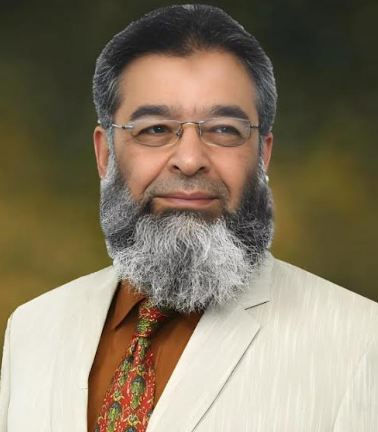
Dr. Muhammad Akram Zaheer

Democratic erosion has emerged as a significant phenomenon in the global political landscape, marked by a steady departure from democratic norms and practices. Unlike abrupt breakdowns such as coups or revolutions, this process unfolds gradually through actions often initiated by legally elected officials. These individuals, referred to as agents of erosion, exploit legal frameworks to systematically dismantle democratic institutions. Their actions are frequently cloaked in justifications that appeal to public interest, creating the illusion of democratic legitimacy.The author highlights key conceptual challenges in understanding democratic erosion, particularly distinguishing it from related phenomena such as loss of democratic quality and autocratization. While the former refers to a decline in the effectiveness of democratic systems, the latter represents a more profound shift toward authoritarianism. A nuanced understanding of these distinctions is crucial for analyzing the pathways through which democracies regress.Democratic erosion is characterized by its incremental nature. This gradualism distinguishes it from more overt forms of democratic collapse. Each step in the process may appear minor and legally defensible, making it difficult to detect the cumulative impact. Over time, however, the erosion transforms the political landscape, often leaving behind only the facade of democracy.The study identifies two critical elements in the process of erosion: agency and sequencing. Agency refers to the role of political actors who deliberately initiate and sustain the erosion of democratic norms. Sequencing, on the other hand, examines the chronological and causal progression of events that lead to the deterioration of democracy. These elements are interdependent, as the intentions and strategies of agents shape the sequence of erosion.Agents of democratic erosion, typically incumbents, leverage their positions of power to alter democratic rules. They often use legal mechanisms such as constitutional reforms or new legislation to consolidate authority. These agents justify their actions as necessary for addressing economic, social, or political challenges, thus gaining public support. The legitimacy derived from elections enables them to claim a mandate for their transformative agendas.A distinctive feature of these agents is their lack of normative commitment to democratic principles. While some leaders openly advocate for alternative models of governance, others maintain a rhetorical commitment to democracy while systematically undermining its foundations. Their actions often include curtailing the independence of the judiciary, weakening opposition parties, and restricting civil liberties.

The process of democratic erosion typically begins with the election of an agent committed to altering the political system. Even before assuming office, these individuals often articulate ambitious reform agendas designed to mobilize public support. Upon gaining power, they initiate structural changes to weaken institutional checks and balances, concentrating authority in the executive branch.The subsequent stages involve reconfiguring the political system to entrench their power. This may include extending term limits, manipulating electoral laws, and reshaping the media landscape. These measures not only secure the incumbent’s position but also create systemic barriers to future democratic restoration. The erosion process is often marked by the subtle and legalistic implementation of changes, minimizing public resistance.The final stage of erosion is characterized by the suppression of political rights and freedoms. Media outlets, civil society organizations, and opposition groups become targets of control and repression. Governments may employ a combination of legal measures, such as anti-disinformation laws, and extralegal tactics to silence dissent. While these actions might appear sporadic, they collectively undermine the democratic fabric of the state.A significant challenge in addressing democratic erosion lies in identifying its early stages. The gradual nature of the process makes it difficult to distinguish between legitimate policy changes and deliberate attempts to subvert democracy. Moreover, the interplay between domestic and international factors adds complexity to the analysis. For instance, the rise of autocratic powers globally has emboldened erosion agents, creating a permissive environment for their actions.The implications of democratic erosion extend beyond national borders. As more countries experience erosion, the global balance between democracies and autocracies shifts. This trend poses challenges to the liberal international order, as eroding democracies often adopt counter-hegemonic strategies. Furthermore, the weakening of democratic institutions in influential states can have cascading effects, inspiring similar processes in other regions.  Additionally, the role of international actors in countering democratic erosion warrants attention. While global organizations and alliances have historically promoted democratic values, their effectiveness in addressing erosion remains inconsistent. A coordinated approach involving both domestic and international stakeholders is essential for preserving democratic systems.

Faith, Labor, and Sacrifice: Addressing the Crisis in Pakistan’s Mines

Faith, Labor, and Sacrifice: Addressing the Crisis in Pakistan’s Mines

by Muhammad Mohsin Iqbal

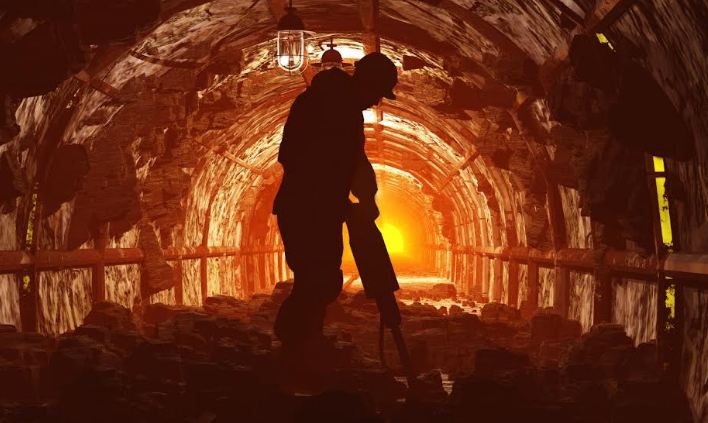
Mining stands among the most grueling and perilous professions worldwide. Driven by the need to earn a livelihood, miners often face extreme risks, enduring conditions that challenge both their physical strength and mental resilience. These workers labor deep beneath the earth to extract coal and minerals, facing life-threatening dangers daily. In Pakistan, regions such as Balochistan, Sindh, Khyber Pakhtunkhwa, Gilgit-Baltistan, and Punjab are hubs of mining activity, yet the grim realities faced by the workers in this sector remain deeply troubling.

The very nature of mining work is fraught with danger. Miners must navigate narrow shafts, endure exposure to toxic fumes, and operate heavy machinery in dimly lit, poorly ventilated conditions. The threat of mine collapses looms constantly, claiming lives when tunnels cave in and bury workers under massive layers of rock and earth. Those who survive such incidents often sustain debilitating injuries that leave them unable to work. Despite these hardships, miners receive low wages and are offered minimal safety protections. Their contributions to industries that generate substantial profits for mine owners are rarely acknowledged.

The root causes of mining accidents are manifold. Poor infrastructure, inadequate ventilation systems, lack of safety equipment, and insufficient training are persistent issues. Methane gas buildup, improper handling of explosives, and negligent maintenance further exacerbate the dangers. In many cases, the indifference of mine owners and contractors plays a critical role, as safety protocols are often disregarded in favor of profit.

Ensuring the safety of miners requires a robust and enforceable framework. Governments must establish and implement strict safety regulations, complemented by regular inspections of mining sites. Miners should be equipped with modern protective gear, including helmets, respirators, and reinforced clothing, to safeguard them from toxic gases and potential accidents. Comprehensive training programs are essential to familiarize workers with safety measures and emergency response procedures. Additionally, setting up medical facilities near mining sites and devising effective evacuation plans can significantly reduce fatalities during accidents.

The compensation framework for miners who lose their lives remains inadequate across Pakistan. In Balochistan, where much of the mining activity is concentrated, compensation laws exist but are poorly enforced. Families of deceased miners typically receive payments ranging from PKR 500,000 to 1,000,000—an amount that barely addresses the financial strain of losing a primary breadwinner. Similar challenges exist in Sindh, Khyber Pakhtunkhwa, and Punjab, where families are often left to negotiate with mine owners for support. These compensation packages need to be reassessed to provide more substantial and long-term financial stability for the affected families.

Mining activities in Pakistan are particularly intensive in Balochistan, which is rich in coal, gold, copper, and other minerals, attracting both local and international investors. However, safety standards in the province’s mines remain alarmingly low. Methane gas explosions and tunnel collapses occur frequently, and the lack of medical infrastructure near mining sites aggravates the situation. In Sindh’s coal mines and Punjab’s salt mines, workers face similar perils, including long hours and insufficient protective equipment. Meanwhile, in Khyber Pakhtunkhwa, miners extracting marble and gemstones contend with hazardous dust and unstable working conditions in rugged terrains.

Islamic teachings add profound significance to the struggles of miners. Islam values earning a livelihood through honest, hard work. The Prophet Muhammad (peace be upon him) stated, “No one eats better food than that which he eats out of the work of his hand” (Bukhari). Despite the dangerous conditions, miners embody this ideal as they labor tirelessly to support their families and communities. Employers, too, bear a moral responsibility in Islam to ensure the well-being of their workers. The Prophet (peace be upon him) emphasized this, saying, “Pay the worker his wages before his sweat dries” (Ibn Majah), highlighting the importance of fair and timely compensation.

The economic disparity between mine owners and workers is stark. While owners and contractors accumulate substantial wealth from mining activities, the laborers who bear the brunt of the risks often lack access to basic necessities like clean drinking water, healthcare, and education for their children. This inequity perpetuates cycles of poverty and exploitation, leaving workers and their families trapped in a cycle of hardship.

Addressing the challenges faced by miners demands a multifaceted approach. Governments must strictly enforce safety standards, ensuring that miners are provided with protective gear and access to emergency medical care. Compensation packages for injured or deceased miners must be restructured to adequately reflect the sacrifices of workers and support their families. Mine owners and contractors must also be held accountable for providing humane working conditions and equitable profit-sharing with their laborers.

In addition to structural reforms, societal recognition of miners’ contributions is vital. These individuals form the backbone of industries that drive national development, yet their efforts often go unnoticed. Their struggles spotlight broader labor rights and economic inequality issues, underscoring the need for collective action to foster a more equitable society. The Quran affirms the dignity of labor, declaring, “And that there is not for man except that [good] for which he strives” (Surah An-Najm, 53:39). Miners exemplify this verse through their tireless endeavors to provide for their families, despite the dangers they face.

The resilience and dedication of miners in Pakistan serve as a testament to the human spirit’s ability to endure adversity. Their sacrifices compel us to address their challenges and uphold principles of fairness, safety, and dignity, as advocated by both Islamic teachings and universal principles of justice. By taking these steps, we can build a future where miners’ contributions are respected, their lives are safeguarded, and their sacrifices are truly valued.

NUML students seek relaxation in attendance requirement

NUML students seek relaxation in attendance requirement

By Kehkashan Tabbasum

Freelance Journalist

ISLAMABAD, JAN 12: The students of the German Department of the National University of Modern Languages, Islamabad Campus have sought intervention of the Rector for granting a relaxation in the attendance requirement to 70pc to them.

In an email request to the NUML Rector they have pleaded that it is a certificate course not a degree program as allowing them to take the exams would help them continue their course to B1 without setbacks, reliable sources in the German Department confided to this scribe on Saturday.

Copies of the applications which the students addressed to the Head of German Department, made available to this correspondent, state that students of the German Department studying A1+A2 Certificate courses were not allowed by the authorities concerned to appear in the final examinations due to the shortage of attendance.

Hence, the educational future of students of German Department has been put at stake by the authorities concerned for not allowing them to appear in their final examinations to prove their mettle.

The students, through applications, had twice requested to the Head of the German Department to allow them to appear in the examinations by taking a lenient view keeping in view time period and heavy tuition and transport fees paid to the university but in vain, the sources claimed.

An aggrieved student, on the condition of anonymity, disclosed that unfortunately the Head of Department neither took decision at its own nor forwarded their applications to next authority i.e. Dean, Registrar or the Director General of the university in order to save students’ precious time.

Resultantly, the sources divulged, due to the importance of the issue owing to time constraints, the students addressed their plight to the Rector, which is pending for want of a favourable decision.

Another student disclosed that a majority of the students of class A2 were facing Damocles sword like situation as the authorities concerned failed to allow the students in time to appear in the examinations.

The sources further divulged that at least three students of Section A whose actual attendance was at 66pc, 63pc and one at less than 60pc were allowed to appear in the A2 examinations whereas other students with below 70pc attendance were not allowed to appear in the A2 examinations at the pretext of short attendance.

Yet another student disclosed that many of them were full-time students, coming from diverse backgrounds would unable to get admission in B1 course unless A2 certificate was issued. Despite this, they had actively participated in the course and achieved excellent results in Mid-term Exams. The A2 certificate is essential for our progression to B1 Level, the student said.

The students have requested to the NUML Rector for granting them a relaxation in the attendance requirement to 70pc in order to examinations to help them continue their course to B1 without setbacks.

Protests delay start of German far-right party’s key meet

Protests delay start of German far-right party's key meet

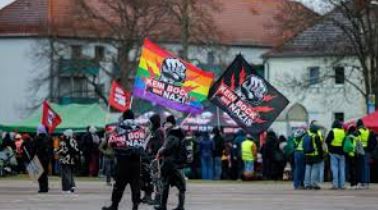
                RIESA, GERMANY, Jan 11 (AFP/APP): A key congress of the far-right Alternative for Germany (AfD) party was delayed Saturday as thousands shouting “No to Nazis” protested outside the venue in the eastern town of Riesa.

                  Once the congress started the party’s 600-odd delegates approved co-leader Alice Weidel as candidate for chancellor by acclamation ahead of a snap general election on February 23.

                  The two-day meet is also expected to agree the party’s election programme.

                  The draft version of the manifesto includes a pledge to leave the euro, reversing Germany’s exit from nuclear power and a tough immigration policy.

                  The programme was delayed by around two hours due to protests preventing delegates reaching the venue but eventually started just after 12pm (1100 GMT).

                  Police said at least 8,000 demonstrators had assembled outside the town’s convention centre.

                  The protestors braved the cold to shout slogans such as “no to Nazis” and listened to music from a stage erected by organisers.

                  Late on Saturday morning, a police spokesman said there was “no serious unrest” but that one road on the way to Riesa remained blocked by protestors.

                  Protest organisers said earlier on Saturday that police had hit groups of demonstrators and deployed pepper spray.

                  A statement from protest organisers said more than 12,000 people had turned out from all over Germany to voice their opposition to the AfD.

                  “The congress was delayed by wide-ranging, colourful and determined protests in many locations inside and outside the town,” the statement said.

                  Maria Schmidt, spokeswomen for the protest organisers, said: “Today we are protecting the right of people to live in safety without the fear of deportation or being attacked.”

                  “We are all making it clear: Riesa is not a peaceful place for fascism,” she said.

Stay Connected

64FansLike
60FollowersFollow

Latest Reviews

Exchange Rates

USD - United States Dollar
EUR
1.17
GBP
1.35
AUD
0.72
CAD
0.73