Home Blog Page 707

Anjum Nisar says govt needs to provide equal facilities to local businessmen

FPCCI

ISLAMABAD, JUN 9 /DNA/ – The Businessmen Panel (BMP) of the Federation of Pakistan Chambers of Commerce and Industry (FPCCI) has announced to endorse the Pak-China consensus on up-gradation of the China-Pakistan Economic Corridor (CPEC) and advancing the high-quality development to the second phase, especially the shifting of the Chinese manufacturing units to Pakistan, demanding the government for equal opportunities to Pakistanis in CPEC projects.

The FPCCI former president and BMP Chairman Mian Anjum Nisar said the government needs to provide equal facilities to the local business community, as are given to the Chinese investors, endorsing the PM Shehbaz Sharif and Chinese President Xi Jinping resolve to further deepen cooperation across diverse fields ranging from political and security to economic, trade, and people-to-people exchanges.

The Businessmen Panel chief declared to endorse the Pak-China agreement to set a new direction of the China-Pakistan Economic Corridor for future cooperation in high economic impact areas, especially the shifting of the Chinese manufacturing units to Pakistan.

Mian Anjum Nisar said that the relocation of Chinese industry to Pakistan and providing Chinese financing facilities for future projects are the welcome steps and if we could put all energies and provide enabling environment, the newly-agreed framework has the potential to transform the country from low-income to a middle-income country in the next few years. He asked the government to focus only on those projects that had a high impact on Pakistan’s economy.

According to reports, the decisions to expand the CPEC scope were taken during PM Shehbaz meeting with Chinese representatives. He said the meeting was fruitful and the agreed framework was promising, as it had set a new direction for the CPEC and hoped that the second phase of CPEC would yield tangible progress towards a shared goal of making this project a resounding success.

He said that high consideration should be given to socio-economic and industrial cooperation in the second phase of CPEC. He underscored that bilateral economic cooperation should proceed as planned for the mutual benefit of both the brotherly countries. It was decided to expand the CPEC to copper, gold, oil, gas and affordable housing sectors, as the copper and mineral development would benefit both the countries since China remained one of the largest copper importers.

Mian Nisar said that only the oil and gas sectors have the potential to attract up to $10 billion Chinese investment. He maintained that the revival of Pakistan Steel Mills with the help of China could also reduce the import bill by $4 billion.

He said that Pakistan’s security challenges had roots in its neighborhood and to meet the challenges, there was a need to completely fence the country’s borders with Afghanistan and Iran.

He said that the CPEC will be a gateway of progress and prosperity for a bright future. He added that next year would prove to be a significant year for China-Pakistan Economic Corridor, as several significant milestones will be achieved by the end of the year.

It is to be noted that the top leaders of the friendly countries also reaffirmed the time-honored ‘All-Weather Strategic Cooperative Partnership. PM Shehbaz held a long and in-depth discussion in meeting with President Xi. Chief of the Army Staff General Asim Munir was also present in the meeting. The two leaders were accompanied by the federal ministers and senior officials. This was the premier’s first meeting with the president of China since assuming office in 2024.

The meeting was marked by traditional warmth reflective of the ironclad friendship and close strategic ties between the two countries. PM Shehbaz thanked President Xi for the warm and gracious welcome accorded to him and his delegation in China.

Commending President Xi’s visionary Belt and Road Initiative (BRI) and Global Development Initiative (GDI), the prime minister underscored that as the flagship project of BRI, CPEC had significantly contributed to Pakistan’s socioeconomic development. The two leaders reaffirmed the consensus for high-quality development of CPEC and timely completion of major ongoing projects.

PM Shehbaz reaffirmed Pakistan’s commitment to the high-quality development of CPEC and to foster synergy between the development strategies of the two countries through close coordination. He underlined Pakistan’s commitment and full support for the safety and security of Chinese nationals, projects and institutions in Pakistan.

Shehbaz briefed Xi on Pakistan’s policies for economic reform and sustained growth, industrial development, agricultural modernization and regional connectivity and the critical role played by CPEC in the country’s development. He underlined that the Pakistani government’s agenda for people-centric, socio-economic development resonates with the concept of ‘shared prosperity’ embraced by China.

The Chinese president also hosted a banquet in honour of PM Shehbaz, where another round of discussion on different matters of mutual interests was held.

Pakistan and China will also continue to consult closely on issues of regional and global significance and multilateral fora, especially during the two-year tenure of Pakistan as a non-permanent member of the UN Security Council.

The delegation-level talks were followed by an MoU signing ceremony, witnessed by PM Shehbaz Sharif and Premier Li Qiang, where both signed 23 MoUs and agreements deepening cooperation in transport infrastructure, industry, energy, agriculture, media, health, water, socio-economic development and others of mutual interest.
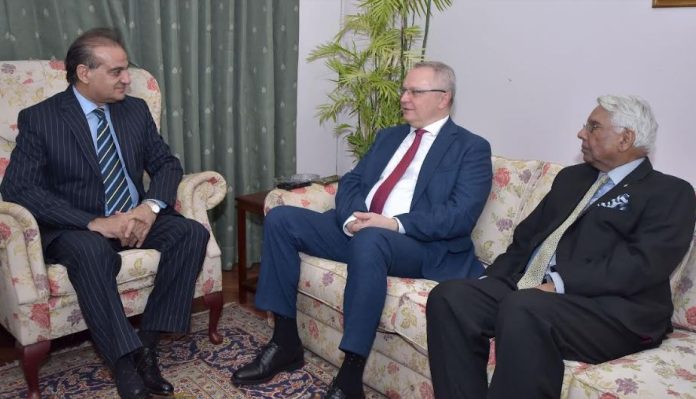
Lithuania, Pakistan can boost cooperation in IT, other sectors

Lithuania, Pakistan can boost cooperation in IT, other sectors

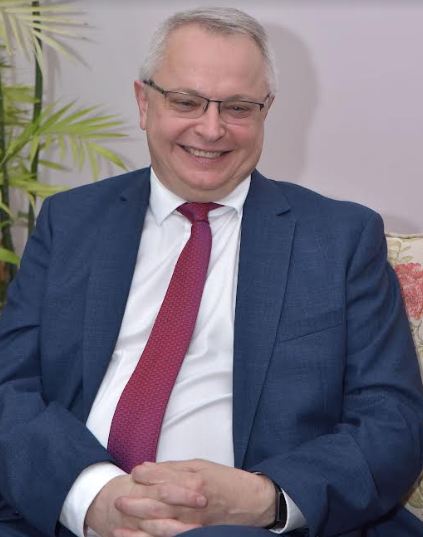
Mr. Egidijus Meilunas, Vice Minister, Ministry of Foreign Affairs of Lithuania visited Pakistan in the third week of May 2024. During the visit the Minister held important meetings with the high-level Pakistani officials. The Minister also attended the reception hosted by Hon. Consul General of Lithuania in Pakistan Masood Khan. The Vice Minister talked to Daily  Islamabad POST, Centreline magazine and Diplomatic News Agency (DNA). Here are excerpts from his interview.

Ansar Mahmood Bhatti

People to People contacts

Enhancing interpersonal connections undeniably serves as a cornerstone in fostering stronger bilateral ties between nations. I’m delighted to convey to you that there’s a vibrant exchange of intellect and culture between Pakistan and Lithuania, exemplified by approximately 400 Pakistani students currently pursuing various academic disciplines in Lithuania. Among them, many are delving into the realms of technology and medicine, while others are exploring diverse fields of study. Notably, a cohort of Pakistani scholars is even engaged in doctoral research. It’s worth mentioning that Lithuanian universities actively recruit students from Pakistan, reflecting the mutual commitment to educational collaboration. Furthermore, the student body in Lithuania comprises individuals from various nationalities, adding richness and diversity to the academic milieu. This thriving exchange underscores the enduring bonds and shared aspirations between our two nations.

Tourism potential

Tourism is a burgeoning industry for us, yet one with immense potential. We aspire to warmly welcome tourists from Pakistan and beyond. However, achieving this vision necessitates a concerted effort to foster mutual understanding between Lithuania and Pakistan. Both governments must commit to tirelessly promoting awareness of the unique offerings, particularly within the tourism sector, that each country possesses. By collaborating closely and championing the cultural richness and natural beauty of both nations, we can pave the way for a flourishing tourism exchange that benefits all involved. Direct airlinks can contribute greatly towards promotion of people to people contacts and spurring the tourism activity on both sides.

Digital solutions

Lithuania is world leader in digital solutions, use of IT. Its key areas are: Life sciences including biotechnologies, ICT, digital solutions, new processes and new materials—in this category, we can give example of Lithuanian laser industry as Lithuania today produces more than 10pc of scientific lasers.

It is quite noteworthy that Pakistan is also investing in hi-tech sector, for example, in financial technologies (Fintech). Pakistani banks have made a significant progress in digitizing their systems and they might be interested in Lithuanian solutions.

Agriculture cooperation

This doesn’t mean that we start action right now. First step is exchange of information. Take example of agriculture, Lithuania is traditionally agriculture country with old practices for ages. Now, of course still it is an important sector but it’s only 3pc of our GDP which used to be 10pc some 30 years ago.

What we did: We modernized our agriculture sector to be more productive. Today, I presented to my Pakistani friends some solutions on biological fertilizers.

Traditionally, we used synthetic chemicals and fertilizers in agriculture which are quite effective but you need big quantity of them and they are not good for your health.

Some Lithuanian companies produced fertilizers based on organic solutions so they are not harmful for nature and for your health and importantly, you don’t need big quantity of them.

Trade relations

Last year our trade turnover was around Euros 50 million. It is not high but it has the potential to increase. Our exports are a little bit more than the imports from Pakistan but more or less they are balanced. We are keen for mutual investment from Pakistan to Lithuania and from our country to Pakistan.

Lithuanian gained independence 35 years ago. We faced challenges of transformation of political system, establishment of democracy, freedom, rule of law and also economic transformation. Under Soviet occupation, we had very ineffective economic system which was so-called centrally governed. Private initiative and private properties were not allowed. So, we had to create new economic system from a scratch.

We have successfully gone through this new system and our economy is very open, very stable and rapidly developing. 84pc of our GDP is created by exports and it is because we are very open globally.

Pakistan’s public and private sector— banks, businesses, enterprises and companies— can multiply their growth as well as revenues by entering into cooperation with their Lithuanian counterparts as the country is a world leader in cutting edge technologies such as development of business service centers, startup ecosystem, fintech, software development, cyber security, life sciences, engineering and electronics.

Hi-tech advancement

We have invested a lot in hi-tech sector. Biotechnologies alone create 3pc of our GDP that means 4-time more than EU average. Our goal is 5pc GDP by life sciences or biotechnologies.

We are specializing in this sector and last year we developed semiconductors in cooperation with Taiwan. We are going to build our first semi-conductor plant in 2029 and it would be one more hi-tech industry in Lithuania.

Traditional industries are also well-developed like chemical industry. We also have the biggest oil refinery in Baltic Sea region. We also produce petrol. Engineering industry is also doing well. Logistics and transport sector also create 10pc of our GDP. Small Lithuania has one of the biggest truck fleets in whole Europe. We serve as transportation hub in Europe.

Fast Train Project: We still have to improve connectivity in Europe. We have a very ambitious plan extending railway connection starting from Finland, then going through Estonia and Lithuania and then to Poland. This project is called ‘Rail Baltica’ going through five Baltic states. 

ENERGY SECTOR

In energy, we are also going though energy transformation. We are building new capacity i.e. renewable sources two wind offshore farms in Baltic Sea and by 2030 we shall be able to produce more than 7Gigawatt electricity. 

Currently, we are importing electricity but by 2030 we shall be exporting or selling it. Currently, renewable energy share in our grid is 40pc mainly generated from hydro, wind and solar (though solar’s share is less than the other two).

EDUCATION COOPERATION

A large number of Pakistani students, more than 400 are studying at various colleges and universities of Lithuania. Twenty of these students are doing their Ph.D.

Most popular discipline for Pakistani students is technical education. Majority of them are concentrated in Vilnius and Kaunas, two major cities of the country. The University of Vilnius established in 1579, is more than 445 years old and among the top universities of Europe. We are also members of NATO and we were present in Kosovo, Balkans, Afghanistan and Iraq so we are not only the regular member but also contributing to EU.

HISTORICAL PERSPECTIVE

Historically as well as traditionally Lithuania is a tolerant nation and respects all religions, faiths, languages, nationalities and beliefs. We condemn Russian’s aggression and see it as brutal violation of international law and our stance is very clear and we have to help Ukraine fight back. We support Ukraine as much as we can that means we spent 2pc of our GDP in support to Ukraine that includes humanitarian, financial assistance, energy and military support.

Our minister said, victory whatever it takes because for Ukraine and for many other countries in Europe it is an existential question. Nowadays Russia has imperialistic ambitions.  They are preparing for long conflict. 20 years ago, we were dependent on Russia for gas and oil but today we are buying zero oil and zero gas from Russia. Today we are buying oil from Kingdom of Saudi Arabia and gas from America.

Australian envoy highlights education and trade cooperation

Australian envoy highlights education and trade cooperation

The High Commissioner however expressed concern over a number of cases where, despite having given undertakings to return, some scholarship recipients had remained in Australia post-graduation.

Agencies

ISLAMABAD, Australian High Commissioner to Pakistan Neil Hawkins on Sunday emphasized Australia’s commitment to investing in Pakistan’s future through education and trade.

He said, “By investing in the people of Pakistan, particularly the young people who study in Australia, we hope they will return with valuable skills to contribute to Pakistan’s future,” Hawkins stated.

He highlighted the sustained efforts to offer scholarships, focusing on women in executive leadership, climate change and agriculture. “Gender equality and climate change are major focuses for us,” he said, underscoring the shared climate challenges between the two nations and the potential for cooperative efforts.

The environmental focus, particularly on water and agriculture, remains a critical aspect of their support, with Hawkins noting his recent visit to northern Pakistan to witness climate change impacts firsthand.

Regarding trade, Hawkins noted a significant increase from the 2.5 billion dollars trade volume in 2022, with a 30 percent rise this year. Key exports include agricultural products like cattle, wheat, and canola, with nearly 90 percent of Pakistan’s canola sourced from Australia. “If you’re enjoying chana or chickpeas for breakfast, they’re likely from Australia as well,” he added.

This dialogue was part of an event celebrating the achievements of 60 Pakistani scholars who completed their studies in Australia through the prestigious Australia Awards scholarship program. These scholars, including 21 men and 39 women, were recognized for their academic excellence and dedication.

The High Commissioner however expressed concern over a number of cases where, despite having given undertakings to return, some scholarship recipients had remained in Australia post-graduation.

He cautioned such actions not only contravene the terms of the scholarship but also undermine the very purpose of this initiative and could ultimately ‘jeopardise the future of the program and deprive aspiring Pakistani scholars from an Australian education.”

“I am proud to join the celebrations with these Pakistani scholars who have completed their studies funded by Australia,” Hawkins said. “I congratulate them on their hard work and dedication. I am confident their newly acquired knowledge and skills will contribute to the development of Pakistan. It’s an investment by Australia in Pakistan’s future.”

The Australia Awards scholarship program is a key component of the Australian Government’s development assistance to Pakistan. The program equips scholars with the expertise needed to drive progress in Pakistan.

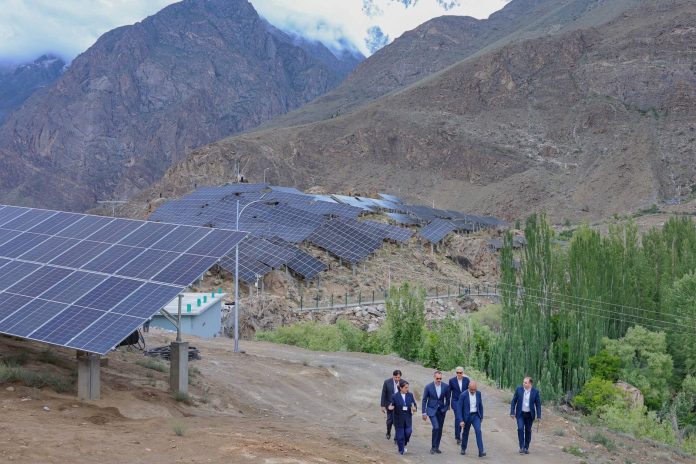
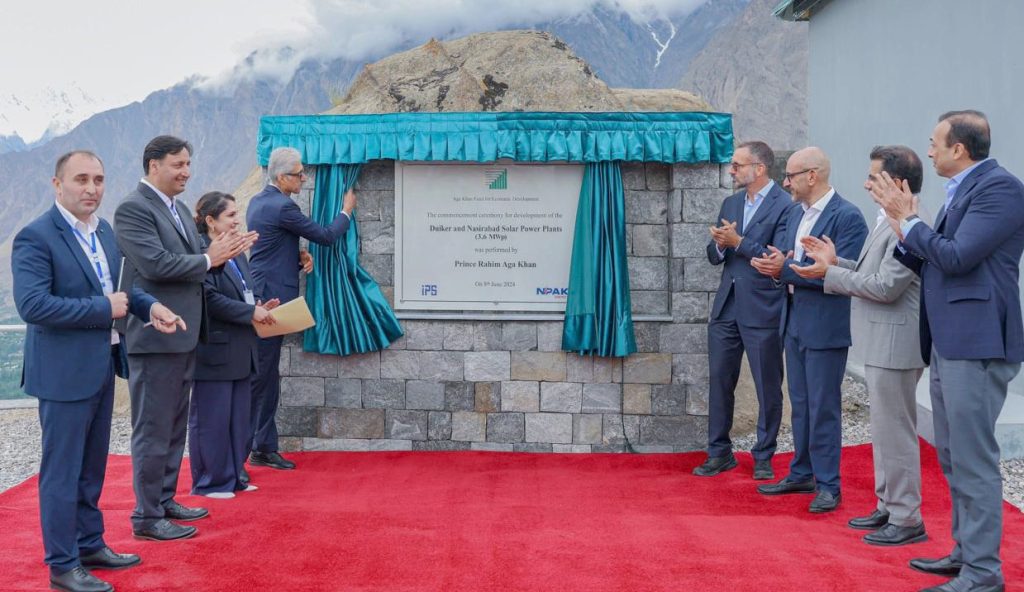
Solar Power Plants in Hunza, Gilgit-Baltistan

Phase I of Duiker Solar Power Plant, which has a generation capacity of 1MWp and 0.6MWh battery storage, commenced operations in November 2023, increasing the daily power availability for more than 11,000 people, from 10 to 17 hours in summer and from 4 to 9 hours in winter

DNA

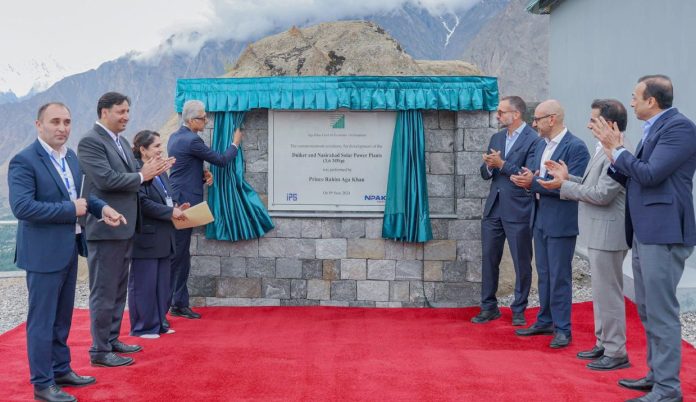
Hunza, Pakistan, 8 June 2024 – Prince Rahim Aga Khan visited Hunza district in Gilgit-Baltistan to launch the development of Duiker Phase II and Nasirabad Solar Power Plants with a total capacity of 3.6 MWp.

Phase I of Duiker Solar Power Plant, which has a generation capacity of 1MWp and 0.6MWh battery storage, commenced operations in November 2023, increasing the daily power availability for more than 11,000 people, from 10 to 17 hours in summer and from 4 to 9 hours in winter. When commissioned in November 2024, Duiker Phase II will expand generation capacity from 1MWp to 1.6MWp, and battery storage from 0.6MWh to 1MWh, providing increased electricity to an additional 8,760 people. Crucially, Duiker replaces diesel power generation, leading to an annual reduction of 1,100 metric tons of CO2 equivalent.

A 2MWp Solar Power Plant with 1MWh battery storage will also be constructed in Nasirabad in lower Hunza. This will supply power to an additional 23,400 people.  The Nasirabad Solar Power Plant is expected to be commissioned in June 2025.

NPAK Energy Limited, a subsidiary of Industrial Promotion Services (IPS), the industrial and infrastructure development arm of the Aga Khan Fund for Economic Development (AKFED), is investing $6m in these projects. Project financing blends equity, sustainable debt, and grants. An additional $14m has been secured from development partners for the enhancement of the region’s energy infrastructure.

Over the next five years, NPAK Energy will mobilise additional investments in clean, sustainable sources of electricity across Hunza and surrounding areas, addressing the region’s acute energy deficit while contributing to global efforts to mitigate climate change. The company is committed to improving public service delivery by creating a sustainable, self-reliant utility operation that catalyses economic opportunities and job creation, and models an innovative and efficient public-private partnership that contributes to sustainable development.

Solar Power Plants in Hunza, Gilgit-Baltistan

Phase I of Duiker Solar Power Plant, which has a generation capacity of 1MWp and 0.6MWh battery storage, commenced operations in November 2023, increasing the daily power availability for more than 11,000 people, from 10 to 17 hours in summer and from 4 to 9 hours in winter

DNA

Hunza, Pakistan, 8 June 2024 – Prince Rahim Aga Khan visited Hunza district in Gilgit-Baltistan to launch the development of Duiker Phase II and Nasirabad Solar Power Plants with a total capacity of 3.6 MWp.

Phase I of Duiker Solar Power Plant, which has a generation capacity of 1MWp and 0.6MWh battery storage, commenced operations in November 2023, increasing the daily power availability for more than 11,000 people, from 10 to 17 hours in summer and from 4 to 9 hours in winter. When commissioned in November 2024, Duiker Phase II will expand generation capacity from 1MWp to 1.6MWp, and battery storage from 0.6MWh to 1MWh, providing increased electricity to an additional 8,760 people. Crucially, Duiker replaces diesel power generation, leading to an annual reduction of 1,100 metric tons of CO2 equivalent.

A 2MWp Solar Power Plant with 1MWh battery storage will also be constructed in Nasirabad in lower Hunza. This will supply power to an additional 23,400 people.  The Nasirabad Solar Power Plant is expected to be commissioned in June 2025.

NPAK Energy Limited, a subsidiary of Industrial Promotion Services (IPS), the industrial and infrastructure development arm of the Aga Khan Fund for Economic Development (AKFED), is investing $6m in these projects. Project financing blends equity, sustainable debt, and grants. An additional $14m has been secured from development partners for the enhancement of the region’s energy infrastructure.

Over the next five years, NPAK Energy will mobilise additional investments in clean, sustainable sources of electricity across Hunza and surrounding areas, addressing the region’s acute energy deficit while contributing to global efforts to mitigate climate change. The company is committed to improving public service delivery by creating a sustainable, self-reliant utility operation that catalyses economic opportunities and job creation, and models an innovative and efficient public-private partnership that contributes to sustainable development.

Nations Cup Hockey: Poor umpiring, average performance from Abu Bakar, goalkeeper led to Pakistan defeat against New Zealand

Nations Cup Hockey

DNA

WARSAW: Extremely poor umpiring, both on field and video and lackluster performance from Pakistani vice captain Abu Bakar, Goalkeeper Abdullah mainly contributed towards Pakistani defeat against New Zealand in the Nations cup hockey semi final. Pakistan will now play against South Africa for the bronze medal.

New Zealand scored early two goals thus putting pressure on Pakistan. The second goal as deliberately conceded by Abu Bakar whose poor clearance provided the NZ team to carry out a counter attack and score a goal.

Pakistan got a number of penalty corners however Abu Bakar again failed to convert them into goals. There are serious question marks on the fitness of Abu Bakar who got a knee injury during camp in Islamabad. Due to his injury he even did not take party in many practice sessions.

Goalkeeper Abdullah has also been a total disappointment. During the entire tournament he failed to put up a world class performance. Despite his average performance the reserve goalkeeper Munib was hardly tired in the tournament.

Captain Ammad Butt played well. Hannan and Rana Waheed however could not live up the expectations in the match against New Zealand, though; the only goal was scored with their combined efforts.

The standard of umpiring remained quite disappointing in the tournament. Especially the video umpiring standard was not up to the mark. In the semi final at the dying moments of the match Pakistan rightly claimed a penalty corner however the on field umpire disallowed their claim. True, Pakistan had lost their referrals but the umpire should have availed the umpire’s referral. But unfortunately he did not.

Prince Rahim Aga Khan inaugurates new Software Technology Park

Prince Rahim Aga Khan inaugurates new Software Technology Park

NASIRABAD, JUN 8 /DNA/ – Through a partnership between the Special Communications Organization (SCO) and the Aga Khan Foundation, Pakistan (AKF, P), the new Software Technology Park in Nasirabad, Hunza will support the sustainable development of Gilgit-Baltistan (GB) byprovidinguninterrupted power supply, high-speed internet, and a co-working space for small and growing start-ups, freelancers, and chambers of commerce.

The NasirabadSoftware Technology Park will act as the central resource for a hub and spokes model linking other IT facilities in more remote areas of the region. This will enhance access to distance learning, entrepreneurship and career counselling, and digital skills development,while catalysing freelance business opportunities. Present on the occasion werethe Director General of the Special Communications Organization,Major General Umar Ahmad Shah;the Directorof the Aga Khan Fund for Economic Development and Chairman of Habib Bank Limited, Mr Sultan Ali Allana;the President of the Ismaili Council for Pakistan, Mr Nizar Mewawalla;and the Chief Executive Officer ofAKF, P, Mr Akhtar Iqbal.

Chairman Sultan Ali Allanaexpressed his optimism that the new Software Technology Park will strengthen the economy of the region: “The users of this new facility will be reliably connected to businesses in Pakistan and around the world. This will provide a range of opportunities nationally and internationally, foster innovation,facilitate the creation of new business networks, and drive economic growth in the region.”

Major General Umar Ahmad Shahthanked the Aga Khan Development Network and remarked, “SCO Vision 2025 focuses on youth empowerment through the provision of a sustained IT environment. We are committed to rapidly expanding IT and Free-LancingHubs (FLHs) across Azad Jammu and Kashmiras well as Gilgit Baltistan. The initiative harnesses the potential of our youth, creates job opportunities, and brings in foreign remittances. The transformed IT landscape is helping the socio-economic uplift of the region as youth are actively contributing to the overall development and prosperity of these areas.”

Speaking about the importance of the initiative,the CEO of AKF Pakistan, Mr. Akhtar Iqbal noted, “Gilgit Baltistan has great potential to become a hub for software companies in Pakistan. With access to high-speed internet, 24-hour electricity supply, co-working spaces, and an attractive geographical location, it will attract national and international tech companies and digital nomadswho can have a significant beneficial impact on the economy of the country.”

New York prepares for ‘high-voltage’ India-Pakistan cricket match

New York prepares for 'high-voltage' India-Pakistan cricket match

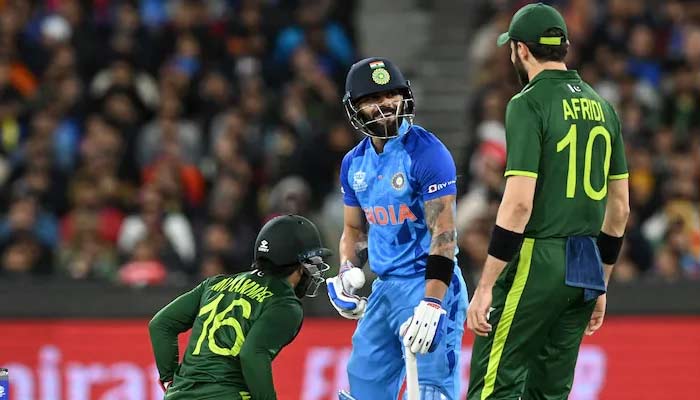
At the cultural crossroads of the world, New Yorkers will experience a thrilling first on Sunday, a World Cup cricket match hosted in a US city between Asian powerhouses: rivals India and Pakistan.

“India-Pakistan is the game everyone would like to watch, and… it’s happening in our backyard,” said Ajith Shetty, president of two local cricket leagues.

“I’m very, very thrilled,” the Indian native told AFP on Friday.

However, roughly 10 miles (16 kilometres) from the pop-up stadium at Eisenhower Park on Long Island, fans interviewed in the bustling Little India neighbourhood of Queens said they won’t be able to attend the game in person.

“I asked about it, but it’s so expensive. I’ll watch it on my mobile,” 31-year-old Rajeet Krishna said.

“Pakistan against India is special… there’s a long history there,” he said, with the 34,000 seats in the stadium sold out for months.

‘Lion and tiger’

This first Cricket World Cup hosted in the United States is in the T20 format, with games that last around three hours, as opposed to the five-day contests in the traditional test match format.

Tickets on the resale market are going for at least $800, with Indian Premier League (IPL) founder and former president Lalit Modi slamming the inflated prices.

An image from an India-Pakistan cricket match. — AFP/File

The tournament “in the US is for game expansion & fan engagement, not a means to make profits on gate collections,” he said on X.

Beyond the Indian and Pakistani communities, the face-off is eagerly anticipated by immigrants from other South Asian countries where cricket is popular.

“Like lion and tiger” is how Faros Ahmed, a 58-year-old of Bangladeshi origin, described the rivalry.

“Even if I am not Indian, not Pakistani, I am going to watch it because this is a high-voltage match,” said the restaurant manager, who supports Pakistan and will broadcast the game for his customers.

‘Like to see India lose’

Although both countries are cricket powerhouses, head-to-head matches are rare between the nations.

The two sides do not meet outside of official competitions of the ICC, the international cricket federation, and the last test match between them was in 2007.

“We are going to take revenge, we are going to beat them,” said Roop Sajnani, an Indian native who manages a sari store.

An image from an earlier India-Pakistan cricket match. — AFP/File

“Let’s say we just like to see India lose against all the teams,” said Mostakim Shahed, a 20-year-old student from Bangladesh, with a smile.

“If you look at Asia, yes, India is the best team,” he said. “They are the richest cricket team… they already have support. Whereas Pakistan, they don’t have really support.”

Sunday’s meeting is crucial for Pakistan, which risks elimination in the first round after a surprising loss on Thursday to the United States, ranked 18th in the world.

The US win over sixth-ranked Pakistan has boosted interest in cricket in the country, where the sport remains well outside the mainstream.

“All the news channels are talking about it, people are explaining, what is cricket. People are understanding, what is cricket,” Shetty said.

Beyond the tournament, which concludes at the end of June, the local cricket organiser hopes it brings “better infrastructure” for players in the New York area.

They will not, however, benefit from the Long Island stadium, which will be dismantled in July, leaving local leagues to continue their quest for a dedicated arena.

Mohsin Naqvi meets UN Secretary-General Antonio Guterres

Mohsin Naqvi

DNA

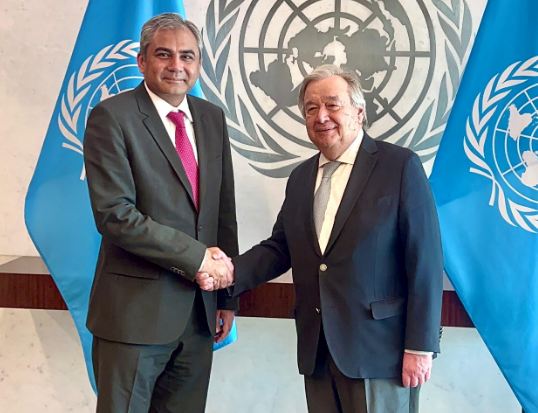
New York: Jun 8: Federal Interior Minister Mohsin Naqvi visited the United Nations Headquarters today, where he was welcomed by UN Secretary General Antonio Guterres. The two leaders had an important meeting to discuss matters of mutual interest, including UN peacekeeping missions and joint efforts to combat terrorism.

During the meeting it was agreed to increase the number of Pakistani personnel in UN peacekeeping missions. Due to the personal efforts of Federal Interior Minister Mohsin Naqvi, significant progress has been made regarding the deployment of Pakistani police officers in UN peacekeeping missions after many years and the stalled process of deployment of Pakistani police officers in UN peace missions has been revived for many years. 128 Pakistani police officers will join UN peacekeeping forces soon.

Both sides also discussed the establishment of a UN Counter-Terrorism Force unit. Federal Interior Minister Mohsin Naqvi apprised regarding Pakistan’s expertise and professional approach regarding the CTD unit and also offered Pakistan’s support for the UNCTD force unit. He highlighted that Pakistan has played the leading role in the war against terrorism and will provide all possible support to the CTD Force. He added that the number of women officers in Pakistan’s police has also increased. The UN Secretary General appreciated the increase in the number of female police officers in Pakistan and expressed his belief that female police officers will also be considered for posting in UN peacekeeping missions.

Federal Interior Minister Mohsin Naqvi thanked the UN Secretary-General for his visit to Pakistan during the 2022 floods and his expression of solidarity with the affected people.
Appreciating the the UN Secretary General’s efforts towards establishing the peace, the Federal Interior Minister said that you have always raised your voice for peace and humanity.
The meeting was also attended by Pakistan’s Permanent Representative to the UN, Munir Akram, and other senior UN officials.

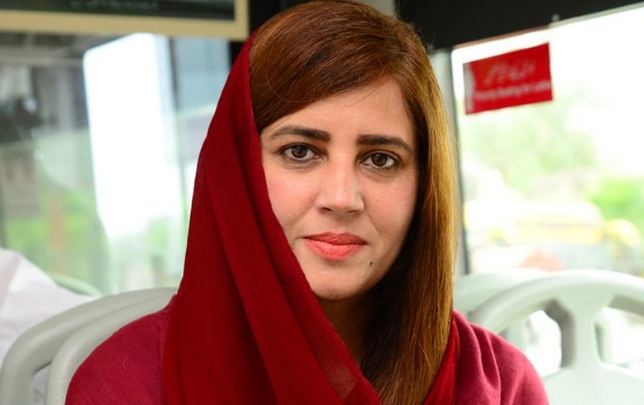
Zartaj Gul appointed SIC’s parliamentary leader in National Assembly

Zartaj Gul appointed SIC's parliamentary leader in National Assembly

ISLAMABAD, JUN 8 /DNA/ – Leader of the Opposition in the National Assembly Omar Ayub has announced the appointment of Zartaj Gul as the new parliamentary leader on behalf of the Sunni Ittehad Council (SIC) in the National Assembly.

In a statement, Omar Ayub confirmed that Zain Qureshi and Ahmed Chattha will serve as deputy parliamentary leaders alongside Zartaj Gul.

Ayub also highlighted that the appointment of Zartaj Gul has received the endorsement of PTI Founder Imran Khan. This decision follows the PTI’s earlier proposal of four potential candidates for the role, which included Zartaj Gul, Sahibzada Mehboob Sultan, Zain Qureshi, and Ahmed Chattha.

Zartaj Gul’s appointment is seen as a move to strengthen the opposition’s presence and leadership in the National Assembly, as the PTI continues to navigate the complex political landscape of Pakistan.

The opposition’s strategic appointments aim to consolidate their efforts in the National Assembly, with Zartaj Gul at the helm, supported by her deputies, Zain Qureshi and Ahmed Chatta. This leadership team is expected to drive the opposition’s agenda and enhance their legislative effectiveness.=DNA

========

Stay Connected

64FansLike
60FollowersFollow

Latest Reviews

Exchange Rates

USD - United States Dollar
EUR
1.17
GBP
1.35
AUD
0.67
CAD
0.72