Home Blog Page 707

Pakistan, Bangladesh diplomats stress strengthening bilateral trade ties

Pakistan, Bangladesh diplomats stress strengthening bilateral trade ties

DUBAI, Jan 13 (APP): Consul General of Bangladesh in Dubai Md. Rashedujjaman on Monday paid a courtesy call on his Pakistani counterpart Hussain Muhammad here wherein both sides discussed bilateral ties and ways to further strengthen cooperation.

Welcoming the visiting Consul General, Hussain emphasized the importance of strengthening ties between Bangladesh and Pakistan, particularly in trade.

Both diplomats acknowledged the potential for collaboration and agreed to engage their respective consulates’ trade sections to further promote bilateral cooperation.

During the meeting, Md. Rashedujjaman expressed his gratitude to Hussain Muhammad for the warm reception and appreciated the valuable insights shared regarding the consular services provided by the Pakistani consulate.

Both sides had an in-depth discussion on various consular services including passport issuance, national identity cards, and visa procedures.

They agreed to enhance information sharing and future collaboration regarding community services and public awareness initiatives.

The meeting was also attended by senior diplomats from both sides.

Foreign Secretary meets UN’s Afghanistan envoy in Islamabad

Foreign Secretary meets UN's Afghanistan envoy in Islamabad

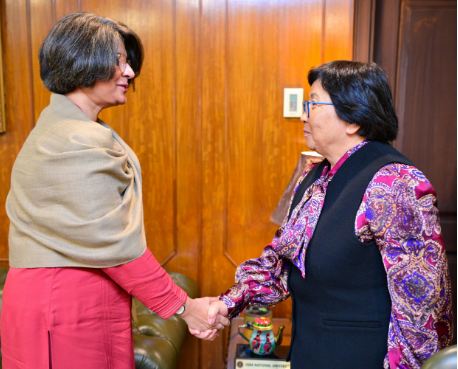
ISLAMABAD, JAN 13 /DNA/ – Foreign Secretary Amna Baloch @amnabaloch4 received Special Representative of the Secretary-General for Afghanistan Roza Otunbayeva, Head of United Nations Assistance Mission in Afghanistan (UNAMA), on the sidelines of the conference on girls’ education in Islamabad.

During the meeting, both sides exchanged views on developments about Afghanistan and the international community’s efforts to address the country’s humanitarian challenges.

£190m case verdict to be announced on Jan 17 after third deferment

£190m case verdict to be announced on Jan 17 after third deferment

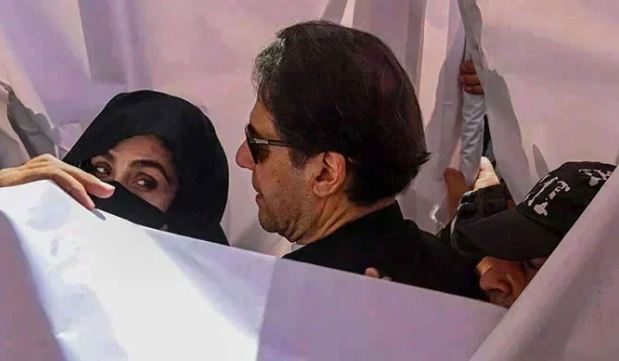
RAWALPINDI: The verdict against Pakistan Tehreek-e-Insaf (PTI) founder Imran Khan and his wife Bushra Bibi in the £190 million case has been delayed for the third time and will now be announced on January 17.

Accountability court Judge Nasir Javed expressed dismay over the no-show of the accused, saying that he had been present at the court since 8:30am, leading to the postponement of the verdict.

Khan had previously claimed that the verdict — initially delayed on December 23, 2024, and again on January 6, 2025 — was postponed to “pressurise him”. However, he did not appear in court today.

“I have been sitting in the courtroom for two hours, but none of them have appeared today,” the judge told reporters present in the courtroom, adding: “Let’s give them another chance.”

The National Accountability Bureau’s (NAB) prosecution team, the media, and the court staff were present in the court room, but none from the defence were in attendance.

While the sentence was scheduled to be handed down at 11am and the judge postponed the announcement before that, Geo News’ reporter Shabbir Dar said that the parties involved generally reach ahead of time.

Today’s deferment in the £190m reference verdict — termed an “open-and-shut case” by Senator Faisal Vawda — comes amid the government’s hope for justice as expressed by Defence Minister Khawaja Asif.

Whereas, Vawda on the other hand, in his press conference a day earlier, said that the PTI founder “committed a crime and will face punishment” in the settlement case.

“When Khan was signing it, I warned him that it would lead to a NAB case […] Being popular doesn’t mean you’re above everything else,” he said.

Postponement not part of any deal
Reacting to the deferment while speaking to the media outside Adiala jail, PTI Chairman Barrister Gohar Ali Khan ruled out the verdict’s postponement as part of any deal.

“We were all waiting today at the court as the court staff had informed us that the verdict would be announced today at 11am,” he said.

Terming the case as a politically motivated one Gohar remarked: “The Al-Qadir Trust case is politically motivated and part of an unfair process whose aim is to compromise Khan sahib, his wife was also dragged into this case to pressure Khan”.

“He [Khan] has neither harmed the national exchequer nor had he benefited from the university. He is only a trustee. This is a baseless case,” noted the PTI chairman, adding: “Khan sahib will not bow down, he will stand firm. He will keep fighting for the people, judiciary, and the Constitution”.

“We have repeatedly emphasised that Khan sahib has stressed that the Al-Qadir Trust case’s verdict should be pronounced [….] It’s a writing on the wall: we have been subjected to injustice, the trial courts have been unjust to us,” he said while lamenting the PTI founder’s legal woes and the postponement of the verdict.

Explaining further, Gohar said that Khan would have appeared, while Bushra was on her way. The PTI chairman added that several others, including Khan’s sisters, were already there in the courtroom.

“We will move higher courts. Like all previous cases, we will also have this case dismissed,” Gohar vowed, reiterating that the former prime minister did not benefit from the Al-Qadir Trust.

PTI’s Secretary General Salman Akram Raja also echoed Gohar’s remarks and said: “The negotiation process is underway [….] However, if someone wants to give the impression that the verdict has been delayed due to these talks, then it is completely false. We will not enter into any deals”.

Stressing that the former prime minister would prove his innocence in courts as he did in the iddat and cypher cases, Raja said: “We will fight the cases and not enter any deals”.

The lawyer clarified that the party was not seeking relief for anybody and there was no link between the ongoing talks with the government and the £190m case.

Al-Qadir Trust case
The couple, along with others, has been accused by the National Accountability Bureau (NAB) in its December 2023 reference for allegedly adjusting Rs50 billion — £190 million at the time — sent by Britain’s National Crime Agency (NCA) to the Pakistani government as part of the agreement with a property tycoon.

Subsequently, the then-prime minister got approval for the settlement with the UK crime agency from his cabinet on December 3, 2019, without disclosing the details of the confidential agreement.

It was decided that the money would be submitted to the Supreme Court on behalf of the tycoon.

According to NAB officials, the PTI founder and his wife obtained land worth billions of rupees from the property tycoon, to build an educational institute, in return for striking a deal to give legal cover to the property tycoon’s black money received from the UK crime agency.

Later, the Al-Qadir Trust was established in Islamabad a few weeks after the PTI-led government approved the agreement with the property tycoon.

Over year-long trial
The accountability watchdog arrested the PTI founder on November 13 last year in connection with the said case. NAB then interrogated Khan and Bushra for 17 days in the Adiala Jail.

The trial began after filing of the NAB reference in December 2023. On 27 February 2024, charges were formally filed against the couple.

Notable witnesses against the PTI founder included his former cabinet member Pervez Khattak, former federal minister Zubaida Jalal, ex-principal secretary Azam Khan, and the chief financial officer of the Al-Qadir University.

The court also declared six co-accused, including Zulfi Bukhari, Farhat Shahzadi, Mirza Shahzad Akbar and Zia-ul-Mustafa Nasim, as absconders, ordering the freezing of their assets and bank accounts.

During the proceedings, the Islamabad High Court granted bail to the disqualified premier in the £190 million reference, while the trial court approved pre-arrest bail for Bushra.

The PTI founder-chairman submitted a list of 16 witnesses to the court, but the request to summon them was rejected.

Over the course of the case, four judges were replaced with Judge Muhammad Bashir, Judge Nasir Javed Rana, Judge Muhammad Ali Warraich, and then again Judge Rana presiding over the hearings.

ASEAN chair handed over to Myanmar

ASEAN chair handed over to Myanmar

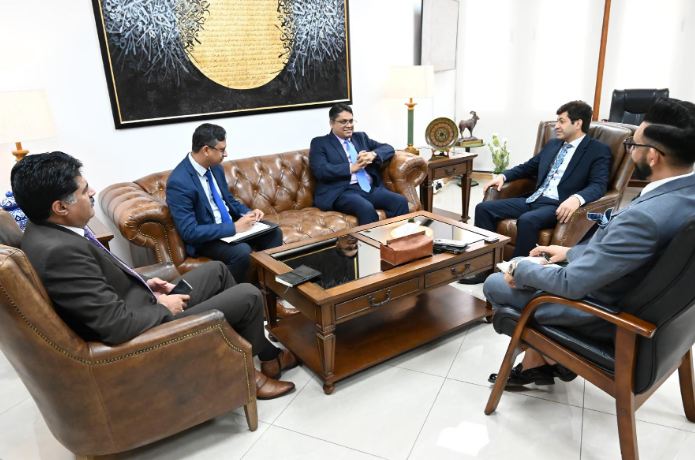
ISLAMABAD, JAN 13 /DNA/ – High Commissioner of Brunei Col (Retired) Pengiran Kamal Bashah Pengiran Ahmad, handing over ASEAN Committee Chair to Ambassador of Myanmar Mr Wunna Han. The ASEAN Chair rotates among the member countries after six months. =DNA

California Wildfire: Will Trump Reconsider the Paris Accord?

Qamar Bashir

By: Qamar Bashir

Macomb, Detroit, Michigan

The American nation consistently demonstrates remarkable resilience and unity in combating natural and man-made disasters. Currently, while Donald Trump advocates reversing global climate change efforts under the Paris Accord and reintroducing coal, gas, and oil as primary energy sources—key contributors to global warming—the state of California is grappling with devastating wildfires. Amidst this crisis, first responders, including firefighters, police, National Guard members, and volunteers, have showcased unparalleled dedication, resilience, and commitment to saving lives, containing fires, and providing relief to victims.

As of January 12, 2025, the wildfires in California, particularly in the Los Angeles area, have devastated over 35,840 acres (56 square miles) since they began on January 7, 2025. The fires have claimed at least 16 lives, left 16 individuals missing, and destroyed more than 12,000 structures, including homes and businesses. Nearly 180,000 residents have been evacuated, and the economic losses are estimated between $135 billion and $150 billion, potentially making these fires the costliest natural disaster in U.S. history. The situation remains critical as strong Santa Ana winds and dry conditions continue to fuel the blazes, complicating firefighting efforts and causing significant human, environmental, and economic losses.

The devastating  wildfires in Southern California are the result of a complex interplay of factors, with climate change playing a significant role. Rising global temperatures have led to prolonged droughts and increased the frequency of extreme weather events, creating conditions conducive to wildfires. Specifically, the region has experienced “climate whiplash,” characterized by rapid transitions between wet and dry periods. This pattern promotes the growth of vegetation during wet periods, which subsequently dries out during droughts, providing ample fuel for fires. While natural factors like the Santa Ana winds have historically influenced wildfire behavior in California, the intensification and increased frequency of these fires are closely linked to anthropogenic climate change and environmental degradation.

While use of fossil fuel is considered the main culprit for climate change and the prime reason for devastating wild fired, the President Elect Donald Trump has  declared the policy of prioritizing fossil fuels as the primary energy source—marked by his rollback of environmental regulations and opposition to renewable energy solutions like wind and solar—poses significant risks for accelerating climate change.

By increasing reliance on coal, oil, and natural gas, such policies would lead to higher greenhouse gas emissions, intensifying global warming and exacerbating extreme weather conditions. This approach undermines efforts to transition to cleaner energy alternatives that could mitigate environmental degradation. The resulting climate impacts, including prolonged droughts, heatwaves, and erratic weather patterns, would create the perfect conditions for more frequent and severe wildfires, similar to those devastating California. These fires not only destroy ecosystems and homes but also release massive amounts of carbon dioxide, creating a feedback loop that further accelerates climate change.

In his latest Press Conference, Mr. Trump mocked wind energy in the most hideous manner. Additionally, he criticized the lifecycle of wind turbines, stating that after 10 years, the structures become obsolete, creating non-biodegradable waste that poses a long-term environmental hazard.

His administration withdrew the U.S. from the Paris Climate Accord, arguing that it unfairly burdened the American economy. Key initiatives included repealing the Clean Power Plan, opening federal lands and offshore areas for fossil fuel extraction, and rolling back methane emission rules. Trump also streamlined permitting processes for energy projects, championed pipelines like Keystone XL and Dakota Access, and reduced funding and incentives for renewable energy programs, prioritizing traditional energy sources over clean alternatives.

Trump’s fossil fuel agenda was driven by a focus on economic growth, job creation, and energy independence. He aimed to support blue-collar workers in energy-rich states and rural communities whose livelihoods depended on coal and oil. His policies appealed to key constituencies while emphasizing reduced regulatory oversight to lower costs and accelerate energy projects. Additionally, Trump’s skepticism toward climate change and the potential economic impacts of environmental policies reinforced his push for fossil fuel dominance. He framed energy exports as a geopolitical tool, promoting U.S. energy independence as a pillar of national security and global influence.

The United States, long recognized as a global leader in shaping critical decisions on international platforms, appears to be retreating from its leadership role, particularly in addressing one of the most pressing challenges of our time: climate change. Donald Trump’s environmental policies reflect a self-centered and short-sighted approach, prioritizing immediate economic gains while ignoring the long-term, devastating consequences for the American people, the United States, and the global community.

These policies not only undermine global climate efforts but also risk encouraging other nations, particularly resource-constrained ones, to follow suit. Such actions could lead to a collective backslide into reliance on fossil fuels, accelerating environmental degradation and exacerbating the severity and frequency of disasters like the ongoing California wildfires.

The implications of these policies are alarming. Increased reliance on fossil fuels contributes to rising global temperatures, which intensify the likelihood of wildfires, tsunamis, earthquakes, droughts, floods, Glacier melting and other extreme weather events. These disasters wreak havoc on human lives, habitats, and biodiversity, further destabilizing vulnerable ecosystems and exacerbating socio-economic challenges. For instance, the California wildfires are a stark reminder of the destructive potential of climate inaction, costing billions in damages, displacing communities, and devastating natural habitats.

One can only hope that the scale of such disasters will prompt Donald Trump to reconsider his environmental stance and adopt policies that prioritize sustainable development and global cooperation. A renewed commitment to combating climate change could not only restore hope for reversing environmental degradation but also reaffirm the United States’ role as a global leader in addressing this existential threat.

By: Qamar Bashir

Press Secretary to the President (Rtd)

Former Press Minister at Embassy of Pakistan to France

Former MD, SRBC

Understanding Civic Education: A Path to Active Citizenship in Pakistan

Understanding Civic Education: A Path to Active Citizenship in Pakistan

Dr. Muhammad Anwar Farooq

Civic education is the process of educating citizens about their rights, duties, and responsibilities within a democratic society. It encompasses understanding the structure and functions of government, the political process, and the importance of active participation in civic life. Civic education aims to develop informed, responsible, and engaged citizens who are capable of critical thinking, effective communication, and collaboration. It also emphasizes the significance of values such as respect for diversity, justice, and equality. By fostering a sense of civic duty and community involvement, civic education contributes to the strength and stability of democratic institutions and promotes social cohesion and justice.

The history of civic education dates back to ancient civilizations, where the importance of preparing citizens to participate in self-governance was recognized. In ancient Athens and the Roman Republic, thinkers like Pericles, Socrates, Plato, Aristotle, and Cicero emphasized the need for citizens to understand their political culture and institutions. Civic education aimed to instill a sense of responsibility and service, enabling individuals to govern themselves and make wise judgments. Over time, the concept of civic education evolved, with formal schooling becoming a primary avenue for fostering civic knowledge, skills and attitudes. In the United States, the Founding Fathers recognized the civic mission of schools, leading to the establishment of universal public education to prepare citizens for democratic participation. Throughout history, civic education has adapted to societal changes, continually aiming to create knowledgeable, competent, and responsible participants in political society.

Similarly, civic education is crucial for Pakistan’s progress and development. In Pakistan, empowering individuals with knowledge and skills will enable them to advocate for their rights, address social issues, and contribute to community development. It will also help to combat with corruption by raising awareness about transparency and integrity in public administration. It also encourages critical thinking and informed decision-making, leading to more thoughtful and constructive participation in public life.

The government of Pakistan has made several efforts to promote civic education. One of the key initiatives is the establishment of the National Civic Education Commission (NCCE) under the National Civic Education Commission Act of 2018. The NCCE is responsible for creating awareness about civic responsibilities and fundamental rights among citizens. It also focuses on promoting civic education in rural areas and organizing capacity-building programs for educators. The National Civic Education Commission Act of 2018 outlines specific responsibilities for schools in Pakistan to ensure the effective delivery of civic education. School in-charges are tasked with imparting civic education to students through lectures, tutorials, and practical work. The teaching methods include formal instructions on the roles of the Legislature, Executive, Judiciary, Law and Democracy as well as guided discussions on current local, national and international issues.

Active learning experiences, such as community service, co-curricular activities fostering engagement with other schools and communities, student participation in school governance, and simulations of democratic processes are also encouraged. These comprehensive guidelines aim to create a well-rounded civic education program that not only educates students about their civic duties and rights but also actively involves them in activities that promote democratic values and community involvement. In terms of the curriculum, civic education is included in the national curriculum for grades for secondary level and higher classes. The curriculum aims to develop civic knowledge, skills and dispositions, encouraging students to use these for civic action to create a just, peaceful and democratic society.

Civic education in Pakistan faces numerous challenges. One major issue is the lack of adequate funding, which affects the development and implementation of effective civic education programs. Schools often lack the necessary resources like educational materials to support comprehensive civic education. Moreover, there is a shortage of trained educators who can teach civic education effectively. The curriculum itself often struggles to represent the complexities of Pakistan’s diverse society and the tension between theocratic and liberal democratic visions creates additional challenges in aligning educational practices with democratic principles. Additionally, the education system’s focus on rote learning and textbook content limits the development of critical thinking and active citizenship. These factors collectively hinder the ability of civic education to foster an informed and engaged citizenry in Pakistan.

The future of civic education in Pakistan holds significant potential. By integrating civic education into the formal education system, from primary to higher education, Pakistan can instill civic values and responsibilities from an early age. This comprehensive approach promotes civic literacy and prepares students to become active participants in society. Moreover, investing in the civic education of the youth is crucial for nurturing a generation of responsible and engaged citizens who can play their role to cope with complex societal challenges. To ensure the widespread dissemination of civic education, it is essential to promote civic engagement and participation beyond the classroom through experiential learning opportunities. By harnessing the potential of youth as agents of positive change, civic education can pave the way for a brighter future for Pakistan.

Dr. Muhammad Anwar Farooq

Director

Institute of Humanities and Arts

Khwaja Fareed University of Engineering and Information Technology

Rahim Yar Khan, Pakistan

Senior Journalist Javed Shehzad passes away due to cardiac arrest

Senior Journalist Javed Shehzad passes away due to cardiac arrest

DNA

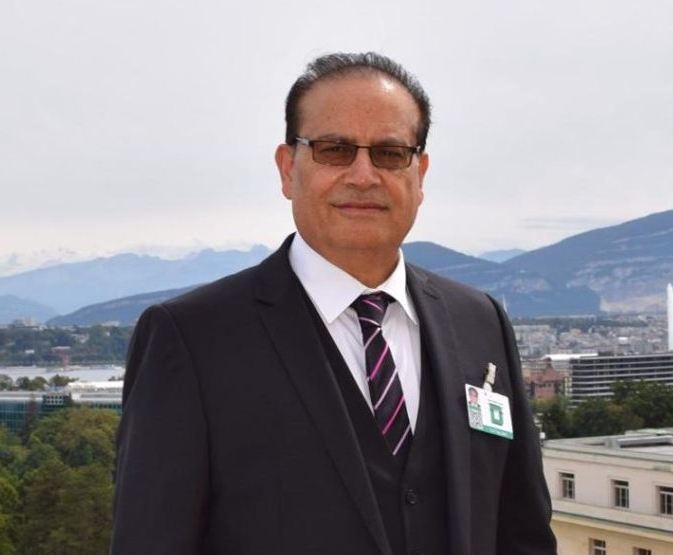
ISLAMABAD: Senior journalist and Chief Reporter of Daily Ausaf and ABN News, Javed Shehzad, tragically passed away on Sunday following a cardiac arrest. He was widely respected for his contributions to the field of journalism and had a long-standing career in reporting and news coverage.

Javed Shehzad’s sudden death has left the media fraternity in deep sorrow, with colleagues, friends, and admirers expressing their heartfelt condolences. Known for his professionalism, commitment to truth, and integrity, Shehzad was a prominent figure in the media landscape, particularly in Islamabad, where he worked for many years.

Throughout his career, Javed Shehzad earned a reputation for his insightful reporting and in-depth analysis of current affairs. His work with both Daily Ausaf and ABN News had a significant impact on shaping public opinion and informing the masses about key national and international issues. His passing is a major loss to the media industry, where he was seen as a dedicated and reliable journalist.

Javed Shehzad is remembered not only for his exceptional journalistic skills but also for his personal warmth and kindness. Tributes have poured in from various media houses and political figures who lauded his commitment to the truth and his invaluable role in journalism.

His Namaz-e-Janaza shall be offered today in Chor, Rawalpindi today.

RWFL: Empowering Pakistan’s youth through combat sports

RWFL: Empowering Pakistan’s youth through combat sports

By our correspondent

ISLAMABAD: The Real World Fight League (RWFL), Pakistan’s premier white-collar fighting platform, hosted electrifying combat competitions. The event brought together young adults from the leading schools and universities.

RWFL Co-founder Qaim Abbas, a student University of Debrecen Hungary, highlighted the league’s mission. “Real World is South Asia’s largest Gen Z movement, providing an accessible platform for kids and adults to train in combat sports. It equips them with skills and a mindset to conquer life’s challenges, improving both physical fitness and mental health. This is for everyone.”

Adil Azhar, from LUMS, praised RWFL for breaking stigmas around MMA. “The league has made MMA accessible for recreation, offering a safe and inspiring environment where participants grow in confidence and embrace empowerment. It’s about far more than fighting—it’s about personal development.”

Speaking to the media, Pakistan MMA Federation President Omar Ahmed drew parallels with cricket’s evolution. “Just as tape-ball cricket popularized the sport, RWFL serves as an entry point for MMA enthusiasts. It transforms perceptions, promoting MMA as a tool for physical and mental growth rather than a violent endeavor. This grassroots initiative ensures that MMA thrives as a sport for all.”

He added: “The Pakistan MMA Federation is setting itself apart from traditional sports organizations in the country with a forward-thinking approach. While many sports are rooted in conventional methods, we are committed to destigmatizing MMA and integrating it into the mainstream. Through initiatives like RWFL, we are breaking barriers and positioning MMA as a sport that fosters character development, mental resilience, and leadership skills.

“Our vision is to create a lasting legacy for combat sports in Pakistan. We aim to ensure that MMA is not just celebrated on professional platforms but also embraced as a powerful tool for recreational growth and personal development. This dual focus allows us to inspire individuals to realize their potential both in and out of the ring,” Omar Ahmed concluded.

FPCCI president meets Bangladeshi commerce minister in Dhaka

FPCCI president meets Bangladeshi commerce minister in Dhaka

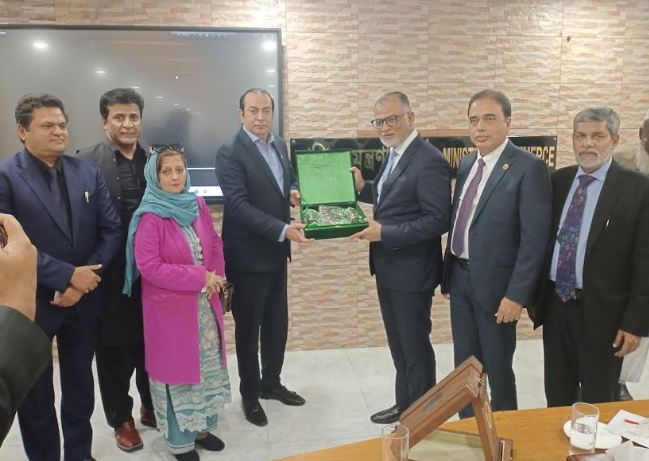
ISLAMABAD, JAN 12: /DNA/ – President FPCCI Atif Ikram met with  SK. Bashiruddin, Minister of Commerce Bangladesh, at the Ministry of Commerce in Dhaka, Bangladesh.  This significant meeting highlights the growing economic ties between Pakistan and Bangladesh. As President FPCCI has been instrumental in fostering bilateral trade relations and exploring new avenues for economic cooperation.  The meeting provided a platform for discussions on enhancing trade, investment, and economic cooperation between the two nations. President FPCCI emphasized the importance of strengthening business-to-business ties and encouraged Bangladeshi investors to explore opportunities in Pakistan.

What is the likely future of CPEC and Pak-China ties?

Comment

Ansar Mahmood Bhatti

The Pakistani side often uses lofty and poetic phrases like “sweeter than honey, deeper than the sea, and taller than the Himalayas” to describe its relationship with China. However, it’s worth noting that the Chinese side has never reciprocated with such extravagant language when describing its engagement with Pakistan. Instead, the Chinese approach has consistently been pragmatic and focused on practical and economic outcomes.

China views bilateral relations largely through the lens of business and investment considerations, prioritizing the protection of its economic interests above all else. This realistic approach underscores China’s preference for clear, measurable objectives over sentiment-driven rhetoric. While this strategy has enabled China to advance its economic agenda effectively, it has also led to unintended consequences.

Some analysts argue that in its attempt to foster close ties with specific political parties or factions within Pakistan, China has inadvertently alienated others. This selective engagement risks creating a perception of favoritism, which can generate resentment among excluded political groups. Over time, such dynamics could undermine China’s broader strategic goals, as it may struggle to maintain a balanced and inclusive relationship with Pakistan’s diverse political landscape. This situation highlights the challenges inherent in China’s interest-driven foreign policy approach.

It is widely believed that China has historically shown a stronger affinity toward the Pakistan Muslim League-Nawaz (PML-N) compared to other political parties like the Pakistan Peoples Party (PPP) and Pakistan Tehreek-e-Insaf (PTI). This perception is rooted in China’s consistent preference to engage with the PML-N leadership and its long-standing rapport with the Sharif family. Over the years, China’s interactions with the PML-N government have been marked by strategic collaboration and personal connections, setting them apart from its dealings with other political entities in Pakistan.

During Shehbaz Sharif’s tenure as the Chief Minister of Punjab, China frequently invited him to participate in high-level visits and bilateral meetings. These engagements, which often excluded other provincial chief ministers, highlighted China’s focus on building ties with the PML-N leadership. This pattern has continued, further reinforcing the perception of a special relationship. For instance, more recently, the current Punjab Chief Minister, Maryam Nawaz, received a special invitation to China, where she was accorded exceptional protocol. This move caused notable discontent among the chief ministers of other provinces, particularly those from Khyber Pakhtunkhwa (KP) and Sindh, who felt sidelined by this overt display of preference.

While it remains uncertain whether the other provincial leaders will be invited for similar engagements at a later stage, the optics of China’s selective invitations have underscored its apparent favoritism toward the PML-N. This perceived bias not only underscores China’s longstanding association with the PML-N but also highlights its emphasis on maintaining strong ties with the Sharif family, which appears to be a cornerstone of its diplomatic strategy in Pakistan.

China paid a significant price for its lopsided approach during the tenure of the Pakistan Muslim League-Nawaz (PML-N) government when the Pakistan Tehreek-e-Insaf (PTI) came to power in 2018. Given the strong rapport between China and the PML-N, the newly formed PTI government, led by Prime Minister Imran Khan, ordered a comprehensive audit of all Chinese projects under the China-Pakistan Economic Corridor (CPEC). This step marked a shift in Pakistan’s approach towards its strategic partnership with China.

The audit uncovered widespread anomalies, including instances of financial mismanagement and corruption. Responding to these revelations, the Chinese government took punitive action against the companies implicated in these irregularities, signaling its zero-tolerance stance on corruption. However, Beijing was deeply displeased with the PTI government’s decision to initiate such an audit, as it effectively brought CPEC projects to a standstill.

This strained the historically strong Pakistan-China relationship. Prime Minister Imran Khan, who took office in August 2018, received a congratulatory message from the Chinese leadership only after two months, delivered by the then Chinese Ambassador to Pakistan. Throughout the PTI government’s tenure, bilateral relations remained in a state of limbo, with minimal progress on CPEC projects.

The fallout from this period continues to linger. Even today, Pakistan-China relations have yet to regain their former momentum, and work on CPEC Phase 2 remains crippled. This impasse has raised concerns about the future of the CPEC initiative and the broader strategic partnership between the two nations.

The Chinese efforts to cultivate friendly relations with the Pakistani mainstream media and think tanks appear to have faced significant challenges. A key issue has been their choice of media partners. Instead of engaging with leading media outlets that have wide reach and influence, Chinese investments were directed towards smaller, less prominent media houses.

This strategic misstep not only alienated the top-tier media organizations but also failed to achieve the intended outcomes. As a result, a perception has developed that Chinese entities are willing to pay significant amounts to have their materials published, creating a transactional relationship that undermines credibility. Now, major media houses are reportedly reluctant to publish Chinese content without financial incentives, further complicating their media management strategy.

Similarly, China’s cooperation with Pakistani think tanks has been suboptimal. Instead of collaborating with well-established and credible institutions, they have largely engaged with lesser-known and under-resourced think tanks, often consisting of only one or two individuals. This approach has limited the ability of Chinese perspectives to reach influential intellectuals and policymakers in Pakistan.

 However, there has been a recent positive development with the establishment of a “China Corner” at the Institute of Strategic Studies Islamabad (ISSI). This initiative marks a significant shift towards working with a reputable and genuine think tank, signaling a more strategic and effective approach to fostering intellectual and policy-level cooperation.

Despite all ifs and buts, China remains Pakistan’s cornerstone ally for economic prosperity and infrastructure advancement, standing firm amid challenges and uncertainties. While Pakistan must pursue a pragmatic and realistic approach to its relationship with China, ensuring mutual trust and long-term collaboration, Beijing too has a critical role to play in fostering a balanced and inclusive strategy.

China’s engagement in Pakistan should be rooted in accommodating diverse political perspectives, as the current opposition could form the future government. The strategy of selective partnerships and narrow alliances is unlikely to yield sustainable outcomes in Pakistan’s dynamic political landscape. Both nations need to strengthen this relationship with a comprehensive, inclusive, and forward-thinking approach to ensure mutual benefits and long-lasting cooperation.

Stay Connected

64FansLike
60FollowersFollow

Latest Reviews

Exchange Rates

USD - United States Dollar
EUR
1.17
GBP
1.35
AUD
0.72
CAD
0.73