Home Blog Page 706

Don’t rejoice when the enemy dies, Friends will also die

Don’t rejoice when the enemy dies, Friends will also die

by Muhammad Mohsin Iqbal

Across the broad spectrum of human emotions, grief and sorrow emerge as universal constants. Regardless of whether the loss is caused by a natural disaster or a human-made catastrophe, the pain remains equally profound. Recent events, such as the devastating fires in Los Angeles and the tragic destruction in Gaza, have once again highlighted these shared experiences. While the origins of these tragedies differ—Los Angeles being struck by a natural calamity and Gaza suffering the consequences of deliberate human actions—the anguish endured by those affected underscores the fragility and interconnectedness of human existence.
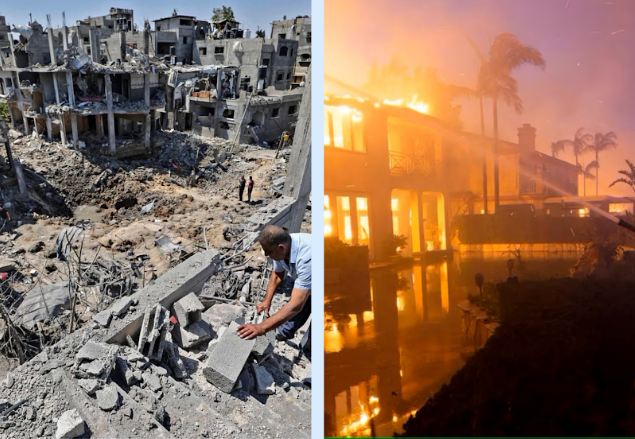
Natural disasters, like the Los Angeles fires, are often perceived as forces of nature, beyond human control. They wreak havoc, displacing families, shattering communities, and leaving behind trails of destruction. In the face of such crises, collective empathy and solidarity often emerge as a beacon of hope. People from diverse backgrounds unite to provide aid and support, transcending boundaries of race, religion, and geography. Yet, despite this outpouring of humanity, the sorrow remains deep. The loss of life, homes, and cherished memories cannot be quantified in material terms. When someone’s home is consumed by flames, the damage goes beyond physical possessions—it creates an irreplaceable void in the heart.

Contrastingly, the ongoing suffering in Gaza represents a tragedy of human making. This is not the result of unpredictable natural forces but deliberate actions stemming from political conflicts and power struggles. The scale of destruction in Gaza is immense, and the human toll is staggering. Entire families are obliterated, homes reduced to rubble, and futures shattered. The sorrow in this instance is compounded by the realization that such tragedies are preventable. They reflect humanity’s capacity for cruelty and disregard for life when blinded by enmity and greed.

Both cases compel us to reflect on the nature of human suffering and our response to it. In moments of loss, the essence of shared humanity becomes evident. The Quran reminds us of this interconnectedness in Surah Al-Hujurat (49:13): “O mankind, We have created you from male and female and made you peoples and tribes that you may know one another. Indeed, the most noble of you in the sight of Allah is the most righteous of you.” This verse highlights the unity of the human race and calls for mutual understanding and compassion.

Prophet Muhammad (peace be upon him) further emphasized the sanctity of human life and the need for empathy. In a well-known hadith, he said, “The believers, in their mutual kindness, compassion, and sympathy, are just like one body. When one of the limbs suffers, the whole body responds to it with wakefulness and fever.” This profound analogy underscores the importance of standing together in times of hardship, irrespective of the source of the calamity.

Christian teachings echo similar sentiments. In the Bible, Romans 12:15 urges believers to “Rejoice with those who rejoice; mourn with those who mourn.” This call for empathy underscores the shared nature of human suffering and the importance of supporting one another in times of grief. In Judaism, the Talmud teaches that “Whoever saves one life, it is as if they have saved the entire world” (Sanhedrin 37a). This powerful statement highlights the sanctity of every human life and the collective responsibility to protect and support one another.

Hindu philosophy also recognizes the interconnectedness of all beings. The concept of “VasudhaivaKutumbakam,” meaning “The world is one family,” reflects the idea that humanity is bound together in a shared existence. The Bhagavad Gita teaches compassion, non-violence, and the importance of performing one’s duty to help others, particularly in times of distress.Similarly, Buddhism emphasizes the cultivation of compassion and the alleviation of suffering. The principle of “Karuna” (compassion) is central to Buddhist teachings, urging individuals to act with kindness and empathy toward all living beings.

However, it is disheartening to witness selective empathy in the world today. While natural disasters often evoke widespread sympathy, man-made tragedies can sometimes become entangled in political biases. The suffering of innocents in Gaza, for example, is at times overlooked or justified under the guise of geopolitical narratives. This selective morality undermines the universal principle of valuing every human life.

Reflecting on the title, “Don’t rejoice when the enemy dies, Friends will also die,” we are reminded of the dangers of dehumanizing others. Celebrating the demise of an adversary can lead to a cycle of hatred and retaliation, perpetuating suffering. The Quran warns against such attitudes in Surah Al-Isra (17:33): “And do not kill the soul which Allah has forbidden, except by right. And whoever is killed unjustly — We have given his heir authority, but let him not exceed limits in [the matter of] taking life. Indeed, he has been supported [by the law].” This verse stresses the sanctity of life and the importance of justice, urging restraint even in the face of conflict.

When we witness tragedies like the Los Angeles fires or the devastation in Gaza, it is a moment to pause and reflect on our shared vulnerability. These events remind us that suffering knows no boundaries and that human loss, regardless of its origin, is a wound to our collective soul. It is only when we internalize this truth that we can truly empathize with others and work towards a world that values life above all else.

The lessons from the Quran and the teachings of the Prophet (peace be upon him) guide us toward compassion and justice. They remind us to rise above petty divisions and view every life as sacred. In the face of natural calamities, we must come together to support those in need. In instances of human-made disasters, we must strive to address the root causes and advocate for peace and reconciliation.

Ultimately, the pain of losing one’s home, whether to a fire or a bomb, is a stark reminder of life’s uncertainties. It teaches us to cherish what we have and to extend our hands to those who have lost everything. The true test of humanity lies not in how we respond to the suffering of those we know and love but in how we react to the pain of strangers and even adversaries.

The world today needs more compassion, understanding, and collective action. As individuals and as a global community, we must reject the notion of selective empathy and embrace the universal principle of valuing all lives equally. Only then can we hope to build a world where sorrow is met with solace, and suffering is alleviated by solidarity.
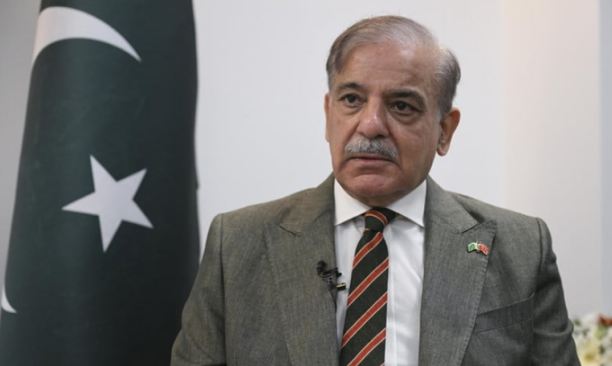

PM for strong federal, provincial coordination to enroll 22.8m out-of-school children

PM for strong federal, provincial coordination to enroll 22.8m out-of-school children

ISLAMABAD, Jan 14 (DNA): Prime Minister Shehbaz Sharif on Tuesday underlined the need for strong coordination between the federal and provincial governments to enroll the 22.8 million out-of-school children and achieve other objectives of the recently launched Education Emergency.

The prime minister, in his televised opening remarks at the meeting of the federal cabinet chaired by him, said that since education was a devolved subject, the federal government should aggressively work with the provincial governments to address the challenge of out-of-school children with a majority of them being girls.

He directed the federal education minister to enhance coordination with the provinces in the education sector.

The prime minister lauded the federal education minister and secretary education for organizing a commendable international conference on girls’ education in the Muslim world that garnered great experts who extended informed discourse on the matter.

The OIC Secretary General, Saudi delegation and education ministers from different Muslim countries had participated in the conference that made the event a big success, he added.

PM Shehbaz also appreciated the resumption of the flight operation of the Pakistan International Airlines (PIA) to Paris and termed it a great achievement.

He regretted that the unfounded statements by the aviation minister of the PTI government incurred huge economic losses and restrictions on the flight operations of the national flag carrier that had now been relieved.

He appreciated and felicitated the Aviation Minister and the entire cabinet members on this achievement and expressed the hope for resumption of flights operation to London as the government was expanding PIA network routes.

Commenting on the new Pak-Iran border crossing in Panjgur, the prime minister extended his gratitude to the Government of Iran for cooperating on the matter as it would help further curb smuggling and promote legal trade between the two neighbouring countries.

The prime minister told the cabinet members that the situation in Kurram had improved and the pickets formed earlier had been removed and supplies of essential items was revived.

“All stakeholders together will maintain peace and strive to suppress violence among the groups,” he remarked.

The armed forces, he said under the leadership of the Army Chief had initiated anti-terror activities against Fitna Al Khawarij (terrorists).

In a recent intelligence-based operation (IBO), 27 terrorists were eliminated and many other IBOs were going on across the country as “the security forces are rendering great sacrifices that will result in the end of Fitna Al Khawarij. History will reckon these sacrifices in golden words.”

The prime minister concluded that the national task force formed for the transformation of the energy sector was aggressively working and preparing an elaborate roadmap for energy sector resilience.

Indonesians in capital face housing, commute woes

Indonesians in capital face housing, commute woes

JAKARTA, JAN 14 (AFP/APP): Scrolling on social media, Indonesian moviegoer Jessica Sihotang stumbled across a film depicting a fellow woman in her 30s struggling to make the dream of buying a Jakarta home a reality.

                  Nearly two million like-minded Indonesians tuned in to watch the protagonist’s house-hunting journey when “Home Sweet Loan” was released last year, the movie’s producer said.

                  Residents of the megalopolis of 11 million are finding it impossible to climb the property ladder, as space shrinks and prices rise, forcing them to seek faraway homes that come with arduous commutes.

                  The movie sparked widespread chatter among Jakartans, as its main character’s grievances resonated with their own long-held housing woes.

                  “I can relate so much. I’ve been thinking about it for the past 10 years,” said Sihotang.

                  “I want to have my own house, but my savings have never been enough even just for the down payment,” added the 35-year-old university admissions worker.

                  Jakarta is where Indonesia’s growing wealth gap is most evident — with unofficial slum housing sitting below shiny new apartment complexes and skyscrapers.

                  Less than two-thirds of Jakartans own a home, according to Indonesia’s Central Statistics Bureau, the lowest figure compared to other provinces.

                  Sihotang said she cannot afford a home within 60 kilometres (37 miles) of her job.

                  “I have to find side hustles for additional income, or maybe try my luck for a few years abroad” before buying a property, she said.

                  The price of a Jakarta house is on average 20 times higher than an employee’s annual salary, a University of Indonesia survey in June found.

                  – ‘Makes me upset’ –

                  Jakartans like Rizqi Arifuddin have resorted to buying a house in neighbouring provinces.

                  The office worker in one of Jakarta’s main business districts commutes by train for an hour from his home in West Java province.

                  He then jumps on a motorcycle taxi for another half an hour to reach the office.

                  “I can never afford a house in the city. Even researching the prices makes me upset,” he said.

                  With limited space available in the cramped capital known for its brutal traffic jams, prices have skyrocketed.

                  Housing complexes are now being built further from the city to meet demand.

                  “This is the reality, people are now competing for places which at least have access to mass transportation,” said Yayat Supriyatna, an urban planner from Trisakti University in Jakarta.

                  “Jakarta is not a place for the poor,” he told AFP.

                  – No ‘peace of mind’ –

                  Some Indonesians like Muhammad Faris Dzaki Rahadian and his wife have chosen to rent, rather than buy, a property close to work.

                  “Even with our joint income, it is still not affordable,” said journalist Rahadian, 27.

                  “I don’t think buying is a rational option.”

                  To address the housing crisis, the government will require employees from 2027 to contribute three percent of their salaries to a savings fund which they can use for housing.

                  But it has angered Indonesians who think it won’t be enough — or that it could be taken from them by a government many distrust.

                  “Who’s going to benefit? It seems to me that people are getting constantly pressured,” Supriyatna said.

                  Despite the grim housing market, some are still holding on to their dreams.

                  “Having a house, no matter how small is a symbol of peace of mind for me,” Sihotang said.

                  “It will give me peace when I’m old.”

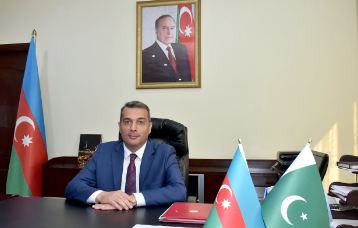
Azerbaijan to open Trade Center in Lahore: Khazar Farhadov

Azerbaijan to open Trade Center in Lahore: Khazar Farhadov

                LAHORE, Jan 13 (APP): Azerbaijan-Pakistan economic collaboration set to expand as significant initiatives are well on the way to enhance trade, investment, B2B (Business to Business) and people-to-people ties.

“We are going to establish Azerbaijan Trade Center in Lahore and Pakistan-Azerbaijan Chamber of Commerce to bring the business communities of both countries closer and open new avenues for mutual cooperation”, said Ambassador of Azerbaijan Khazar Farhadov while speaking here at the Lahore Chamber of Commerce and Industry (LCCI) on Monday.

LCCI President Mian Abuzar Shad and Senior Vice President Engineer Khalid Usman also spoke

on the occasion while LCCI Executive Committee Members, including Khurram Lodhi, Ahsan Shahid, Asif Malik, Asif Khan, Waqas Aslam, Abdul Majeed, Karamat Ali Awan, Riaz Shahid, Aamir Ali, Aamna Randhawa, Ali Imran and former Executive Committee Member Abdul Wadud Alvi were also present.

The ambassador said that Azerbaijan had a lot of respect and affection for Pakistani nation and is committed to strengthening bilateral ties. He highlighted the duty-free access granted to Pakistani rice by Azerbaijan until 2027, encouraging traders to capitalize on this opportunity, especially considering Punjab’s reputation for producing high-quality Basmati rice. He assured that Azerbaijani authorities would provide maximum facilitation to Pakistani traders exploring opportunities in Azerbaijan.

Referring to the positive impact of direct flights between the two countries, the ambassador revealed that bilateral trade volume has tripled since 2022, growing from USD 10 million to significantly higher levels. He said that over 80,000 Pakistanis visited Azerbaijan last year which reflects the growing interest and people-to-people connections.

The ambassador also invited Pakistani investors to explore opportunities in Azerbaijan’s infrastructure and energy sectors and highlighted the country’s strategic position as a key international transport corridor between Asia and Europe. He highlighted Azerbaijan’s strong trade surplus and assured robust support for potential collaborations.

On the energy front, Ambassador Farhadov stressed the importance of further collaboration in defense, petroleum products and other sectors. He also reiterated the USD 2 billion investment commitment made during Azerbaijan President’s visit to Pakistan, with work underway to realize these projects.

LCCI President Mian Abuzar Shad underscored the excellent diplomatic, historical and cultural relations between Pakistan and Azerbaijan and called for joint efforts to boost bilateral trade to USD one billion in the coming years.

He said that Azerbaijan shares borders with Russia, Georgia, Iran, Turkey and Armenia. The geographic position of Azerbaijan makes it a key player in regional trade and transportation networks. Azerbaijan is also known for its huge reserves of oil and natural gas which make it a major player in the global energy market.

The LCCI president said that despite having such deep relations, we have yet to succeed in utilizing the real trade potential. According to the trade figures, our exports to Azerbaijan in 2023-24 were just 6 million dollars whereas the imports from Azerbaijan amounted to few thousand dollars. The main reason of such a low level of trade is lack of proper information about each other’s markets.

“We are really keen to take fair share in the overall trade of Azerbaijan. The global exports of Azerbaijan were around 34 billion dollars while global imports were nearly 17 billion dollars in 2023. We need to make joint efforts to take trade volume between both countries to at least One Billion Dollars in coming few years”, he added.

LCCI Senior Vice President Engineer Khalid Usman said that Pakistan’s exports to Azerbaijan consist of rice, water pumps, fruits and fabrics of cotton etc. There is an urgent need of finding new products lines and new avenues of cooperation for enhancing trade between Pakistan and Azerbaijan.

He said that Pakistani products including pharmaceuticals, surgical instruments, sports goods, value-added textiles, leather products, home-made crafts, processed food and engineering goods have great scope in Azerbaijan. There is a great potential of Joint Ventures in tourism sector as well. Azerbaijan can also benefit from the expertise of Pakistan in IT sector.

LCCI office-bearers said that the commercial sections of our embassies have to play a positive role in this connection. Similarly, in order to increase people to people contacts and mutual trade, the embassies and chambers should provide every possible support to the business communities of both the countries.

Mian Abuzar Shad said that organizing trade delegations and holding single country exhibitions on reciprocal basis will be effective in opening new avenues that are much needed for enhancing the mutual trade relations.

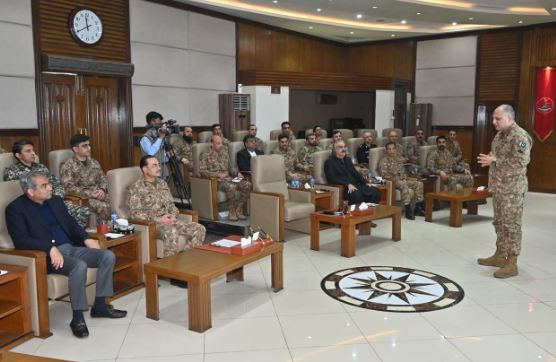
Army Chief: Pakistan’s counter-terror operations will continue to logical end

Army Chief: Pakistan's counter-terror operations will continue to logical end

RAWALPINDI, JAN 13 /DNA/ – General Syed Asim Munir, NI (M), Chief of Army Staff (COAS), visited Peshawar today, where he was provided with a comprehensive briefing on the prevailing security situation and the ongoing counter-terrorism operations targeting Fitna Al Khwarij. Briefing was also attended by Federal Minister of Interior and Chief Minister Khyber Pakhtunkhwa.

During his visit, the COAS praised the unwavering resolve and unmatched sacrifices of Pakistan Armed Forces and law enforcement agencies, who have been instrumental in dismantling terrorist networks and thwarting their nefarious agenda. He stated, “As we stand united against the forces of evil, I am immensely proud of the remarkable achievements of our security forces. Through their dedication, courage, and supreme sacrifices, we have successfully degraded the operational capabilities of terrorist organizations, both within our borders and beyond. Our forces have relentlessly pursued and eliminated key terrorist leaders, dismantled their infrastructure, and neutralized their cells, sending a clear message that terror has no place in our land. This war is ongoing and we would take it to its logical conclusion, InshAllah.

COAS further emphasised the relentless efforts of law enforcement agencies in ensuring the safety and security of citizens, foiling numerous attacks, and maintaining peace and order. He highlighted that every operation has been a testament to the courage, professionalism, and operational readiness of the security forces, who continue to thwart the evolving threats posed by terrorists.

The COAS made it clear that any attempt to disturb the peace of the nation will be met with decisive and overwhelming force. “The enemy may try to sow discord and fear, but we will not relent. Hostile elements will be dealt with an iron hand. They will continue to suffer heavy losses, and their capacity to inflict harm will be decimated,” said the COAS.

The COAS also lauded the exceptional morale of the troops, who remain steadfast in their commitment to safeguard the sovereignty of the nation. He affirmed that the Pakistan Armed Forces and law enforcement agencies stand as an unbreakable force, resolute in their mission to protect the motherland and its people.

COAS also separately interacted with politicians of Khyber Pakhtunkhwa belonging to different political parties. The participants resolved consensus on the need for one political voice and public support against the scourge of terrorism. The political representatives showed vivid clarity on unflinching support of the Armed Forces and LEAs in nation’s fight against terror and agreed on the need for a unified front beyond political colours against the extremist philosophy of terrorist groups.

Upon arrival, COAS was received by the Corps Commander Peshawar.

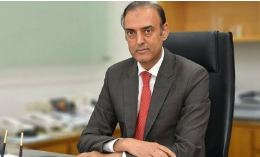
Governor Ahmad highlights digital strategy for financial inclusion growth

Governor Ahmad highlights digital strategy for financial inclusion growth

KARACHI, JAN 13 /DNA/ – Governor, State Bank of Pakistan Mr. Jameel Ahmad reaffirmed the central bank’s dedication to increasing financial inclusion through strengthened collaborations with both global and domestic stakeholders.  Mr. Ahmad shared these remarks in a bilateral meeting held with Chief Executive Officer of Alliance for Financial Inclusion (AFI), Dr. Alfred Hannig, during his visit to Pakistan on January 13, 2025, in Karachi.

In the meeting, Mr. Ahmad highlighted SBP’s recently launched 3rd edition of National Financial Inclusion Strategy (NFIS) 2024-28. He emphasized that SBP will persist in its efforts for enhancing financial inclusion through digitalization, and reduce the gender gap in finance.

Dr. Hannig extended AFI’s appreciation for SBP’s leadership role in promoting financial inclusion in Pakistan and discussed areas of mutual collaborations to continue efforts towards breaking the barriers. SBP is a founding member of AFI since 2008, which is a policy leadership alliance of central banks and financial regulatory institutions from 84 countries with the common objective of advancing financial inclusion at country, regional and international levels. SBP currently serves on AFI Board, and as Vice-Chair of AFI Gender Inclusive Finance Committee and the South Asia Regional Financial Inclusion Initiative (SARFII).

Governor Jameel Ahmad appreciated AFI’s support and its longstanding partnership with SBP, which facilitated in peer learning exchanges and capacity building opportunities for SBP officers in developing and implementing evidence-based financial inclusion policies. In his remarks, Dr. Hannig highlighted the crucial and progressive need to enhance regulators’ capacity in South Asia region to achieve impactful financial inclusion policy objectives, and stressed that the implementation should be balanced with effective cyber security resilience and consumer protection.

The meeting also explored opportunities to further strengthen institutional collaboration in areas of digital payments, financial literacy, sustainable finance and MSMEs financing. Both parties resolved to continue efforts for improving financial health and well-being of masses, especially of unbanked and underbanked population segments.

The SBP also organized a discussion of Dr. Hannig with financial inclusion stakeholders including the Presidents and CEOs of the banks, representatives Pakistan Bank’s Association, Pakistan Microfinance Network, Fintech Association & Network and SBP’s senior management. During this session, the NFIS 2024-28 was presented along with SBP’s financial inclusion goals for the next four years. An interactive discussion followed, where industry participants shared grassroots level insights and key challenges in broadening access to financial services, while AFI shared its perspective based on global best practices. The forum agreed to enhance collaborations among domestic stakeholders and international organizations for improved knowledge sharing on emerging trends in financial inclusion.

The visit concluded with a tour of the SBP Museum, where Dr. Hannig appreciated the cultural heritage, preservation of SBP’s history, and the evolution of Pakistan’s money over time.

Pakistan-Bangladesh form joint business council to boost bilateral trade

Pakistan-Bangladesh form joint business council to boost bilateral trade

KARACHI, JAN 13: /DNA/ – Atif Ikram Sheikh, President FPCCI, has apprised that the Pakistani trade delegation, led by FPCCI, participated in Bangladesh – Pakistan Business Forum in Dhaka; which was organized by the Federation of Bangladesh Chambers of Commerce & Industries (FBCCI), on Monday.

A Memorandum of Understanding (MoU) was also signed between FPCCI and FBCCI in the meeting to form Pakistan – Bangladesh Joint Business Council (JBC) to strengthen, facilitate and enable trade between the two countries.

Mr. Atif Ikram Sheikh added that diverse industries, sectors and verticals like electronics, cars, industrial machinery, carpets, toys, ceramics, sanitary products, handicrafts, fabrics, ready-made garments, leather, home appliances, processed foods, furniture, plastic goods, jute products, cosmetics, sports goods and jewelry, were represented in the business forum.

Mr. Muhammad Hafizur Rahman, Administrator of FBCCI, emphasized on utilizing the South Asian Association for Regional Cooperation (SAARC) and the Organization of Islamic Cooperation (OIC) to strengthen Bangladesh – Pakistan trade relations.

Mr. Muhammad Hafizur Rahman said that there is ample scope for the two countries to work closely in sectors such as energy, education, technology, human resources development, research and innovation to meet the challenges of the fourth industrial revolution.

In other high-profile engagements, Mr. Atif Ikram Sheikh informed that, the delegation had a productive meeting with Sheikh Bashiruddin, Advisor / Minister for Commerce, Bangladesh, a day earlier – in which he expressed his government’s intent to facilitate Pakistani exporters and Pakistani products. He added that Bangladesh government has already relaxed visa requirements for Pakistani nationals and Pakistan has also done the same.

FPCCI Chief highlighted that the Pakistani trade delegation also had high-profile meetings with Bangladesh Investment Development Authority (BIDA) and Federation of Bangladesh Chambers of Commerce & Industry (FBCCI). We have discussed collective trade promotion activities; exchange of delegations and single-country exhibitions, he added.

Mr. Atif Ikram Sheikh noted that the Pakistani exporters have received initial order of 25,000 metric tonnes of sugar and raw fabric demand from Bangladesh is so sizeable that there is a dearth of the same in Faisalabad. These are great omens and it is just a beginning, he added.

Mr. Saquib Fayyaz Magoon, SVP FPCCI, stressed that the business, industry and trade community of Pakistan can achieve substantive milestones for Pakistan through economic diplomacy; which seem to be difficult vis-à-vis political diplomacy. That is how nations and the regions come closer in today’s world through forging interdependencies that result in creation of wealth and prosperity for their respective populations.

Mr. Magoon added that the delegation will also visit Dhaka International Trade Fair (DITF) to explore avenues of mutual cooperation and study international trends in various established and emerging industries.

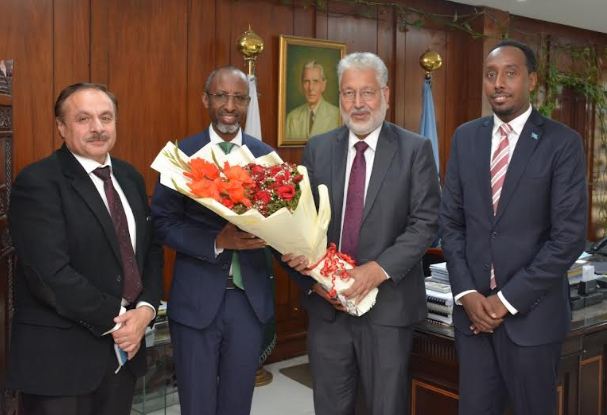
HEC Chairman discusses collaborative opportunities with Somali delegation

HEC Chairman discusses collaborative opportunities with Somali delegation

Islamabad, January 13, 2025:A Somalian delegation, led by Mr. Farah Abdulkadir, Minister of Education and Mr. Sheikhnur Mohamed Hassan, Ambassador of Somalia in Pakistan, visited Higher Education Commission (HEC) Secretariat in Islamabad on Monday and met Chairman HEC Dr. Mukhtar Ahmed. Both sides discussed opportunities for the mutual development of higher education sector of the two countries.

The delegation also included Mr. Abdullahi Omar, Director General of the Ministry of Education, Ms. Deka, Adviser to the Ministry of Education, and Ms. Asma from the Embassy of Somalia. From HEC, Mr. Awais Ahmad, Adviser Global Engagement and Mr. Tariq Iqbal, Director Administration attended the meeting.

The Chairman HEC emphasized the organization’s ongoing efforts to increase scholarships for international students in Pakistan, particularly for youth from Muslim countries. He highlighted the success of the Afghan Student Scholarship Programme, which has enabled numerous Afghan students to pursue higher education in Pakistan’s top universities.

Dr. Ahmed assured the Somali delegates of HEC’s full support in advancing higher education in Somalia and providing opportunities for Somali students to benefit from academic programmes in Pakistan. He particularly emphasized the collaboration for strengthening quality assurance systems as well as enhancing collaboration in the areas of agriculture and information technology.

The Chairman also extended invitation to Somali officials to attend the upcoming Vice-Chancellors’ Forum of Universities in the Islamic World. The event will bring together over 150 vice-chancellors from universities across OIC member states, aiming to enhance collaboration in higher education within the Islamic world.

Dr. Mukhtar Ahmed also briefed the delegation on ‘Ilm-Bank,’ a virtual platform that aims to serve as a knowledge consortium for higher education institutions in OIC countries. This platform will facilitate cross-border education, training, and research opportunities, allowing students and scholars to connect with resources from across member states.

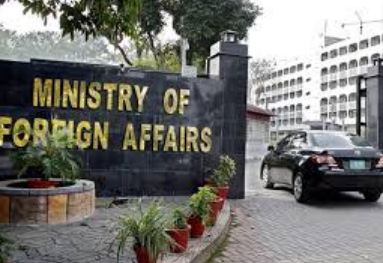
FO condemns xenophobic remarks against UK Pakistani community

FO condemns xenophobic remarks against UK Pakistani community

ISLAMABAD, JAN 13 /DNA/ – In response to media queries regarding the recent spate of xenophobic remarks directed towards the Pakistani community in the UK, the Spokesperson, Ministry of Foreign Affairs made the following statement.

Pakistan-UK friendship is characterized by warmth, cordiality, robust cooperation and trust. Nurtured over decades this relationship remains an important priority of Pakistan’s foreign policy. The deep and multifaceted relations cover important areas including trade and investment, education, security, counter-terrorism, parliamentary cooperation and people-to-people contacts. The presence of 1.7 million strong British-Pakistani diaspora provides the strongest link between the two friendly countries.

As such, we note with deep concern the increasingly racist and Islamophobic political and media commentary in the UK that is aimed at conflating the reprehensible actions of a few individuals with the entire 1.7 million British Pakistani diaspora.

British nationals of Pakistani origin have a rich history of contributing to the United Kingdom’s growth, development and, indeed, freedom. An exceptionally large number of predominantly Muslim soldiers from what is now Pakistan served in the British Indian army and laid down their lives for the cause of democracy in both World Wars.

British Pakistanis today form the backbone of the UK’s health, retail and services sectors. Many British Pakistanis hold high public office, and thousands serve their communities as Members of Parliament, mayors, councillors, and as members of local police and municipal services. British Pakistanis have excelled in sports and arts. Their cuisine and music enriches British culture.

To demonize such a large and diverse community on the basis of the actions of a few individuals needs to be condemned.

Japan funded two electricity projects inaugurated in Mandi Bahauddin

Japan funded two electricity projects inaugurated in Mandi Bahauddin

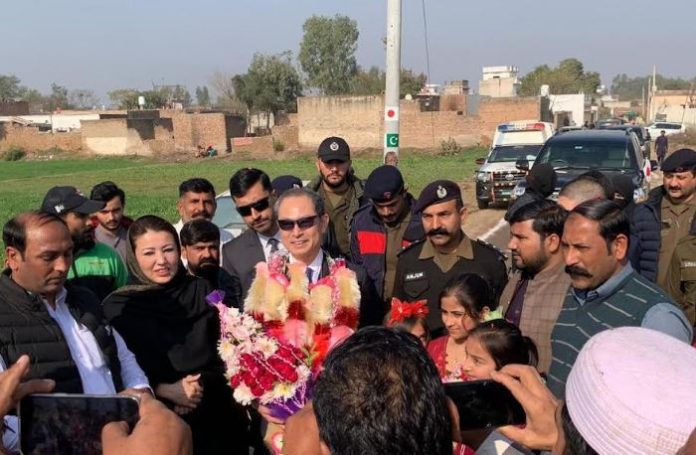
ISLAMABAD, JAN 13 /DNA/ – Akamatsu Shuichi, Ambassador of Japan to Pakistan, on Monday, 13th January 2025, inaugurated two projects for installation of electricity facilities in District Mandi Bahauddin, Punjab being managed by Hana Development Council, a non-governmental organization, working to improve health and infrastructure in the region, aim to uplift the quality of life in rural community, especially in Mandi Bahauddin. The Government of Japan, under its Grant Assistance for Grassroots Human Security Projects (GGP) Program, had provided financial assistance of 92,307USD under two projects.  The grant of42,818 USD was allocated in 2019 for provision ofsustainable electricity facility to eight(8) communities, and 49,489 USDgrantedin 2022 to connect additional seven(7)communities in Mandi Bahauddin.The inauguration ceremony was attended by the Japanese Embassy officials, NGO Board Members and community leaders.

It is pertinent to mention here that Hana Development Council has received Japanese grant assistance three times to date, implementing projects in collaboration with the Japanese Embassy and has been working for more than twenty years to empower the people in vulnerable areas in Pakistan.

The grant of92,307 USD provided by the Government of Japan is utilized to improve the living environment ofpeople in region, creating new opportunities and stimulate economic growth by ensuring access to modern energy services.

His Excellency, Mr. Akamatsu Shuichi, while speaking at the inaugural ceremony, congratulated Ms. HameedaWaheeduddin, a Member of Punjab Assembly, President of the NGO, for successful completion of these important projects. Mr. Akamatsu emphasised the impact of these initiatives that fifteen communities have now access to the sustainable electricity, these projects have brought a real difference to the daily lives of thousands of people. It is not just about installing power lines and electrical grids. It is about empowering communities and improving lives.He also stressed thatthe Government of Japan would continue to support the people of Pakistan, to improve their living standards and represented his sincere wish that this project would certainly strengthen the existing relations between the people of Japan and Pakistan.

Stay Connected

64FansLike
60FollowersFollow

Latest Reviews

Exchange Rates

USD - United States Dollar
EUR
1.17
GBP
1.35
AUD
0.72
CAD
0.73