Home Blog Page 705

A letter from a father to his Son’s Teacher

Global Misperceptions

By Sami Ullah Malik, Ph.D*

             This letter was written in 1830. The letter was written by Abraham Lincoln, the 16th President of the United States of America. He is widely regarded as one of the greatest presidents of the United States for his remarkable leadership during one of the most challenging periods in the nation’s history—the Civil War (1861–1865). Abraham Lincoln’s presidency exemplifies transformative leadership, unwavering moral integrity, and resilience under pressure. His ability to navigate the nation through its greatest crisis, while laying the foundation for a more just and unified society, cements his legacy as one of the greatest leaders in American and global history.

            The letter is attributed to the undaunting personality of Abraham Lincoln that reflects his principles and leadership philosophy. It is cherished worldwide for its wisdom and practical guidance on education and personal growth. The letter serves as a reminder of the role of teachers and parents in shaping the next generation to be not just successful, but also compassionate and morally strong. However, almost 200 years later, its content still holds the same validity and utility as it did then. Nothing in what it says sounds old or too distant. Because the lessons it refers to are basic and unchanging pillars. When these lines were written, Abraham Lincoln was not yet the President of the United States, nor had he entered the United States House of Representatives (he would do so in 1846).

      “My son starts school today. It is all going to be strange and new to him for a while and I wish you would treat him gently. It is an adventure that might take him across continents. All adventures that probably include wars, tragedy and sorrow. To live this life will require faith, love and courage.

     “So dear Teacher, will you please take him by his hand and teach him things he will have to know, teaching him – but gently, if you can. Teach him that for every enemy, there is a friend. He will have to know that all men are not just, that all men are not true. But teach him also that for every scoundrel there is a hero, that for every crooked politician, there is a dedicated leader.

      Teach him if you can that 10 cents earned is of far more value than a dollar found. In school, teachers, it is far more honourable to fail than to cheat. Teach him to learn how to gracefully lose and enjoy winning when he does win.

      Teach him to be gentle with people, tough with tough people. Steer him away from envy if you can and teach him the secret of quiet laughter. Teach him if you can – how to laugh when he is sad, teach him there is no shame in tears. Teach him there can be glory in failure and despair in success. Teach him to scoff at cynics.

              Teach him if you can the wonders of books but also give time to ponder the extreme mystery of birds in the sky, bees in the sun and flowers on a green hill. Teach him to have faith in his own ideas, even if everyone tells him they are wrong.

               Try to give my son the strength not to follow the crowd when everyone else is doing it. Teach him to listen to everyone but teach him also to filter all that he hears on a screen of truth and take only the good that comes through.

               Teach him to sell his talents and brains to the highest bidder but never to put a price tag on his heart and soul. Let him have the courage to be impatient, let him have the patience to be brave. Teach him to have sublime faith in himself, because then he will always have sublime faith in mankind, in God.

              This is the order, teacher but see what best you can do. He is such a nice little boy, and he is my son”.

Life learning lesson from this precious letter

       ·         The letter emphasizes that education should not only be about academic excellence but also about developing a child’s character. It stresses the importance of teaching children’s values like honesty, kindness, and resilience.

       ·         Lincoln’s letter highlights the importance of teaching children to value integrity over superficial success. For instance, lines like “Teach him that a dollar earned is of far more value than five found” underscore the importance of hard work and honesty.

       ·         The letter encourages children to be strong in the face of adversity and not to be disheartened by failure. This aligns with Lincoln’s own life experiences, as he faced numerous setbacks before becoming president.

       ·         It advises teaching empathy and understanding, stating that a child should learn to “have sublime faith in mankind.” This reflects Lincoln’s belief in the potential for goodness in humanity.

       ·         The letter urges the teacher to prepare the child for the harsh realities of life while teaching him to remain hopeful and optimistic. This balance reflects Lincoln’s leadership philosophy during challenging times like the Civil War.

       ·         The lessons conveyed in the letter are timeless and universally applicable. They resonate with parents, educators, and leaders as guidance for nurturing well-rounded and morally grounded individuals.

Lastly, I wish that every father should give this advice to his son or daughter. Life is not what we expect, and life has both hard and easy lessons, which we learn every day. Every day is a challenge, and we learn from our mistakes. The wisdom in Lincoln’s letter transcends time and context, making it a powerful tool for personal development. Its principles encourage individuals to lead lives marked by integrity, empathy, and purpose—qualities essential for building not only a successful life but also a better society.

*The writer is a Disaster Management Expert and recently completed his PhD from Islamic International University, Islamabad – Pakistan.
Cabinet okays revised agreements with 14 IPPs

Cabinet okays revised agreements with 14 IPPs

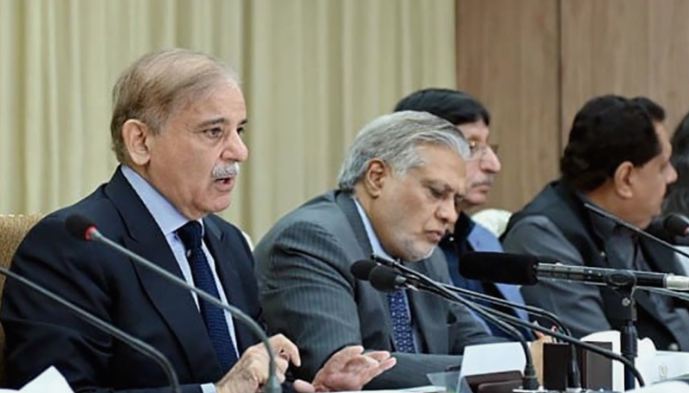
ISLAMABAD, JAN 14: The federal cabinet approved on Tuesday revised agreements with 14 the independent power producers (IPPs) to ensure significant economic relief.

The adjustments included a deduction of Rs35billion from prior excessive profits, yielding a total benefit of Rs140billion to the country.

PM Shehbaz stated, “The revised agreements with the IPPs will play a pivotal role in eliminating circular debt, ensuring financial stability within the energy sector.”

In addition to the IPP agreements, the cabinet endorsed the merger of the Anti-Narcotics Division into the Ministry of Interior and the Aviation Division into the Ministry of Defence.

The cabinet further approved the submission of the National Commission for Minorities Act 2024.

Meanwhile, the amendments to the Public Procurement Rules 2004 were also sanctioned, including the insertion of a new Section 45-A to streamline regulatory procedures.

CDA conducts e-balloting for 236 residential plots in sector C-14

CDA conducts e-balloting for 236 residential plots in sector C-14

ISLAMABAD, JAN 14 (DNA) — Capital Development Authority (CDA) conducted a successful e-balloting process for the allotment of 236 residential plots in Sector C-14, a prime location nestled at the foothills of the Margalla Hills.

The process, held under the direct supervision of Chairman CDA Muhammad Ali Randhawa, was lauded for its transparency and efficiency. The e-balloting was conducted with the technical assistance of the National Database and Registration Authority to ensure openness and fairness on Tuesday.

Seed numbers were randomly collected from the participants attending the event to maintain integrity in the selection process. Overseas Pakistanis were given the first right of preference for the plots in Sector C-14.

In case, successful applicants fail to pay their dues by the stipulated deadline, the plots will be allotted to citizens on a waiting list formed during the balloting. The CDA received an overwhelming response, with over 1,700 applications submitted for the limited plots.

Sector C-14, touted as the future “E-7” of Islamabad, is a highly sought-after residential area due to its prime location and the promise of all modern civic amenities. The CDA assured applicants that the development work in the sector is progressing rapidly, with 24/7 efforts underway to ensure timely completion.

The list of successful candidates has been made available on the CDA’s official website and social media platforms, ensuring accessibility for all participants.  Chairman Randhawa extended his gratitude to the applicants for their trust in the CDA and congratulated the successful candidates.

In light of the growing interest in Sector C-14, Chairman Randhawa announced plans to launch new residential sectors and accelerate development in previously launched sectors.  He reaffirmed CDA’s commitment to providing timely possession of plots and enhancing the city’s infrastructure.

“We are dedicated to making Islamabad a more beautiful and sustainable city. I urge all citizens to join hands with us in this mission,” Chairman Randhawa said. Sector C-14 continues to attract attention as a prime residential location, and the CDA’s commitment to transparent processes and rapid development work has further solidified public trust in its initiatives. —DNA

Bangladesh PSO meets COAS Gen. Syed Asim Munir at GHQ Rawalpindi

Bangladesh PSO meets COAS Gen. Syed Asim Munir at GHQ Rawalpindi

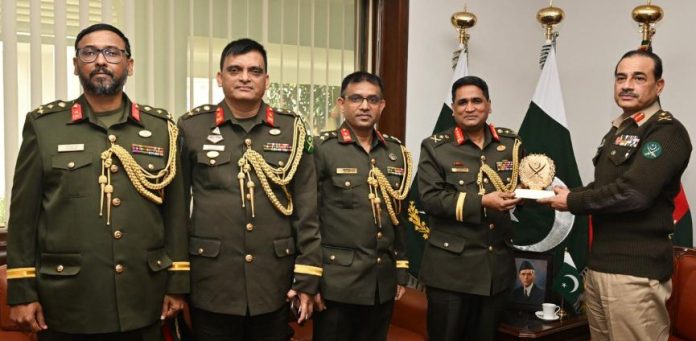
RAWALPINDI, JAN 14 /DNA/ – Lieutenant General S M Kamr-ul-Hassan, Principal Staff Officer (PSO) of the Armed Forces Division of Bangladesh, is visiting Pakistan and met with General Syed Asim Munir, NI (M), Chief of Army Staff (COAS), at the General Headquarters (GHQ) Rawalpindi.

During their meeting, both held extensive discussions on the evolving security dynamics in the region and explored further avenues for enhancing bilateral military cooperation. The COAS and the PSO underscored the importance of a stronger defence relationship, emphasizing that the enduring partnership between the two brotherly nations must remain resilient against external influences.

COAS reiterated the significance of joint efforts to promote peace and stability in South Asia and the broader region, while ensuring that both nations continue to contribute to regional security through collaborative defence initiatives.

Lieutenant General Kamr-ul-Hassan commended the exceptional professionalism of the Pakistan Army and acknowledged the immense sacrifices made by the armed forces in their relentless fight against terrorism, noting that their efforts serve as a beacon of courage and determination.

Bangladesh PSO holds strategic talks with CJCSC in Rawalpindi

Bangladesh PSO holds strategic talks with CJCSC in Rawalpindi

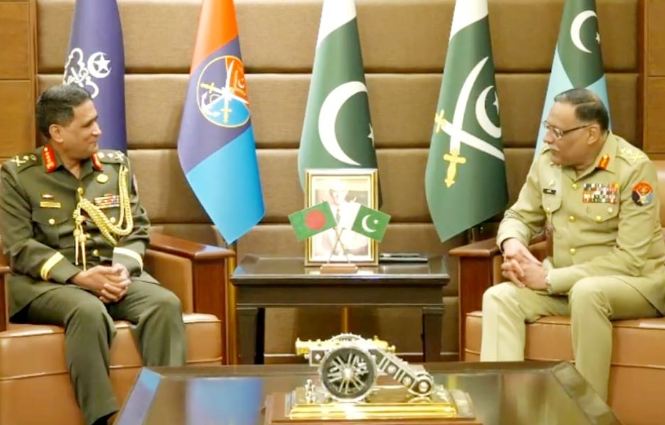
RAWALPINDI, JAN 14 /DNA/ – Lieutenant General S M Kamr-ul-Hassan, Principal Staff Officer (PSO) of the Armed Forces Division of Bangladesh, along with his delegation, is visiting Pakistan. Today he held a detailed meeting with General Sahir Shamshad Mirza, NI (M), Chairman Joint Chiefs of Staff Committee (CJCSC), at the Joint Staff Headquarters (JSHQ).

The discussions focused on matters of mutual strategic interest and explored avenues for enhancing bilateral defence cooperation between the two nations. Both sides emphasized the importance of strengthening military ties and reaffirmed their commitment to insulating this partnership from any external disruptions.

General Mirza and Lieutenant General Kamr-ul-Hassan agreed on the critical need for continued collaboration in promoting regional peace, security, and stability. The CJCSC reiterated that both countries share a common vision for a secure and prosperous future, underpinned by robust defence cooperation.

Lieutenant General Kamr-ul-Hassan lauded the professionalism of the Pakistan Armed Forces and expressed deep admiration for their sacrifices in the fight against terrorism, recognizing the resilience and dedication displayed by the forces.

Newly Commissioned PNS YAMAMA visits Turkiye

Newly Commissioned PNS YAMAMA visits Turkiye

DNA

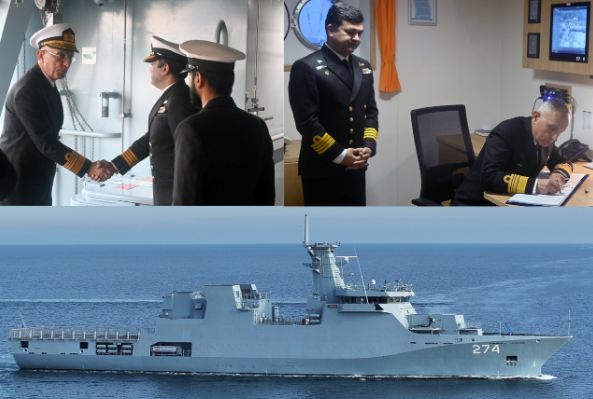
ISLAMABAD, JAN 14: The newly commissioned Pakistan Navy Ship YAMAMA, during maiden voyage from Romania to Pakistan, visited Golcuk and Aksaz Naval Bases Turkiye and participated  in Turkish Navy Exercise MAVI VATAN-2025. Earlier, upon arrival, the ship was received by representatives of Turkish Naval Forces along with Naval Attaché of Pakistan.

PNS YAMAMA’s visit to Turkiye was aimed at strengthening brotherly relations and reaffirming Pakistan’s commitment to foster wide-ranging bilateral relations and defence ties with Turkiye. In same context, during the visit, a number of professional and social activities such as leadership engagements, visits to Turkish Naval facilities, professional interactions and discourse on professional subjects of mutual interests were conducted. Deputy Commander Turkish Naval Fleet, Vice Admiral Ibrahim Ozden Kocer also visited PNS YAMAMA and received a detailed brief on Ship’s capabilities.

Besides port calls, PNS YAMAMA participated in Turkish Navy Exercise MAVI VATAN-2025. PNS YAMAMA was the only foreign participating unit other than Turkish Naval Ships. The participation of PNS YAMAMA underscores strong bond forged by years of collaboration, brotherhood and mutual respect between Turkish Navy and Pakistan Navy.

PNS YAMAMA is the last of four Offshore Patrol Vessels built for Pakistan Navy by DAMEN Shipyards, Galati, Romania. These versatile, high-tech, and state-of-the-art platforms are designed to operate in contested maritime environments and are equipped to project deterrence across all domains of warfare.

ISSI-MEMO webinar explores global impact of Palestine crisis

ISSI-MEMO webinar explores global impact of Palestine crisis

ISLAMABAD, JAN 14 /DNA/ – The Centre for Afghanistan Middle East and Africa (CAMEA) at the Institute of Strategic Studies Islamabad (ISSI), in collaboration with the Middle East Monitor (MEMO), hosted a webinar titled, “How are the Dynamics in Palestine Impacting the International and Regional System.” The webinar was moderated by Ms. Amina Khan, Director CAMEA. The speakers at the webinar included Ambassador Sohail Mahmood, Director General ISSI; Ambassador Khalid Mahmood, Chairman BoG, ISSI; Dr. Daud Abdullah, Director Middle East Monitor (MEMO); Dr. Afaf Jabiri, Co-Director of the Centre for Social Justice and Change at the University of East London, UK; Dr. Daud Abdullah , Director Middle East Monitor (MEMO); Dr. Moatmer Amin, Department of Political Science, University of Cairo, Egypt; Dr. Jafar Haghpanah, Research Assistant at University of Tehran; Ambassador Mthuthuzeli Madikiza, Former South African Ambassador to Pakistan, and Dr. Ahmet Köroğlu, Distinguished faculty member, Department of Political Science and International Relations, Istanbul University.
DG ISSI Ambassador Sohail Mahmood highlighted the roots of the Palestinian issue in seven decades of illegal occupation, brutal repression, and denial of self-determination. He echoed UN Secretary General Antonio Guterres’ opinion, stressing that the events of 7 October 2023 did not happen in a vacuum and reflected a long history of marginalization and dispossession. He noted that the current dynamics in Palestine were having a profound impact on the international system, as reflected in: (i) contemptuous disrespect of international law, principles of UN Charter, and basic norms of state behaviour; (ii) virtual impunity for the perpetrator despite conducting a genocide; (iii) inability of the UN Security Council to act in the face of the most grievous danger to world peace and an existential threat to the Palestinian people; and (iv) uncertainties in the wake of the incoming Trump Administration with its commitment to Abraham Accords and a new regional security architecture. While noting global support for Palestine — from the Western street to the Global South to like-minded major powers — he urged decisive action from the Arab League, OIC, and the international community. He called for an urgent ceasefire, safe and sustained provision of humanitarian assistance, and start of negotiations for Palestinian statehood, emphasizing that for peace in the Middle East justice for the Palestinians was indispensable.
Ms. Amina Khan highlighted the Palestinian refugee crisis caused by Israel’s systematic occupation since 1948. She condemned the ongoing genocide in Gaza, which has displaced millions and questioned refugees’ right of return, while commending Palestinians’ resilience against oppression. Calling for urgent action, she emphasized their rightful return to an independent homeland with Jerusalem as its capital, noting pivotal legal developments like South Africa’s ICJ initiative and the ICC’s arrest warrant for Israeli leadership.
Dr. Afaf Jabiri highlighted the events of October 7, 2023 as a continuation of the ‘Nakba’, reflecting systemic denial of Palestinian freedom and growing global recognition of their struggle. Critiquing U.S. imperialistic policies, she warned of rising Arab public outrage and emphasized that power now lies with the people to drive change.

Dr. Daud Abdullah noted the re-emergence of the Palestinian issue, previously overshadowed by global focus on Ukraine, and emphasized the need for stronger law enforcement. He highlighted the growing debate on suspending Israel’s UN membership, predicting increased isolation for Israel and renewed momentum for the Palestinian cause.

Dr. Moatmer Amin analyzed the shifting dynamics in Palestine and their broader implications for regional and global systems, particularly against the backdrop of Donald Trump’s upcoming second inauguration. He noted that the Gaza War transcends the Israel-Hamas confrontation, reflecting deeper internal divisions within Palestine, such as those between Hamas and Fatah, and within Israel, including tensions among right-wing factions, leftists, and Haredim.

Dr. Jafar Haghpanah highlighted the impact of the Palestine conflict on recent events in Syria, emphasizing how shared challenges like fragile governance, foreign intervention, and the role of non-state actors link Syria’s crisis to the broader regional instability. He noted Syria’s position in the Levant, close to Palestine, makes it a critical flashpoint where extremist groups like Daesh exploit instability to reorganize and expand.

Ambassador Mthuthuzeli Madikiza emphasized that peace depends on upholding human rights and safety. He noted how the Palestinian struggle has amplified their voice globally, shifting UN dynamics and uniting Middle Eastern nations. While hopeful for the future, he warned of challenges ahead ,before calm can prevail.
Dr. Ahmet Köroğlu highlighted the Gaza Tribunal Initiative’s role in amplifying victims’ voices and shaping global opinion on injustices in Gaza. Despite its non-binding judgments, he emphasized its moral significance in promoting dialogue and advancing peace efforts.

During his concluding remarks, Ambassador Khalid Mahmood highlighted global crises, including conflicts, terrorism, Islamophobia, and power rivalries. He described Gaza’s atrocities as genocide, criticized Western complicity, and called the Arab world’s response inadequate. Citing global support for Palestine, he expressed concern over the region’s bleak outlook under the incoming Trump administration. He concluded by asserting that, ultimately, the Palestinians will be able to realize their inalienable rights to self-determination.

Selamat datang Yang Mulia: Welcome Your Excellency

Selamat datang Yang Mulia: Welcome Your Excellency

Dr M Ali Hamza

Pakistan is eagerly looking forward to the visit of President Prabowo Subianto, the newly elected leader of Indonesia. This visit will mark another milestone in the strong relationship between the two nations, which have enjoyed close ties since their independence.As the only G20 member state in Southeast Asia, Indonesia is the region’s largest economy and is recognized as a newly industrialized country. The data of 2024 shows that Indonesia is the world’s 16th largest economy by nominal GDP and 8th largest by purchasing power parity, with estimates of $1.402 trillion and $4.658 trillion, respectively.

Pakistan admires Indonesia’s remarkable progress and is eager to learn from its experiences as a brotherly nation, in areas of socio-economic and political development. With the fourth largest population in the world and the largest Muslim population, Indonesia plays a significant role in global affairs and is a key member of ASEAN.Pakistanis acknowledge these achievements and are ready to extend a warm and heartfelt welcome to President Prabowo Subianto.

India’s Republic Day is just around the corner on January 26, celebrated with grandeur in New Delhi. A highlight of the event is the presence of a chief guest, who often brings along a contingent of soldiers to participate in the iconic parade. Organizing such a visit requires significant planning and coordination, so the chief guest is typically confirmed well in advance, with the public informed accordingly.However, this year has been unusually quiet. While it’s widely speculated that Indonesia’s newly elected president, His Excellency Prabowo Subianto, will be the chief guest, the Indian government has yet to make an official announcement.

In previous years, the guest list was finalized much earlier. For instance, French President Emmanuel Macron’s participation in the 2024 Republic Day celebrations was confirmed in December 2023. Before that, Egypt’s President Abdul Fattah al-Sisi’s visit in 2023 was announced in November 2022. Even in 2020, when Brazil’s then-President Jair Bolsonaro attended, the confirmation came by November 2019. The only exception was in 2021, when the parade was cancelled due to the pandemic.So, what’s behind the silence about Prabowo’s visit this year? It’s an unusual break from tradition, sparking curiosity and speculation as India’s republic day approaches.

Sources suggest that President Prabowo plans to visit Pakistan for a three-day trip immediately after attending India’s republic day celebrations on January 26. This could explain the Indian government’s silence.From India’s perspective, it might seem awkward for a chief guest at such an important event in New Delhi to head straight to Pakistan afterward. The optics could appear unusual, given the longstanding tensions between the two countries.However, is it reasonable to let conflicting interests with a neighbour overshadow the sovereign decisions of another nation? Respecting Indonesia’s right to chart its own diplomatic path is key, and such decisions shouldn’t be viewed through a lens of contention.

It seems the Indian government is hesitant to uphold its own principle when another country applies it, the policy of ‘’de-hyphenation’’.De-hyphenation is a diplomatic approach where a country maintains independent relations with multiple nations, even if those nations have conflicting interests. It ensures that ties with one country are not influenced or prioritized based on tensions with another. This strategy allows nations to engage with each other individually, treating each as a distinct entity rather than viewing them solely through the lens of their conflicts or rivalries.The concept promotes the idea of separating intertwined foreign policy narratives, enabling more nuanced and balanced relationships. It’s a reasonable and pragmatic approach, but the question remains, why hesitate when it’s someone else’s turn to exercise it?

In 2014, Indian Prime Minister Narendra Modi introduced the de-hyphenation policy toward Israel. The goal was to establish diplomatic relations with Israel that were independent of India’s ties with Palestine.This approach was notably practiced in January 2018, when Israeli Prime Minister Benjamin Netanyahu visited New Delhi to sign agreements on cyber-defence, security, and scientific cooperation. What made this visit particularly significant was its timing, it came just a month after India voted in favour of a United Nations resolution, brought by Türkiye and Yemen, opposing the US decision to recognize Jerusalem as Israel’s capital, a move against Palestinian interests.

Since the start of the Russian invasion of Ukraine, India has taken a diplomatically neutral stance, applying a de-hyphenation approach to the conflict. While providing humanitarian aid to Ukraine during its time of crisis, India chose to abstain from voting on UN General Assembly Resolution ES-11/1. This resolution condemned Russia’s actions, called for a full withdrawal of Russian troops, and demanded the reversal of the recognition of Luhansk and Donetsk as independent republics.If India can adopt this policy to balance its relations and priorities, why should it be a problem when another country does the same? After all, diplomacy is about respecting each nation’s right to chart its own independent course.

Let’s take a quick look at recent history. India’s sensitivity and concerns about combining visits to both Pakistan and India in the same travel itinerary became more pronounced in 2006, when US President George W. Bush visited India to sign a civil nuclear agreement and then flew straight to Pakistan to meet its then-President, Gen. Pervez Musharraf. That didn’t sit well with India at the time.Since then, Indian govt. want world leaders to separate their trips and keep their relations with India and Pakistan separately, means do not de hyphenate just ties but trips as well. A rather peculiar demand, but one that seems to have been respected.As later American presidents Barack Obama, Donald Trump, and Joe Biden, have visited India without including Pakistan in their itineraries. It’s not just the US, when Saudi Crown Prince Mohammed Bin Salman visited India in 2019, he also went to Pakistan in the same month. However, to align with India’s stance, he took a detour, stopping in Dubai instead of flying directly to Islamabad.There are rumours that the Indonesian President may not travel to Pakistan directly from India. Instead, he might head to Malaysia from India late on January 26. However, there’s no official confirmation of this plan yet. Jakarta has also remained silent about the President’s itinerary, leaving things unclear.If President Prabowo does visit Malaysia, it’s uncertain whether he would then backtrack to Islamabad or postpone his trip to Pakistan altogether. For now, everything remains up in the air.

Interestingly, President Prabowo’s predecessor, former President Joko Widodo, flew directly to Pakistan after his visit to India. It will be fascinating to see how President Prabowo approaches this.All eyes are on him and his potential visit to Pakistan. There’s no doubt that His Excellency has no intention of offending India, nor does he wish to be influenced by their pressure.

Regardless of the itinerary, Pakistanis are eagerly awaiting the opportunity to host His Excellency.The bond between Pakistan and Indonesia transcends such superficial matters and theirbilateral relations are built on a strong foundation of mutual respect and shared interests, far above any fleeting diplomatic nuances.

Mohsin Naqvi lauds security forces for successful operations in Khyber Pakhtunkhwa

Mohsin Naqvi lauds security forces for successful operations in Khyber Pakhtunkhwa

                ISLAMABAD, Jan 14 (APP): Federal Interior Minister Mohsin Naqvi has commended the security forces for their two successful intelligence-based operations in Khyber Pakhtunkhwa.

The operations resulted in the elimination of eight Khawarji terrorists, marking a significant success.

Interior Minister praised the security forces for thwarting the terrorists’ nefarious plans, saying that the brave security forces have neutralized the threats and deserve appreciation.

He also acknowledged that the nation stands shoulder-to-shoulder with the security forces and salutes their sacrifices.

He emphasized that khwarji terrorists will be completed eliminated with the nation’s support.

Mastermind of May 9 riots to be tried in Military Court, Khawaja Haris argues before SCP

Mastermind of May 9 riots to be tried in Military Court, Khawaja Haris argues before SCP

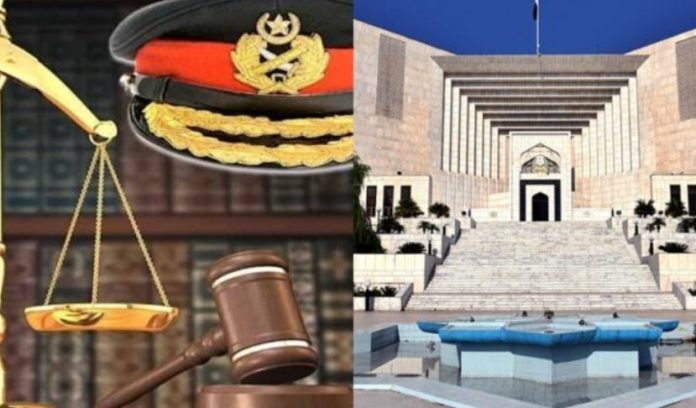
ISLAMABAD, Jan 14 (APP/DNA): Counsel for the Ministry of Defense Advocate Khwaja Haris has argued before the Supreme Court that whoever disrupt the military discipline will be tried in military courts and conspirator and mastermind of the event would also be tried under Army Act.

Khwaja Haris continued his arguments before the seven-member Constitutional Bench of the Supreme Court headed by Justice Amin ud Din Khan and comprising Justice Jamal Khan Mandokhial, Justice Muhammad Ali Mazhar, Justice Hasan Azhar Rizvi, Justice Musarrat Hilali, Justice Naeem Akhtar Afghan and Justice Shahid Bilal Hasan.

Justice Hasan Ali Azhar questioned the lawyer that how the protester on May 9 entered into the house of the Corps Commander without weapons? Were they interrupted by anyone? Any legal action against someone for letting the protesters enter into such a protected place?

Response of the Counsel for the Ministry of Defense was in negative to questions regarding involvement and legal action.

Justice Musarrat Hilali remarked that what if there is a quarrel between a civilian and a soldier on a check post?

‘There is a difference between interrupting discipline and disagreements, responded Khwaja Haris.

Justice Jamal observed that it seems that the counsel depends on the case of FB Ali while both military men and civilian were accused in that case.

Addressing the Counsel, Justice Mandokhail said you are expending the jurisdiction of the military court to an extent where anyone can be tried under Army Act.

Khwaja Haris referred to the case of Khwaja Liaquat Hussain, in which a civilian was tried by a military court.

Despite the Court desire that the Counsel for the Ministry of Defense should conclude his arguments by today, the proceeding was adjourned for tomorrow and Khwaja Haris will continue his arguments.

Stay Connected

64FansLike
60FollowersFollow

Latest Reviews

Exchange Rates

USD - United States Dollar
EUR
1.17
GBP
1.35
AUD
0.72
CAD
0.73