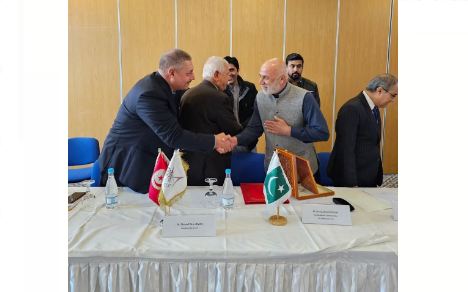
ISLAMABAD, JAN 15 /DNA/ – A significant milestone was achieved on the Tunisian and Pskistani trade relations by signing the MoU between the Chamber of Commerce and Industry of Tunis (CCIT) and the Islamabad Chamber of Commerce & Industry (ICCI) during the work visit of the Pakistani 16 member trade delegation to Tunis.
The event was graced by Esteemed Responsables, including the President of CCIT, the Ambassador of Pakistan to Tunisia, Head of the Foreign Investment Promotion Agency (FIPA), a representative of the Governor of Tunis, and officials from the Ministry of Foreign Affairs,Migration and Tunisians abroad and from the Tunisian Ministry of Trade.
Islamabad, JAN 15 /DNA/ – In response to the overwhelming interest of Pakistani citizens in Sector C-14, the Capital Development Authority (CDA) has decided to introduce Margalla Enclave in collaboration with the Defence Housing Authority (DHA). CDA and DHA have unveiled an excellent investment opportunity for the public.
The jointly launched project, Margalla Enclave, promises to be one of Islamabad’s most significant residential ventures, offering a prime location and modern urban living.
Margalla Enclave will feature residential plots of 5 Marla, 10 Marla, and 1 Kanal, catering to the needs of various segments of the society.
These plots are available on flexible payment plans of 1, 2, and 3 years, ensuring affordability for all.
The project will be equipped with all essential urban amenities, including reliable infrastructure, modern utilities, and green spaces, ensuring a high standard of living.
Citizens can access complete information about Margalla Enclave on the official CDA website.
Chairman CDA, Mr. Muhammad Ali Randhawa stated this joint venture between CDA and DHA represents a significant milestone in Islamabad’s development and provides citizens with an exceptional opportunity for secure investment and quality living.
Previously, Sector C-14 witnessed a successful balloting process, and the response from citizens was remarkable. Successful allottees can confirm their plot allocations by submitting the first installment. Development work in Sector C-14 is progressing rapidly, and plot possession will be handed over after the final installment is cleared.
The CDA remains committed to delivering world-class residential projects that meet the growing demands of Islamabad’s citizens and overseas Pakistanis while setting new benchmarks in urban planning and development.
ISLAMABAD: Rising star Ali Dara defeated seasoned player Faisal Masih in a closely contested final, winning the Islamabad Cup Snooker Championship by 5-4 frames for the first time in his career at Shander 41 Snooker Academy.
The week-long event was organized by the Islamabad Billiards and Snooker Association (IBSA) under the umbrella of the Pakistan Billiards and Snooker Association (PBSA).
In a thrilling final, Ali Dara triumphed over Faisal Masih in the decisive frame with 5-4. The best-of-9 frames match concluded with scores of 65-42, 35-60, 69-42, 31-59, 67-51, 23-61, 59-34, 44-70, and 68-53.
In the Masters category final, Chaudhry Shehzad defeated Raheel Waheed 4-1frame. In the Under-20 category final, Muzammal Sheikh triumphed over Burjees Khan 3-1, while in the Under-17 category, Abu Bakar Chatta beat Ghulam Mustafa 3-1 frame.
Senior Vice President of Islamabad Billiards and Snooker Association, Saleem Akhtar Rana, Secretary-General Faheem Anwar Khan, MS Rawalpindi Institute of Cardiology (RIC) Dr. Ayaz Haider, President of the Rawalpindi Billiard and Snooker Association Dr. Amir Khan, Vice President Malik Asghar, and other dignitaries attended the closing ceremony and distributed prizes to the players.
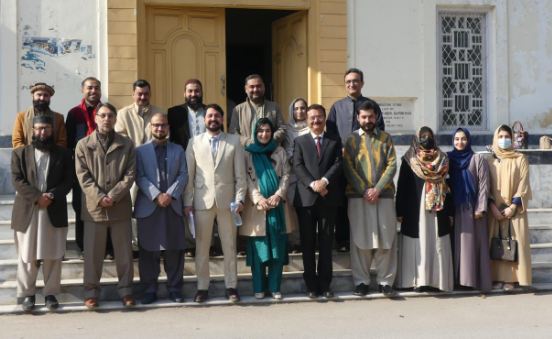
ISLAMABAD, JAN 15 /DNA/ – Shazma, a promising researcher, has successfully defended her PhD thesis in Pharmaceutical Sciences at University of Peshawar achieving a significant milestone in the field of ophthalmology. Her groundbreaking work, titled “Self-Assembled Latanoprost Loaded Nanomicelles as a Drug Delivery System,” focuses on a novel nano-formulation for the management of glaucoma, a condition affecting approximately 70 million people worldwide and a leading cause of irreversible blindness.
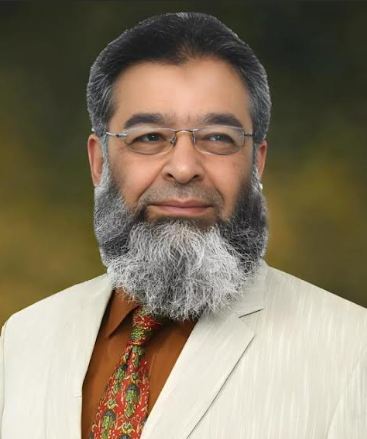
Under the supervision of Meritorious Professor Dr. Zafar Iqbal (Tamgha-e-Imtiaz) and co-supervision of Professor Dr. Fazle Nasir, Chairman of the Department of Pharmacy, Shazma’s research offers a more effective and long-lasting alternative to current treatments. Her formulation not only enhances efficacy but is also free of side effects, marking a breakthrough in the fight against glaucoma.
This innovative work is expected to revolutionize glaucoma treatment, offering hope to millions at risk of losing their sight.
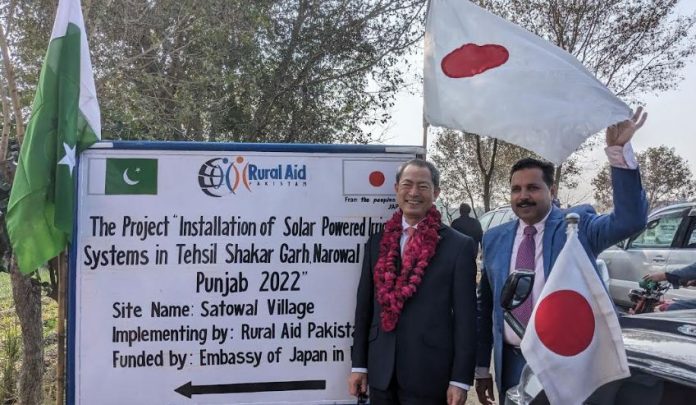
ISLAMABAD, JAN 15 /DNA/ – Akamatsu Shuichi, Ambassador of Japan to Pakistan, on Wednesday, 15th January 2025, inaugurated a project for installation of solar powered irrigation system in Tehsil Shakar Garh, District Narowal being managed by Rural Aid Pakistan, a non-governmental organization, working at grassroots level in rural areas of Pakistan to fight against poverty and empowering the vulnerable rural communities for sustainable development.
The Government of Japan, under its Grant Assistance for Grassroots Human Security Projects (GGP) Program, had provided financial assistance of 65,617 USD under this project, for provision of seven(7) solar powered irrigation pumps and facilities to enhance agricultural productivity in the region by providing sustainable and efficient irrigation system in District Narowal. The inauguration ceremony was attended by the NGO Board Members, local government officials,community leaders and local farmers.
It is pertinent to mention here that Rural Aid Pakistan has been workingfor more than thirty years with farmers in rural areas, implementing many projects in collaboration with government departments and different donors.
The grant of 65,617 USD provided by the Government of Japan is utilized to improve the environment for agricultural activities, increase the production and harvest of agricultural products in the area, and increase the income of local farmers.
His Excellency, Mr. Akamatsu Shuichi, while speaking at the inaugural ceremony, congratulated the representatives of the NGO for successful completion of this important project. Mr. Akamatsuexpressed his hope that this initiative would empower farmers and ensure to increase their agricultural productivity, improve their livelihoods, and contribute to the local economy. He also stressed that the Government of Japan would continue to support the people of Pakistan, to improve their living standards and represented his sincere wish that this project would certainly strengthen the existing relations between the people of Japan and Pakistan.
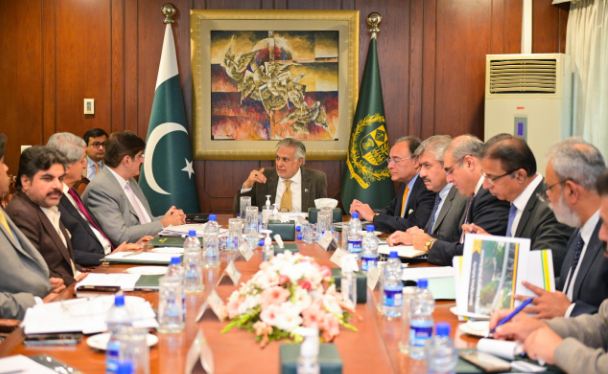
ISLAMABAD, JAN 15 /DNA/ – Chief Minister Sindh Syed Murad Ali Shah called on the Deputy Prime Minister/Foreign Minister Senator Mohammad Ishaq Dar @MIshaqDar50 in his office today. He was accompanied by MNA Syed Naveed Qamar as well as Sindh Planning Minister, Chief Secretary Sindh, Chairman P&D Sindh and Finance Secretary Sindh. The meeting was also attended by the Finance Minister as well as Secretaries of relevant Federal Divisions.
The meeting:
* Reviewed in detail the on-going development projects included in Public Sector Development Programme (PSDP) of Sindh.
* Deliberated upon the issues related to allocations, implementation and approvals of the reviewed projects, particularly pertaining to road connectivity, water storage, schools infrastructure and housing.
* Discussed in detail the approval and implementation status of such projects.
* Agreed that timely completion of projects within approved cost was imperative for the development of Sindh province and betterment of the population.
The Deputy Prime Minister/Foreign Minister assured the Chief Minister of the Federal Government’s commitment to ensure full and timely release of funds for all approved projects. He further assured that any increase in cost of on-going projects will be expeditiously considered by CDWP and ECNEC for decision.
WASHINGTON, JAN 15: Tech CEOs Elon Musk, Jeff Bezos and Mark Zuckerberg will attend U.S. President-elect Donald Trump’s inauguration on Monday, according to a source familiar with planning for the event.
The chief executives of Tesla, Amazon and Meta will be featured prominently at Trump’s swearing in, sitting with the Republican’s Cabinet nominees and other elected officials, according to NBC News, which first reported their attendance.
Representatives for the company executives did not immediately respond to requests for comment.
Bezos’ Amazon and Zuckerberg’s Meta are among the companies that have donated to Trump’s inauguration, each giving $1 million. Musk, the head of Tesla, SpaceX and X, spent more than a quarter of a billion dollars to help elect Trump in November.
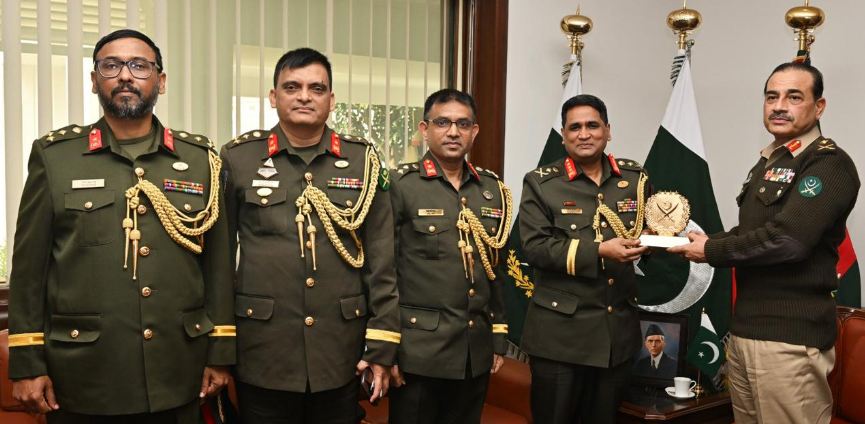
After almost half a century, as a student of history, I was struck by a picture that symbolized the transformation of relationships between two nations. The photograph captured Pakistan Army Chief General Syed Asim Munir presenting souvenirs to a top military delegation from Bangladesh, a gesture of goodwill and friendship.This seemingly simple act carried profound symbolism, not just for Pakistan-Bangladesh relations but also for the broader narrative of South Asian history. As I pondered this picture, my mind wandered to another image deeply etched in history; General Amir Abdullah Khan Niazi signing the instrument of surrender at the Racecourse Ground (now Suhrawardy Udyan) in 16 December1971, marking the creation of Bangladesh.
This surrender was not just a military event but a culmination of years of political unrest, misunderstandings, and external conspiracies. It symbolized the tragic breakdown of unity within Pakistan and the birth of a new nation under circumstances marred by international intrigue. For years, this image adorned the walls of Bangladesh’s political elite. It served as a constant reminder of their liberation struggle and, at times, a tool for fostering animosity against Pakistan. A notable example was the placement of the surrender photograph in the Bangladeshi Prime Minister’s office, where Sheikh Hasina Wajid would often stand with Indian Prime Minister Narendra Modi for media coverage, emphasizing the bond between India and Bangladesh that was forged during those turbulent times.
However, history has a way of revealing hidden truths. Over time, the Indian narrative of its role in the 1971 war has been openly acknowledged by Indian leadership. Prime Minister Modi himself has repeatedly boasted about India’s involvement in the dismemberment of Pakistan. His admission aligns with documented evidence of India’s covert operations, military interventions, and support for the Mukti Bahini. This acknowledgment, while a point of pride for India, has also served to expose its role in exploiting regional vulnerabilities for its own geopolitical ambitions.
For decades, Bangladesh appeared ensnared in India’s strategic orbit, with economic and political ties heavily skewed in India’s favor. Indian goods dominated Bangladeshi markets, water-sharing disputes over transboundary rivers remained unresolved, and Indian influence often seemed to encroach upon Bangladesh’s sovereignty. However, in recent years, as relations have shown signs of strain, Bangladesh has begun to assert its independence at the regional level.
In this evolving context, the recent thaw in Pakistan-Bangladesh relations is a development of immense significance. The symbolic meeting between General Syed Asim Munir and the Bangladeshi military delegation represents a conscious effort to move beyond the bitter legacy of 1971. Both nations appear to recognize the futility of prolonged hostility and the benefits of fostering brotherhood. This rapprochement is rooted not just in shared history and culture but also in pragmatic considerations. In a region dominated by India’s hegemonic ambitions, cooperation between Pakistan and Bangladesh could serve as a counterbalance, ensuring greater regional stability.
The economic trajectories of both nations further underscore the need for collaboration. Bangladesh has emerged as a global leader in textile exports, achieving remarkable economic growth despite challenges. Pakistan, with its vast resources and strategic location, has the potential to complement Bangladesh’s economic aspirations. Trade agreements, joint ventures, and cultural exchanges could unlock untapped potential, benefiting both nations.
Moreover, the shared religious and cultural heritage between Pakistan and Bangladesh remains a powerful bridge. Despite the painful separation, the bonds of faith, language, and traditions have endured. Initiatives such as academic exchanges, people-to-people contact, and collaboration in arts and sports can further cement these ties.
The broader geopolitical landscape also necessitates unity. India’s expansionist policies and its attempts to isolate Pakistan have not gone unnoticed. The same India that once posed as Bangladesh’s liberator has now been unmasked as a regional bully, manipulating its neighbors to serve its own interests. By strengthening their bilateral relationship, Pakistan and Bangladesh can collectively challenge this narrative, advocating for a more inclusive and balanced South Asia.
This renewed brotherhood also reflects the resilience of nations and their ability to overcome historical grievances. It is a testament to the enduring truth that no external power can permanently divide those united by shared destiny. The journey from 1971 to the present moment has been fraught with challenges, but it also demonstrates the capacity for reconciliation and forward-thinking leadership.
As I revisited the image of General Niazi’s surrender, juxtaposed with the recent picture of General Asim Munir extending goodwill, a poignant Urdu verse came to mind: “Pohnchiwahan pay khak,jahan ka khameertha” (Destiny ultimately leads us to where we truly belong). The wheel of time has turned, exposing conspiracies and unveiling new realities. The past, though painful, serves as a guide for the future. It reminds us that while history cannot be undone, it can be a source of learning and growth.
The evolving Pakistan-Bangladesh relationship holds lessons for all nations grappling with the weight of historical animosities. It underscores the importance of dialogue, mutual respect, and the recognition of shared interests. As the region stands at a crossroads, the example set by these two nations could inspire a new era of cooperation and harmony in South Asia, defying the divisive forces that once tore them apart.
The contemporary United States reveals a paradoxical duality a nation experiencing internal discord while maintaining global preeminence. Despite two-thirds of Americans perceiving the country as on the wrong track and waning public trust in government, the United States remains the wealthiest and most powerful state in the international system.
This paradox is underpinned by structural factors, such as vast land resources, a growing and diverse demographic, and a decentralized political framework. However, these assets also exacerbate vulnerabilities, including pronounced economic disparities, political polarization, and strategic overreach.Economically, the United States continues to dominate the global landscape, accounting for 26% of global GDP, comparable to its share during the unipolar moment of the 1990s.
The American economy has outpaced its European counterparts and maintains a substantial lead over emerging economies, including China. Innovations in technology, energy production, and military alliances have further cemented this position. For example, the United States has transitioned from being the largest energy importer to the leading producer of oil and natural gas, enhancing its geopolitical advantage.However, this prosperity is juxtaposed with significant socioeconomic inequalities. While median household incomes and wages for low-income workers have risen, rural areas continue to face economic stagnation.
The decline of manufacturing and public sector jobs in these regions has intensified economic and political divides, as urban centers benefit from globalization and technological advancements. Rural populations, heavily reliant on dwindling industries, often perceive themselves as marginalized, fostering resentment and undermining national cohesion.
The growing urban-rural divide reflects a deeper polarization within American society. Urban areas, characterized by diverse and educated populations, align predominantly with progressive ideologies. In contrast, rural regions, which remain predominantly white, older, and less educated, gravitate toward conservative politics. This divide has transformed the political landscape, with rural voters exhibiting strong support for the Republican Party, while urban centers predominantly back Democrats. This polarization threatens democratic stability, as both parties adopt increasingly uncompromising strategies, sidelining bipartisan governance.The United States’ global dominance is rooted in its unparalleled economic, military, and technological capabilities.
The dollar’s centrality in international finance and the country’s leadership in technological innovation underscore this influence. Moreover, military alliances, such as NATO and initiatives like AUKUS, have bolstered U.S. strategic positioning.Yet, the pursuit of global leadership is marred by strategic contradictions. The tendency to oscillate between detachment and over engagement undermines the coherence of U.S. foreign policy. Historical examples, such as the inconsistent responses to German and Japanese expansion in the 1920s and the protracted conflicts in Iraq and Afghanistan, highlight the costs of strategic miscalculation. Additionally, current underinvestment in defense relative to GDP raises concerns about the country’s readiness to address emerging threats from adversaries like China, Russia, Iran, and North Korea.
Geographically, the United States benefits from natural insulation provided by oceans and a resource-rich territory. These factors, combined with a robust private sector and a decentralized governance system, foster innovation and economic resilience. The U.S. labor market, characterized by adaptability and productivity, further reinforces this advantage, enabling rapid recovery from crises.However, demographic trends pose both opportunities and challenges. While the United States is projected to maintain a growing working-age population, thanks to immigration and higher birth rates, other major powers face significant demographic declines. This dynamic offers the United States a competitive edge but necessitates policies that address domestic disparities and foster social cohesion.To sustain its global leadership, the United States must navigate its internal and external contradictions. Bridging the urban-rural divide requires targeted investments in infrastructure, education, and healthcare in neglected regions. Policies that promote economic inclusivity and mitigate disparities can strengthen national cohesion. On the global stage, a balanced approach to foreign policy, combining robust deterrence with diplomatic engagement, is essential to maintaining stability and addressing emerging threats.The United States’ unique combination of structural advantages and institutional flexibility provides a foundation for continued dominance. However, leveraging these strengths requires addressing vulnerabilities that threaten its stability and global standing. By fostering unity and exercising prudent leadership, the United States can navigate the complexities of the modern era and contribute to a more stable and prosperous world order.
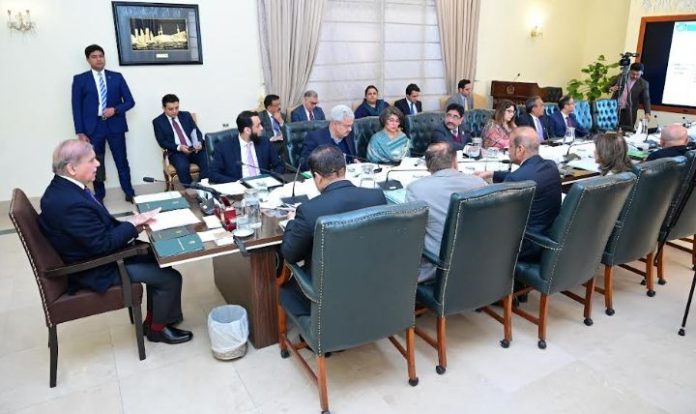
ISLAMABAD, JAN 15 (APP): Prime Minister Shehbaz Sharif on Wednesday directed all the relevant institutions to play an active role in curbing human smuggling and take strict legal action against the perpetrators defaming the country through their heinous business.
The prime minister, chairing a meeting to review the measures against human smuggling, instructed to address the shortage of manpower in the Federal Investigation Agency (FIA) and ensure effective screening of those traveling abroad at the airports.
The prime minister directed the Ministry of Information and Broadcasting to run an awareness campaign on illegal foreign travel and human smuggling. He also called for seeking Interpol’s support for the extradition of most wanted criminals involved in human smuggling.
During the briefing, the prime minister was told that several human smugglers had been arrested from June 2023 to December 2024. Many government officials have been dismissed for facilitating the crime while several others face disciplinary proceedings.
The prime minister was apprised of the punitive measures being taken against the government officials involved in human smuggling. Besides the assets of human smugglers worth Rs500 million had been confiscated and a process was underway for more such confiscations.
It was also told that special prosecutors had been appointed to prosecute the human smugglers.
Federal Economic Affairs Minister Ahad Khan Cheema, Information and Broadcasting Minister Attaullah Tarar and relevant senior officers attended the meeting.