Home Blog Page 702

U.S-Asia from Nixon to Trump

U.S-Asia from Nixon to Trump

Dr. Muhammad Akram Zaheer

The potential return of Donald Trump to the White House represents a pivotal development for global geopolitics, evoking distinct reactions across various regions. While European nations largely perceive this shift as a destabilizing force threatening alliances and economic stability, the response in Asia is notably more measured. The nuanced perspective of Asian states stems from their historical experience of engaging with the United States in transactional and interest-driven relationships, as opposed to ideologically aligned partnerships. This divergence underscores the complex dynamics shaping U.S.-Asia relations and their broader implications for the international order.In the context of Asia, encompassing key actors such as Japan, South Korea, Southeast Asian nations, and the Indian subcontinent, the prospect of a second Trump administration aligns with historical patterns of U.S. engagement. Unlike Europe, where concerns about Trump’s authoritarian inclinations and disregard for liberal internationalist ideals dominate discourse, Asian countries emphasize pragmatism. The region’s longstanding preference for interest-based diplomacy resonates with Trump’s transactional foreign policy, which prioritizes mutual benefits over the preservation of a liberal world order. This pragmatic approach reflects Asia’s ambivalence toward the “rules-based order,” a concept that carries disparate connotations in Western and Asian contexts.The historical trajectory of U.S. policy in Asia offers critical insights into this dynamic. Since the Vietnam War era, the United States has gradually adopted a strategy characterized by offshore balancing—a policy approach articulated in President Richard Nixon’s 1969 doctrine. The Nixon Doctrine emphasized that regional actors should assume primary responsibility for their security, with the United States providing support through extended deterrence and a strategic military presence. This policy marked a departure from direct intervention, as exemplified by the Vietnam War, and established a framework for U.S.-Asia relations that persists to this day.

Asian states have navigated this framework with varying degrees of adaptation and apprehension. The post-9/11 “war on terror” and the protracted U.S. involvement in Afghanistan under the George W. Bush administration represented exceptions to the general orientation of U.S. policy in Asia. By contrast, the gradual withdrawal of U.S. forces under subsequent administrations, culminating in President Joe Biden’s decision to end the Afghanistan conflict, underscores a return to offshore balancing. The Biden administration’s efforts to strengthen alliances through initiatives such as the Quadrilateral Security Dialogue (Quad) and the AUKUS defense agreement highlight a consultative and strategic approach, albeit within the constraints of transactionalism.The potential resurgence of Trump’s “America First” doctrine would amplify these trends, albeit with notable distinctions. Trump’s approach, marked by unpredictability and a focus on burden-sharing, aligns with the historical precedent of offshore balancing but introduces heightened transactionalism. This shift necessitates careful consideration of three critical issues: Taiwan, trade policies, and regional leadership.Taiwan’s strategic significance and its evolving role in U.S.-China relations remain central to regional stability. President Biden’s explicit commitments to defend Taiwan against Chinese aggression have heightened expectations in Taipei, while simultaneously fueling tensions with Beijing. A Trump administration, by contrast, would likely adopt a more transactional stance, viewing Taiwan within the broader context of U.S.-China trade dynamics. This approach risks exacerbating uncertainties surrounding Taiwan’s security, particularly if it is leveraged as a bargaining chip in trade negotiations. The potential implications for cross-strait relations and regional stability cannot be understated.

Trade policy under Trump’s leadership is another area of significant concern. Trump’s proclivity for tariffs and his emphasis on reducing trade deficits have profound implications for Asian economies with substantial trade surpluses, including Malaysia, Thailand, and Vietnam. The likelihood of renewed trade tensions, coupled with China’s economic challenges, creates a precarious environment. Beijing’s reliance on state-directed investment to offset domestic economic pressures exacerbates overcapacity issues, fueling trade disputes and geopolitical tensions. This cyclical dynamic underscores the interconnectedness of economic and security considerations in U.S.-Asia relations.Regional leadership represents a third critical dimension. The withdrawal of U.S. leadership from multilateral frameworks, exemplified by Trump’s decision to exit the Trans-Pacific Partnership (TPP), underscores the need for regional actors to assume greater responsibility. Japan’s efforts under the late Prime Minister Shinzo Abe to salvage the TPP and establish the Comprehensive and Progressive Agreement for Trans-Pacific Partnership (CPTPP) illustrate the potential for regional initiatives. However, the absence of strong and cohesive leadership among key U.S. allies, such as Japan, South Korea, and Australia, poses challenges to sustaining a coordinated regional strategy.The interplay between U.S. policy and regional dynamics extends beyond immediate concerns to broader strategic considerations. The intensifying competition between the United States and China remains a defining feature of the geopolitical landscape. While mutual nuclear deterrence reduces the likelihood of direct military conflict, the economic and security ramifications of this rivalry are profound. Asian countries, including traditionally nonaligned actors such as India, Indonesia, and Vietnam, have increasingly gravitated toward the United States in response to China’s assertive policies. This trend, initiated during Trump’s first term and reinforced under Biden, underscores the enduring significance of U.S. engagement in the region.The implications of these dynamics extend to global geopolitics. Trump’s transactional approach, while polarizing, reflects a broader evolution in U.S. foreign policy. The historical context of U.S. engagement, from the Nixon Doctrine to the present, reveals a consistent pattern of recalibrating commitments based on strategic interests. This trajectory suggests that Trump’s policies, while distinct in style, align with underlying trends in U.S. foreign policy.For Asian states, this continuity underscores the importance of pragmatic engagement with the United States. The region’s experience with transactional diplomacy offers valuable lessons for other U.S. allies and partners adjusting to Washington’s recalibrated approach. By emphasizing common interests and fostering regional initiatives, Asian countries can navigate the uncertainties of a changing geopolitical landscape.

The potential return of Donald Trump to the presidency represents a critical juncture for U.S.-Asia relations and global geopolitics. The region’s historical experience with U.S. policy, rooted in pragmatism and transactionalism, provides a foundation for navigating these challenges. By addressing key issues such as Taiwan, trade policies, and regional leadership, Asian states can contribute to a stable and resilient regional order. This nuanced perspective highlights the complexity of U.S.-Asia relations and their broader implications for the international system.
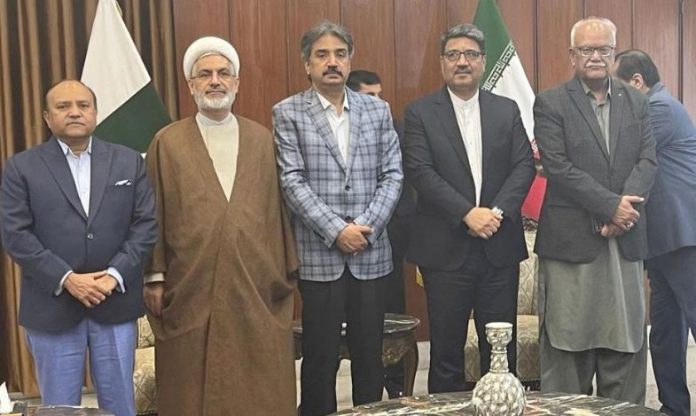
Consul General of Iran hosts lunch in honour of Speaker Sindh Assembly

Consul General of Iran hosts lunch in honour of Speaker Sindh Assembly

Nazir Siyal

KARACHI: Hassan Nourian, Consul General of the Islamic Republic of Iran and Dean of the Karachi Consular Corps, hosted a luncheon in honour of Syed Awais Qadir Shah, Speaker of the Provincial Assembly of Sindh, here at the Consulate General of Iran in Karachi.

On the occasion graced by a four-member delegation from the Iranian Parliament’s Cultural Commission, who are on an official visit to Karachi.

Speaker Syed Awais Qadir Shah was accompanied by Deputy Speaker Anthony Naveed, Member National Assembly, Mirza Ikhtiyar Baig and General Secretary PPP, Waqar Mehdi.

During the gathering, discussions centered on the mutual cooperation and strengthening of relations between Iran and Pakistan.

Speaker Syed Awais Qadir Shah emphasized the enduring friendship shared by the two neighboring nations.

“Iran and Pakistan share a strong and friendly relationship as neighbors. It is essential for both countries to maintain and enhance these ties for mutual progress, peace, security, and stability.” Syed Awais Qadir Shah

The discourse also focused into the challenges facing the global Muslim fraternity and the shared responsibilities of both nations in working towards sustainable solutions for unity and security.

Speaker Syed Awais Qadir Shah extended his gratitude to Consul General Hassan Nourian for the gracious invitation and the warm hospitality.

Consul General thanked the Speaker Provincial Assembly of Sindh, Syed Awais Qadir Shah and the delegation for their time and also presented a shield to the Speaker in his honour.

The Speaker also invited His Excellency and the Iranian delegation to visit the historic Sindh Assembly and attend a session of the provincial legislature, further strengthening bilateral ties and cultural understanding.

This meeting marked a reaffirmation of the enduring partnership between Iran and Pakistan, reflecting a shared commitment to regional cooperation and unity.

PIDE’s discourse unveils urgent reforms for Pak’s future: Dr. Arshad Hashmi

PIDE’s discourse unveils urgent reforms for Pak’s future: Dr. Arshad Hashmi

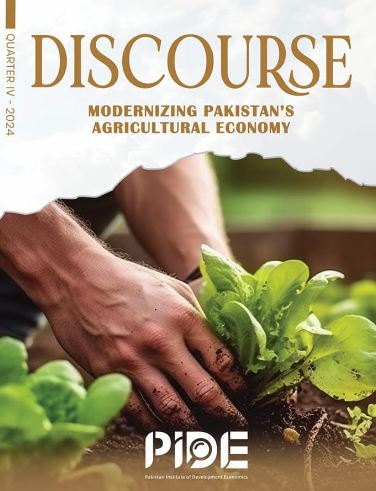
ISLAMABAD, JAN 19 /DNA/ – The Pakistan Institute of Development Economics (PIDE) is proud to announce the release of its much-awaited edition of Discourse, titled Modernizing Pakistan’s Agricultural Economy. This special issue is a call to action for addressing the critical challenges facing the country’s agricultural sector through innovative solutions and global best practices. In his opening remarks, Dr. Arshad H. Hashmi, Acting Vice Chancellor of PIDE, stated, “This special issue of Discourse aims to inspire a transformational shift in Pakistan’s agricultural landscape, fostering informed discussions and actionable strategies to address the challenges of today and tomorrow.”

The issue was skillfully curated by editorial team, including Dr. Arshad H. Hashmi; Dr. Shujaat Farooq,; Dr. Abedullah Anjum; and Dr. Muhammad Faisal Ali, all from PIDE. Together, they have shaped a comprehensive guide to reforming and modernizing the agricultural sector.

The edition highlights the multifaceted challenges confronting Pakistan’s agricultural sector, including low productivity, fragmented landholdings, poor infrastructure, inefficient irrigation practices, and regulatory barriers. These issues are compounded by a lack of investment in research and development (R&D), outdated technologies, and the impacts of climate change. However, the publication outlines a roadmap to overcome these challenges by adopting global best practices, such as precision farming, deregulation of agricultural markets, geospatial monitoring, and leveraging advanced technologies like artificial intelligence (AI) and drones.

Among the solutions presented, the issue emphasizes the critical need for liberalizing input markets, such as seeds and fertilizers, and reforming land consolidation policies to promote equitable growth. It also advocates for economic water pricing to encourage sustainable use of resources while suggesting market-driven approaches to enhance efficiency in the sugar and wheat sectors. Additionally, adopting AI and drone technology in supply chains and farming practices is highlighted as a game-changer for improving productivity and reducing waste.

The special edition features compelling contributions from leading experts. Muhammad Faisal Ali and Abedullah propose actionable strategies in “Pathways to Prosperity: Strategic Reforms for Pakistan’s Agricultural Markets,” while Zartasha Inayat and Tuaha Adil explore the potential of deregulating the sugar sector in “Deregulation of the Sugar Sector Critical to Promote Efficiency.” Sobia Rose addresses the inequities in land markets in “Reforming Agricultural Land Markets in Pakistan: Overcoming Structural Inequities,” and Muhammad Asad ur Rehman Naseer examines pricing inefficiencies in “Decoding the Dynamics of Pricing in the Fruit and Vegetable Market: Highlighting the Government Imperfections.”

Technological innovation also takes center stage, with Ibrar ul Hassan Akhtar detailing geospatial advancements in “SUPARCO Interventions for Geospatial Monitoring of Agricultural Crops.” Anjeela Khurram and Muhammad Faisal Ali emphasize energy efficiency in “Valuing Energy Efficiency Potential in the Agriculture Sector,” while Rizwan Mir, outlines government-led efforts in “Revolutionizing the Agricultural Sector of Pakistan – SIFC’s Top Priority.” Ayesha Sultana’s “Why Investment in R&D has not Improved Agriculture Productivity?” critiques the barriers to impactful research in the sector.

The potential of AI is explored in a series of articles, including “Artificial Intelligence (AI) for Agricultural Advancements” by Shayan Malik and “Harnessing AI for Agricultural Transformation–A Prospect of Pakistan” by Engineer Mahwish Rose. These contributions illustrate how AI can revolutionize supply chains, precision farming, and resource management. Similarly, the role of drone technology in improving efficiency and overcoming regulatory constraints is examined in articles by Sadaf Safder and Hafsa Sarfraz.

The edition also explores the future of Pakistan’s agricultural sector, with a focus on the Gene Revolution. Articles such as “Sowing the Seeds of Change: Pakistan’s Transition from Green to Gene” by Ayesha Rahman and “Moving from Green to Gene Revolution: Scope and Challenges for Pakistan” by Waqar Younas & Uzma Zia advocate for the adoption of genetically modified crops to enhance productivity and sustainability.

The comprehensive analysis and actionable solutions presented in Discourse aim to provide a roadmap for policymakers, stakeholders, and innovators to collaborate on building a resilient agricultural sector. With its focus on adopting global best practices and modern technologies, this special edition offers a vision for transforming Pakistan’s agricultural landscape.

Trump arrives in Washington for inauguration celebration in freezing weather

Trump arrives in Washington for inauguration celebration in freezing weather

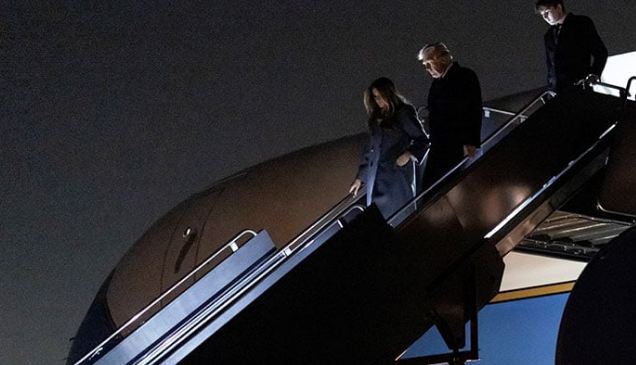
WASHINGTON: President-elect Donald Trump has flown to Washington on Saturday for an inauguration celebration, as freezing temperatures cast a shadow over the event marking his return to power.

Trump flew in an Air Force plane sent by outgoing President Joe Biden to his home in Palm Beach, Florida, where the Republican had worked on his transition to power after winning the Nov. 5 election over Democratic Vice President Kamala Harris. His wife Melania, daughter Ivanka and her husband Jared are accompanying him on the plane.

After arriving at Dulles airport in suburban Virginia, Trump traveled to his golf club in Sterling, Virginia, on the outskirts of Washington.

Elvis Presley impersonator Leo Days serenaded the incoming president and first lady ahead of a reception for about 500 guests and fireworks display. An aide posted a video on social media showing the singer crooning as the Trumps watched.

The 78-year-old Trump is due to hold a rally with supporters inside the Capital One Arena in downtown Washington on Sunday, the eve of his inauguration, as well as a post-inauguration event Monday afternoon.

A blast of frigid weather forecast for Monday prompted Trump to move the inaugural ceremonies from the iconic west front of the US Capitol building to indoors in the Capitol Rotunda, and the parade down Pennsylvania Avenue to the Capital One Arena.

Trump will be sworn in at 12 p.m. local time (1700 GMT) and then delivers his inaugural address, a speech that typically sets the tone for the president’s new four-year term, from the rotunda inside the US Capitol.

It will be the first time since Ronald Reagan’s second inauguration in January 1985 that the big event has been moved indoors.

Crowds without seats in DC
Most of the more than 220,000 ticketed guests who had been due to watch from the US Capitol grounds will be unable to view the swearing-in inside the building. Just a fraction will be able to fit inside the 20,000-seat Capital One Arena where the inauguration will be broadcast and parade entertainers and participants are expected to perform.

On Saturday, Trump fans who had planned to attend the inauguration were already walking around downtown Washington.

Arthur Caisse, a 78-year-old retired professor, and his brother Richard Caisse, a 64-year-old small business owner, had traveled from Connecticut to see Trump’s inauguration for the second time, after coming in 2017.

“It’s so disappointing because all of us traveled so long and far to get here, and then to go through the congressional process to get tickets to the inauguration. Finally we got tickets, now, boom. They’re saying we may not even be able to go to the (National) Mall,” Arthur Caisse said.

“I’m not disappointed because on Monday we’re getting our country back,” Richard Caisse chimed in.

Debbie Koch, a 60-year-old information technology professional who had traveled from Wisconsin with her sister, said they were still planning to attend the Sunday night Capital One arena rally if they can get inside.

“We don’t know for sure,” she said. “We’re just excited to be here.”

Asked on Saturday how they would manage the crowds of Trump inauguration ticket holders who would not fit into the Capitol Rotunda or the Capital One stadium, Secret Service referred the question to the event organizers.

Trump’s inaugural committee didn’t respond to requests for more information about the Capital One arena event on Saturday.

Once he returns to the White House on Monday afternoon, Trump is expected to begin signing some of the dozens of executive orders and directives that he has planned to crack down on migration, boost US energy production and other priorities.

Trump, whose first term lasted from 2017 to 2021, had refused to attend the inauguration of Biden, who defeated him in 2020. He left Washington for Florida ahead of the ceremony, vowing “we will be back in some form.”

Two weeks earlier, his supporters had attacked the US Capitol on Jan. 6, 2021, seeking to delay lawmakers from certifying Biden’s victory.

Biden will attend Trump’s inauguration ceremony on Monday.

Govt makes security clearance mandatory for Hajj pilgrims

ISLAMABAD, JAN 18: The Ministry of Religious Affairs has introduced a new regulation policy for private Hajj schemes, requiring security clearance for individuals opting for Hajj packages costing more than Rs3 million.

Under the revised policy, the names of pilgrims opting for expensive private Hajj packages will be sent to the FBR. The board will then investigate the assets and tax history of pilgrims choosing expensive private Hajj packages.

The move is aimed at ensuring transparency and preventing misuse of funds in one of Islam’s most significant religious pilgrimages.

The names of these individuals will be forwarded to security agencies to assess their criminal records or any other relevant history. Only after receiving security clearance will such pilgrims be permitted to proceed with their Hajj arrangements.

Additionally, companies offering Hajj packages above the Rs3 million threshold must submit detailed information about their packages for approval by the Ministry of Religious Affairs. The ministry will scrutinise and approve the pricing and associated expenses to ensure compliance with regulations.

To oversee the implementation of the new policy, the Ministry has appointed Muhammad Hakeem Khattak as the focal person.

Also Read: Private Hajj 2025 packages unveiled as MoRA inks pact with tour operators

Last week, the Ministry of Religious Affairs reached an agreement with private Hajj tour operators, granting them permission to begin Hajj bookings. The tour operators are now allowed to accept bookings until January 31.

However, for Hajj packages worth over Rs3 million, approval from the Hajj Formulation Committee would be mandatory. The new policy aims to streamline the Hajj process and ensure transparency while also accommodating the growing demand for private Hajj services.

The collection of Hajj applications for the limited quota also started last week. Applications would be accepted on a first-come, first-served basis.

Moreover, Pakistan and Saudi Arabia signed an agreement for Hajj, paving the way for improved facilities for Pakistani pilgrims. Federal Minister Chaudhry Salik Hussain participated in a four-day International Hajj Conference in Jeddah. Salik and the Saudi minister of Hajj signed the agreement in Jeddah.

Also Read: Pakistan and Saudi Arabia sign Hajj 2025 agreement in Jeddah

Under this agreement, 189,210 Pakistanis would perform Hajj this year, as confirmed by a Ministry of Religious Affairs spokesperson. A ministry spokesperson highlighted several new measures to ensure a more comfortable Hajj experience for Pakistani pilgrims:

Pilgrims will have access to dedicated spaces in Mina, with reduced rates for better affordability. A 20-25-day Hajj program has been introduced, allowing pilgrims to customize their schedule. Pilgrims will stay in Medina for four to eight days and have the option to choose accommodations according to their preferences.

Each pilgrim will receive a specially designed bag featuring the Pakistani flag, a QR-coded identity tag, and all necessary information. A dedicated app will provide pilgrims with live maps, locations, and essential updates, enhancing their Hajj experience.

Bill Gates Foundation health initiative in KP could end

Bill Gates Foundation health initiative in KP could end

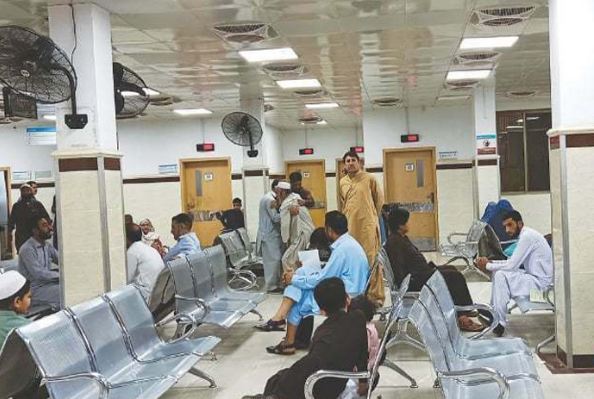
Peshawar, JAN 18: A key health initiative in Khyber Pakhtunkhwa, funded by the Bill Gates Foundation, is facing the risk of termination due to delays in land allocation and the issuance of No Objection Certificates (NOCs) by the Local Government Department.

The Gates Foundation had pledged to build 15 health centers in the province’s 55 high-risk areas for polio, offering to cover all associated expenses until December 2025.

Since 2020, the foundation has successfully operated 15 temporary health centers, housed in rented buildings. However, with the deadline for land allocation looming, the foundation’s commitment to the project hangs in the balance.

According to sources within the Health Department, four sites for the health centers have already been identified by the Local Government Department. Despite this, the department has yet to provide the necessary land and NOCs to enable the construction of permanent facilities.

The failure to secure the land before March could lead to the end of the project, which has been pivotal in the fight against polio in the region.

The Health Secretary, Adeel Shah, acknowledged the situation, noting that the Local Government Department has been urged to expedite the process. “Efforts are being made to resolve the issue and ensure the timely completion of the project,” Shah said.

With polio still a threat in several parts of the province, the establishment of these health centers is seen as a crucial step in protecting children from the virus. The delay in land allocation threatens to undermine the progress made so far and may jeopardize the broader public health objectives tied to this international collaboration.

OGRA holds meeting with LPG bowzers and storage tanks manufacturers

OGRA holds meeting with LPG bowzers and storage tanks manufacturers

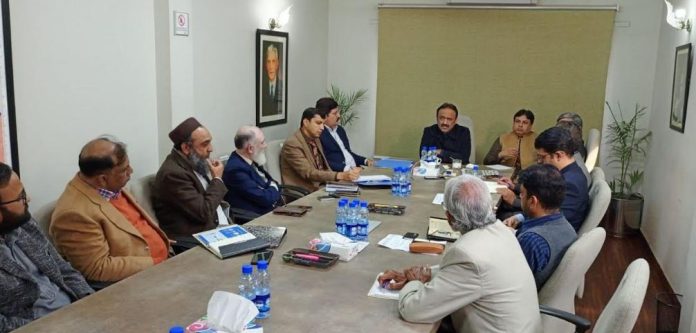
LAHORE, JAN 18 /DNA/ – A high-level meeting with Liquefied Petroleum Gas (LPG) bowzers, storage tanks, and bullet manufacturers was convened today at the Regional Office of the Oil and Gas Regulatory Authority (OGRA) in Lahore. The meeting was chaired by Mr. Zain Ul Abideen, Member Oil, OGRA, and attended by senior directors and officers from the LPG and Enforcement departments.

During the meeting, the authorized manufacturers of LPG bowzers were directed to ensure compliance with critical safety standards, emphasizing that no LPG bowzer should be manufactured with a capacity exceeding 30 metric tons, exclusive of the 15% allowance. Manufacturers were further instructed to adhere strictly to established safety regulations to mitigate risks and ensure the safe handling and transportation of LPG.

OGRA officials disclosed that the requisite data provided by manufacturers is currently under examination and analysis to verify compliance with manufacturing standards. In addition, the Authority’s Enforcement teams are planning inspections of all manufacturing units to ensure adherence to safety protocols.

The Authority reiterated its commitment to cracking down on unauthorized and illegal manufacturers, in collaboration with local administrations, to eliminate unsafe practices in the industry.

Mr. Zain Ul Abideen emphasized that regular monitoring and evaluation will be conducted to ensure sustained progress and the highest safety standards across the LPG manufacturing sector. These efforts reflect OGRA’s unwavering dedication to safeguarding public safety and maintaining regulatory compliance within the industry.=DNA

===========

Pakistan first country to implement Digital FDI under WEF: Shehbaz

Pakistan first country to implement Digital FDI under WEF: Shehbaz

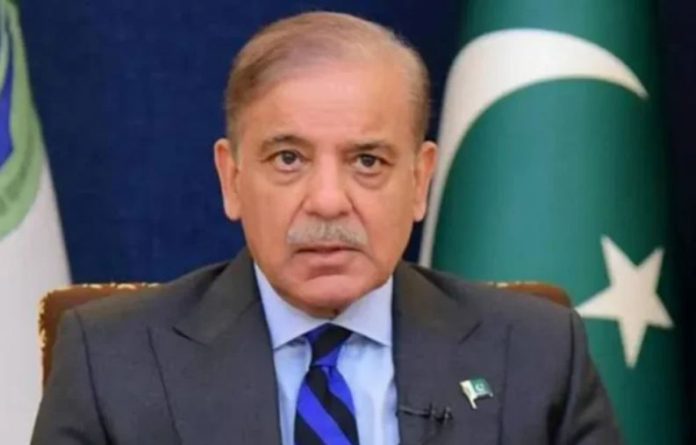
LAHORE, JAN 18 (DNA): Prime Minister Muhammad Shahbaz Sharif said on Saturday Pakistan is the first country to implement the Digital Foreign Direct Investment (FDI) Initiative, launched by the World Economic Forum (WEF) and the Digital Cooperation Organisation (DCO).

According to a spokesperson, the premier said Pakistan’s first Digital FDI project had been making significant efforts to identify targets and promote digital progress. He elaborated that Pakistan’s Digital FDI project was a framework aimed at implementing digital infrastructure, digitization and export of digital services. It would focus on sectors likely to attract foreign investment into the country, he added.

“It is an important milestone towards creating an investment-friendly environment in the country,” the premier said, adding that the country was heading towards a vibrant digital economy, which was a vital step in achieving sustainable progress and prosperity.

PM Shehbaz Sharif remarked that the initiative reflected the government’s commitment to fostering economic growth.=DNA

========

Two Supreme Court judges shot dead in Tehran, says Iranian judiciary

Two Supreme Court judges shot dead in Tehran, says Iranian judiciary

Tehran, JAN 18: Two Supreme Court judges were shot dead in Tehran on Saturday and another judge was wounded, the judiciary’s Mizan news website reported.

It said the attacker killed himself after opening fire at the judges outside the Supreme Court. Iranian media said a bodyguard of one of judges was also wounded.

The motive for the assassination was unclear.

The judiciary identified the judges who were killed as ayatollahs Mohammad Moghiseh and Ali Razini. Opposition websites have in the past said Moghiseh was involved in trials of people they described as political prisoners.

The U.S. Response to China’s Rise

The U.S. Response to China's Rise

Dr. Muhammad Akram Zaheer

The economic agenda of the incoming administration is firmly anchored in revitalizing the United States’ financial strength. One of the most pressing areas demanding attention is the complex trade and investment relationship between the United States and China. Addressing the intricate challenges embedded in this dynamic will play a critical role in achieving the desired economic revival. A significant portion of the discussion in recent months has centered on trade measures, particularly tariffs, as tools to address a range of economic concerns. These measures are proposed to rebalance the trade imbalance, encourage domestic companies to bring their operations back to the United States, and curb the growing global influence of the Chinese financial system.

The trade imbalance between the United States and China has long been a contentious issue. For years, the U.S. has imported significantly more goods from China than it has exported, resulting in a persistent trade deficit. This imbalance is not merely a statistical concern; it carries implications for jobs, industrial competitiveness, and national security. The administration has argued that imposing trade measures could compel China to alter its economic practices, thereby addressing these concerns. By applying pressure through economic tools, the goal is to create a more level playing field for American businesses and workers. However, such measures are not without risks. Critics warn that excessive reliance on trade restrictions could provoke retaliatory actions, destabilizing global markets and harming businesses that rely on international supply chains. Furthermore, focusing solely on trade measures may overlook deeper structural issues within the U.S. economy that contribute to its reliance on imported goods. One of the administration’s primary goals is to encourage domestic companies to relocate their production facilities back to the United States. Over the past several decades, many firms have moved their operations overseas, particularly to China, to take advantage of lower labor costs and access to the global market. While this strategy has brought short-term gains in profitability for these companies, it has also resulted in the erosion of U.S.-based manufacturing industries and a loss of jobs in many sectors. By implementing economic incentives alongside trade restrictions, policymakers aim to reverse this trend. Reshoring production is expected to revitalize local economies, strengthen supply chain resilience, and reduce reliance on external actors for critical goods. However, achieving this objective will require addressing challenges such as high domestic labor costs, regulatory barriers, and the need for infrastructure investment to support modern manufacturing. Furthermore, businesses may be hesitant to abandon established supply chains in favor of new ones, as such transitions involve significant costs and logistical challenges. Therefore, the success of this initiative will depend on a carefully calibrated mix of policies that balance incentives and penalties to achieve the desired outcomes.

The global financial landscape is undergoing significant changes, with some countries exploring alternatives to traditional dollar-based systems. These shifts are driven by efforts to reduce dependence on the U.S. dollar, particularly in response to concerns about the volatility and potential risks associated with being tied to a single dominant currency. China has emerged as a key player in this movement, promoting the use of its currency, the yuan, in international trade and investment. Policymakers in the U.S. view these developments as a challenge to their country’s economic influence. Addressing these concerns will require a multifaceted approach that goes beyond trade measures. Strengthening the U.S. financial system, maintaining global confidence in the dollar, and fostering international partnerships will be essential to counteract the potential erosion of the U.S.’s financial dominance. While economic tools such as trade restrictions can play a role in addressing these issues, they must be part of a broader strategy. Overreliance on any single policy instrument risks creating unintended consequences, such as disruptions to global markets or the alienation of key allies. Moreover, a nuanced approach that considers the interconnected nature of global trade and finance will be essential to achieving long-term success.

The complexities of the U.S.-China economic relationship require careful navigation. On one hand, the administration is committed to safeguarding domestic economic interests, promoting job creation, and reducing dependence on external actors. On the other hand, the interconnected nature of the global economy means that unilateral actions can have far-reaching consequences, both domestically and internationally. Promoting economic growth while addressing trade imbalances and other challenges will require a balance between assertive measures and cooperative strategies. Engaging with China and other key economic partners through dialogue and negotiation can help address underlying concerns while avoiding the risks associated with confrontation. Building on existing international frameworks and fostering collaboration on issues such as intellectual property protection, market access, and environmental standards will be critical to creating a stable and sustainable global economy. The implementation of these strategies will face numerous challenges. Domestic political divisions, global market uncertainties, and the complexity of international trade dynamics are just a few of the factors that could complicate efforts to achieve the administration’s economic objectives. Furthermore, the effectiveness of proposed measures will depend on their ability to address the root causes of economic challenges, rather than merely treating the symptoms. Additionally, the success of these policies will require careful coordination with domestic stakeholders, including businesses, workers, and communities. Addressing the concerns of these groups and ensuring that the benefits of economic growth are broadly shared will be essential to building support for the administration’s agenda.

Stay Connected

64FansLike
60FollowersFollow

Latest Reviews

Exchange Rates

USD - United States Dollar
EUR
1.17
GBP
1.35
AUD
0.72
CAD
0.73