Home Blog Page 695

2nd Chief of Army Staff Inter Club tourney: Rising Stars Hockey Club beats Gilgit to qualify for Lahore round

2nd Chief of Army Staff Inter Club tourney:Rising Stars Hockey Club beats Gilgit to qualify for Lahore round

ISLAMABAD: High Commissioner of Brunei Kamal Ahmed giving runner’s  up award to the Captain of the Gilgit-Baltistan team. -DNA

President of the winning team, Rising Stars Hockey Club, Mahmood Ahmad, General Secretary Sohail Akram Janjua, team manager Ansar Mahmood Bhatti and coach Asif Bhatti congratulated the team

ISLAMABAD: Team Management of the Rising Stars Hockey Club with the High Commissioner of Brunei. DNA

DNA

ISLAMABAD: Second Chief of Army Staff Interclub Hockey Championship 2024-25 Provincial Round 3 in the name of Rising Stars Hockey Club Islam*

According to the details, in connection with the ongoing second Chief of Army Staff Interclub Hockey Championship 2024-25, Islamabad.

Gilgit-Baltistan and Azad Kashmir region competitions were held at Naseer Banda Hockey Ground Islamabad, in the final match of which Rising Stars Hockey Club Islamabad qualified for the National Round of the Inter-Club Championship by defeating Young Stars Hockey Club Gilgit 3-4 after a nerve-wracking match. Waqqas Shah of the winning team nominated by the Chief Guest and Jury as the Player of the Match and the goalkeeper of the Gilgit team as the Best Goalkeeper of the Match for his best performance.

 The special guest of today’s final match was Mr. Kamal Bashah Ahmad, Ambassador of Brunei Darussalam, who praised the performance of both teams in his speech after the distribution of prizes, and President of the winning team, Rising Stars Hockey Club, Mahmood Ahmad, General Secretary Sohail Akram Janjua. 

Congratulating the players along with team manager Ansar Mahmood Bhatti and coach Asif Bhatti for becoming the regional champion and expressed good wishes for the next stage.

Senate body approves ‘contentious’ Peca bill amid JUI-F, journalists’ opposition

Senate body approves 'contentious' Peca bill amid JUI-F, journalists' opposition

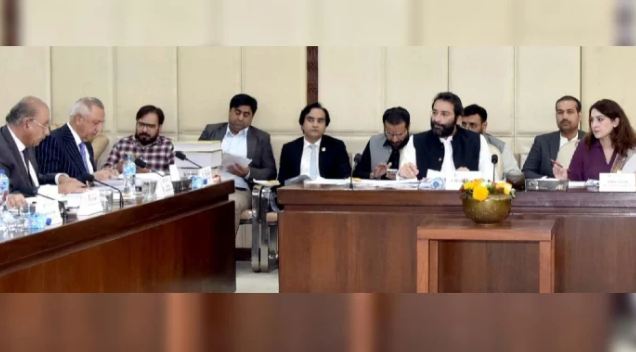
ISLAMABAD, JAN 27: The Senate Standing Committee on Interior has approved the Prevention of Electronic Crimes Act (Peca) amendment bill despite opposition from Jamiat Ulema-e-Islam-Fazl (JUI-F) and journalist organisations.

According to Geo News, during discussions on the bill, JUI-F Senator Kamran Murtaza expressed concern over the hasty approval process. “How can this bill be approved so quickly? There wasn’t enough time to read, let alone consult on it,” he remarked.

He criticised the bill for its lack of clarity, saying that the term “fake news” is undefined, raising questions on how it would be determined.

PML-N Senator Irfan Siddiqui acknowledged the concerns of journalists, saying: “It would have been better to consult journalists beforehand. However, we agree with the essence of the bill, as addressing the issue of fake news, particularly on social media, is crucial.”

The interior ministry’s secretary requested the committee to approve the bill in its current form, as passed by the National Assembly, noting that the government has introduced amendments to improve its implementation.

The National Assembly on January 23 approved the Peca (Amendment), 2025, making changes to the existing controversial law, drawing severe criticism from journalist bodies as well as the opposition.

Pakistan Federal Union of Journalists (PFUJ) Secretary General Arshad Ansari told Geo News that journalists would challenge the tweaks in the court and announced staging protests as well as boycotting assembly sessions.

The bill was approved within minutes after Federal Minister for Industries and Production Rana Tanveer Hussain presented it as the opposition parties had already staged a walkout.

This includes new definitions, the establishment of regulatory and investigative bodies, and stricter penalties for disseminating “false” information.

The government aims to lower the punishment for spreading “fake information” online to three years, according to a draft of the document, while they may also face a fine of up to Rs2 million.

“Whoever intentionally disseminates, publicly exhibits or transmits any information through any information system, that he knows or has reason to believe or has reason to believe to be false or fake and likely to cause or create a sense of fear, panic or disorder or unrest in general public or society shall be punished with imprisonment which may extend up to three years or with fine which may extend to two million rupees or with both,” Section 26A of the bill said.

The parliament’s lower house greenlighted the bill hours after journalist bodies — including the PFUJ, Association of Electronic Media Editors and News Directors, All Pakistan Newspapers Society, Council of Pakistan Newspaper Editors, and Pakistan Broadcasters Association — had rejected the proposed amendments.

Meanwhile, the newly amended bill also proposes establishment of the Social Media Protection and Regulatory Authority (SMPRA), the National Cyber Crime Investigation Agency (NCCIA) and the Social Media Protection Tribunal.

The statement of objects and reasons said that the Prevention of Electronic Crimes (Amendment) Bill 2025 aims to modernise and enhance the legislative framework for combating cybercrime in Pakistan, ensuring alignment with present-day requirements and addressing the growing complexities of cyber threats.

Furthermore, it stated, any person “aggrieved by fake and false information” can approach the authority for removal or blocking access to such information and the authority would issue orders no later than 24 hours on the request.

According to the bill, the authority should consist of a chairperson and eight other members out of which the secretary Ministry of Interior, the Pemra chairman and Pakistan Telecommunication Authority (PTA) chairman or any member of PTA. “The Chairperson and five members, other than ex-officio members, shall be appointed by the federal government for a non-extendable period of live years,” it added.

The proposed changes also stated that the authority might require any social media platform to enlist with it any manner, form and on payment of such fee as may be prescribed.

It added that apart from the requirements of the act, additional conditions or requisites as deemed appropriate might also be stipulated while enlisting a social media platform.

The bill stated that the authority would have the power to issue directions to a social media platform for removal or blocking of online content if it was against the ideology of Pakistan;

  • incites the public to violate the law, take the law into own hands, to coerce, intimidate or terrorise public, individuals, groups, communities, government officials and institutions
  • incites the public or section of the public to cause damage to governmental or private property
  • coerce or intimidate the public or section of the public and thereby prevent them from carrying on their lawful trade and disrupting civic life
  • incite hatred and contempt on religious, sectarian or ethnic basis to stir up violence or cause internal disturbance
  • contains anything obscene or pornographic in contravention of any applicable law
  • is known to be fake or false or there existed sufficient reasons to believe that the same may be fake or false beyond a reasonable doubt
  • contains aspersions against any person, including members of judiciary, armed forces, parliament or a provincial assembly
  • or promoted and encouraged terrorism and other forms of violence against the state or its institutions.

Additionally, the newly amendments also proposed the constitution of a Social Media Complaint Council to receive and process complaints made by aggrieved parties against violation of any provision of the cybercrime law.

The bill also proposed the establishment of Social Media Protection Tribunals. Each tribunal will be consisted of a chairperson qualified to be a high court judge, a journalist registered with a press club, and a software engineer.

Tribunals must resolve cases within 90 days, with appeals allowed to the Supreme Court within 60 days.

Meanwhile, it also proposed the establishment of an investigation agency to be called the National Cyber Crime Investigation Agency (NCCIA) for inquiry into, investigation and prosecution of the offences specified under this Act.

Convoy of 70 vehicles departs for Parachinar with essential supplies

Convoy of 70 vehicles departs for Parachinar with essential supplies

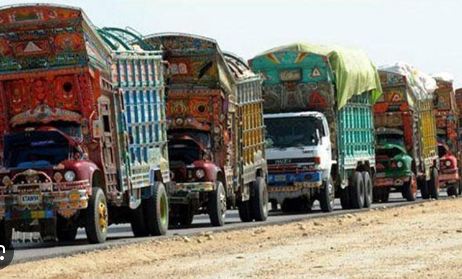
PESHAWAR, JAN 27 (APP/DNA): A large convoy of 70 vehicles carrying essential goods has been dispatched to Parachinar, with police and district administration ensuring its safety, and security forces on standby for support.

According to official reports on Monday the convoy aims at supplying Parachinar with essential food items, including flour, oil, vegetables, fruits, and other goods.

The convoy comprises 20 oil tankers and multiple trucks loaded with food and medical supplies. The route starts from Tall and will head towards Parachinar.

Authorities have vowed to deal firmly with any untoward incident.

Government sources revealed that the demolition of illegal bunkers is expected to resume today, besides renovations of damaged buildings in Bagan Bazaar. Efforts to provide financial assistance to the affected people of Kurram District are also underway.

Today’s convoy includes petroleum products, flour, sugar, fruits, vegetables, medicines, and other essentials to meet the needs of the residents.

Government officials stated that tribal elders from Lower Kurram participated in a government jirga held in Kohat the other day, while elders from Upper Kurram and Parachinar declined to attend. However, a government jirga with Upper Kurram and Parachinar leaders is expected soon.

The convoy’s security is being jointly handled by the police, district administration, and security forces. Authorities have reiterated their commitment to take strict action against any disruptions during the operation.

West Indies win Test in Pakistan for first time in 35 years

West Indies win Test in Pakistan for first time in 35 years

MULTAN: Spinner Jomel Warrican took five wickets as the West Indies won a Test match in Pakistan for the first time in nearly

Al-Shifa Trust treats 29 million patients in 30 years

Al-Shifa Trust treats 29 million patients in 30 years

RAWALPINDI, JAN 27: /DNA/ – Al-Shifa Trust Eye Hospital said on Monday that by 2050, Pakistan’s population will double, and so will the number of people confronting eye problems.

Eye problems are on the rise due to factors such as prolonged screen time, poor lifestyle habits, urbanization, and aging populations, and the government should brace to address these problems, it said.

Major. Gen. (Retd) Rehmat Khan, President of Al-Shifa Trust (AST), said that the private sector will not be able to cope with the problem of this magnitude; therefore, the government should intervene immediately.

He said that the government should upgrade the existing facilities and build state-run eye clinics at every basic health unit to provide eye treatment to patients who cannot afford costly private treatment.

He informed that a large number of people are facing digital overload, as prolonged screen time leads to digital eye strain, which causes symptoms like dry eyes, headaches, and blurred vision.

Maj. Gen. Rehmat Khan said that AST has treated 29 million patients over the last three decades, and it performs 9000 surgeries monthly at its Rawalpindi, Chakwal, Kohat, Muzaffarabad, Sukkar, and Gilgit hospitals.

He said that GB Hospital, which is under construction, is already providing services to the public lacking quality eye care. AST treats 80 percent of patients free of cost, and we run one of the widest spread outreach programs for the prevention of blindness in the country.

Throughout the year, school screenings, free eye camps, awareness campaigns, and primary eye care sessions are arranged in far-flung areas of the country.

The AST president underlined that the private sector cannot cope with the challenge of increased eye problems in the masses; therefore, the government must mobilize its resources. AST can train doctors and paramedics at its School of Ophthalmology.

He said ignorance and poverty prevent people from visiting doctors, and blindness is rising, especially among poor rural people. Eye care facilities were mostly concentrated in big cities, and in many districts and towns, there are simply no government-run eye care facilities, he added.

Gen Rehmat has said that approximately 4% of the world’s blind live in Pakistan. About 2.2 million people are completely blind; many have limited or no access to eye care.

With 90% of the world’s visually impaired living in developing countries, Pakistan is no exception to this ongoing global healthcare challenge. The combination of aging, sugar, and a growing population has significantly increased the number of people with vision impairment.

There is an enormous financial burden of vision impairment in countries such as Pakistan, which, despite making many advances in addressing eye conditions, cannot progress enough to keep pace with the growing population’s eye care needs.

Pakistan believes in One-China policy

Pakistan believes in One-China policy

ISLAMABAD, JAN 27 /DNA/ – Responding to media speculations, the spokesperson categorically rejected baseless and unfounded allegations to target Pakistan-China friendship. He reaffirmed Pakistan’s unwavering commitment to the foundational principle of the One-China Policy which is a consistent cornerstone of Pakistan’s foreign policy and remains unchanged.

The Spokesperson emphasized that China was Pakistan’s all-weather strategic partner. This relationship is characterized by mutual trust, shared values, support on issues of core concern and a commitment to regional and global stability.

Constitutional rights at stake in proposed PECA changes: JAC

Constitutional rights at stake in proposed PECA changes: JAC

KARACHI, JAN 27 /DNA/ – The Joint Action Committee of media bodies consisting of PBA, APNS, CPNE, AEMEND and PFUJ has addressed the following letter to the chairman Standing Committee of Senate on Interior apprising him on the stance of the JAC on the PECA bill.

JAC (Joint Action Committee) is a representative body of all media organizations, PFUJ, CPNE, AEMEND, APNS and PBA. The Joint Action Committee (JAC) wishes to draw your attention to the proposed amendments to the Prevention of Electronic Crimes Act (PECA) through the PECA Amendment Bill 2025. This bill, which carries significant implications for freedom of the press and freedom of expression, has been introduced without any consultation or discussion with relevant stakeholders, including media and journalist organizations.

At the very outset, it is pertinent to mention that JAC is not against the enactment of laws that regulate media in a manner consistent with democratic norms. However, the process through which this amendment is being advanced—hastily and without meaningful engagement with the stakeholders—contradicts the principles of fairness and the spirit of democracy. Such an approach erodes trust and raises serious concerns about the intent behind the bill, particularly its impact on constitutionally guaranteed rights such as freedom of expression and freedom of the press.

We believe that legislation of such importance must be shaped through a transparent, participatory process, ensuring that the concerns, objections, and suggestions of all relevant stakeholders are taken into account. Passing this law in its current form, without addressing these issues, will inevitably be seen as an attempt to stifle dissent and curtail freedoms that are guaranteed by the Constitution of Pakistan, which is neither acceptable nor justifiable in a democratic society.

Sir, we urge you to give the representatives of JAC a hearing before the committee debates the above-mentioned amendment bill. We would like to put up our serious concerns on certain aspects of this bill which seriously impede freedom of expression.

Setbacks Encountered in Trump’s Immigration Crackdown

Qamar Bashir

By: Qamar Bashir

Macomb, Detroit, Michigan

Recent developments have posed challenges to the U.S. deportation policy under President Trump’s administration. On January 24, 2025, Mexico denied permission for a U.S. military aircraft, specifically a C-17 transport plane, carrying approximately 80 deported migrants to land in the country, citing concerns over sovereignty and the treatment of deportees. Similarly, Colombia has rejected U.S. military flights carrying deported Colombian migrants, with President Gustavo Petro emphasizing the need for dignified and respectful treatment of migrants while rejecting their criminalization.

Unauthorized immigration remains a complex and multifaceted issue in the United States. As of 2022, the United States is home to approximately 12 million unauthorized immigrants. Among them, Mexico has the largest share, with an estimated 4.81 million unauthorized immigrants. Guatemala follows with 750,000, while El Salvador and Honduras account for 710,000 and 560,000, respectively. Beyond Central America, the Philippines contributes 350,000 unauthorized immigrants, Venezuela 320,000, Colombia 240,000, and Brazil 230,000. Additionally, India and China have significant unauthorized populations, with 220,000 and 210,000 individuals, respectively. Many individuals from these countries initially arrive through legal channels, such as student or tourist visas, and subsequently overstay their permitted duration, thereby becoming unauthorized residents.

The Trump administration described illegal immigration as “invasion,” highlighting that over 13,000 individuals with murder convictions, nearly 16,000 rapists and sexual predators, and more than 425,000 individuals with criminal records have entered the U.S. illegally.  Noting that drug trafficking and human trafficking affect communities nationwide, describing the situation at the southern border as a “war zone,” requiring urgent intervention. Concerns were expressed over 70,000 Afghan refugees who were brought to the U.S. without proper vetting.

According to the data over 13,000 individuals with murder convictions and nearly 16,000 rapists and sexual predators have entered the U.S. illegally. Additionally, more than 425,000 individuals with criminal records are currently residing in the country without legal authorization. Reports indicate that over 300,000 migrant children are currently unaccounted for, raising fears of trafficking and abuse.

Additionally, illegal migrants were involved in drug cartels and human trafficking, including fentanyl, illegal firearms, and large sums of cash that continue to flow across the southern border due to inadequate enforcement measures.

The Trump administration presented a robust strategy to counter illegal immigration, focusing on stronger enforcement, judicial reforms, and national security enhancements. The plan prioritizes securing the border, deporting criminal migrants, dismantling human trafficking networks, and improving transparency between federal and state agencies.

The administration is also committed to addressing the growing backlog of cases to clear the pending immigration cases, from 1.4 million to 3.5 million between 2021 and 2024, with over 340,000 asylum claims, and to investigating the status of missing migrant children and strengthening enforcement against traffickers who prey on vulnerable individuals.

Since President Trump’s inauguration, his administration has aggressively pursued its illegal immigration deportation policy. Within the first few days, U.S. Immigration and Customs Enforcement (ICE) conducted raids in multiple cities, resulting in the arrest of 538 undocumented immigrants, including individuals identified as gang members and those convicted of sex crimes against minors. Additionally, the administration’s plan to deport migrants with temporary residence permits granted during the previous administration has sparked legal and ethical debates.

However, refusals of Mexico and Colombia to reject deportation flights have given a first setback to the speed and efficiency of deportation efforts. This situation poses a challenge to Trump’s policy, forcing the U.S. to engage in diplomatic negotiations, establish clear deportation mechanisms and methodologies, and adhere to both local and international laws and protocols before implementing a unilateral deportation strategy.

The Trump administration’s policy of deporting illegal immigrants is based on both common sense and legality. While there may be justifications and counterarguments to this approach, on the touchstone of legal principles and rational policymaking, the deportation of individuals who have entered the country through illegal or shortcut means must be handled strictly in accordance with the law.

Immigration laws exist to ensure national security, economic stability, and public order, and failing to enforce them undermines the legitimacy of the legal immigration system, encourages further illegal migration, and places undue pressure on public resources.

 The responsibility lies with the countries of origin to take back their citizens with dignity and respect, establish rehabilitation centers, and provide them with the necessary support to reintegrate into their societies or apply legally for migration in the future. Ironically, many of these nations refuse to accept their own deported citizens while expecting the United States to grant them legal residency or citizenship, an approach that lacks both logical and legal justification.

While the USA has the full legal right and authority to deport these individuals, it may consider demonstrating magnanimity and compassion by ensuring that illegal immigrants are treated with dignity and respect.

Additionally, it should exercise extreme restraint in addressing this critical issue with wisdom and diplomacy, seeking appropriate diplomatic solutions rather than resorting to coercion, pressure tactics, or the use of military force to enforce its immigration policies.

A measured and strategic approach would uphold international norms, strengthen bilateral relations, and promote cooperation, ensuring that the issue is resolved in a manner that aligns with both legal principles and humanitarian values.

Moreover, the USA, as a champion and advocate of human rights and decency, bears an additional moral responsibility beyond common sense and legality toward illegal immigrants who have arrived in search of better opportunities for themselves and their families after enduring immense hardships and suffering.

Furthermore, those who are genuinely hardworking, law-abiding, and contributing to the U.S. economy and growth should be given a pathway to remain in the country, provided they meet the bare minimum legal requirements. Such an approach would not only uphold the nation’s humanitarian values but also recognize the contributions of immigrants, who play a vital role in various sectors of the economy.

By: Qamar Bashir

Press Secretary to the President (Rtd)

Former Press Minister at Embassy of Pakistan to France

Former MD, SRBC

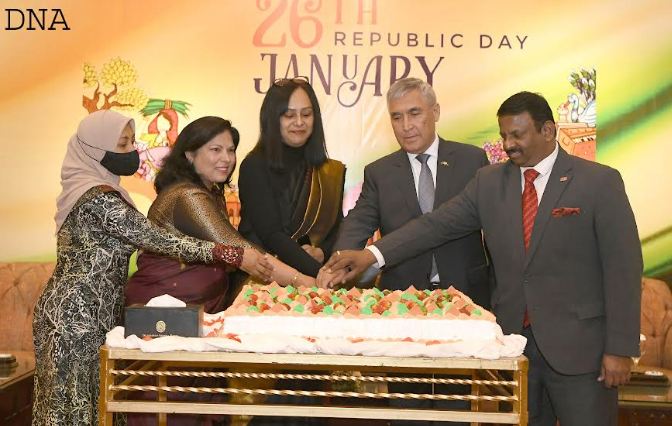
Republic Day of India celebrated in Islamabad

Republic Day of India celebrated in Islamabad

ISLAMABAD, JAN 26 /DNA/ – Republic Day commemorates the adoption of the Indian Constitution in 1950, making India a republic. The mention of Geetika Srivastava, who is the Charge d’Affaires (essentially the head of the Indian diplomatic mission) at the Indian High Commission in Islamabad, highlights her role in representing India at the event in Pakistan’s capital.

The Heads of Missions of SAARC (South Asian Association for Regional Cooperation) countries attending the event suggests a diplomatic and regional cooperation aspect to the occasion. SAARC is a regional intergovernmental organization and geopolitical union in South Asia, which includes countries like Afghanistan, Bangladesh, Bhutan, India, Maldives, Nepal, Pakistan, and Sri Lanka.

Cutting the cake is often a symbolic act at such celebrations, representing unity and festivity. It’s common for diplomats and dignitaries to gather in solidarity during important national events, even in countries where relations might be strained, as is the case with India and Pakistan.

In this instance, the event likely had both celebratory and diplomatic significance, with attendees coming together to mark India’s national day while acknowledging regional ties and cooperation. The fact that this is being reported by DNA (a prominent Pakistani news outlet) suggests an emphasis on the importance of these diplomatic gestures and their broader implications for India-Pakistan relations and regional diplomacy. DNA

Gas tariff rises to Rs. 3,500/MMBTU for captive industry from Feb 1

Gas tariff rises to Rs. 3,500/MMBTU for captive industry from Feb 1

ISLAMABAD, JAN 26: /DNA/ – The Federal Government, in response to OGRA’s determinations of SNGPL and SSGCL’s Review of Estimated Revenue Requirement for FY 2024-25, has issued advice on gas sale prices.

Effective February 1, 2025, the gas sale price for General Industry (Captive) has been revised from Rs. 3,000/MMBTU to Rs. 3,500/MMBTU.

The gas sale prices for all other consumer categories, including Domestic, Special Roti Tandoor, General Industry (Process), Commercial, CNG, Cement, Fertilizer, and Power, remain unchanged.

This revision has been officially notified in the Official Gazette and is available on OGRA’s website: www.ogra.org.pk.

Stay Connected

64FansLike
60FollowersFollow

Latest Reviews

Exchange Rates

USD - United States Dollar
EUR
1.17
GBP
1.35
AUD
0.72
CAD
0.73