Home Blog Page 694

Pakistan’s Winter Drought: A Wake-Up Call for Climate Action

Pakistan's Winter Drought: A Wake-Up Call for Climate Action

by: Muhammad Mohsin Iqbal

Pakistan is currently grappling with an alarming drought during the winter season, with rainfall significantly lower than in previous years. Traditionally, the regions of Galiyat, Malika-e-Kohsar Murree, and the northern areas are blanketed in snow by this time, but this year, they remain barren. According to the Meteorological Department, rainfall over the past three months has been critically scarce, raising serious concerns about the country’s climate patterns and environmental stability.

One of the primary reasons for the decrease in rainfall is the global phenomenon of climate change. Rising global temperatures have disrupted traditional weather patterns, leading to unpredictable and extreme weather events worldwide. Pakistan, despite contributing minimally to global greenhouse gas emissions, is one of the most climate-vulnerable countries. The melting of glaciers, erratic monsoons, and now, insufficient winter rainfall highlight the pressing impacts of this crisis. The warming atmosphere retains more moisture, altering the distribution and intensity of precipitation. This could explain why regions that previously experienced heavy snowfall are now witnessing dry spells.

Environmental pollution is another critical factor exacerbating the situation. Urbanization, industrial emissions, and vehicular pollution have significantly increased the concentration of pollutants in the atmosphere. These pollutants interfere with cloud formation and precipitation processes, further reducing rainfall. Moreover, Pakistan’s air quality has deteriorated to hazardous levels, especially in urban areas like Lahore, which not only impacts human health but also disrupts ecological balance.

Deforestation is yet another major contributor to this crisis. The large-scale cutting of trees, whether for urban development, agriculture, or timber, has disrupted the natural water cycle. Forests play a vital role in maintaining humidity levels and attracting rainfall. The loss of tree cover has not only led to soil erosion and desertification but has also reduced the ability of ecosystems to regulate weather patterns. Pakistan’s forest cover is already far below the global standard, and continued deforestation will only worsen the situation.

The recent decline in rainfall has also been linked to the growing phenomenon of droughts in Pakistan. The country has faced recurring droughts over the past five years, particularly in regions like Sindh and Balochistan, where water scarcity has become a persistent issue. The agricultural sector, which forms the backbone of Pakistan’s economy, is particularly vulnerable. Reduced rainfall impacts crop yields, threatens food security, and increases dependence on groundwater, further depleting already strained water resources.

A review of Pakistan’s weather patterns over the past five years reveals a worrying trend. Rainfall during both summer and winter seasons has become increasingly erratic, with some years experiencing devastating floods while others suffer from prolonged dry spells. This inconsistency poses a significant challenge to water management and agricultural planning. The unpredictability of monsoons and the lack of winter rains this year are clear indications that Pakistan must prioritize climate resilience and sustainable environmental practices.

To address the immediate and long-term implications of this crisis, several emergency measures must be implemented. First, a national reforestation campaign should be launched to increase forest cover, particularly in drought-prone regions. Second, water conservation practices must be promoted at all levels, from individual households to industries. Rainwater harvesting, efficient irrigation techniques, and the rehabilitation of water reservoirs can help mitigate the impact of reduced rainfall. Third, stricter regulations are needed to curb environmental pollution, including transitioning to cleaner energy sources, enforcing vehicular emissions standards, and promoting public awareness about the importance of environmental preservation.

Additionally, Pakistan must actively participate in global efforts to combat climate change. This includes honoring international commitments, such as the Paris Agreement, and advocating for financial and technical support from developed nations to enhance climate resilience. Collaboration with neighboring countries on shared water resources and regional climate strategies can also play a crucial role in addressing this crisis.

There are Quranic injunctions regarding drought and the hadiths, including the prayer of istisqa, shed light on the occurrence of rain and drought. These spiritual practices emphasize the need to turn to Allah in times of difficulty, seeking His mercy and guidance. The Quran states, “And We send down blessed rain from the sky and bring forth thereby gardens and grain from the harvest” (Surah Qaf 50:9). This verse highlights Allah’s mercy in providing rain as a blessing and a source of sustenance. Another verse declares, “He causes it to reach whom He wills of His servants” (Surah Ar-Rum 30:48), emphasizing that rainfall is entirely under Allah’s control.

The hadith also addresses the significance of rain and the response to drought. The Prophet Muhammad (peace be upon him) performed the prayer of istisqa during times of drought, supplicating for Allah’s mercy and rain. In one narration, he said, “O Allah, give us rain, a beneficial rain, a rain that will bring water, life, and prosperity” (Sunan Abu Dawood). These teachings remind us of the spiritual dimension of drought and the importance of collective repentance and prayer.

The current drought and its associated challenges may also be seen through a spiritual lens. Many in Pakistan believe that natural disasters and climate anomalies are a reflection of divine displeasure, urging humanity to reflect on its actions. The Quran emphasizes the importance of being custodians of the earth, and neglecting this responsibility can lead to dire consequences. It is, therefore, essential for individuals and communities to adopt environmentally responsible behaviors while seeking forgiveness and guidance from Allah.

Pakistan stands at a critical juncture in its history, where environmental challenges threaten not only its economy but also the well-being of its citizens. The ongoing drought serves as a stark reminder of the need for urgent action to address climate change, environmental degradation, and water scarcity. By adopting sustainable practices, strengthening climate resilience, and fostering a sense of collective responsibility, Pakistan can navigate these challenges and ensure a stable and prosperous future for generations to come.


PTCL Introduces Industry-First WhatsApp-Based Bill Payment Solution in Pakistan

PTCL Introduces Industry-First WhatsApp-Based Bill Payment Solution in Pakistan

DNA

ISLAMABAD, JAN 28: Pakistan Telecommunication Company Limited (PTCL), the country’s largest ICT services provider, has partnered with PayFast, a State Bank of Pakistan-licensed Payment Service Provider (PSP), to launch for the first time an innovative bill payment solution via WhatsApp. This cutting-edge service enables PTCL customers to view and pay their bills directly through WhatsApp, representing a major step forward in digital customer service for Pakistan’s telecom industry.

The official signing ceremony for the launch was held at PTCL Headquarters in Islamabad, with senior leaders from PTCL, eOcean and PayFast in attendance. This collaboration allows customers to choose from a variety of payment methods, including major banks and popular mobile wallets. The seamless integration of this service is powered by eOcean, a leading cloud communication service provider.

To complete a payment, customers have to enter their CNIC and account number, verify the transaction via OTP on their registered mobile numbers, and receive an instant receipt within the chat. In addition to bill payments, the PTCL WhatsApp bot offers features designed to improve the customer experience. PTCL’s WhatsApp bot not only facilitates bill payments but also offers a range of customer-centric features designed to enhance convenience. These include real-time troubleshooting for service issues, bill inquiries, tax certificate retrieval, and the ability to subscribe to additional services like Flash Fiber bolt-ons.

Syed Atif Raza, Group Chief Commercial Officer, PTCL & Ufone 4G, stated, “The WhatsApp-based bill payment solution aligns with our digital transformation strategy, aimed at enhancing customer convenience and delivering top-notch services. PTCL is proud to pioneer this solution in Pakistan through a partnership with PayFast, setting a new benchmark in the industry for customer experience. We are committed to streamlining interactions for our valued customers and making digital transactions as simple as possible.”

PayFast’s CBO – Mahwish Saad Khan stats, “Our partnership with PTCL is a pivotal milestone in redefining digital payment experiences in Pakistan. By integrating PayFast’s reliable and user-friendly payment solutions with PTCL’s WhatsApp bot, we are making transactions easier and more secure than ever. Together, we are fostering a culture of digital innovation to empower customers nationwide with accessible payment options.”

Adding to the conversation, Altaf Siddiqui, Director of Products, eOcean, commented, “WhatsApp chatbots offer transformative potential for telecommunication providers by enabling instant top-ups and personalized customer support at scale. With WhatsApp’s unmatched reach and adaptability, it seamlessly aligns with user preferences, making it an ideal platform for PTCL to enhance customer interactions and ensuring swift service delivery.”

The launch of WhatsApp bill payments marks another significant step in PTCL, eOcean and PayFast’s joint commitment to transforming customer interactions and advancing digital innovation in telecom sector, playing a pivotal role in building a digitally empowered Pakistan.

NAHE successfully completes Tier-II training for Associate Professors from Sindh, Balochistan

NAHE successfully completes Tier-II training for Associate Professors from Sindh, Balochistan

ISLAMABAD, JAN 28 /DNA/ – National Academy of Higher Education (NAHE), Higher Education Commission (HEC) Pakistan successfully concluded its two-week National Faculty Development Programme Tier-II (Associate Professors) of public sector Universities of Sindh and Balochistan at the HEC Regional Centre, Karachi. This programme, designed to be a transformative initiative, aimed to equip faculty members with the skills to serve as Trainers of Trainers (TOT), enabling them to enhance their roles as professional educators and trainers across Pakistan.

Mr. Nazeer Hussain, Director General HEC Regional Centre, Karachi, warmly welcomed Prof. Dr. Zia ul Qayyum, Executive Director, HEC and participants. He applauded NAHE and her team for their dedication and efforts, which were instrumental in the program’s success.

The Chief Guest, Prof. Dr. Zia Ul-Qayyum, Executive Director of HEC, praised NAHE for launching this impactful programme. He expressed that NAHE is implementing the Faculty Development Programme in three tiers. Tier-3 (Lecturer & Assistant Professor) training is already been successfully conducted in various universities across the country. Now, Tier-2 (Associate Professor) has been introduced to empower faculty members to become master trainers, ensuring the cascading of knowledge and skills throughout academic institutions.”

The Executive Director emphasised the importance of the cascading process, where trained participants will disseminate the acquired knowledge and skills within their respective universities. He reaffirmed HEC’s commitment to fostering academic excellence nationwide and congratulated NAHE on the successful execution of its training programmes.

During the closing ceremony, participants shared their feedback, highlighting the program’s effectiveness in promoting professional development. The event concluded with the distribution of certificates to the participants.

Taliban Dismiss Academicians on Religious Grounds

Taliban Dismiss Academicians on Religious Grounds

By Shamim Shahid

PESHAWAR: The Taliban, currently governing Afghanistan in their second term, have initiated the removal of university academicians based on religious affiliations, replacing them with less qualified individuals across the country.

In a recent development, at least 30 senior, highly qualified academicians have been dismissed from two prominent universities in Afghanistan. These include 16 professors from Syed Jamal Ud Din Afghani University in Asadabad, Kunar Province, and 14 from Sheikh Zahid University in Khost Province. Notably, both Kunar and Khost border Pakistan.

Since assuming control of Afghanistan on August 15, 2021, the Taliban have systematically targeted various sectors of government for political victimization. In addition to security personnel, police, and intelligence officers, academicians have become a primary target. While some academics managed to flee the country before the Taliban solidified their power, many were not as fortunate. Numerous professors, including women, were detained, faced forced disappearances, or became victims of targeted killings. Consequently, the majority of academics abandoned their posts, paving the way for the Taliban to appoint their own affiliates.

Sources inside Afghanistan revealed that a religious group played a significant role in supporting the Taliban’s takeover of Kabul. In return, individuals from the that school of thought were initially rewarded with key positions in government institutions, including universities. However, over time, the Taliban have begun removing these individuals as well, citing various reasons.

The sources further highlighted that the vacancies left by the dismissal of highly educated academicians are being filled by individuals loyal to the Taliban, many of whom lack proper qualifications.

The Taliban justify these actions as being in accordance with Islamic Sharia, a claim they frequently use to defend their policies.

Trump’s $8 Trillion Deportation Dilemma

Qamar Bashir

By: Qamar Bashir

Macomb, Detroit, Michigan

Colombia collapsed under the wrath of the U.S. President after facing intense pressure. Initially refusing to accept deported illegal immigrants, Colombia reversed its stance when President Trump threatened a 25% tariff increase on Colombian exports. Although the Colombian President initially retaliated with threats of similar countermeasures, he ultimately relented, conceding not only to accept deportees but also to shoulder the transportation costs. In a further display of submission, Colombia went beyond mere compliance, sending its presidential plane to fetch its deported citizens, thereby relieving the U.S. of the financial burden of their repatriation.

Trump celebrated his first victory following his aggressive posture by issuing an official statement through the President’s Press Secretary. The bold and assertive message, reproduced below, underscores the might of the United States and the vulnerability of other nations:

“The Government of Colombia has agreed to all of President Trump’s terms, including the unrestricted acceptance of all illegal aliens from Colombia returned from the United States, including on U.S. military aircraft, without limitation or delay. Based on this agreement, the fully drafted IEEPA tariffs and sanctions will be held in reserve and not signed unless Colombia fails to honor this agreement. Today’s events make it clear to the world that America is respected again. President Trump will continue to fiercely protect our nation’s sovereignty, and he expects all other nations of the world to fully cooperate in accepting the deportation of their citizens illegally present in the United States.”

This declaration had a transformative effect, leading all other nations, who had initially reacted fiercely, to eventually comply. Mexico, following Colombia’s lead, not only agreed to take back its own citizens but also accepted deportees from other countries. As of January 27, 2025, Mexico has received over 4,000 deportees, primarily Mexican nationals but also some non-Mexican migrants, marking a significant shift in its immigration stance.

India fell in line even before Colombia and Mexico. It announced its full agreement with Trump’s immigration policy but with a logical condition—it demanded a verified list of illegal immigrants to confirm their citizenship status before repatriation.

Brazil, though accepting all 88 deportees who arrived on a U.S. Air Force plane in handcuffs and shackles, strongly objected to the treatment of its citizens. The flight, originally bound for Belo Horizonte, made an unscheduled landing in Manaus due to technical issues. Upon landing, the handcuffs deportees were immediately removed and were transferred to a Brazilian Air Force plane to complete their journey with dignity and safety.

Guatemala has taken a cooperative stance toward U.S. deportation policies, accepting multiple deportation flights, including those on U.S. military aircraft. Recently, a flight carrying 64 deportees landed in Guatemala, marking the third such arrival since these flights began.

Encouraged by the success of Trump’s fierce, resolute, and decisive actions, law enforcement agencies across the country have intensified operations, expanding raids and increasing deportation efforts, signaling a new era of strict immigration enforcement.

On January 23, coordinated operations by U.S. Immigration and Customs Enforcement (ICE) in cities including Boston, Denver, Philadelphia, Atlanta, Seattle, Miami, Washington, D.C., New York City, and Newark resulted in the arrest of 538 undocumented immigrants. On January 27, nearly 1,000 individuals were arrested in a single day across at least 12 cities, including Chicago, Denver, Austin, and Los Angeles. The administration has also rescinded policies that previously limited enforcement actions in sensitive locations like schools and churches, allowing for a broader scope of operations.

Despite this development, the scale of deportation remains immense. This monumental operation demands extensive planning, international cooperation, and sustained execution, highlighting the complexity of large-scale immigration enforcement and the enormous challenges that lie ahead.

The cost of executing the deportation of over 12 million undocumented immigrants from the United States would be exorbitant, with an estimated price tag of $3 trillion. This expense includes law enforcement deployment, detention facility expansion, legal processing, transportation via chartered flights and buses, and diplomatic coordination with receiving countries. Given the sheer scale, the operation would require around 12 years to complete, necessitating massive logistical efforts, increased immigration court capacities, and international agreements.

Deporting 12 million undocumented immigrants over 12 years would have a devastating economic impact on the United States, costing the economy trillions of dollars in lost productivity, tax revenue, and workforce contributions. According to the Center for Migration Studies, mass deportation could shrink U.S. GDP by 1.4% in the first year alone, resulting in a cumulative loss of $4.7 trillion over a decade. Undocumented immigrants make up 5% of the U.S. labor force, with critical roles in agriculture, construction, and hospitality; their removal would trigger severe labor shortages, pushing wages higher and raising production costs, ultimately driving up consumer prices.

Additionally, many undocumented workers contribute to Social Security and Medicare without receiving benefits; their deportation would reduce these contributions, further straining these social programs.

The housing market would also face instability, as 1.2 million mortgages are held by households with undocumented immigrants, potentially leading to a surge in foreclosures and declining property values. Overall, the cost of deportation extends far beyond the estimated $3 trillion in direct expenses, as the long-term economic repercussions would disrupt key industries, destabilize financial markets, and hinder overall economic growth.

It would be naive to assume that the Trump administration had not carefully considered both the direct costs of mass deportation and its broader economic impact. However, these concerns appeared to be secondary to larger objectives such as enforcing immigration laws, addressing national security risks, and responding to societal anxieties. One key rationale behind the administration’s aggressive deportation policy was the belief that certain undocumented populations posed security threats, particularly in light of global extremism. With U.S. foreign policies deeply entangled in regions like the Middle East, Afghanistan, Iran, North Korea, Russia, and China, fears arose that individuals from these areas might be susceptible to radicalization. Mass deportation was thus framed as a preventive measure to mitigate potential threats before they materialized. Beyond security concerns, the policy also seemed to target public perceptions of safety in American neighborhoods. Many communities, particularly those with predominantly white populations, expressed unease over demographic shifts and rising crime rates, often linking undocumented immigrants to social instability. This sentiment was echoed by the Vice President in a recent interview, where he highlighted how many Americans felt increasingly unsafe in their own neighborhoods due to unchecked immigration. The reason could be job losses for the USA citizens, wage suppression, and the strain on social services.

Ultimately, the Trump administration’s approach was likely shaped by a combination of national security concerns, societal anxieties, efforts to preserve American culture and norms, and political strategy, with economic considerations playing a lesser role, making it a deeply complex and multifaceted initiative.

By: Qamar Bashir

Press Secretary to the President (Rtd)

Former Press Minister at Embassy of Pakistan to France

Former MD, SRBC

CS’s administrative skills, good governance, acumen lead province towards improvement

CS's administrative skills, good governance, acumen lead province towards improvement

As Balochistan continues on its path toward development, the lessons learned from Shakeel Qadir Khan’s leadership can serve as a blueprint for other regions facing similar challenges. By building on this foundation and sustaining the momentum, Balochistan has the potential to emerge as a model of inclusive and sustainable development in Pakistan

Mumtaz Ahmed Bhatti


Balochistan, the largest province of Pakistan by area, has long grappled with profound developmental and administrative challenges. From governance issues to a stark lack of infrastructure, the province has often been perceived as lagging behind other regions in the country. However, a transformative wave of change has emerged following the appointment of Shakeel Qadir Khan as the Chief Secretary of Balochistan on August 18, 2023. His visionary leadership, tireless efforts, and unwavering commitment to public service have illustrated how effective governance can tackle systemic issues and guide a region toward sustainable development.

Historically, Balochistan has faced a wide array of challenges, including inadequate infrastructure, limited access to basic services, and inefficiencies in the public sector. The province’s vast geographical expanse and sparse population add further complexity to policy implementation and project execution. Additionally, corruption and a lack of accountability have undermined public trust in government institutions, compounding the sense of marginalization felt by many citizens.

Administrative head in such an environment requires not only strong managerial skills but also patience, strategic thinking, and the ability to inspire and mobilize teams. Shakeel Qadir Khan’s tenure as Chief Secretary has been marked by a concerted effort to address these deep-rooted challenges and pave the way for a more effective and transparent administration.From his very first day in office, Shakeel Qadir Khan exhibited an unwavering commitment to addressing the needs of the people of Balochistan. Recognizing the importance of government offices as the primary interface between citizens and the state, he prioritized improving their environment and ensuring that public servants treat citizens with respect and dignity.

This shift in attitude has begun to rebuild trust between the government and the people, laying the foundation for more productive interactions.One of the significant misconceptions about Balochistan has been the belief that development projects exist only on paper, with little to no tangible impact on the ground. Projects that did materialize were often criticized for their substandard quality. Under Shakeel Qadir Khan’s leadership, these perceptions have started to change.

His administration has focused on ensuring that development projects are not only visible but also meet high-quality standards. One of the most notable achievements of Shakeel Qadir Khan’s administration has been the enhancement of basic public services. Access to clean drinking water, a long-standing issue in Balochistan, has significantly improved.

Through strategic planning and collaboration with relevant departments, his administration has ensured the provision of safe and clean water to more communities across the province. Similarly, sanitation systems in major cities have seen noticeable upgrades, contributing to improved public health and a cleaner urban environment.

The quality of development projects in sectors such as communications, public health, irrigation, and local government has also shown marked improvement. Shakeel Qadir Khan has emphasized the importance of accountability and transparency in project execution. Engineers, contractors, and officials are now held to higher standards, ensuring that public funds are used effectively and efficiently.

This focus on quality has set a new benchmark for future projects and has instilled confidence among citizens in the government’s ability to deliver.A key aspect of Shakeel Qadir Khan’s governance philosophy is his zero-tolerance approach to inefficiency and corruption. Under his leadership, immediate and effective action is taken against officers, engineers, and other officials who fail to perform their duties or engage in corrupt practices, regardless of their influence or connections. This approach has created a culture of accountability, motivating public servants to perform their roles with diligence and integrity.Shakeel Qadir Khan’s success can also be attributed to his ability to build and lead a cohesive team. Secretaries, commissioners, deputy commissioners, and officials from various departments have worked collectively under his guidance to address the province’s challenges. This collaborative approach has not only improved inter-departmental coordination but has also enhanced the overall effectiveness of governance in Balochistan.

While the progress under Shakeel Qadir Khan’s guidance is commendable, it is essential to recognize that Balochistan’s challenges are deeply rooted and systemic in nature. Long-term solutions require sustained efforts and a comprehensive strategy that addresses the underlying causes of underdevelopment.Infrastructure remains a critical area of focus for Balochistan’s development. Improved road networks, reliable electricity, and access to education and healthcare facilities are essential for enhancing the quality of life for the province’s residents.

Shakeel Qadir Khan’s administration has made strides in initiating infrastructure projects, but continued investment and oversight are necessary to ensure their successful completion.Shakeel Qadir Khan’s tenure as Chief Secretary of Balochistan has been a beacon of hope for a province long plagued by challenges.

His leadership has demonstrated that with dedication, strategic planning, and a commitment to accountability, it is possible to address even the most entrenched issues. While much work remains to be done, the progress achieved so far is a testament to the transformative power of effective governance.

As Balochistan continues on its path toward development, the lessons learned from Shakeel Qadir Khan’s leadership can serve as a blueprint for other regions facing similar challenges. By building on this foundation and sustaining the momentum, Balochistan has the potential to emerge as a model of inclusive and sustainable development in Pakistan.

Ambassador of Morocco calls on PM Shehbaz

Ambassador of Morocco calls on PM Shehbaz

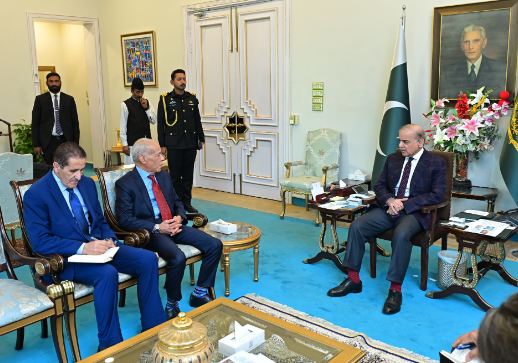
ISLAMABAD, JAN 27 /DNA/ – Ambassador of the Kingdom of Morocco, Amb. Mohamed Karmoune, paid a courtesy call on Prime Minister Muhammad Shehbaz Sharif at the Prime Minister House, earlier today.

During the meeting, the Prime Minister expressed Pakistan’s deep appreciation to the King of Morocco, His Majesty King Muhammad VI and the Government of Morocco for the support extended in rescuing stranded Pakistanis who survived the recent boat capsizing off the coast of Dakhla. He thanked the local Moroccan authorities for extending their full cooperation to the Pakistani officials involved in repatriation of the survivors as well as the remains of those deceased.

While recalling the excellent historic and brotherly ties between Pakistan and Morocco, the Prime Minister said there was a need to strengthen trade and investment cooperation between the two countries. He recalled the great affection and goodwill between the peoples of the two countries and emphasized upon fostering more people-to-people contacts.

The Ambassador of Morocco reaffirmed his country’s commitment to further strengthen cooperation with Pakistan across all areas of shared interest. He assured the Prime Minister that he would continue to work closely with Pakistani side to explore new avenues of mutually beneficial collaboration. The two sides are working closely to convene meetings of the institutional consultative mechanisms, including Bilateral Political Consultations at an early date.

Japanese envoy calls on PM Shehbaz

Japanese envoy calls on PM Shehbaz

PM expresses desire to further strengthen Pak-Japan trade, investment ties

Saifullah Ansar

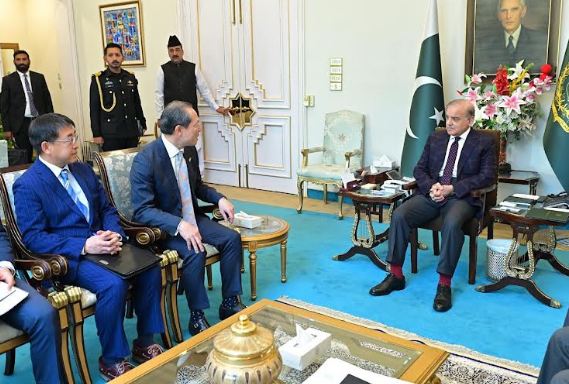
ISLAMABAD: Ambassador of Japan to Pakistan Akamatsu Shuichi, paid a courtesy call on Prime Minister Muhammad Shehbaz Sharif at the Prime Minister House on Monday and discussed matters of mutual interest.

During the meeting, the Prime Minister said Pakistan and Japan enjoyed friendly ties, which was evident by the tremendous goodwill that existed among the people of both countries towards each other. He recalled the excellent history of bilateral cooperation and appreciated Japan’s support for Pakistan’s economic and industrial development efforts. The Prime Minister expressed Pakistan’s desire to further strengthen trade and investment cooperation with Japan.

The ambassador of Japan reiterated his country’s commitment to supporting Pakistan’s development goals and promoting bilateral cooperation in various fields. While observing that last year Japan had celebrated 70 years of Overseas Development Assistance (ODA) to Pakistan, the ambassador said Japan was keen to continue its partnership in Pakistan’s development.

Finance minister reviews progress of PM’s committee on IT export remittances

Finance minister reviews progress of PM’s committee on IT export remittances

ISLAMABAD, JAN 27: /DNA/ – Federal Minister for Finance and Revenue, Senator Muhammad Aurangzeb, chaired another meeting of the Prime Minister’s Committee on IT Export Remittances today at the Finance Division. The meeting focused on reviewing the preliminary findings of the working group and formulating next steps to enhance the flow of IT export remittances.

The meeting was attended by Minister of State for IT & Telecom Ms. Shaza Fatima Khawaja, Secretary IT, Special Secretary IT, CEO Pakistan Software Export Board (PSEB), and senior officers from the Finance Division and IT Ministry.

The Finance Minister appreciated the working group’s preliminary report and proposed expanding its scope by including representatives from the Pakistan Banking Association as well. To streamline efforts, the committee decided to form two sub-working groups dedicated to Taxation and Banking, which will work towards resolving key barriers and simplifying remittance processes for IT exporters and freelancers.

The Finance Minister underscored that currency stability has played a pivotal role in enhancing remittances and stressed the importance of policy continuity and consistency. He emphasized the need to counter misconceptions about restrictions on companies’ financial operations, noting that there are no limitations on transferring money in or out of the country. Bridging this perception gap through targeted communication and awareness campaigns was highlighted as a priority.

The committee also discussed incentivizing IT companies based on their performance to encourage growth and competitiveness. Leveraging tools like the Roshan Digital Account and creating domestic payment solutions for global remittance facilitation were reiterated as vital measures to empower IT professionals and freelancers.

Participants decided that the sub-working groups would submit a consolidated report in the next meeting, with the final comprehensive report to be presented to the Prime Minister by the end of March 2025.

Reaffirming the government’s commitment, the Finance Minister urged all stakeholders to work collectively, address challenges, and establish Pakistan as a leading player in the global IT export industry.

APNS extends awards submission deadline to Feb 3

APNS extends awards submission deadline to Feb 3

KARACHI, JAN 27 /DNA/ – The All Pakistan Newspapers Society  has extended the last date of submission of entries for APNS Advertising Awards and APNS Journalist Awards from January 27, 2025 to February 03, 2025.

Mr. Sarmad Ali, Secretary General, APNS has stated that the date has been extended on the request of journalists and advertising agencies to enable maximum participation in the contest of APNS awards.

The Secretary General, APNS has advised all the prospective participants to positively submit their entries by February 03, 2025.

Stay Connected

64FansLike
60FollowersFollow

Latest Reviews

Exchange Rates

USD - United States Dollar
EUR
1.17
GBP
1.35
AUD
0.72
CAD
0.73