Home Blog Page 691

The Spirit of Ramadan and the Harsh Realities of Inflation in Pakistan

The Spirit of Ramadan and the Harsh Realities of Inflation in Pakistan

by Muhammad Mohsin Iqbal

Ramadan Mubarak is not far from us, and as the blessed month approaches, Muslims in Pakistan and around the world prepare to observe the fast with devotion and respect. Considered the month of mercy and forgiveness, this holy month is eagerly awaited by over two billion Muslims around the world. It provides believers with an opportunity to purify their souls, seek Allah’s mercy, and strengthen their faith through prayer, charity, and self-control. The importance of Ramadan is deeply rooted in Islamic teachings, as stated in the Quran: “O you who have believed! Fasting has been prescribed for you as it was prescribed for those before you, that you may become righteous.” (Surah Al-Baqarah 2:183). The Prophet Muhammad (peace and blessings of Allah be upon him) also emphasized the importance of fasting, saying: “Whoever fasts the month of Ramadan out of faith and in the hope of reward from Allah, all his previous sins will be forgiven.” (Sahih Bukhari).
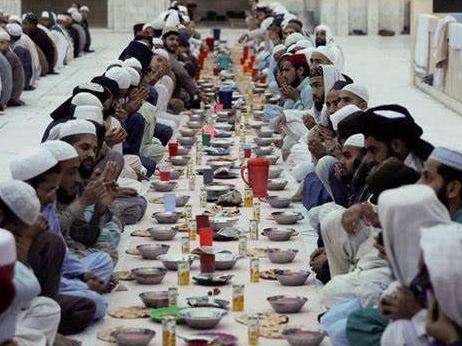
In many Islamic nations, as well as in non-Muslim countries with considerable Muslim populations, special provisions are made to ensure the ease of fasting for all. Governments and charitable organizations work in unison to offer essential commodities at reduced prices, allowing individuals from all social classes to partake in this sacred observance without undue hardship. Markets extend significant concessions on food and beverages, and alms are distributed among the impoverished. However, the reality in Pakistan stands in stark contrast to this ideal. Though special Ramadan bazaars are established in every city, ensuring affordability and quality remains an elusive goal.

It has long been observed that, as Ramadan approaches, the prices of fundamental necessities experience an unjustified surge. Certain merchants, driven by avarice, engage in the unscrupulous practice of hoarding goods—particularly fresh fruits and beverages—only to release them at exorbitant rates once the holy month commences. Dates, bananas, apples, and other such essentials, indispensable for the Iftar meal, become almost unattainable for the common man. This merciless price inflation leaves the consumer helpless.The distress is heightened when parents, compelled by their children’s innocent desires for a wholesome Iftar, find themselves struggling to procure even the most basic sustenance.

The grievous irony is that a month devoted to piety and self-restraint is tarnished by economic exploitation. Where fasting is intended to cultivate patience, gratitude, and compassion for the less fortunate, the unethical pursuit of profit in Pakistan runs counter to these very tenets. Elsewhere in the Muslim world, governments undertake rigorous measures to ensure that traders do not take undue advantage of the heightened demand. In the Kingdom of Saudi Arabia and the United Arab Emirates, stringent price regulations are enforced, with heavy penalties imposed upon those found guilty of hoarding or price manipulation. Similarly, in Turkey and Malaysia, Ramadan is a period of extensive welfare programs, wherein food aid is dispensed generously, and essential commodities are made available at significantly reduced prices. Even in certain non-Muslim countries, particularly in Western lands where Muslims reside in great numbers, supermarkets launch special Ramadan campaigns to make foodstuffs more affordable.

Despite repeated declarations by the Pakistani authorities to curb inflation during Ramadan, the situation remains unchanged year after year. Market committees and consumer protection bodies prove ineffective, while merchants continue to exploit the absence of stringent oversight. At times, frustrated citizens have endeavored to launch fruit boycotts as a means of protest, yet such efforts have borne little fruit. It is imperative that the state enforces robust price control mechanisms, meting out exemplary punishments to hoarders and profiteers. If other nations, both Muslim and non-Muslim, can successfully regulate their markets during Ramadan, there is no plausible reason why Pakistan should be unable to do the same.

In addition to price regulation, ensuring the provision of wholesome food is of paramount importance. It is all too common that substandard or adulterated goods infiltrate the markets during this sacred month, endangering public health. Authorities must take uncompromising action against those who peddle inferior merchandise. Yet Ramadan should not be reduced to a mere matter of economic management; it must, above all, be a period of spiritual and social refinement. The government, private sector, and civil society must collectively endeavor to restore the true spirit of Ramadan—one of honesty, generosity, and communal welfare.

A peculiar trend is also witnessed in Pakistan wherein numerous businessmen, particularly those engaged in trade and commerce, capitalize on the month’s soaring prices, only to embark upon a journey to the Holy Hijaz for the final ten days of Ramadan. While there is great virtue in spending the last nights of the month in the sacred precincts, one cannot help but question whether such individuals, who have contributed to the economic burden of the masses, truly fulfill the spirit of this hallowed period. If those who hold dominion over the supply chains of essential commodities devoted themselves to ensuring the welfare of the people rather than amassing wealth, the observance of Ramadan in Pakistan would be far more dignified and rewarding for all.

Ramadan in Pakistan ought to be a time of solemn reflection and moral rectitude, not one marred by avarice and exploitation. While the citizens of this land continue to exhibit extraordinary generosity through almsgiving and communal Iftars, it remains the duty of the state and the mercantile class to uphold their responsibilities. If economic policies are aligned with the true essence of Ramadan, and the principles of fairness, compassion, and justice are upheld, then this sacred month shall truly become a period of both material relief and spiritual elevation for all Pakistanis.
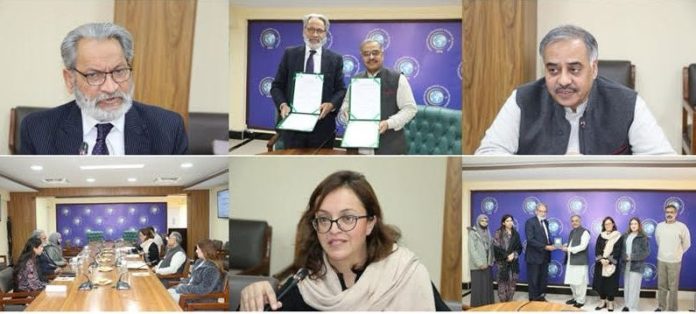
ISSI, SPRC sign MoU to boost Intra-Regional Trade Research

ISSI, SPRC sign MoU to boost Intra-Regional Trade Research

ISLAMABAD, JAN 31 /DNA/ – The Institute of Strategic Studies Islamabad (ISSI) has formalized a partnership with the Social Protection Resource Centre (SPRC) by signing a Memorandum of Understanding (MOU). The MOU aims to enhance collaboration in research and policy dialogue, with a special focus on intra-regional trade, economic integration and connectivity. The MOU was signed by Ambassador Sohail Mahmood, Director General ISSI, and Dr. Safdar Sohail, Executive Director SPRC.

Speaking on the occasion, Ambassador Sohail Mahmood underscored ISSI’s commitment to foster collaboration with think-tanks and research institutions with niche area specialization like the SPRC. He underlined that such partnerships are mutually-advantageous, enabling both the sides to bring together their strengths, and produce fruitful inputs for relevant stakeholders. He proposed a joint study focused on regional trade frameworks, particularly keeping in view the importance of economic integration. Despite existing commitments, intra-regional trade remains at a low level due to myriad of factors including political, economic and technical. He highlighted the importance of organizations such as SAARC, ECO, and D-8 in this context. Similarly, he stressed the need for devoting more focused attention to India-Pakistan trade matters with a view to evaluating the relevant issues on the basis of facts and data, and bringing clarity to the public discourse.

Dr. Safdar Sohail welcomed the formalization of ISSI-SPRC relationship. He echoed Ambassador Sohail Mahmood’s recommendations and proposed organizing a conference centered on the two sides’ areas of study. He emphasized the significance of ECO and SAARC in fostering economic integration and suggested scrutinizing existing loopholes to formulate timely recommendations. Additionally, he advocated for presenting knowledge stored in old formats in new and innovative formats in view of the technological transformation and latest means of communication.

Earlier in the event, Dr. Neelum Nigar, Director of the Centre for Strategic Perspectives at ISSI, provided an overview of ISSI and its five Centres. The event concluded with a series of collaborative recommendations from both teams, reaffirming their commitment to facilitating informed policy-making and enhancing public awareness regarding intra-regional trade and economic collaboration frameworks.

What is difference between Dec 16, May 9 civilians

May 9 civilians

Justice Mandokhail says preventing terrorism and gathering evidence are administration’s tasks

Special Correspondent

ISLAMABAD: The Supreme Court’s Justice Hasan Azhar Rizvi has stressed the need for reforms not only in the anti-terrorism court but also in all other courts for the improvement of the judiciary.

The remark came during the hearing of the intra-court appeal against the trial of civilians in military courts, by a seven-member constitutional bench of the apex court on Friday.

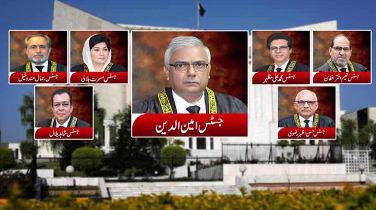
The bench, headed by Justice Aminuddin Khan — comprising Justice Jamal Khan Mandokhail, Justice Muhammad Ali Mazhar, Justice Hasan Azhar Rizvi, Justice Musarrat Hilali, Justice Naeem Akhtar Afghan, and Justice Shahid Bilal — questioned the distinction between civilians involved in the May 9 riots and those responsible for the December 16 attacks.

Khawaja Ahmad Hussain — the counsel for former chief justice Jawad S Khawaja — who opposed the military trials, presented arguments in today’s hearing.

He said that civilians do not fall under military trials. The counsel also clarified that he is not entirely challenging the Army Act but only a specific aspect of it. He pointed out that Justice Muneeb Akhtar had also referred to the same argument in his verdict.

At this, Justice Jamal Khan Mandokhail said that there was a dispute over different possibilities in the FB Ali case.

“Nowadays, there is also a viewpoint that if a political party engages in such actions, what should be done,” he remarked, recalling his observation from yesterday’s hearing where he had mentioned the Mehran Base attack and a few other incidents.

Justice Hilali said that the court was convinced during the previous hearing that military trials ensure a fair trial. This was when she asked about the difference between the individuals involved in the May 9 riots and the attack on Army Public School, Peshawar, on December 16, 2014.

In response, Hussain stated that the individuals involved in the APS attack were linked to acts of terrorism. He explained that an amendment had to be made to facilitate their trials, after which the accused were prosecuted.

The lawyer further said that the Pakistan Army Act applies to civilian employees of the armed forces.

At this point, Justice Rizvi questioned, “Does the Army Act apply to those who attack airbases?”

Responding to the query, Hussain referred to the Inter-Services Public Relations’ (ISPR) statement regarding the May 9 incidents. He noted that the military’s media wing had issued a statement on May 15, 2023, about the events of May 9. He clarified that he had no objection to the statement but highlighted that it expressed grief and sorrow within the institution over the incident. The statement also mentioned the presence of undeniable evidence regarding the May 9 events.

“How can a fair trial be ensured in a military court after such a statement?” he asked.

The lawyer emphasised that their case is not beyond the Constitution. He said that the May 9 suspects should be prosecuted, but not in military courts, arguing that an “affected party cannot ensure a fair trial.”

Chairman CDA meets World Bank team in Islamabad

Chairman CDA meets World Bank team in Islamabad

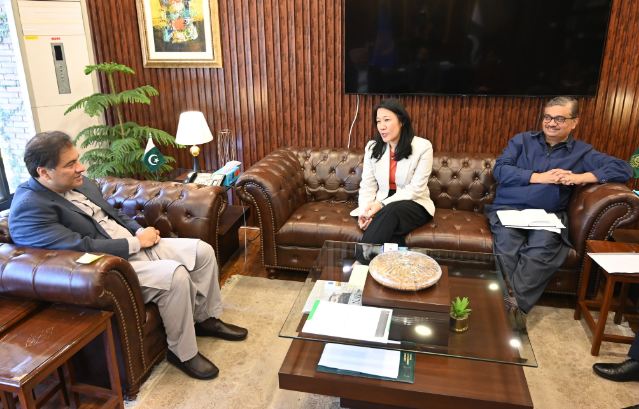
ISLAMABAD, JAN 31 /DNA/ – Chairman Capital Development Authority (CDA), Muhammad Ali Randhawa, held a meeting with the World Bank’s Senior Disaster Risk Management Program Specialist, Lesley Y. Cordero, and her team on Friday at the CDA Headquarters.

The Member Environment along with the senior CDA officers were also present during the meeting. The primary focus of the discussion was to address the issue of smog and take steps to improve the air quality and environment in Islamabad.

Chairman Muhammad Ali Randhawa emphasized the need for issuing a reliable Air Quality Index (AQI) to guide the citizens of Islamabad. Various measures and proposals were also discussed to improve the AQI and mitigate the adverse effects of air pollution.

Chairman CDA stressed the importance of taking practical steps to tackle the causes of smog before the smog season begins. The meeting also highlighted the urgency of controlling smoke-emitting vehicles, with a decision to ensure that all vehicles in Islamabad possess fitness certificates.

Chairman CDA underscored the adoption of a zero-tolerance policy against vehicles contributing to smog. He also highlighted that electric buses have been introduced in Islamabad to provide eco-friendly transportation for the city’s residents. This initiative is seen as a significant step toward improving the city’s environment.

Chairman CDA called for strengthening the partnership with the World Bank to combat air pollution and stated that a comprehensive tree plantation campaign this year aims to curb air pollution effectively. He urged the World Bank to provide technical support in obtaining carbon credits for these environmental initiatives.

Moreover, Chairman CDA requested the World Bank’s support in establishing a Carbon Credit Cell in CDA. Lesley Y. Cordero assured the World Bank’s full cooperation in improving Islamabad’s air quality and addressing smog-related issues. She also expressed her willingness to assist CDA in preparing short-term, medium-term, and long-term plans to enhance the city’s environment.

Chairman Muhammad Ali Randhawa reiterated the commitment to leveraging the World Bank’s technical expertise and experience to tackle environmental challenges effectively and ensure a healthier environment for the citizens of Islamabad.

Governor oversees MoU signing of Technical Resource Centre

Governor oversees MoU signing of Technical Resource Centre

LAHORE, JAN 31 (DNA) — Governor Punjab Sardar Saleem Haider Khan oversaw the signing of a memorandum of understanding (MoU) on Friday for establishing a Technical Resource Centre (TRC) in Jund, Attock during a ceremony, held at the Governor’s House.

The TRC Jund will be established in collaboration between University of Engineering and Technology (UET) Taxila and Virtual University (VU) with Huawei as technical partner. Vice Chancellor UET Taxila Prof. Dr. Muhammad Inayatullah Khan, Rector Virtual University Prof. Dr. Arshad Saleem Bhatti and ticket-holder (PP Jund) Syed Atif Hussain Shah Gillani were present.

The TRC, an initiative of the Punjab governor, aims to provide technical education in the fields of computer engineering and sciences to students from far-flung areas of the Punjab including Attock and Jund.  Sardar Saleem Haider Khan said at the ceremony youth were an asset to the country and they should be imparted skills-based education.

 He said educational institutions should not produce job seekers but self-employed youth. He said that establishment of a campus in Attock’s Tehsil Jund is a positive step from which not only the youth of Punjab province, but also of Khyber-Pakhtunkhwa would benefit. He said that all possible support would be provided for establishment of the campus in Jund.

The governor regretted that Attock (Jund) was deprived of projects like education, public health and public welfare despite being in proximity of the federal capital. He said more programmes of modern education would be announced in Jund very soon.

 He said that in the 1960s and 1970s, the world appreciated Pakistan’s education system, but today the neighboring countries were far ahead of the country in the field of education and health. He said “we must rise above our vested interests and bring about improvement in these sectors”. —DNA

Al-Qaeda is the mothership of all terrorist groups in Pakistan

Al-Qaeda is the mothership of all terrorist groups in Pakistan

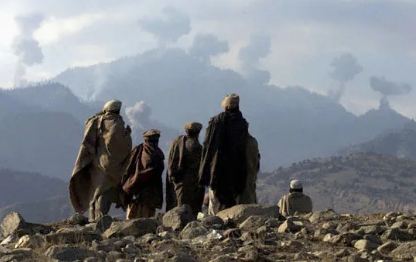
ISLAMABAD, JAN 31: /DNA/ – Iftikhar Firdous, the editor and founder of The Khorasan Diary, emphasized that al-Qaeda continued to be the leading force behind terrorism in Pakistan, in a discussion hosted by the Institute of Regional Studies (IRS) here on Friday.

Explaining the role of al-Qaeda offering ideological, logistical, and operational assistance to numerous militant groups, he underscored that while military actions had diminished al-Qaeda’s immediate threat, its strategic impact remained significant, influencing the tactics and goals of not only associated groups such as al-Qaeda in the Indian Subcontinent (AQIS) but also the Tehrik-i-Taliban Pakistan (TTP).

In a concerning development, Mr. Firdous informed that the TTP was emerging as a quasi-governance entity, strategically shaping its narrative by weaponizing public and bureaucratic discourse within Pakistan. He stated that by amplifying voices and opinions already present in society, TTP was attempting to legitimize its ideology and further entrench its influence. He added that the group used Pashtun nationalist themes and, in recent years, Baloch content to spread its message. Mr Firdous shared that the TTP also spoke out on natural disasters and public injustices in Pakistan, claiming to speak for the people while manipulating these crises for its ideological goals.

The talk also explored al-Qaeda’s influence in radicalization, especially by means of its propaganda, with digital platforms being misused to disseminate extremist narratives, recruit militants, and orchestrate attacks. He added that the year 2021 proved to be a catalyst for the Taliban in Afghanistan, with TTP leveraging its presence in Pakistan to bolster its operations and influence. This shift, according to him, underscored the group’s evolving approach, using a blend of ideological, ethnic, and socio-political narratives to reinforce its standing in the region.

Regarding Pakistan’s counterterrorism strategy, the speaker underscored the necessity of intelligence-based operations, diplomatic engagements, and policy measures to develop a balanced approach to effectively counter al-Qaeda and TTP’s influence. Mr Firdous emphasized that a strategic mix of these elements was essential in addressing the evolving threats posed by terrorist organizations. However, he cautioned against the inclusion of civil society or local communities in counter-terrorism efforts, arguing that such involvement had historically led to unintended consequences and further instability rather than sustainable security solutions. Moreover, the speaker noted that one could not overlook India’s potential involvement in the propaganda of these terrorist organizations against Pakistan, suggesting that its role, whether direct or indirect, warrants further scrutiny. In his concluding remarks, President IRS Ambassador Jauhar Saleem called for a holistic response toward counter-terrorism in the country focusing more on empowerment of its citizens in the border areas through better governance and rule of law, provision of social justice, and redressal of public grievances as an integral part of its counter-terrorism strategy.

OGRA reveals per kg LPG price increase of Rs. 3.68

OGRA reveals per kg LPG price increase of Rs. 3.68

ISLAMABAD, JAN 31 /DNA/ – The Oil and Gas Regulatory Authority (OGRA) has notified the maximum Price of LPG, effective February 01 2025, as under;

Notified LPG Producer prices Rs. / Ton Rs / 11.8 kg Cylinder
February-2025 ( w.e.f  01-02-2025)     212,672.542,509.54
January -2025      208,984.432,466.02
Increase / (Decrease)         3,688.11               43.52
   
Notified LPG Consumer prices Rs. / Ton Rs / 11.8 kg Cylinder
February-2025 ( w.e.f  01-02-2025)      253,972.542,996.88
January -2025       250,284.432,953.36
Increase / (Decrease)         3,688.11            43.52

2.  The LPG price Notification for the month of February 2025 is readily available at OGRA website www.ogra.org.pk.

3. The LPG producer price is linked with Saudi Aramco-CP and US$ dollar exchange rate. As compared to previous month Saudi Aramco-CP has increased by 1.6%. The average Dollar exchange rate has slightly increased by 0.19% resulting to increase in LPG consumer price by Rs.43.52/11.8 kg cylinder (1.47%). The per Kg increase in LPG consumer price is Rs.3.68

OGRA reveals per Kg LPG price increase of Rs. 3.68

OGRA reveals per Kg LPG price increase of Rs. 3.68

ISLAMABAD, JAN 31 /DNA/ – The Oil and Gas Regulatory Authority (OGRA) in accordance with the Policy Guidelines of the Federal Government has determined the maximum price of Liquified Petroleum Gas (LPG) effective from February 1st, 2025 as under:

Notified LPG Producer prices      Rs. / Ton              Rs / 11.8 kg Cylinder

February-2025 ( w.e.f  01-02-2025)                212,672.54      2,509.54

January -2025         208,984.43      2,466.02

Increase / (Decrease)             3,688.11                     43.52     

Notified LPG Consumer prices   Rs. / Ton              Rs / 11.8 kg Cylinder

February-2025 ( w.e.f  01-02-2025)                 253,972.54     2,996.88

January -2025          250,284.43     2,953.36

Increase / (Decrease)            3,688.11                  43.52

The LPG producer price is linked with Saudi Aramco-CP and US$ dollar exchange rate. As compared to previous month Saudi Aramco-CP has increased upto 1.6%. The average Dollar exchange rate has slightly increased by 0.19% resulting to increase in LPG consumer price by Rs.43.52/11.8 kg cylinder (1.47%). The per Kg increase in LPG consumer price is Rs.3.68. The LPG price notification for the month of August, 2024 is readily available at OGRA website www.ogra.org.pk.

Champions Trophy: Gaddafi Stadium to be inaugurated on Feb 7, confirms PCB chief

Champions Trophy: Gaddafi Stadium to be inaugurated on Feb 7

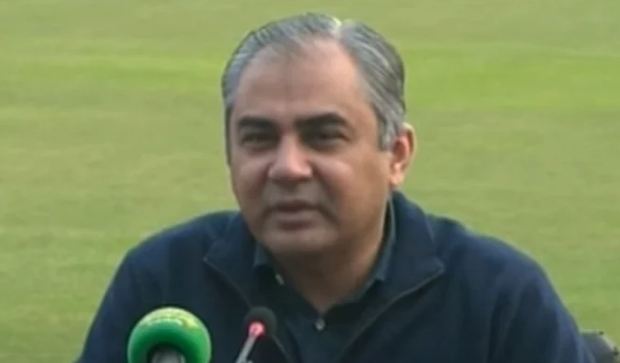
LAHORE, JAN 31: Pakistan Cricket Board (PCB) Chairman Mohsin Naqvi on Friday confirmed that newly renovated Gaddafi Stadium Lahore and National Stadium Karachi would be inaugurated on February 7 and February 11, respectively ahead of the highly-anticipated ICC Men’s Champions Trophy 2025.

“Lahore stadium is going to be inaugurated on February 7, God willing,” Naqvi told the media at the Gaddafi Stadium.

The chairman added that inauguration of Lahore’s stadium will be done by Prime Minister Shehbaz Sharif whereas Karachi’s will be done by President Asif Ali Zardari.

The chairman added that the stadium’s renovation is at the last stages with workers giving it final touch ups and 100% work will be completed before February 7.

“Construction and renovation of Gaddafi Stadium was promised to be completed on January 31,” he said adding that the work at the historical stadium began in October last year.

Play Video
As for the opening ceremony of the event, the chairman of the national cricketing body stated that it will be held on February 16 in cooperation with the International Cricket Council (ICC).

Naqvi also confirmed that India and Chairman ICC Jay Shah have been invited for the opening ceremony of the marquee event however, “Jay Shah’s participation in the commemoration of the event is not confirmed”.

“We are completely prepared for Champions Trophy,” Naqvi assured and added that Pakistan’s squad for the event will be announced soon.

“We trust the selection team, a good team will be selected,” he added.

Talking about the international players from the seven other participating nations, Naqvi said that they will be welcomed and the PCB alongwith other teams, is working day and night for the security and other arrangements of the incoming international teams.

The eight-team tournament, comprising 15 matches, will run from February 19 to March 9, across three venues — Karachi, Lahore and Rawalpindi — in Pakistan and Dubai.

The eight teams are divided into two groups. Group A features Pakistan, India, New Zealand and Bangladesh, while Group B is consisted of Afghanistan, South Africa, England and Australia.

Hosts Pakistan will take on New Zealand in the curtain raiser on February 19 in Karachi, while the blockbuster clash between arch-rivals Pakistan and India is scheduled for February 23 in Dubai.

Pakistan will host a total of 10 matches, while four matches, including all three of India’s group-stage matches and the first semi-final, will be played in Dubai.

The final of the Champions Trophy is scheduled to be played in Lahore but if India qualifies then it will be held in Dubai.

Sindh Tourism Minister inaugurates Ethiopian Embassy Pavilion at Pakistan Travel Mart

Sindh Tourism Minister inaugurates Ethiopian Embassy Pavilion

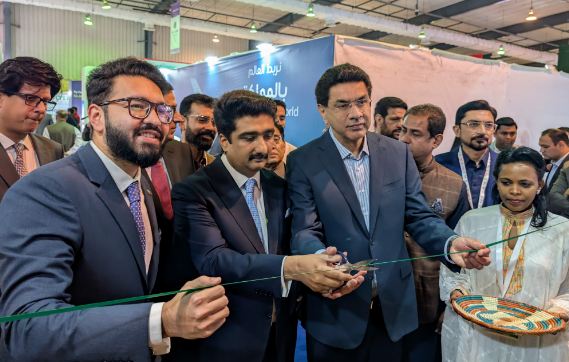
KARACHI, JAN 31: /DNA/ – Minister of Sindh for Culture, Tourism, Antiquities and Archives Syed Zulfiqar Shah on Friday inaugurated the exclusive Tourism Pavilion of the Embassy of the Federal Democratic Republic of Ethiopia (PTM) at the Pakistan Travel Mart 2025 (PTM) in Karachi.

H.E. Ibrahim Khalid Tawab, Honorary Consul of the FDR Ethiopia in Karachi, along with the Embassy’s staff received the Minister upon his arrival at the pavilion.

Speaking on the occasion, the Minister praised thriving tourism industry of Ethiopia under the leadership of H.E. Dr. Abiy Ahmed, Prime Minister of the FDR Ethiopia.

The establishment of the Ethiopian Pavilion at the Pakistan Travel Mart is a reflection of flourishing bilateral relations between the two countries, the Minister remarked.

Honorary Consul Ibrahim Khalid said the FDR Ethiopia and the Islamic Republic of Pakistan enjoyed strong bilateral relations based on mutual respect and shared values.

The Ethiopian Embassy in Islamabad has established its pavilion at the PTM for up to February 2nd to represent its diverse culture, centuries old traditions and thriving tourism industry completely transformed on modern lines by H.E. Dr. Abiy Ahmed.  

The PTM is an annual tourism event in Pakistan where multiple countries and organizations participate to promote themselves and their products.

Stay Connected

64FansLike
60FollowersFollow

Latest Reviews

Exchange Rates

USD - United States Dollar
EUR
1.17
GBP
1.35
AUD
0.72
CAD
0.73