Home Blog Page 686

Saudi Arabia reaffirms firm stance: No ties with Israel without Palestinian state

Saudi Arabia, in swift response to Trump, says no ties with Israel without Palestinian state

          RIYADH, Feb 05 (DNA): The Saudi Ministry of Foreign Affairs on Wednesday affirmed that the Kingdom’s position on the establishment of a Palestinian state is firm and unwavering.

The ministry, in a statement, said Crown Prince and Prime Minister Mohammed bin Salman bin Abdulaziz Al Saud, clearly and unequivocally has reaffirmed this stance during his speech at the opening of the first session of the ninth term of the Shura Council on September 18, 2024. He emphasized that Saudi Arabia will continue its relentless efforts to establish an independent Palestinian state with East Jerusalem as its capital, and will not establish diplomatic relations with Israel without that.

The crown prince also reiterated this firm position during the extraordinary Arab-Islamic Summit held in Riyadh on November 11, 2024. He stressed the continuation of efforts to establish a Palestinian state based on the 1967 borders with East Jerusalem as its capital, demanding an end to the Israeli occupation of Palestinian lands. He also urged more peace-loving countries to recognize the State of Palestine, and emphasized the importance of mobilizing the international community to support the Palestinian people’s rights, as expressed in United Nations (UN) General Assembly resolutions, recognizing Palestine’s eligibility for full UN membership.

According to the statement, the Kingdom of Saudi Arabia (KSA) also reaffirms its unequivocal rejection of any infringement on the legitimate rights of the Palestinian people, whether through Israeli settlement policies, land annexation, or attempts to displace the Palestinian people from their land. “The international community has a duty today to alleviate the severe humanitarian suffering endured by the Palestinian people, who will remain steadfast on their land and will not move from it.”

The KSA emphasizes that this unwavering position is non-negotiable and not subject to compromises. Achieving lasting and just peace is impossible without the Palestinian people obtaining their legitimate rights in accordance with international resolutions, as has been previously clarified to both the former and current United States administrations.

UNHCR and IOM concerned about recent developments requiring Afghans to leave Pakistan’s capital

UNHCR and IOM concerned about recent developments requiring Afghans to leave Pakistan’s capital

From Shamim Shahid

ISLAMABAD, FEB 5: /DNA/ – The UNHCR, the UN Refugee Agency and IOM, the International Organization for Migration, are concerned about recent developments requiring Afghan nationals in Pakistan to relocate from Islamabad Capital Territory (ICT) and Rawalpindi or else face deportation. The two agencies are seeking clarity over the modality and timeframe of this relocation. 

While UNHCR and IOM recognise that states may choose to limit freedom of movement for foreigners, including refugees, we jointly urge the Government of Pakistan to implement any relocation measures with due consideration for human rights standards, including due process, and the legal status of Proof of Registration (POR) and Afghan Citizen Card (ACC) holders, who have resided in Pakistan for an extended period of time. The uncertain timeframe to plan for a dignified move is compounding a stressful situation, not to mention the immediate impact of such a move on livelihoods and the education of children. 

Since 1 January 2025, an uptick in arrests of Afghan nationals in the ICT and Rawalpindi has caused significant distress, with reports of Afghan nationals of various documentation status being rounded up. More than 800 Afghan nationals, among them women and children, have been deported so far this year from Islamabad and Rawalpindi alone. This latest relocation directive has increased fears of imminent deportation among Afghans in the capital region.

A UNHCR-issued non-return advisory has been in place since 2021, calling for a suspension of forced returns of Afghan nationals from any country regardless of their status. UNHCR and IOM are especially concerned for Afghan nationals who may face a risk of harm upon return, such as ethnic and religious minorities, women and girls, journalists, human rights activists, and members of artistic professions like musicians and others. 

“Pakistan has a proud tradition of hosting refugees, saving millions of lives. This generosity is greatly appreciated,” noted UNHCR Representative Philippa Candler. “Forced return to Afghanistan could place some people at increased risk. We urge Pakistan to continue to provide safety to Afghans at risk, irrespective of their documentation status.”

UNHCR and IOM understand the challenges the Pakistan Government has been facing, in particular those related to security.  Refugees, like all others, have obligations to abide by the laws of Pakistan. The overwhelming majority of Afghan nationals in Pakistan are law abiding individuals, whose situation needs to be seen through a humanitarian lens.

“IOM is committed to work with the Government of Pakistan and UNHCR to develop a mechanism to register, manage and screen Afghan nationals in Pakistan,” underlined IOM Chief of Mission, Mio Sato. “This will open the door to tailored solutions including international protection to those in need and pathways for Afghan nationals, with long-standing socioeconomic and family ties in the country.” 

Karzai pay tributes to Karim Agha Khan 

Karzai

Shamim Shahid 

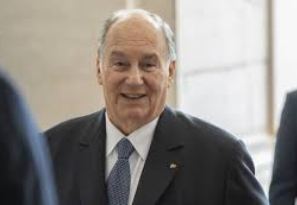
PESHAWAR: Former President of Afghanistan Hamid Karzai while showing concern over sad demise of Prince Karim Agha Khan, termed it a great loss to people from all over third world countries especially Afghanistan.

Through a condolence message on Wednesday, Hamid Karzai States, ” The death of His Highness Prince Karim Agha Khan; the religious Imam of the Ismailian of the world is considered a great loss, I express my deepest condolences and sympathy to his family, relatives and followers.” 

He further states, ” we belong to Allah and to Him we shall return. The people of Afghanistan will remember the valuable services and role of His Highness Prince Karim Agha Khan in providing public services and rebuilding the country, repairing historical buildings and building service and cultural facilities.

” May God have mercy on the deceased and go to heaven, and I pray for patience and reward for their survivors.”

COAS vows unwavering support for IIOJK people on Kashmir Day

COAS vows unwavering support for IIOJK people on Kashmir Day

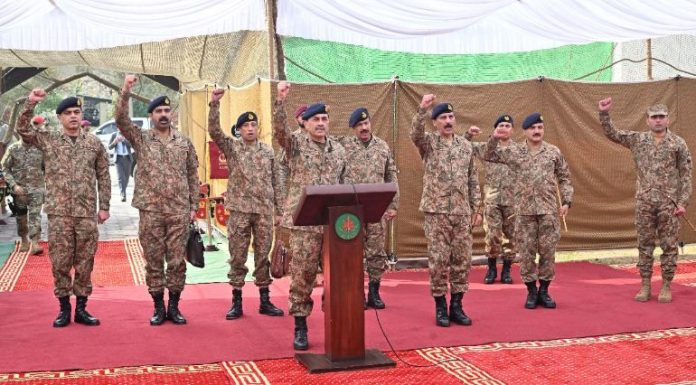
RAWALPINDI, FEB 5: /DNA/ – Chief of Army Staff (COAS), General Syed Asim Munir, NI (M), visited Muzaffarabad, where he paid homage to the sacrifices of the martyrs. Upon arrival at the Jammu and Kashmir Monument, he laid floral wreath at the Martyrs’ Monument and offered rich tributes to the unparalleled sacrifices of the Shuhada.

While paying homage to the martyrs of Kashmir, COAS also commended the unwavering dedication, professional excellence, and combat readiness of the deployed officers and soldiers in the face of challenging operational conditions in Kashmir. He lauded their high morale and vigilance, emphasizing the importance of maintaining peak operational preparedness to deter and counter any hostile provocations.

The COAS expressed complete confidence in the battle readiness of the Armed Forces, and reaffirmed that no act of aggression would go unanswered and underscored Pakistan Army’s commitment to defend the nation’s sovereignty and territorial integrity with full resolve.

Later COAS interacted with the notables and veterans of Kashmir and reiterated Pakistan’s steadfast support for the people of Indian Illegally Occupied Jammu & Kashmir (IIOJK). COAS stated that Indian atrocities and rising Hindutva extremism only strengthens the resolve of Kashmiri people in their struggle for self-determination. He reaffirmed that Pakistan will always stand by them in their just and legitimate cause against state-sponsored repression and oppression. He remarked: “Without any doubt Kashmir will be free one day and part of Pakistan as per the free will and destiny of the people of Kashmir”.

Earlier, upon arrival, COAS was received by the Commander Rawalpindi Corps.

Pat Cummins out? Australia faces major blow ahead of Champions Trophy

Pat Cummins out? Australia faces major blow ahead of Champions Trophy

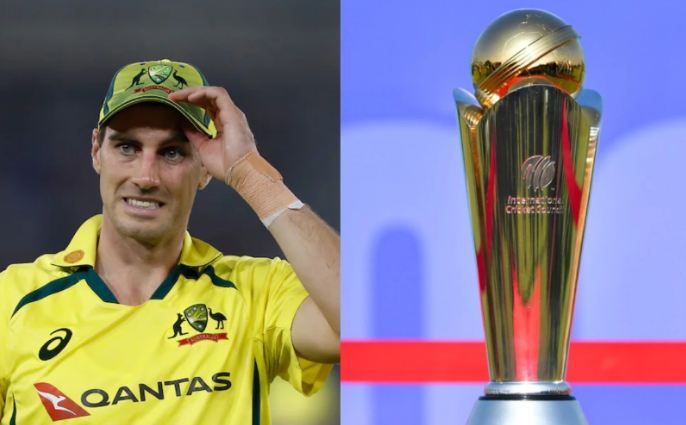
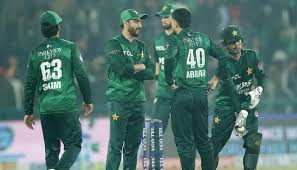
Australia’s participation in the upcoming Champions Trophy has been dealt a significant blow with skipper Pat Cummins “heavily unlikely” to feature in the tournament due to an ongoing ankle injury.

Cummins, who had opted out of the Test series in Sri Lanka for the birth of his second child, has been unable to resume bowling after his injury worsened following Australia’s Test series win over India last month.

“Pat Cummins hasn’t been able to resume any type of bowling so he’s heavily unlikely,” McDonald told Australian radio station SEN. “So that would mean that we do need a captain. Steve Smith and Travis Head are the two that we’ve been having conversations with while we’ve been building out that Champions Trophy team.”

In another setback, fast bowler Josh Hazlewood remains doubtful for the ODI tournament as he continues his recovery from side and calf injuries. Hazlewood missed three of the five Tests against India and was also absent from the Sri Lanka tour.

A final decision on his participation will be made in the coming days once further medical assessments are completed.

Australia has already suffered a major loss, with all-rounder Mitchell Marsh ruled out of the tournament due to a back injury.

The Champions Trophy, set to begin on February 19, will be co-hosted by Pakistan and the United Arab Emirates.

Meanwhile, in Test cricket, Australia has released young batter Sam Konstas from the squad ahead of the second Test against Sri Lanka. The 19-year-old, who made a promising debut against India at the Melbourne Cricket Ground with a brisk 60 on Boxing Day, was dropped for the first Test against Sri Lanka in Galle.

Travis Head moved up from the middle order to take his place, scoring 57 in Australia’s dominant innings and 242-run victory. A team spokesperson confirmed that Konstas would return home to play for New South Wales in the Sheffield Shield against Queensland in Brisbane.

“Konstas has been released from the Australian squad to play his first match at the Gabba and gain further experience at the venue,” the spokesperson said on Wednesday.

The Gabba will host the second Ashes Test against England in December, and team management hopes the experience will benefit Konstas ahead of future assignments.

Head expects the youngster to rejoin the Test squad for the World Test Championship final against South Africa at Lord’s in June.

“Most likely, I’ll go back in the middle order and Sam will open,” Head told reporters in Galle.

Australia will look to complete a 2-0 series sweep against Sri Lanka when the second Test begins in Galle on Thursday.

U.S. recognizes China as an equal power

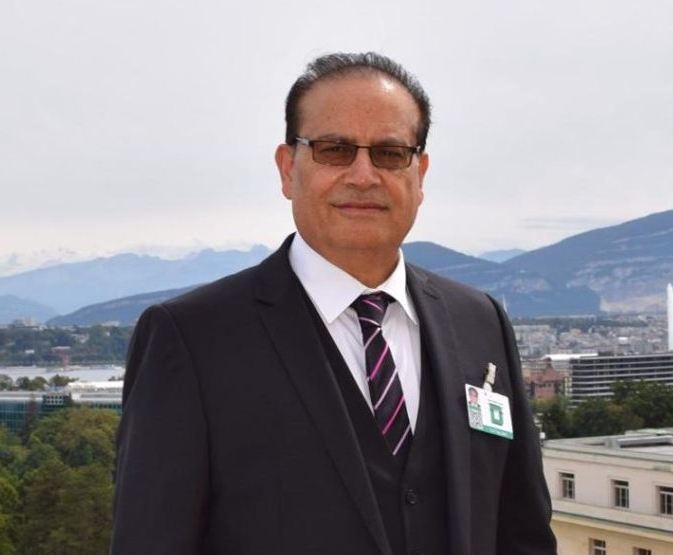
Qamar Bashir

By: Qamar Bashir

Macomb, Detroit, Michigan

While China has imposed retialory tariff from 10% to 15% on the US imports, for the first time in U.S. history, Secretary of State Marco Antonio Rubio openly acknowledged that China is a great power and is poised to provide global leadership in the near future. He recognized China as the largest trading partner of the United States and likely to remain so for the foreseeable future. Unlike the traditionally hawkish stance of many U.S. lawmakers, Rubio outlined a more measured and pragmatic approach to managing China’s rise, focusing on strategic containment rather than outright confrontation.

Rubio further emphasized that the future of the 21st century will be largely defined by the relationship between the United States and China. While acknowledging China’s economic growth and global influence, he warned against allowing it to dominate entire regions or monopolize essential industries such as manufacturing, energy, critical minerals, and medicine. Dependence on China for these sectors, he argued, would weaken America’s self-sufficiency and national security, making it imperative to prevent Beijing from gaining control over key industries like telecommunications and the automobile sector.

Rather than suppressing China’s influence, Rubio advocated for a balanced and fair global order where U.S. independence and strategic interests are not compromised. He underscored the need for economic diversification, domestic industrial strengthening, and global partnerships to counterbalance China’s rising dominance.

Rubio also acknowledged China’s legitimate right to pursue its national interests, just as the U.S. does, signaling a shift from the confrontational rhetoric notably, while Canada and Mexico faced 25% tariffs, tariffs on China were limited to 10%, suggesting a carefully measured approach that considers China’s strategic importance in global trade and economic stability.

Rubio  rejected the notion of taking control of panana Canal by the USA, and adopted a conciliatory tone, by saying that he is a diplomat and believe in resolving the outstanding issues by diplomatic means and rather than using kinetic force. Though he expressed concern that Chinese-linked companies controlling key entry points could violate treaty terms and disclosed that the Panana leadership will seriously consider withdrawal from the China’s Belt and Road Initiative and would initiate  legal processes required for further changes to keep the canal open, free, and free from foreign influence that could pose risks to U.S. security, but striking a diplomatic tone made it clear that while direct U.S. operational control of the canal is not the immediate goal, decisive action is necessary to prevent any foreign power from using the canal strategically against American interests.

Regarding foreign aid, Rubio dismissed concerns that China would fill the gap left by the freezing of USAID funds, asserting that China has the right to pursue its policies as it sees fit. However, he questioned why the U.S. should fund initiatives that do not align with its national interests. He emphasized that U.S. taxpayer money should not be spent on programs that do not strengthen America’s security, economy, or strategic standing.

On trade policies, Rubio acknowledged that China acts in its national interest and, if allowed to take advantage of the U.S., would continue to do so. The U.S., he asserted, must ensure fairness in economic relations and not allow China to maintain an unfair advantage. While this stance may face criticism in political and media circles, he noted that millions of Americans recognize the logic behind ensuring economic reciprocity with China.

Rubio’s remarks reflected a shift from aggressive confrontation to strategic recalibration in managing U.S.-China relations. He emphasized the need for economic and strategic independence while acknowledging China’s global influence. His approach suggests a nuanced policy—one that seeks to establish a balanced relationship with China while safeguarding American interests through economic diversification, fair trade practices, and strategic policy adjustments.

The U.S. approach to tariffs on China, imposed on February 4, 2025, was notably cautious compared to what many observers had anticipated. While a 10% tariff was applied to all Chinese imports, amounting to $427 billion in goods and generating an estimated $42.7 billion in duties, this was significantly lower than the straight 25% tariff imposed on imports from Canada and Mexico. The disparity in tariff rates suggests a measured approach toward China, likely aimed at maintaining economic stability and avoiding excessive disruption to global trade.

In retaliation, China imposed tariffs on U.S. exports valued at approximately $20 billion, which appeared more symbolic than economically damaging. These measures included a 15% tariff on U.S. coal and liquefied natural gas (LNG) and a 10% tariff on crude oil, agricultural machinery, and vehicles.

While these tariffs target key U.S. industries, they remain limited in scope compared to the broader U.S. tariffs on Chinese goods. This exchange of tariffs reflects a strategic balancing act, where both nations are asserting their economic positions while avoiding full-scale trade escalation.

The approach adopted by Secretary of State Marco Rubio is both commendable and strategically sound. Following President Trump’s return to office, there were widespread concerns that the U.S. would adopt an aggressively confrontational stance toward China, potentially escalating global tensions. However, Rubio’s measured and pragmatic approach has reassured the international community, signaling that the U.S. is opting for strategic engagement rather than outright hostility.

If Rubio’s statements accurately reflect the stance of President Trump, it suggests a significant shift in U.S. policy—one that acknowledges China as an equal partner, respects its economic and military strength, and moves away from a policy of obstruction toward one of competitive coexistence.

This approach is not a sign of weakness but rather a recognition of geopolitical realities. The U.S. is asserting its national interests while allowing China to do the same, a principle fundamental to global diplomacy.

By refraining from aggressively opposing China’s rapid rise and instead focusing on maintaining a fair and balanced global order, the U.S. is fostering an environment conducive to economic progress and stability.

This shift has the potential to accelerate global development, benefiting not only the U.S. and China but also the rest of the world. If this pragmatic policy is consistently applied, it could mark the beginning of a new era of economic cooperation and strategic competition—one that prioritizes national interests without undermining global peace and progress.

By: Qamar Bashir

Press Secretary to the President (Rtd)

Former Press Minister at Embassy of Pakistan to France

Former MD, SRBC

Pakistan marks Kashmir Solidarity Day with nationwide rallies, protests

Pakistan marks Kashmir Solidarity Day with nationwide rallies, protests

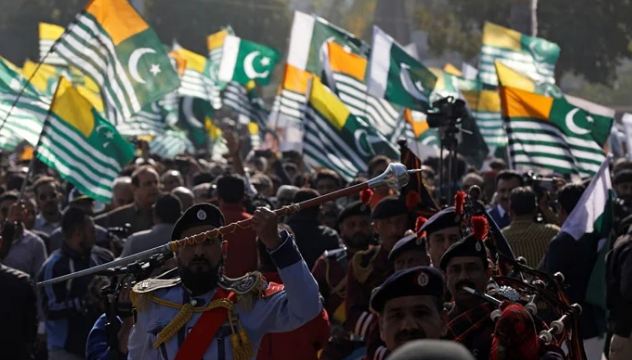
ISLAMABAD: Pakistan is observing Kashmir Solidarity Day today (Wednesday) to express unwavering support for the Kashmiri people’s struggle for self-determination as promised in the United Nations’ resolutions.

The day is marked by a public holiday every year on February 5, with solidarity walks taking place across the country and Azad Jammu and Kashmir (AJK).

Pakistan stands in solidarity with the people of Indian Illegally Occupied Jammu and Kashmir (IIOJK), with a renewed commitment to their just struggle for freedom from Indian subjugation.

In Islamabad, a rally is set to be held at Constitution Avenue. At 10am, sirens will sound, and a minute of silence will be observed in tribute to Kashmiri martyrs.

Posters and billboards highlighting the plight of Kashmiris have been placed at key locations, including airports and railway stations.

In Muzaffarabad, the AJK Legislative Assembly will hold a special session to express solidarity with those in Indian Illegally Occupied Kashmir (IIOJK).

Human chains will be formed at Mangla, Kohala, Bararkot, Azad Pattan, and Holar, symbolising unity between Pakistan and AJK. A special function will take place at Mangla Bridge in Mirpur, with similar events planned in Kotli and Bhimber districts.

In his message on Kashmir Solidarity Day, President Asif Ali Zardari said this day reminds the international community of its responsibility towards the oppressed Kashmiri people.

He said the United Nations should honour the promises made to the Kashmiris 78 years ago and support their struggle for their right to self-determination.

On the occasion, Prime Minister Shehbaz Sharif said the government and people of Pakistan annually observed the ‘Kashmir Solidarity Day’ to renew their steadfast support to the Kashmiri people’s just and legitimate struggle for realising their right to self-determination.

He said that in the interest of durable peace in South Asia, the international community should urge India to allow the Kashmiri people to freely determine their own future as a lasting peace could not be achieved by suppressing the genuine aspirations of the local people.

“The recent developments in the Middle East showed that the long-standing disputes should not be allowed to fester,” the prime minister said in a message on Kashmir Solidarity Day.

A statement issued by the PM Office quoted PM Shehbaz as saying: “The right to self-determination is a fundamental principle of international law. Every year, the UN General Assembly adopts a resolution that stresses the legal right of people to decide their own destiny”.

The prime minister said that the Kashmiri people had not been able to exercise this right, notwithstanding the passage of the last seventy-eight years.

“Today, the Indian Illegally Occupied Jammu and Kashmir (IIOJK) remains one of the most-militarised zones in the world. Kashmiris are living in an environment of fear and intimidation.”

The prime minister said the political activists and human rights defenders faced prolonged detention and confiscation of properties, adding the political parties, representing the genuine aspirations of the Kashmiri people, had been banned. The intent of these oppressive measures was to crush dissent, he added.

The PM further said that India was also taking steps to consolidate its illegal occupation of the IIOJK.

“Following its illegal and unilateral actions of 5 August 2019, India’s efforts have been aimed at engineering demographic and political changes so that the Kashmiris transform into a disempowered community in their own land,” he added.

The prime minister reiterated that the Jammu and Kashmir dispute would remain a key pillar of their foreign policy.

“Pakistan will continue to offer its unwavering moral, diplomatic and political support to the Kashmiri people till the realisation of their right to self-determination, as enshrined in the relevant UN Security Council resolutions,” he reiterated.

The prime minister also saluted the resolve and courage of the valiant Kashmiri people, who continued to render innumerable sacrifices in their struggle to achieve their fundamental rights and freedoms.

Armed forces reaffirm support for Kashmiris
Chairman Joint Chiefs of Staff Committee (CJCSC) General Sahir Shamshad, the services chiefs and the Pakistan armed forces also reaffirmed their unwavering support for the resilient people of IIOJK in their struggle for self-determination, the Inter-Services Public Relations (ISPR) said.

They also paid tribute to the indomitable spirit of the Kashmiri people, who have endured decades of oppression, state-sponsored brutality, and egregious human rights violations.

“Their unwavering resolve in the face of tyranny remains a beacon of courage and inspiration for the entire nation,” the military’s media wing statement read.

The military’s media wing said that the armed forces of Pakistan strongly condemn the ongoing grave violations of human rights in IIOJK, including extrajudicial killings, enforced disappearances, and arbitrary detentions.

These transgressions stand as a stark indictment of India’s blatant disregard for international law, humanitarian principles, and fundamental human rights, it added.

“We urge the international community, global human rights organisations, and the United Nations to take immediate and decisive action to address the plight of the Kashmiri people and ensure the implementation of United Nations Security Council resolutions by their aspirations”, the statement said while quoting CJCSC and services chiefs.

It further said that the Pakistan armed forces remain steadfast in their commitment to the just cause of Kashmir and resolute in their duty to safeguard Pakistan’s sovereignty and territorial integrity.

“We stand shoulder to shoulder with our Kashmiri brethren in their rightful pursuit of freedom and dignity, it concluded. Long live Pakistan! Long live Kashmir,” the statement concluded.

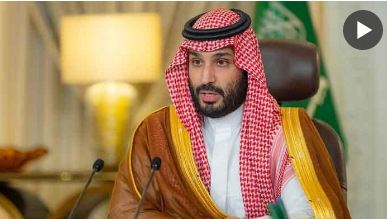
Saudi Arabia, in swift response to Trump, says no ties with Israel without Palestinian state

Saudi Arabia, in swift response to Trump, says no ties with Israel without Palestinian state

RIYADH, FEB 5: Saudi Arabia has reaffirmed that it will not establish diplomatic relations with Israel unless a Palestinian state is created, countering claims by US President Donald Trump that the kingdom has dropped such demands.

In a statement issued on Wednesday, the Saudi foreign ministry underscored Crown Prince Mohammed bin Salman’s “clear and explicit” stance, asserting that the kingdom remains unwavering in its support for Palestinian statehood and strongly rejects any attempt to displace Palestinians from their land.

The statement came a day after Trump made a controversial announcement, declaring that the United States would “take over” Gaza following the resettlement of its Palestinian population and develop it into what he called the “Riviera of the Middle East.”

Speaking at a joint press conference with Israeli Prime Minister Benjamin Netanyahu, Trump claimed that Saudi Arabia was no longer insisting on a Palestinian state as a condition for normalisation with Israel.

The kingdom’s response directly contradicted Trump’s assertion, emphasizing that its position on the Palestinian cause is “non-negotiable.”

Trump claims US will ‘take over’ Gaza in redevelopment plan

United States President Donald Trump has announced an extraordinary proposal for the US to “take over” and “own” the Gaza Strip, suggesting that his administration will spearhead redevelopment efforts to transform the war-ravaged enclave into “the Riviera of the Middle East.”

Speaking at the White House alongside Israeli Prime Minister Benjamin Netanyahu on Tuesday, Trump stated that his administration would lead an economic reconstruction initiative to “supply unlimited numbers of jobs and housing for the people of the area.”

“The US will take over the Gaza Strip, and we will do a job with it too. We’ll own it,” Trump said, adding that his plan involved clearing debris, dismantling unexploded ordnance, and laying the foundation for large-scale investment.

The announcement marks a dramatic departure from longstanding US policy on the Israeli-Palestinian conflict and has drawn swift condemnation from Palestinian leaders and human rights advocates.

The dark side of digital Pakistan

The dark side of digital Pakistan

Amsal Fatima

Pakistan, with nearly 49% of the women’s population, has the prevalence of gender disparity and patriarchal values. Deep-rooted complex beliefs and making them limited to women only, such as honor, cultural norms, and Parda, are the finest examples of gender disparity in Pakistan. Gender disparity plays a pivotal role in contributing to harassment against women by objectifying them as sexual objects and giving power to men. This harassment is not limited only in workplaces, educational institutions, and public places but also online. Pakistani women face harassment due to outdated beliefs and deep-rooted patriarchal values. Overtime, with a growing digital landscape in Pakistan, 3G and 4G connectivity has made social media access a norm. However, a significant rise has been seen in online harassment against women. According to DataReportal’s 2023 report, 82.1% of Pakistanis use at least one social media platform, and with notable gender disparity, only 28% of users are female, while males make up to 72 percent. Pakistan, a third-world country where women’s participation on social media is already low compared to men. This behavior makes it more difficult for women to have a social media presence. According to the Digital Rights Foundation 2020 in Pakistan, there are only 35% female Instagram users and 65% are males. As per the United Nations, “an increasing number of Pakistani women and girls are facing cyber harassment online.” The online harassment also has far-reaching and devastating effects offline as well, which can be easily understood by this case. In 2012, one of the first cases of the negative side of digital technology and cybercrime was reported in Kohistan. In this incident, a private video of a family gathering was leaked showing four women dancing in the presence of three men. Their family members in the name of honor killed all the individuals shown in that video. While supreme court of Pakistan took its Sou Moto jurisdiction but this case was sidelined when the team of facts researchers were actively misled by the locals of that area and it was concluded that those women are still alive.  However, it was discovered later that the women that were shown to the research team were different. Eventually, that case was opened again in 2016 due to the doubts raised by the commission. This case shows violence against women caused by cybercrimes. An epidemic of private video leaks has taken place in Pakistan from the last decade that caused a significant rise in honor killings and suicide. On May 20, 2020, two teenage girls were killed over phone video footage in northwest Pakistan. They are said to be killed by their family members. Activists believe about 1000 “honor killing” murders are carried out every year across the country. The concept of honor killing in Pakistan is common and limits women’s freedom to live. Most Pakistani women feel uncomfortable posting their photos online due to the fear of misuse. This continuous fear makes it difficult for women to have an effective social media presence. From the last 4-5 years, leaking of private videos of women has reached an alarming level, and it seems that law-regulating authorities and FIA have terribly failed to mitigate it. Many cases of online harassment and leaked private videos go unreported due to the burden of the reputation of family. Women are not able to take steps to seek justice because they fear they will be killed in the name of honor. The rise has been seen in revenge porn. Revenge porn refers to non-consensual pornography where an ex-partner shares illicit video with the motive to defame another partner. This has detrimental consequences, especially for women in Pakistan, by causing severe mental distress. As per the official estimates, revenge porn increased by 50% in Pakistan between 2020 and 2022.Not only is this, but the misuse of AI to create defamatory content, particularly targeting women, a growing concern.It has devastating impacts on women, damaging their reputations and causing them emotional trauma.The alarming rise in revenge pornography and deepfake videos requires immediate attention; otherwise, this poses serious threats to the lives and security of women in Pakistan.

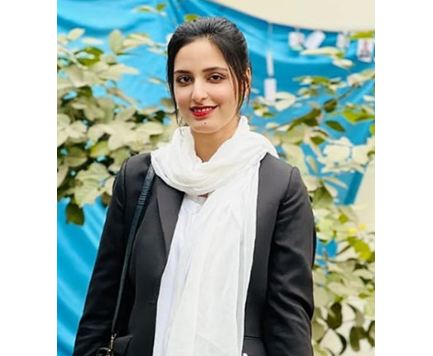
Amsal Fatima | Student  of  LLB (Bachelor of laws) Punjab University.

PM Shehbaz vows corruption-free Ramadan Relief Package sans utility stores

PM Shehbaz vows corruption-free Ramadan Relief Package sans utility stores

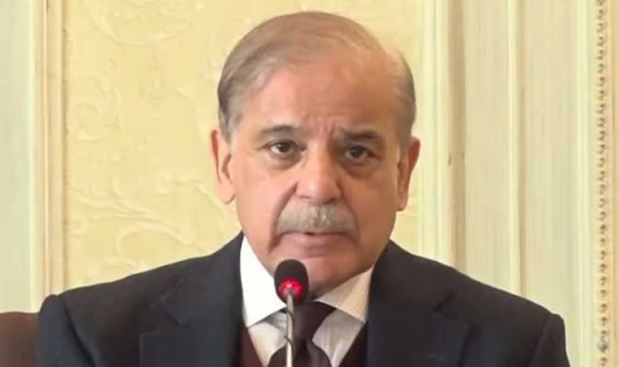
ISLAMABAD, FEB 4: Prime Minister Shehbaz Sharif announced on Tuesday that the government would unveil the Ramadan Relief Package this year without the involvement of the Utility Stores to prevent corruption and the distribution of low-quality commodities to the people.

“As the month of Holy Ramadan is about to start, I have asked the Ministry of National Food Security to bring about a Ramadan package without Utility Stores. I had asked many months ago that this cannot go on with the Utility Stores,” the premier said while addressing a federal cabinet meeting on Tuesday.

Last month, the incumbent government formed a seven-member cabinet committee to oversee the prompt shutdown of USC operations nationwide. The committee was also tasked with devising a strategy for distributing the Ramadan package in coordination with the Benazir Income Support Programme (BISP).

Speaking during today’s meeting, PM Shehbaz said that last year, the government had received immense complaints about the execution of the Ramadan Package run by the USC.

Referring to the polio vaccination drive, the prime minister mentioned the killing of a policeman Abdul Khaliq in Jamrud who was deployed for the security of the polio team, paying tribute to his sacrifice to make Pakistan a polio-free nation.

He also lauded the services of PM’s Coordinator on Health Dr Mukhtar, Polio Coordinator Dr Ayesha Farooq, secretary health and polio vaccinators for their tireless efforts to rid the country of this crippling disease.

Apprising the cabinet members of his Quetta visit, the prime minister said he visited the hospital to meet the security personnel who were injured in an anti-terror operation in Kalat in which 18 security personnel were martyred and 23 terrorists were eliminated.

“I met the injured. They had high morale and were even ready to sacrifice their lives for the country. These are the martyrs and Ghazis who are resolved to rid the country of terrorism and striving day and night for the cause,” he remarked.

He added that the soldiers of the army, police, FC and Rangers sacrificing their lives were bearing the brunt of the short-sighted policies of a past government which released thousands of terrorists.

Inflation and economic growth
The premier also expressed pleasure over monthly inflation coming down to a nine-year low of 2.4% from 28.73%.

He congratulated the entire nation, the cabinet members, particularly the finance minister, his team, FBR, and others, for their efforts during the last eleven months to bring inflation down to its lowest level.

“Now, we are fully striving to head toward economic growth… This is the main challenge. All of our energies will be focused on economic growth. Just like other targets, we will achieve this too,” he resolved.

He told the cabinet members that on Monday, Saudi Crown Prince Mohammed bin Salman sent a delegation to Pakistan and both sides signed an agreement under which the kingdom would provide oil worth $1.2 billion annualy on deferred payment.

Besides, the Saudi Development Fund will also provide a loan for a $40 million water supply scheme project in Mansehra.

He said that the entire nation would observe Kashmir Solidarity Day on Wednesday to express solidarity with their Kashmiri brethren.

Prime Minister Shehbaz also lauded the approval of agricultural income tax by all four provinces as per the IMF condition and thanked the chief ministers, President Asif Ali Zardari, Bilawal Bhutto Zardari, and Nawaz Sharif for their support in this regard.

Stay Connected

64FansLike
60FollowersFollow

Latest Reviews

Exchange Rates

USD - United States Dollar
EUR
1.17
GBP
1.35
AUD
0.72
CAD
0.73