Home Blog Page 684

Pakistan, Turkmenistan agree to expedite TAPI pipeline project

Pakistan

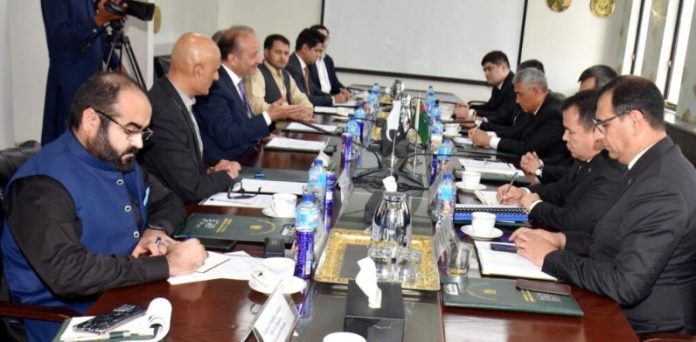
ISLAMABAD, Jul 24 (APP/DNA): Pakistan and Turkmenistan have agreed to expedite the Turkmenistan-Afghanistan-Pakistan-India (TAPI) gas pipeline project, affirming their resolve for continuous engagement.

This agreement was reached during a meeting on Wednesday between Pakistan’s Federal Minister for Petroleum, Dr Musadik Malik, and Turkmenistan’s Deputy Chairman of the Cabinet of Ministers and Minister of Foreign Affairs, Rashid Meredov, who is on a two-day visit to Pakistan.

– Advertisement –

The Turkmen delegation accompanying Rashid Meredov included Ata Haljanov, head of the International Economic Cooperation Division at Turkmenistan’s Ministry of Foreign Affairs; Eziz Nazarov, head of the Legal Department at the Ministry of Foreign Affairs; Muhammetmyrat Amanov, Chairman of the Board and CEO of TAPI Pipeline Company Ltd; Atadjan Movlamov, Ambassador of Turkmenistan to Pakistan; and Eldar Permanov, Third Secretary of the Embassy of Turkmenistan. Pakistani officials present at the meeting included Additional Secretary Hasan Yousafzai, Joint Secretary Shahbaz Tahir, and MD of Interstate Gas Systems Limited, Nadeem Bajwa.

Dr Musadik Malik welcomed the Turkmen delegation and expressed his gratitude for the hospitality offered by the Turkmen side during his last visit to Turkmenistan.

He said the visit of the Foreign Minister of Turkmenistan marks a significant milestone in the strengthening of diplomatic and economic ties between the two nations.

TAPI pipeline project, the minister said, will lower energy costs, which can boost industrial growth, create jobs, and foster economic development. Reliable and affordable energy supplies are vital for industrial sectors and overall economic stability, he added.

This project, he said, aimed at fostering economic integration and energy security, has witnessed substantial progress through collaborative efforts and resolved continuous engagement among both countries.
He further added that Pakistan is fully committed to this project which is significant for regional energy cooperation and infrastructure development.

Rashid Meredov expressed his profound appreciation for the warm welcome extended by the Pakistani side. “Together we will chalk out a roadmap for cooperation between both countries” he added.

Muhammetmyrat Amanov, CEO of Tapi Pipeline Company Limited mentioned that with the special interest of Petroleum Minister and Special Investment Facilitation Council (SIFC) TAPI has seen significant progress and is on the right track.
Speaking on the developments, officials from both Pakistan and Turkmenistan emphasized the project’s strategic importance in enhancing regional connectivity, promoting economic growth, and meeting the energy demands of participating nations. They underscored their commitment to continued cooperation and mutual support to overcome any remaining challenges. Continuous diplomatic efforts and political commitments are beneficial for ensuring a conducive environment for project advancement.

The TAPI project remains a testament to the enduring partnership between Pakistan and Turkmenistan, reflecting shared goals of regional stability and prosperity through sustainable energy solutions.

Pakistan, EU co-organize conference on strategic trade controls

Pakistan, EU co-organize conference on strategic trade controls

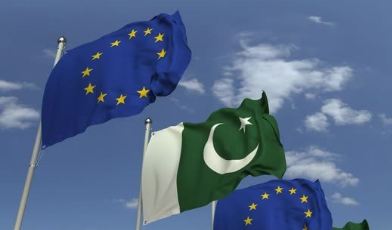
ISLAMABAD, JUL 24 /DNA/ – Foreign Secretary Muhammad Syrus Sajjad Qazi today inaugurated the two-day Regional Conference on Export Control Programme for Dual-Use Goods in Central Asia, being held in Islamabad. 

Co-organized by Ministry of Foreign Affairs, Islamabad and the European Union, the Regional Conference brings together Senior officials and Experts from Kyrgyzstan, Mongolia, Pakistan, Turkmenistan, Uzbekistan, Kazakhstan, the US, the EU, the UN and representatives of multilateral export control regimes and other international organizations The participants will discuss national approaches on strategic trade controls with a view to promoting international cooperation on trade of goods and technologies, in line with the relevant United Nations Resolutions, particularly UN Security Council (UNSC) Resolution 1540.

At the inaugural session, Foreign Secretary Muhammad Syrus Sajjad Qazi underlined the right of developing countries to access dual-use goods & technologies for socio-economic development and urged striking a balance between protecting national security interests and facilitating legitimate trade. He stated that Pakistan is diligently fulfilling all its obligations pertaining to nonproliferation and disarmament. As a responsible state of a thriving technology landscape with advanced nuclear technology, Pakistan remains fully cognizant of its nonproliferation obligations, he stated.

In his welcome address, Director General SECDIV, Haroon Rashid, briefed the participants on Pakistan’s extensive legislative, regulatory and administrative framework for exercising controls over the transfer of sensitive goods and technologies to prevent their diversion to non-peaceful uses. Pakistan’s national control lists are fully harmonized with those of the Nuclear Suppliers Group (NSG), Missile Technology Control Regime (MTCR) and Australia Group (AG) and its export control regime is at par with the highest international standards.

The Regional Conference showcases Pakistan’s robust cooperation with regional and global stakeholders in non-proliferation efforts. The Conference also demonstrates Pakistan’s role as an important partner of the international community in the implementation of strategic trade controls in line with the objectives of UNSC Resolution – 1540.

Commonwealth Secretary-General to Visit Pakistan on July 28

Pakistan: A Pivotal Bridge Aligning Economic Interests Between China and the Middle East

ISLAMABAD, JUL 24 /DNA/ – The Rt Hon Patricia Scotland KC, the Commonwealth Secretary-General, will pay her first official visit to Pakistan from 28 July to 2 August 2024 on the invitation of the Government of Pakistan.

During her five-day visit, Secretary-General Scotland will meet with Pakistan’s leadership, members of the Cabinet, youth leaders, civil society representatives and other stakeholders.

The Commonwealth Secretary-General, who has been a staunch advocate for supporting Pakistan in meeting the adverse impacts of climate change, will reaffirm her solidarity with Pakistan, as it marks the second anniversary of the catastrophic 2022 floods that submerged a third of the country and caused more than $30 billion in damage. She is also likely to tour some of the areas that were affected by the floods.

During the Secretary-General’s visit, the two sides would also discuss avenues to enhance cooperation between Pakistan and the Commonwealth in other areas of shared interest, including supporting Pakistan’s national development plan, empowering youth, and boosting trade and investment.

With 2023/24 designated the “Year of Youth” by the Commonwealth and Pakistan chairing the Commonwealth Youth Ministers Meeting, the Secretary-General will receive extensive briefings on the Prime Minister’s Youth Programme and highlight the opportunities Commonwealth membership brings to young people.

As one of the organisation’s founding members, Pakistan values the Commonwealth as an important forum for forging consensus on global issues and challenges. The visit of the Commonwealth Secretary-General would provide an important opportunity to further strengthen the longstanding partnership between Pakistan and the Commonwealth.

RCCI, Ministry of Climate Change join hands for climate action, environmental protection

RCCI, Ministry of Climate Change join hands for climate action, environmental protection

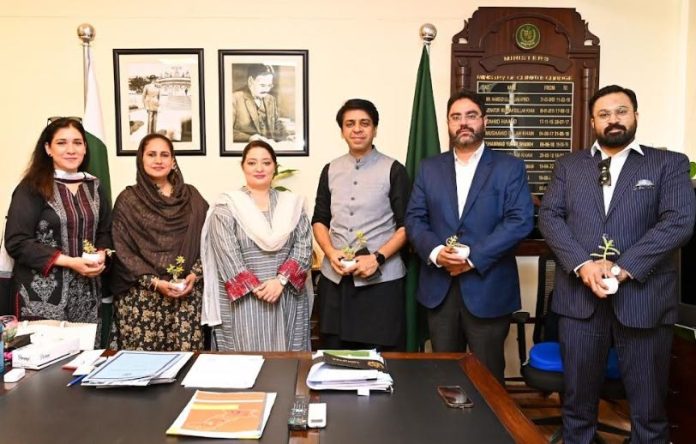
ISLAMABAD, JUL 24 /DNA/ – The Rawalpindi Chamber of Commerce and Industry (RCCI), and Ministry of Climate Change will join hands to address challenges faced by Pakistan due to Climate Change and both reiterated their resolve to put joint efforts to cope with the impact of climate change. These commitments were expressed at a meeting of RCCI delegation headed by President Saqib Rafiq, with Ms. Romina Khurshid Alam, Coordinator to the Prime Minister on Climate Change and Secretary, Ministry of Climate Change and Environmental Coordination (MoCC) in Islamabad.

The primary focus of the discussion revolved around collaborative efforts on climate change initiatives, with particular emphasis on carbon/plastic credit mechanisms and cooperation in climate programs. Ms.  Romina Khurshid expressed her commitment and cooperation from her office to work closely with RCCI towards sustainable environmental practices and enhancing climate resilience in Pakistan. “Pakistan is among the countries most adversely impacted by climate change, but it is now leading the way with its climate diplomacy, she added.”

President Saqib Rafiq highlighted the RCCI’s ongoing efforts and initiatives in promoting environmental sustainability within the business community. He extended an invitation to Ms. Romina Khurshid Alam to participate in an upcoming event on Environmental, Social, and Governance (ESG) organized by the RCCI. Ms. Romina Khurshid Alam appreciated RCCI’s proactive approach and assured the Ministry’s full support in advancing joint climate action programs.

Senior Vice President Muhammad Hamza Sarosh and executive committee member Mr. Asad Aftab, and Women Executive Members Ms. Gul Zeba and Ms. Sadia Zia were also present on the occasion.

CAP asks govt to cut commercial electricity tariff for documented retail sector

CAP asks govt to cut commercial electricity tariff for documented retail sector

DNA

LAHORE: The Chairman of the Chainstore Association of Pakistan (CAP), Mr. Tariq Mehboob, has called upon the government to take serious action to resolve issue of ever rising power tariff for commercial consumers, surging to extreme level of Rs77.15 per unit, the highest tariff of all electricity consumers in the country.

In a press release, issued here, Tariq Mehboob said that soaring electricity costs pose a major threat for retailers, traders, and exporters, severely impacting their competitiveness and affordability. This situation has also adversely affected household budgets, reducing purchasing power and making it increasingly difficult for businesses to sell products and consumers to buy them. Consequently, this has led to domestic business closures and exacerbated poverty levels. Over the past two years, Pakistan has seen a historic increase in the base electricity tariff. As a result, the base tariff for residential customers has reached Rs48.84 per unit, while the tariff for commercial customers has surged to Rs77.15 per unit, the highest tariff of all consumers. Including various taxes, these prices reach alarming levels, with electricity bills for retailers often exceeding their rent costs.

“How can a business survive in this situation?” asked Mr. Mehboob. “Commercial consumers, especially organized retailers who pay their bills on time, are burdened with the highest tariffs in the country because they are paying even higher cross-subsidies than industrial consumers, to keep tariffs artificially low for life-line consumers. Providing relief to low-income households is essential but the government must finance the subsidy for needy residential consumers from its own sources, e.g. BISP, rather than making other sectors completely unviable. One of the primary reasons for the sky-high electricity prices is substantial capacity payments to Independent Power Producers (IPPs), generating considerable concern and uncertainty. Recent report suggest that electricity consumers are set to pay capacity payments amounting to Rs 2.8 trillion during the upcoming financial year 2024-25 in total. These payments account for 70% of the electricity tariff for consumers, with the remaining 30% attributed to energy costs.”

CAP urges the government to transparently communicate the details regarding IPPs, including their role, capacity payments, and justifications, to alleviate public anxiety. Transparency in these matters is essential to build trust. All segments of Pakistani society are raising concerns about these agreements with IPPs and urging a revisit of unsustainable terms and conditions.

In another development, the Federal Board of Revenue (FBR) has recently introduced fixed monthly tax payments ranging from Rs 100 to over Rs 60,000, depending on the locality, targeting small shopkeepers and retailers across 42 major and minor cities, encompassing 25,989 identified areas. While CAP acknowledges the government’s initiative to broaden the tax base—a step crucial for national development and particularly highlighting the essential role of the retail sector—the association emphasizes the urgent need to simplify the tax system. Creating an enabling environment for the business community is vital for economic growth, leading to increased tax compliance and ensuring sustainable economic stability.

These steps will also support Prime Minister Shehbaz Sharif’s aim to boost exports to $60 billion within three years, reflecting aspirations for national self-sufficiency. However, achieving such ambitious goals requires favorable business conditions, currently hindered by increasing challenges. Until these conditions improve, reaching these targets remains a daunting prospect. CAP stresses that a supportive policy for domestic businesses and exporters, coupled with reforms in the tax system and energy sector, is essential for realizing these national objectives.

Reluctance to digital transformation and the role of positive change management

Reluctance to digital transformation and the role of positive change management

By Iqbal Hassan, Deputy Executive Director (OGRA)

In the age of globalization and technology, many organizations realize that digital transformation is compulsory, however, it is a common fact that employees repudiate to accept change and to adapt to innovations and new methods of doing official business. It is a common cliche that people do not like change or to come out of their comfort zones easily. Unlike children they are reluctant to learn new things. Mostly children perceive things through all their impulses and learn it quickly, whereas, adults have to first unlearn the previous knowledge to relearn new knowledge or the fear of being lost in between learning and unlearning process creates hindrances and they lose their confidence. The first reaction to change is usually defensive and employees chose the path of silent ignorance and wait till the change efforts are ended or digital adoption fails.

Now a question arises here, how to bring a positive change among employees’mindset? Leon Festinger, a psychologist at Stanford University says that people tend to act in compliance to their attitude and this is an involuntary reaction called cognitive dissonance which bring behavioral changes which affect rationalization and adoption of new attitudes. For example, behaving with things that are aligned with your personal values may result in intense feeling of discomfort.

In order to bring positive change in the organization, the leader/Head of Organization should first communicate the reasons for change in a clear and consistent manner and highlight the purpose and values of the goal like digitalization at workplace enables organization to collaborate effectively, transparently manage projects and tasks, resolves service requests and defects, automates mundane business tasks, integrate third party applications and generate data driven reports with paperless environment and helps in ease of doing business.

There are two types of organizational changes; first are adoptive changes and second are transformational changes. Adoptive changes are small, gradual and evolve with time, whereas, the transformational changes are larger in scale and require immediate action to withstand with contemporary world.

Therefore, employees should be informed that digitizing the workplace takes a step ahead in adopting the ever-evolving business dynamics and will enhance country’s world ranking in ease of doing business and will help in sustain with current world. Digitalization will unite the workspace, minimize operational costs, enhance productivity and efficiency, create revenues, helps to act safety issues promptly and all that is possible with positive change.

Secondly, for positive change and to bring digital transformation in the organization, it is equally important that the office atmosphere needs to be friendly and incentive based encouraging employees to go for change with fun and ease. They should learn together and celebrate every milestone to foster culture of adaptability and unlock innovation and succeed in transformation collectively.

Finally, positive change requires inducements and that reinforcement can be in the form of training, bonus, increment or any financial/societal status quo like promotion compelling employees to change their behaviors towards adoption of new knowledge or learning. The employees will go for incentives and will ultimately learn new things and bring change in their attitude. The change in outer behavior often results in change in inner approach and positive change in employees’ attitude will follow the creation of a suitable training and support tools to strengthen the new way of behavior and learning. Ultimately, the behaviors of learning and transformation will be achieved amicably.

Pakistan ‘approves’ visa free entry for 126 countries

Pakistan ‘approves’ visa free entry for 126 countries

DNA

ISLAMABAD: Pakistan has approved the issuance of digital visas for citizens of 126 countries, allowing visa-free entry for business and tourism purposes, DNA News reported citing sources.

The federal cabinet, chaired by Prime Minister Shehbaz Sharif okayed the decision that aims to promote investment and trade with friendly countries, enabling visa-free entry for investors and businessmen.

Additionally, the cabinet approved the establishment of special courts under the SECP Act 1997, the signing of an MoU between Pakistan and Denmark, and the increase in the number of members of the Privatization Commission Board.

While addressing the cabinet meeting the Prime Minister said the government is undertaking efforts to ensure ease of business in the country.

Citing a recent meeting amongst different ministries, he said they have agreed to a liberal visa regime to promote investment and tourism including religious tourism in the country. He said the visa regime will be presented in the cabinet for the approval. Sharing details of the new visa regime, the Prime Minister said it envisages major changes, including providing free visas to businessmen and tourists from one hundred and twenty-six countries.

He was confident that this policy will open Pakistan’s corridors for tourists and business community. He said the visa will also be provided in twenty-four hours through electronic travel authorization form.

The Prime Minister said e-gates will also be established at nine airports and Gwadar port. He said these e-gates will be established in Karachi, Lahore and Islamabad airports in the first phase.

Harris vs. Trump: What’s Next for Pakistan?

Qamar Bashir

By: Qamar Bashir

The divine approval seemed to suddenly turn away from Joe Biden after he fumbled, lost his words, and struggled to maintain the sequence while making points, showing visible signs of aging. Later, he contracted coronavirus, perhaps seen as the final push of the divine to move him out of the president’s slot. The “Huma,” the “Bird of Paradise,” which had been protecting his presidency, flew away in search of a new abode. For the first time, it found not a man, but a woman of mixed heritage—Black and Tamil—bestowing her with the strength and charisma to enter the race to become the first-ever female president of the world’s most powerful country in known history.

She was nominated by Joe Biden as his successor, but this was only half the battle won. She still has to pass many tests and cross numerous formidable hurdles to officially secure her position as the Democratic nominee and run for the presidency. With the broadest smile, exuding confidence and competence, she is well-prepared for the challenge, but the path ahead is steep, with stiff competition from many men with impressive CVs and compelling credentials.

However, fate seems to be smiling on her. She has already made significant strides towards securing the Democratic nomination for the presidency. She has successfully garnered the support of enough Democratic delegates, and top Democrats, including elected officials, party leaders, and political organizations, have rallied behind her following President Joe Biden’s decision to drop his bid for reelection. She has set a new 24-hour record  of raising $48 million for presidential donations, and several state delegations, including Texas and California, have confirmed their support.

But who is Kamala Harris?. Shew was born on October 20, 1964, is a member of the Third Baptist Church of San Francisco, a mixed race, with a Black and South Asian heritage. Her mother, the late Shyamala Gopalan, a PhD was of Indian Tamil descent from Madras (now Chennai), India. Her father, Donald Jasper Harris, is of Jamaican descent and is an economist and professor emeritus at Stanford University. Kamala has one sibling, a younger sister named Maya Harris, who is a lawyer, public policy advocate, and political analyst, and who served as a senior policy advisor to Hillary Clinton’s 2016 presidential campaign.  She is married to Douglas Emhoff, an attorney. They got married on August 22, 2014. She does not have biological children but is a stepmother to Emhoff’s two children from his previous marriage, Cole and Ella Emhoff.

Kamala Harris earned a Juris Doctor (J.D.) from the University of California, Hastings College of the Law, in 1989. She began her legal career as a deputy district attorney in Alameda County, later serving as San Francisco’s District Attorney from 2004 to 2011, and as California’s Attorney General until 2017. Her career culminated with her election as Vice President alongside President Joe Biden in 2020.

Like all countries, Pakistan is closely watching the ups and downs of the U.S. elections. Pakistan, like others, is evaluating both Donald Trump and Kamala Harris for their expected policies toward Asia, South Asia, and Pakistan.

Pakistan has already experienced Trump’s presidency, so his policies may not come as a surprise. However, Trump had some positive aspects for Pakistan. He prioritized counter-terrorism and used military force and economic sanctions to curb terrorism. His administration carried out drone strikes and targeted terrorist leaders in Afghanistan and Pakistan. In Afghanistan, Trump focused on reducing U.S. military presence while negotiating with the Taliban, leading to the Doha Agreement aimed at withdrawing U.S. troops. His approach to countries perceived to harbor terrorists involved applying pressure through sanctions and military actions.

Regarding the Kashmir dispute, Trump generally supported India’s position, occasionally offering to mediate between India and Pakistan, but his administration was less vocal about human rights concerns in the region.

Trump’s view of Pakistan-China relations was generally wary, seeing Pakistan primarily through the lens of counter-terrorism and regional stability rather than as a broader geopolitical partner. He strengthened U.S.-India relations, viewing India as a key strategic partner to counterbalance China’s influence in the region, which sometimes strained U.S.-Pakistan relations.

On the other hand, Kamala Harris is likely to maintain a strong stance on counter-terrorism, emphasizing a combination of military, diplomatic, and economic tools. She is expected to support initiatives that enhance regional stability and cooperation in counter-terrorism efforts.

In Afghanistan, Harris would focus on ensuring that the country does not become a haven for terrorists again, emphasizing diplomatic solutions and international cooperation.

On the Kashmir dispute, Harris may take a more balanced approach, emphasizing human rights and democratic values. She has previously expressed concerns about the situation in Kashmir, which could lead to a more vocal stance on human rights issues.

Regarding Pakistan-China relations, Harris is likely to acknowledge their strategic importance while seeking to balance U.S. interests in the region, potentially engaging Pakistan in broader diplomatic and economic initiatives to counterbalance China’s influence.

Under Trump, India was seen as a crucial partner in the Indo-Pacific strategy to counter China’s rise, leading to significant defense agreements and a strong bilateral relationship.

Under Harris, while India will likely continue to be a strategic partner in counterbalancing China, she might also stress human rights and democratic values in U.S.-India relations, potentially leading to a more holistic approach.

For Pakistan, this comparison seems to tilt in favor of Kamala Harris becoming President of the USA. However, the true test will come once her policies take shape after she assumes office and confronts the ground realities and complexities of geopolitics. She will only realize the full impact of the intricate layers of bilateral and multilateral relations after assuming the mantle of power. Pakistan may likely be overshadowed by larger issues such as the Russia-Ukraine war, the China-Taiwan standoff, the trade and innovation war between the U.S. and China, and the Israel-Gaza conflict to name a few.

By: Qamar Bashir

Former Press Secretary to the President

Former Press Minister to the Embassy of Pakistan to France

Former MD, SRBC

TTP’s Afghan-based terror attacks unacceptable; Pakistan fully prepared to protect citizens: PM

Shehbaz Sharif

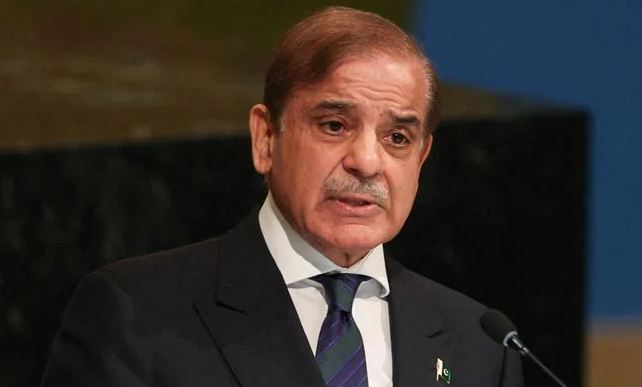
ISLAMABAD, Jul 24 (DNA): Prime Minister Shehbaz Sharif on Wednesday denounced the terror attacks in Pakistan involving Tehreek-e-Taliban Pakistan (TTP) using Afghan soil saying that was “unacceptable” as Pakistan was fully prepared to protect its citizens but desired to resolve the matter peacefully.

The prime minister, in his remarks at the meeting of the federal cabinet chaired by him, pointed out the surge in terror incidents, particularly in Khyber Pakhtunkhwa and Balochistan causing the killing of the personnel of the army, police and civil armed forces.

He called the terrorism wave a machination against Pakistan as it was taking place at a time when the coalition government was making efforts for the country’s development as it reached a Staff Level Agreement with IMF despite challenges and announced a three-month relief package for 96% of domestic power consumers.

Highlighting the role of Afghanistan in the surged wave of terrorism, the prime minister said the government was in interaction with them as Defence Minister Khawaja Muhammad Asif also visited there.

“But how is it possible that we hosted millions of their people here without any complaint? We treated them like our brothers and never considered them as a burden. But we were rewarded in the form of TTP attacks on our citizens to mar the country’s peace and business. This is not acceptable,” he remarked.

He said Pakistan was ready to face any kind of situation as its valiant armed forces had sacrificed their lives to safeguard the country and its people.

Prime Minister Shehbaz also highlighted that the perpetrators of the May 9 riots, who had also attacked parliament, PTV and besieged the PM House in the past, had resorted to new tactics to malign the country and its armed forces as a malicious campaign was run against Army Chief General Asim Munir from the official website of Pakistan Tehreek-e-Insaf.

“We will not tolerate any such steps against the country, its innocent people, and armed forces,” he said and called for national unity to protect the national interest.

The prime minister apprised the members of a decision to abolish the visa fees for 126 countries as a “quantum jump” to bring ease of doing business and attract businessmen, tourists and travelers to Pakistan. The decision, made after a threadbare discussion, would be tabled before the cabinet for its consideration, he added.

He said the deficiency of the visa fees would be made up by foreign exchange earned through investment and tourism, including religious tourism of which Pakistan has immense potential.

Prime Minister Shehbaz said that the visitors would get visas within 24 hours through the electronic travel authorization form. Besides, the E-gates would be established at Gwadar Port and nine airports – initially in Islamabad, Lahore and Karachi airports.

The prime minister strongly condemned the unprecedented human rights abuses of Israel against Palestinians as around 40,000 Palestinians had been killed including thousands of children and women.

He said despite the resolutions passed by the United Nations Security Council and UN General Assembly and the decision by the International Court of Justice, Israel was unbudged from its oppression which was highly condemnable.

The prime minister drew attention to the attacks on Pakistan’s missions in Germany and London. He said the Foreign Office had timely taken up the matter and that the envoys of the countries concerned should be given demarches to seek the protection of Pakistan’s missions.

Railways putting maximum efforts retrieve 13,972 acres land

Railways putting maximum efforts retrieve 13,972 acres land

ISLAMABAD, Jul 24 (APP/DNA): Pakistan Railways has accelerated the efforts to retrieve the major portion of around 13,972 acres of land worth billions of rupees found under the illegal occupation of private individuals and different government departments across the country.

“Around 5,809 acres were occupied in Punjab, 1,181 acres are under encroachment in Khyber Pakhtunkhwa, 5,948 acres in Sindh and 1,034 acres land occupied in Balochistan,” an official in the Ministry told APP.

He said the category of land under illegal occupations included commercial, residential, agricultural and various persons or departments.

Giving details of the land, the official said that around 769 acres were commercial in all the provinces, 3,309 residential, 5,512 acres agricultural and 4382 were under encroachment of various persons or departments.

The official said the department had also decided to accelerate its ongoing anti-encroachment operation against land grabbers across the country to recoup its land from different individuals, groups, and even business organizations which were using it for residential, commercial and agriculture purposes for decades.

“The joint procedure orders have been issued to all Divisional Superintendents of Pakistan Railways to retrieve the railway land from encroachers,” the official added.

Accordingly, he said the anti-encroachment operations for retrieval of encroached Railway land all over the Railway network are being initiated by the concerned divisions and notices are issued to encroachers under the Possession Ordinance 1965 for vacation of Railway land/structure within 14 days.

The official said that Pakistan Railway Police, District Administration and law enforcement agencies are informed of necessary assistance in anti-encroachment operations.

He Pakistan Railways owned 167,690 acres of land across the country, of which 90,326-acre was in Punjab, 39,428-acre in Sindh, 28,228-acre in Balochistan, and 9,708-acre in Khyber Pakhtunkhwa.

Stay Connected

64FansLike
60FollowersFollow

Latest Reviews

Exchange Rates

USD - United States Dollar
EUR
1.17
GBP
1.35
AUD
0.67
CAD
0.72