Home Blog Page 684

Chinese Quest for Global Order

Chinese Quest for Global Order

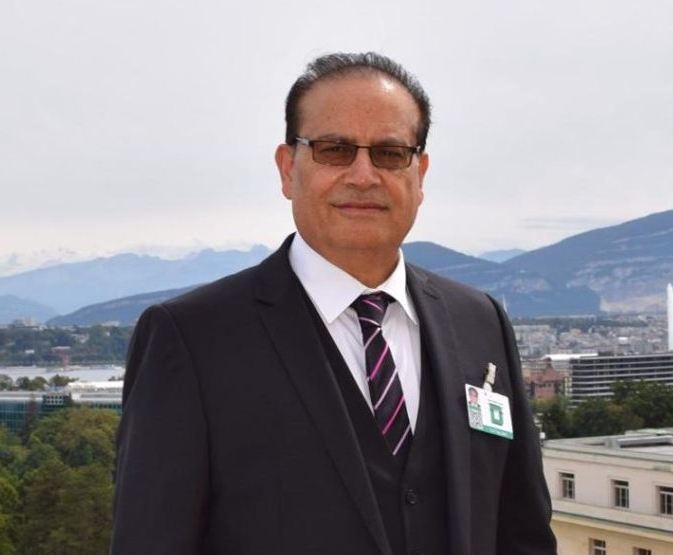
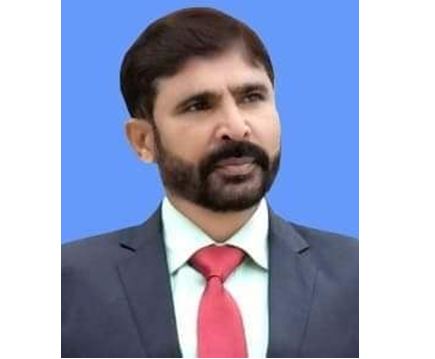
Dr. Muhammad Akram Zaheer

The ambition of Chinese President Xi Jinping to reshape the international order is a reality that cannot be overlooked. His vision seeks to dismantle the existing alliance network led by Washington and replace it with a framework underpinned by Chinese values and priorities. This involves eliminating the dominance of the U.S. dollar, weakening Washington’s technological monopoly and instilling Chinese notions of common security and economic development into global institutions. According to Xi, this “community with a shared future for mankind” is within reach. During the Central Conference on Work Relating to Foreign Affairs in December, Xi characterized Beijing as a “confident, self-reliant, open and inclusive major country” and proclaimed the transformation of his vision from a “Chinese initiative” to an “international consensus.” Four major programs support this vision: the Belt and Road Initiative (BRI), the Global Development Initiative (GDI), the Global Security Initiative (GSI) and the Global Civilization Initiative (GCI).Despite skepticism from American policymakers and global observers, who often point to the faltering Chinese economy and the unpopularity of China’s diplomatic approaches, Xi’s vision is gaining traction in specific contexts. Beijing’s initiatives resonate particularly among nations dissatisfied with the current international order, as they promise a more inclusive and multipolar framework. To counter China’s rise, the United States must embrace systemic changes, investing in technological, military and diplomatic capacities. Furthermore, stabilizing U.S.-China relations will enable Washington to address longer-term challenges effectively.China’s vision is rooted in a multipolar system emphasizing absolute sovereignty, development-driven solutions and security rooted in international consensus. Beijing portrays its model as fundamentally distinct from the U.S.-led order, which it accuses of perpetuating Cold War mentalities, fostering division and leveraging cultural and economic hegemony for unilateral gain. This narrative resonates with countries frustrated by the dominance of Western norms and institutions.At the 2024 Munich Security Conference, Chinese Foreign Minister Wang Yi emphasized the compatibility of Chinese and U.S. responsibilities for global stability while advocating for China’s partnerships with Russia, the European Union and the Global South. Beijing’s initiatives seek to validate the choices of nondemocratic regimes, amplify the voices of smaller democratic nations and challenge the status quo of major democracies. Dissatisfaction with the existing order has created a fertile environment for China’s proposals.China’s strategy, developed over decades, has recently evolved into three core global programs: the BRI, the GDI and the GSI. Each program supports China’s overarching goal of reshaping the international system and ensuring its centrality within it. The GCI, introduced in 2023, advances the notion that diverse civilizations and development paths should coexist without a universal imposition of values. This initiative aligns with China’s broader goal of challenging the primacy of liberal democratic principles in global governance.

Initially conceived as a mechanism to address infrastructure deficits in emerging economies, the BRI has since evolved into a geostrategic tool. It embeds Chinese technology, promotes its development model, extends its military and police reach and encourages the use of its currency. Approximately 150 countries have joined the BRI, illustrating its widespread appeal despite criticisms of debt dependency and environmental concerns.The GDI positions China as a leader in addressing global development challenges. Through collaborations with the United Nations and other institutions, it prioritizes projects on poverty alleviation, digital connectivity, climate change and health security. The GDI advances Beijing’s narrative that economic development is a prerequisite for human rights, challenging the Western focus on democracy and individual freedoms.The GSI promotes a vision of security based on dialogue, consultation and noninterference. It aims to dismantle U.S.-led alliances and advocates for absolute sovereignty and indivisible security. Although controversial particularly for its alignment with Russia’s justifications for the invasion of Ukrainethe GSI has garnered support from countries disenchanted with Western military interventions.The GCI underscores the legitimacy of diverse political and economic systems, advocating that no single model should dominate global discourse. This approach appeals to nations seeking to preserve their sovereignty against perceived Western cultural imperialism.China’s multilevel strategy integrates bilateral, regional and multilateral engagements. The BRI serves as a model for embedding Chinese values into global frameworks, linking with regional initiatives like ASEAN’s Master Plan on Connectivity. Beijing’s efforts to align its initiatives with UN agendas, such as the 2030 Agenda for Sustainable Development, further solidify its influence.China’s extensive diplomatic network—the largest globally—and its state-controlled media apparatus amplify its narrative. Outlets like CGTN and Xinhua promote China’s vision, often swaying public opinion in developing countries. Surveys reveal that Chinese messaging can shift perceptions, especially when contrasted with U.S. narratives.

Despite its progress, Beijing faces significant obstacles in realizing its vision. The BRI has encountered financial sustainability issues, with declining investments and withdrawals by key participants like Italy. Public opinion remains mixed, with surveys in regions such as Africa and Latin America indicating skepticism about China’s long-term intentions. Moreover, concerns about debt dependency and the undermining of universal human rights persist.Multilateral support for initiatives like the GSI and GCI is nascent and often rhetorical. For instance, the abstention of many countries during the UN vote condemning Russia’s invasion of Ukraine illustrates the limits of China’s influence. Additionally, regional powers such as India resist alignment with China’s security frameworks, fearing encroachment on their strategic autonomy.To counter China’s ascent, the United States must present an alternative vision for global governance that addresses the shortcomings of the current system. This vision should prioritize inclusivity, technological innovation and sustainable development. Initiatives such as the U.S.-EU Trade and Technology Council and the Indo-Pacific Economic Framework lay the groundwork for such efforts but must be expanded to include countries vulnerable to Chinese influence.Public-private partnerships can bolster U.S. competitiveness by aligning strategic goals with economic incentives. Additionally, Washington should leverage its leadership in emerging technologies, such as artificial intelligence, to establish new international norms that reflect democratic values. Engaging with a broader range of countries, particularly those in the Global South, will enhance the legitimacy of U.S.-led initiatives.Stabilizing U.S.-China relations is equally critical. Clear communication, reduced hostility and cooperative engagements on shared challenges, such as climate change and global health, will create a more constructive bilateral relationship. This approach will enable the United States to focus on long-term objectives without unnecessary distractions.

China’s bid to reshape the international order is both ambitious and multifaceted, appealing to nations disillusioned with the status quo. While Beijing’s initiatives have gained traction, significant challenges remain. For the United States, the path forward lies in presenting a compelling alternative that addresses global disparities, fosters innovation and reinforces democratic principles. By investing in diplomacy, technological leadership and inclusive governance, Washington can ensure its continued relevance in a rapidly changing world. The competition between these two visions will define the contours of the 21st-century international system.
GHQ Meeting: Pakistan, Maldives reaffirm military brotherhood

GHQ Meeting

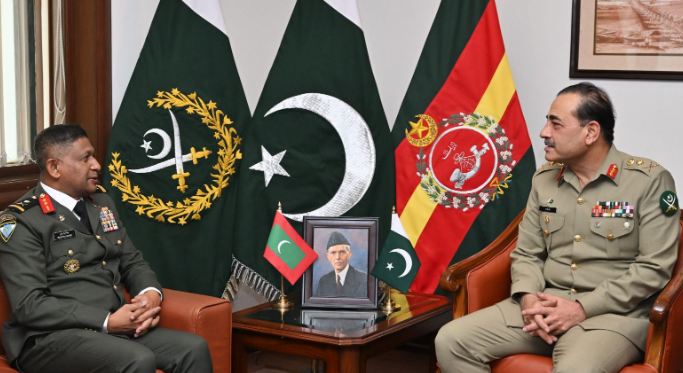
RAWALPINDI, 7 Feb /DNA/ – Major General Ibrahim Hilmy, Chief of Defence Forces (CDF) of the Maldives Armed Forces, called on General Syed Asim Munir, NI (M), Chief of Army Staff (COAS), at the General Headquarters, Rawalpindi.

During the meeting, matters of mutual interest, including bilateral defence cooperation and regional security dynamics, were discussed in detail. Both sides expressed satisfaction over the enduring bonds of brotherhood and friendship between Pakistan and the Maldives, underscoring their shared perspectives on key regional issues.

Recognizing the evolving security landscape, the two military leaders reaffirmed their commitment to strengthening and revitalizing bilateral ties, with a view to enhancing collaboration in areas of mutual interest.

The visiting dignitary lauded Pakistan Army for its exceptional professionalism, dedication, and contributions to regional stability.

9th Multinational Maritime Exercise AMAN – 2025 kicks off at Karachi

9th Multinational Maritime Exercise AMAN - 2025 kicks off at Karachi

DNA

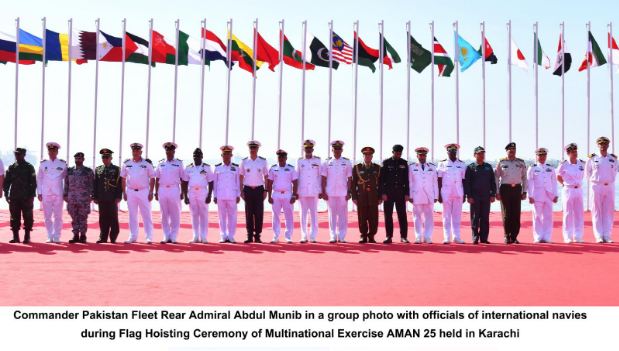
KARACHI, 07 Feb: An impressive and colourful flag-hoisting ceremony was held at Pakistan Navy Dockyard, Karachi, marking the formal inauguration of the 9th Multinational Maritime Exercise AMAN 2025. The event featured the simultaneous hoisting of flags from all participating nations. A large number of senior military representatives, observers, diplomats, and officials from Pakistan Armed Forces attended the ceremony.

The message of Chief of the Naval Staff, Admiral Naveed Ashraf, was read during the ceremony. In his message, the Naval Chief warmly welcomed the participants of Exercise AMAN-25 and highlighted that the exercise has become a regular feature, bringing together regional and extra-regional navies to foster a secure and conducive maritime environment. He emphasized Pakistan Navy’s role as a key stakeholder in the Arabian Sea and its initiatives to enhance regional maritime security, including Regional Maritime Security Patrols (RMSP). The Admiral further stated that in recognition of the international community’s trust in Pakistan Navy’s efforts to promote peace and stability at sea, AMAN Dialogue has been introduced as an adjunct to the exercise.

Speaking on the occasion, Commander Pakistan Fleet, Rear Admiral Abdul Munib, underscored Pakistan Navy’s contributions toward collaborative maritime security. He emphasized the significance of the exercise in enhancing interoperability among participants and sought their cooperation in achieving the exercise’s objectives. He praised the participating countries for supporting Pakistan’s commitment to peace and maritime security and acknowledged the fluttering flags of participating nations as a true embodiment of the Exercise AMAN motto — ‘Together for Peace.’ He expressed hope that the friendships fostered during the exercise would continue to grow.

AMAN 2025 is the 9th edition of the series and is being held from 7-11 February 2025. Around 60 countries, along with their ships, aircraft, special operations forces, and observers, are participating in the exercise. Additionally, Pakistan Navy has introduced the inaugural AMAN Dialogue, scheduled for 9-10 February 2025, as an adjunct to the exercise. During this dialogue, naval chiefs and senior representatives from participating countries will deliberate on maritime security challenges and explore innovative solutions to enhance security at sea.

Gen Mirza, Hungarian State Secretary exchange views on defense partnership

Gen Mirza

RAWALPINDI, 7 Feb /DNA/ – Tamás Vargha, State Secretary and Deputy Minister of Defence, Hungary, called on General Sahir Shamshad Mirza, NI (M), Chairman Joint Chiefs of Staff Committee at Joint Staff Headquarters, Rawalpindi.

During the meeting, both leaders discussed evolving regional dynamics and emphasized the importance of exploring new opportunities for mutually beneficial collaboration in defense and security domains between both countries.

The visiting dignitary lauded the professionalism of Pakistan Armed Forces and acknowledged their sacrifices in fight against terrorism.

National Men’s & Women’s Elite Boxing C`ship starts from Feb 10

Boxing C`ship

AFZAL JAVED / DNA

ISLAMABAD: The 41st edition of the National Elite Men’s Boxing Championship and the 5th National Women’s Boxing Championship, marking the return of competitive boxing to Pakistan, will begin on February 10 in Karachi organised by the Pakistan Boxing Federation (PBF).

According to Lt. Col. (R) Nasir Ijaz Tung, President of the Pakistan Boxing Federation, 14 teams, including the Army, Navy, Air Force, WAPDA, Railways, HEC, Police, Karachi Port Trust, Balochistan, Khyber Pakhtunkhwa, Punjab, Sindh, Azad Jammu & Kashmir, and Islamabad, will compete in this prestigious event. The championship will conclude on February 15.

The President of PBF further stated that, following World Boxing (WB) rules, the 41st National Elite Men’s Championship will feature ten weight categories, while the 5th Women’s Boxing Championship will include eight categories.

It is noteworthy that this is the first time in Pakistan’s boxing history that women’s participation has exceeded 100. This growth demonstrates the increasing interest in boxing among women in the country. The first elite women’s championship was held in 2018 with only three categories, and now, in its fifth edition, 112 women boxers are competing in eight different categories.

Nasir Ijaz Tung emphasized that gender equality is a priority in the Olympic Movement under the International Olympic Committee (IOC) charter. This supports greater access to sports for female athletes and promotes the inclusion of women in sports administration and management.

The President of PBF also mentioned that all arrangements for the successful conduct of the championship have been completed. A team of technical officials has been appointed to ensure smooth event management. A total of 140 male and 112 female entries have been received, and 234 bouts will take place over the six-day event.

Additionally, top-performing boxers from the championship will be selected for training camps and provided with the necessary facilities to prepare for international competitions.

Weight Categories

Men (in Kg): 47-50, 50-55, 55-60, 60-65, 65-70, 70-75, 75-80, 80-85, 85-90, 90+

Women (in Kg): 45-48, 48-51, 51-54, 54-57, 57-60, 60-65, 65-70, 70-75

Police arrest two kite sellers with over 400 kites, string rolls

Police arrest two kite sellers

RAWALPINDI, Feb 07 (APP):Rawalpindi District Police have arrested two kite sellers and recovered over 400 kites, six kite flying string rolls and other items from their possession.

According to a police spokesman, Rawalpindi district police on the directives of City Police Officer, Rawalpindi are making efforts to control kite flying and conducting raids to net kite sellers and flyers.

He informed that Pirwadhai police arrested a kite seller namely Shabbir for having 400 kites and 4 kite flying string rolls.
Waris Khan police also rounded up a kite seller namely Rehan with 20 kites and two string rolls.

Separate cases have been registered against the accused and further investigations are under process.

SSP Operations Rawalpindi ordered the police teams to accelerate operations against kite sellers and flyers.

Trump’s Media Defiance and Bold Geopolitical Moves

Qamar Bashir

By: Qamar Bashir

Macomb, Detroit, Michigan

Sick and tired of the nosy, manipulative, and self-serving American media, Donald Trump is perhaps the only president in the country’s history who has had the tenacity, courage, and guts to confront the dreadful and all-powerful media head-on. He has boldly defied the influence of traditional media, demonstrating that it no longer holds the sole power to elevate or demolish any president, regardless of their power. By harnessing the power of social media, Trump has successfully shattered the long-held notion that the media controls the narrative and the fate of leaders.

Unlike his predecessors, Trump is unafraid to take actions he deems necessary to expose the manipulative influence of the American media, showing no fear of potential backlash. His determination to bypass traditional media channels has revolutionized political communication. Special arrangements were even made for the direct live broadcast of President Donald J. Trump’s historic inauguration on platforms like TikTok and YouTube. This strategic move paid off as the live telecast of the inauguration ceremony set a new “All-Time Viewership Record” with 9.6 million viewers. Additionally, the live stream on President Trump’s X account garnered an impressive 36.7 million views. In total, the ceremony reached an estimated 80.7 million viewers, surpassing the previous record of 42 million set during Ronald Reagan’s inauguration in 1981.

Through his innovative use of social media, Trump has stripped traditional media of its exclusive role as the primary news disseminator. He now directly reaches out to the American people and audiences worldwide, unfiltered and unmediated. For researchers and writers like me, this shift is liberating. No longer do we have to navigate the paywalls and restrictions of mainstream media outlets that prioritize profit over public access. Instead, platforms like X and TikTok offer direct, unfiltered access to Trump’s statements and updates straight from his official handles.

In one of his recent posts, shared just a few hours ago on February 6, Trump exposed what he described as the manipulative misuse of taxpayer money. He claimed that billions of dollars have allegedly been misappropriated at USAID and other agencies, with substantial sums reportedly funneled to specific media outlets as “payoffs” for producing favorable coverage of the Democratic Party. Among those implicated, Politico is alleged to have received $8 million, raising questions about whether other major media organizations, such as The New York Times, also benefited. This situation is being framed as potentially the largest scandal in history, with its scale and implications too significant to ignore. Critics argue that the Democrats cannot evade scrutiny over these allegations, which are described as both extensive and deeply troubling.

Without relying on the crutches of traditional media, Trump has effectively used the power of social media to directly broadcast significant events, including the signing of executive orders on far-reaching issues. This approach allows the public to receive unmanipulated, unfiltered information straight from the president, free from biased interpretations or commercial restrictions. Just a day before, while surrounded by young schoolgirls, Trump signed an executive order that redefined gender recognition in the U.S., limiting it to only two categories: male and female. In his tweet, he described this decision as historic and far-reaching, aimed at protecting families and the country from what he views as psychological and social confusion. The signing ceremony was streamed live on platforms like X, TikTok, and YouTube, ensuring the message reached millions before traditional media could even report it.

In another significant executive order, also broadcast live, Trump announced the NCAA’s policy change banning men from competing in women’s sports. He proudly declared, “This is a great day for women and girls across our country. Men should have NEVER been allowed to compete against women in the first place, but I am proud to be the president to SAVE Women’s Sports.” He urged the Olympics Committee to adopt similar measures, emphasizing that this policy is popular not just in America but worldwide. Through these direct communications, Trump continues to challenge the traditional media’s gatekeeping role, reinforcing his commitment to transparency and public engagement.

Further challenging the conventional media landscape, Trump proposed a bold geopolitical solution regarding the Gaza Strip. In his tweet, he suggested transferring the Gaza Strip to the United States by Israel following the conclusion of hostilities. According to the proposal, Palestinians, including individuals like Chuck Schumer, would be resettled in significantly safer and more attractive communities with modern homes, providing opportunities for happiness, safety, and freedom. Together with global development teams, the U.S. would slowly build what is thought to be one of the world’s most amazing projects, without sending U.S. troops there, which would help keep the region stable for a long time.

Trump’s strategy extends beyond media influence to leveraging the economic and military might of the United States to achieve his objectives. He has compelled countries like Colombia, Venezuela, Brazil, and Mexico to accept deportees, using diplomatic pressure effectively. His strong stance on the Panama Canal prompted the Panamanian government to withdraw from China’s Belt and Road Initiative and waive transition fees for American ships. Trump’s bold proposal concerning Gaza played a role in pushing both Hamas and Israel towards a ceasefire agreement. Additionally, his assertive approach regarding Greenland influenced the European Union to assume greater financial responsibilities within NATO.

His unconventional and fearless approach with the media, allies, neighbors, and adversaries alike is producing tangible results. By proposing out-of-the-box solutions that appeal to common sense while defying bureaucratic red tape, Trump sets a new standard for geopolitical actors. His methods challenge the status quo, exposing the unnecessary complexities often created to justify bureaucratic dominance and financial gain.

Through these bold moves, Trump has not only reshaped political communication but also redefined the role of the presidency in an era dominated by digital connectivity. His unfiltered engagement with the public through social media platforms represents a seismic shift in how leaders connect with citizens, challenge traditional narratives, and assert their policies on both national and international stages. Trump’s combination of economic power and direct communication strategies has positioned him as a transformative figure in modern politics, establishing new standards of media management and geopolitics.

By: Qamar Bashir

Press Secretary to the President (Rtd)

Former Press Minister at Embassy of Pakistan to France

Former MD, SRBC

A Written Legacy: The Impact of Political Correspondence in Pakistan’s History

A Written Legacy: The Impact of Political Correspondence in Pakistan’s History

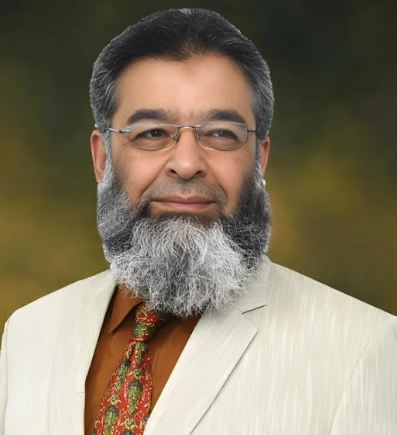
by Muhammad Mohsin Iqbal

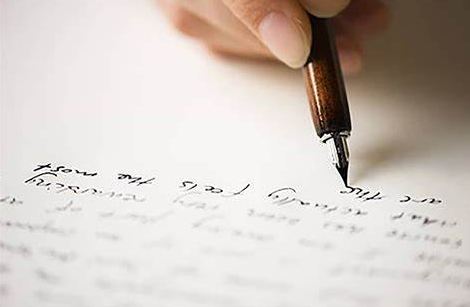
The practice of political correspondence has long been an essential facet of governance in Pakistan, serving as a formal means of communication between state institutions and key officeholders. Whether it is the Prime Minister addressing the President, a Chief Minister writing to the Prime Minister, or judicial authorities exchanging correspondence with executive officials, the written word remains a formidable instrument in the administration of state affairs. Such letters fulfill multiple functions, ensuring procedural propriety, shaping policymaking, upholding constitutional mandates, and fostering diplomatic engagement. This tradition, deeply rooted in political history, continues to underscore the solemnity and weight of official discourse in Pakistan.

The origins of written political correspondence in Pakistan can be traced back to the formative years of the nation’s independence. Quaid-e-Azam Muhammad Ali Jinnah, as the first Governor-General, set a precedent for formal written exchanges by frequently corresponding with his Prime Minister, Liaquat Ali Khan, and other key government figures. Among his significant letters was one addressed to Lord Mountbatten in 1947, articulating Pakistan’s firm stance on the Kashmir issue. Similarly, the letters exchanged between Liaquat Ali Khan and Indian Prime Minister Jawaharlal Nehru during the late 1940s regarding communal violence and refugee repatriation exemplified the pivotal role of written communication in diplomatic negotiations and interstate relations.

A Written Legacy: The Impact of Political Correspondence in Pakistan’s History

One of the most historically significant correspondences that influenced the ideological foundation of Pakistan was the exchange of letters between Quaid-e-Azam Muhammad Ali Jinnah and Allama Muhammad Iqbal. Between 1936 and 1937, Allama Iqbal wrote to Quaid-e-Azam, urging him to assume leadership of the Muslims of the Indian subcontinent and work towards an independent Muslim state. Quaid-e-Azam, in his responses, acknowledged Iqbal’s concerns and appreciated his unwavering commitment to the Muslim cause. These letters remain among the most important historical documents, serving as evidence of how intellectual and political discourse through correspondence helped in articulating and realizing the dream of Pakistan.

In the present-day political landscape of Pakistan, written correspondence remains a fundamental practice within the corridors of power. When the Prime Minister writes to the President, it is often in pursuit of constitutional approvals—whether for key appointments, legislative enactments, or executive decisions of national significance. A notable instance of this occurred in August 2023 when Prime Minister Shehbaz Sharif formally communicated with President Dr. Arif Alvi to seek approval for the appointment of a caretaker Prime Minister, a step of profound consequence in the transition of governance. Similarly, Chief Ministers frequently address the Prime Minister to seek federal intervention in matters of provincial concern, ranging from financial allocations to disaster management.

The judiciary, too, has long engaged in the practice of written correspondence with the executive, often in pursuit of legal and administrative reforms. Such exchanges reaffirm the judiciary’s autonomy and ensure that matters of constitutional import are duly acknowledged by the state. This form of communication remains a testament to the delicate balance of power between the executive and judicial branches of government.

The roots of this tradition, however, extend far beyond Pakistan’s political history, tracing back to the earliest days of Islamic governance. Among the most celebrated instances of diplomatic correspondence in Islamic history are the letters written by the Holy Prophet Muhammad (PBUH) to various rulers, inviting them to embrace Islam. Around the year 628 CE, the Prophet dispatched formal letters to Emperor Heraclius of Byzantine, Chosroes II of Persia, the Negus of Abyssinia, and Muqawqis of Egypt. These letters, documented in historical chronicles, exemplified the role of written diplomacy in fostering dialogue, conveying religious and political messages, and forging alliances.

In later centuries, the Islamic world continued to witness the profound impact of political correspondence. During the Abbasid era, the Caliph Harun al-Rashid famously exchanged letters with Charlemagne, the King of the Franks, thereby establishing diplomatic ties between the Muslim empire and medieval Europe. Similarly, Sultan Suleiman the Magnificent maintained extensive written correspondence with European monarchs, solidifying alliances and articulating the Ottoman Empire’s foreign policy objectives.

Some letters exchanged at the diplomatic level have held great historical significance. One such instance was the letter written by US President Gerald Ford to Pakistani Prime Minister Zulfikar Ali Bhutto on March 19, 1976. In this correspondence, President Ford expressed deep concerns over Pakistan’s plans to acquire sensitive nuclear facilities, particularly those related to uranium enrichment, heavy water production, and chemical reprocessing. While acknowledging the strong and cordial relationship between the two nations, Ford emphasized the global apprehension regarding nuclear proliferation and appreciated Pakistan’s assurances that its nuclear efforts would be directed exclusively towards peaceful purposes. However, he cautioned that the establishment of such facilities could undermine international confidence and stability, particularly in the absence of a compelling economic justification. Ford also highlighted the broader geopolitical implications, warning that the acquisition of these technologies might erode public and congressional support for US-Pakistan cooperation. His letter reflected the delicate balancing act between diplomatic relations and global nuclear non-proliferation concerns. Recently such kind of a similar diplomatic note that sparked controversy in Pakistan and raised doubts about its authenticity.

Pakistani political correspondence has also played a critical role in shaping the country’s history. The exchange of letters between President Ghulam Ishaq Khan and Prime Minister Nawaz Sharif in 1993 ultimately led to the dissolution of the government, marking a decisive moment in Pakistan’s political trajectory. Similarly, the refusal of Prime Minister Yousaf Raza Gilani in 2012 to write a letter to Swiss authorities regarding corruption allegations against President Asif Ali Zardari resulted in his dismissal by the Supreme Court. These instances underscore how correspondence between high-ranking officials can serve not only as instruments of governance but also as catalysts for political upheaval.

Beyond the realm of executive and judicial communications, political letters have also served as tools of public engagement and advocacy. Open letters addressed to the judiciary, civil society, or the general populace have often been employed to convey critical policy positions or shape public opinion. In some cases, these letters have played a pivotal role in galvanizing public support for pressing national issues, thereby influencing the broader political discourse.

The continued relevance of written correspondence in Pakistan’s political and administrative affairs underscores its enduring utility as a formal instrument of governance. By serving as records of state decisions, mechanisms for institutional engagement, and vehicles for diplomatic outreach, such letters play an indispensable role in the functioning of the state. However, the efficacy of political correspondence ultimately hinges upon its reception and execution; where letters are heeded with due diligence, they fortify the foundations of governance, but where they are disregarded or politicized, they become little more than symbolic gestures devoid of substantive impact.

The written word, therefore, remains a defining feature of political practice in Pakistan, carrying with it the weight of history and the promise of continuity. Whether exchanged between the highest offices of the state or directed toward the wider citizenry, political correspondence persists as a cornerstone of institutional integrity and a vital instrument of democratic governance. In an era of digital transformation, while electronic communication has largely supplanted traditional handwritten letters, the essence of political correspondence endures, continuing to shape Pakistan’s administrative, legal, and diplomatic landscape.

Grand Farewell Ceremony for Station Master Malik Ghulam Mustafa Awan, Railway Employees Pay Glowing Tribute

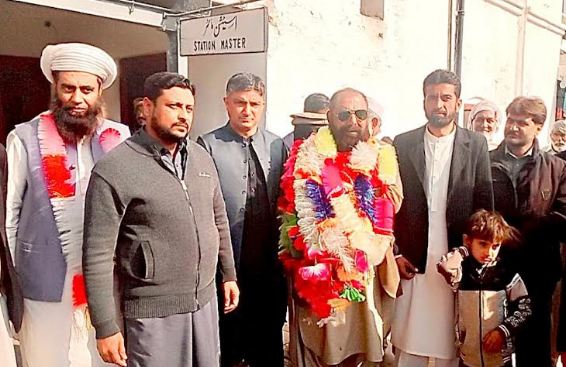
ATTOCK , FEB 7 (DNA): Pakistan Railways’ Station Master of Attock, Malik Ghulam Mustafa Awan, has retired after completing his distinguished service. On the occasion of his retirement, a grand farewell ceremony was organized by railway employees and officials, where his invaluable services were acknowledged, and he was given a heartfelt tribute.

During the ceremony, railway employees adorned Mustafa Awan with beautiful flower garlands and danced to the beat of drums. He was also presented with gifts and commemorative shields. Employees and officials reminisced about their time with him and praised his dedication, honesty, and hard work throughout his career. They highlighted how he always strived to uphold the prestige of the institution.

Railway officials and colleagues stated that Malik Ghulam Mustafa Awan’s services would always be remembered and that his hard work would serve as an example for the organization. They acknowledged his commitment to his duties and recognized him as a great mentor for new employees.

At the end of the ceremony, Station Master Mustafa Awan expressed his gratitude to all his colleagues, stating that he would always cherish the moments spent with Pakistan Railways. He bid farewell to his fellow workers with best wishes and expressed hope for the continued progress of the railway sector.

The event was filled with emotional moments, as colleagues conveyed their love and best wishes for him. On the occasion of his retirement, his friends and colleagues remarked that they would deeply miss him, but they also extended their heartfelt wishes for success in this new chapter of his life.

Forces kill 12 Khawrij

Rawalpindi, 6 February 2025:
On 5-6 February 2025, security Forces conducted an intelligence based operation in general area Hassan Khel, North Waziristan District on reported presence of khwarij.

During the conduct of operation, own troops effectively engaged the khwarij location, as a result of which, twelve khwarij were sent to hell.

However, during intense fire exchange, Lance Naik Muhammad Ibrahim (age: 34 years, resident of District Hangu), having fought gallantly, paid the ultimate sacrifice and embraced shahadat.

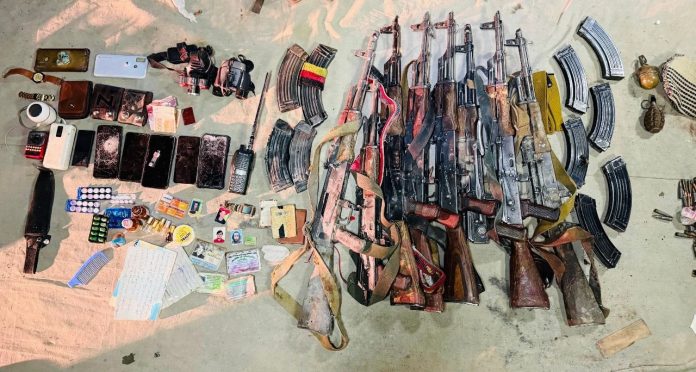
Weapons and ammunition were also recovered from the killed khwarij, who remained actively involved in numerous terrorist activities against the security forces as well as target killing of innocent civilians.

Sanitization operation is being conducted to eliminate any other Kharji found in the area, as security forces of Pakistan are determined to wipe out the menace of terrorism and such sacrifices of our brave soldiers further strengthen our resolve.

Stay Connected

64FansLike
60FollowersFollow

Latest Reviews

Exchange Rates

USD - United States Dollar
EUR
1.17
GBP
1.35
AUD
0.72
CAD
0.73