Home Blog Page 683

Tri-nation series: New Zealand win toss, opt to bat against Pakistan

Tri-nation series: New Zealand win toss, opt to bat against Pakistan

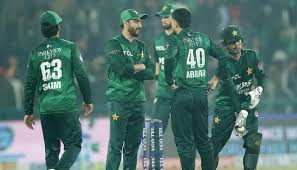
LAHORE: New Zealand won the toss and elected to bat first in the first match of the ODI tri-nation series against Pakistan at the Gaddafi Stadium in Lahore on Saturday.

The tri-nation series involving hosts Pakistan, along with New Zealand and South Africa, will be played from February 8 to 14 at the newly-constructed Gaddafi Stadium in Lahore and National Bank Stadium in Karachi.

Tournament provides opportunity to all three sides to prepare for upcoming ICC Champions Trophy.

After the toss, Pakistan captain Mohammad Rizwan said had they won the toss, they would also have chosen to bat first.

Rizwan emphasised the importance of the tri-series as part of their preparations for the Champions Trophy, highlighting its relevance to the team’s upcoming challenges.

He further mentioned that Babar Azam will open alongside Fakhar Zaman, with the duo taking the initial responsibility at the crease.

The skipper said the playing squad featured three fast bowlers — Haris Rauf, Shaheen Afridi and Naseem Shah.

Rizwan is eying his fourth consecutive ODI series win since taking over as Pakistan captain, having won bilateral ODI series against Australia, Zimbabwe and South Africa last year.

The Green Shirts captain on the eve of the tri-nation series said: “We are excited to be playing again in front of our home crowd and in the newly constructed stadiums in Lahore and Karachi.

“The preparations have gone well so far with the players looking to give their best in the tournament leading up to the ICC event.”

New Zealand, who had their first training session at the LCCA Ground on Thursday evening, will look to make a winning start in the tournament. Mitchell Santner said: “We had a good training session in Lahore under lights and can’t wait to take on the home side on Saturday.

“It is great to be back in Pakistan and the side had a good outing when we toured last time. The tri-nation series will provide us a great opportunity to know about the wickets and help us prepare well for the upcoming pinnacle event.”

Pakistan XI: Fakhar Zaman, Babar Azam, Kamran Ghulam, Mohammad Rizwan, Salman Ali Agha, Tayyab Tahir, Khushdil Shah, Shaheen Shah Afridi, Naseem Shah, Haris Rauf and Abrar Ahmed.

New Zealand XI: Will Young, Rachin Ravindra, Kane Williamson, Daryl Mitchell, Tom Latham (wk), Glenn Phillips, Michael Bracewell, Mitchell Santner (c), Ben Sears, Matt Henry and Will O’Rourke.

A visit to Medical College and Hospital Sahiwal

A visit to Medical College and Hospital Sahiwal

Student of BS Medical Laboratory Technology University of Okara.

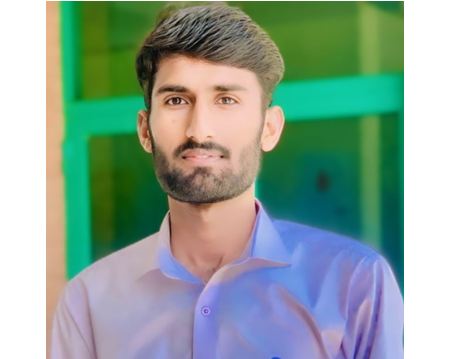
Hospital tours provide invaluable insights into medical laboratories, enhancing students’ practical knowledge beyond textbooks. A study tour for Department of Medical Laboratory Technology students at the University of Okara was conducted on January 28, 2025, under the supervision of Dr. Saira Sattar.They were accompanied by Ms.Amina Aqeel and Mr.Naeem Akhtar. Despite facing several challenges, the organizers, with the support of some students, successfully arranged the tour. The visit included Sahiwal Teaching Hospital and Sahiwal Medical College, offering exposure to microbiology, histopathology, hematology, and serology labs. Students observed diagnostic procedures, blood banking, and laboratory techniques firsthand. Experts guided them through specimen collection, bacterial culture, and medical diagnostics.Hands-on experience with laboratory equipment deepened their understanding of quality control and clinical practices. The visit highlighted career opportunities in academia, research, and clinical diagnostics. Interactions with professionals emphasized the critical role of laboratory technologists in healthcare. The experience reinforced their confidence and professional aspirations. This initiative bridged academic learning with real-world medical applications, preparing students for impactful careers in medical sciences. The first visit was to the laboratory of Sahiwal Teaching Hospital, where students had the opportunity to explore various sections under the guidance of Dr. Ahmad and Dr. Hina. The visit began with an introduction to the laboratory, highlighting its role in medical diagnostics.Students were introduced to different sections, including Hematology, Serology, Routine Chemistry, and Microbiology.

Dr. Ahmad and Dr. Hina explained the significance of each segment in disease diagnosis and patient management. The process of sample collection was demonstrated, emphasizing the correct techniques for drawing blood and other specimens. Students learned about the importance of maintaining hygiene and safety protocols while handling samples. The proper method of labeling samples was explained to ensure accuracy and prevent errors. They were introduced to the laboratory’s automated and manual equipment used for different diagnostic tests. In the Hematology section, students observed how blood samples are analyzed to detect various disorders. The working principles of hematology analyzers were discussed in detail. In the Serology section, they learned about diagnostic tests used to detect infectious diseases. The significance of antigen-antibody reactions in disease detection was explained. In the Routine Chemistry section, students were shown how biochemical tests are performed to assess organ function. They observed tests for liver function, kidney function, and blood glucose levels. The principles behind spectrophotometry and other biochemical techniques were demonstrated. In the Microbiology section, students learned about bacterial culture techniques. They were shown how different culture media are used to grow and identify microorganisms. The process of staining and microscopic examination of bacteria was demonstrated. The importance of antibiotic sensitivity testing in treatment decisions was explained. Throughout the visit, Dr. Ahmad and Dr. Hina answered students’ queries, enhancing their understanding. Students were given hands-on experience in handling laboratory instruments. They observed how laboratory professionals follow standard operating procedures to ensure accuracy. The role of quality control in maintaining reliable test results was emphasized. The final stage of laboratory diagnostics, which involves generating patient reports, was demonstrated. Students learned how test results are interpreted and documented. The significance of maintaining confidentiality and ethical considerations in laboratory work was discussed.The instructors conducted practical demonstrations to reinforce theoretical knowledge. This hands-on experience helped students gain a deeper understanding of laboratory techniques. The visit provided valuable exposure to real-world diagnostic procedures. It enhanced students’ confidence in performing laboratory tasks accurately.Overall, the visit to the laboratory was an informative and enriching experience, preparing students for future professional challenges.

After that, the students visited the Blood Bank at Sahiwal Teaching Hospital, where they observed various instruments used in blood banking procedures. They gained practical knowledge of the cross-matching process, which ensures compatibility between donor and recipient blood. The students also learned about the collection and processing of fresh frozen plasma (FFP) and its significance in medical treatments. Additionally, they observed the separation of different blood components, such as red blood cells, platelets, and plasma, each stored under specific conditions to maintain their viability. The visit provided hands-on exposure to the technical aspects of blood banking, enhancing their understanding of transfusion medicine. They also learned about the strict protocols followed to ensure blood safety and prevent contamination. The role of advanced equipment in inaccurate blood testing and storage was emphasized during the session. Students observed how blood samples are handled, labeled, and stored to maintain traceability. The visit reinforced the importance of proper blood component storage to ensure effective patient treatment. Overall, the experience deepened their knowledge of laboratory practices and the critical role of blood banks in healthcare. After visiting Sahiwal Teaching Hospital, the students were taken to Sahiwal Medical College. Upon arriving at the medical college, the teachers and students were warmly welcomed by the histopathologists and microbiologists. The faculty members introduced themselves and briefly explained their respective fields. They provided insights into the role of histopathology and microbiology in medical diagnosis and research. The students were given a tour of the laboratories, where they observed various diagnostic techniques and procedures. The doctors explained how different diseases are identified through microscopic examination and laboratory tests. They also discussed the importance of research in improving medical treatments and patient care. The students had the opportunity to ask questions and interact with the experts. The visit aimed to enhance their understanding of medical sciences and inspire them for future careers in healthcare. It was an informative and engaging experience for both students and teachers. After welcoming the teachers and students, they were first divided into groups and taken for a visit to the microbiology laboratory. There, Dr. Syeda Wajiha Batool Microbiologists provided a detailed explanation of how microorganisms are cultivated and how their growth is observed on Petri dishes. He introduced the students to various instruments used in the laboratory, including the laminar airflow, hot oven, and incubator, explaining the function and importance of each in microbiological research. The students were shown how culture media is prepared and the methods used to identify microbial growth. Dr. Syeda Wajiha Batool Microbiologists also explained the different types of agars used in the laboratory and their specific applications for cultivating various microorganisms. Additionally, she demonstrated how sensitivity tests are conducted to determine the effectiveness of antibiotics on microbes, and how microbial resistance is assessed, an important factor in understanding the behavior of pathogens. She emphasized the role of medical laboratory professionals in these processes, highlighting their crucial involvement in ensuring accurate testing, diagnosis, and treatment strategies. Through this visit, the students gained practical insights into the everyday functions of a microbiology laboratory, understanding the methods and techniques used to study microorganisms, and the essential role laboratory professionals play in advancing medical science. This experience provided a solid foundation for the students, complementing their theoretical knowledge with real-world laboratory practices. The microbiology laboratory students were taken on a visit to the histopathology laboratory, where they had the opportunity to observe and learn about various processes. In the grossing room, students were shown different organs and provided with detailed information on how tissues and organs are preserved. Practical demonstrations were conducted to explain these processes. The students were also introduced to the techniques of tissue processing and embedding. The process of cutting tissues using a microtome was demonstrated, along with the methods of staining slides. They were informed about the different types of stains used in histopathology, and the practical application of these techniques was shown to them.

The students gained hands-on experience during the visit, which significantly enhanced their understanding of the subject. The histopathologist also explained the vital role played by medical laboratory professionals in a histopathology laboratory. Furthermore, the students were briefed on the prospects in the field and the various roles they could pursue as professionals in histopathology. This visit provided them with a comprehensive view of the operations within a histopathology laboratory and offered valuable insight into the potential career paths they could follow. Overall, the visit was a highly informative and enriching experience for the students. After visiting the histopathology laboratory, Dr. Raess, a histopathologist, and Dr. Syeda Wajiha Batool from microbiology at Sahiwal Medical College took photos with students and teachers. They engaged in a discussion about the future of students and highlighted the significant role of medical laboratory professionals. They also shared their insights on the growing opportunities in the field. The students and teachers were given a comprehensive tour of the laboratories at Sahiwal Teaching Hospital, Sahiwal Laboratory, and Sahiwal Medical College. This tour provided the students with valuable exposure and a great learning experience. The visit allowed students to see firsthand the practical applications of their academic knowledge and how laboratory work contributes to patient care. As the visit came to an end, Dr. Raess and Dr. Syeda Wajiha Batool bid farewell to the group, wishing them the best in their future careers. The entire experience served as an excellent opportunity for students to interact with professionals in the field and gain insights into the importance of laboratory work in the medical profession. The students completed the tour with valuable insights that went beyond academic learning. They developed a deep understanding of their future roles as professional laboratory technologists and recognized their potential to make a meaningful impact in healthcare. The experience boosted their confidence, reinforcing the importance of their contributions, which are just as significant as those of MBBS students. The hospital tours undertaken by the students of the Department of Medical Laboratory Technology at the University of Okara were more than just a physical exploration—they were a profound learning experience. As they return to their classrooms, these students bring not only theoretical knowledge but also a deeper appreciation of their future role in patient care and community health. Inspired and committed to lifelong learning, they are prepared to excel in their chosen field, knowing that their contributions play a vital role in the broader healthcare system.

Student of BS Medical Laboratory Technology

University of Okara.

[email protected]

ICCI president sounds alarm on unfavorable business climate in Islamabad

ICCI president sounds alarm on unfavorable business climate in Islamabad

ISLAMABAD, FEB 8 /DNA/ – Nasir Mansoor Qureshi, President of the Islamabad Chamber of Commerce and Industry (ICCI), has called for urgent action from the relevant authorities to address the mounting challenges faced by the business community in Islamabad. Speaking at a presentation in the presence of Chaudhry Mohammad Ali Randhawa, Chairman Capital Development Authority (CDA) and Chief  Commissioner Islamabad during the Federation of Pakistan Chamber of Commerce and Industry (FPCCI) meeting, Qureshi highlighted the significant rise in the cost of doing business and the heavy tax burdens on local businesses, which are jeopardizing the growth of the city’s economy and could lead to the relocation of businesses abroad.

He reiterated that businesses in Islamabad have been paying higher taxes compared to other regions, a situation that, if left unaddressed, could force businesses to move overseas, further impacting unemployment rates and depriving the government of essential revenue.

“The cost of doing business in Islamabad has skyrocketed by 190%, creating an unfavorable environment for industries. This alarming trend could have devastating effects on the local economy,” Qureshi stated. He also pointed out that educated youth are already leaving the country due to diminishing job opportunities and business prospects.

Furthermore, Qureshi called for urgent reforms in the ship-breaking industry, which plays a crucial role in supplying scrap metal to the steel industry. He highlighted how excessive taxes on this sector are undermining its potential to support the country’s manufacturing industries.

The ICCI President also reiterated the business community’s commitment to working alongside the Capital Development Authority (CDA) to make Islamabad cleaner, greener, and more attractive for both residents and visitors.

On this occasion, President FPCCI Atif Ikram Shaikh, Vice President Tariq Jadoon, Chairman Capital Office Karim Aziz Malik, Chairman Coordination Malik Sohail, Chairman Founder Group Tariq Sadiq, former Presidents ICCI Khalid Javed, Mian Akram Farid, Abdul Rauf Alam and other business leaders were present in large number and expressed their support for Qureshi’s call for reforms. They  also urged the authorities to create a more conducive environment for businesses in Islamabad to ensure the city’s continued economic growth and prosperity.

EU’s largest far-right bloc makes show of force in Madrid

EU's largest far-right bloc makes show of force in Madrid

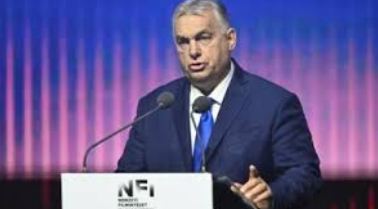
MADRID, FEB 8 (AFP/APP): Hungarian Prime Minister Viktor Orban and France’s Marine Le Pen headline a rally in Madrid on Saturday by Europe’s biggest far-right bloc, buoyed by electoral gains and Donald Trump’s return to power.

                  Patriots for Europe has realigned the EU far right and became the European Parliament’s third-largest force after Orban helped launch it last year to shift Brussels rightwards.

                  Among the leading nationalist figures taking to the stage are Orban, Le Pen, Dutch anti-Islam firebrand Geert Wilders, Italian Deputy Prime Minister Matteo Salvini and former Czech premier Andrej Babis.

                  They will outline their strategy to defend “national sovereignty, the defence of liberty and European identity” and reject “mass immigration that destabilises nations”, said Spanish party Vox, which is hosting the rally.

                  Their vision is a “real alternative” to the coalition in Brussels between the European People’s Party of European Commission chief Ursula von der Leyen and the Socialists and Democrats, Vox added.

                  Around 2,000 people are due to attend the event after a dinner on Friday for the participants and Kevin Roberts, head of influential conservative US think tank The Heritage Foundation.

                  After last year’s EU elections in which far-right parties performed strongly in several countries, Saturday’s gathering “is a show of force”, said Steven Forti, a researcher at the Autonomous University of Barcelona.

                  Those elections saw the group overtake the European Conservatives and Reformists, associated with Italian Prime Minister Giorgia Meloni’s Brothers of Italy party, while it also overshadows a smaller far-right bloc that includes Germany’s ascendant AfD.

                  Patriots for Europe is therefore seeking to “show its central place in the competition” with rival far-right groups, Forti told AFP.

                  – ‘Make Europe Great Again’ –

                  “They want to take advantage of the wave from Trump’s victory and the shock in the European Union” as the US president roils allies with his measures, Forti added.

                  The summit in the Spanish capital has adopted the slogan “Make Europe Great Again”, a nod to Trump’s rallying cry “Make America Great Again”.

                  Orban is seen as one of Trump’s closest EU allies, while Vox leader Santiago Abascal has highlighted the ideological affinity between the group and Trump, especially on immigration.

                  In wanting a European Union that “takes care of defence, the economy up to a certain point, and especially borders… it would be a confederation of sovereign states” that aligns the group with Trump, said Forti.

                  But Trump’s threats, from slapping prohibitive tariffs on European goods to annexing Denmark’s gigantic Arctic territory of Greenland, may generate tensions within the far right.

                  “Liking Donald Trump’s patriotism does not mean being the vassal of the United States,” Jordan Bardella, leader of France’s National Rally whose figurehead is Le Pen, said last month.

President Asif Ali Zardari attends 9th Asian Winter Games in Harbin

President Asif Ali Zardari attends 9th Asian Winter Games in Harbin

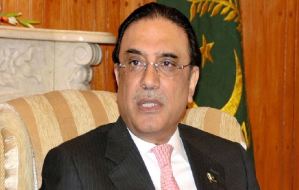
HARBIN, FEB 7 /DNA/ – President Asif Ali Zardari attended the grand opening ceremony of the 9th Asian Winter Games in Harbin, China, alongside Chinese President Xi Jinping and other heads of states from Asia.

The ceremony drew high-profile attendees, including the Sultan of Brunei, the President of Kyrgyzstan, and the Prime Minister of Thailand. The games, scheduled from February 7 to 14, have attracted over 1,200 athletes from 34 countries. Pakistani winter athletes are also participating in the event.

The President’s participation in the opening ceremony highlights the importance of the games in fostering regional cooperation and strengthening people-to-people ties. The games offer an opportunity to further deepen cultural cooperation among regional nations and promote sports diplomacy between Pakistan and China.

The President’s participation will also further cement bilateral ties between Islamabad and Beijing.

The Asian Winter Games could also serve as a significant platform for advancing winter sports in Pakistan.

The President also extended his best wishes to the Chinese government and all athletes competing in the games.

Britain remains a major trading partner of Pakistan – Usman Shaukat

Britain remains a major trading partner of Pakistan – Usman Shaukat

RAWALPINDI, FEB 7 /DNA/ – The United Kingdom continues to be one of Pakistan’s major trading partners and currently stands as the fourth largest export market for Pakistani products. In the previous fiscal period, Pakistan exported goods worth $935.018 million to the UK, reaffirming Britain’s crucial role in Pakistan’s trade landscape.

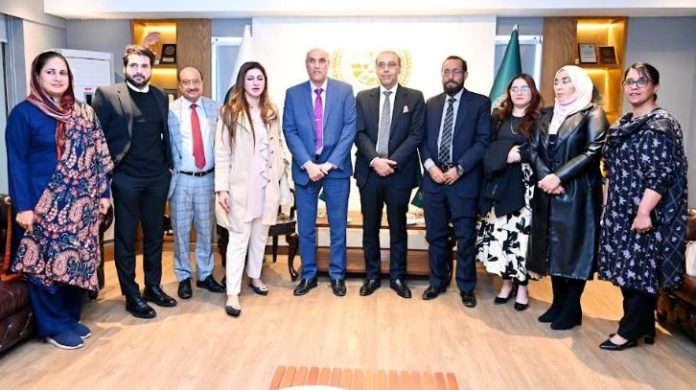
 This was stated by Usman Shaukat, President of the Rawalpindi Chamber of Commerce and Industry (RCCI), during a meeting with a visiting delegation led by Rashid Iqbal, Chief Executive and Trade Champion of the Pakistan Britain Business Council (PBBC).

 President Usman Shaukat highlighted the steady growth of Pakistan’s exports to European countries, which increased by 8.62% in the first five months of the current fiscal year. He attributed this growth to higher shipments to Western states and emphasized the need to further strengthen bilateral trade relations between RCCI and PBBC.

 The discussions during the meeting focused on enhancing trade cooperation, fostering business-to-business linkages, and supporting entrepreneurs, particularly women entrepreneurs, in expanding their reach to international markets.

 The visiting delegation acknowledged Britain’s significant role in Pakistan’s trade sector and commended the Pakistani diaspora in the UK, which represents the second-largest overseas Pakistani community in the world, for its substantial contributions to bilateral trade and investment.

 The meeting was attended by RCCI Senior Vice President Khalid Farooq Qazi, Vice President Fahad Barlas, and other executive members of the chamber. Both sides expressed their commitment to continued collaboration to boost economic and trade activities between Pakistan and the UK. 

CDA Board approves SAP system implementation for financial management

CDA Board approves SAP system implementation for financial management

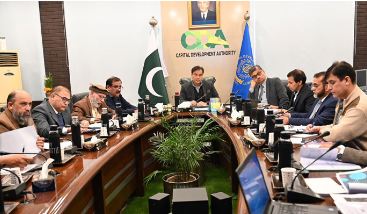
ISLAMABAD, FEB 7 /DNA/ – The third meeting of the CDA Board was held on Friday at CDA Headquarters, under the chairmanship of Muhammad Ali Randhawa. The meeting was attended by all members of the CDA Board. Various agenda items were discussed during the third meeting of the CDA Board

During the third meeting of CDA Board, approval for the appointment of a Director Finance to efficiently manage the financial matters of the CDA Hospital. The meeting also decided to implement the SAP system for the financial management of CDA. Under this decision Government of Pakistan’s accounting system, SAP, will be introduced in CDA for financial matters. The Board also approved rate running contract for the supply of various kits in the Health Services Wing.

CDA Board was apprised that the monthly lease of the petrol pump located in Sector F-6 has increased from PKR 292,000 to PKR 4.5 million per month, with an additional 10% annual increase in the annual lease of the petrol pump.
Chairman CDA, Muhammad Ali Randhawa, instructed that data for all assets under the administration wing should be compiled.

Furthermore, the meeting decided to recruit landscaping experts in CDA to further beautifting Islamabad.The CDA Board approved recruitment of a Managing Director and three Directors for the Islamabad Water Agency. It was also decided to recruit Urban Developers and a Carbon Credit Expert within the institution.

Additionally, it was decided to take action against deputation officers and employees who have taken house building advances from CDA but have not made deductions.In this regard, it was decided that a request will be made to the Establishment Division for action against deputation officers who are not returning loans. The decision was also made that no last pay certificate will be issued for any deputation officer or employee until they repay the advances taken from CDA.

Chairman CDA, Muhammad Ali Randhawa, emphasized that efforts should be made to facilitate the officers and employees of CDA with easy loans from other banks, along with house building and car advances provided by CDA.

The CDA Board also decided to upgrade the nursery located on Park Road.In this regard a proposal was discussed to establish a Carbon Credit Center at the nursery.

The CDA Board approved the hiring of a transaction advisor for the Green Four tier Data Center. The meeting also approved e-payment gateways of the My Islamabad App.

The CDA Board also approved the hiring of a consultant under 42 (F) for the revamping of Parliament Lodges and Government Hostel.

Gilani calls youth to take lead of Green Pakistan through innovation, research, action

Gilani calls youth to take lead of Green Pakistan through innovation

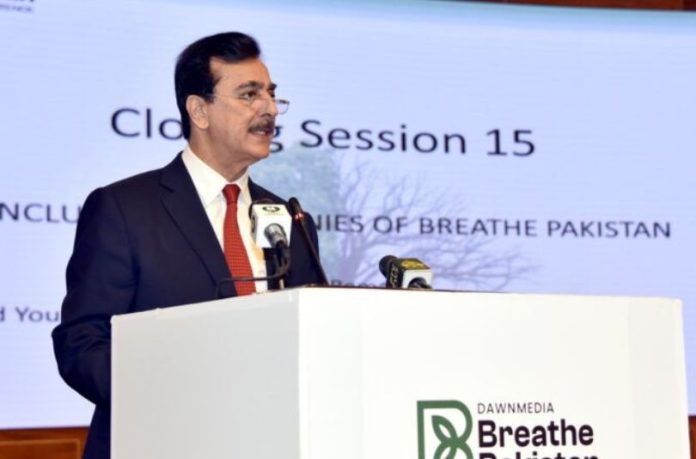
ISLAMABAD, FEB 07 (APP): Acting President Syed Yousuf Raza Gilani on Friday urged the youth to take lead of the Green Pakistan initiative through research, advocacy and innovation to ensure inclusive climate resilience at the national level.

In his keynote address at the closing session of Breathe Pakistan International Climate Change Conference, the acting president reaffirmed the country’s commitment to address gravest challenges of climate change.

He said that Pakistan had endured devastating floods, droughts and glacier melting causing floods due to climate change despite it’s least share to the global carbon emissions.

“Climate Change is a living reality. Pakistan needs support for technology transfer and capacity building to ensure climate resilience,” he said.

Acting President Gilani  mentioned that Pakistan had taken indigenous steps to contain climate change impacts on the region mainly renewable energy (RE) adoption like solar and hydropower projects to reduce reliance on fossil fuels.

The country, he said was also exploring climate finance and carbon markets to mobilize climate finance.

He underscored that early warning systems and disaster management frameworks were critical to protect communities.

The government, he said was holding dialogue with communities, provincial governments and development partners to ensure improved and holistic climate action.

He added that fight against climate change was not possible without global support and global commitment for international climate finance was critical to ensure access of least developed nations to climate finance for adaptation and mitigation.

“We need to equip the young change makers with skills, technology and knowledge to lead community level climate adaptation and mitigation efforts. Climate action is a movement that demands relentless commitment and devotion,” he said.

Aban Marker Kabraje of UNEP said the speakers and experts rendered quality discourse, subject matter and knowledge in their speeches and addresses.

The interventions were rich full of enormous information required to address climate change, she added.

Folerence Roll, FAO Country Head presented the outcomes of the Breathe Pakistan Conference.

The conference provided a great opportunity to showcase how media can lead climate action, she said , adding, “The first outcome is on key aspect that climate change affects all aspects and components of society and multi sectoral and multidisciplinary action to address, encourage federal and provincial governments to join resources to address it.”

She added that climate finance was the second important outcome and demanded Pakistan to mobilize international agenda on climate finance and enhance it’s capacities of accessing climate finance.

The living Indus Initiative was a national project that addressed all provinces and the government was addressing it, she mentioned.

The Conference outcomes underlined that the fourth outcome was about women and girls who were the most affected due to climate change and look forward for specific measures to address specific strategy to address resilience building of women and girls.

It also demanded transformation of agriculture food system to enhance quality and nutrition of food, and improve tree cover that have huge potential to mitigate and transform climate change impacts.

ISSI hosts seminar on Kashmir Solidarity Day, launches research hub

ISSI hosts seminar on Kashmir Solidarity Day

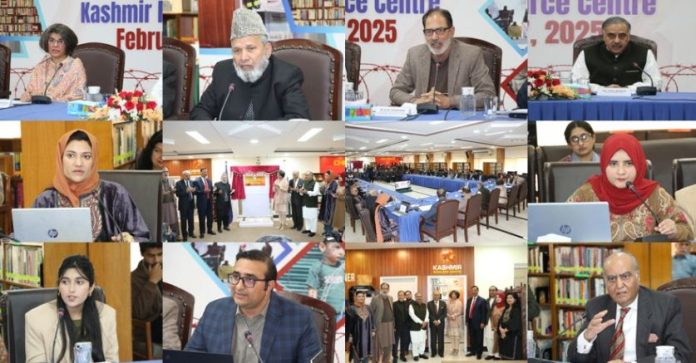
ISLAMABAD, FEB 7 /DNA/ – The India Study Centre (ISC) at the Institute of Strategic Studies Islamabad (ISSI) organized a Seminar in commemoration of the Kashmir Solidarity Day, Titled “Kashmir Solidarity Day: A Commitment to Peace, Rights and Self-Determination”, the event included inauguration of the ‘Kashmir Resource Centre’ – a first-of-its-kind at a national think-tank. Ambassador Amna Baloch, the Foreign Secretary of Pakistan, was the chief guest on the occasion.

Expressing her views, the Foreign Secretary said the Kashmiri people have not been able to exercise their fundamental right of self-determination due to continued Indian intransigence. Today, the true representatives of the Kashmiri people remain behind bars, with the total number of political prisoners being in the thousands. Iconic Kashmiri leader Syed Ali Shah Geelani died during detention. As if the imprisonment of popular leaders was not enough, the Indian authorities have been banning the political parties that represent the true aspirations of the Kashmiri people. So far, 14 political parties have been outlawed. History bears witness that India’s continued occupation of  large parts of Jammu and Kashmir has threatened regional peace and stability on a number of occasions. The Foreign Secretary stressed that Pakistan believes in peaceful co-existence with its neighbours. However, a peaceful settlement of the Jammu and Kashmir dispute, in accordance with the UN Security Council Resolutions and aspirations of the Kashmiri people, is essential for lasting peace in South Asia. The Foreign Secretary commended the ISSI for establishing a much-needed ‘Kashmir Resource Centre’ and expressed her hope that this Centre will offer a useful repository of knowledge for researchers, practitioners and lay readers alike.

Director General ISSI Ambassador Sohail Mahmood, in his remarks, said that while Pakistan and the Kashmiris remain resolute in their quest for a solution based on the Security Council resolutions, India has long reneged on its solemn commitments. The international community hesitates to play its rightful role, either because of geo-strategic considerations or corporate interests. Meanwhile, India’s conduct in the occupied territories is marked by heartless cruelty and repression, political manipulation, demographic engineering, and an onslaught of misinformation and disinformation. In order to deceive the world community and secure legitimacy for its crimes, India has been trying to paint the legitimate Kashmiri resistance struggle as “terrorism”, leveling allegations of “cross-border terrorism” against Pakistan, and projecting a false sense of ‘normalcy’ in IIOJK since 5 August 2019.  Ambassador Sohail Mahmood stressed that for the Kashmiris and the people of Pakistan, it is imperative to reject any narratives of despair and to keep faith in the prospects of a fair settlement of the Jammu and Kashmir dispute.

While highlighting the importance of the newly-established Kashmir Resource Centre (KRC) at ISSI, Ambassador Sohail Mahmood hoped that it will play a meaningful part in creating increased awareness and understanding and promote informed discourse, particularly among the youth of Pakistan about this most intractable of global issues from the last century. He also thanked the Ministry of Foreign Affairs for its support in the establishment of KRC.

Earlier, in his introductory remarks, Dr. Khurram Abbas, Director India Study Centre said that every year, Pakistan observes Kashmir Solidarity Day to express unwavering support for the Kashmiri people’s right to self-determination, as enshrined in the UN’s Charter as well as the Security Council resolutions. Indian occupied forces in Indian Illegally Occupied Jammu and Kashmir (IIOJK) are responsible for many untold atrocities but they could not break the will of the Kashmiri people for their right of self-determination.

The Seminar featured a line-up of distinguished speakers who shared their perspectives on the Kashmir issue. Speaking from the perspective of a Pakistani youth, Ms. Fatima Waheed said that the revocation of Article 370 and 35A was a calculated step towards erasing Kashmir’s identity – a violation of international law and United Nations Security Council resolutions. She questioned that while the world claims to value democracy and justice, why Kashmiris are being denied both?

Ms. Tayyaba Khurshid, Research Officer at CISS (AJK), shared her perspective as a Kashmiri youth. She said that there is a strong bond between AJK and Pakistan. The youth in AJK have hopes and possibilities for a better future, which is not the case with the Kashmiri youth under Indian occupation. India remained active in spreading falsehoods and sow disaffection among the youth. Both AJK and Pakistan must join hands to thwart Indian designs.

Ms. Naila Kyani, a social and political analyst and a seasoned anchorperson, highlighted the resilience and role of Kashmiri women in the freedom struggle. She said that Kashmiri women have shown remarkable resilience in the face of brutal repression and systemic violence. For over seven decades, Kashmiri women have led protests, sit-ins, and resistance movements. She highlighted the sacrifices of women like Asiya Andrabi, Anjum Zamrud Habib and Fehmeeda Sofi who have been in Indian prison for years. She also highlighted movements like ‘Wanan Zanan’ that provide safe spaces to women through storytelling, literature and poetry.

Mr. Altaf Hussain Wani, Chairman, Kashmir Institute of International Relations, spoke on Modi’s policies in IIOJK. He said that when Modi assumed power in 2014, he started rounding up Kashmiri political leaders and sent them to jails so that their voices does not reach a common Kashmiri. While giving the example of renowned human rights activist Khurram Parvez, who has been in Indian captivity for more than three years, Mr. Wani said that free speech has been criminalized in Jammu and Kashmir under Indian occupation. The hallmark of Modi’s policies in IIOJK was the revocation of Articles 370 and 35A, which was done to implement the ‘Hindutva’ agenda, bring about demographic change in IIOJK, and ‘Indianize’ Kashmir, which the Kashmiris will not accept. 

Mr. Ghulam Muhammad Safi, Convener, All Parties Hurriyat Conference (APHC), highlighted various dimensions of the Kashmir dispute that included human rights violations as Kashmiris are being killed and tortured in custody of Indian forces. Rape is being used as a weapon. He said that these violations of human rights are cause-related phenomena as India wants to silence the Kashmiri people and deter them from demanding their right to self-determination. He underlined the importance of UN Security Council resolutions for solution of the Jammu and Kashmir dispute. He also emphasized that any country that is a strategic partner of India must not be allowed to mediate and that any talks on the resolution of Kashmir dispute must include Kashmiri leadership. 

In his concluding remarks, Chairman Board of Governors Ambassador Khalid Mahmood said that the right of self-determination is a fundamental human right and Kashmiris have this right under the UN Charter, international law, and Security Council Resolutions. A number of human right organisations have highlighted the ongoing human rights abuses in IIOJK.  Despite India’s oppression and its settler- colonial agenda, the resilience of the people of IIOJK has not shaken and Pakistan stands behind the Kashmiri people in their just struggle. Time is not far off when the people of Jammu and Kashmir will be exercising their right to self-determination.   

The Kashmir Resource Center is envisaged to be a resource hub aimed at promoting awareness and facilitating rigorous research, informed discourse, dialogue and advocacy on this issue of national importance and international significance.

Bangladesh Naval Chief meets CJCSC in Rawalpindi

Bangladesh Naval Chief meets CJCSC in Rawalpindi

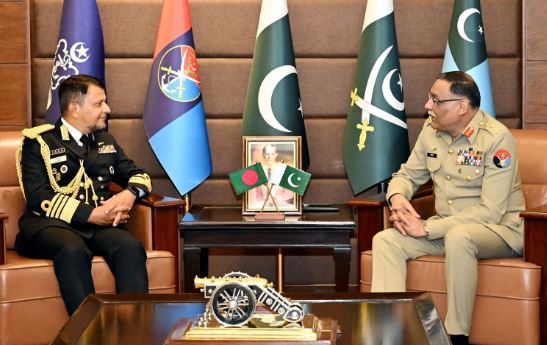
RAWALPINDI, FEB 7 /DNA/ – Admiral M Nazmul Hassan, Chief of Naval Staff Bangladesh, who is on an official visit to Pakistan, called on General Sahir Shamshad Mirza, NI (M), Chairman Joint Chiefs of Staff Committee at Joint Staff Headquarters, Rawalpindi.

The discussion centered on evolving regional environments, mutual strategic interests, including maritime collaboration and explored ways to enhance bilateral defense cooperation. Both military leaders underscored the importance of collaboration in promoting peace and stability.

The visiting dignitary lauded the professionalism of Pakistan Armed Forces and acknowledged their sacrifices in fight against terrorism.

Earlier, upon arrival at Joint Staff Headquarters, a smartly turned-out tri-services contingent presented Guard of Honour to the visiting dignitary.

Stay Connected

64FansLike
60FollowersFollow

Latest Reviews

Exchange Rates

USD - United States Dollar
EUR
1.17
GBP
1.35
AUD
0.72
CAD
0.73