Home Blog Page 681

British Council’s 8th Women of the World Festival concludes with resounding success

British Council

Staff Reporter

LAHORE, FEB 9 /DNA/ -The 8th edition of the British Council’s Women of the World Festival (WOW) held in collaboration with the WOW Foundation, UNFPA, and the Entrepreneurship and Community Development Institute (ECDI), concluded successfully at the Alhamra Arts Council, Lahore.

The two-day festival, free and open to the public, attracted an impressive audience of over 12,000 attendees, marking another milestone in Pakistan’s journey towards gender equality and empowerment.

This year’s festival marked the second consecutive WOW Festival in Lahore, following its successful expansion from Karachi and Hunza in previous years. The programme featured an engaging blend of panel discussions, workshops, film screenings, immersive performances, a dynamic marketplace, and children’s activities.

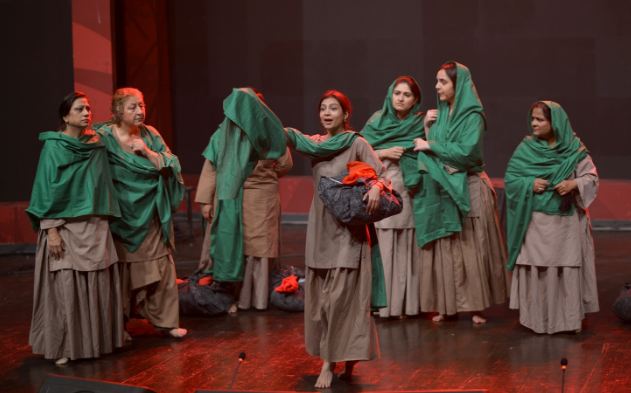
Attendees were enthralled by a female qawali curated by Arieb Azhar, a musical tribute to Haniya Aslam by Rakae Jamil, and an electrifying dance performance by Suhai Abro. Literary enthusiasts enjoyed readings by Attiya Dawood and Zambeel, while families were delighted by an interactive pop-up session with Khaled Anam.

Adding to the visual spectacle, the festival showcased a public mural featuring impactful women, created by Summaiya Jillani, and premiered a film on women in the arts by Destination Media, further cementing WOW’s role as a powerful platform for celebrating and amplifying women’s contributions in Pakistan and beyond.

Maarya Rehman, Deputy Director, British Council Pakistan, emphasized the festival’s role in tackling crucial gender issues. She expressed, “The WOW Festival continues to be a platform for addressing some of the most critical gender issues of our time. It has been inspiring to witness the courage and resilience of women in Pakistan who are leading the charge for change. Empowering women is not just a women’s issue—it is everyone’s issue, and together we can create a more equitable and inclusive world.”

Laila Jamil, Director Arts, British Council Pakistan, highlighted the festival’s mission said “WOW Pakistan celebrates the resilience, talent, and potential of women while offering a powerful platform for dialogue and action. This year’s theme, ‘Surkhaab,’ is a tribute to women’s intrinsic worth and a reminder of the value they bring to our communities, families, and societies. It was great to see such a huge turnout for the festival in Lahore. The British Council remains committed to fostering inclusivity, gender empowerment, and providing platforms for every Pakistani to raise their voice for a better tomorrow.”

The festival hosted thought-provoking discussions on pressing topics including mental health, climate change, education, women in public spaces, the digital divide, patriarchy, and disability, reflecting the multifaceted challenges women face today.

WOW Pakistan is a vital part of the British Council’s long-standing commitment to gender equality, fostering collaboration between civil society, women’s rights organizations, academics, artists, and community leaders to create lasting impact. The 2025 programme was shaped through extensive consultations with diverse stakeholders, ensuring inclusivity and representation across different sectors of society.

As the curtains close on another successful edition of the WOW Festival, the impact of these conversations, performances, and collaborations will continue to inspire and shape the future. With unwavering dedication, the British Council and its partners remain committed to breaking barriers, creating opportunities, and ensuring a more inclusive world for women and girls in Pakistan and beyond.

FM Dar, Egyptian counterpart discuss GAZA crisis in phone call

FM Dar, Egyptian counterpart discuss GAZA crisis in phone call

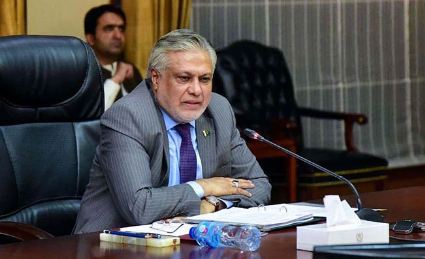
ISLAMABAD, FEB 9 /DNA/ – Deputy Prime Minister/ Foreign Minister, Senator Mohammad Ishaq Dar held a telephone conversation with  Foreign Minister of the Arab Republic of Egypt, Badr Abdelatty, today. They discussed the developments in Gaza including  critical humanitarian situation impacting  millions of Palestinian residents.

The Deputy Prime Minister reiterated Pakistan’s unwavering support to the Palestinian people and also expressed Pakistan’s full solidarity with Egypt. He also conveyed Pakistan’s support for convening of an Extraordinary OIC meeting of Council of Foreign Ministers to deliberate upon this issue. The two Ministers agreed to maintain close contact on these developments in the days ahead.

Kosovo votes amid tensions with allies, Serbia

Kosovo votes amid tensions with allies, Serbia

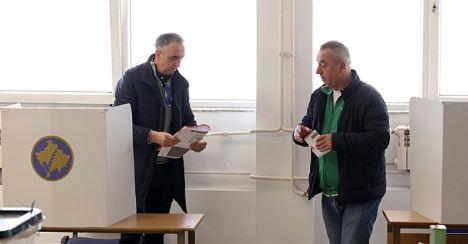
PRISTINA, FEB 9 (AFP/APP): Voters began casting ballots in Kosovo elections Sunday in a contest that pits combative incumbent Prime Minister Albin Kurti’s quest to stamp out Serbian influence against a fractured opposition’s vow to boost the economy.

                  Kurti and his Vetevendosje (“Self-Determination”) party (VV) have campaigned on their efforts to dismantle the remaining Serbian institutions in Kosovo while expanding the government’s reach to Serb-majority areas.

                  Those pledges appear to have been well received by large swaths of Kosovo’s ethnic Albanian majority, with one of the few available polls projecting that VV was on course to capture roughly half of the vote.

                  Kurti’s campaign has sought to drive home the message, insisting the government is in greater control of Kosovo’s territory than at any other time since independence.

                  “I thank all the citizens of Kosovo who voted so far and encourage everybody to vote. Exercise your democratic right to make your voice heard,” said Kurti as voting got under way across Kosovo.

                  Animosity between Kosovo and Serbia has persisted since the war between Serbian forces and ethnic Albanian insurgents in the late 1990s.

                  Serbia has steadfastly refused to acknowledge Kosovo’s declaration of independence in 2008.

                  Since the war’s end, remnants of Serbian government institutions continued to provide services — ranging from health care to education — to Serbs inside Kosovo.

                  But in the past year, Kurti has sought to end that status quo.

                  – Shadow state –

                  Kosovo’s authorities have effectively outlawed the use of the Serbian dinar, closed banks and shuttered the post offices where Serbian pension payments were cashed.

                  Belgrade-backed government and tax offices have also been closed and Serbian car plates banned.

                  The moves have heightened the uneasy relations between Kosovo’s ethnic Albanian majority and its Serb minority in the run-up to the polls.

                  Once known for antagonistic stunts such as letting off tear gas in parliament, the VV has grown from a street movement led by Kurti in the 2000s to Kosovo’s dominant political party.

                  Kurti’s government is the first to finish its full term in office since the breakaway Serbian province declared independence.

                  But Kurti’s rule has been turbulent, marked by regular unrest between Serbs and ethnic Albanians.

                  Tensions spiked after EU- and US-backed negotiations between Kosovo and Serbia all but collapsed in March 2023.

                  In the aftermath, NATO peacekeepers were assaulted by rioting Serbs, a deadly armed standoff in the north sent regional tensions soaring and an explosion targeting a canal vital to Kosovo’s power plants late last year saw Kurti blaming Belgrade.

                  Throughout the unrest, Kurti has remained unwavering, even if it meant running afoul of Kosovo’s vital allies in the United States and Europe.

                  But his supporters have praised his vision.

                  “You can see the things (Kurti) has done. He is irreplaceable,” Zek Kurtaj, 40, told AFP after landing at the Pristina airport on Saturday ahead of the vote.

                  – ‘Critical indicator’ –

                  Others suggest Kurti’s actions may have been overly disruptive.

                  Kurti “has been repeatedly accused by opposition parties of delivering little, defying the international community, and complaining about Serbia while missing out on opportunities to build infrastructure and develop Kosovo economically,” wrote Jonathan Moore, an analyst from the Atlantic Council’s Europe Center.

                  “The results of this election will be a critical indicator of Kosovo’s future.”

                  Several of Kurti’s rivals — which include more than two dozen opposition parties in the contest — have sought to focus on Kosovo’s economic uncertainty.

                  Kosovo remains one of the poorest economies in Europe, with roughly 12 percent of its population emigrating since 2011.

                  Many voters said economic issues were at the top of their minds as they cast their ballots.

                  “We believe that change will come. I am thinking about employment, the economy, and all other sectors,” Remzije Halimi, a teacher, told AFP.

                  “My main concern is improving the education system and creating more opportunities for young people like me,” added first-time voter Morena Ismaili.

                  In the run up to the vote, Xhavit Haliti of the right-wing Democratic Party of Kosovo — considered one of the VV’s strongest opponents — has slammed Kurti for fraying ties with Washington and Brussels.

                  Meanwhile, the Democratic League of Kosovo led by economist Lumir Abdixhiku has vowed to increase salaries and boost pensions. 

                  In ethnic Serb areas, the Belgrade-backed Serb List party has campaigned on familiar vows to protect the rights of Kosovo’s dwindling Serb minority.

                  “Any Serb who does not vote tomorrow or who votes against the Serb List de facto gives their vote to Kurti and to those who obey him,” party leader Zlatan Elek told local media.

                  Voting began at 07:00 am (0600 GMT) and will end 12 hours later, when exit polls are expected.

Martyrs are pride of the nation; Governor Punjab

Martyrs

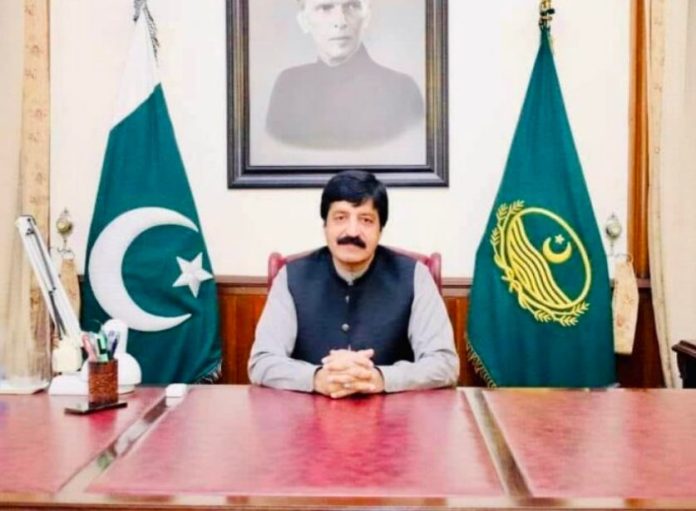
RAWALPINDI, Feb 09 (APP): Governor Punjab, Sardar Saleem Haider Khan on Sunday said that martyrs of Pakistan’s armed forces are the pride of the nation as the country is safe only because of the great sacrifices laid down by the security personnel.

The governor remarked this during his separate visits to villages of martyrs Havaldar Saeed Iqbal and Sepoy Basit Ali who sacrificed their lives while fighting against terrorists in Wana. Havaldar Saeed Iqbal Shaheed belonged to Shahra-e-Bahadur village and Sepoy Basit Ali Shaheed belonged to Jafar village of Fateh Jang.

Sardar Saleem extended condolence with the families of the martyrs, offered Fateha for the high ranks of Shud and paid tribute to the parents of Shuhda.

He said that the nation stands by the defence forces of Pakistan.

“Every child of Tehsil Fateh Jang is ready to sacrifice himself for the defence of the motherland”, he said.

Governor Punjab Sardar Saleem Haider Khan prayed for the elevation of the ranks of the martyrs. He assured the Shuhda families of all possible facilities to be provided to the families of the martyrs.

FTO to visit Faisalabad on Monday

FTO to visit Faisalabad on Monday

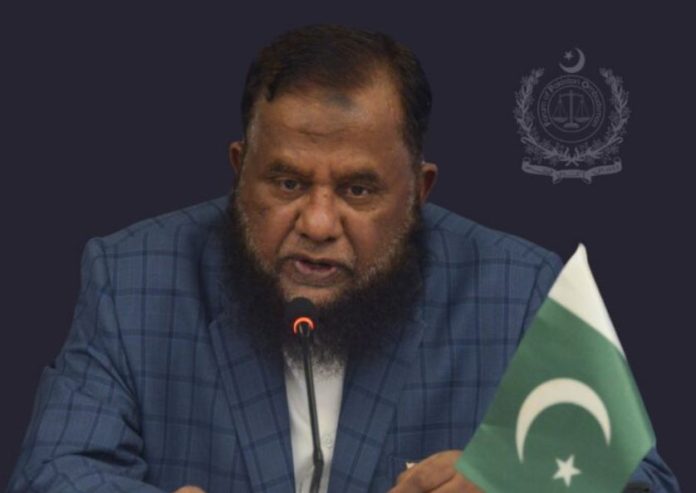
FAISALABAD, Feb 09 (APP): Federal Tax Ombudsman (FTO) Dr. Asif Mahmood Jah will visit Faisalabad on Monday, February 10, to address members of the Faisalabad Chamber of Commerce & Industry (FCCI) regarding tax grievances.

According to Coordinator to FTO Muhammad Farhan Munir, the visit aims to foster better understanding and cooperation between taxpayers and tax authorities, ensuring a more efficient and transparent tax system. 

En route to Faisalabad, Dr. Jah will make a brief two-hour stop in Hafizabad to meet local businessmen and stakeholders, discussing regional tax-related challenges. 

In Faisalabad, he will also meet Government College University Faisalabad (GCUF) Vice-Chancellor Prof. Dr. Rauf-e-Azam and faculty members to explore collaboration between academic institutions and the FTO’s office. Discussions will focus on promoting research and awareness of taxation policies and their economic impact.

PM Shehbaz heads to Dubai for High-Level Global Governance Forum

PM Shehbaz heads to Dubai for High-Level Global Governance Forum

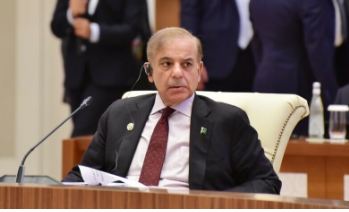
ISLAMABAD, FEB 9 /DNA/ – At the invitation of Vice President and Prime Minister of the United Arab Emirates and Ruler of Dubai, Sheikh Mohammed bin Rashid Al Maktoum, Prime Minister Muhammad Shehbaz Sharif will pay a two-day official visit to the United Arab Emirates (UAE) from 10-11 February 2025 to participate in the World Governments Summit (WGS) in Dubai.

The Summit will bring together a large number of Heads of State/Government, global policymakers, and leading private sector figures to discuss the future of governance, innovation and international cooperation.

This marks Prime Minister Muhammad Shehbaz Sharif’s second visit to the UAE since assuming office in March 2024. He will be accompanied by a high-level delegation including Deputy Prime Minister/ Foreign Minister Senator Mohammad Ishaq Dar and other key members of the Cabinet, reflecting Pakistan’s strong commitment to deepening its engagement with the UAE and other global partners.

During his visit, the Prime Minister will deliver a keynote address at the WGS, highlighting Pakistan’s vision for inclusive economic growth, digital transformation and governance reforms. He will also hold bilateral meetings with the UAE leadership as well as engage with Heads of State/Government from participating countries and leading CEOs of major multinational companies.

Pakistan and the UAE share a deep-rooted brotherly relationship built on mutual trust, understanding and a longstanding mutually beneficial cooperation. The UAE remains one of Pakistan’s key economic and strategic partners, with strong collaboration across multiple sectors.

Pakistani diaspora in the UAE, which is the second largest Pakistani expatriate community worldwide, continues to play a pivotal role in the development and success of both countries, serving as a bridge between the two nations.

The Prime Minister’s visit underscores Pakistan’s unwavering commitment to further strengthening its ties with the UAE, fostering greater economic collaboration and exploring new avenues of partnership for mutual prosperity.

US Congressman Joe Wilson urges Pakistan to ‘free Imran Khan’

US Congressman Joe Wilson urges Pakistan to 'free Imran Khan'

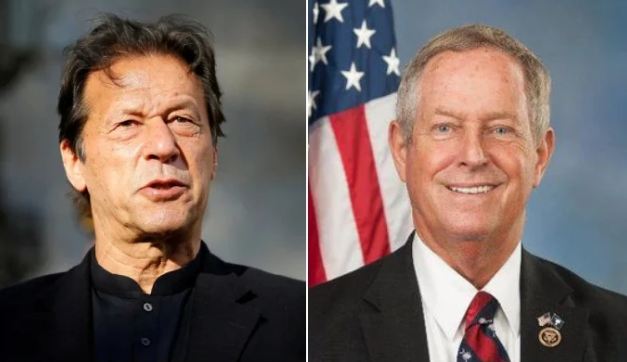
KARACHI, FEB 9: US Republican Congressman Joe Wilson has called on President Asif Ali Zardari, Prime Minister Shehbaz Sharif, and Chief of Army Staff (COAS) General Asim Munir to release former prime minister Imran Khan, asserting that his freedom would strengthen US-Pakistan relations, The News reported on Sunday.

In a letter addressed to Pakistan’s civilian and military leadership, Wilson described Khan’s release as a “would be a major step towards strengthening US-Pakistan relations”.

Wilson, who represents South Carolina’s 2nd congressional district and serves as assistant majority whip, made the appeal public on February 7, posting the letter on X (formerly Twitter).

“Grateful to send this letter today to the political and military leaders of Pakistan to Free Imran Khan,” he wrote.

Underscoring his push for the former premier’s release, he added: “I will also be engaging the Trump administration on this issue. US-Pakistan relations are strongest when Pakistan is democratic. Free Imran Khan”.

The letter starts off by saying that a strong relationship between the US and Pakistan “is in the national interest” of both countries and that “in the over 75 years of bilateral relations between the US and Pakistan, our relationship has been strongest when Pakistan embraces its democratic ideals of rule of law”.

Wilson then comes to what he calls the “unjust detention of the former Prime Minister of Pakistan Imran Khan”. Interestingly, he pre-conditions his appeal with the disclaimer that he has “many disagreements with Mr Khan, particularly his stances in support of the Chinese Communist Party, and War Criminal Putin”.

However, he then added that “however, democracy cannot work if political opponents are unjustly detained on politicised charges rather than defeated in the ballot box”.

The letter asks Pakistani state officials to “uphold democratic institutions, human rights, and the rule of law….” and then ends with Wilson urging “Pakistan to free Imran Khan. Such a step would be a major step towards strengthening US-Pakistan relations”.

Barely a few hours later, the American Congressman followed up with a speech on the floor of the House, once again posting on X his appeal to “free Imran Khan”.

During his Friday speech in Congress, Wilson repeated much of what he had written in the letter, adding that “Pakistan’s military has undermined democracy by jailing former PM Imran Khan”, that “President Trump has survived a corrupt judicial system and knows the danger of persecution”, and “Pakistan should release Imran Khan, restoring democracy”.

While he spoke, photos of the leaders of North Korea, Iran, Russia and China were displayed on a poster beside him. Wilson is seen largely as a fiscally conservative foreign policy hawk known for being a vocal critic of Iran, Russia and China.

This is not the first time Wilson has advocated for the incarcerated former prime minister. On January 23, Congressman Joe Wilson had posted “Free Imran Khan” on X.

Wilson’s letter has invariably drawn much PTI support on X but has not been without its critics and fact-checkers who have pointed out that the idea that ties between the US and Pakistan have been strongest when Pakistan embraces democracy is flawed and that ties have historically improved during Pakistan’s military regimes.

Pakistan Reforms Report 2025 Launched

Pakistan Reforms Report 2025 Launched

Pakistan’s First-Ever Governance Reforms Report Released, In-Depth Analysis of 120+ Reforms Implemented in 11 Months

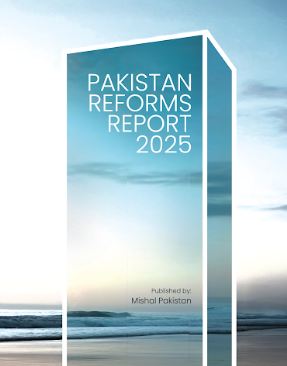
ISLAMABAD, FEB 9 /DNA/ – Mishal Pakistan, the Country Partner Institute of the World Economic Forum’s New Economic and Societies Platform, has officially launched the first-ever Pakistan Reforms Report 2025. This groundbreaking report is a first-of-its-kind initiative documenting over 120 key reforms undertaken by the Shahbaz Sharif Government since assuming office in March 2024. Covering a comprehensive assessment period from January 2024 to the end of January 2025, the report provides an unprecedented, data-driven analysis of the government’s policy and governance transformations.

For the first time in Pakistan, a comprehensive effort has been made to systematically document the government’s reform agenda. Over the past 11 months, more than 120+ reforms have been implemented across multiple sectors, shaping the country’s governance, economic policies, legal frameworks, and institutional efficiencies. This initiative is crucial in providing an accurate and transparent account of policy transformations, allowing stakeholders – including policymakers, businesses, and international institutions – to engage with and evaluate Pakistan’s evolving governance landscape.

By bridging the information gap, the Pakistan Reforms Report 2025 ensures that reforms are acknowledged, analysed, and serve as a foundation for future governance advancements.

Unlike most international reports that capture data only from January to May every year, the Pakistan Reforms Report 2025 offers a full-year assessment, presenting a more accurate and holistic picture of governance, accountability, and inclusivity reforms.

Speaking at the launch of the Pakistan Reforms Report 2025, Amir Jahangir, Chief Executive Officer of Mishal Pakistan, the Country Partner Institute of the World Economic Forum, highlighted the significance of the report and said, “The Pakistan Reforms Report 2025 is an unprecedented initiative aimed at bridging the knowledge gap in governance reforms. While international assessments often focus on fragmented data, this report presents a full-spectrum analysis of how Pakistan has transformed under the Shahbaz Sharif administration.” He further said, “By documenting reforms in a structured and accessible manner, we empower policymakers, businesses, and global institutions with the knowledge needed to engage with Pakistan’s evolving governance landscape.”

The Pakistan Reforms Report 2025 is an essential resource for policymakers, investors, academics, and development organizations seeking to understand Pakistan’s evolving governance framework. Through extensive research, data collection, and stakeholder engagement, the report provides a structured, transparent, and comprehensive overview of the government’s performance in key areas.

Mishal Pakistan is an award-winning business intelligence, public policy, and strategic communications institution. As the Country Partner Institute of the World Economic Forum (WEF), Mishal Pakistan contributes to several global competitiveness indices, including the Global Competitiveness Report, Global Growth Index, Global Gender Gap Index, Global Travel and Tourism Development Report, and the Network Readiness Index. The organization has been at the forefront of media development, governance innovation, and digital transformation in Pakistan. The completePakistan Reforms Report 2025 (PRR25) is available for public access and download at mishal.com.pk/reforms2025

Pak-Romania Business Council, SPBF sign MoU

Pak-Romania Business Council

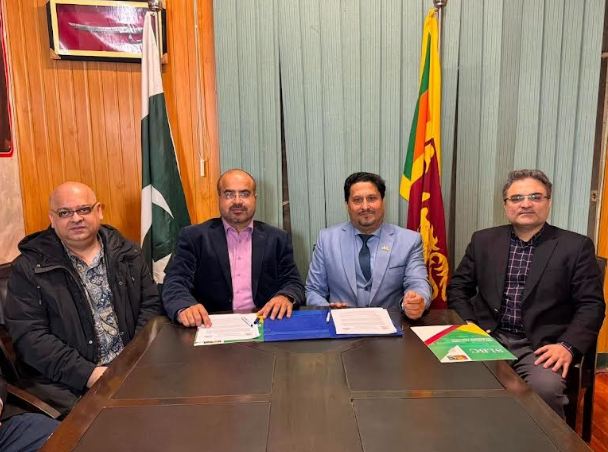
LAHORE, FEB 9 /DNA/ – The Pakistan-Romania Business Council (PRBC) and the Sri Lanka Pakistan Business Forum (SPBF) have signed a Memorandum of Understanding (MoU) to promote trade, investment, and economic cooperation between Pakistan, Romania, and Sri Lanka.

The MoU was signed by Mr. Yasin Joiya, Honorary Consul of Sri Lanka in Lahore, and Mr. Sohail Shamim Firpo, Chairman of PRBC. This significant agreement aims to foster greater economic ties and mutual benefits for all three nations.

Atif Farooqi, Advisor and Chief Operating Officer of PRBC, stated, “This partnership will serve as a catalyst for fostering economic cooperation between Romania and Sri Lanka, leveraging Pakistan’s strategic location as a bridge between the two nations. We envision this collaboration to unlock new opportunities for trade, investment, and growth, ultimately strengthening regional economic ties.

Beekeeping becomes a lucrative business in rural areas

By Fakhar-e-Alam

                PESHAWAR, Feb 09 (APP):Fixing steel-nail in wooden bee-boxes under a bare tree on a bank of River Kabul, Hussain Khan — a progressive beekeeper is making determined efforts to prepare it before an onset of spring season.

As the sun rays bath the house of 35-year-old beekeeper, Hussain Khan start his Alto Car to reach his farmhouse constructed at Pashtoon Ghari village in Nowshera district where he along with co-beekeepers began fixing steel-nail in order to prepare 500 bee-boxes to take advantage of blossom of bee-flora plants and flowers buds.

 “Following the untimely death of my parents, life was a nightmare for me as my relatives were pressing for huge amount borrowed for treatment of my Abu and Ammi, forcing me to leave my education incomplete and joined the pain-sticking beekeeping business,” said Hussain with sobbing eyes while talking to APP.

“Initially, I purchased 50 bee-boxes in 2020 and by the grace of Allah Almighty, it increased to 500 boxes within four years due to my hard work and commitment to the job, enabling me to return all the borrowed amount as well as established a beekeeping farm house here,” he said.

Hussain said that beekeeping was a cost-efficient profession and any person making Rs 500,000 investment can earn upto Rs100,000 per month.

Employing two laborers, Hussain was planning to go to Punjab and Azad Kashmir where an abundance of bee-flora plants was planted under the Prime Minister’s Green Pakistan Program.

 He urged the Khyber Pakhtunkhwa government to focus on plantations of native species like palosa, bair and shisham, provide interest free loans to beekeepers and fix honey selling rates.

Sher Zaman, General Secretary of All Pakistan Beekeepers Association, said Pakistan’s biodiversity and climate conditions are most suited for beekeeping business that needed the government patronage to arrest the unemployment.

More than 700 plants, mostly bees-flora, are found in Punjab, Sindh, Khyber Pakhtunkhwa, Balochistan, AJK and Gilgit Baltistan, attracting millions of indigenous and exotic honey bees every year.

The rural areas of Chakwal, Mianwali, Gujarkhan, Attock, Sargodha, uska, Rawalpindi, Jehlum, Pathoki, in Punjab, Karak, Kohat, Swat, DI Khan, Chitral, Peshawar, Nowshera, Charsadda, Bannu, Hazara, Malakand, Turbela, Haripur in KP, Quetta, Ziarat, Naseerabad, Kalat in Balochistan and Thatta, Sujawal, Mirpur Khas and Hyderabad in Sindh are most suited for beekeeping business.

“Our exports especially of the bair and phulai honey increased to Saudi Arabia, UAE, Kuwait, Oman, Yeman, Iraq, Qatar, Libya, Afghanistan, Maleysia, USA, China, Singapore, Azerbaijan, Mangolia etc due it’s better taste and quality and called for better marketing to increase honey exports,” he said.

He urged an issuance of cards to beekeepers for identification while migrating from one district/province to another to avoid times, and bees loss during check-post.

KP government urged to impose a ban on cutting of berry and palosa trees and award strict punishment to timber mafia to save thousands of bees from extinction.

Iftikhar Khalil, former Director Apiculture/NTFP said Pakistan was a home to four famous honey bees including Apis Cerana (small bee), Apis Dorsata (wild bee), Apis Flori (little bee) and exotic Apis Mellifera having over 450,000 colonies with capacity to produce 12,000 metric ton honey per year.

Mellifera produces 20 to 25 kg honey per colony (box) against six to eight kilogram by native bees two times in a year. Apis Dorsata has the ability to produce 40 to 45 kg honey from each hive mostly in tall trees and buildings, adding around 120,000 to 150,000 wild bees were busy in a one meter-length and half-meter wide comb making 120 degree angle.

Iftikhar said, “two queens in the same colony cannot live together as the younger queen often kills the elder or the latter leaves the colony in fear of sharing food.”

“Bees collect pollen and nectar within five-kilometer radius of hives and majority prefer to get food while staying close to their combs,” he said, adding one bee produces 1/12th of a teaspoon of honey in her life time and flapping their wings 11,000 times per minute beside using her tiny hairs to take pollen and stomach to carry 70mg nectar.

However, he said there is every possibility of losing an average of five to ten kg out of 1000 kilogram of honey production if preventive measures were not taken.

“Wild bees are under heightened danger due to deforestation and climate change weather patterns and if proper attention was not given to their preservation and management of natural forests their population would vanish in a few decades.”

He stressed the need for capacity building of beekeepers to face any situation like rising of food and nurseries of bee-flora plants.

Admitting climate change’s effects on the population of Apis Flori and Apis Dorsata commonly known as “Swat bees”, he said Apis mellifera was imported from Australia in 1977 owing to her speedy growth and increased power of honey production.

Research project was launched at Agriculture Research Institute Tarnab, Peshawar, Faisalabad and National Agriculture Research Centre Islamabad in 1979 to analyze mellifera’s properties. Iftikhar said Apis mellifera was mostly vulnerable to bacteria attacks such as American and European foul brood diseases, which often causes substantial losses to beekeepers if not treated.

He said about Rs 43 billion revenues could be generated and over 100,000 new jobs to be created after achieving the 70,000MT honey target, adding 10,009 exotic bees has a potential of producing 100 tons honey per year with financial benefits of Rs75 million.

Annually, 10 tons of honey can be produced from indigenous bees with annual economic benefits of Rs38 million and collectively Rs113 million income from the beekeeping sector.

Iftikhar said KP southern districts are most suited for beekeeping business where about 5.2 million bair trees could be planted in Karak, Kohat, Bannu, Lakki Marwat, Tank and DI Khan.

He said that 15000 beekeepers and farmers would be trained under National Apiculture Up-scaling Program for Income and Rural Employment (ASPIRE) in the country including Khyber Pakthunkhwa.

Under ASPIRE, he said the training and capacity building of these beekeepers and their certification would be achieved through National Vocational and Technical Training Commission (NAVTTC).

Dr Naeem Khattak, former Chairman Economics Department said that beekeeping was an effective business to combat unemployment in Pakistan.

As per Economic Survey of Pakistan 2023-24 report, he said about 4.5 million individuals are unemployed in the country, with the youth aged 15-24 having the highest unemployment rate of 11.1 per cent and this social problem could be addressed by promoting beekeeping.

He stressed the need for a national apiculture policy, establishment of high standards for bee products and equipment besides promotion of beekeeping as a productive business operation and important component of forests and agricultural ecosystem to compete at international level.

Introduction of a national bee breeding program would help meet local demands for good quality queens and efforts should be made to promote commercial beekeeping, apiculture products and services.

Musawar Khan, adviser to the Chief Minister KP for forests said that bees are the lifeline of Pakistan and preference was being given to bees-favorite species in spring and monsoon plantations to make KP a land of honey.

The capacity of beekeepers through extensive training by NTFP experts would be enhanced. He said thousands of bees’ boxes have been distributed among flood affected beekeepers and farmers in Khyber Pakthunkhwa.

He said a new type of honey “Margalla” was introduced, mostly useful for asthma and allergy patients while “Ber and Kalongi” honey was also brought in markets keeping in view of its numerous health benefits for consumers.

New Zealand thump Pakistan by 78 runs in tri-series opener

New Zealand thump Pakistan by 78 runs in tri-series opener

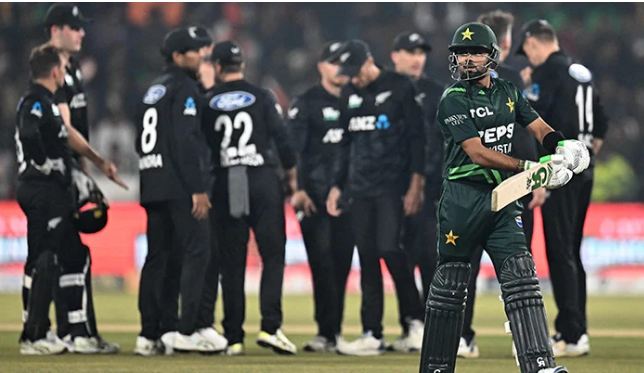
LAHORE, FEB 8: Pakistan have suffered a humiliating defeat against New Zealand after failing to chase the 331-run target in the opening match of the tri-nation ODI series against Pakistan at the Gaddafi Stadium Lahore on Saturday.

Chasing a daunting 331-run target, the home side only managed 254 before getting bowled out in 47.5 overs despite Fakhar Zaman’s gutsy half-century.

Pakistan got off to a solid start to the run chase as their new opening pair of Fakhar and Babar Azam put together a brisk 52-run stand.

Fakhar was the core aggressor of the opening stand, while Babar was batting cautiously until falling victim to Michael Bracewell on the last delivery of the batting powerplay.

The right-handed batter could score 10 off 23 deliveries.

Fakhar was then involved in another important partnership for Pakistan when he added 51 runs for the second wicket with Kamran Ghulam, who scored a scratchy 18 off 32 deliveries.

The returning opener then put together a brief partnership with skipper Mohammad Rizwan (three) before eventually walking back to the dugout in the 24th over.

He remained the top-scorer for the hosts with a defiant 84 off 69 deliveries, peppered with seven fours and four sixes.

Following his dismissal, vice-captain Salman Ali Agha took the reins of Pakistan’s pursuit and was involved in two important partnerships with Tayyab Tahir (30) and Khushdil Shah (15) before Bracewell drew curtains on his gritty knock.

Agha remained a notable run-getter for Pakistan with a 51-ball 40, including two fours and a six.

Abrar Ahmed then offered some fightback against a momentum-filled New Zealand bowling attack with an unbeaten 25 off 15 but his efforts were not enough to power his side to the victory.

Mitchell Santner and Matt Henry bagged three wickets for New Zealand, while Bracewell picked up two.

Opting to bat first, the touring side accumulated 330/6, in the allotted 50 overs, thanks to veteran Kane Williamson, Daryl Mitchell and Phillips.

The Blackcaps, however, had a contrasting start to their innings as Shaheen Shah Afridi got Will Young (four) caught behind on just the fourth delivery of the match.

Following the early hiccup, Williamson joined Rachin Ravindra in the middle and together they added 35 runs to the total until the latter was dismissed by Abrar Ahmed in the eighth over with the scoreboard reading 39/2.

Ravindra scored 25 off 19 deliveries with the help of five boundaries.

Williamson then joined hands with Mitchell to lead the visitors’ recovery by adding 95 runs for the third wicket until falling victim to Shaheen.

The top-order batter scored 58 off 89 deliveries with the help of seven boundaries.

New Zealand were soon reduced to 135/4 in 27.1 overs when Haris Rauf dismissed Tom Latham for a duck.

Meanwhile, Mitchell stood his ground firm and put together an important 65-run partnership for the sixth wicket with Phillips until falling victim to Abrar Ahmed in the 38th over.

Mitchell scored 81 off 84 deliveries with the help of two fours and four sixes.

Following Mitchell’s dismissal, Glenn Phillips switched gears and bolstered New Zealand’s total past the 300-run mark with an unbeaten 106 off 74 deliveries, laced with six fours and seven sixes.

He was also involved in a 54-run partnership for the sixth wicket with Michael Bracewell, who made a 23-ball 31, laced with one four and three sixes.

For Pakistan, Shaheen Shah Afridi picked up three wickets, followed by Abrar with two, while Haris Rauf made one scalp.

Pakistan XI: Fakhar Zaman, Babar Azam, Kamran Ghulam, Mohammad Rizwan, Salman Ali Agha, Tayyab Tahir, Khushdil Shah, Shaheen Shah Afridi, Naseem Shah, Haris Rauf and Abrar Ahmed.

New Zealand XI: Will Young, Rachin Ravindra, Kane Williamson, Daryl Mitchell, Tom Latham (wk), Glenn Phillips, Michael Bracewell, Mitchell Santner (c), Ben Sears, Matt Henry and Will O’Rourke.

Stay Connected

64FansLike
60FollowersFollow

Latest Reviews

Exchange Rates

USD - United States Dollar
EUR
1.17
GBP
1.35
AUD
0.72
CAD
0.73