Home Blog Page 679

President lauds Police Force sacrifices

President lauds Police Force sacrifices

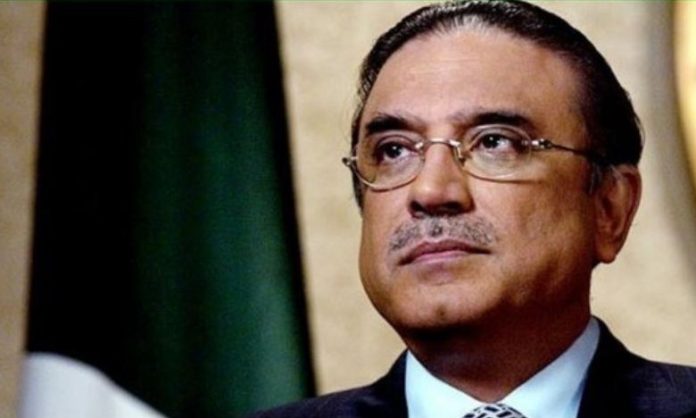
ISLAMABAD, Aug 4 (APP): President Asif Ali Zardari on Sunday paid tribute to Shuhada of police force and said the martyred police personnel had offered valuable sacrifices in the fight against terrorism.

On Youm-e-Shuhada-e-Police, the president lauded the unmatched bravery and sacrifices of shuhada of police force.

“The entire nation is proud of its valiant police force for their sacrifices. The police personnel had laid down their lives while fighting on the frontline with terrorists and criminal elements,” President Secretariat Press Wing, in a press release in Urdu language, quoted the president as saying.

President Zardari highlighting the role of police force during the success in fight against terrorism said that Jawans of police force had been sacrificing their lives, fighting with terrorists and anti social elements in different parts of the country.

On behalf of the entire nation, the president said, he saluted shuhada of police force on their services and sacrifices.

Non-Productive Elite

Non-Productive Elite

Dr M Ali Hamza

If an airplane took off a dozen times only to crash each time, the only logical conclusion would be that the aircraft needs a fundamental redesign. Similarly, Pakistan’s economy has crashed 23 times in the last 75 years, each time requiring a bailout from the International Monetary Fund (IMF). It wasn’t always this way. In the 1980s, Pakistan was richer in per capita terms than India, China, and Bangladesh. Today, however, Pakistan is the poorest among them, with a recent GDP growth estimate of only 2%, barely enough to keep up with population growth.

Currently, Pakistan is facing an economic crisis fuelled by high global oil prices, rising agricultural imports, and economic mismanagement. In April 2023, Pakistan’s year-on-year inflation hit a record 36.5%, the highest increase in nearly 60 years. It is evident that Pakistan has become dependent on IMF bailouts, yet these bailouts seem unable to address the root problems. The cycle is always the same: Pakistan runs out of dollars, seeks an IMF bailout, and receives it on conditions such as privatizing state-owned enterprises, implementing austerity measures, and broadening the tax base. None of these conditions resolve the primary issue in Pakistan’s economy—the non-productive nature of its elite. This deep-rooted defect is gradually leading to Pakistan’s demise. Let’s delve into the concept of a non-productive elite to see if this claim holds ground.

A non-productive elite consists of influential individuals or groups who prioritize personal gain and power over public welfare, often engaging in corruption, misleading allocation of resources, compromised execution, and nepotism. Their actions undermine economic growth, social progress, and governance, leading to stagnation and decline in their respective nations. Has it started making sense?

Throughout history, the rise and fall of nations have often been tied to the effectiveness and productivity of their ruling elite. When the elite becomes non-productive, focusing more on personal gain and power consolidation than on the welfare of their nations, the seeds of decline are sown. This phenomenon is not only a relic of the past but continues to manifest in contemporary societies, demonstrating the timeless impact of leadership on national prosperity.

History is filled with such examples. For instance, the decline of the Roman Empire. Indulgence in lavish lifestyles, accumulated vast estates, and exploited the provinces for personal wealthweakened Rome’s political and economic foundations, contributing significantly to its eventual collapse. In late 19th century, China’s Qing Dynasty were more focused on maintaining their luxurious court life than on addressing the growing challenges.  The opium trade, facilitated by British merchants, further drained the economy. The ruling elite’s inability to modernize and reform the state led to a series of humiliating defeats to foreign powers, culminating in the fall of the dynasty in the early 20th century.

In contemporary times, Venezuela; once one of the wealthiest countries in South America, has plunged into economic and social chaos over the past two decades. The reason is ruling elite, under both Hugo Chávez and his successor Nicolás Maduro focus on maintaining power at all costs.

Under the leadership of Robert Mugabe, Zimbabwe shifted from being the “breadbasket of Africa” to an economic disaster. Mugabe and his inner circle prioritized land reforms to facilitate political allies. The ruling elite’s failure to prioritize national well-being over personal power and wealth was a key factor in Zimbabwe’s downfall.

In Pakistan, the phenomenon of a non-productive elite contributing to national issues is evident across various sectors. Whether political, military, bureaucratic, or business elites, all seem to function in a non-productive manner.

Pakistan’s political landscape is filled with people who are egocentric, and self-serving. Their deep ties with land mafia and other illicit network enable them for land grabbing, money laundering, and exploitation of resources. This ultimately undermine governance, stall reforms, and erode public trust in political institutions. The Panama Papers leak in 2016 exposed such numerous politicians, including former Prime Minister Nawaz Sharif, for owning offshore companies and properties, raising questions about the sources of their wealth. This kind of corruption diverts resources away from critical areas like education, healthcare, and infrastructure, contributing to economic and social discontent.Moreover, the latest Dubai leaks revealed properties linked to senior political and military officials, highlighting their lack of interest in advancing the nation, but focus on increasing and protecting their personal wealth.

Moreover, the prevalence of dynastic politics in Pakistan is another indicator of a non-productive elite. Major political parties, such as the Pakistan People’s Party (PPP) and the Pakistan Muslim League-Nawaz (PML-N), are dominated by a few families who wield significant influence over the political system. This concentration of power limits political competition and innovation, often leading to policy stagnation and a focus on maintaining familial power rather than addressing the country’s pressing issues.

There is a prevailing perception that the Pakistani military’s extensive economic involvement leads the top brass to prioritize personal financial interests over national economic development. The dominant role in politics and economy is viewed as a non-productive engagement of the military elite.

The bureaucratic elite in Pakistan, has long been criticized for inefficiency and excessive red tape. A local term “BABU”, connotatively meant as arrogant official, is evident in their conduct. The civil service, tasked with delivering public services, often becomes a bottleneck due to bureaucratic inertia, corruption, and a lack of accountability. This inefficiency hampers development projects, discourages foreign investment, and frustrates citizens’ access to essential services. The focus on maintaining status and privileges within the bureaucracy often overshadows the need for effective governance and public service delivery.

The business elite in Pakistan faces accusations of tax evasion, using loopholes to minimize their contributions to the national economy. Furthermore, their monopolistic practices, often aided by connections to political, military, and bureaucratic elites, hinder competition and impede economic advancement. This concentration of economic power restricts broader participation and stifles overall growth.

While elite capture may seem a typical aspect of a capitalist financial structure, the real concern lies in the investment choices of this elite group. Their capital is often directed toward less productive activities, such as real estate, speculative ventures, and luxury imports, rather than more productive sectors like industrial development. This misallocation of resources hampers national growth by diverting funds from sectors that generate jobs and provide widespread economic benefits.

The pattern is clear; when the elite of a nation become non-productive, focusing on self-interest and invest on less productive activities, the consequences are often catastrophic.For any nation to thrive, it requires anelite/ leadershipwithin all institutions, that strives for self-actualization rather than merely fulfilling the lower-level needs outlined in Maslow’s Hierarchy. It is imperative for people of Pakistan to hold their leaders accountable, ensuring that they remain productive and aligned with the nation’s long-term interests. Only through such vigilance can the tragic patterns of history be broken, securing a prosperous and stable future.

Author’s email: [email protected]

Federal Minister of Finance and State Minister Visit RTO Lahore

Federal Minister of Finance and State Minister Visit RTO Lahore

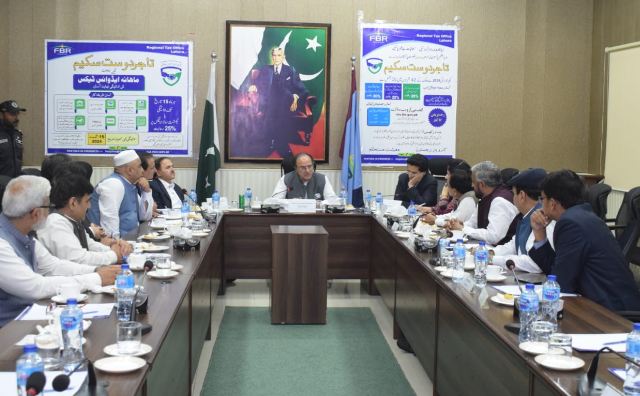
LAHORE, AUG 3 /DNA/ – Federal Minister of Finance and Revenue Senator Muhammad Aurangzeb, along with Minister of State for Finance and Revenue Ali Pervaiz Malik, visited the Regional Tax Office (RTO) Lahore, today. They were warmly received by Chief Coordinator Tajir Dost Scheme Mr. Naeem Mir, Member Operations Mir Badshah Khan Wazir, Chief Retailers Registration Nazia Zaib, Chief Commissioner RTO Lahore Mr. Ahmad Shuja Khan, and their teams, along with trade representatives. During visit, the Federal Minister inaugurated the Central Secretariat for Tajir Dost Scheme in Lahore. RTO Lahore provided a comprehensive briefing on the Scheme’s operations and impact.

The Finance Minister appreciated the performance of Tajir Dost Scheme in Lahore and stressed the importance of its effective implementation and the collection of advance taxes. The Federal Minister also engaged with trade representatives, listening to their suggestions on improving the Scheme. He instructed that these recommendations be implemented efficiently to enhance the Scheme’s effectiveness.

RTO Lahore currently holds the leading position in Pakistan with the highest number of trader registrations, totaling 24,814 till date.

CG Tariq calls for further strengthening Pak-US relations

CG Tariq calls for further strengthening Pak-US relations

The government supports Pakistani entrepreneurs by facilitating business deals and promoting business education to access US capital, Saqib Rafiq.

DNA

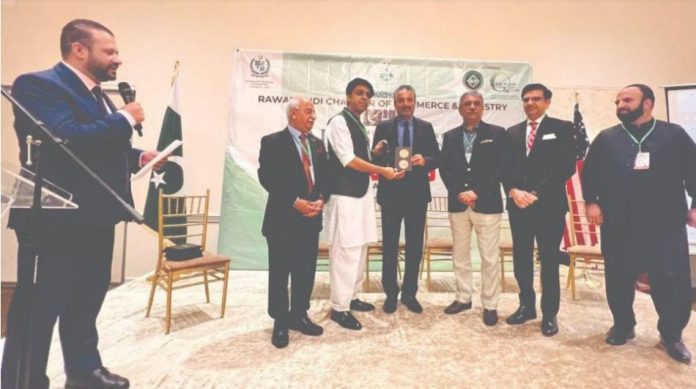
ISLAMABAD, AUG 3: Rawalpindi Chamber of Commerce and Industry in collaboration with Pak World Trade and Expo Center (Pvt.) Limited with the assistance of Consul General of Pakistan in Chicago organized the Pak America Business and Investment Opportunities Conference in the American city. It was held on July 30, 2024 in Chicago. Consul General of Pakistan in Chicago Tariq Karim inaugurated the conference.  Speaking at the event, Tariq Karim said that the United States is one of the countries that invest the most in Pakistan. Dekar helps Pakistani entrepreneurs, Pak World Trade and Expo Center (Pvt) Ltd CEO Khurshid Barlas, Fahad Barlas COO, J7 Group Chairman Maqbool Hussain and more than two hundred other Pakistani American and investor companies participated. Khurshid Barlas of And Expo Center (Pvt) Limited said that Pakistan’s prosperity is not only in Pakistan’s own interest but also in the interest of the region and the United States.  Trade and investment are the future of Pakistan-US relations. In the conference, proposals were presented regarding the promotion of Pakistan-US relations, trade and investment, and the problems faced by Pakistan were discussed. In the end Saqib Rafiq, President of Rawalpindi Chamber of Commerce and Industry presented the shield to Consul General of Pakistan Chicago Tariq Karim on this occasion Khurshid Birlas CEO of Pak World Trade and Expo Center (Pvt.) Ltd., Fahad Barlas COO, J7 Seven Group Chairman Maqbool Hussain is also present.

ATC sends Raoof Hasan on 14-day judicial remand

ATC sends Raoof Hasan on 14-day judicial remand

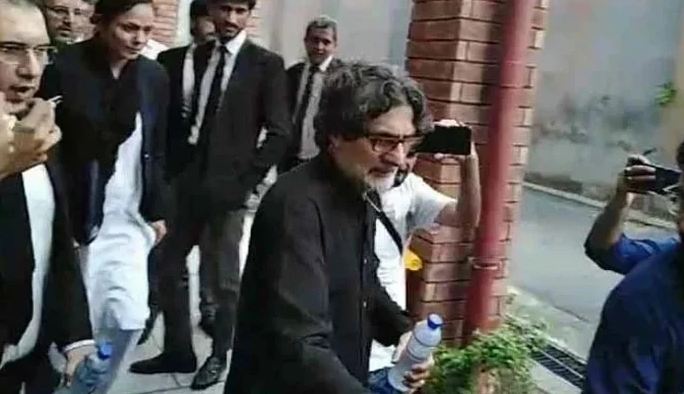
ISLAMABAD: An anti-terrorism court (ATC) in the federal capital sent Pakistan Tehreek-e-Insaf (PTI) Information Secretary Raoof Hasan on judicial remand for 14 days in a terrorism-related case on Saturday.

The PTI information secretary was arrested on July 31 in light of a statement of PTI International Media Coordinator Ahmed Janjua, who claimed that the former had given the latter money to incite terror.

ATC Judge Tahir Abbas Supra dismissed the plea seeking Hasan’s physical remand for seven days.

The PTI leader’s counsel Ali Bukhari appeared and presented his arguments in the court. He also filed a post-arrest bail for his client. Over which, the court issued notices for August 6.

Bukhari said he wanted to bring something to the court’s notice over decision of the previous hearing that details of Hasan’s bank accounts could be checked online as well.

The judge said he should have objected to the decision in the high court and not in the ATC. He also inquired if details of the PTI leader’s call data, bank transfer or meeting were obtained.

Currently, Hasan is also nominated in a case related to anti-state propaganda, but he has secured bail in it. However, since he’s on remand in the terrorism case, he will remain behind bars.

President Zardari grieves rain-related losses

Zardari forms committee for talks with electables

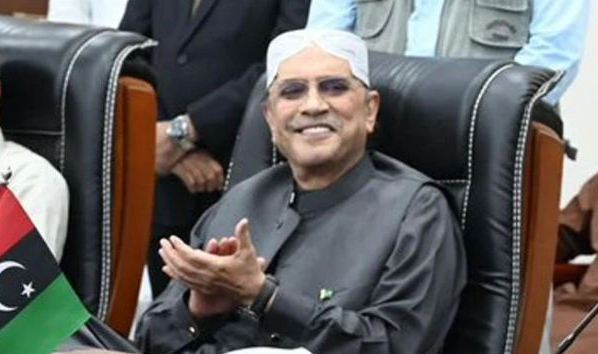
ISLAMABAD, AUG 02 (DNA) — President Asif Ali Zardari on Friday expressed deep sorrow over the loss of lives and damage to properties caused by rain-related incidents across various regions of the country. In a statement issued by the President House, he conveyed his heartfelt condolences to the families of those who lost their lives.

The president underscored the urgency of accelerating relief efforts to aid those affected. President Zardari also called for the implementation of precautionary measures to safeguard lives and prevent further rain-related tragedies.

He emphasized the importance of timely actions by the administration to ensure the effective drainage of rainwater and mitigate the risks of future incidents. In his prayers, Zardari sought divine peace for the departed souls and strength for the bereaved families to endure their loss. — DNA

Gwadar sit-in to end as Baloch Yakjehti Committee, govt sign agreement

Gwadar sit-in to end as Baloch Yakjehti Committee

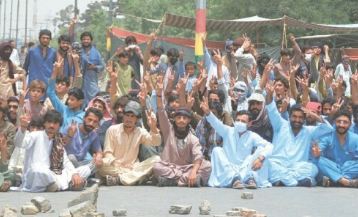
GWADAR, AUG 2: The Baloch Yakjehti Committee (BYC) has decided to end its protest in Gwadar, Balochistan’s interior minister confirmed on Friday, after the two sides signed a seven-point agreement.

The BYC has been holding protests for almost a week at the Marine Drive in Gwadar and other areas to decry the alleged human rights violations against the people of Balochistan, enforced disappearances, and alleged extrajudicial killings of the Baloch people.

As previously reported by Dawn.com, clashes erupted between the protesters and the security forces, killing three protesters and injuring at least 24. BYC leader Dr Mahrang Baloch claimed that over 200 people were arrested by security personnel.

Following days of protest, negotiations between the government and the BYC began on Wednesday evening after which officials announced that talks had been “successful” and BYC had agreed to call its sit-in off after signing a deal.

“Negotiations between the Baloch Yakjehti Committee and the district administration have been successful and the organisers of the committee have agreed to end their sit-ins across the province,” Balochistan’s Interior Minister Mir Zia Ullah Langov said in a statement.

“I appeal to the people to protest, but do not damage the protest site, attack the forces, or hurt the common people,” he said, adding that the government would “not allow anyone to take the law into their hands under the guise of protest.”

The seven-point agreement
The seven-point agreement, a copy of which is available with Dawn.com, was signed by Gwadar Deputy Commissioner Hamoo­dur Rehman and Dr Mahrang.

The statement said that the BYC would end its protest once all the protesters arrested by security forces in Balochistan and Karachi were released.

“Protesters who have been sent to jail on judicial remand will be released by August 5 following court proceedings, the agreement stated.

The Balochistan government will be in contact with authorities in Sindh to ensure the release of those arrested therein, the agreement stated, adding that all cases registered against the Raji Muchi (Baloch National Gathering) protesters will be withdrawn.

It, however, noted that cases related to the loss of lives during protests will not be dismissed.

“All highways will be reopened as soon as the sit-in ends, two hours after which mobile network will also be restored”, the document said.

A committee consisting of officials from BYC and the district administration will also be established, while all items confiscated from the protesters by the government will be returned within a week, it stated.

“No one will be subjected to harassment or retortion for participating in the protest once the sit-in ends,” the agreement added.

It further said that a case will be registered on the complaint of families of those killed or injured during the protests.

“Once the ongoing sit-in at Gwadar’s Marine Drive ends, all other sit-ins across the province will also be called off, the agreement noted.

‘We will not accept compensation from govt’
Meanwhile, the BYC has refused to accept any compensation from the government for those killed or injured during the protests.

“We have categorically told them [the government officials] that the blood of our martyrs is not so cheap, so we will not insult our Baloch national martyrs by accepting compensation,” Dr Mahrang Baloch wrote on the X platform.

“The reward for the blood of our national martyrs is not five or ten million rupees but continuous struggle, resistance, national unity, and national goal” she added.

She further said that the BYC was not willing to seek compensation for those injured during the protests either, adding that the group will collect donations from people even if they have to go from door to door.

“But we will not accept any compensation from this state in any case and prove that the Baloch are a living and brave nation.”

BISP, NADRA leadership convene to strengthen collaborative efforts

BISP, NADRA leadership convene to strengthen collaborative efforts

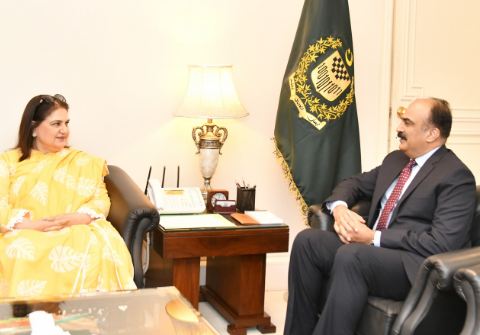
ISLAMABAD, AUG 2: /DNA/ – Senator Rubina Khalid Chairperson Benazir Income Support Programme (BISP), met with the Chairman of the National Database and Registration Authority (NADRA) Lieutenant General Muhammad Munir Afsar at the NADRA Headquarters today.

PIDE hosts Chinese expert delegation and leading Pakistani Think Tanks

PIDE hosts Chinese expert delegation and leading Pakistani Think Tanks

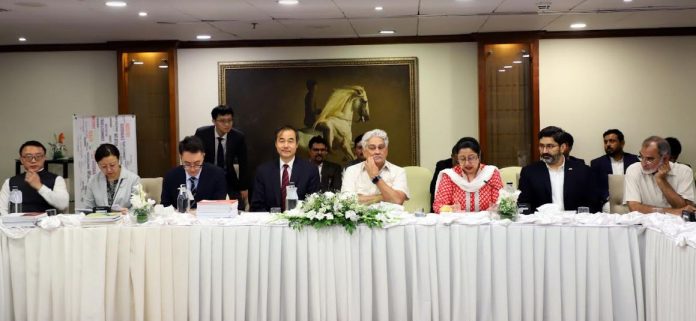
ISLAMABAD, AUG 2 /DNA/ – A high-level Chinese expert delegation participated in an event organized by the Pakistan Institute of Development Economics (PIDE) at the Marriott Hotel in Islamabad, marking a significant step towards enhancing economic collaboration between China and Pakistan. The event, titled “Pakistan Economy & Growth: Learning from Chinese Experience,” aimed to facilitate an exchange of knowledge and best practices between the two nations.

In her introductory remarks, PIDE’s Pro VC Dr. Durre Nayab emphasized the importance of such interactions in fostering growth and development. She highlighted the need for adopting strategies that have propelled China to economic success, tailored to Pakistan’s unique context.

The event featured a detailed presentation by Dr. Nadeem ul Haque, Vice Chancellor of PIDE, who discussed the critical need for policy reforms, investment in human capital, and fostering an innovation-driven economy. Dr. Haque noted that the event aimed to explore lessons Pakistan can learn from China’s economic transformation, which provides insights into growth strategies, infrastructure development, industrialization, and policy reforms applicable to Pakistan.

Dr. Haque emphasized that Pakistan is poised for a new era of economic growth and regional connectivity through the dynamic framework of the China-Pakistan Economic Corridor (CPEC). He highlighted that with a young, burgeoning population and a rapidly expanding middle class, Pakistan presents a compelling case for significant investment and development.

Pakistan’s demographic profile, with a median age of just 20.6 years and a labor force expanding by over 3 million annually, is a cornerstone of its growth potential. Dr. Haque noted that the projected growth rate of 7-8% per annum is within reach with strategic reforms, positioning Pakistan as a future market leader. By 2030, Pakistan is expected to become the 7th largest consumer market globally, underscoring its vast potential.

Dr. Nadeem further stated that CPEC is not just an infrastructure project but a framework for regional connectivity. It aims to enhance geographical linkages through people-to-people contact, academic and cultural exchanges, and robust trade and business flows. The initiative promises to transform Pakistan into a logistical hub, driving industrial, agricultural, and financial cooperation, along with human resource development and tourism.

He pointed out that Pakistan is undergoing significant reforms to create a more investment-friendly environment. Moving from a permission-based to a rule-based economy, the government is addressing regulatory challenges that have historically hampered growth. The implementation of Regulatory Impact Assessments (RIAs) and the reduction of excessive permissions are crucial steps towards this transformation.

Dr. Haque noted that beyond infrastructure, CPEC opens up diverse opportunities for investment. Leading global corporations such as Pepsi-Cola, Coca-Cola, General Electric, and Procter & Gamble have already established a strong presence in Pakistan, collectively investing over $1.5 billion and generating $3 billion in revenues. The Special Economic Zones (SEZs) under CPEC offer further prospects for investment, particularly in the technology and manufacturing sectors.

He highlighted that Pakistan’s burgeoning market for electric vehicles (EVs) represents a significant growth area. With over 50% of households owning motorbikes and a growing demand for cars, the market for 2- and 4-wheel EVs is set to expand rapidly. Initiatives to promote EVs and public transport in Islamabad are already underway, positioning Pakistan strategically as a hub for EV production for both local and export markets.

By learning from China, Pakistan can develop strategies to overcome economic challenges and achieve sustainable growth. The seminar at PIDE provided a platform for discussing these lessons and adapting them to Pakistan’s context, paving the way for a prosperous future.

The Chinese delegation’s lead expert provided invaluable insights into the Chinese economic model, emphasizing lessons that Pakistan can leverage for its own growth. He elaborated on China’s strategic investments in infrastructure, technology, and education, demonstrating how similar initiatives could yield significant benefits for Pakistan. The expert highlighted that China’s economic rise from a developing nation to the world’s second-largest economy offers crucial lessons in various areas, including economic policies, infrastructure development, industrialization, education, innovation, and governance. By strategically investing in these sectors, Pakistan can replicate China’s success and drive its own economic growth.

In this context, a Chinese delegation comprising experts from diverse fields such as economy, industry, agriculture, technology, healthcare, education, environmental science, urban planning, and more, will be visiting Pakistan. These experts bring a wealth of knowledge and experience from their respective domains, aiming to foster deeper collaboration and mutual growth. Their insights and recommendations are expected to play a crucial role in shaping the next phase of Pakistan’s development under the CPEC framework.

Chinese lead experts have lauded the Pakistan Institute of Development Economics (PIDE) for its exceptional efforts in identifying and addressing the critical challenges facing Pakistan. Through rigorous empirical research and the engagement of top-tier specialists, PIDE is exploring innovative solutions to these issues. This esteemed national think tank is undeniably instrumental in charting a course for Pakistan’s success and prosperity.

Effective governance and institutional reforms, including streamlined bureaucracy and anti-corruption measures, were critical to China’s development. Pakistan can adopt these reforms to improve governance, strengthen institutions, and enhance transparency. Emulating China’s policies, infrastructure investments, SEZs, human capital development, technological innovation, export promotion, and governance reforms can pave the way for Pakistan’s prosperity.

Representatives from all leading think tanks from all provinces of Pakistan participated in the seminar and emphasized the importance of skill development, industrial linkages, and technology transfer between China and Pakistan. Indeed, it is a great initiative by PIDE aims to establish thought connectivity with China. We need more research collaborations and the sharing of ideas. China has much to teach us about policies and reforms. CPEC-II should include a component for shared and collaborative research.

During the event, the Chinese delegation engaged in meaningful discussions with representatives from Pakistani academia and think tanks. The discussions covered a broad range of topics, including economic policy, industrial development, and sustainable growth. The event provided a platform for the exchange of ideas, fostering a collaborative approach to addressing economic challenges.
They commended PIDE for organizing such a highly productive, significant, and timely event.

NA passes resolution unanimously to condemn Israeli oppression; express complete solidarity with Palestinians

NA passes resolution unanimously to condemn Israeli oppression

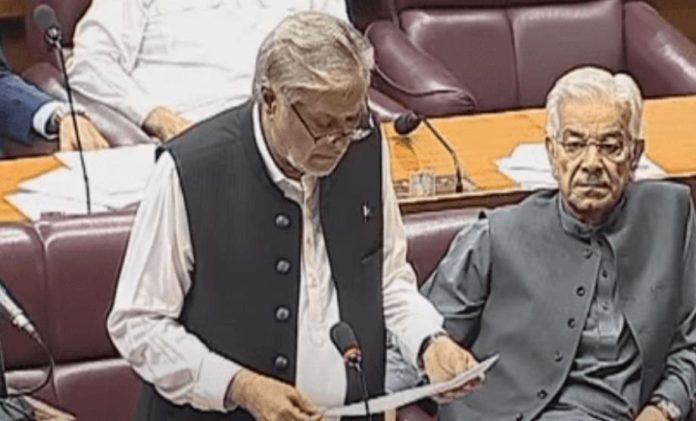
ISLAMABAD, Aug 02 (APP): The National Assembly (NA) on Friday unanimously passed a resolution, strongly condemning the Israeli ongoing state oppression and brutality in Palestine.

The House expressed complete solidarity with the Palestinian brothers and sisters and extended condolences to the family of Ismail Haniyeh and the people of Palestine. The resolution was moved by the deputy prime minister and foreign minister Mohammad Ishaq Dar in the House on behalf of all political parties.

The House also called on the international community to take effective action to halt Israel’s oppression and brutalities and deliver justice to the Palestinian people.

The house called for an immediate and comprehensive ceasefire the provision of sustainable and unhindered humanitarian assistance to the beleaguered Palestinians, and immediate withdrawal of Israeli occupation forces from Gaza in accordance with the UN Security Council Resolution 2735 (2024).

 “This house decides that Pakistan will continue to supply aid to Palestine and take effective measures for medical assistance to the oppressed Palestinian brothers and sisters, including medical treatment in Pakistan,” the resolution said.

The house resolved that Palestine medical students would be given admission in Pakistan’s medical colleges on gratis basis to complete their education.

“The House also decides to observe a day of mourning across Pakistan on 2nd August as a mark of solidarity with our Palestinian brothers and sisters and to unequivocally condemn Israeli brutality,” the resolution further said.

It was also decided to hold funeral prayers in absentia for martyr Ismail Haniyeh across the country after Friday prayers today.

“The House calls on the United Nations Security Council to take effective measures to impose its call for a ceasefire in Gaza to stop the genocidal war being waged against Palestinian people and hold Israel accountable for its war crimes and crimes against humanity inflicted upon the Palestinians.

It also called for the immediate admission of the State of Palestine as a full member of the United Nations.

The resolution said, “ whereas the atrocities by Israel on Palestinians have escalated causing immense suffering and loss of over 40,000 innocent lives so far, including women and children”.

Whereas all parliamentary parties in the National Assembly expressed their unified grief and anger over the ongoing Israeli oppression and brutality against the people of Palestine for the past nine months, the resolution said.

The resolution further said, “ Whereas the assassination of Hamas leader Ismail Haniyeh in Tehran has added to the angst and grief, and such incidents are seen as deliberate conspiracies to sabotage efforts to stop the ongoing oppression and brutality against Palestinians and to establish peace in the region”.

“Whereas the Israeli leadership is intent on expelling the population of Palestine from their homeland and despite clear verdicts of the International Court of Justice (ICJ) and resolution of the United Nations General Assembly, the UN Security Council, Organization of Islamic Cooperation (OIC) and calls by the UN Secretary-General, Israel has not stopped the indiscriminate violence and attacks against innocent Palestinians,” it further said.

The House said that such incidents not only destroy the peace of the world but also constitute a dangerous escalation in an already volatile region and undermine efforts for peace.

Stay Connected

64FansLike
60FollowersFollow

Latest Reviews

Exchange Rates

USD - United States Dollar
EUR
1.17
GBP
1.35
AUD
0.67
CAD
0.72