Home Blog Page 676

HEC , Council Of Higher Education Türkiye to develop collaboration roadmap

HEC

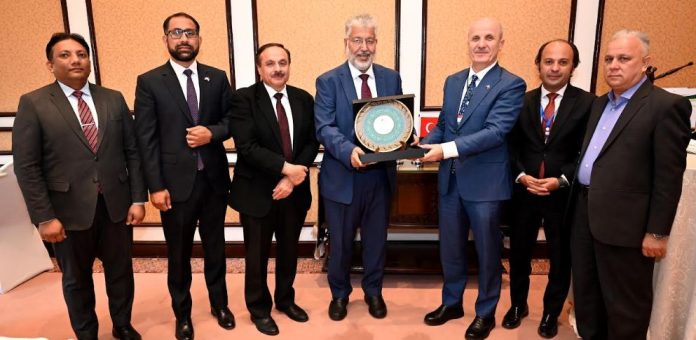
ISLAMABAD, FEB 14: /DNA/ – Chairman Higher Education Commission (HEC), Pakistan Prof. Dr. Mukhtar Ahmed held a meeting with President Council of Higher Education, Türkiye, Prof. Dr. Erol Özvar and discussed the potential of academic and research collaboration between higher institutions of both the countries.  

The two sides agreed to develop a roadmap to enhance collaboration between HEC Pakistan and Council of Higher Education, Republic of Türkiye. They discussed various areas for potential collaboration, including academic and research exchange initiatives, leadership development, and community-centric projects to foster sustainable growth in educational settings.

The two sides expressed the need for measures such as facilitating the mobility of faculty and students across the universities of both sides, developing a consortium of universities to enhance academic and research collaboration, and developing a framework for joint research programme on emerging issues of Pakistan and Türkiye. They expressed their commitment to enhancing joint academic, research, and institutional linkages.

Rizwan, Agha steady Pakistan’s ship after early blows in final against NZ

Rizwan

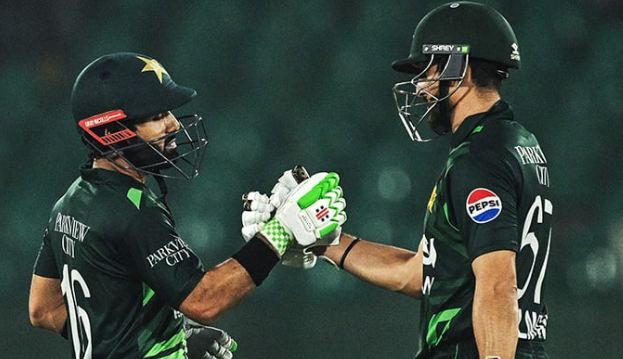
KARACHI, FEB 14: Skipper Mohammad Rizwan and vice captain Salman Ali Agha have steadied Pakistan’s ship in final match of Tri-Nation Series against New Zealand after getting early blows at the National Bank Stadium in Karachi on Friday.

Within 12 overs Pakistan had lost three wickets, including that of star batter Babar Azam (29), who chipped a return catch to Nathan Smith. Opener Fakhar Zaman (10) and Saud Shakeel (8) were routed cheaply.

At the end of 26th over, Pakistan were 109/3 thanks to Rizwan (27) and Salman (27).

Earlier, the Men in Green won the toss and elected to bat first against the Kiwis. Pakistan qualified for the final after defeating South Africa at the same venue, while also achieving their highest chase of 353, giving the home side a confidence boost.

Suffering from a muscular sprain in his lower chest, Haris Rauf has already been advised to rest for the remainder of the series. He was replaced by Mohammad Hasnain in the previous game against the Proteas. While all-rounder Faheem Ashraf has substituted Hasnain in the final. Faheem is making his comeback in the fifty-over format after last playing against India in the 2023 Asia Cup in Colombo.

On the other hand, New Zealand’s Rachin Ravindra, who misjudged a catch and was hit in the forehead during a match against Pakistan in Lahore last Saturday, still has concussion protocols to pass before returning to the field, coach Gary Stead said.

Though Ravindra passed his first Head Injury Assessment (HIA) immediately after the blow, Stead revealed the 25-year-old had suffered headaches in the following days and would need to tick off further HIA’s to be passed fit.

Therefore, he has been ousted from the ODI tri-series final against Pakistan.

Pakistan XI: Fakhar Zaman, Babar Azam, Saud Shakeel, Mohammad Rizwan (wk/c), Salman Ali Agha, Tayyab Tahir, Faheem Ashraf, Khushdil Shah, Shaheen Shah Afridi, Naseem Shah, Abrar Ahmed

New Zealand XI: Will Young, Devon Conway, Kane Williamson, Daryl Mitchell, Tom Latham (wk), Glenn Phillips, Michael Bracewell, Mitchell Santner (c), Nathan Smith, Jacob Duffy, Will O’Rourke

Cut in US aid to Afghanistan will have implications for Pakistan

Cut in US aid to Afghanistan will have implications for Pakistan

The people of Afghanistan related with Pakistan in a way they did not with the people of any other neighbouring country, he added. Emphasizing the historical, cultural, and ethnic context of the Pak-Afghan relations, he urged the Government of Pakistan to also take a holistic sociocultural approach towards Afghanistan instead of treating it as a bureaucratic exercise. He countered the argument that Afghans did not like Pakistan

Mahnoor Ansar

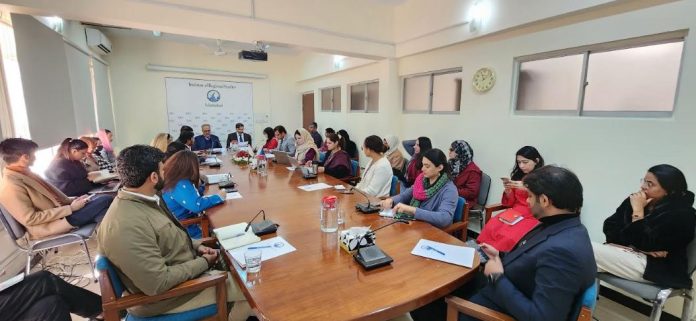
ISLAMABAD: Ambassador Asif Durrani, Pakistan’s former Special Representative for Afghanistan expressed serious concerns over the US decision to halt economic assistance to Afghanistan. While speaking at a roundtable discussion held at the Institute of Regional Studies (IRS) here on Thursday, he shared that half of Afghans were dependent on international humanitarian assistance who might be forced to migrate to Pakistan because of extreme poverty with the stop to US economic assistance. “We need to be prepared for such an eventuality,” he said. Ambassador Durrani further shared that the Taliban government had already informed its employees that they would not be getting salaries for the coming three months.

Listing some positives coming out of the Taliban government, he mentioned that corruption and poppy cultivation had reduced but added that the United Nations Office on Drugs and Crime (UNODC) had reported an increase of 19 per cent in poppy cultivation last year.  He cautioned that poppy cultivation could rise further if the dire economic situation of Afghanistan remained unchanged. Ambassador Durrani shared that the immediate neighbours of Afghanistan and Russia were sustaining Afghanistan through currency swaps and border trade but warned that it was not enough for a full economic recovery of a country as large as Afghanistan.

Ambassador Durrani termed the relationship between Afghanistan and Pakistan as different from the relations either country had with any of its other neighbours.

The people of Afghanistan related with Pakistan in a way they did not with the people of any other neighbouring country, he added. Emphasizing the historical, cultural, and ethnic context of the Pak-Afghan relations, he urged the Government of Pakistan to also take a holistic sociocultural approach towards Afghanistan instead of treating it as a bureaucratic exercise. He countered the argument that Afghans did not like Pakistan. “If Afghans hate Pakistan, why do we issue 3,000 visas a day to Afghans?” he remarked.

Speaking on the occasion, Mr. Aarish U. Khan, the Head of the Afghanistan Program at IRS, expressed his hope for improvement of economic relations between Afghanistan and Pakistan. Referring to the recent US announcement to rescinded certain waivers to sanctions against Iran, including the ones accorded to the Chabahar Port, he argued that it will make Afghanistan more reliant on Pakistan’s ports for trade with the rest of the world. In his concluding remarks, President IRS Ambassador Jauhar Saleem emphasized the historical brotherly relations between Pakistan and Afghanistan and called on both the governments to tap into the potential of the people-to-people and business-to-business relations between the two countries rooted in the longstanding historical and cultural connections between the two countries.

30 Sri Lankan students arrive in Pakistan for higher studies

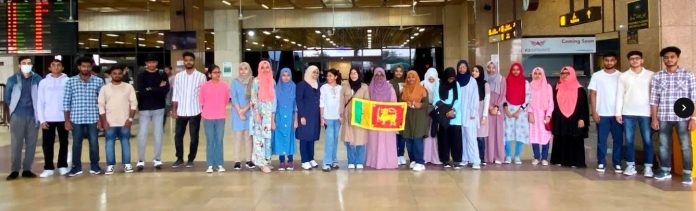
ISLAMABAD/KARACHI, FEB 14: /DNA/ – Another 30 Sri Lankan students have reached Pakistan to pursue MBBS degree in Pakistani medical universities under Allama Iqbal Scholarships for Sri Lankan Students. The students arrived at Jinnah International Airport, Karachi.

These scholarships are a portion of the comprehensive educational programme entitled Pakistan-Sri Lanka Higher Education Cooperation Programme (HEC). The Sri Lankan students will pursue their medical education in top-notch medical institutions of Pakistan like DOW University of Health Sciences, Karachi and Liaquat University of Medical Sciences, Karachi. Both of these institutions are accredited by Sri Lankan Medical Council (SLMC).

There are another 456 Sri Lankan students enrolled in Pakistani universities, under this scholarship programme, in all major disciplines, including Medicine, Engineering, Business Studies, Natural Sciences, Social Sciences, etc. The students were selected through a competitive selection process keeping in view their basic eligibility criteria for enrolment in Pakistani universities. The incoming Sri Lankan scholars were given a warm welcome at the airport.

1,000 Pakistani agricultural graduates to get advanced training in China

1,000 Pakistani agricultural graduates to get advanced training in China

ISLAMABAD, FEB 14: /DNA/ – Federal Minister for National Food Security & Research, Rana Tanveer Hussain chaired a high-level meeting to review progress on Prime Minister’s Initiative for Short-Term Training of 1,000 Agricultural Graduates in China.

The initiative aims to enhance the skills of young professionals in nine priority areas of modern agriculture through three- and six-month training programs at leading Chinese institutions.

According to Gwadar Pro, the first batch of 300 students is set to depart for China in March, 2025, followed by a second batch, while the selection process for the final 300 students is underway. 

The training will be conducted at Northwest Agriculture & Forestry University and Yangling Vocational & Technical College, Shaanxi Province, China.

During the meeting, Minister Rana Tanveer Hussain emphasized the need to speed up the dispatch process and ensure maximum facilitation for students. 

The ministry is actively coordinating with Chinese authorities, stakeholders, and financial institutions to streamline logistical arrangements.

The Pakistani government has ensured merit-based selection, with 10% additional quota for students from Balochistan.

The meeting also discussed the Joint Working Group meeting with China, scheduled for next month, where further discussions on Pakistan-China collaboration in agricultural education and training will take place.

This initiative will equip young agricultural professionals with modern knowledge in mechanization, biotechnology, AI, irrigation systems, and value chain development, strengthening Pakistan’s agriculture sector for future growth.

The Crumbling Pillars: Pakistan’s Medical System on the Brink of Collapse

The Crumbling Pillars: Pakistan’s Medical System on the Brink of Collapse

Dr Imran Yousaf

Pakistan’s medical system is on the verge of collapse, with a growing mismatch between the number of medical graduates and job availability. Every year, thousands of doctors enter the field, but the healthcare system lacks the capacity to absorb them. This has led to widespread unemployment, underemployment, and frustration among medical professionals. At the same time, the perception of doctors in society has undergone a drastic shift over the last two decades. What was once considered a noble profession dedicated to serving the community has9 been tainted by materialism, skepticism, and unrealistic societal expectations. False beliefs and misconceptions have undermined the trust between doctors and the public, turning medicine into a transactional service rather than a vocation rooted in compassion and commitment.

Beyond the visible challenges lies an even greater unseen crisis. The backlog of unemployed doctors and the absence of long-term planning to integrate them into the workforce is a ticking time bomb. If the current trends continue, Pakistan will face a situation where an oversupply of trained medical professionals will meet a healthcare system incapable of utilizing them effectively. This looming catastrophe remains largely unrecognized, much like the submerged portion of an iceberg—hidden from immediate sight but devastating in scale. Despite the clear warning signs, there are no structured programs in place to prevent this profession from spiraling further into crisis.

            The imbalance in the medical profession is a reflection of a broader societal disequilibrium. Public hospitals are overwhelmed, understaffed, and poorly funded, making quality healthcare inaccessible for a vast majority of the population. Meanwhile, private hospitals operate as businesses, catering only to those who can afford their exorbitant fees. The disparity in medical education is equally concerning. Private medical colleges charge exorbitant tuition fees, making it nearly impossible for middle-class families to afford medical education for their children. Even after years of financial sacrifice, these graduates struggle to find stable employment. The divide between government and private hospital setups has also created deep-rooted complexities within the medical community, leading to resentment and professional conflicts.

            If this situation remains unaddressed, Pakistan’s healthcare system will eventually break down completely. The consequences will not just affect doctors but will extend to the entire population, leading to an even greater crisis in public health. A failing system will force talented professionals to seek opportunities abroad, further depriving the country of its skilled workforce. Urgent reforms are needed to bridge these gaps before the system reaches the point of no return. The government must take immediate steps to create employment opportunities for new doctors, regulate medical college fees, and ensure that medical training remains standardized across all institutions.

            A public-private partnership in healthcare can help balance the disparity between different hospital setups, while public awareness campaigns are needed to restore the respect and dignity of the medical profession. Without these measures, the future of healthcare in Pakistan is destined for an inevitable collapse.

Rizwan, Agha earn defining victory for Pakistan against South Africa

Rizwan, Agha earn defining victory for Pakistan against South Africa

Pakistan clinched a six-wicket win against South Africa in elimination match of the Tri-Nation Series on Wednesday following a record partnership of Mohammad Rizwan and Salman Ali Agha and secured spot in the tournament’s final.

Chasing a daunting 353-run target at the National Bank Stadium in Karachi, the home side knocked the winning runs for the loss of four wickets and six balls to spare, thanks to a record fourth-wicket partnership between Agha and Rizwan.

Pakistan, however, had a contrasting start to the pursuit as their ace batter Babar Azam continued to struggle in his role as an opener and was dismissed by Wiaan Mulder on the first delivery of the seventh over.

The right-handed batter scored 23 off 19 deliveries with the help of four boundaries.

Fakhar scored 41 off 28 deliveries with the help of six fours and a six, while Saud made a 16-ball 15.

Following the slump, Salman Ali Agha joined Mohammad Rizwan in the middle and turned the game on its head by recording the highest partnership for Pakistan in an ODI run chase.

The duo added a record 260 runs for the fourth wicket until Lungi Ngidi got rid of Salman on the fifth delivery of the penultimate over.

Agha top-scored for Pakistan with 134 off 103 deliveries, studded with 16 fours and two sixes.

Rizwan, on the other hand, carried his bat all the way through with an unbeaten 122 off 128 deliveries, laced with nine fours and three sixes.

For South Africa, Mulder bagged two wickets, while Ngidi and Corbin Bosch made one scalp apiece.

The Proteas got off to a decent start to their innings as their new opening pair of Tony de Zorzi and skipper Bavuma added 51 runs for the first wicket.

The opening stand culminated on the last delivery of the eighth over when Shaheen Shah Afridi got de Zorzi caught at the first slip.

The left-handed opener made 21 from 18 deliveries with the help of three fours and a six.

The century-plus stand ended when Bavuma got run out, courtesy of a direct hit from Saud Shakeel.

The South African captain struck 13 boundaries on his way to a 96-ball 82.

Breetzke then shared a 68-run partnership with Klaasen before falling victim to Khushdil Shah in the 39th over.

He scored 83 off 84 deliveries, laced with 10 fours and a six.

South Africa then suffered another blow to their batting expedition when Afridi dismissed Wiaan Mulder for two in the next over.

The right-handed batter eventually perished in the 48th over after top-scoring for the touring side with a 56-ball 87, studded with 11 fours and three sixes.

Afridi was the standout bowler for Pakistan, picking up two wickets for 66 runs in his 10 overs, while Khushdil and Naseem Shah chipped in with one scalp apiece.

Playing XIs
Pakistan: Fakhar Zaman, Babar Azam, Saud Shakeel, Mohammad Rizwan (c)(wk), Tayyab Tahir, Salman Agha, Khushdil Shah, Shaheen Afridi, Naseem Shah, Mohammad Hasnain, Abrar Ahmed.

South Africa: Matthew Breetzke, Temba Bavuma (c), Tony de Zorzi, Kyle Verreynne (wk), Heinrich Klaasen, Wiaan Mulder, Senuran Muthusamy, Corbin Bosch, Keshav Maharaj, Lungi Ngidi, Tabraiz Shamsi.

Geopolitical Conflicts: A Quest to Understand the Struggle of Influence

Geopolitical Conflicts: A Quest to Understand the Struggle of Influence

Dr. Muhammad Akram Zaheer

Dr. Muhammad AkramZaheer’s Geopolitical Conflicts: A Quest to Understand the Struggle of Influence presents a comprehensive analysis of contemporary geopolitical dynamics. The book compiles articles previously published in various national and international newspapers, bringing together a wealth of insights into global power struggles. Covering a diverse range of topics—including major powers like the U.S., China, and Russia, as well as regional players such as Pakistan, India, Iran, and Saudi Arabia—this work serves as an essential resource for scholars, policymakers, and informed readers interested in global affairs.

One of the book’s major strengths is its breadth. It provides a multi-faceted exploration of geopolitics, covering both historical contexts and present-day challenges. The inclusion of various geopolitical flashpoints—ranging from the AUKUS alliance and China-India tensions to Pakistan-Russia relations and the Iran-Saudi rapprochement makes this book a valuable reference for those seeking to understand the complexities of global conflicts. Additionally, the book excels in offering a structured and analytical approach. Each section presents a detailed discussion of the geopolitical significance of a specific issue, followed by an evaluation of its broader implications. For instance, the chapters on China’s foreign policy towards Pakistan and India and the U.S. strategy in Afghanistan critically assess shifting alliances, security dynamics, and economic interests in South Asia.

Another key strength of this work is its relevance. The author discusses contemporary issues such as hybrid geopolitics, cyber warfare, and economic coercion, which have become defining elements of modern international relations. By examining these topics, the book underscores the evolving nature of power struggles in the 21st century.

Despite its numerous strengths, the book does have some areas for improvement. While the breadth of topics is impressive, the depth of analysis in certain sections could be enhanced. Some discussions, particularly on the Palestine issue and violations of human rights in Jammu and Kashmir, could benefit from a more extensive examination of historical grievances, legal dimensions, and international diplomatic efforts. Additionally, while the book effectively highlights the role of major powers, it could delve deeper into the perspectives of smaller but strategically significant nations. For example, Central Asia is discussed in terms of investment opportunities, but the book could further explore how these nations navigate their geopolitical positioning amid the growing influence of China and Russia.

Another notable point is the book’s writing style, which is academic yet accessible. However, in some instances, the arguments could be structured more cohesively to enhance readability. Providing more empirical data, such as economic statistics or military expenditure comparisons, would also strengthen the analytical rigor of certain sections.Overall, Geopolitical Conflicts: A Quest to Understand the Struggle of Influence is a valuable contribution to the field of international relations and geopolitics. Dr. Muhammad AkramZaheer presents a well-researched and thought-provoking analysis of global conflicts, offering insights into both historical trajectories and emerging trends. While the book could benefit from deeper analysis in certain areas and a more structured presentation, it remains an essential read for those interested in understanding the shifting dynamics of global power. This book serves as an important resource for students of political science, international relations professionals, and anyone keen on grasping the complexities of the modern geopolitical landscape.

Azerbaijan-Pak, CCI lays foundation for stronger economic alliance: Aleem Khan

Azerbaijan-Pak, CCI lays foundation for stronger economic alliance: Aleem Khan

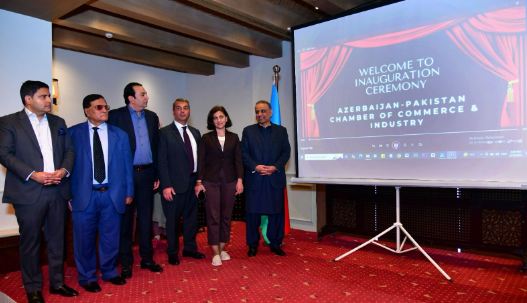
ISLAMABAD, FEB 12 /DNA/ – Federal Minister for Board of Investment (BOI), Privatization,and Communication, Abdul Aleem Khan on Wednesday said the inauguration of Azerbaijan-Pakistan Chamber of Commerce and Industry (APCCI)  is the foundation for a stronger economic alliance between Pakistan and Azerbaijan, which will enhance the bilateral economic and trade ties between both side.

Federal Minister for Board of Investment (BOI), Privatization, and Communication, Abdul Aleem Khan addressing the Inauguration ceremony of Azerbaijan-Pakistan chamber of Commerce and Industry (APCCI) as Chief Guest along with others including, Ambassador of Azerbaijan to Pakistan, Khazar Farhadov and Chairman, APCCI Ahsan Zafar Bakhtawari here.

The President Federation Pakistan Chamber of Commerce and Industry (FPCCI), Atif Ikram Sheikh and Secretary General of FPCCI, Zafar Bakhtawari also addressed the occasion.

 Meanwhile addressing on the occasion, he said “We stand at the threshold of a new and dynamic chapter in our bilateral relations, with unwavering optimism, I am confident that this Chamber will evolve into a cornerstone of our economic cooperation, ushering in a new era of trade, innovation, and mutual success.”

Aleem Khan said the APCCI stands as a testament to that enduring friendship, transforming goodwill into tangible economic opportunities.

This Chamber is more than an institution and it is a catalyst for innovation, a bridge between ambition and achievement, he said.

The Minister said that with ongoing economic reforms, Pakistan is committed to creating a business-friendly environment for Azerbaijani investors and under the leadership of the Prime Minister, Muhammad Shehbaz Sharif the government is advancing economic diplomacy, with Azerbaijan as a key partner in this vision.

The Minister said the responsibility now lies with government bodies, business leaders, and industry stakeholders to transform this potential into tangible economic progress.

He said the path ahead is full of promise, but realizing its full potential demands our collective commitment, strategic collaboration, and unwavering confidence in the limitless opportunities that await us.

Today, as “We chart a new course, we are reaffirming our commitment to expanding economic horizons and unlocking new avenues of trade and investment.

He said that in modern economies fast-paced global economy, sustainable growth depends on strategic partnerships and adaptability.

Today, it is not just about the unveiling of an institution; it is about cementing an economic partnership that is poised to redefine the trajectory of our bilateral relations. Pakistan and Azerbaijan share a bond that extends beyond formal diplomacy; it is rooted in history, mutual respect, and an unwavering commitment to shared prosperity.

Both our nations have always stood shoulder to shoulder—whether in moments of triumph or challenges.

Pakistan was among the first to recognize Azerbaijan’s independence, and since then, our relationship has flourished, strengthened by mutual commitment to regional connectivity, sustainable growth, and strategic collaboration.

“I would like to take this moment to extend my deepest appreciation to Ambassador Khazar Farhadov, whose relentless efforts in strengthening the Azerbaijan-Pakistan partnership have been instrumental in bringing us to this milestone’’ he said.

Meanwhile on the occasion, Ambassador of of Azerbaijan to Pakistan, Khazar Farhadov expressed his deep fraternal sentiments towards Abdul Aleem Khan and mentioned that both countries were taking steps to enhance bilateral cooperation.

The Ambassador expressed confidence that Azerbaijan-Pakistan Chamber of Commerce and Industry would further increase the existing $ 2 billion investment volume between the two countries.

Chairman of the Azerbaijan-Pakistan Chamber of Commerce and Industry, Ahsan Zafar Bakhtawari said that annual bilateral trade of $ 100 million between Azerbaijan and Pakistan is not according to the potential and efforts needed to enhance the bilateral trade up $1 billion in next five years.

He said that Prime Minister Muhammad Shehbaz Sharif’s upcoming visit to Azerbaijan proved to be a catalyst in bilateral economic and trade ties between Azerbaijan and Pakistan.

On this occasion, he reiterated his determination that he will take the bilateral economic and trade ties between both nations to the highest level through this potential platform of APCCI.

The President of the Federation of Pakistan Chambers of Commerce and Industry (FPCCI), Atif Ikram addressing the ceremony, hailed the establishment of the APCCI and highlighted its role in introducing Pakistani products to Azerbaijan and Central Asian countries.

Meanwhile, on the occasion, Secretary General of FPCCI, highlighted the different aspects of Azerbaijan and Pakistan relation and praised the Federal Minister’s efforts for promoting bilateral ties of the two friend countries.

At the end of the inauguration ceremony, Federal Minister Abdul Aleem Khan as the Chief Guest cut the ceremonial cake and congratulated the Ambassador of Azerbaijan Khazar Farhadov and all the attendees.

Experts at CASS call for global dialogue on Jammu & Kashmir’s ongoing struggle

Experts at CASS call for global dialogue on Jammu & Kashmir’s ongoing struggle

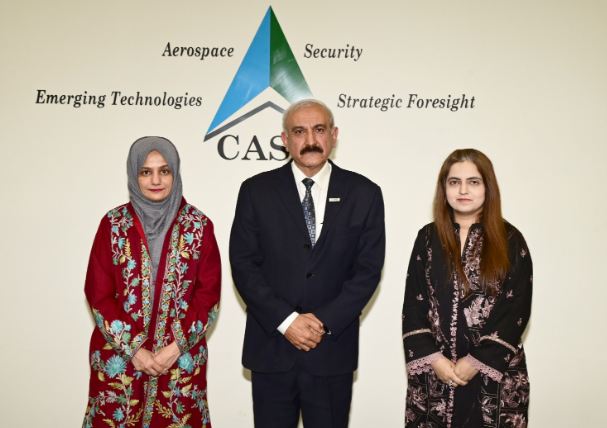
ISLAMABAD, FEB 12 /DNA/ – The Centre for Aerospace & Security Studies (CASS), Islamabad, hosted a Catalyst Conversation reaffirming Pakistan’s unwavering political, moral, and diplomatic support for the people of Jammu and Kashmir. The discussion reinforced the need for sustained efforts in advocating for their fundamental rights and dignity on the global stage.

Session moderator and Research Associate at CASS, Ms. Shaza Arif, highlighted that generations of Kashmiris have suffered under repression, militarisation, enforced disappearances, and severe human rights violations. She pointed out the deteriorating situation following India’s revocation of Articles 370 and 35A on August 5, 2019, which removed Kashmir’s special status and facilitated demographic and political manipulation. She further noted that India’s settler-colonial project in Jammu and Kashmir is being implemented through legal and administrative changes, demographic shifts, and technology-enabled repression.

Keynote Speaker, Ms. Farzana Yaqoob, Former Minister for Social Welfare and Women Development, Azad Jammu and Kashmir, reflected on the evolving dynamics of the Jammu and Kashmir conflict, noting that while it once carried significant costs for India, these have now diminished. She stressed that Pakistan had maintained a magnanimous attitude towards dialogue, but India had shown little interest in engagement, particularly on Kashmir. She also remarked that India’s aggression had intensified over time, especially in its challenges to the Indus Waters Treaty, further exacerbating tensions in the region. Despite this, Pakistan had remained steadfast in advocating for Kashmir on international platforms, including the UN, EU, and OIC. She highlighted that Kashmiris, deeply invested in Pakistan, placed more trust in Pakistan than in themselves, and the political leadership of Pakistan had displayed unity in supporting their cause.

Ms. Yaqoob further noted that while India had effectively leveraged its media and film industry to control the Kashmir narrative, Pakistan’s coverage of the issue remained limited, with PTV being the primary broadcaster consistently reporting on Kashmir. She stressed the need for original and indigenous Kashmiri content to counter India’s influence and raise awareness of the struggles faced by Kashmiris. She cautioned that future conflicts between India and Pakistan would likely centre on water disputes rather than land, reinforcing Quaid-i-Azam’s assertion that Kashmir is Pakistan’s jugular vein.

In his Concluding Remarks, Air Marshal Javaid Ahmed (Retd), President of CASS, noted the think tank’s role in providing valuable insights to policymakers, particularly following the revocation of Article 370 in 2019. He observed that India was executing a calculated strategy on IIOJK and stressed the need for Pakistan to project its strengths more effectively and unite its intellectual resources to counter Indian actions.

The discussion was followed by a thought-provoking question and answer session, where participants talked about into the human cost of the conflict, shedding light on the profound struggles faced by individuals, families, and communities living under perpetual Indian occupation.

Stay Connected

64FansLike
60FollowersFollow

Latest Reviews

Exchange Rates

USD - United States Dollar
EUR
1.17
GBP
1.35
AUD
0.72
CAD
0.73