Home Blog Page 675

Trump’s War on Institutions

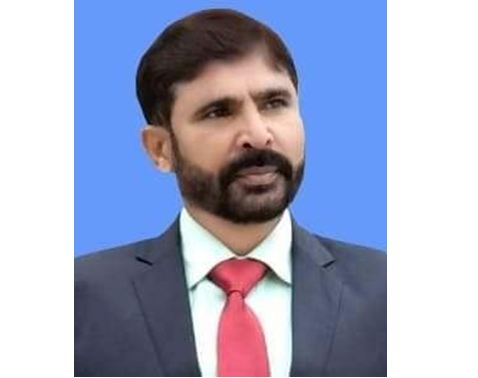
Qamar Bashir

By: Qamar Bashir

Macomb, Detroit, Michigan

President Donald Trump accused the U.S. bureaucracy of massive fraud, waste, and abuse, citing an investigation led by Elon Musk that uncovered billions of dollars in misused funds. He condemned judges for obstructing his reform agenda, calling their block on his $3 billion federal grant freeze “intolerable judicial interference.” Trump also charged the Pentagon with corruption and financial mismanagement, referencing a 2023 audit that found $2.1 trillion unaccounted for. He accused USAID of funneling billions into mainstream media as payoffs for pro-Democrat coverage, calling it “too big, too dirty” to ignore. Further, he alleged USAID provided over $697 million to terrorist groups like Al-Qaeda, Boko Haram, and ISIS under the guise of aid and meddled in foreign elections by sending $15 million to Pakistan’s Election Commission to manipulate the 2024 vote, as exposed by journalist Ryan Grim and others.

For the first time in U.S. history, President Donald Trump is spearheading an unprecedented effort to uproot not only the entrenched bureaucracy but also the military, federal institutions like USAID, IRS, Pentagon, health agencies, law enforcement, CIA, and FBI, as well as the judiciary and the media. Trump has positioned himself as the only leader who has truly recognized the deep-seated corruption, overregulation, and misuse of tax dollars by these institutions.

He asserts that federal agencies have participated in unauthorized commissions and omissions, directed taxpayer funds towards inefficient projects, and established a bureaucratic grip that hinders economic and financial liberty.

He argues that instead of fulfilling their duty to serve the public, these institutions—including judges, bureaucrats, politicians, and the media—have formed a corrupt nexus to amass wealth, secure lavish perks, and misuse their power. This unchecked authority, rather than facilitating public welfare, has crippled economic activities through excessive regulations, leading to inflation, soaring unemployment, and an unprecedented cost-of-living crisis.

These institutional failures have not only burdened American citizens but also weakened the United States’ global leadership in military power, economic dominance, trade, and investment.

Once regarded as the world’s strongest economy, the U.S. now faces the reality of losing its competitive edge to rising powers like China, the Middle Eastern economic hubs, and industrial giants in South Korea, Japan, and Europe.

While these nations are constructing advanced infrastructure such as highways, airports, and ports, the infrastructure in the U.S. is rapidly deteriorating.

A firsthand experience of this decline can be seen in Michigan, where our family arrived in September 2024, only to find crumbling roads, broken highways, and entire neighborhoods—like Hamtramck in Detroit—worse than many underdeveloped countries.

Even major airports and subways in cities like New York, which should symbolize American progress, are far inferior to those in rising global economic centers. This visible decay has become a symbol of how mismanagement and corruption have weakened the country from within.

President Donald Trump has laid out a powerful argument against the unchecked power of the judiciary, questioning how an unelected, taxpayer-funded judge can override the orders of a democratically elected president. He argues that this authority is often motivated by self-interest—protecting judicial power, safeguarding the bureaucracy, and maintaining strong ties with economic and political elites.

Trump has rightly argued that if an unelected judge holds the power to veto presidential orders, it raises serious doubts about the integrity of the democratic system. A president, chosen by the people to enact policies in the public interest, should not have their authority unilaterally obstructed by an appointed judge. Such interference, he contends, undermines the very foundation of democracy, shifting power away from the electorate and into the hands of unaccountable judicial figures.

His assertion is rooted in logic: either power must rest with the elected representatives of the people, or the current system is nothing more than an illusion of democracy, controlled by an entrenched elite that serves itself rather than the nation.

The very foundation of American democracy is now facing an unprecedented challenge. Instead of functioning as a government of, by, and for the people, the U.S. system has become a battleground where institutions operate with separate mandates and self-serving agendas, often at odds with the will of the public.

The bureaucracy—both civil and military—along with the judiciary, has consolidated power to such an extent that elected representatives have been reduced to mere figureheads, unable to implement meaningful change. As a result, the wealth and power of the country have been diverted away from the general public and into the hands of bureaucratic elites, further deepening economic inequality and weakening the nation.

This imbalance has led to a situation where the system exists to sustain itself, rather than to serve the citizens it was designed to protect. The more the bureaucracy tightens its grip, the more the country drifts away from its founding democratic principles.

In contrast, nations where government institutions function in harmony—where every pillar of the state aligns itself with the leadership’s vision—are proving far more effective in delivering stability, prosperity, and national progress. When leadership sets a course, and institutions work collectively to implement it, these governments are able to build state-of-the-art infrastructure, boost economic growth, and enhance the well-being of their people.

The U.S., on the other hand, is witnessing institutional fragmentation, where different branches of government operate in conflict rather than in unison, obstructing national progress instead of facilitating it.

 This is why Trump’s call for systemic reform is not merely about politics—it is about ensuring that power is exercised with accountability, that democracy is truly representative, and that government institutions work for the people, rather than against them.

Recognizing these deep-rooted structural failures, President Trump has declared war on nearly all pillars of the state and their subordinate institutions. His agenda aims to dismantle the bureaucratic stranglehold, expose the judiciary’s complicity, and challenge the media’s biased role in shaping public perception.

This is not just a political battle but a fundamental restructuring of how power is distributed and exercised in the country. Trump’s reforms are not merely cosmetic changes—they are surgical interventions aimed at breaking the alliance between corrupt bureaucrats, activist judges, and self-serving media elites.

Whether he succeeds in his mission or faces unprecedented resistance from these institutions, his presidency has already sparked the most radical political and institutional shake-up in modern U.S. history.

By: Qamar Bashir

Press Secretary to the President (Rtd)

Former Press Minister at Embassy of Pakistan to France

Former MD, SRBC
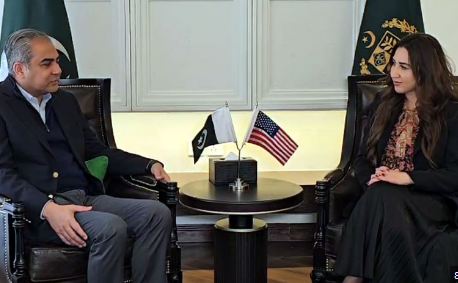
Interior Minister Mohsin Naqvi meets Acting US Ambassador Natalie Baker

Interior Minister Mohsin Naqvi meets Acting US Ambassador Natalie Baker

ISLAMABAD, FEB 15: /DNA/ – Federal Interior Minister Mohsin Naqvi held a meeting with ActingUS Ambassador Natalie Baker in Islamabad. During the meeting, detailed discussions were held on Pakistan-US relations, matters of mutual interest, and enhancing bilateral cooperation. 

 Interior Minister’s  recent visit to the US was also discussed during the meeting, where he had positive interactions with members of the US Congress. In these meetings, detailed talks were held on formulating a joint strategy against terrorism and further strengthening bilateral relations. 

On this occasion, Mohsin Naqvi stated that terrorism is an international issue, and the global community must work together to fight this menace. He further emphasized that Pakistan and the United States have longstanding and excellent relations that span over several decades. 

The Interior Minister said that US cooperation in enhancing the capacity of Pakistan’s law enforcement agencies is highly significant. He expressed hope that Pakistan-US relations would be further strengthen during President Donald Trump’s tenure. 

During the meeting, Mohsin Naqvi al invited Acting US Ambassador Natalie Baker to attend the Jashn-e-Baharan (Spring Festival) in Islamabad.

New Zealand beat Pakistan by 5 wickets in tri-series final

Tri-Nation Series: New Zealand defeat Pakistan by five wickets in final

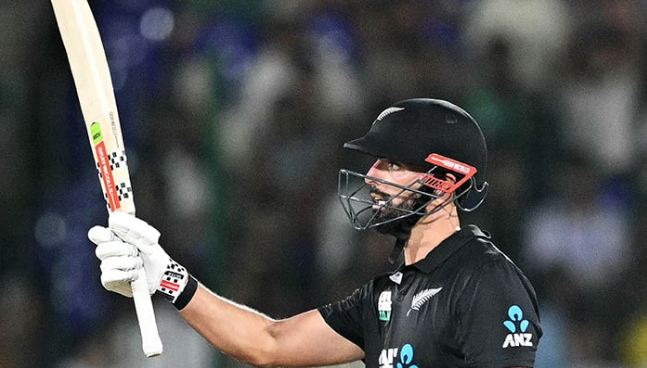
KARACHI: New Zealand defeated Pakistan by 5 wickets in tri-series final. Pacer Will O’Rourke’s four-wicket haul helped New Zealand to book Pakistan for a modest total in the tri-nation ODI series final here at the National Bank Stadium on Friday.

Opting to bat first, Pakistan managed to accumulate 242 before getting bowled out in 49.3 overs despite an anchoring fourth-wicket partnership between skipper Mohammad Rizwan and all-rounder Salman Ali Agha.

The home side got off to a shaky start to their innings as their in-form opener Fakhar Zaman fell victim to Will O’Rourke in the fourth over with just 16 runs on the board.

Following the early hiccup, Saud Shakeel and Babar Azam put together a brief 30-run partnership until both perished in quick succession, bringing the total down to 54/3 in 11.5 overs.

India involved in smuggling drugs, weapons across LoC

India involved in smuggling drugs, weapons across LoC

Waqar Ahmad Noor says India’s military, intelligence agencies have been involved in destabilising the region

DNA

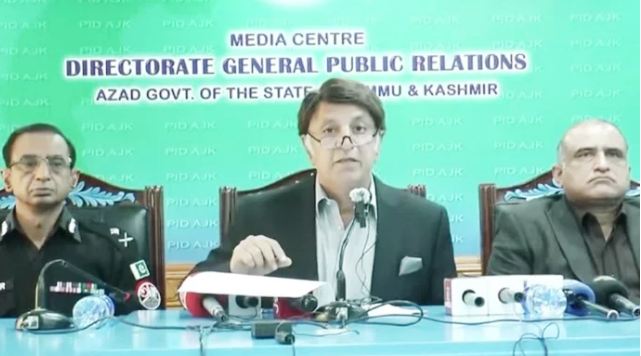
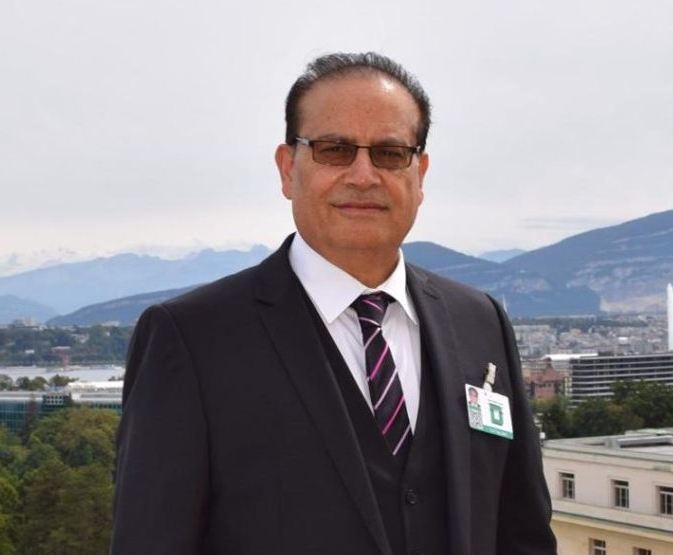
MUZAFFARABAD: Azad Jammu and Kashmir (AJK) Interior Minister Waqar Ahmad Noor has said that India is smuggling weapons and drugs across the Line of Control (LoC) and orchestrating sabotage activities using explosive devices.

Speaking at a press conference in the regional capital of Muzaffarabad, Noor said that India’s military and intelligence agencies have been involved in destabilising the region.

He revealed that since 2016, there have been 54 incidents of improvised explosive devices (IEDs) being planted along the LoC, with an increase in such activities in recent years.

The minister detailed that Indian IEDs have been discovered and detonated in various locations, including Chakothi, Nezapir, Chirikot, Rakh Chakri, and Deva.

The number of such incidents has also risen in Battal, Kot Kotera, and other areas, resulting in multiple civilian casualties.

According to Noor, India’s long-standing subversive activities along the LoC have intensified, with IEDs, weapons, and drugs being moved through Bagh, Battal, Deva, and other sectors.

He further disclosed that between February 4 and 6, four Indian IEDs were recovered from the Battal sector and Rawalakot. On February 12, Indian forces also violated the ceasefire in Deva and Bagsar sectors.

Pakistan has protested to India over these destabilising actions and the movement of IEDs, the AJK minister said, adding that Islamabad has also shared evidence of India’s activities with the United Nations.

Noor further accused Indian forces of conducting false flag operations and staged encounters to justify their actions. He also said that India uses its military resources to smuggle narcotics and arms across the border, contributing to regional instability.

Pak-Bangladesh Ties: Ambassador Siddiqui meets press delegation from Dhaka

Pak-Bangladesh Ties: Ambassador Siddiqui meets press delegation from Dhaka

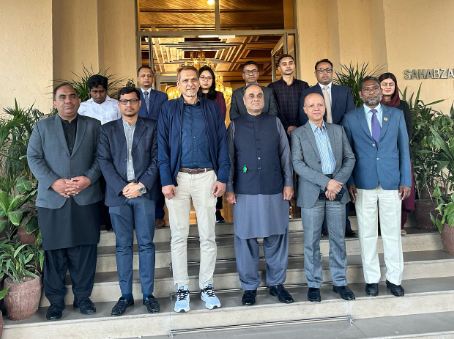
ISLAMABAD, FEB 14: /DNA/ – Additional Foreign Secretary (Asia & Pacific), Ambassador Imran Ahmed Siddiqui, received a media delegation from Bangladesh, today. Appreciating the positive momentum in the bilateral relations, the Additional Foreign Secretary underscored the key role of media in enhancing mutual understanding between Pakistan and Bangladesh.

Prime Minister lauds IFC’s role in fostering private investments in Pakistan

Prime Minister lauds IFC’s role in fostering private investments in Pakistan

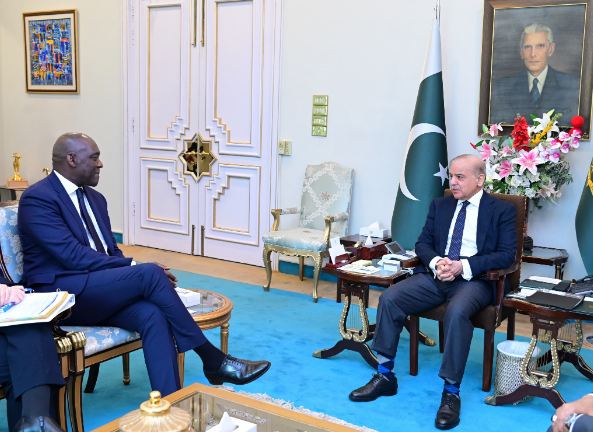
ISLAMABAD, FEB 14: /DNA/ – Prime Minister Muhammad Shehbaz Sharif met with Mr. Makhtar Diop, Managing Director and Executive Vice President of the International Finance Corporation (IFC), the private sector investment arm of the World Bank Group (WBG), to discuss IFC’s ongoing and pipeline portfolio in Pakistan.

Mr. Muhammad Ishaq Dar, Deputy Prime Minister and Foreign Minister, Mr. Muhammad Aurangzeb, Finance Minister; Mr. Ahad Khan Cheema, Minister of Economic Affairs, and senior officers of the Ministry of Finance and Economic Affairs attended the meeting.

The Prime Minister appreciated the WBG’s recently launched new decade-long Country Partnership Framework (CPF) (2026-2035) with its unprecedented commitment of US$40 billion. It would include sovereign lending of US$ 20 billion by the International Development Association (IDA) and International Bank for Reconstruction & Development (IBRD). IFC will mobilize another US$ 20 billion to foster private sector investments in Pakistan.

The Prime Minister lauded IFC’s role in fostering private sector investments and expanding portfolio in Pakistan. He encouraged IFC to enhance its support under the key areas including infrastructure and logistics, outsourcing of large airports, Agriculture, Information Technology, Mining, Climate Resilience, Healthcare and Water & Sanitation. He also encouraged IFC to enhance collaboration with the private sector arms of other Multilateral Institutions for maximizing private sector participation in the development process and achieving greater impact.

The Prime Minister emphasized to focus on export led growth. He underlined the need for digitization of the entire echo-system of Pakistan’s economy. Ongoing digitization efforts of the Federal Board of Revenue were also highlighted.

Mr. Diop reciprocated by highlighting the need for increased private sector investments to improve the road and power sector infrastructure, especially transmission lines, airport services, wheat storage infrastructure including silos to enhance the private sector’s role in facilitating exports.

In order to have a healthy population for sustained economic growth, the need of private investment in water, health and sanitation – with desired social safeguards was also highlighted at the meeting.

Mr. Diop appreciated Pakistan’s productive engagement with IMF and successful ongoing economic reforms. He shared that Government’s efforts to create an enabling environment for the private sector operations in Pakistan under the dynamic leadership of the Prime Minister that has increased investors’ confidence. He assured the Prime Minister of IFC’s continued support to the private sector in Pakistan duly aligned with the government’s priorities.

The Prime Minister underscored the need to design various programs to foster human development especially the youth of Pakistan. He noted that the youth of Pakistan was provided skills training through various initiatives. Mr Diop committed to enhance IFC’s focus on the priority sectors of the Government and thanked the Prime Minister and other relevant stakeholders of the Government for their continued support to IFC’s interventions in Pakistan.

New Zealand bowlers restrict Pakistan to 242 in tri-series final

New Zealand bowlers restrict Pakistan to 242 in tri-series final

KARACHI, FEB 14: Pakistan managed to set a 243-run target after New Zealand bowlers kept hosts under pressure from the beginning in the final match of the Tri-Nation Series being played at National Bank Stadium, Karachi, on Friday.

Opting to bat first, Pakistan managed to accumulate 242 before getting bowled out in 49.3 overs despite an anchoring fourth-wicket partnership between skipper Mohammad Rizwan and all-rounder Salman Ali Agha.

The home side got off to a shaky start to their innings as their in-form opener Fakhar Zaman fell victim to Will O’Rourke in the fourth over with just 16 runs on the board.

Following the early hiccup, Saud Shakeel and Babar Azam put together a brief 30-run partnership until both perished in quick succession, bringing the total down to 54/3 in 11.5 overs.

Saud made a scratchy 14-ball eight, while Babar scored 29 off 34 deliveries with the help of five boundaries including a six.

Pakistan’s in-form batters Agha and Rizwan then tried to launch the recovery by adding 88 runs to the total.

The crucial stand culminated with Rizwan’s dismissal in the 32nd over, while Agha followed suit five overs later, resulting in Pakistan slipping to 161/5.

Rizwan remained the top-scorer for the home side with a cautious 46 off 76 deliveries, laced with four fours and a six, while Agha made a 65-ball 45 with the help of one four and a six.

Middle-order batter Tayyab Tahir knitted a one-sided partnership with Khushdil Shah before both perished in the span of eight deliveries.

Tayyab smashed five boundaries including a six on his way to a 33-ball 38.

All-rounder Faheem Ashraf and tailender Naseem Shah then added valuable runs at the backend with brisk cameos.

The duo also shared an important 39-run partnership for the ninth wicket, which concluded with Ashraf’s dismissal on the first delivery of the final over.

Ashraf made 22 off 21 deliveries with the help of two boundaries, while Naseem made 19.

Will O’Rourke was the standout bowler for New Zealand, taking four wickets for 43 runs in 9.3 overs, while Michael Bracewell and Mitchell Santner bagged two each.

Pakistan XI: Fakhar Zaman, Babar Azam, Saud Shakeel, Mohammad Rizwan (wk/c), Salman Ali Agha, Tayyab Tahir, Faheem Ashraf, Khushdil Shah, Shaheen Shah Afridi, Naseem Shah, Abrar Ahmed

New Zealand XI: Will Young, Devon Conway, Kane Williamson, Daryl Mitchell, Tom Latham (wk), Glenn Phillips, Michael Bracewell, Mitchell Santner (c), Nathan Smith, Jacob Duffy, Will O’Rourke

“Beautiful Japan-Through the Eyes of an Ambassador” Photo exhibition opens at PNCA

“Beautiful Japan-Through the Eyes of an Ambassador” Photo exhibition opens at PNCA

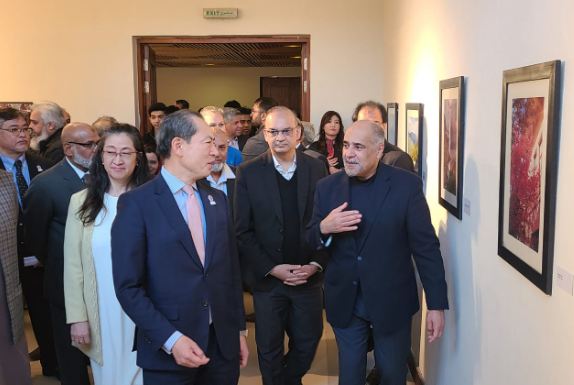
ISLAMABAD, FEB 14: /DNA/ – A captivating photo exhibition titled “Beautiful Japan- Through the Eyes of an Ambassador” opened here today at the Pakistan National Council of the Arts (PNCA) that showcases a remarkable collection of photographs capturing the various facets of Japanese life, including Japanese culture, its people, landscapes, technology while reflecting the essence of beauty and intricacies of Japan. The former Ambassador of Pakistan to Japan, Mr. Farukh Amil, who played a significant role in forging deep connections between the two nations over the years, captured these photographs displayed in the exhibition during his diplomatic service in Japan.

The exhibition, which runs until February 19th, was inaugurated by Mr. Hassan Nasir Jamy, Secretary, National Heritage & Culture Division, and H.E. Mr. Akamatsu Shuichi, the Ambassador of Japan to Pakistan.  Also present were Mr. Ayoub Jamali, Director General PNCA, and other distinguished guests. The exhibition is a collaborative effort between the Embassy of Japan, the MEXT Alumni Association of Pakistan (MAAP), and the PNCA.

The exhibition, featuring  around 40 selected photographs, aims not only to showcase the beauty of Japanese society and culture but also reinforces the ties between Japan and Pakistan fostering a deeper understanding and appreciation of Japan’s rich heritage and contemporary society among Pakistani audiences. It is pertinent to mention here that Mr. Faruk’s talent was even recognized in Japan itself, where he won the prestigious Grand Prix in the Ambassador’s Photo Exhibition competition.

While speaking at the inaugural ceremony, Ambassador AKAMATSU expressed his admiration for Mr. Amil’s work, noting that his deep understanding of Japanese society is evident in the photographs as each photograph is a testament to Mr. Amil’s keen eye and deep affection for Japan. He added that as Japan’s Ambassador to Pakistan, he is delighted to see Japan through the lens of someone who knows our country so well. 

“I believe this exhibition powerfully connects our two nations. It allows us to share Japan’s beauty and complexity with the people of Pakistan, fostering deeper understanding and appreciation. It reminds us that despite distance, we share the values, respect for traditions, love of beauty, and appreciation for the human experience”, remarked Ambassador Akamatsu.

The Ambassador expressed his deep gratitude for Pakistan National Council of the Arts (PNCA) and MEXT Alumni Association Pakistan (MAAP) for their  very valuable support in co-organizing the exhibition.

Cholistan Jeep Rally: Adventure, Culture & Heritage

Cholistan Jeep Rally: Adventure, Culture & Heritage

Dr. Muhammad Akram Zaheer

The 20th annual Cholistan Jeep Rally is scheduled to take place from February 14 to 16, 2025, at the historic Derawar Fort. This highly anticipated event will draw participants and spectators from across Pakistan, with over 100 competitors expected to take part. More than just a sporting event, the rally is a celebration of the rich cultural heritage and history of South Punjab, bringing together sports enthusiasts, cultural admirers and adventure seekers. Since its inception, the Cholistan Jeep Rally has grown significantly, becoming one of Pakistan’s most prominent desert racing events. Held annually, it serves as a vital platform to highlight the unique geographical landscape of the Cholistan Desert, attracting both national and international attention. The rally not only tests the skill and endurance of drivers but also highlights the resilience and adaptability required to navigate the challenging desert terrain.

Beyond the thrill of competition, the rally plays a key role in promoting the cultural and historical identity of South Punjab. The selection of Derawar Fort as the venue emphasizes the organizers’ commitment to blending sports with cultural appreciation. By hosting the event at this historic site, the rally draws attention to Pakistan’s ancient and medieval history, encouraging efforts toward heritage preservation and tourism development.

The 20th International Cholistan Desert Rally will feature a demanding 500-kilometer course through the shifting sands and rugged terrain of the Cholistan Desert. The challenging landscape, marked by dunes, hard tracks and sudden elevation changes, will test the technical skills and strategic planning of participants. Competitors will race in various vehicle categories, catering to different levels of expertise and technical specifications. These categories are expected to include stock and modified 4×4 vehicles, motorbikes and potentially even electric and hybrid vehicles as motorsport technology evolves. This diversity ensures inclusivity, attracting both experienced rally drivers and newcomers aiming to establish themselves in off-road racing.

Given the scale of the event, security and logistical preparations are critical. Law enforcement agencies, including the police and other security forces, will ensure the safety of participants and visitors. Measures such as checkpoints, surveillance and emergency response units will be deployed along the race route. Additionally, authorities will coordinate with medical teams to provide immediate assistance in case of accidents or injuries. Logistical planning involves participant registration, vehicle inspections, technical checks and medical assessments, all of which are essential to maintaining safety standards and ensuring compliance with regulations.

While the jeep rally is the main attraction, the accompanying cultural and recreational activities make the event a holistic experience for visitors. A variety of cultural events have been planned to complement the rally, offering attendees a chance to engage with the region’s traditions and artistic heritage. Highlights include a camel race, a centuries-old tradition of desert communities and traditional dance performances by local artists in vibrant attire. These performances provide a glimpse into the cultural richness of South Punjab. A cultural night featuring folk music will further immerse visitors in the region’s musical heritage. The festivities will conclude with a fireworks display, adding a celebratory touch to the event. Additionally, an exhibition showcasing local handicrafts, textiles and cuisine will offer artisans and entrepreneurs a platform to present their work, supporting the local economy.

The Cholistan Jeep Rally is expected to have a significant economic impact on the region, particularly in terms of tourism and local business growth. As one of Pakistan’s largest desert rallies, the event attracts a substantial number of domestic and international tourists. The influx of visitors boosts revenue for the local hospitality industry, including hotels, restaurants and transportation services. The rally also serves as a platform for business networking and investment opportunities. With growing corporate sponsorships and media coverage, the event has the potential to attract further investments to South Punjab, particularly in adventure tourism, eco-tourism and cultural heritage conservation. Small businesses, especially those dealing in local handicrafts and cuisine, benefit from the increased footfall, helping sustain traditional craftsmanship and culinary arts. The rally also creates temporary employment opportunities in event management, security, hospitality and media production, fostering community engagement as local residents participate in various aspects of the event.

A notable addition to this year’s festivities is a special gathering aimed at promoting knowledge and literature. This intellectual forum will encourage discussions on the historical and cultural narratives of the Cholistan region, fostering greater awareness and appreciation of its heritage. Scholars, historians and literary figures will participate, offering insights into the socio-cultural evolution of South Punjab and its relevance today. Panel discussions, poetry recitals and book launches focusing on regional history, folklore and literature will be key features of this gathering, aligning with broader efforts to integrate cultural heritage with academic discourse.

As the Cholistan Jeep Rally continues to grow in scale and popularity, there is potential for further enhancements to elevate its global standing. Incorporating technological advancements, such as GPS tracking and live-streaming, could enhance spectator engagement and provide real-time updates for global audiences. The event could also attract greater international participation, drawing rally enthusiasts and professional teams from around the world. Strengthening collaborations with international motorsport bodies could align the rally with global standards, potentially making it part of international off-road racing circuits. Environmental sustainability is another critical consideration. Given the fragile ecosystem of the Cholistan Desert, implementing eco-friendly measures such as waste management, reduced carbon emissions and awareness campaigns on desert conservation is essential. Promoting sustainable tourism alongside motorsports can ensure the event’s long-term viability without compromising the region’s ecological balance.

The 20th Cholistan Jeep Rally promises to be a landmark event, transcending sports to become a multifaceted celebration of culture, history and adventure. With its challenging racecourse, vibrant cultural performances and economic opportunities, the rally is set to leave a lasting impact on the region. By blending tradition with modernity, the event highlights the richness of South Punjab’s heritage while fostering tourism and economic growth. As preparations continue, excitement builds for another successful edition. Whether as a competitor, spectator, or cultural enthusiast, the Cholistan Jeep Rally offers something for everyone, making it a nationally significant event that truly embodies the spirit of Pakistan’s desert heartland.

Business Community a Priority for Government: Parliamentary Secretary for Commerce

Business Community a Priority for Government: Parliamentary Secretary for Commerce

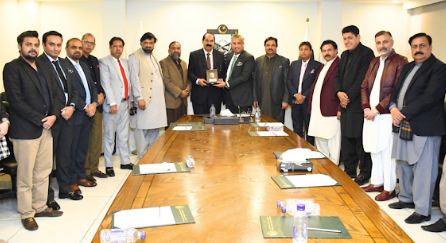
ISLAMABAD, FEB 14: /DNA/ – Parliamentary Secretary for the Ministry of Commerce, Dr. Zulfiqar Ali Bhatti, has affirmed that the business community is the true driving force behind Pakistan’s economy, and the government is committed to addressing its challenges on a priority basis. He made these remarks during an interaction session titled ‘Uraan Pakistan Vision’—Export Regulatory Challenges and Capacity Building for the Ecosystem—held at the Chamber House.

Dr. Bhatti highlighted that, despite significant challenges, the country has emerged from difficult times through the steadfastness of the government and the cooperation, hard work, and dedication of the business community under the visionary leadership of Prime Minister Shehbaz Sharif. He emphasized the need for both the government and the private sector to work unitedly for the success of the ‘Uraan Pakistan Vision,’ which focuses on exports, digital transformation, and sustainability to drive Pakistan’s economic growth. He assured that the Commerce Ministry is determined to adopt all necessary measures, including capacity building of business leaders and entrepreneurs, to create a more transparent and accessible environment for businesses.

He also pledged to arrange meetings between the Chamber’s leadership and personnel from concerned departments, including the Capital Development Authority and the Interior Ministry, to facilitate ease of doing business.

Earlier, in his welcome address, Nasir Mansoor Qureshi, President of the Islamabad Chamber of Commerce and Industry, commended Prime Minister Shehbaz Sharif’s ‘Uraan Pakistan Vision.’ He expressed the business community’s readiness to contribute, provided a business-friendly and congenial atmosphere free from bureaucratic hurdles, and regulatory frameworks that support the promotion of startups, entrepreneurship, and other necessary facilities. He emphasized the need for the bureaucracy to accord due respect to the business community, address their problems on a priority basis, and extend support for the promotion of the country’s brands, which are symbols of national respect and honor. The ICCI President also stressed the necessity for a dedicated space for the development of an industrial estate exclusively for Islamabad’s business community. He highlighted the importance of resolving issues related to business centers and markets, such as security, parking, cleanliness, and sanitation, by utilizing allocated funds and providing necessary facilities in the capital’s industrial areas, rather than imposing heavy fines that discourage the community.

Mahmood Warich, Senior Vice President of the Industrial Area Association and former SVP of ICCI, apprised the guest about pressing issues faced by the industrial sector, particularly excessive trade change charges that are discouraging investors. Executive Member Chaudhry Nadeem Ahmed and Senior Advisor to the ICCI President Naeem Siddiqui also called for business-friendly and bold decisions by the government to foster business growth. Senior Vice President Abdul Rehman Siddiqui emphasized the significance of SMEs in economic growth and demanded necessary incentives for their development. He also highlighted the Chamber’s determination to work alongside the government for this purpose.

Other prominent attendees included Vice President Nasir Mehmood Chaudhry, Executive Member Raja Naveed Satti, Umair Abdul Nasir, Sanaullah, Ali Nawaz, Atiq ur Rehman, Zulqurnain Abbasi, Ishaq Sial  and Council Member Chaudhry Masood.–

Stay Connected

64FansLike
60FollowersFollow

Latest Reviews

Exchange Rates

USD - United States Dollar
EUR
1.17
GBP
1.35
AUD
0.72
CAD
0.73