Home Blog Page 673

Ravians Forever: Memories, Mentors, and the Legacy of GCU

Ravians Forever: Memories, Mentors, and the Legacy of GCU

by Muhammad Mohsin Iqbal

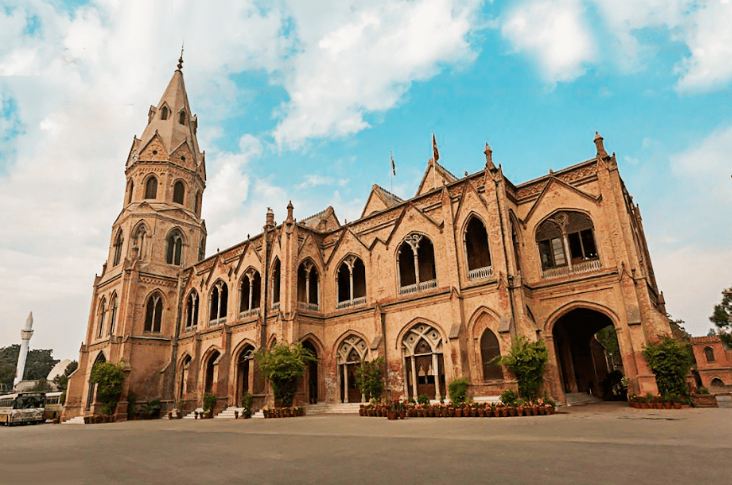
Before the partition of the Sub-Continent, Lahore was illustrious not only for its historical and cultural richness but also for its esteemed educational institutions. Among these, Government College Lahore stood as a beacon of intellectual brilliance. Alongside other distinguished institutions such as Aitchison College, Forman Christian College, Islamia College, Kinnaird College, King Edward Medical College and Punjab University, it was regarded as a bastion of academic excellence, where admission was the cherished dream of countless students. Before I had the privilege of stepping through its grand entrance, I would often gaze wistfully at its towering structure, deeply aware of the luminaries who had once graced its halls, including the great poet-philosopher, Allama Muhammad Iqbal.
Ravians Forever: Memories, Mentors, and the Legacy of GCU

The long-awaited day finally arrived when I stepped through the majestic gates of Government College Lahore, situated opposite Nasir Bagh, embarking upon my own academic journey towards that iconic tower. Accompanied by my father Chaudhary Muhammad Iqbal, I secured the admission form, completed the formalities, and paid the required fee at the bank situated across the road from the college. Thus, I was formally inducted into the M.A. History program, an achievement made possible by the unwavering support of my father and maternal uncle Mehmud Fakhri—an indebtedness I shall always hold close to my heart.

Government College Lahore, now revered as Government College University (GCU), was established in 1864 under British colonial rule. Initially affiliated with Calcutta University before becoming a part of Punjab University, it has since evolved into one of the premier seats of learning in South Asia. Over the decades, its reputation has been cemented by the brilliance of its alumni—visionaries, statesmen, poets, scientists, and artists—who have made remarkable contributions to various fields. Among them stand Nobel laureate Dr. Abdus Salam, literary giant Faiz Ahmed Faiz, astute politician NawabzadaNasarullah Khan, iconic Bollywood actor Dev Anand, and numerous others who have left an indelible mark on history. The faculty of Government College has also been graced by illustrious scholars such as Pitras Bukhari, Dr. Muhammad Ajmal, and Dr. Nazir Ahmad, whose erudition and pedagogical prowess have illuminated the intellectual landscape.

Over a period of almost 16 years, I studied under many educational institutions and teachers, but Dr. Amjad Butt, head of History Department was unique among them all. Amjad Butt, who received his doctorate from Oxford University, spoke English like Shakespeare in class, and the words would fall like pearls from his lips. Outside the class, he spoke in pure Punjabi, as he belonged to Gowalmandi, Lahore and was a “Puckey Lahori”. During this time, his retirement was approaching, so the then Chief Minister of Punjab offered him a five-year extension in his service, which he declined with thanks, saying that I had played my innings. He was a principled and dignified personality, although it was known during that era that no teacher agreed to retire from GovernmentCollege.

My days at this venerable institution remain among the most cherished of my life. Whether braving the dense fog of Lahore’s winter or the relentless heat of summer, my eagerness to immerse myself in the pursuit of knowledge never waned. The college’s academic environment was profoundly enriched by the presence of extraordinary teachers, including Dr. Amjad Butt, Prof. Masood Raza, Dr. Farhat Mahmood, Amanullah Virk, and Muhammad Sadiq—scholars whose intellectual rigor and inspiring mentorship shaped my perspective in profound ways. During my tenure at the college, I was fortunate to witness the grand celebrations marking its 125th anniversary. The occasion was a magnificent convergence of Old Ravians from across the world, including the legendary Indian actor Dev Anand, a testament to the college’s far-reaching influence and the deep-seated connections it fosters among its alumni.

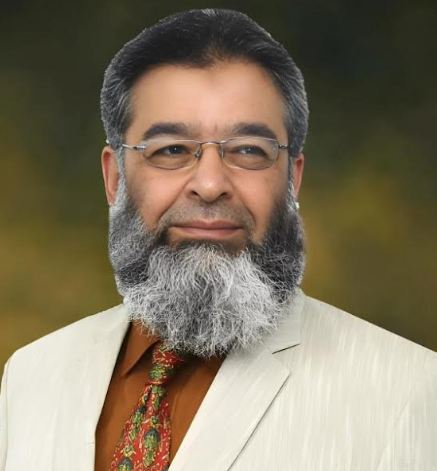
A fundamental part of this enduring connection is the Old Ravians Union, an association dedicated to preserving the spirit and camaraderie of former students. Since its inception, the Union has served as a platform for alumni to contribute to their alma mater, promoting academic and extracurricular excellence. Its elections, conducted with great zeal and fervor, ensure the continuation of this noble legacy. This year, the elections for the 2025-27 term are set to take place on February 23, 2025. Among the candidates for the esteemed position of President is my valued classmate, Sajid Goraya.

Even during our college days, Sajid Goraya distinguished himself through his deep involvement in extracurricular activities, complementing his academic pursuits with an active presence in student affairs. Clad in his signature white cotton shalwar kameez, he exuded an air of humility and commitment—a trait that remains a hallmark of his personality even today. His candidacy for the presidency of the Old Ravians Union is a reflection of his unwavering dedication to the welfare of his fellow alumni and the advancement of GCU. Should he secure victory, I have no doubt that he will discharge his responsibilities with diligence and integrity, further strengthening the ties between past and present Ravians.

As I reflect upon my time at Government College Lahore, I am reminded of the friendships that shaped my journey. The names of my classmates—Sheikh Aamir Rashid, Raja Fakhar Sultan, Ansar Moin, Hammad, Ijaz Boxer, and many others—resonate in my memory, each one an integral part of my college experience. Our camaraderie, our passionate intellectual debates in the corridors, and our collective aspirations formed the fabric of a remarkable chapter in our lives. Even now, I can hear the echoes of our laughter, the fervent discussions we held, and the moments of youthful ambition that bound us together.

Music, too, was an inseparable aspect of GCU’s cultural vibrancy. The melodies that once echoed through its halls still linger in my mind, none more evocative than the song rendered by Ali Ahmed Sayan—AshiqaanTo Sohna Mukhra Lukan Lai, Sajna Ne BoheUtte Chikh Tan Lai—a tune that continues to stir nostalgia and an enduring sense of belonging.

As the Old Ravians Union election approaches, I am drawn to a deeper reflection on its significance—not merely as an administrative entity but as a guardian of traditions, a bridge between generations, and a steadfast custodian of the values instilled within these historic walls. Government College University Lahore is not merely an institution; it is an enduring legacy, an emblem of intellectual distinction, and a sanctuary of enlightenment. As Old Ravians, it is both our privilege and our solemn duty to uphold its grandeur, ensuring that its luminous heritage continues to guide and inspire the generations to come.Finally, I request the administration and the future elected body to remove the word “University” from the name of this institution because the name Government College Lahore” is a name of identity and legacy.

Climate Change Ministry, PEMRA sign MoU to promote environmental awareness

PEMRA

The Ministry of Climate Change will assist PEMRA in implementing sustainable practices within its own operations, helping the regulatory body become a “Green Regulator.”

ISLAMABAD, Feb 17 (DNA): The Ministry of Climate Change and Pakistan Electronic Media Regulatory Authority (PEMRA) here on Monday signed a Memorandum of Understanding (MoU) to collaborate on raising awareness and advocating for sustainable practices across Pakistan through various media channels.

This partnership seeks to tackle the urgent issue of climate change while encouraging collective efforts for a greener future.

The MoU outlines a comprehensive framework for both organizations to work together, utilizing television, radio, and digital platforms to raise public awareness on critical environmental concerns, such as climate change, air pollution, water conservation, and sustainable living.

The goal of this collaboration is to engage the public at a national level, driving widespread action for environmental sustainability.

Following the MoU signing, Ms. Romina, in a meeting with Sikander Rashid Choudry, Executive Member of PEMRA, emphasized the importance of cross-sector cooperation between regulatory bodies, the government, and media organizations to advance sustainable practices and promote climate-conscious initiatives.

Ms. Romina stressed the need for platforms that facilitate public dialogue on climate issues to help address Pakistan’s environmental challenges. “From water scarcity to rising temperatures, Pakistan is facing significant environmental concerns. The media plays a vital role in ensuring that these challenges are understood and acted upon by both the public and decision-makers,” she said.

She further underscored the government’s strong commitment to climate action and the need for a collective approach involving all sectors of society to achieve environmental sustainability. “Climate change is an existential threat to Pakistan, and all stakeholders, including the media, must actively engage in educating the public and fostering a culture of environmental stewardship,” Ms. Romina added.

Reaffirming the government’s dedication to addressing climate change, she highlighted the importance of collaborations like the one with PEMRA in amplifying climate awareness and broadening the reach of climate action efforts. The partnership is focused on promoting environmental education, climate action, and a more informed, responsible, and environmentally conscious society across Pakistan.

PEMRA and the Ministry of Climate Change will jointly develop and broadcast nationwide campaigns on climate-related topics, encouraging media outlets to create engaging content centered on renewable energy, eco-friendly practices, and environmental protection.

Additionally, PEMRA will consider establishing guidelines for media organizations to adopt sustainable broadcasting practices. These guidelines will focus on reducing energy consumption, promoting paperless operations, and encouraging green practices within the media industry.

The Ministry of Climate Change will assist PEMRA in implementing sustainable practices within its own operations, helping the regulatory body become a “Green Regulator.” This initiative will focus on energy efficiency, waste reduction, and minimizing its carbon footprint, setting an example for other regulatory bodies and organizations.

PEMRA will also collaborate with the Ministry to monitor media coverage on climate issues, track public engagement, and report on the impact of media in driving climate advocacy. This will help assess the effectiveness of their joint initiatives.

To further their efforts, joint workshops and training sessions for journalists and content creators will be organized. These sessions will enhance their understanding of climate change and provide the necessary tools to report on environmental issues responsibly.

Through this collaboration, PEMRA and the Ministry of Climate Change will create a united front in the fight against climate change, harnessing the power of media to drive national conversations, actions, and sustainable development. This partnership marks a crucial step in Pakistan’s commitment to confronting environmental challenges and creating a more sustainable future for all.

Ramadan Calendar 2025 Islamabad (SEHRI & IFTAR TIME)

Ramadan Calendar 2025 Islamabad (SEHRI & IFTAR TIME)
DaySEHRIIFTARDATE
105:11 AM6:06 PM02 Mar 2025
205:10 AM6:07 PM03 Mar 2025
305:09 AM6:08 PM04 Mar 2025
405:08 AM6:09 PM05 Mar 2025
505:07 AM6:09 PM06 Mar 2025
605:05 AM6:10 PM07 Mar 2025
705:04 AM6:11 PM08 Mar 2025
805:03 AM6:12 PM09 Mar 2025
905:01 AM6:13 PM10 Mar 2025
1005:00 AM6:13 PM11 Mar 2025
1104:59 AM6:14 PM12 Mar 2025
1204:57 AM6:15 PM13 Mar 2025
1304:56 AM6:16 PM14 Mar 2025
1404:55 AM6:17 PM15 Mar 2025
1504:53 AM6:17 PM16 Mar 2025
1604:52 AM6:18 PM17 Mar 2025
1704:50 AM6:19 PM18 Mar 2025
1804:49 AM6:20 PM19 Mar 2025
1904:48 AM6:20 PM20 Mar 2025
2004:46 AM6:21 PM21 Mar 2025
2104:45 AM6:22 PM22 Mar 2025
2204:43 AM6:23 PM23 Mar 2025
2304:42 AM6:23 PM24 Mar 2025
2404:40 AM6:24 PM25 Mar 2025
2504:39 AM6:25 PM26 Mar 2025
2604:37 AM6:26 PM27 Mar 2025
2704:36 AM6:26 PM28 Mar 2025
2804:34 AM6:27 PM29 Mar 2025
2904:33 AM6:28 PM30 Mar 2025
3004:31 AM6:29 PM31 Mar 2025

Faceless Dictatorship in the USA and Europe

Qamar Bashir

By: Qamar Bashir

Two major headlines shook the U.S. and the world. First, President Trump’s defiant tweet: “One who saves his country does not violate any laws.” Second, Vice President JD Vance’s blistering rebuke of European leaders, accusing them—without exception—of betraying democratic values and suppressing free speech. Both statements sent shockwaves, exposing the widening chasm between political rhetoric and the reality of governance in the West.

Trump’s statement invited a flood of criticism across both traditional and social media. Many social media users harshly criticized him, branding him a dictator and authoritarian, and even comparing him to Mussolini, Hitler, and Napoleon. However, such comparisons overlook key historical facts. While Mussolini and Hitler rose to power through a mix of political maneuvering and suppression of opposition, and Napoleon seized power in a coup in 1799 and later declared himself Emperor, Trump was elected through a transparent, free, and fair democratic process.

The president’s statement carries multiple connotations. One interpretation is that the U.S. media, having been challenged by Trump and his team, reacted with hostility after losing the unchecked power to dictate narratives and control political agendas. Unlike past leaders who sought media appeasement, Trump confronted it head-on, refusing to be blackmailed or intimidated. The media’s backlash can be seen as a defeatist response—an attempt to spin his words by stripping them of context to fit their own agenda.

Secondly, democracy in both the USA and Europe appears to have come full circle. Over prolonged democratic rule, the bureaucracy—both military and civilian, judiciary, and media—oiled by filthy rich multinational corporations, has been buying lawmakers to enact scores of laws, rules, and regulations that serve their vested interests, further augment their wealth, protect their privileges, and secure their hefty perks and perquisites.

Over the years, elements of this dirty nexus have amassed such overwhelming influence and have occupied so much space in governance that little remains for democratically elected representatives. This alliance ensures that any political challenge is swiftly neutralized before it crosses acceptable limits. Together, they have transformed democracy into a modern, unelected dictatorship.

The elected leadership, soon after assuming power, finds themselves powerless. Instead of enacting meaningful reforms, they are reduced to a mere figurehead—a toothless showpiece—who spends their tenure justifying the failures of the bureaucracy and defending crimes committed by the unelected elites.

When they try to resist, the faceless dictatorship often coerces them into committing transgressions themselves. Once compromised, the de facto dictators tighten their grip, stripping the politician of power, humiliating them, and ensuring their downfall while keeping their power intact, securing their privileges, and perpetuating the flow of dirty money into their coffers while, in their private conversations, relishing their vanquishing of the political elites.

This faceless dictatorship has reduced ordinary citizens to mere laborers, maybe a little over slaves, who toil day in and day out, barely earning enough to sustain themselves or provide food at their tables. Conversely, the elements of the faceless dictatorship enjoy a lifestyle akin to royalty, lavishing millions on individual events, acquiring airplanes, helicopters, private islands, and expansive estates that were previously exclusive to monarchs.

This form of dictatorship, widespread in both the USA and Europe, might have gone unnoticed had it not been for the rapid rise of nations once dismissed as inferior—those ruled by monarchies, like in the Middle East, or quasi-democracies such as South Korea, Singapore, Thailand, Hong Kong, and Malaysia, as well as socialist China.

These countries, once seen as struggling under supposedly flawed systems, have now surged ahead, surpassing the USA and Europe in nearly every major national and international domain. When the Western powers finally woke up to this reality, they were stunned to find that China, Middle Eastern states, and other quasi-authoritarian regimes had quietly bought up their assets and outpaced them in industries and sectors that were once considered exclusive Western monopolies.

Panic-stricken, the USA and Europe responded with extreme protectionist measures—passing emergency laws to block foreign acquisitions of their assets, shutting their economies off from outside influence, and building legislative fortresses around their institutions. Desperate, they banned foreign media outlets, enacted sweeping laws against “hate speech” and “fake news,” empowered law enforcement agencies to profile their own citizens, clamped down on diversity, pushed aggressive anti-immigration policies, and, in a complete reversal of their long-preached values, embraced white supremacy under the guise of “protecting their cultural identity.”

Ironically, these are the same nations that once used their economic and military might—alongside their control of international institutions—to force other countries into opening their economies, respecting free speech, upholding judicial independence, making immigration-compliant laws, preaching diversity, and selling off their national assets to foreign investors.

Yet, with stunning hypocrisy, while utterly ignoring the suffocating grip of faceless dictatorships on Americans, U.S. Vice President JD Vance took the stage at the Munich Security Conference on February 14, 2025, to deliver a scathing critique of European leaders. He accused them of stifling free speech and religious liberties under the convenient banner of combating “misinformation.”

His remarks, dripping with condescension, painted European leaders as hypocrites masquerading as champions of democracy while, in his view, systematically silencing dissent and eroding fundamental freedoms. Vance’s address, far from a diplomatic overture, landed as a direct insult to Europe’s leadership, branding them as elitist, oppressive, and hopelessly out of touch with the democratic ideals they claim to uphold.

Though delayed, this realization exposes the deep fault lines within democratic systems. The unelected, faceless dictatorship that has engulfed both the USA and Europe has tightened its grip over time, leaving ordinary people struggling and disillusioned. Meanwhile, socialist regimes, monarchies, and quasi-dictatorships have uncovered a simple but powerful truth—empower the people, improve their quality of life, and, in turn, secure long-term stability and influence. By doing so, they are not only consolidating their hold at home but also positioning themselves to dominate regions where governments have failed to uplift their own citizens, leaving them weak and resentful.

The political leaders, both in Europe and the USA, are struggling to reclaim their space from the elements of faceless dictatorship, but it is a long-haul war, not just a battle.

By: Qamar Bashir

 Press Secretary to the President (Rtd)

 Former Press Minister at Embassy of Pakistan to France

 Former MD, SRBC

 Macomb, Detroit, Michigan

KP govt to send two delegations to Afghanistan

Barrister Saif nominated as focal person for coordination for KP-Afghanistan dialogue; ToRs finalised

Shamim Shahid

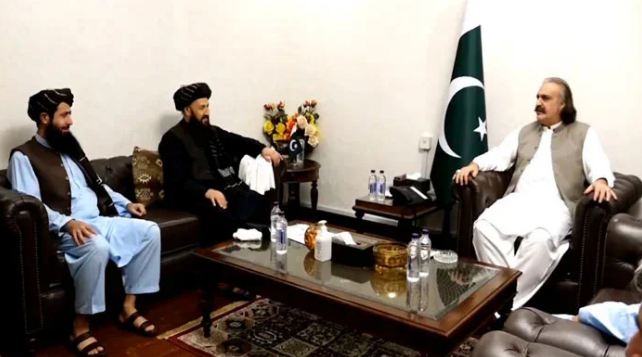
PESHAWAR: Revealing a major development on the diplomatic front, Adviser to Khyber Pakhtunkhwa (KP) Chief Minister Barrister Mohammad Ali Saif on Sunday said that the provincial government would dispatch two delegations to Afghanistan to hold talks with Kabul.

As per the terms of references (ToRs), two delegations will be dispatched to Kabul with the first one tasked with creating a conducive environment for talks and handling diplomatic matters whereas the second one will comprise various stakeholders.

The development comes against the backdrop of increased terrorist incidents in Pakistan which Islamabad has time again blamed on outlawed groups based in Kabul — something vehemently denied by the Afghan Taliban-led administration.

The two nations share a porous border spanning around 2,500 kilometres with several crossing points which hold significance as a key element of regional trade and relations between the people across both sides of the fence.

However, the issue of terrorism remains a key issue for Pakistan which has urged Afghanistan to prevent its soil from being used by groups such as the Tehreek-e-Taliban Pakistan (TTP) to carry out attacks inside the former’s territory.

Islamabad’s reservations have also been confirmed by a report submitted to the United Nations Security Council (UNSC) by the Analytical Support and Sanctions Monitoring Team which has revealed a nexus between Kabul and the TTP with the forming providing logistical, operational and financial support to the latter.

Furthermore, this is also evident from the statistics compiled by the Pakistan Institute for Conflict and Security Studies (PICSS) which show that KP and Balochistan — both of whom abut Afghanistan — have remained the worst-affected provinces from increased terrorist attacks which witnessed a surge of 42% last month compared to December 2024.

Owing to the KP’s security situation — including the months-long turmoil in the Kurram region — KP CM Gandapur in September 2024 put out a proposal of holding direct talks with Afghanistan to address terrorism concerns for lasting peace in the restive bordering regions.

The announcement, backed by Pakistan Tehreek-e-Insaf (PTI) founder Imran Khan, received flak from the federal government which termed it as a direct attack on the federation.

Nevertheless, the chief minister went on to reiterate his stance earlier this month saying that the KP government would send a jirga to the neighbouring country.

The provincial chief executive, while speaking at a session titled “National Unity Against Terrorism”, , again linked KP’s peace to the situation in the neighbouring country while calling for purposeful and result-oriented government-level negotiations with the Afghan authorities.

As per the ToRs prepared by his government, the purpose of sending the delegation is to strengthen cross-border tribal diplomacy and promote economic and social relations.

With nominating Barrister Saif as the focal person for coordination for the KP-Kabul talks, the ToRs further state that the provincial government will remain in contact with the Centre as it undertakes a key diplomatic task.

170 deported from 11 countries, 59 offloaded

170 deported from 11 countrie

FIA intercepts four women suspected of being trafficked for forced labour in Saudi Arabia

Nazir Siyal

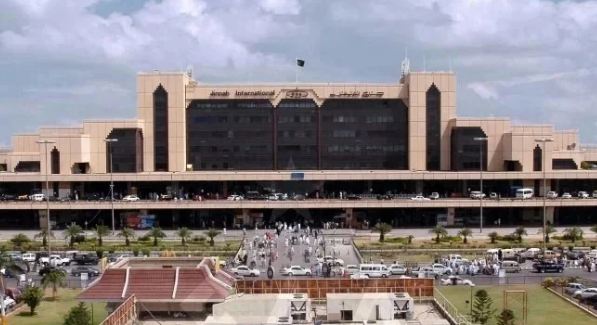
KARACHI: Nearly 170 Pakistanis have been deported from Saudi Arabia, the United Arab Emirates (UAE), Oman, and several other countries during the last 48-hours, with 24 individuals taken into custody upon arrival in Karachi.

According to immigration sources, the Saudi authorities deported 94 Pakistanis within 48 hours on various charges, including blacklisting, begging, drug dealing, illegal residence, working without a sponsor, absconding from employment, and violating contractual agreements.

Other deportations included three individuals from Oman, one from Thailand, nine from Iraq, one each from the United Kingdom and Cyprus, four from Indonesia and five from Mauritania on charges of human smuggling.

Additionally, two individuals were deported from Qatar due to insufficient travel funds, and one Pakistani was removed from Tanzania.

In the UAE, 39 Pakistanis were deported in the past two days after serving sentences for illegal activities and other violations.

Seven of the deported individuals were identified as blacklisted in the Integrated Border Management System (IBMS). Officials confirmed that several deportees had been involved in financial and immigration-related offences.

Meanwhile, authorities offloaded 59 passengers from flights bound for 21 countries, including the UK, Saudi Arabia, Cambodia, Egypt, Bahrain, Qatar, and Malawi, due to visa and travel documentation issues.

Among those offloaded, 21 Umrah pilgrims were denied travel because of insufficient hotel bookings and funds. A passenger traveling to Italy was offloaded after his asylum request was rejected, while another heading to the UK on a student visa and four individuals traveling to Cyprus on study visas were also prevented from flying.

Additionally, passengers attempting to travel to Turkiye, the UAE, Thailand, Malaysia, Nepal, Iraq, Bangladesh, Sri Lanka, Indonesia, and the Democratic Republic of Congo were stopped. Four passengers, including one blacklisted individual, were denied boarding from Oman as well.

The Federal Investigation Agency (FIA) Immigration Unit at Karachi Airport also intercepted four women traveling on Umrah visas, suspecting they were being trafficked for forced labour in Saudi Arabia. According to FIA, the women had previously traveled to Saudi Arabia, and authorities suspected a trafficking network at play.

A woman named Aasia was identified as the facilitator behind their travel arrangements. She was previously employed by Punjab Police and had financed the travel expenses for all four women.

Further a Saudi-based agent, Waseem Gujar, had facilitated their stay and covered their expenses there.

Dutch Hockey Club wins tournament under PM youth program initiative

Dutch Hockey Club wins tournament under PM youth program initiative

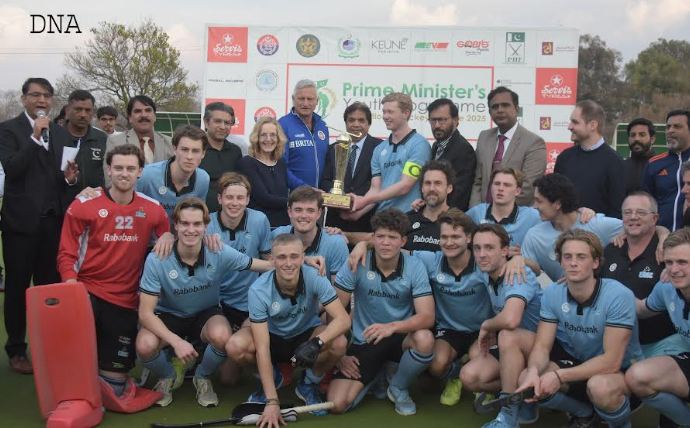
ISLAMABAD, FEB 16, /DNA/ – Senior PML N leader Hanif Abbasi, Olympian Khawaja Junaid, Ambassador of the Netherlands and others giving winners Trophy to the Netherlands Hockey Club. The matches were played under the banner of the Prime Minister Youth Program. Teams from Germany and the Netherlands played matches in Lahore and Islamabad. -DNA

An Ode to happiness

An Ode to happiness

Erosion of social values: Addressing the decline of social ethics

Ghazala Anbreen

In recent times a sad trend is emerging where most of the people feel happy in mistreating others especially those who are simple, quiet and shy and hence are introvert and innocuous by nature. Being a harmless fellow should be taken as something positive. As a matter of fact, such simple people should be celebrated and appreciated but such people are most often scoffed at and victimized rather than appreciated and promoted. This raises some questions why social values have acquired such propositions where people are turning to derive pleasure in teasing others, feel happy in their troubles and maltreat them.

The nature with which a human being is born as per Islamic concept supports the fact that human beings are intrinsically good. According to this school of thought every child is born innocent and pure. This can be supported by many instances from Quran and Hadith where main focus is on kindness and mercy. In Sura Al-Maidah (5:32) is stated “whoever saves a life, it is as if he has saved all of mankind.” In Surah Al-Baqarah (2:83) is said “and speak to people kindly”. In Surah Ar-Rahman (55:60) the focus on kindness is reinforced “Is there any reward for good other than good?” Prophet Muhammad (PBUH) also gave much importance in treating others with fairness.  At one point he said: “Allah will not be merciful to those who are not merciful to mankind.” (Sahih Bukhari, 6013; Sahih Muslim, 2319″. Showing mercy to the creatures of Allah is a way to please Him. The same thing is highlighted at many places by Holy Prophet (PBUH). At one place he says, “The best among you is that who bring the most benefit to others.” (Sunan al-Mu’jam al-Awsat, 6192). His sayings truly reflect how significant it is to live in perfect harmony through good dealings with all around us. Some other sayings by him echoing the similar point include: “He who is not merciful to our young and does not honour our elders is not one of us.” (Sunan Abu Dawood, 4943; Tirmidhi, 1919). “A believer is like a gentle plant that bends but does not break in the wind, while a hypocrite is like a hard tree that is uprooted by the storm.” (Bukhari, 7460; Muslim, 2811).  The Prophet (PBUH) also said: “Make things easy for people, and do not make them difficult.” (Sahih Bukhari, 69; Sahih Muslim,1732).

Despite all these clear directions and emphasis on fair dealings and good treatment towards our fellow human beings why people turn to become sadists when they grow up in our society? Is the collective conscience of our society getting dead or the people are turning totally indifferent to think of good of others?

Why we see erosion of values? The societal behavior should be looked into for these reasons. It is a modern dilemma and must not be ignored as it leads to creating an environment where the best abilities of many individuals cannot shine and overall development suffers. Because of undue torture many people have to deal with multiple mental issues.

The person who is victimized cannot get rid of the negative experiences and the excruciating pains associated with those. For those who become victims, their struggle with the bad experiences is very difficult.

 To address these issues encouraging positive behaviors in the society is important. Rebuilding the societal values will help a lot in bringing improvement in facilitating ways for the weak, quiet and shy people who are at the mercy of those who think themselves to be very smart and clever. One act of giving can change a life forever. Especially for those whose life have been of daily struggle. In this context a call for collective action is required. Awareness raising is a must and there is a need to go for discussions at different forums. This will also help in fostering and improving social cohesion, a society where the weak people are safe and protected and no more feel afraid. Advocacy and awareness campaigns for propagating kindness are a must for engendering harmony and peace in the society and treating others with respect and not making them feel let down.

Focusing on values like empathy, cooperation and emphasizing on mutual respect is very essential. Get rid of the behaviors paving way for a place where people do not find joy in causing distress to others. Genuine happiness is in standing against cruelty and promoting politeness and kindness.

How empathy, understanding, and proactive measures can lead to overall well-being can be learnt through Danish pedagogy methods. If in Denmark a teacher feels that some particular student is not performing well then, she makes sure that the underlying causes are addressed as to why he is facing difficulty in learning. For this purpose, she pauses the academic activities, work with the students, parents and other school staff and looks for the possible reasons that are hindering the student’s ability to learn. The methods she may employ may involve additional tutoring, a change in teaching methods or counselling.

The element of respect is a must. Respect is a value which mut be honoured by all. Every relation which if given due respect which it deserves flourishes and becomes a source of happiness for all concerned.  Also, we must know that life is not meaningless. Small things do matter in life for us and can become source of immense happiness and gratefulness. The realization of this helps solidify every relation in the world.

We must always remember that life is very beautiful. Actually, unwittingly we ourselves fill our lives with much pain and sadness which could have been easily avoided through introspection as mostly we ourselves are responsible for creating problems in our lives. We must know that changing the perspective of life will change our life as most of the pains in life is not because of any other but they are caused by ourselves. Genuinely we have to reflect on our actions Life is neither meaningless nor meaningful. It is up to us what meaning we confer to it. Any one who takes care of us, honouring that person and deriving happiness from this aspect may add value to our living. It may become a source of pleasure for us no matter though the whole world may turn against us. Even if nothing is good in our life, for that one person living will make our life worth living.

It is equally important that we know that we should look for multiple possibilities in life but learning to stay contented with what we have is also significant. Accepting reality is very important. If we try to humiliate others then this act reflects more on us than others whom we try to underestimate. Therefore, we must often question our own behaviour. How many times we judge people without actually knowing about them? The fact remains that simplicity and kindness do not lessen our importance but instead these attributes elevate us.

A person’s true worth is not in their status but actually it is in how they choose to treat other people. Are we living to impress others or learn to become better people. It is actually not what you achieve or have but about the positive impact you leave on the people those who are around you. So let the actions speak for us.

For making ourselves feel bigger pulling others down and humiliating them in front of others will not serve any good to us ever in life but for that very person whom we try to belittle through our acts or gestures will keep the pain of these bitter things alive for longer times. We must not forget that such acts are always self-defeating.

Well one good lesson we can learn is that we do not have to become like them and support such individuals who are a part of all this cruel exercise. We have to play our due role in facilitating others and helping people in distress. That is the very essence for which a human being is born.

The true goodness lies not in perpetuating this cruelty mercilessly hurting or judging people on account of their appearances and inflate our egos but in championing the cause of humanity and sticking to the ethical principle that if you have to choose, always choose to be a good person.

Hope, compassion and resilience are keys to success. Have we ever tried to give a thought how many times we apologised for our arrogance and how many times we learn from apologies and take these as opportunities for change? The reality cannot be denied that often what we search most in the world is what we find least in ourselves. Sooner we realize this, better it will be for us.

CEO Murree Brewery luncheon celebrating Pak religious diversity

RAWALPINDI, FEB 16 (DNA) — Federal Parliamentary Secretary and CEO of Murree Brewery, Isphanyar Bhandara, hosted a luncheon at his residence in honor of religious minority communities. A large number of people from various faiths attended the gathering.

Speaking on the occasion, Isphanyar Bhandara welcomed the attendees and extended his best wishes to them. He emphasized the significant role religious minorities have played in Pakistan’s progress and development. Since the country’s inception, they have contributed alongside their fellow citizens in various fields and will continue to do so in the future.

Bhandara reaffirmed his commitment to fostering interfaith harmony and ensuring that all communities feel valued and included in Pakistan’s social and economic fabric. —DNA

IRS-CVF pledges to work together on climate change issues

IRS-CVF pledges to work together on climate change issues

ISLAMABAD, FEB 16, /DNA/ – A high-level delegation from the Climate Vulnerable Forum (CVF) and the V20 Group of Finance Ministers visited the Institute of Regional Studies (IRS) to discuss potential cooperation on pressing climate vulnerability issues.

The CVF-V20 Secretariat is based in Accra, Ghana with a regional office in Colombo, Sri Lanka and an office in Washington D.C., USA.

During the session, Ms. Sara Jane Ahmed, the Managing Director of CVF-V20, provided an insightful overview of the forum’s ongoing initiatives aimed at supporting Pakistan’s Climate Prosperity Plan (CPP). She highlighted various strategies and frameworks being implemented to enhance resilience and sustainability in the face of climate challenges, emphasizing the importance of international collaboration and financial support.

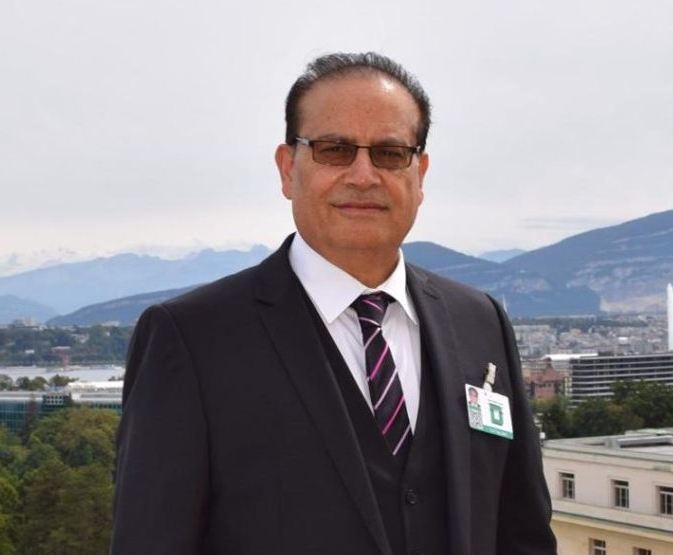
Ambassador Jauhar Saleem, President of the IRS, welcomed the delegation in his opening remarks and commended the CVF-V20 team for their significant contributions to the forum. He underscored the commitment of the CVF to amplify the voices of climate-affected communities worldwide, advocating for their rights and needs in the international arena. Ambassador Saleem emphasized the urgency of collective action to combat climate change and foster sustainable development, acknowledging the role of the IRS in facilitating such essential dialogues, discussions, and joint ventures.

Mr. Hamza Haroon, Regional Director South Asia, CVF-V20, highlighted the loopholes in the climate change governance in South Asia inclduing Pakistan, and stressed the need to improve the coordination among the stakeholders, and effective collaboration between public and private entities. The team IRS, comprising Dr. Rizwan Naseer, Dr. Muhammad Imran Mehsud, Mr. Syed Imran Sardar, Dr. Anjum Rasheed, and Mr. Talha Tufail Bhatti, emphasized the need to collaborate in addressing climate challenges, and exchange ideas for a joint venture such as research collaboration and climate awareness programs.

Stay Connected

64FansLike
60FollowersFollow

Latest Reviews

Exchange Rates

USD - United States Dollar
EUR
1.17
GBP
1.35
AUD
0.72
CAD
0.73