Home Blog Page 669

NAHE’s Faculty Development Programme for IPFP Fellows Concludes at Lahore & Peshawar

NAHE’s Faculty Development Programme for IPFP Fellows Concludes at Lahore & Peshawar

ISLAMABAD, 21 FEB /DNA/ -The National Academy of Higher Education (NAHE) organized the certificate distribution ceremonies of the National Faculty Development Programme (NFDP) for participants under Interim Placement of Fresh PhDs (IPFP) Programme at Lahore and Peshawar.

The NFDP aims to equip fresh PhDs with essential tools and techniques for effective teaching and research, ensuring they are well-prepared to contribute meaningfully to Higher Education Institutions (HEIs) across Pakistan.
Faculty development is essential for advancing the Sustainable Development Goals (SDGs), particularly in higher education settings. By improving the capabilities and effectiveness of university faculty, institutions can better contribute to multiple SDGs. Faculty development aligns with and supports various SDGs including SDG-4 (Quality Education), SDG-5 (Gender Equality), SDG-8 (Decent Work and Economic Growth), SDG-10 (Reduced Inequalities), SDG-13 (Climate Action) and SDG-16 (Peace, Justice and strong Institutions).

By investing in faculty development, educational institutions can significantly advance the SDGs, ensuring quality education for all and fostering innovation, and promotes sustainable development across various sectors.

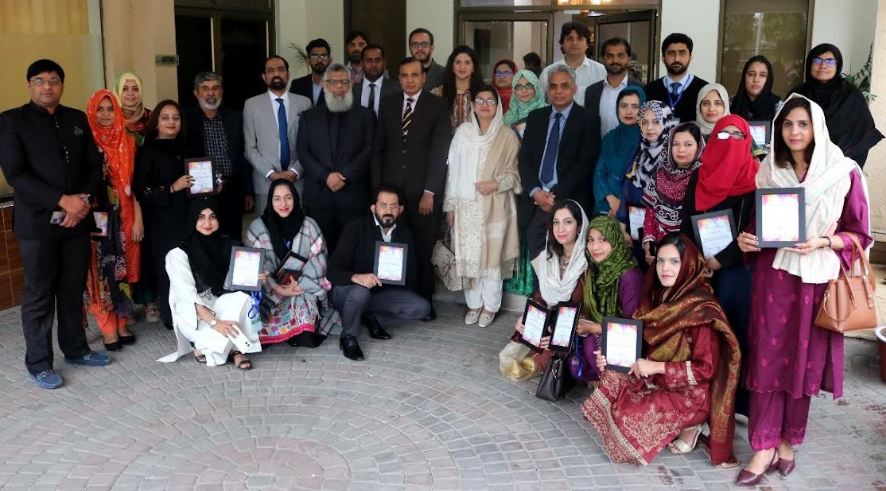
Lahore: Prof. Dr. Syeda Faleeha Zahra Kazmi, Vice Chancellor, University of Home Economics Lahore was chief guest in the certificate distribution ceremony held at Lahore. Dr. Akhtar Sandhu, Principal, Postgraduate Islamia College, Civil Lines, Lahore and Mr. Ghulam Nabi, Director General of HEC Regional Centre, Lahore were also present. The participants shared their memorable experiences and lessons learnt during the programme, reflecting on how the training equipped them thoroughly with skills to meet the challenges of modern academia.

Dr. Syeda Faleeha highlighted the significance of such programmes in fostering professional acumen and capacity building amongst faculty thereby strengthening higher education in Pakistan. She distributed certificates among the participants, acknowledging their dedication and devotion to teaching. At the end, Mr. Ghulam Nabi extended his vote of thanks to all the guests, participants, his team including Assistant Directors Mr. Shoaib Raza and Ms.Yamima Edwin, and NAHE team including Deputy Director Mr. Saleem Qamar for their contributions to the programme’s success.

The NFDP training session featured a series of expert-led workshops, interactive sessions, and hands-on activities aimed at refining teaching methodologies, research capabilities, and leadership skills. The programme underscores NAHE’s unwavering commitment to nurturing academic excellence and fostering a culture of innovation in higher education across Pakistan.

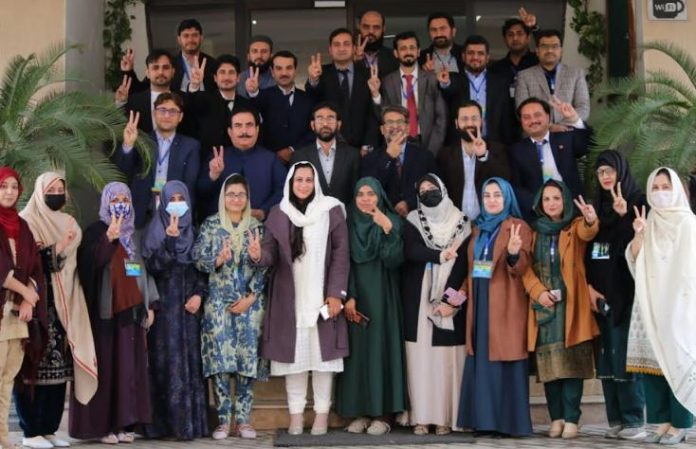
Peshawar: The ceremony was graced by the presence of Prof. Dr. Usman Ghani, Director of IMSciences, as the Chief Guest, along with DG HEC Regional Centre Mr. Nasir Shah and Deputy Director Mr. Shafi Ur Rehman. Dr. Usman Ghani distributed certificates among the participants, congratulating them on their achievements and encouraging them to continue striving for excellence in their academic and professional careers. Dr. Usman Ghani emphasized the importance of dedication, innovation, and lifelong learning, urging participants to contribute meaningfully to the advancement of higher education in Pakistan.

Mr. Nasir Shah addressed the participants commending the organizers Mr. Shafi ur Rehman and Mr. Yasir Aftab for their contributions to the programme’s success. Deputy Director Mr. Shafi Ur Rehman expressed his gratitude for the collaborative spirit and commitment demonstrated throughout the programme, highlighting the importance of such initiatives in building capacity and fostering academic excellence.
NTDC reforms success depends on holistic planning and independent decision-making: Energy Experts

NTDC

ISLAMABAD, FEB 21: /DNA/ –  While the NTDC’s structural reforms are designed to improve accountability, efficiency, and transparency, their success depends on comprehensive planning, political neutrality, and systemic coordination, as mere restructuring alone will not bring lasting improvements. The success of these reforms also needs reducing bureaucratic influence, ensuring independent decision-making, and prioritizing national interest over institutional inertia.

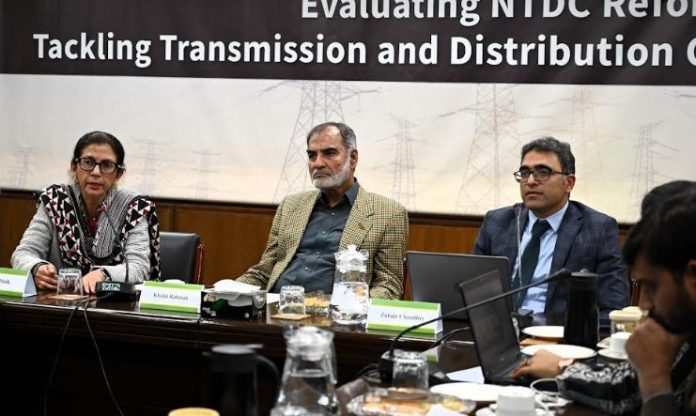
This perspective was shared by power sector experts during a roundtable on “Evaluating NTDC Reforms: Tackling Transmission and Distribution Challenges in Pakistan,” held at the Institute of Policy Studies (IPS), Islamabad.

The session was addressed as keynote speaker by Dr Fiaz Chaudhry, chairman National Transmission and Despatch Company (NTDC), Zubair Chaudhry, general manager finance, Central Power Purchasing Agency (CPPA), Afia Malik, senior energy policy expert, Pakistan Institute of Development Economics (PIDE), and Khalid Rahman, chairman IPS. It was chaired by Mirza Hamid Hassan, former federal secretary, Water and Power, and moderated by Ameena Sohail, an energy lawyer, whereas Ashfaq Mehmood, former secretary, Water and Power, also shared his views.

Providing an overview of the NTDC reforms, Fiaz Chaudhry noted that reforms are primarily focused on structural changes. He said restructuring included separating the project development function into an independent Energy Infrastructure Development & Management Company to insulate it from existing institutional inefficiencies. It also includes renaming NTDC to National Grid Company of Pakistan (NGC-Pak) to improve the efficiency and effectiveness of transmission service delivery. Additionally, forming an Independent System and Market Operator would ensure neutrality and avoid conflicts of interest.

These reforms were needed as persistent internal and external factors, including weak corporate boards, ineffective governance, disregard for corporate policies, complex procurement processes, and arbitrary decision-making, have been undermining NTDC’s performance, he noted.

Talking about the future outlook of NTDC, Zubair Chaudhry observed that reform initiation is a time-intensive process but promises several critical advantages, including enhanced accountability by segregating responsibilities so that each entity will be directly accountable for its specific functions. It will also ensure timely project delivery as independent companies will face direct consequences for delays, improving overall performance. Additionally, the reforms would introduce transparency and efficiency in allocating funds, particularly for transmission infrastructure development.

He underscored that it is crucial to understand the broader perspective of Pakistan’s power sector, as any financial burden or inefficiency within this sector ultimately impacts consumers through increased tariffs or adds to the national fiscal burden. Therefore, a clear awareness of both the technical and commercial flows within the power sector is essential to reap these advantages.

Referencing her earlier study on NTDC reforms, Afia Malik pointed out that there are systemic inefficiencies beyond these challenges. She stressed that leadership issues, bureaucratic interventions, and inadequate human resource capacity are primary barriers to progress in the power sector. She also underscored governance incompetence within NTDC and other power sector boards, attributing it to excessive political influence and non-independent decision-making.

She stressed the necessity of coordination across all entities, warning that even with structural separation, collaboration would still be required to see any tangible improvements. To improve efficiency, she advocated for the adoption of advanced technologies and the implementation of export-competitive tariffs to support industrial growth.

Adding to this, Hamid Hassan asserted that mismanagement and confusion in the power sector cannot be resolved by focusing on isolated issues. He stressed that flawed government planning remains a fundamental issue, and restructuring efforts would be ineffective without comprehensive reforms in all domains of planning, coordination, operation, and regulation.

In concluding remarks, Khalid Rahman noted that issues in the power sector are not isolated but linked to broader poor governance, including institutional and political crises. He attributed the discussed challenges to a deeper moral crisis at both leadership and grassroots levels, underscoring the need for prioritizing collective interests and systemic reform beyond superficial restructuring.

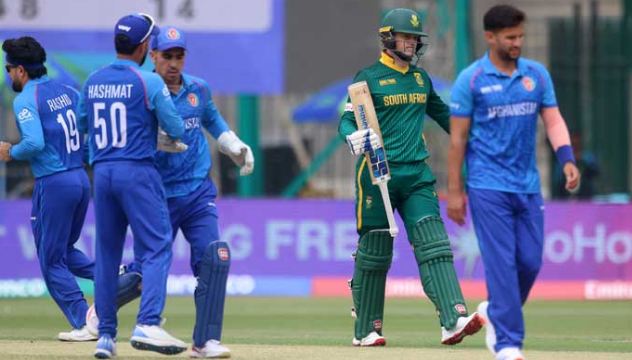
Champions Trophy: South Africa stand firm on pitch with 83/1 against Afghanistan

Champions Trophy: South Africa stand firm on pitch with 83/1 against Afghanistan

KARACHI: South Africa won the toss and elected to bat first against Afghanistan in the third Champions Trophy 2025 match at the National Bank Cricket Stadium in Karachi on Friday.

At the end of the 15th over, South Africa stood firm against Afghanistan on the pitch with 83 runs.

Meanwhile, it was an exciting start for the Men in Blue as Mohammad Nabi knocked Tony de Zorzi (11) out of the field with the help of Azmatullah Omarzai’s incredible catch.

Earlier, after winning the toss, South Africa captain Temba Bavuma had expressed confidence and said that his team “will try to score well”. Meanwhile, Afghanistan captain Hashmatullah Shahidi said that had they gone the other way, his team would have opted to bat.

“We will be happy if we start well,” he said, adding, “We have played good cricket against South Africa before.”

Earlier, during a pre-match press conference, Bavuma highlighted the challenges posed by Afghanistan’s spin-heavy attack and emphasised the importance of adapting to the conditions in Karachi.

Bavuma had noted that the surfaces in Karachi have been batter-friendly, with teams consistently posting scores around 300 in recent matches. However, he emphasised the need for his bowling unit to remain disciplined and precise to counter the high-scoring trend.

“Our challenge as a bowling unit is to be one of the more disciplined and precise bowling units,” he said.

“From a batting point of view, scoreboard pressure is a big thing. Guys getting in, making sure they go big so we can challenge for those 330–350 type of scores.”

On the other hand, Shahidi highlighted his team’s success over the years and claimed they are ready for the eight-team tournament, dismissing the notion of being under pressure while facing South Africa, who boast a slight edge in the head-to-head record.

“A lot has changed since 2019 and recently, we beat them 2-1 in Sharjah. So, we have that confidence with us and we are not under any pressure because right now, we are focusing on what we can do in this tournament,” said Shahidi.

“I believe our team is ready for this tournament and we are only focusing on our team so there is no pressure on us,” he added.

Playing XIs
Afghanistan: Rahmanullah Gurbaz(w), Ibrahim Zadran, Sediqullah Atal, Rahmat Shah, Hashmatullah Shahidi(c), Azmatullah Omarzai, Gulbadin Naib, Mohammad Nabi, Rashid Khan, Fazalhaq Farooqi, Noor Ahmad.

South Africa: Ryan Rickelton(w), Tony de Zorzi, Temba Bavuma(c), Rassie van der Dussen, Aiden Markram, David Miller, Wiaan Mulder, Marco Jansen, Keshav Maharaj, Kagiso Rabada, Lungi Ngidi.

Pakistan on the Global Stage: The Champions Trophy and Its Far-Reaching Effects

Pakistan on the Global Stage: The Champions Trophy and Its Far-Reaching Effects

by Muhammad Mohsin Iqbal

After a prolonged hiatus, Pakistan is once again hosting a major international cricket tournament, the ICC Champions Trophy, started from February 19, 2025. This marks a significant milestone for the country, which had long been striving to restore its image as a safe and vibrant hub for international sports. The return of such a prestigious event not only rekindles the passion of millions of cricket enthusiasts but also carries profound economic, social, and diplomatic implications for Pakistan.

Economically, the Champions Trophy is poised to inject a substantial boost into the country’s economy. The influx of international teams, officials, media personnel, and spectators is expected to generate significant revenue for multiple sectors, including hospitality, transportation, retail, and tourism. Hotels in major cities hosting matches have reported full bookings, and local businesses are witnessing a surge in demand. This increase in economic activity will not only benefit large corporations but also small vendors, who rely on such events for their livelihood. Additionally, broadcasting rights, sponsorship deals, and ticket sales will contribute to Pakistan’s foreign exchange reserves, strengthening the financial outlook of the country’s sports industry.

The tournament’s social impact is equally profound. Cricket has always been a unifying force in Pakistan, transcending political and ethnic divides. The return of a high-profile event to home soil fosters national pride and provides the younger generation with much-needed inspiration. It sends a strong message to the world that Pakistan is ready to host global events, countering the negative narratives often associated with the country. Schools, universities, and sports academies across Pakistan are already abuzz with excitement, as the Champions Trophy rekindles a passion for cricket and encourages youth participation in sports. The success of this event could potentially lead to the revival of other sports as well, paving the way for broader investment in athletics and infrastructure.

On the diplomatic front, hosting the Champions Trophy will enhance Pakistan’s image on the global stage. For years, Pakistan faced challenges in convincing international teams to play on its soil due to security concerns. The successful conduct of this event serves as a testament to the country’s improved security situation and its capability to organize world-class sporting events. The participation of top cricketing nations reflects a growing confidence in Pakistan’s ability to ensure the safety and comfort of visiting teams and spectators. Moreover, the tournament will provide an opportunity for international engagement, fostering better relations between Pakistan and participating nations. Cricket diplomacy has historically played a significant role in bridging political differences, and this tournament offers a platform for constructive dialogue and collaboration among nations.

Pakistan’s ability to host international sporting events has been limited in the past due to security concerns. The unfortunate attack on the Sri Lankan cricket team in March 3, 2009 led to a prolonged isolation, forcing Pakistan to play its home series at neutral venues, mainly in the UAE. However, in recent years, Pakistan has successfully hosted bilateral series and international tournaments, including the Pakistan Super League (PSL) and tours by teams such as Australia, England, and New Zealand. The Champions Trophy marks the most significant multi-nation tournament in Pakistan since the 1996 Cricket World Cup, co-hosted with India and Sri Lanka. The successful organization of this event will further encourage international sporting bodies to consider Pakistan for future global tournaments, such as the ICC Cricket World Cup and other marquee events.

Another key aspect of hosting the Champions Trophy is the enhancement of sports infrastructure. The government and Pakistan Cricket Board (PCB) have invested heavily in upgrading stadiums, security arrangements, and training facilities. These improvements not only benefit cricket but also provide a foundation for developing other sports in the country. The tournament serves as a model for future event planning, ensuring that Pakistan remains an attractive destination for international competitions.

Moreover, the Champions Trophy acts as a cultural bridge, showcasing Pakistan’s rich heritage, hospitality, and enthusiasm for sports to the world. International visitors will have the opportunity to experience the country’s diverse culture, historic landmarks, and culinary delights, leaving with a positive impression that can help promote tourism beyond the tournament. Media coverage of the event will further highlight Pakistan’s vibrant cities and warm hospitality, countering long-standing misperceptions about the country.

Security remains a crucial aspect of hosting the tournament, and Pakistan has taken extensive measures to ensure a safe environment for all participants. The deployment of specialized security forces, coordination with international security agencies, and the implementation of comprehensive contingency plans underscore Pakistan’s commitment to safeguarding the event. A smooth and incident-free tournament will serve as a confidence booster for future international engagements and will further establish Pakistan as a reliable host for global events.

The Champions Trophy also serves as a catalyst for nurturing local talent. Young cricketers will get the opportunity to witness top international players in action, motivating them to pursue the sport professionally. The exposure to high-level competition will contribute to the development of the national team, strengthening Pakistan’s cricketing prospects on the global stage.

As Pakistan embarks on this historic journey of hosting the Champions Trophy, the tournament signifies far more than just a cricketing spectacle. It is a testament to Pakistan’s resilience, its ability to overcome challenges, and its aspirations to be recognized as a global sports destination. The success of this event will open doors for future international engagements, benefiting the nation on multiple fronts. Beyond the boundaries of the cricket field, the Champions Trophy represents a moment of unity, pride, and progress for Pakistan, solidifying its place in the world of international sports.

Trump Says USA is Very Corrupt Country

Qamar Bashir

By: Qamar Bashir

In a recent speech at Mar-a-Lago, President Trump condemned what he described as rampant corruption within the U.S. government, stating, “We have a very corrupt country, very corrupt country.” He expressed frustration over the mismanagement of taxpayer funds and the extensive misuse of federal resources, particularly within the Social Security Administration (SSA).

Trump while admiring DOGE, led by Elon Musk, which uncovered extensive irregularities in SSA records said that SSA was paying  20 million individuals over the age of 100, including one astonishing record of a 360-year-old recipient. These findings exposed the systematic mismanagement of funds intended for retirees and low-income families. Further investigation revealed that the SSA was maintaining records for 4.7 million individuals between the ages of 100-109, 3.4 million between 120-129, 3.9 million between 130-139, 1.3 million between 150-159, and even 879 recipients between 200-209 years old.

Trump said that DOGE identified over $55 billion in savings by canceling 1,127 wasteful contracts and plans to lay off 2.5 million unnecessary government workers, saving an estimated $21 billion in wages. Additionally, DOGE exposed the mismanagement of government-issued credit cards, revealing $40 billion in expenditures, with transactions at casinos, luxury hotels, and entertainment venues. The General Services Administration, which oversees these expenses, has faced mounting criticism for lax oversight.

Schools spent nearly $200 billion in COVID relief funds with little to no oversight, funding expenses like a $393,000 payout to a Major League Baseball stadium, $86,000 in Caesars Palace hotel rooms, $60,000 for swimming pool passes, and even an ice cream truck. New Jersey Governor Phil Murphy used COVID funds to purchase SUVs for his administration, later justifying the expense dismissively.

DOGE uncovered billions of dollars funneled into obscure international projects with no direct benefit to U.S. taxpayers. Among the most questionable expenditures were $520 million for an environmental consultant focused on ESG investments in Africa, $25 million for biodiversity conservation in Colombia, $40 million for social and economic inclusion of sedentary migrants, and $42 million to Johns Hopkins University for social behavior change research in Uganda. Purdue University received $70 million for development research, while $10 million was allocated for circumcisions in Mozambique, and $9.7 million went toward Cambodian youth entrepreneurship training.

Additional allocations included $2.3 million to strengthen independent voices in Cambodia, $32 million to a liberal Prague-based civil society group, and $14 million to improve procurement in Serbia. More concerning was the $486 million directed to support elections globally, including $21 million for voter turnout in India. Further funds included $20 million for fiscal federalism in Nepal, $19 million for biodiversity conservation in Nepal, $1.5 million for voter confidence in Liberia, $14 million for social cohesion in Mali, $2.5 million for promoting democracy in South Africa, $47 million for improving learning outcomes in Asia, and $2 million for recycling initiatives in Kosovo. DOGE efforts prompted the IRS to cancel a $1.9 billion contract under scrutiny for inefficiency and waste.

DOGE also exposed corruption in the Pentagon, where nearly $6.5 trillion in transactions remain unaccounted for, raising concerns about financial transparency and military spending accountability. The FBI was found to have misused surveillance funds and spent millions on secretive programs lacking congressional oversight. USAID was flagged for directing billions in foreign aid to questionable organizations with minimal tracking, fueling suspicions of fraud and misuse. Additionally, the CIA was reported to have allocated undisclosed sums to covert operations with little justification, leading to speculation about the true nature of these expenditures.

The federal government reported $149 billion in improper payments in FY 2024, accounting for 3.7% of all federal spending. These payments included fraud, overpayments, and allocations to ineligible recipients. While DOGE identified $55 billion in potential recoveries, critics have challenged the accuracy of attributing all improper payments to fraud.

President Trump is not only unpredictable but also has the courage to acknowledge the shortcomings within the U.S. system. He has rightly recognized that the most powerful nation in the world is grappling with deep-rooted issues that demand urgent reform to restore its upward trajectory. Defying the deep state and the judiciary, he remains fearless in the face of bad publicity and unafraid to challenge allies who have long exploited America’s generosity. He has made it clear that the United States will no longer funnel hard-earned taxpayer dollars into the coffers of wealthy allies at the expense of its own citizens.

Taking on the deep state head-on, Trump is striving to liberate the country and its people from the grip of unelected bureaucrats, the judiciary, corporate elites, and compromised lawmakers. His mission is to return power to the people, breaking the chains of systemic corruption and inefficiency.

During his previous presidency, he demonstrated a sharp understanding of the fundamental flaws within the governance system. Realizing that true reform requires expertise beyond traditional government circles, he has brought in accomplished professionals from outside the bureaucratic establishment—visionaries like Elon Musk—who are immensely successful, financially secure, and devoid of any urge to exploit public funds. These individuals possess the skill and insight to uncover instances of corruption, waste, and misallocated resources—exposing unnecessary programs, consultancy schemes, and advocacy initiatives designed merely to siphon money under the guise of progress.

With these revelations, President Trump himself is sending shockwaves across the country. Every department is now forced to reevaluate its inefficiencies, wastefulness, and systemic loopholes—scrambling to put its house in order. For the first time in history, a U.S. President has dared to appoint an external team to assess government efficiency and productivity, an unprecedented move that has shaken the foundations of the establishment.

Trump’s audacity and boldness have led him to label the U.S. as one of the most corrupt countries, a statement no other leader has dared to make. He is unafraid of the deep state—those who, despite being mere public servants, have misused their authority for personal gain rather than serving the people. By confronting these entrenched powers, Trump has initiated a movement that, if successful, will serve as a blueprint for other patriotic leaders around the world to reclaim power from the clutches of the deep state and return it to the people.

By: Qamar Bashir

 Press Secretary to the President (Rtd)

 Former Press Minister at Embassy of Pakistan to France

 Former MD, SRBC

 Macomb, Detroit, Michigan

OGDCL partners with LUMS to establish cleantech/energytech grant

OGDCL

LAHORE, 21 FEB /DNA/ – Oil and Gas Development Company Limited (OGDCL) has awarded the LUMS Centre for Entrepreneurship (LCE) a Cleantech/EnergyTech Grant to establish a dedicated space within its co-working facility. This initiative aims to support start-ups focused on cleantech and sustainable energy solutions, fostering innovation to tackle local and global climate challenges.

The OGDCL Energy and Cleantech Zone, housed within LCE, will serve as a hub for research, collaboration, and innovation. It will provide selected start-ups access to workspaces, mentorship, and industry expertise. The initiative aligns with LCE’s mission to drive entrepreneurship in high-impact areas, including AI-driven energy solutions, cleantech, and sustainability.

The partnership was announced at a ceremony held at the LUMS Vice Chancellor’s Office, with senior representatives from both organisations in attendance. OGDCL was represented by Mr. Ahmed Hayat Lak, MD/CEO; Mr. Shahzad Safdar, Executive Director HR/Admin; Mr. Talat Haider, Chief Incharge Oil and Gas Training Institute; Mr. Zeeshan Haider, Manager External Communications; Mr. Omair Kamran, Senior Training Coordinator; and Mr. Raja Sami Haris, Human Resource Officer. LUMS and LCE were represented by Dr. Ali Cheema, Vice Chancellor, LUMS; Ms. Nuzhat Kamran, Director, Office of Advancement; Prof. Nauman Ahmad Zaffar, Faculty Lead, Cleantech Projects; and Mr. Jazib Zahir, Director, LCE.

Mr. Zahir commented on the agreement, saying, “The OGDCL partnership is a significant milestone for LUMS, and the Centre for Entrepreneurship views it as a key collaboration. We share common goals in areas like innovation, AI, cleantech, and training. OGDCL’s support is vital to the sustainability and growth of the Centre, enabling us to branch into new strategic areas.”

Mr. Lak shared the vision behind the initiative, “At OGDCL, we recognise the importance of sustainable energy solutions. Our partnership with LCE allows us to nurture the next generation of innovators in cleantech. By investing in entrepreneurship, we are cultivating a culture of research-driven problem-solving that will benefit Pakistan’s energy sector and beyond.”

Following the ceremony, the OGDCL delegation toured the LCE facilities, including the Makers Lab, where they witnessed firsthand the entrepreneurial potential of start-ups at LCE.

Looking ahead, LCE is excited to explore further collaborations with both public and private organisations to empower the next generation of entrepreneurs, driving innovative solutions that will create lasting impact in Pakistan and beyond.

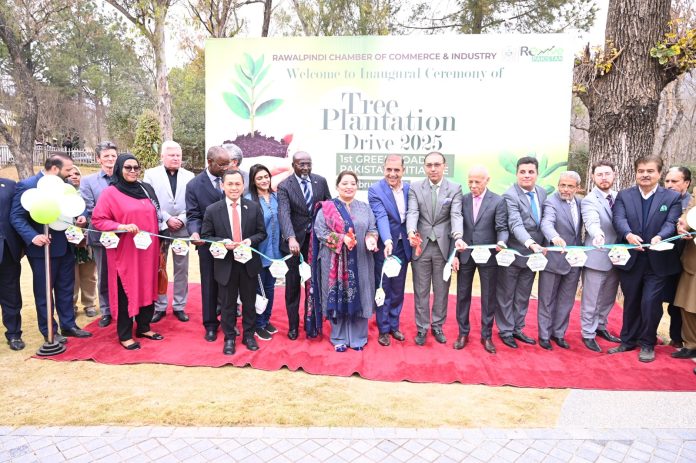
RCCI Inaugurates Plantation Drive 2025 – A Step Towards a Greener Future!

DNA

ISLAMABAD: The Rawalpindi Chamber of Commerce and Industry (RCCI) has launched its much-anticipated Tree Plantation Drive 2025, reaffirming its steadfast commitment to environmental sustainability. The event, titled “Green Earth is Clean Earth,” was held at Gulistan Fatima Park in Islamabad, marking another milestone in RCCI’s ongoing efforts to promote ecological responsibility.

RCCI President Usman Shaukat, accompanied by Group Leader Sohail Altaf, Vice President Fahad Barlas, Chairman Climate Change Tallat Mehmood Awan, former RCCI presidents, and members of the RCCI Executive Committee, warmly welcomed distinguished guests to the inaugural ceremony.

Coordinator to Prime Minister for Climate Change, Romina Khurshid Alam, praised RCCI’s initiative, emphasizing the pivotal role that businesses and the broader community play in shaping a sustainable future. “Business communities are not only vital for economic development, but they also hold a significant role in safeguarding our environment,” she noted. She further highlighted the need for collective efforts to tackle climate change, encouraging industries to adopt eco-friendly practices, reduce carbon footprints, and integrate renewable energy into their operations.

Federal Minister for Maritime Affairs, Mr. Qaiser Ahmed Sheikh, also graced the occasion, underscoring the government’s support for such green initiatives.

The event saw participation from a large number of the diplomatic corps, including: H.E. Mr. Albert P. Khorev (Russian Ambassador), H.E. Mr. Béla Fazekas (Ambassador of Hungary), Dr. Maen A.M. Khreasat (Ambassador of Jordan), Harelimana Fatou (High Commissioner of Rwanda), Ladislav Steinhübel (Czech Embassy Ambassador), among others.

Patron-in-Chief of Pakistan Sweet Homes, Zamurad Khan, alongside RCCI members, civil society representatives, and other distinguished guests, actively participated in the tree plantation ceremony.

RCCI President Usman Shaukat expressed his gratitude to all participants, reaffirming the Chamber’s dedication to fostering a greener Pakistan. “This drive is not just about planting trees but about nurturing hope for a sustainable and healthier future for generations to come,” he stated.

The RCCI Plantation Drive 2025 reflects the Chamber’s holistic vision for economic growth that harmonizes with environmental stewardship, setting an inspiring example for other organizations to follow.

Pak-Türkiye exercise Ataturk-XIII concludes

DNA

Rawalpindi, 20 February, 2025:

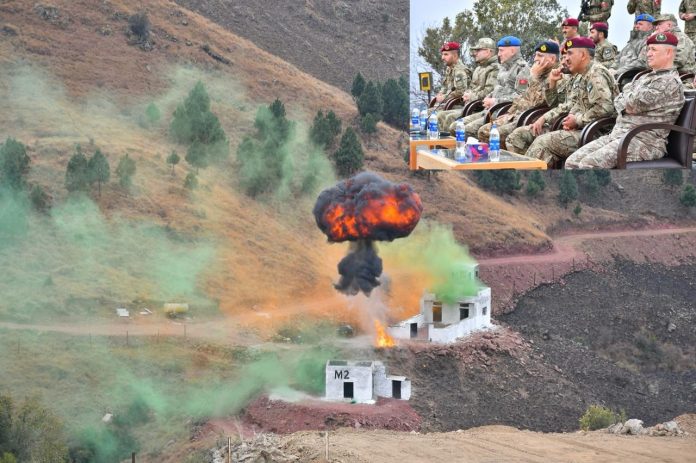
Closing ceremony of Pak-Turkiye Joint Exercise Ataturk-XIII in Counter Terrorism domain was conducted between the Armies of Pakistan and Republic of Turkiye at Cherat, Pakistan.

Two weeks long Exercise commenced on 10 February 2025. 2x Combat Teams from Special Services Group, Pakistan Army and 36x all ranks from Special Forces, Republic of Turkiye participated in the Exercise.

Commander 11 Corps, attended the Closing Ceremony as Chief Guest. Brigadier General Ahmet ASIK from Republic of Turkiye also witnessed the closing Ceremony. The troops displayed highest standards of professional excellence during the conduct.

The exercise was aimed at refining professional skills through joint training besides harnessing the historic military to military relations among the friendly countries. Participating troops benefited immensely from joint training/ exercise.

Chief of Staff Bahrain National Guards meets General Sahir

DNA

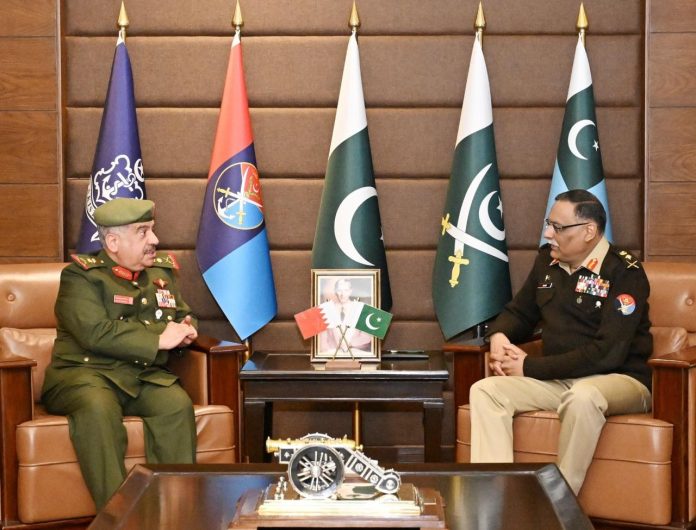
Rawalpindi, 20 February, 2025: Lieutenant General Shaikh Abdulaziz Saud Mubarak Al-Khalifa, Chief of Staff Bahrain National Guard called on General Sahir Shamshad Mirza, NI (M), Chairman Joint Chiefs of Staff Committee at Joint Staff Headquarters, Rawalpindi.

During the meeting, both military leaders discussed evolving regional environment and related security issues. Furthermore, they emphasized broadening the scope and depth of existing bilateral military engagements and cooperation between both countries.

The visiting dignitary lauded the professionalism of Pakistan Armed Forces and acknowledged their sacrifices in fight against terrorism.

Champions Trophy: 6th wicket down as pressure mounts on Pakistan

Champions Trophy: 6th wicket down as pressure mounts on Pakistan

KARACHI: Champions Trophy: 6th wicket down as pressure mounts on Pakistan. New Zealand struck early against Pakistan as Will O’Rourke sent opener Saud Shakeel (6) and skipper Mohammad Rizwan (3) back to the pavilion to disrupt the hosts’ advancement to a 321-run chase in the maiden match of the ICC Champions Trophy 2025 being played at the National Bank Stadium, Karachi, on Wednesday.

Babar Azam and Shakeel opened the innings instead of Fakhar Zaman as latter required 20 minutes due to his time off the field. According to the PCB, Zaman was being assessed and examined for muscular sprain.

However, the openers failed to extend their stand as Shakeel (6) was sent back to the pavilion by Will O’Rourke during the fourth over.

Earlier, New Zealand set a massive target of 321 runs against Pakistan with the help of Young, Tom tons.

Put into bat first, the Blackcaps registered 320/5 on the board in their allotted 50 overs, thanks to a match-defining fourth-wicket partnership between Young and Latham.

The visitors, however, got off to a shaky start to their innings as mystery spinner Abrar Ahmed inflicted an early blow by castling Devon Conway (10) on the third delivery of the eighth over.

New Zealand suffered two more blows in quick succession as pacers Naseem Shah and Haris Rauf picked up the key wickets of Kane Williamson (one) and Daryl Mitchell (10), bringing the total down to 73/3 in 16.2 overs.

Following the slump, wicketkeeper batter Latham, who scored a match-winning half-century in the tri-nation ODI series final last week, joined set batter Young in the middle.

The duo partnered strongly to put New Zealand in a commanding position by adding 118 runs for the fourth wicket.

Naseem eventually broke the threatening partnership in the 38th over by getting rid of centurion Young, who scored 107 off 113 deliveries, studded with 12 fours and a six.

Latham, on the other hand, stood his ground firm and carried his bat all the way through with an unbeaten century.

He remained the top-scorer for New Zealand with an unbeaten 118 off 104 deliveries with 10 fours and three sixes.

He was supported by in-form Glenn Phillips, who smashed a quickfire half-century to push New Zealand to amass the 320-run mark.

Phillips made 61 from 39 deliveries, laced with three fours and four sixes.

For Pakistan, Naseem and Rauf picked up two wickets each, while Abrar Ahmed chipped in with one dismissal.

President Asif Ali Zardari and First Lady Aseefa Bhutto Zardari are also attending the opening match as the chief guests.

The event also featured an aerial display by the Pakistan Air Force’s Sherdil Squadron.

New Zealand’s Devon Conway in action during the Group A match between Pakistan and New Zealand at Karachi’s National Stadium on February 19, 2025. — Reuters
Champions Trophy is pictured before the Group A match between Pakistan and New Zealand at Karachi’s National Stadium on February 19, 2025. — Reuters
President Asif Ali Zardari along with his daughter and first lady Aseefa Bhutto Zardari, and former skipper Sarfaraz Ahmed during the trophy display before the match between Pakistan and New Zealand at Karachi’s National Stadium on February 19, 2025. — Reuters
President Asif Ali Zardari along with his daughter and first lady Aseefa Bhutto Zardari, and former skipper
The eight-team tournament will be played across three venues in Pakistan – Karachi, Lahore and Rawalpindi – as well as in Dubai, United Arab Emirates (UAE) from 19 February to 9 March.

The cricket fever is high among fans as Pakistan is hosting an ICC event after a 29-year hiatus.

Pakistan last hosted an ICC event in 1996 — ICC Cricket World Cup 1996, which concluded with the final at the Gaddafi Stadium, where Sri Lanka defeated Australia by seven wickets.

Pakistan Cricket Board (PCB) Chairman Mohsin Naqvi hailed the tournament’s commencement as a victory for a peaceful and secure Pakistan. He stated that the entire nation, including himself, takes pride in hosting the event.

Stay Connected

64FansLike
60FollowersFollow

Latest Reviews

Exchange Rates

USD - United States Dollar
EUR
1.17
GBP
1.35
AUD
0.72
CAD
0.73