Home Blog Page 668

ISSI holds webinar on “Interim Afghan Government in Power – Three Years on”

ISSI holds webinar on “Interim Afghan Government in Power - Three Years on”

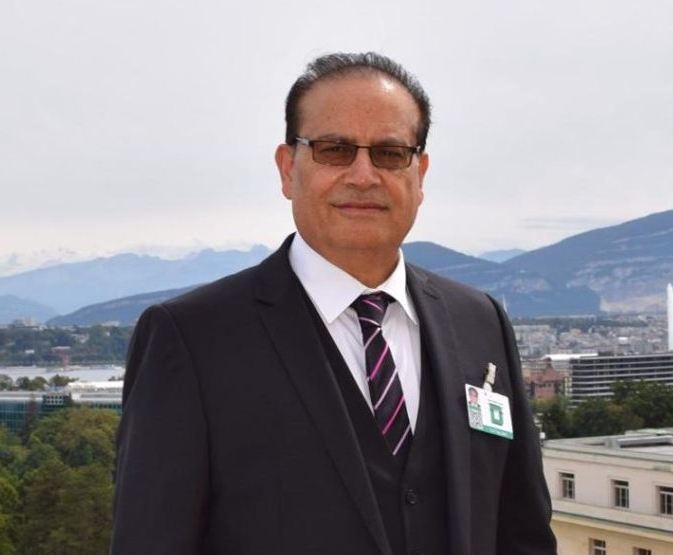
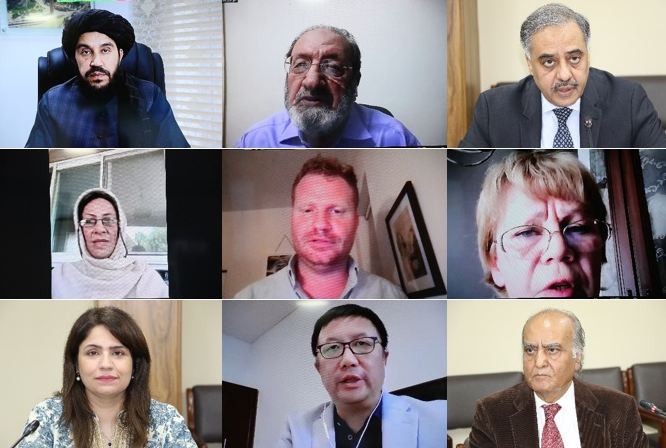
ISLAMABAD, AUG 15 /DNA/ – The Centre for Afghanistan Middle East and Africa (CAMEA) at the Institute of Strategic Studies Islamabad (ISSI) hosted a webinar, titled “Interim Afghan Government in Power – Three Years on.” The webinar was moderated by Ms. Amina Khan, Director CAMEA. Speakers included Ambassador Sohail Mahmood, Director General ISSI; Ambassador Khalid Mahmood, Chairman BoG, ISSI; Sardar Ahmad Shakeeb, Charge d’ Affaires/Minister Counselor, Afghanistan Embassy, Islamabad; Ambassador Ayaz Wazir, Former Pakistani Diplomat; Dr. Mandana Tishehyar, President of the Iranian Peace Studies Scientific Association; Dr. Ye Hailin, Director, Center for South Asia Studies, Chinese Academy of Social Sciences, Beijing; Dr. Zamaraeva Natalia Alekseevna, Senior Researcher  Center for the Study of the Near and Middle East, Russia; Adam Weinstein, Deputy Director of the Middle East Program at the Quincy Institute for Responsible Statecraft, Washington D.C.

Ambassador Sohail Mahmood stated that while the Taliban have consolidated power over the past three years, significant concerns persist regarding their governance, respect for human rights and women’s rights, and counter-terrorism measures. He acknowledged positive developments such as improved security and certain economic indicators like increased revenue and exports, but noted that these were overshadowed by ongoing challenges in other domains. He mentioned that potent threats from groups like ISKP and TTP continue to challenge the Taliban’s authority and stoke regional tensions. These concerns were borne out by the UN report as well. It was important for the Interim     Afghan authorities to address Pakistan’s specific concerns on this account in an effective, credible and sustainable manner. Ambassador Sohail Mahmood also highlighted the complexities of Pakistan-Afghanistan relations and emphasized the imperative of enhanced cooperation in diplomacy, trade and economy, and security and counter-terrorism to stabilize the region. While stressing that a peaceful, stable and prosperous Afghanistan was in Pakistan’s vital interest, he underlined the need for the Taliban authorities to take the long view and work with Pakistan to counter the threats and realize the opportunities for peace, stability, connectivity and prosperity.   

Ms Amina Khan noted that the Taliban have solidified their status as the de facto political authority, though not de jure. They have established a fair degree of stability and security, along with efforts to stabilize the economy. In a significant diplomatic shift from the 1990s, the Taliban have been engaging in diverse regional and global interactions, including 18 active political missions internationally. However, she expressed concerns over ongoing human rights violations, particularly against women, and threats from transnational terrorist groups like ISKP and TTP. Ms. Khan emphasized the fundamental importance of the bilateral relationship that is crucial in shaping the future of the region.

Sardar Ahmad Shakeeb stated that the Interim Afghan government has maintained internal unity, restored political and security stability, and saved the economy from collapse through infrastructure projects. Efforts have also focused on eliminating corruption, combating narcotics, and reforming bureaucracies while creating a new, corruption-free army that has generated youth employment. Despite international sanctions, Afghanistan has seen increased exports, the opening of over 1,500 factories, and plans for modernizing customs and establishing export centers. Diplomatic relations have strengthened with 39 active embassies, and border security has improved. He stated that no country is without differences or disagreements with others, but these should be resolved through dialogue.

Ambassador Ayaz Wazir acknowledged the Taliban’s control in Afghanistan despite lacking formal recognition. He expressed concerns about governance issues, including girls’ education, human rights, and the need for inclusivity. Ambassador Wazir urged the international community to recognize the Taliban’s reality and engage with them to ensure regional peace.

Dr. Mandana Tishehyar observed that despite the Taliban’s claim of defeating the U.S., they face governance challenges, raising security concerns for neighbouring countries. Economic talks have progressed, but the Taliban’s lack of recognition was due to the abandonment of the constitution and unclear foreign policy. She emphasized the importance of the SCO and multilateral engagement through the Afghanistan Contact Group to address these challenges collectively.

Dr. Ye Hailin discussed China’s focus on Afghanistan which was based on non-interference, respect for Afghan sovereignty and social economic development. He said that Beijing’s engagement was not based on conditionalities, but rather engagement with the Taliban for the welfare of the masses. He outlined five principles guiding China’s policy in Afghanistan, self-governance, respect for sovereignty, global commitment to reconstruction, Afghanistan’s right to choose its government, and unconditional assistance.

While expressing her views, Dr. Zamaraeva Natalia Alekseevna stated that the best approach towards Afghanistan was through engagement with the Taliban. She said a common approach was required towards the group that would ensure the Taliban addressing regional concerns. She talked about the presence of transnational terrorist groups, particularly the TTP. She said that despite Pakistan’s repeated concerns regarding the TTP, the Afghan Taliban had failed to resolve the matter.

Adam Weinstein highlighted that since the Taliban took over Afghanistan, while violence has decreased, threats emanating from transnational terrorist groups such as ISKP and the TTP continue which are not just threats for the region but for the wider international community as well. He said that if an attack by the ISKP were to take place on continental Europe it would bring Afghanistan back to forefront of international focus. He said the Afghan Taliban were supporting terrorism and a low intensity war against Pakistan. Moreover, the targeting of Chinese workers in Baluchistan and now in Khyber Pakhtunkhwa is worrisome as is the transnational nature of the TTP and its links to terrorist groups.

These presentations were followed by a Q&A session. While concluding, Ambassador Khalid Mahmood acknowledged progress under the Taliban rule, noting improvements in security and economic realm. He also stressed the importance of addressing issues like refugee management and terrorist threats.


Second trial of national security firewall complete

Second trial of national security firewall complete

ISLAMABAD, AUG 15: The second trial of a new national security firewall has been completed successfully, according to sources in the telecom sector.

They said the firewall has been installed to address national security concerns, with a focus on blocking controversial content and curbing propaganda on social media platforms.

The installation has been carried out on Internet Service Providers (ISPs) by restricting services of social media apps, the sources said. Features such as audio and video downloading from these apps have been temporarily halted. Mobile signal and internet services were also suspended during the firewall’s deployment, the sources said.

They said social media services will return to normal in the next few days.

Also Read: Pakistan accelerates firewall framework for regulating all digital media platforms

Sources indicate that the firewall is equipped with deep packet inspection capabilities, meant to effectively identify and block content deemed to be spreading propaganda against national security. This technology enables the system to target and filter out specific points of propaganda on social media platforms.

The firewall’s primary function is to ensure the safety and integrity of national security by controlling the flow of sensitive information and preventing the spread of harmful content. The sources said that identities spreading propaganda against national security will be blocked, the sources added.

The National Cyber Emergency Response Team (CERT) has issued a critical advisory, warning of a heightened risk of cyber attacks targeting organizations across Pakistan.

Also Read: Alert issued for huge risk of cyber attack; firewall activation urged

The advisory urges all institutions to take immediate precautionary measures to safeguard their digital infrastructure.

According to the National CERT, the primary threat identified is a SQL injection attack, a type of cyber assault in which hackers exploit vulnerabilities in a database to gain unauthorized access. The advisory highlights that hackers may attempt to breach databases to steal sensitive information, posing a significant threat to the integrity and privacy of organizational data.

“Hackers are trying to gain access to sensitive information from various organizations’ databases,” the advisory notes.

RCCI celebrates 77th Independence Day of Pakistan

RCCI celebrates 77th Independence Day of Pakistan

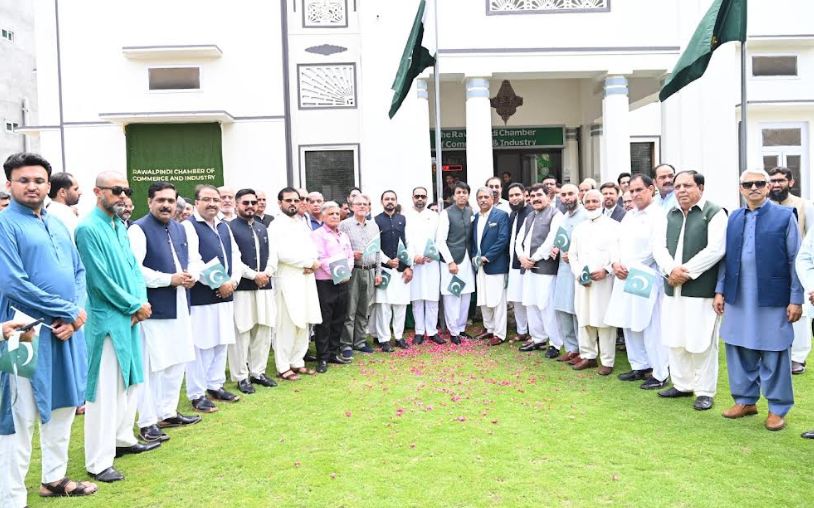
RAWALPINDI, AUG 15 /DNA/ – A grand ceremony was organized on the occasion of 77th Independence Day of Pakistan at the Rawalpindi Chamber of Commerce and Industry (RCCI).

RCCI President Saqib Rafiq, along with Senior Vice President Muhammad Hamza Sarosh, Vice President Faisal Shahzad hoisted the flag to mark the 77th Independence Day of Pakistan at the Chamber Building. Director AIC, Brig. Ejaz Qamar Kiani, Former Presidents, executive committee members, chairman standing committee on culture Martin Parvez, representatives from the trade associations, Shahid Ghafoor Paracha, Sheikh Hafeez, distinguished RCCI Members and a large number of businessmen, women entrepreneurs participated in the event.

In his address, President RCCI Saqib Rafiq said that the business community pledges that they will not hesitate to make any sacrifice for the sake of their dear homeland and will continue to play their role in the progress and development of the country. He said, “It is also a day of happiness; a day of bowing down our heads before Almighty Allah in thankfulness and a day of renewing our pledge that we will continue to struggle with unity and oneness for the objectives, for which Pakistan was created.”

RCCI President Saqib Rafiq also planted a tree under the Plant for Pakistan initiative reflecting the nation’s commitment to combating the adverse impacts of climate change. Independence Day cake was also cut on this occasion. Later, while expressing their views, the participants highlighted the sacrifices of elders and leaders for the creation and independence of Pakistan. They also pledged that every possible effort will be made for the progress and prosperity of the country. A special prayer was also offered for the country’s security, progress and prosperity. A musical performance was also performed to pay tribute to the national heroes.

‘Gen Faiz Hameed was our asset, has been wasted,’ says Imran Khan

'Gen Faiz Hameed was our asset, has been wasted,' says Imran Khan

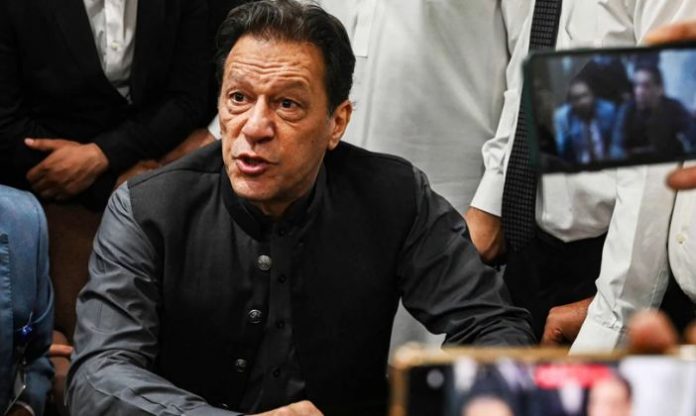
ISLAMABAD, AUG 15: Pakistan Tehreek-e-Insaf (PTI) Founder Imran Khan has voiced strong opinions on recent political developments and internal party matters.

In an informal conversation with journalists at Adiala Jail on Thursday, the former prime minister criticized the handling of former spy chief Lt Gen (retd) Faiz Hameed, saying: “General Faiz Hameed was our asset, who has been wasted.”

He further remarked that the Pakistan Army’s investigation with Faiz Hameed was his internal matter, and he had nothing to do with it. “Holding Gen Faiz Hameed accountable is a good thing, but then everyone should be held accountable,” he added.

The PTI founder alleged that the former ISI chief was removed from office at the behest of former prime minister Nawaz Sharif and incumbent premier Shehbaz Sharif. He added that there were serious debates over the removal of Faiz Hameed at that time.

“I have no relation with Faiz Hameed,” Imran Khan asserted.

The former prime minister also raised concerns about potential violations of the Constitution. He remarked that by not following the Supreme Court decision on reserved seats, the government was violating the Constitution for the third time. “I am already preparing the party for any scenario in the wake of not allocating the reserved seats to the PTI and violating the Constitution,” he added.

Meanwhile, a former deputy superintendent and a jail assistant from Adiala Jail have been detained on charges of facilitating Pakistan Tehreek-e-Insaf (PTI) Founder Imran Khan during his imprisonment.

The authorities have also launched an investigation into the involvement of several other jail employees, deepening the inquiry into the alleged misuse of power within the prison.

Sources reveal that former deputy superintendent Zafar and jail assistant Nazim are among those apprehended for providing unauthorized privileges to the former prime minister during his incarceration. The detained former deputy superintendent reportedly resides near Adiala Jail.

Meanwhile, investigation is going on with six employees on the information provided by another former deputy superintendent, Muhammad Akram, who had served in Adiala Jail for 15 years at various intervals and was removed from his post in June. These six employees were said to be closely associated with Akram.

Increased ‘surveillance’ blamed for internet slowdown in Pakistan

Increased 'surveillance' blamed for internet slowdown in Pakistan

Internet speeds witnessed around 30% to 40% reduction, reveals WISPAP chairman

ISLAMABAD, AUG 15: As internet users in Pakistan continue to reel under prevailing access and speed issues, the Wireless and Internet Service Providers Association of Pakistan (WISPAP) has blamed the phenomenon on increased security and surveillance whose adverse repercussions might lead to severe economic repercussions.

“It’s a very discouraging situation for our customers […] Many are leaving the smaller ISPs because they cannot sustain the poor service quality anymore. If this continues, we will see a mass exodus of businesses from Pakistan,” said WISPAP Chairman Shahzad Arshad on Thursday.

Elaborating on the prevailing issue, the WISPAP chairman revealed that internet speeds witnessed around 30% to 40% reduction which has had a devastating effect on businesses and individuals who depend on reliable internet connectivity.

Highlighting the adverse effects of internet-related issues on online and electronic-related businesses, the WISPAP chairman warned that these sectors, an essential pillar of the country’s digital economy, are now “struggling to maintain operations, and the slowdown is threatening their very survival”.

His remarks come as the Prime Minister Shehbaz Sharif-led coalition government and the country’s top cyber regulator the Pakistan Telecommunication Authority (PTA) have remained quiet as millions across the country continue to face trouble accessing internet services due to limited connectivity, particularly while using mobile data in some regions.

The internet disruption is not only affecting citizens’ rights but also causing financial losses to the national exchequer, as several online businesses, including e-commerce and ride-hailing services, are bearing the brunt of the restricted connectivity.

Users of the widely used messaging application WhatsApp in Pakistan have also reported frustratingly long delays and failures when uploading and downloading content of all types.

The issue has been being attributed to the alleged testing of an internet firewall to rein in social media and is equipped with filters that will block unwanted content from reaching a wider audience.

US Mission to Pakistan welcomes Natalie A Baker as new deputy chief of mission

US Mission to Pakistan welcomes Natalie A Baker as new deputy chief of mission

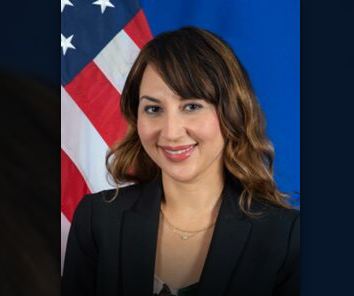
ISLAMABAD, Aug 15 (DNA): The United States (US) Mission to Pakistan on Thursday welcomed the arrival of Deputy Chief of Mission Natalie A Baker. 

Prior to assuming the duties of Deputy Chief of Mission at US Embassy Islamabad, Natalie served as Deputy Chief of Mission at the US Embassy in Doha, Qatar.

Natalie has previously served as Director of the Office of North African Affairs in the US Department of State’s Bureau of Near Eastern Affairs; Deputy Chief and Chargé d’Affaires, a.i., of the US Mission to Libya; Deputy Director of the Iran Regional Presence Office at the US Consulate in Dubai; and Economic Counselor at the US Embassy in Kuwait. In Kuwait, Natalie worked with the Department of Defense to support the withdrawal of US forces from Iraq.

From 2009-2011, Natalie served as Political and Economic Counselor in Libya, as the bilateral relationship was normalizing after a nearly 30-year pause.  She remained in Libya until the Libyan Revolution forced the US Embassy to evacuate in February 2011.

Natalie’s previous other assignments included Special Assistant in the Bureau of Near Eastern Affairs, Consular Officer in Islamabad, Pakistan, and Cultural Officer in Ashgabat, Turkmenistan.

Natalie holds a bachelor’s degree from Princeton University and a master’s degree in public policy from Harvard University.  She is a 2017 Distinguished Graduate of the National War College, National Defense University of the United States of America.

Australian High Commissioner visits Murree Brewery, receives souvenir from CEO

Australian ambassador visits Murree Brewery, receives souvenir from CEO

ISLAMABAD, AUG 15 /DNA/ – The Australian High Commissioner to Pakistan, Neil Hawkins, visited Murree Brewery, where he was warmly welcomed by the CEO, Isphanyar Bhandara. During the visit, Bhandara presented a souvenir to High Commissioner Hawkins, marking the occasion.

The visit highlighted the friendly relations and mutual respect between the two countries.

COAS Asim Munir honors Pakistan Army veterans on 77Th Independence Day

COAS Asim Munir honors Pakistan Army veterans on 77Th Independence Day

Independence Day Reception Highlights Unity, Warns Against Fake News

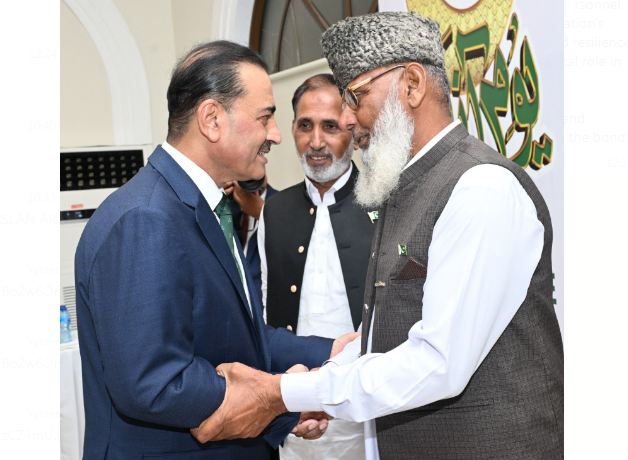
RAWALPINDI, AUG 15 /DNA/ – General Syed Asim Munir, Chief of Army Staff (COAS), NI (M), hosted a graceful reception in honor of Pakistan Army veterans on the occasion of Independence Day. The event brought together a multitude of retired army officers and soldiers.

COAS paid heartfelt tribute to the contributions of the retired personnel, lauding their dedication and instrumental role in shaping the nation’s history. He emphasized the paramount importance of unity and resilience in the face of challenges, urging veterans to continue playing a vital role in Pakistan’s progress and development.

COAS also cautioned against the insidious threat of fake news and propaganda being perpetrated by inimical elements to weaken the bond between the people of Pakistan and the Armed Forces. He reassured that the unwavering support of the nation, including the veterans will fail all such futile efforts.

Veterans expressed faith and  confidence in the leadership of the Pakistan Army, pledging their support in combating both internal and external security challenges. The event served as a testament to the unbreakable bond between the Pakistan Army and its veterans, united in their commitment to the nation’s prosperity and security.

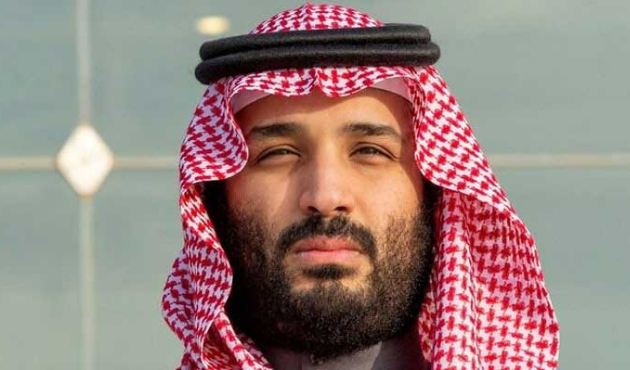
Mohammed bin Salman ‘at risk of assassination’ over Israel-Saudi normalisation: report

Mohammed bin Salman 'at risk of assassination' over Israel-Saudi normalisation: report

WASHINGTON, AUG 15: A report published in US-based news publication Politico has claimed that the Saudi Crown Prince Mohammed bin Salman (MBS) is at risk of assassination because of his push for normalisation of ties with Israel.

The report said the Saudi crown prince told members of US Congress that he was putting his life in danger by pursuing a grand bargain with the US and Israel that includes normalising Saudi-Israeli ties.

According to Politico, MBS, referencing the slain Egyptian leader Anwar Sadat — who was assassinated after making a peace deal with Israel — questioned, “What did the US do to protect him?”

He also opened up about the threats he is facing in explaining why any such deal should include a true path to a Palestinian state, especially as the Gaza war has now intensified Arab fury against Israel.

The report said the discussion with MBS was revealed to Politico’s correspondent by a former US official briefed on the conversations and two other people with knowledge of them.

Despite the risks, the crown prince is willing to pursue the mega-deal with the US and Israel, viewing it as crucial to his country’s future, according to the report.

However, the report adds that the Israeli government has been unwilling to incorporate a credible path to a Palestinian state in the agreement.

Earlier this year, amid an intense Israeli offensive against Palestinians in Gaza, Saudi Arabia told the US its position stands that there will be no diplomatic relations with Israel unless an independent Palestinian state is recognised on the 1967 borders with East Jerusalem and Israeli “aggression” on the Gaza Strip stops, the Saudi foreign ministry had said in a statement.

Before this, White House National Security spokesperson John Kirby had said that the Biden administration had received positive feedback that Saudi Arabia and Israel are willing to continue to have normalisation discussions.

In response to the White House, the kingdom stated to affirm its steadfast position on the Palestinian issue in the light of the comments attributed to Kirby, the ministry said.

— With additional input from Reuters

USA’s White Gloves: Derailing Regimes

Qamar Bashir

By Qamar Bashir

The National Endowment for Democracy (NED), often referred to as the “White Gloves,” is a nonprofit foundation established in 1983 and funded by the U.S. Congress. Its declared purpose is to support democratic governance worldwide by providing grants to political parties, civic groups, labor unions, and media organizations. These efforts are aligned with U.S. economic and security interests, creating trade and investment opportunities while reducing the influence of competitors in target countries, with China and Russia being primary focuses due to their perceived threats to U.S. strategic interests.

While the declared objectives of the National Endowment for Democracy (NED) seem noble, its undeclared objectives can be daunting, raising concerns and potential dangers for target countries, including China, Hong Kong, Myanmar, Egypt, Iran, Pakistan, Tunisia, Sudan, Zimbabwe, Russia, Ukraine, Venezuela, Cuba, Nigeria, and the Congo, among others, covering almost all continents.

Since its establishment NED has received massive funding from the U.S. Congress. Though, funding also has two faces, declared funding is $18 million per year, but undeclared fundings is provided to support special  initiatives in specific countries of interest, such as Poland, Chile, Nicaragua, South Africa, Burma and specially China.

Analysts believe that NED’s presence and activities in Pakistan contribute to a complex political landscape, which has been linked to PTI’s allegations of a U.S.-initiated regime change. PTI, led by Imran Khan, has accused the U.S. of orchestrating his ousting as Prime Minister in April 2022 through a no-confidence motion. The Pakistani government and certain political factions view NED’s activities as a form of U.S. interference in domestic politics. This perception is often based on the broader context of U.S. foreign policy and its history of involvement in regime change operations in Pakistan and other countries.

In Iran NED is accused of fomenting protests against hijab in 2022 by releasing batches of unverified information and pictures to incite public sentiments. NED regularly published commentaries on its Journal of Democracy to call for a regime change in Iran through human rights movement. NED is dubbed by Iranian media as a “National Enemy for Democracy” and “the NED Trojan” disrupting order and inciting unrest in Iran.

NED was also an instrument in fomenting Ukraine’s “color revolution and Orange Revolution in 2004. NED financed the Mass Media Institute to spread inflammatory information. NED spent tens of millions of dollars to coopt Facebook, X (formerly Twitter), and Instagram to spread disinformation, heighten ethnic tensions in Ukraine, and stir up ethnic antagonism in eastern Ukraine.

In July 2023, the Journal of Democracy published five articles on Indian democracy under the theme of “Is India Still a Democracy,” claiming that since Prime Minister Narendra Modi rose to power, his government has engaged in what is, by some accounts, a wholesale dismantling of democratic institutions, norms, and practices. In April 2024, the Journal of Democracy published an article “Why This Election Is India’s Most Important,” claiming that democratic governance in India has been steadily eroding since Modi’s second term began and that the future of India as a plural, secular democracy could be on the line if Prime Minister Modi and his Bharatiya Janata Party win a third consecutive term. This campaign finally eroded the mass popularity of the BJP in Election 2024 denying it ⅔ majority in the parliament.

Like many other countries of the world, the activities of NED threatened China’s Socialist rule by directly confronting with the Chinese system of governance which unlike democracies is based upon elections and selections, one party rule and centralized control credited with achieving rapid economic growth and maintaining social stability compared to democratic systems which advocates plurality, individual liberty and rule of law but face political gridlock and slower decision-making processes.

China is particularly worried about NED activities which are perceived as subverting state power, meddling in its internal affairs, inciting division and confrontation, misleading public opinion, and conducting ideological infiltration drawing strong condemnation  from  the Chinese civil society.

In China, It funds organizations that document and expose human rights abuses, provide legal support  to political and separatists activists, manipulate marginalized communities and promote grassroots activism. It encourages community organizing to undermine the Chinese political and governance system. Additionally, it manipulates  and adds toxic strands in the Chinese press by funding independent journalists and media outlets to encourage them to offer uncensored news and advocate for legal and judicial reforms. It funds specific programs to manipulate ethnic and religious minorities, such as Tibetans and Uyghurs, and provides training and capacity-building to enhance their level of resistance against the Chinese Government.

To counter NED’s toxic interference, China has implemented several concrete measures to counteract. It has enacted Foreign NGO Law  in 2017 requiring all foreign NGOs to register with the Ministry of Public Security and obtain approval for their activities. It passed the National Security Law in 2015 to give extensive powers to the government to manage and control foreign influence, while the Cybersecurity Law of 2017 imposes strict controls on internet usage and data management, targeting online platforms and social media that might be used for organizing or promoting dissent. Administratively, China has restricted visas and expelled individuals associated with NED and intensified surveillance of Chinese citizens and organizations receiving foreign funding to curb foreign-supported activities aimed at destabilizing the stable and productive Chinese systems.

Diplomatically, China frequently denounces the NED and accuses it of attempting to destabilize the country. Additionally, China applies diplomatic pressure on other countries to limit or cut funding to organizations like the NED, leveraging its economic and political influence to reduce international support for democracy promotion activities within its borders.

The NED employs both overt and alleged covert tools to achieve its objectives of promoting democracy and supporting civil society organizations. Overtly, NED provides direct grants, capacity-building programs, and support for independent media and human rights advocacy. Covertly, NED or its affiliates use disguised funding channels, intelligence gathering through informant networks, media manipulation, disinformation campaigns, secret training programs, and cyber operations. These covert activities aim to influence political dynamics, spread misinformation, and support specific groups or individuals without direct attribution, thereby ensuring strategic objectives are met discreetly.

There is dire for the governments around the world to take cognizance of NED clandestine and covert activities and take necessary precaution to safeguard their national interest and insulate their societies from the toxic strains of NED covert operations.

By Qamar Bashir

Former Press Secretary to the President

Former Press Minister to the Embassy of Pakistan to France

Former MD, SRBC, CEO, ATV

Stay Connected

64FansLike
60FollowersFollow

Latest Reviews

Exchange Rates

USD - United States Dollar
EUR
1.17
GBP
1.35
AUD
0.67
CAD
0.72