Home Blog Page 664

CPEC 2.0 should focus on building intellectual infrastructure in Pakistan

CPEC 2.0 should focus on building intellectual infrastructure in Pakistan

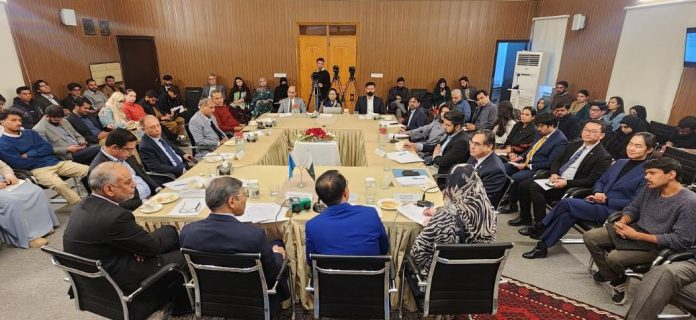
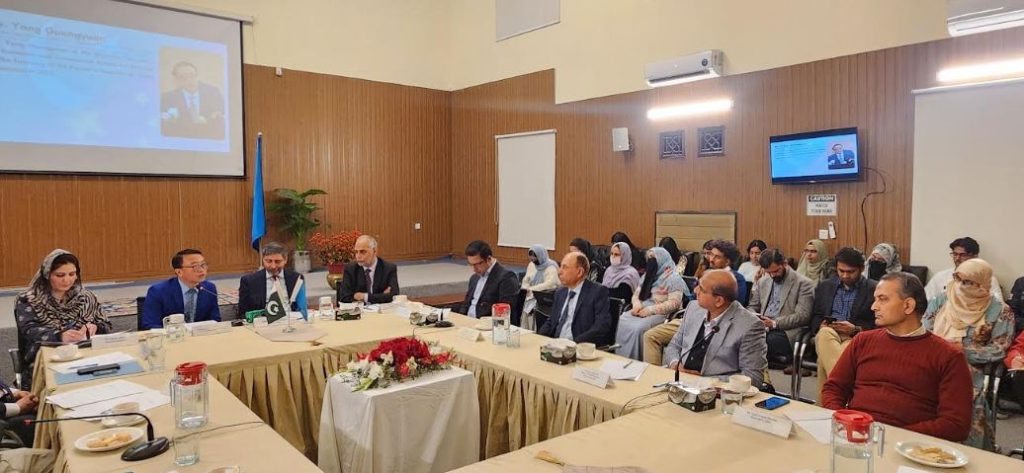
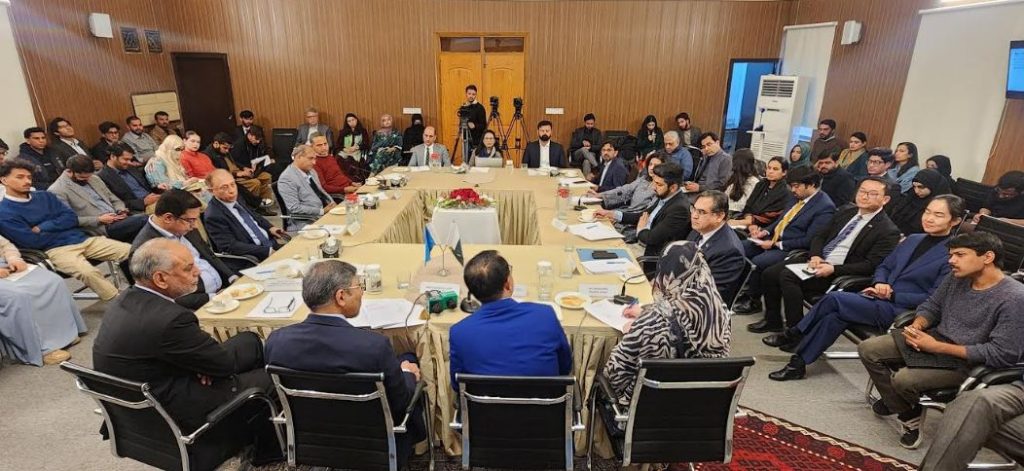
ISLAMABAD, FEB 25 /DNA/ – The Institute of Regional Studies (IRS) hosted a consultative dialogue on “Advancing Cooperation in the Transfer of Knowledge and Technology under the Innovation Corridor of CPEC 2.0.” The event brought together prominent experts, scientists, high ranking Chinese officials and academics to explore opportunities for enhancing technological collaboration, joint research initiatives, and capacity building under the CPEC framework.

In his opening remarks, Ambassador Jauhar Saleem, President of IRS, reflected on the transformative journey of CPEC marking the accomplishments of Phase 1. Emphasizing Pakistan’s potential as a connector of South, Central, East, and West Asia, he noted that Phase 2.0 shifts the focus from building on physical construction to creating an intellectual infrastructure, since advancing toward a knowledge-based society was only possible for Pakistan by leapfrogging traditional industrialization stages. He also stressed upon the need for capitalizing on Pakistan’s young population by imparting skills and focusing on emerging technologies under CPEC.

Minister Counsellor Yang Guangyuan, emphasized the importance of B2B cooperation and digital innovation in strengthening Pakistan-China economic ties. Drawing upon two decades of experience, he highlighted improvements in business confidence acknowledging challenges such as underutilized industrial capacity and electricity overcapacity in Pakistan. While state-owned enterprises have led infrastructure development so far, he advocated for greater involvement of private Chinese companies to drive market-responsive growth. He proposed targeted partnerships, and specialized training programs, to integrate Pakistani industries into global supply chains. Stressing the need for strategic investments in digital and applied technologies, he suggested expanding Pakistan’s 5Es policy by adding  5 more Es  namely efficiency, effectiveness, electricity, endurance of policies, and e-commerce to enhance economic sustainability and competitiveness.

Dr. Asif Ali, Chairperson of the National Seed Development and Regulatory Authority (NSDRA) emphasized the need for greater collaboration in the sector given Pakistan’s status as ,primarily, an agrarian country. Noting that the Special Economic Zones (SEZs) being developed are increasingly linked to universities, he called for enhanced knowledge transfer.

Prof. Dr. Mumtaz Shah, Project Director of the China-Pakistan Joint Research Center on Earth Sciences emphasized the urgent need for adopting modern mining techniques to unlock the immense untapped potential of Pakistan’s mineral sector, which remains underdeveloped and is ripe for exploration.

Hamza Saeed Orakzai from Special Technology Zones Authority (STZA), noted that STZA has launched 18 technology zones, employing 25,000 skilled professionals. A forthcoming $300 million technology transfer investment from China was also announced, reinforcing Pakistan’s potential as a tech hub.

Khalid Taimur Akram, Executive Director, Pakistan Research Center for a Community with Shared Future,emphasized that service industry must address critical gaps between infrastructure development, technology transfer, and urged Pakistanis to invest more in language learning. He also advocated fostering open-source private ventures, enabling Pakistan to accelerate its modernization efforts and better align with the pace of Chinese innovation.

Dr. Qamar ul Islam, Project Director Pakistan’s First Lunar Mission “ICUBE-Qamar” Institute of Space Technology,provided a compelling overview of Pakistan’s burgeoning space sector and its transformative potential. Noting that the global space economy is projected to reach $1.8 trillion by 2035, he urged Pakistan to intensify efforts in the space sector by engaging more with Chinese space tech.

Dr. Mirza Habib Ali, Director Researcher at the Pakistan Science Foundation, stated that the foundation’s strongest partnership is with China. Over the past decade, 57 joint projects have been initiated, each involving one partner from Pakistan and one from China.

Tahir Ahmed Dhindsa, Head of SDTV at the Sustainable Development Policy Institute (SDPI) and a journalist, emphasized that in today’s world success depends on controlling the narrative. While the China-Pakistan Economic Corridor (CPEC) is now an inevitable reality,  its success will be shaped by the narrative built around it.

PM Shehbaz visits Tashkent’s Independence Monument, honors Uzbek history

PM Shehbaz visits Tashkent’s Independence Monument, honors Uzbek history

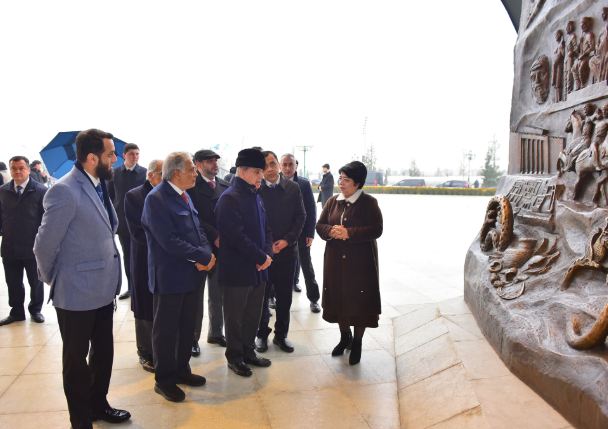
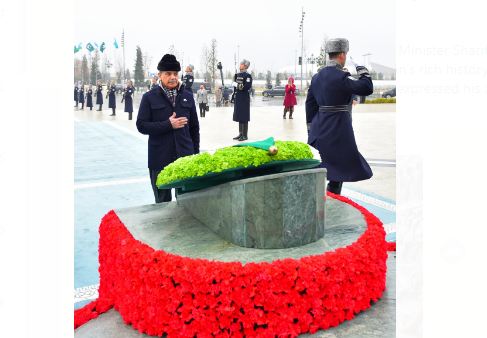
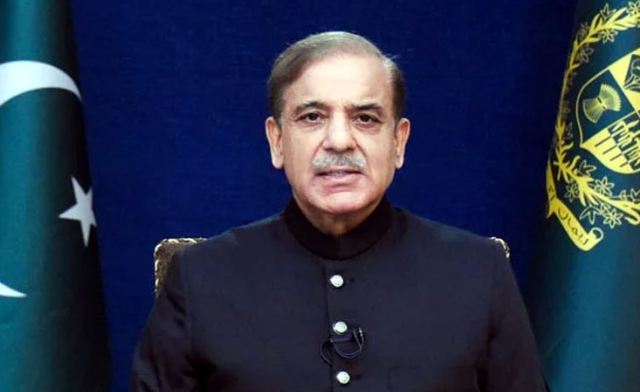
TASHKENT, FEB 25 /DNA/ – Prime Minister Muhammad Shehbaz Sharif, paid a solemn visit to the iconic Independence Monument in Tashkent today, as part of his official trip to Uzbekistan. The visit underscores the shared historical and cultural ties between Pakistan and Uzbekistan, while reaffirming the commitment to deepening bilateral relations.

Accompanied by a high-level delegation, Prime Minister Sharif laid a floral wreath at the monument, a symbol of Uzbekistan’s rich history and its journey toward sovereignty. The Prime Minister expressed his admiration for Uzbekistan’s progress and resilience, drawing parallels with Pakistan’s own struggle for independence and development.

In his remarks, Prime Minister Sharif stated, “The Independence Monument stands as a testament to the courage and determination of the Uzbek people. Pakistan and Uzbekistan share a common vision for peace, prosperity, and regional connectivity. This visit is a reminder of our shared values and the need to work together for a brighter future.”

Prime Minister was also briefed about the 3000 year history of Uzbek nation and its heroes while visiting the monument.

The visit to the monument will follow a series of high-level meetings with Uzbek officials, focusing on enhancing trade, energy cooperation, and cultural exchanges. Both nations are committed to bolster regional connectivity and economic integration.

Prime Minister Shehbaz Sharif’s visit to Uzbekistan marks a significant step in strengthening the strategic partnership between the two countries. The trip is expected to yield new agreements in areas such as agriculture, regional connectivity, technology, and education, further solidifying the bond between Pakistan and Uzbekistan.

The Misuse of Words and the Crisis of Religious Thought

The Misuse of Words and the Crisis of Religious Thought

Muhammad Zaka Ullah

The selection and proper use of terminology hold fundamental importance in any intellectual and social system. Words are not only tools for expressing thoughts, but they also shape the ideological structure of society. Unfortunately, a common tendency in our society is to adopt terms without uncritically understanding and deep reflection, leading not only to intellectual confusion but also to the distortion of the original message. This issue becomes even more critical in religious discourse, where thecareless use of terminology can give rise to multiple interpretations, ultimately obscuring the true essence of the message.Take, for example, the term “Islamic governance.”Different schools of thought interpret it in their own way. In addition, words like “Islamic economic system,” “Islamic teachings,” and “Islamic society” have become ambiguous because every sect claims its own interpretation as the ultimate “Islamic” understanding. In contrast, the term “Quranic teachings” is far more precise, as the Quran is an immutable, preserved, and universally applicable code of life. When we describe a principle and law as “Quranic,” it is not confined to any particular school of thought;ratherit assumes a clear and undisputed status.

This problem extends to religious discourse as well. Some individuals wants to impose their own interpretations as the definitive understanding of faith, andleaving no room for different idea and perspectives. This mind set deepens religious divisions and fuels ideological chaos. Then the question arises,if the Quran is a clear and self-explanatory book, why do different people derive different meanings from it? Is this due to the vastness of the Arabic language, or is it simply a means for some to establish a unique intellectual identity? The truth is that understanding the Quran is not limited to literal translations and interpretations; its primary purpose is to inspire critical thinking and improve human actions. If intellectual engagement with the Quran fails to bring moral and behavioural refinement, then such discussions are meaningless.This intellectual turmoil becomes even more complex when the traditional religious elite and clergy use faith as a tool to distance people from their fundamental needs and social development. Religions were meant to promote human welfare and social justice, but unfortunately, religious authorities have turned them into instruments of exploitation, deprivation, and ideological rigidity. Humanity was not sent to this world merely for worship but also to establish a just and equitable social order where every individual has access to food, dignity, and security. This is the core message that religious leadership has ignored, leading to a society where religion is often used to foster division rather than unity.

A well-known truth is that the first word of society is bread, this sentence reflects a fundamental social reality. Until a person has food to eat, a shelter over their head, and access to basic necessities, no high level ideology and belief system can truly influence them. A starving person does not ponder philosophical debates or religious injunctionshis primary concern is finding his next meal. This is why intellectuals and religious leaders must prioritize human welfare over abstract ideological disputes.

A similar argument is found in socialist thought and ideology.Great thinkers like Karl Marx, Friedrich Engels, and other socialist philosophers argued that until wealth and resources are distributed equitably, people cannot attain true intellectual consciousness. If a person is hungry, deprived of basic needs, and struggling for survival, they will not be receptive to lofty ideological concepts. The Quran, too, preaches social justice, but do today’s religious leaders actively promote this message?  No because their vested interests lie in maintaining a system where hunger, fear, and exploitation persist.We must recognize that real social progress requires not only intellectual and religious freedom but also economic justice. Before preaching any ideology or belief system, it is essential to address the basic needs of those we seek to influence. Only when a person is free from hunger and enjoys social security can they truly grasp the meaning of knowledge, awareness, and intellectual freedom.This is why, if we genuinely desire societal improvement, intellectual debates and religious discourse alone will not suffice, we need concrete actions. We must build a society where everyone has equal rights, where no one goes to bed hungry, and where religion is not used as a tool of oppression but as a force for true human service. Until these fundamental issues are resolved, we will remain entangled in ideological discussions without achieving real progress.The question is: Are we ready for this intellectual revolution? Are we willing to break free from traditional religious and ideological constraints to build a genuinely humane society? If not, then we must accept the reality that we will continue to exist in a cycle of endless words, devoid of any real change.

Palestinian Ambassador, Jamal Shah inaugurate “Palestine Was and Will Remain” exhibition in Islamabad

Palestinian Ambassador, Jamal Shah inaugurate

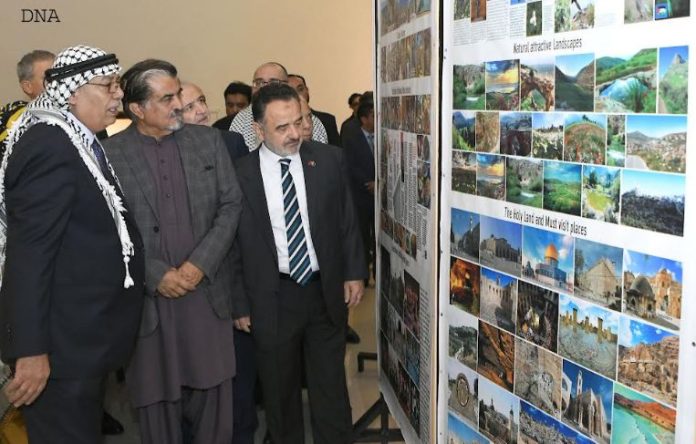
ISLAMABAD, FEB 25: Dr. Zuhair Mohammad Hamdallah Zaid, Ambassador of Palestine, briefs Jamal Shah and other attendees about the exhibition titled “Palestine Was and Will Remain.” Jamal Shah also inaugurated the event. — DNA

PM Shehbaz Sharif arrives in Uzbekistan

PM Shehbaz Sharif arrives in Uzbekistan

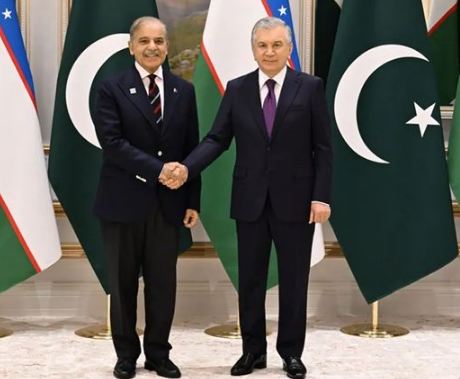
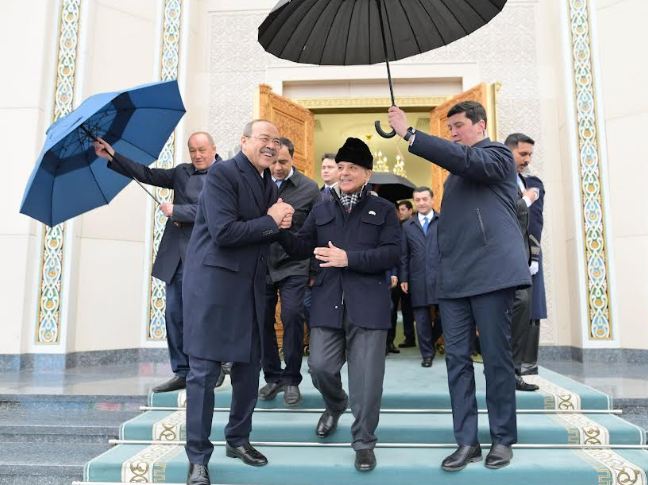
Tashkent, FEB 25 /DNA/ – Prime Minister of Uzbekistan Abdulla Nigmatovich Aripov received Prime Minister Muhammad Shehbaz Sharif upon his arrival in Uzbekistan.

ALSO READ: Pakistan’s Prime Minister to pay an official visit to Uzbekistan

Looking back at the recent history of Uzbek-Pakistani cooperation, it is important to note that Pakistan was among the first nations to recognize Uzbekistan’s independence on December 20, 1991. Diplomatic relations between our countries were established on May 10, 1992.

Since then, Uzbekistan and Pakistan have maintained an active political dialogue based on mutual respect and shared interests. In recent years, there has been an intensification of high-level interactions and an increase in interstate contacts, leading to strategically important agreements between the parties.

Notably, following the high-level official visit to Uzbekistan on July 15-16, 2021, a Joint Declaration on the Establishment of a Strategic Partnership was signed, along with a substantial package of documents covering both traditional and emerging areas of cooperation.

On March 3-4, 2022, President Shavkat Mirziyoyev paid an official visit to Pakistan, during which the heads of the two states signed a Joint Declaration on Further Steps to Enhance the Strategic Partnership between Uzbekistan and the Islamic Republic of Pakistan (IRP). This visit and the accompanying business forum gave a powerful impetus to the development of bilateral relations, expanding areas of cooperation through the signing of approximately 10 documents and agreements on the implementation of joint trade and investment projects.

The intensification of relations between our countries in a bilateral format has contributed to strengthening mutual support within multilateral structures such as the United Nations (UN), the Shanghai Cooperation Organization (SCO), the Organization of Islamic Cooperation (OIC), the Economic Cooperation Organization (ECO), and others.

In this context, it is important to note that in 2022, the Prime Minister of Pakistan Shehbaz Sharif also visited Uzbekistan to participate in the SCO summit, which took place in Samarkand on September 15-16. During the visit, the Head of Pakistan met with the President of Uzbekistan, Shavkat Mirziyoyev. At the meeting, the leaders considered the entire spectrum of bilateral cooperation issues, primarily in the trade, economic, investment, and transport-transit spheres.

The meetings of President Shavkat Mirziyoyev with Pakistani executives at the summits of international organizations not only reaffirmed the commitment to previously reached agreements, but also served as a clear demonstration of the emphasis on the sustainability and long-term nature of the Uzbek-Pakistani strategic partnership.

Inter-parliamentary cooperation plays an important role in strengthening political dialogue. Within the framework of parliamentary diplomacy, friendship groups have been established in the representative bodies of both countries, contributing to the development of legislative initiatives aimed at expanding and strengthening bilateral interaction in the trade, economic, and cultural-humanitarian spheres. Meetings, mutual visits, and participation in international events provide momentum to inter-parliamentary cooperation.

Relationships between the ministries and departments of Uzbekistan and Pakistan are developing constructively, facilitating the prompt implementation of strategically important joint projects agreed upon at the highest level.

Therefore, to support political dialogue, the foreign ministries of both countries effectively utilize mechanisms for bilateral political consultations, the eighth round of which was held in Tashkent in February 2025, as well as contacts at major international events.

Productive interdepartmental cooperation has also been established in the fields of culture, education, business, transport and logistics, law enforcement, the struggle against terrorism and transnational crime, and other areas.

Uzbekistan and Pakistan, being important actors in their regions and possessing significant resource and human potential, are actively utilizing opportunities to increase trade, economic, and investment cooperation.

Stable dynamics of cooperation development in this area was observed despite the pandemic. In particular, in 2021, the volume of bilateral trade increased by 50 percent. In 2024, mutual trade volumes exceeded 400 million US dollars, approaching the goals set by the heads of the two states to bring this figure to 500 million US dollars in the near future and to 1 billion US dollars in the long term.

An important step was the signing of the Preferential Trade Agreement, signed during the official visit of the head of our state to Pakistan in March 2022, which allows for the reduction of tariff barriers and stimulates bilateral trade.

At the interregional level, direct contacts between business-circles are actively developing, which contributes to the creation of joint ventures in sectors such as the textile industry, agriculture, pharmaceuticals, and information technology. Today, there are 130 joint ventures operating in Uzbekistan with Pakistani capital participation. Investment projects in partnership with large Pakistani companies such as “Novugen Pharma”, “UP-Match”, “Pak-Merit Bleaching”, “Diamond Group”, and others have been implemented in Syrdarya, Tashkent and Namangan regions, as well as the city of Tashkent.

A testament to the high level of mutual interest in expanding economic cooperation and collaboration is the recent intensification of dialogue between the business communities of the two countries.

In particular, over the past two years, about 10 bilateral business forums, B2B and G2B meetings, industrial and agricultural exhibitions, and other events aimed at establishing connections and developing joint projects have taken place in Uzbekistan and Pakistan.

Thus, the Uzbek-Pakistani Business Forum, which included the “Made in Pakistan” exhibition and the transport and logistics forum, was held in Tashkent in June 2024. More than 110 leading Pakistani companies in the textile, chemical, pharmaceutical, medical, household and electrical industries, the production of building materials, and agricultural products presented their products at the exhibition. As a result of this business forum, trade and investment agreements worth about 180 million US dollars were signed. The transport and logistics forum discussed the intensification of transportation and cargo flows between our regions and countries, the creation of “green corridors” at border customs points for companies providing services for foreign trade operations, and the digitalization of customs clearance processes.

In November 2024, the 9th session of the Uzbekistan-Pakistan Intergovernmental Commission on Trade, Economic, and Scientific-Technical Cooperation took place in Tashkent, during which the Uzbek-Pakistani Business Forum, as well as G2B and B2B meetings were held.

At the end of November 2024, a business forum was held in Lahore, Pakistan, with the participation of more than 60 entrepreneurs working in the textile industry, leather and wool processing, pharmaceuticals, IT, household appliance manufacturing, food production, the paper industry, and other sectors. During the event, representatives of the Uzbek companies “Artel” and “Imzo” made presentations of their products and investment proposals. An agreement was reached with Pakistani partners on the production of household appliances and their export to third countries.

The beginning of the current year has also been marked by large-scale events. In February 2025, the “Made in Uzbekistan” National Industrial Exhibition was held in Lahore, Pakistan, with the participation of a representative delegation of more than 150 entrepreneurs from various sectors, headed by the leadership of the Ministry of Investment, Industry and Trade of Uzbekistan, as well as more than 500 representatives of the Pakistani business community.

During the three days of the exhibition, more than 80 thousand visitors learned about national industrial products and cooperation opportunities. More than 500 B2B meetings were organized within the framework of the event, where the conclusion of new trade agreements and the implementation of joint projects were discussed. As a result of this exhibition, 181 contracts were signed for a total amount of over 500 million US dollars. Of these, 263 million US dollars are export trade contracts, and 236 million US dollars are import contracts.

One of the key factors influencing the development of economic cooperation between our countries is transport interconnectivity. Therefore, both Uzbekistan and Pakistan pay special attention to the development of transport and logistics cooperation.

Cultural and humanitarian cooperation between our countries is developing on a solid foundation of historical ties between the Uzbek and Pakistani peoples, common cultural traditions of the Great Silk Road, Islamic civilization, and the legacy of historical figures – Zahir-ud-din Muhammad Babur and his dynasty members.

Today, the foundation is being laid for the creation of a feature film dedicated to the life of Babur, a native of the Uzbek land who created a great empire, including the territory of modern-day Pakistan.

Since 1991, the “Uzbekistan-Pakistan” Friendship Society has been active in our country, regularly organizing cultural and scientific events and exchanges of delegations of scientists and cultural figures.

At the Tashkent State University of Oriental Studies, courses in Urdu language, literature, and the history of Pakistan have been taught for nearly 75 years, contributing to the strengthening of cultural ties between the two countries.

Projects to study the Uzbek language and history are currently being implemented in Pakistan. Joint cultural events, festivals, exhibitions, and forums are regularly held.

In February 2021, the Babur Heritage Center was opened at Punjab University, where the life and legacy of the great ancestor of our people are studied. In turn, the Uzbek Language Center named after Alisher Navoi was established at the University of Peshawar, whose activities promote Uzbek culture in Pakistan.

Tourism exchanges have intensified, facilitated by direct air links between the cities of the two countries. There is a growing interest in the sacred sites and historical monuments of Uzbekistan in Pakistan. In this regard, Uzbekistan Tourist Information Center was opened in Islamabad in March 2019, and in 2020, Shaykh Muhammad Hassan Haseeb ur Rehman, the leader of the Naqshbandi order in Pakistan, was appointed as the Ambassador of Uzbekistan for pilgrimage tourism.

Intercultural dialogue is also characterized by high mutual respect and interest in the rich history and heritage of the two peoples.

Therefore, a permanent exhibition dedicated to the culture and history of Uzbekistan has been open at the Lok Virsa Museum of Folk and Traditional Heritage in Islamabad since 2022.

The exchange of cultural delegations has become dynamic, with delegations participating in international events – exhibitions, tourism fairs, seminars, conferences, days of culture and cinema – held in both countries.

Pakistani musicians and singers participate in international music festivals in Uzbekistan – “SharqTaronalari” in Samarkand, the art of maqom, and the art of bakhshi in the regions of our republic.

The delegation of Pakistan participated in international events held in 2024 on the occasion of the declaration of the city of Shakhrisabz as the tourist capital of the Economic Cooperation Organization.

In turn, at the international “Spring Festival” held in Islamabad from April 22–24, 2024, Uzbekistan’s pavilion was showcased, providing visitors with a three-day introduction to the country’s rich historical and cultural heritage, as well as its tourism potential.

Thus, it can be confidently stated that Uzbek-Pakistani relations continue to evolve dynamically, encompassing the political, economic, and cultural-humanitarian spheres.

The alignment of strategic interests, particularly in the areas of regional security and transport and logistics cooperation, renders these relations both promising and mutually beneficial. In this context, the forthcoming visit of the Prime Minister of Pakistan to our country will mark a significant milestone in the advancement of political dialogue, the strengthening of economic ties, and the expansion of partnerships in key sectors, including trade, transport, energy, and security. This visit will not only reaffirm the commitment of both Uzbekistan and Pakistan to reinforcing their strategic partnership but also open new avenues for long-term, mutually beneficial cooperation, contributing to the stability and development of the entire region.

Dunyo IA

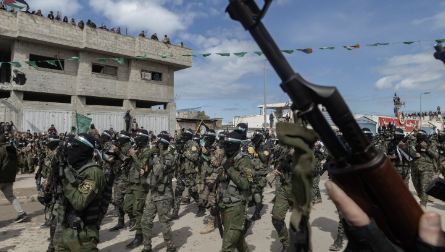
HAMAS leader regrets Oct 7 attack on Israel

HAMAS leader regrets Oct 7 attack on Israel

DNA

ISLAMABAD: Mousa Abu Marzouk, a senior Hamas official, has voiced regret over the group’s decision to launch the October 7 attack on Israel, highlighting the immense destruction it unleashed on Gaza. His striking comments, delivered in an interview with The New York Times, reveal a rare moment of introspection from a key figure within the militant organization amid the escalating conflict.

Speaking to The New York Times, Mousa Abu Marzouk said, “If I had known ahead of time about all the destruction that would follow the attack, the scope of the catastrophe that would befall us, believe me, I wouldn’t have supported it.” The admission points to the devastating impact of Israel’s military response, which has left Gaza in ruins, claiming numerous lives and intensifying an already dire humanitarian situation.

The October 7 operation triggered a fierce Israeli counteroffensive that demolished entire neighborhoods and uprooted countless families. Hamas has traditionally justified such actions as resistance against Israeli policies, but Mousa Abu Marzouk’s remarks suggest a reassessment of the toll on Palestinians. He further told The New York Times, “We didn’t expect this scale of disaster,” underscoring the unanticipated severity of the fallout.

He also tells the Times that Hamas is ready to consider proposals for disarmament: “We are ready to speak about every issue. Any issue that is put on the table, we need to speak about it.”

As the Qatar-based head of Hamas’s foreign relations office, Mousa Abu Marzouk holds a prominent role within the group. His public reflection has yet to draw an official response from Hamas, leaving analysts to ponder whether it reflects a broader sentiment or an individual viewpoint within the leadership during this protracted war.

(YWN World Headquarters – NYC)

[09:59, 25/02/2025] Palestine AMB Dr Zuhair Zaid: The Palestinian Ministry of Foreign Affairs and Expatriates Condemns in the Strongest Terms Israel’s Expulsion of European Parliament Delegation Members

The Palestinian Ministry of Foreign Affairs and Expatriates strongly condemns Israel’s outrageous decision to expel members of the European Parliament delegation for relations with Palestine and ban their entry into the occupied Palestinian territory. 

Last night, Israeli airport authorities detained and subsequently expelled MEPs Rima Hassan and Lynn Boylan upon their arrival at Tel Aviv airport. Both parliamentarians were traveling as part of an official European Union delegation to Palestine. Israel, the occupying power, has no sovereignty over the Occupied Palestinian Territory, including East Jerusalem nor legal right to deny access to Palestine, especially to official representatives on diplomatic missions. 

This European delegation was scheduled to hold high-level meetings with Palestinian Prime Minister Mohammad Mustafa, officials from the Ministry of Foreign Affairs, the EU representative, and members of civil society in both Israel and Palestine. By preventing their entry, Israel has not only obstructed diplomatic engagement but also shown blatant disregard for the European Parliament and the European people as a whole. 

Israel’s decision to deny access is a calculated move to prevent European officials from witnessing firsthand the atrocities it is committing against the Palestinian people in the Gaza Strip, West Bank and East Jerusalem. This shameful act is an affront to democratic values and international diplomatic norms. 

We call on the European Parliament and the European Union to respond decisively to this provocation. Israel must face consequences for its actions. The European Parliament should impose reciprocal measures, including barring Israeli representatives from its premises. It is time for Europe to stop treating Israel as a state above the law. Accountability is essential—not only for the credibility of the European Union but also for upholding the dignity and values of its people.

Palestine condemns expulsion of European parliament team by Israel

Palestine condemns expulsion of European parliament team by Israel

DNA

RAMALLAH: The Palestinian Ministry of Foreign Affairs and Expatriates has condemned in the Strongest Terms Israel’s Expulsion of European Parliament Delegation Members.

The Palestinian Ministry of Foreign Affairs and Expatriates strongly condemns Israel’s outrageous decision to expel members of the European Parliament delegation for relations with Palestine and ban their entry into the occupied Palestinian territory. 

Last night, Israeli airport authorities detained and subsequently expelled MEPs Rima Hassan and Lynn Boylan upon their arrival at Tel Aviv airport. Both parliamentarians were traveling as part of an official European Union delegation to Palestine. Israel, the occupying power, has no sovereignty over the Occupied Palestinian Territory, including East Jerusalem nor legal right to deny access to Palestine, especially to official representatives on diplomatic missions. 

This European delegation was scheduled to hold high-level meetings with Palestinian Prime Minister Mohammad Mustafa, officials from the Ministry of Foreign Affairs, the EU representative, and members of civil society in both Israel and Palestine. By preventing their entry, Israel has not only obstructed diplomatic engagement but also shown blatant disregard for the European Parliament and the European people as a whole. 

Israel’s decision to deny access is a calculated move to prevent European officials from witnessing firsthand the atrocities it is committing against the Palestinian people in the Gaza Strip, West Bank and East Jerusalem. This shameful act is an affront to democratic values and international diplomatic norms. 

We call on the European Parliament and the European Union to respond decisively to this provocation. Israel must face consequences for its actions. The European Parliament should impose reciprocal measures, including barring Israeli representatives from its premises. It is time for Europe to stop treating Israel as a state above the law. Accountability is essential—not only for the credibility of the European Union but also for upholding the dignity and values of its people

Australia bolsters blind women cricket in Pakistan

Pakistan

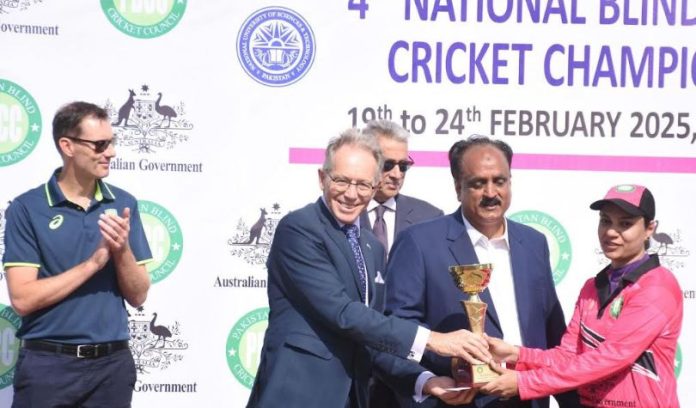
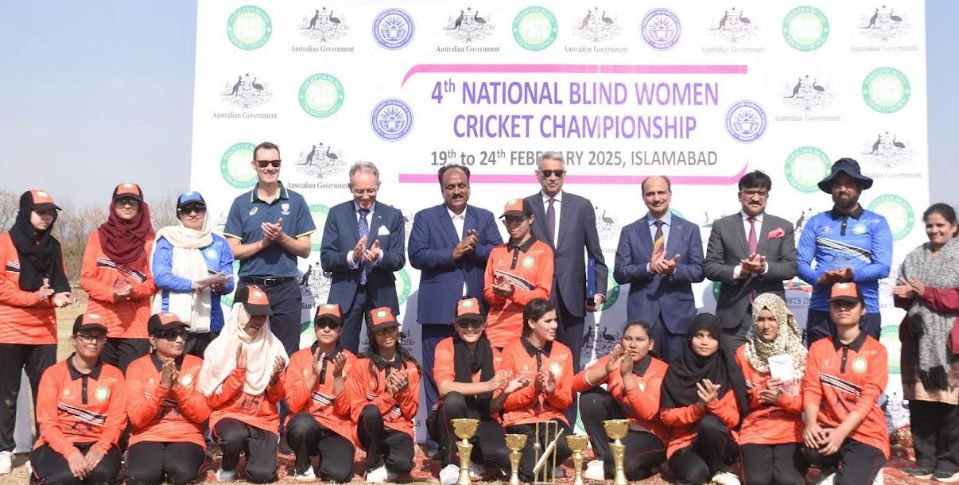
ISLAMABAD, FEB 25 /DNA/ – The Australian High Commission, in partnership with the Pakistan Blind Cricket Council (PBCC) and Serena Hotels, supported a national blind women’s cricket training camp and tournament in Islamabad.

Women and girls from across Pakistan participated in the event. The initiative followed the historic formation of Pakistan’s first blind women’s cricket team in 2018, which played its inaugural international T20 match that same year. This year, 50 additional visually impaired women and girls had the opportunity to sharpen their skills and chase their cricketing dreams.

Speaking at the concluding awards ceremony, Australia’s High Commissioner to Pakistan, Neil Hawkins, highlighted how sports diplomacy strengthens ties between nations and transforms lives:

“Cricket is a powerful force for connection and inclusion. It opens doors for women and girls in Pakistan and Australia, including for those with disabilities, challenging perceptions and breaking barriers.”

Chairman of the Pakistan Blind Cricket Council, Syed Sultan Shah, praised the initiative: “Blind Cricket has become a beacon of hope for visually impaired athletes. It’s more than a game—it’s a statement that no disability can hold you back. With the right support, these women can be champions in sport and in life.”

The players were coached by some of Pakistan’s finest blind cricket mentors, including Abdul Razzaq, Ibrar Shah, Shahida Shaheen, and Tahir Mehmood Butt, who have trained world-class athletes.

With a legacy of cricketing excellence, Australia has been at the forefront of promoting blind cricket, a sport that was invented in Melbourne in 1922 when visually impaired factory workers improvised by putting rocks in a tin can to create a ball.

Prime Minister Shehbaz Sharif’s message on Kuwait’s National Day and Liberation Day

Prime Minister Shehbaz Sharif's message on Kuwait's National Day and Liberation Day

ISLAMABAD, FEB 25 /DNA/ – Prime Minister Shehbaz Sharif extended warm greetings to the Amir of Kuwait, Sheikh Meshal Al-Ahmad Al-Jaber Al-Sabah, Prime Minister Sheikh Ahmed Abdullah Al-Ahmad Al-Sabah, the Government, and the brotherly people of Kuwait on the occasion of Kuwait’s National Day and Liberation Day. In his message, the Prime Minister expressed Pakistan’s strong bond of friendship with Kuwait and wished the nation continued peace, progress, and prosperity.

On this auspicious occasion, we join the Kuwaiti nation in celebrating their proud history and their courage and valour through challenging times for preserving their freedom against foreign aggression.

Pakistan-Kuwait bilateral relations are anchored in our shared history, faith and culture. We have always stood by each other through thick and thin. I look forward to working closely with the leadership of Kuwait to elevate our  relations to new heights, enhance mutually beneficial cooperation and strive for regional peace and prosperity.

GHS Nawankilli (Now Captain Karnal Sher Keley), students of batch 1973-75 held second get together

GHS Nawankilli (Now Captain Karnal Sher Keley), students of batch 1973-75 held second get together

Shamim Shahid

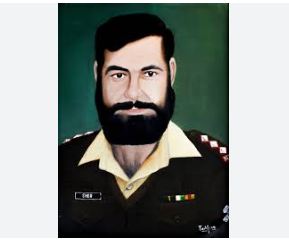
PESHAWAR—For second time the students of 9th and 10th classes of 1973-75 Government High School Nawan Killi ( now called as Captain Karnal Sher Khan Keley) held their get to gathering on weekend at two different places.

Convener of the most active group Engineer Saeed Ul Zaman had arranged the first ever sitting of second get together inside the school which is now converted into Government Girls High School and Government Girls Primary School. The second part of the event was arranged at Hujra of Fazal Yazdan Khan at village Taraki situated around three kilometers from school.

After first ever meeting and recalling old memories of 1973-75 at a Restaurant at Ambar Swabi on September 29th 2024, almost participants were no more strangers for each others. However, one amongst them was Qaisar Khan was new. Belong to the nearby Tarakai. Qaisar Khan and his brother Hukam Khan were also part of the batch, Unfortunately Hukam Khan had lost his last breath couple of years back whereas Qaisar Khan had served Highway Police and now enjoying retirement life. He was received with warm welcome by friends upon joining the group.

Muhammad Ikram Khan from village Totalai has also attended the get together for first time but after first ever event he remained in contact with fellows like Ahmad Saeed Khan, Fazal Yazdan and Subhan Ullah Khan. On such grounds, Ikram was familier in the group. In early 70’s only four students from Buner get education from this school and three of them are alive whereas fourth one Faiz Ur Rahman died couple of years back

Interesting part of the event was participation of respected Muhammad HUssain who had also served this school as its Principal for couple of years. However, late educationist Muhammad Junaid Khan from village Kalu Khan had served GHS Nawankilli (now Karnal Sher Keley) as its Head Master in 1973-75. Muhammad Hussain who is now above 80 had demonstrated his skill of teaching, speaking and conversation with his old students very well. Upon arrival Muhammad HUssain sb was received with warm welcome by organizers Engineer Saeed Ul Zaman, Brig (Retd) Riaz Ali, Maj (Retd) Jehan Afsar, Shams U R Rahman, Shamim Shahid and others. He remained for around half an hour and had addressed the old students.

After departure of Muhammad Hussain saib, the old students after a break of around 50 years made a brief demonstration of school morning assembly. Faqir Zaman Khan has recited verses of holy Quran whereas Muhmmad Nazir commanded the school time parade. Nazir is also retired from Armed Forces of Pakistan in a prestigious position. Later they held a brief introductory session. The School Headmistress arranged a tea party for the participants.  Convener Engi8neer Saeed Ul Zaman Khan thanked the School headmistress for allowing them for a brief but colourful get to gathering inside the historical school building.

Later the participants moved towards Hujra of Fazal Yazdan Khan at village Rashakai, which was decorated with traditional farming plough and other farming materials. Remaining in courtyaward and warranda of Hujra, the participants have recalled their past memories and present day routine lives and matters. Almost of them have shared their government, private services, business and farming experiences with each others. Besides others children lives remained top of discussions and chats during over three hours gathering.

Last but not the least, on this occasion Irfan Khattak who belong to Terry area of Karak district was not only appreciated for the long journey but specially his love for the fellows as he requested the children to delay for couple of hours the event pertained to his birth day. On this occasion he was congratulated by friends. Irfan Khattak’s father had served Pakistan Tobacco Company. Therefore, he along with brother Zahoor Khattak educated till 10th from GHS Nawankilli ( Now Captain Karnal Sher keley).

The day long event was concluded with Dua by Faqir Zaman Khan and convener Engineer Saeed Ul Zaman announced third gathering on the bank of Indus in mid of coming April.

Stay Connected

64FansLike
60FollowersFollow

Latest Reviews

Exchange Rates

USD - United States Dollar
EUR
1.17
GBP
1.35
AUD
0.72
CAD
0.73