Home Blog Page 663

Our Responsibilities as Patriotic Citizens

Global Misperceptions

Ikramullah Saeed

Freedom is a profound blessing, its value often most deeply appreciated when contrasted with oppression. In a state of enslavement, where every breath is constricted and rulers impose their will mercilessly, the dream of freedom seems distant. Conversely, in free nations, the pursuit of prosperity is a continuous endeavor. Here, laws act as a bulwark against the abuse of power, and the fear of accountability deters wrongdoers from engaging in detrimental actions.

As we mark the 77th anniversary of Pakistan’s independence, it is disheartening to note that many nations which gained their independence after us have surpassed us in terms of development. Despite this significant milestone, many Pakistanis continue to grapple with basic necessities, burdened by the soaring costs of essentials such as electricity, gas, medicine, food, petrol, taxes, and transportation. These fundamental needs, critical for survival, often come at a prohibitive cost.

This brings us to pressing questions that weigh heavily on the minds of every patriotic citizen: Will the Islamic Republic of Pakistan ever achieve true prosperity? Will we ever experience genuine relief and unity? Can we, as a nation, come together to make significant progress? These are not mere concerns but earnest prayers to Allah Almighty, asking for His guidance to lead our nation towards the prosperity enjoyed by more advanced countries. This also calls for holding accountable those internal forces that undermine our nation’s integrity.

History teaches us that actions have consequences, and no one, regardless of their power or wealth, endures forever. The once-mighty kings and influential figures of the past are now but echoes in history. The question that remains for us is whether our people will ever experience true freedom and whether those who earn their livelihood through honest means will retain their rights or see them siphoned away by unscrupulous individuals. How long will this cycle of exploitation persist? Is there no one to halt this trend and provide Pakistan with leadership that embodies its core values?

The aspiration to see Pakistan emerge as a respected and dignified nation on the global stage remains unfulfilled. When will every Pakistani channel their energy toward the development, honor, and dignity of our country?

Our responsibilities are clear. Nations are built by individuals who share common ideals and values. A true patriot stands firm against those who seek to harm the nation, defends national interests unwaveringly, and bears personal loss for the collective good. Each of us must contribute to the country’s progress according to our roles and responsibilities, avoiding actions that could bring dishonor and actively preventing others from causing harm.

In these challenging times, it is imperative for every segment of society—be it judges, generals, teachers, scientists, officers, or employees—to contribute to the nation’s welfare. We must be prepared to exert every effort to enhance our motherland’s glory and to combat those who threaten its well-being. Such dedication ensures that we do not become a source of disgrace and that we proactively prevent actions that could damage our nation.

The path forward requires unwavering commitment and collective effort. Let us rise to the occasion, for it is through our united and diligent endeavors that Pakistan can fulfill its potential and secure its rightful place in the world.

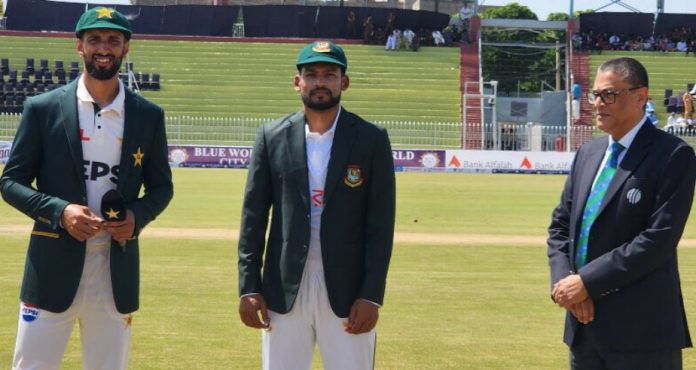
Bangladesh send Pakistan into bat in rain-delayed first Test

Bangladesh send Pakistan into bat in rain-delayed first Test

Bangladesh captain Najmul Hossain Shanto won the toss and sent Pakistan to bat on the opening day of the first Test on Wednesday after a delayed start due to a wet outfield.

The two umpires — Richard Kettleborough of England and Adrian Holdstock of South Africa — made four inspections of the ground but found wet patches due to overnight rain, deemed dangerous for play.

No play was possible before lunch with 230 minutes of play lost, curtailing the day to 48 overs.

The weather forecast for all five days is not encouraging with rain and bad light predicted.

Pakistan entered the Test with four fast bowlers in an all-pace attack with no frontline spinner while Bangladesh included three pacers and two spinners.

Meanwhile, all-rounder Aamer Jamal has missed out on a place for the first fixture of the two-match Test series against Bangladesh, which is set to be played from Wednesday.

The two-match series is part of the World Test Championship (WTC) third cycle (2023-2025) contested by nine teams. Pakistan is currently sixth and Bangladesh is eighth on the table.

The second Test will also be played in Rawalpindi, from August 30, after being moved from Karachi because of construction work at the stadium.

Pakistan: Shan Masood (captain), Saud Shakeel, Abdullah Shafique, Babar Azam, Khurram Shahzad, Mohammad Ali, Mohammad Rizwan, Naseem Shah, Saim Ayub, Agha Salman, Shaheen Shah Afridi

Bangladesh: Najmul Hossain Shanto (captain), Zakir Hasan, Shadman Islam, Mominul Haque, Mushfiqur Rahim, Shakib Al Hasan, Litton Das, Mehidy Hasan Miraz, Nahid Rana, Shoriful Islam, Hasan Mahmud

Umpires: Richard Kettleborough (ENG) and Adrian Holdstock (RSA)

TV umpire: Michael Gough (ENG)

Match referee: Ranjan Madugalle (SRI)

Either International community failed in combating continuous violation of HR in Afghanistan or it has some other ambitions?

Either International community failed in combating continuous violation of HR in Afghanistan or it has some other ambitions?

Shamim Shahid

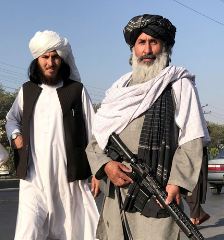
Amidst continuous role on the part of international community, especially UN gun-totting Taliban militants have celebrated what they called “victorious return” into power corridors of war Afghanistan couple of days back. Giving a deaf ear response to international community’s appeals of “honouring and respecting HR,” Taliban rulers on that particular occasion also demonstrated its inhuman and immoral acts of punishing and victmising innocent civilians especially those who remained part of previous regimes or believe in other religious faith.

Instead listening to cries of war affected Afghans who are passing through miserable conditions throughout the world and HR defenders, one of Taliban office holder has defended, “denial of education rights to women” by saying, “similar is the situation in Israel where civilians are subjected to worst kind of violence.” On that particular day, instead of answering to stock of queries regarding women and children rights, the Taliban leader Zabih Ullah Mujahid through X page massage “has stressed on the implementation of justice in Afghanistan and warned if justice not implemented hi regime will be collapsed.” Such remarks on the part of Zabih Ullah Mujahid also confirm that Afghan Taliban fearing threats to their regime, imposed on Afghans through guns and bullets.

No one can deny the fact, that since a long the UN and other international organs are helpless before US lead allies who giving preference to its own purposes and interests in war like situations especially prolonged Afghan Conflict, Ukraine and others. Instead building up pressure against Taliban regime as it did against former USSR backed regimes from December 1979 till April 1992, the US has admitted of releasing a huge amount of 239 million US dollars to Kabul authorities. Amidst this confession, senior most Pakistani politician Afrasiab Khattak is known for his words, “in according to Doha Qatar agreement, US making payment to Kabul on weekly basis.”

On the eve of Taliban’s brutal rule third year, the Rawadari, an organization working for rights in its statement states, “ Taliban have increased their enforcement of their repressive policies against women including detaining women for their “bad hijab” and arresting teachers for running secret classes for girls.” It recalled that on August 15, 2021, the Taliban seized power in Afghanistan, leading to severe consequences for Afghans, particularly women and girls. Over the past three years, the Taliban have systematically stripped women of their fundamental rights, including the right to education, work and freedom of movement. Afghanistan is the only country in the world where girls are banned from secondary education. The Taliban have increased their enforcement of their repressive policies against women including detaining women for their “bad hijab” and arresting teachers for running secret classes for girls.”

It further states, “ Rawadari has continuously monitored and documented these violations, despite severe and increasing restrictions on access to information by the Taliban. From August 15, 2021, to June 30, 2024, Rawadari has recorded 9,276 cases of human rights violations, nearly half of which involve the right to life. These include targeted killings, civilian casualties from attacks, enforced disappearances, illegal detentions and cruel punishments.”

Besides, Rawadari, the UN also denounced the Taliban regime for its aggressions based policies towards the civilians, by saying, “ The International community must not normalise de facto authorities and their regime of institutionalised discrimination, segregation and exclusion of women & girls.” “Over the past three years, the people of Afghanistan, especially women and girls, have been subjected to an appalling and intensifying attack on their rights and freedoms by a regime that lacks legitimacy and inclusivity, quashes all forms of dissent, represses civil society and the media, and has shown a flagrant disregard for the principles of justice, non-discrimination, equality, and the rule of law.”

It further states that the situation continues to deteriorate, and stronger international action is needed immediately. In the last year, the Taliban has further entrenched and intensified its system of institutionalised gender-oppression, introducing new discriminatory edicts and practices, and implementing them by harsh and violent means. Since taking power, the de facto authorities have issued more than 80 edicts, directives, and statements which specifically target and restrict the rights of women and girls.

According to UN statement, “the Taliban’s deliberate subjugation of women and girls is widespread and systematic, amounting to crimes against humanity, including the crime of gender persecution. The situation is so severe that many Afghans, especially women, say the situation can be best described as ‘gender apartheid.’ Despite this, Taliban officials have insisted the situation of women and girls is an ‘internal’ matter.

Whatever is the claims and stances on the part of Taliban and their “visible and invisible” patrons but the fact is that they converted Afghanistan into a “BIG PRISON” where the inmates are safe but their lives are at mercy of rulers. Despite adopting or following patience and restrain policies, even the regional countries are reluctant in having friendly and cordial relations with Afghanistan due to UN pressures. In last three years, over 0.7 million have made good their flee towards western and European world. Millions of others not only those waiting for chances in neighbouring South and Central Asian states but also in Arab world are in hunt of flee to western world for their survival.

Compare to 90’s, the internal situation of Afghanistan is hostile for those who either remained part of US backed Afghan War or Western-world supported democratic process. One can disagree but the fact is this that the US lead allies through Doha Accord achieved what they didn’t through 2001 War on Terror and 1988 Geneva Accord. Prior to Taliban entrance in Kabul, Pakistan had also played an important role in remaining very honest and sincere inheritance to British Colonial rulers famous strategic policies of “divide and rule.” Earlier in 90’s almost non Pushtoon Afghans didn’t left the country and remain on forefront of armed resistance against Pakistan patronized Taliban. But this time healthy wealthy like Dostam and co already settled in Turkey and almost successors and followers of late Prof Rabbani and Ahmad Shah Mehsud airlifted to Pakistan little before entrance of Taliban into Kabul.

Major failure on the part of Taliban could be considered its growing unfriendly or even foes like relations with Pakistan. Such relations are only multiplying miseries of common people but it also paving the ways for strengthening or consolidating positions of Islamic States Khurasan. Strengthening of IS K is not only harmful to the very interests of Afghanistan and its people but it is considered “a very fastly emerging threat” to regional countries especially to neighbours including Pakistan. The Afghanistan Security Watch an online organization in its report about the ISIS-K operations states that during past three years in Afghanistan and said after August15,2021 this group has conducted 62 terrorist attacks, leading to 857 deaths and 1,575 injuries, affecting civilians, Taliban members, and foreign nationals. According to report almost of these attacks, apart from capital Kabul, have been carried out in cities and towns adjacent to neighbouring countries. In 2019, Afghan government with help of US and others picked up over three thousands IS-K militants from Nangarhar and its surrounding areas. Afghanistan Security Watch Report reveals, “ in 2021 following the Taliban’s release of approximately 3,000 ISKP members and their families from prisons, the group rebuilt its structure and emerged as a significant threat to Afghanistan and the broader region. – 2022: Internal discord, weak governance, and divisions within the Taliban allowed ISKP to increase its influence within various Taliban factions and expand its terrorist activities in Afghanistan. In this year, ISKP also claimed responsibility for two rocket attacks on Tajikistan and Uzbekistan from Afghan territory. – 2023: Intelligence cooperation between the Taliban and regional powers, particularly Iran and Russia, led to targeted operations against ISKP, resulting in a reduction in attacks compared to 2022. – 2024: ISKP bolstered its cells by intensifying recruitment and propaganda efforts.”

Security and economic hardships of South and Central Asian region couldn’t afford war like situation any more. Keeping in mind increasing miseries of wars, terror and poverty hit people of this particular region, gun totting and turban wearing Taliban leaders must review its internal and external policies. Their ignorance or reluctance towards an inclusive government would definitely enable no other than IS-K militants who are already engaged in waging of proxies. It is the time for Taliban leaders to get rid of abroad patronage and let the representative leadership to decide destiny of war affected and war scattered people.


Taliban denounces Pakistan special envoy remarks, terming it provocative

Pakistan: A Pivotal Bridge Aligning Economic Interests Between China and the Middle East

Shamim Shahid

PESHAWAR: /DNA/ – Afghanistan’s ministry for foreign affairs in a statement has reacted strongly to the Asif Durrani’s recent remarks on the repeat of 9/11, as world turn back to Afghanistan, terming a move of provocation and jeopardising relations between the two countries neighbours to each others.

Zia Ahamd Takal the Taliban deputy spokesman for foreign ministry in a statement issued at Kabul on Tuesday, said “Mr. Durrani should know that it is the responsibility of diplomats to ensure that provocative media statements do not jeopardize the relations of the two countries’.

The Taliban leaders governing Kabul, issued the strong worded reaction at the time when skirmishes, closure and exchange of hot words between security personnel of both the neighbouring countries at Torkham and other crossing points is the routine matter. Bilateral trade is on decline whereas Pakistan is accused Afghanistan of providing sanctuaries to militants who are carrying out deadly terror acts especially attacks against security forces.

The statement said that the recent comments made by Pakistan’s Special Representative Asif Durrani, concerning Afghanistan’s security and economic situation are both provocative and misaligned with the ground realities, seemingly aimed at misleading the public perception regarding Afghanistan. “ In fact, the issues and concerns he attributed to Afghanistan are more likely to be present in Pakistan.

Afghanistan is now a safe and stable country, focused on achieving economic self-sufficiency by utilising its own resources rather than being reliant on foreign loans and aid. The Afghan government has successfully neutralized the ISIS-KP, insurgent group, within Afghanistan”, the statement said “However, addressing ISIS-kp hideouts along the theoretical Durand Line could lead to the complete elimination of this threat. It’s worth noting that the Tehrik-i-Taliban Pakistan (TTP) issue is an internal matter of Pakistan, requiring a domestic solution”, the statement further said.

The Afghan government has already shown its goodwill to by taking tangible actions to foster positive relations. Thereafter, Pakistan’s effective agencies should adopt rational and pragmatic approaches to address this issue. Mr. Durrani should know that it is the responsibility of diplomats to ensure that provocative media statements do not jeopardize the relations of the two countries.

According to Pakistani media Asif Durrani the special envoy of Pakistan to Afghanistan in a meeting with former Pakistani ambassadors said on Sunday that after the Ukraine war and Palestinian genocide, the priorities of the international players changed.

“In fact, Afghanistan is no more in the news. Forget about front or back pages, even in the inner pages Afghanistan is absent.” I think it can push back Afghanistan to pre-9/11 conditions and which in fact then give birth to 9/11,” Durrani warned.

Pakistan’s special envoy Asif Durrami in response to a media querry regarding his assessment on the Taliban rule and their possible international acceptance, Durrani was of the view that they were moving in that direction. “We should not forget that they are faced with tremendous challenges. Number 1, they are not recognised by any country, secondly, when they came to power, their coffers were empty, thirdly, they were not expecting of a meltdown of Ashraf Ghani government.”. “On the balance, if you look at it during the past 3 years, I think the security situation in Afghanistan has improved, there is less corruption, which is internationally acknowledged,” he further said.

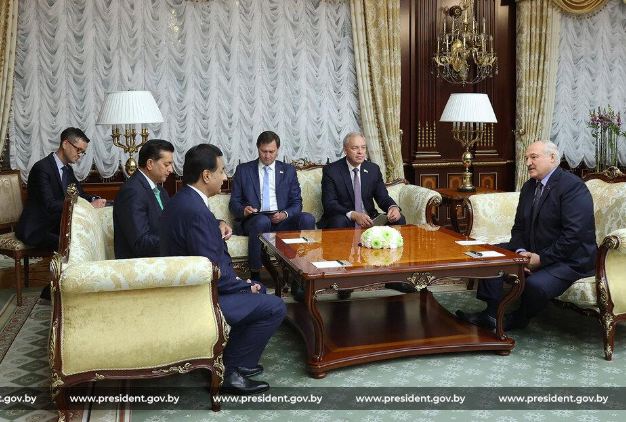
Belarus, Pakistan commit to deepening ties, exploring new areas of cooperation

Belarus, Pakistan commit to deepening ties, exploring new areas of cooperation

MINSK, AUG 21 /DNA/ – Sardar Ayaz Sadiq, the Honorable Speaker of the National Assembly of Pakistan, called on Aleksandr Lukashenko, President of the Republic of Belarus, during his official visit to Minsk from August 19-22, 2024. The meeting was also attended by the Chairman of the House of Representatives of Belarus, the Foreign Minister of Belarus, and the Ambassador of Pakistan to Belarus.

President Lukashenko extended a cordial welcome to the Pakistani delegation and fondly recalled his recent meeting with the Prime Minister of Pakistan in Astana. He emphasized Belarus’s readiness to expand multifaceted bilateral relations, including economic cooperation, agriculture, industry, and educational and cultural exchanges.

The Honorable Speaker conveyed warm greetings from Pakistan’s leadership to President Lukashenko and highlighted the potential for further strengthening bilateral cooperation. He stressed the significance of locally manufacturing Belarusian agricultural machinery, including tractors, in Pakistan to meet the growing demands of the market. Furthermore, the Speaker expressed Pakistan’s keen interest in learning from Belarus’s expertise in industrial development and agricultural innovation, and he expressed a desire for collaboration in research.

Highlighting the importance of people to people contact, Sardar Ayaz Sadiq stressed the need to streamline the visa process for Pakistani students and businessmen, for an efficient system to facilitate easier travel and exchange between the two countries.

The discussion between the leaders also focused on enhancing agricultural cooperation. Pakistan side expressed interest in importing high-quality Belarusian agricultural machinery, known for its efficiency and reliability. The meeting underscored the potential for increased economic and industrial collaboration. President Lukashenko shared the possibility of establishing multi brand centers in Pakistan for the sale and maintenance of Belarusian machinery with the possibility of joint production facilities in Pakistan.
Sardar Ayaz Sadiq noted the importance of such initiatives in boosting Pakistan’s industrial sector and improving bilateral trade.

Both leaders reaffirmed their commitment to strengthening the ties between Pakistan and Belarus, recognizing the historical and cultural connections between the two nations and expressing a mutual desire to build on this foundation.
The meeting concluded on a positive note, with both sides expressing their readiness to continued dialogue and cooperation to further enhance the bond between the two nations, including collaboration in multilateral forums.

CPEC Facing Uncertain Future

National Security in American Political Discourse

Dr. Muhammad Akram Zaheer

The China-Pakistan Economic Corridor (CPEC) was once seen as a groundbreaking project that promised to bring significant benefits to both China and Pakistan. Launched as part of China’s Belt and Road Initiative (BRI), CPEC was envisioned as a massive infrastructure development plan that would create new economic opportunities for Pakistan while also serving China’s strategic interests. However, in recent years, this once-prominent project has faded from the spotlight in Pakistan and its progress has been much slower than initially expected.CPEC was designed to connect China’s northwestern region of Xinjiang to Pakistan’s Gwadar Port, located on the Arabian Sea. This connection was to be established through a network of highways, railways and pipelines, creating a corridor that would facilitate trade and energy transportation between the two countries. For China, CPEC held strategic importance as it would provide a shorter and safer route for transporting goods and energy supplies, bypassing the longer maritime route through the Strait of Malacca. For Pakistan, CPEC was seen as an economic lifeline that could boost its economy by improving infrastructure, creating jobs and attracting foreign investment.However, despite the high hopes surrounding CPEC, the project has encountered several challenges over the years that have hindered its progress. One of the major issues has been the slow pace of implementation. Many of the planned infrastructure projects, such as highways and railways, either have been delayed or have yet to be completed. This has led to frustration in both China and Pakistan as the expected economic benefits have not materialized as quickly as anticipated.

Another significant problem facing CPEC is the issue of unpaid loans. The project has been largely financed by Chinese loans and Pakistan has struggled to repay them. The financial burden of these loans has added to Pakistan’s economic difficulties, leading to concerns about the long-term sustainability of the project. This situation has been exacerbated by allegations of corruption, with reports of funds being misused or siphoned off by officials involved in the project. Such issues have further undermined public confidence in CPEC and have led to questions about whether the project will ultimately deliver on its promises.The security situation in Pakistan has also posed a major challenge to the successful implementation of CPEC. Parts of the country, particularly in the regions where key CPEC projects are located, have been plagued by violence and instability. Attacks on infrastructure projects, workers and security personnel have created a climate of fear that has deterred both local and foreign investors. The need to allocate significant resources for security measures has also increased the overall cost of the project, adding to the financial strain.Since the beginning, the West, particularly the United States and India—an important Western ally and Pakistan’s long-time rival have opposed the China-Pakistan Economic Corridor (CPEC). They have labeled it a Chinese “debt trap,” with many U.S. lawmakers warning that they don’t want Pakistan to repay Chinese loans with money from the International Monetary Fund (IMF).

CPEC is a major project under China’s Belt and Road Initiative (BRI). China and Pakistan have kept many details of the project secret, but it’s clear that China has been repeatedly disappointed by the various challenges CPEC has faced in Pakistan. In 2019, under Prime Minister Imran Khan, Pakistan reportedly revealed confidential details of Chinese agreements to the IMF, which may have led to a breakdown in trust between the two countries. Additionally, the ongoing terror attacks on Chinese workers involved in CPEC projects have become a serious concern for China.As Pakistan faces another financial crisis, Prime Minister Shehbaz Sharif visited China in June. During this visit, the two countries announced plans to upgrade CPEC and start Phase II of the project. However, many believe that the visit was more about Pakistan’s urgent need for financial assistance, especially through new Chinese investments in CPEC and restructuring Pakistan’s $15 billion energy debt to China.Pakistan’s desperation for Chinese financial support is driven by its recent agreement with the IMF. On July 12, 2024, Pakistan and the IMF reached a preliminary agreement for a 37-month Extended Fund Facility (EFF) worth about $7 billion. However, this agreement still needs approval from the IMF’s Executive Board, which requires Pakistan to secure funding commitments from its partners, including China.Pakistan’s situation is difficult as it has little to offer China besides poor progress on CPEC, ongoing financial instability and governance issues. Moreover, under IMF pressure, Pakistan has promised not to allocate additional funds to pay off the $1.8 billion owed to Chinese power plants built under CPEC, violating a 2015 Energy Framework Agreement with China. Pakistan’s debt restructuring request to China hinges on this issue. Additionally, Pakistan has agreed to phase out incentives for Special Economic Zones (SEZs), a key part of CPEC as part of its IMF agreement.China recognizes Pakistan’s strategic importance and commitment to CPEC, despite the many problems Pakistan has failed to address. China also seems aware that Pakistan’s recent financial decisions regarding CPEC are due to its severe economic crisis and may not be permanent. However, China appears reluctant to continue investing in Pakistan at the same level as before. Some in China now view the political risk in Pakistan as extremely high, with one prominent Chinese scholar comparing it to countries like Somalia and Syria. This is a worrying sign for Pakistan, which sees Chinese cooperation, especially through CPEC as its best hope for long-term economic recovery.

In June, during Prime Minister Sharif’s visit to China, China rejected Pakistan’s request for new investments related to the China-Pakistan Economic Corridor (CPEC). A month before the visit, Pakistan had asked for an additional $17 billion for China-funded energy and infrastructure projects. Despite bringing a large delegation with hopes of securing new investments, China only agreed to proceed with a long-delayed $6.7 billion railway project and even then, only the first phase was approved. This shows that China’s interest in CPEC has waned and many blame Pakistan for this. In April, Finance Minister Muhammad Aurangzeb admitted that Pakistan had been slow in advancing CPEC over the past few years. He mentioned that the government was planning to move forward with Phase II of CPEC, focusing on revenue-generating projects. However, due to incidents involving the deaths and injuries of Chinese nationals on CPEC projects and Pakistan’s ongoing financial struggles, many doubts that China will continue its commercial interest in Pakistan or that Phase II will be significant. The excitement about CPEC Phase II seems to be coming more from Pakistan than China. The Pakistani government is eager to continue to plan the projects, despite some delays and has stressed the importance of Phase II, that includes the development of Special Economic Zones (SEZs), agricultural improvements and science and technology cooperation. However, China’s response has been lukewarm, with analysts pointing out that China prefers to focus on the agricultural aspect of Phase II, while Pakistan is more interested in energy and technology projects. Chinese scholars, who believe Pakistan’s unrealistic expectations could harm long-term relations between the two countries, have flagged this difference in expectations as a major concern. In the short term, Pakistan’s hope lies in getting China to restructure its energy debt. Finance Minister Aurangzeb’s visit to China in late July is crucial, as Pakistan is seeking a five-year extension on the repayment of Chinese energy debt, aiming to reduce foreign currency outflows by $750 million annually. However, this would increase Pakistan’s total energy debt to China to $16.6 billion by 2040. Pakistan is also seeking to profile $27 billion in debt and liabilities with China, Saudi Arabia and the UAE to secure an IMF program. It remains uncertain whether Mr. Aurangzeb’s visit, following Prime Minister Sharif’s trip, will convince China to support Pakistan again. Pakistan is trying to highlight the government’s recent reforms and the agreement with the IMF to gain China’s approval. After the finance minister’s visit, Prime Minister Sharif wrote a letter to the Chinese government requesting debt profiling. Additionally, the Prime Minister announced that Chinese citizens would be exempt from visa fees, starting in August, as part of Pakistan’s efforts to secure Chinese support. However, it remains to be seen how China will respond.

RCCI demands construction package and relocation of SMEs along Ring Road

RCCI demands construction package and relocation of SMEs along Ring Road

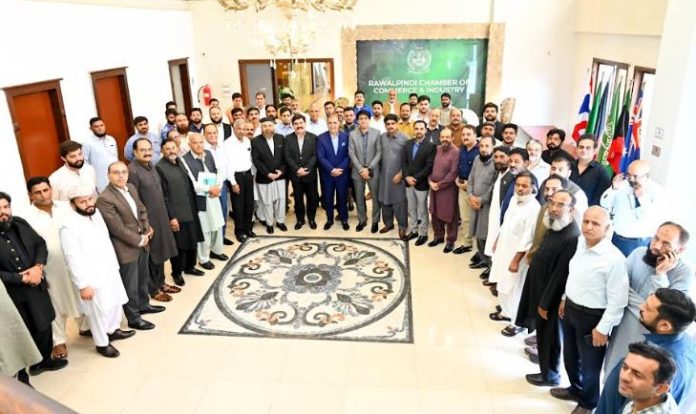
RAWALPINDI, AUG 20 /DNA/ – Business Community and Participants of the Standing Committee on Paints and Chemicals held at the Rawalpindi Chamber of Commerce and Industry (RCCI) demand a construction package and relocation of SMEs along Ring Road. House on the suggestion of Group Leader Sohail Altaf passed a unanimous resolution urging the Government of Pakistan to announce a comprehensive construction package as more than 70 Industries are directly related and associated with construction projects.” The meeting discussed the issues related to the paint and chemical manufacturers. RCCI President Saqib Rafiq informed the committee members about the prospect of economic zones along Ring Road and sought suggestions and recommendations from the Paints and Chemicals Association in this regard.

The meeting was chaired by Chairman RCCI Mohammad Badar Haroon along with President RCCI Saqib Rafiq. Senior Vice President Muhammad Hamza Sarosh, Vice President Faisal Shahzad, Former Presidents, Vice Chairman Standing Committee on Paints and Chemicals Mr. Humayun Zaheer and  other distinguished members were also present in the meeting.

The committee members in an interactive session shared key suggestions on environmental challenges and workers’ safety and also gave valuable input for the growth of the Paints and Chemical Industry. The relocation of allied industry including Furniture, Plastic Shoes, Goods Transport, the ring road project, anomalies in the Tajir Dost scheme, the development of industrial zones and Construction Package for the Industry, issues with fake subsidies, and challenges related to (LC) for exports were also part of the discussion.

UAE eyes investment in Pakistan’s maritime, railways, and aviation sectors

UAE eyes investment in Pakistan’s maritime, railways, and aviation sectors

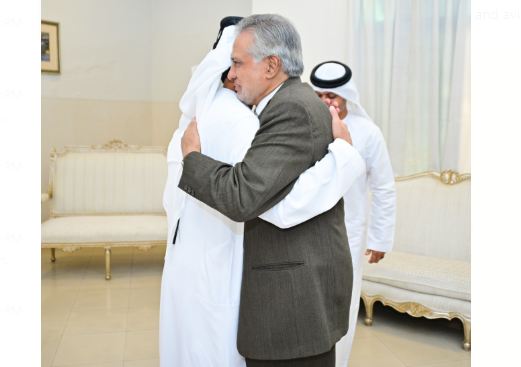
ISLAMABAD, AUG 20 /DNA/ – A high-ranking UAE delegation, led by Sheikh Ahmed Dalmook Al Maktoum, met with Deputy Prime Minister and Foreign Minister Senator Mohammad Ishaq Dar to discuss investment opportunities in Pakistan’s maritime, railways, and aviation sectors.

The discussions centered on potential collaborations to enhance Pakistan’s infrastructure in these key areas.

CASS discusses Pakistan’s path to 2047, stressing reforms and citizen engagement

CASS discusses Pakistan’s path to 2047

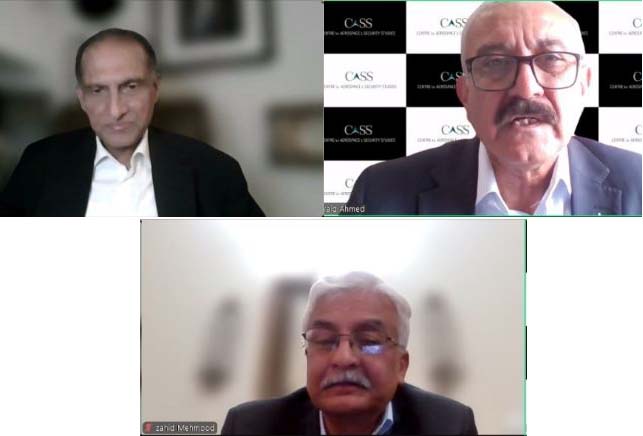
ISLAMABAD, AUG 20 /DNA/ – As Pakistan nears its centennial year of independence, engaging in thoughtful discussions to envision a prosperous future becomes imperative. This Catalyst Conversation, organised by the Centre for Aerospace & Security Studies (CASS), Islamabad, was designed to facilitate such discourse. The session was guided by insights and expertise of Ambassador Aizaz Ahmad Chaudhry, Chairman Sanober Institute and former Foreign Secretary of Pakistan.

Air Marshal Zahid Mehmood (Retd), moderator for the session and Director at CASS, initiated the discussion by reflecting on the creation of Pakistan — a saga marked by struggle and sacrifice under the guidance of visionary leaders. He stressed that as Pakistan approaches its centenary, it is crucial for all Pakistanis to learn from the past 77 years and chart a forward-looking course aligned with the original vision of its founders and the aspirations of its people. He also highlighted that the responsibility for Pakistan’s development extends beyond policymakers and national leaders to every citizen.

On the main subject ‘Pakistan of 2047,’ Distinguished Speaker, Ambassador Aizaz Ahmad Chaudhry (Retd), discussed the formidable challenges and potential strategies for envisioning a prosperous future for Pakistan. During his talk, he noted the difficulty in predicting the nation’s future given the current political and economic climate and regional conflicts.

Ambassador Chaudhry stressed the importance of having a clear vision and long-term socioeconomic development plans, similar to those implemented by nations like the United States, China, and Singapore. He outlined several critical challenges facing Pakistan today, including inadequate devolution of power; substantial portion of the population not contributing to the tax base; excessive reliance on donor aid to balance economic shortfalls; and lackluster export growth. Additional issues highlighted included weak economic growth; water and food insecurity; bureaucratic barriers for the private sector; non-competitive knowledge economy, and insufficient development of human resources.
Despite these challenges, Pakistan’s potential was underscored by its young population, rich natural resources, and strategic geographic location. Ambassador Chaudhry advocated for a citizen-centric approach, as originally championed by the country’s founder — Quaid-i-Azam.

Ambassador Chaudhry outlined several key reforms needed to transform Pakistan’s potential into reality, including stable political governance through decentralisation; economic self-reliance; living within means; continuity of economic policies; and ease-of-doing business to facilitate the private sector. He also called for streamlining regulations; enhancing tax compliance; non-partisan accountability; and significant investments in human development, particularly in education and skill development for youth in emerging technologies such as AI. The speaker concluded by stating that with these reforms, Pakistan could look forward to a peaceful and prosperous future by 2047, marking the centennial of its independence. Conversely, without such reforms, the future remains uncertain.

In his concluding remarks, Air Marshal Javaid Ahmed, President of CASS, Islamabad, pointed out dual nature of the challenges Pakistan faces, with both known and unknown elements. He stressed the immediate need for action and the pivotal role of think tanks in fostering foresight and developing a balanced perspective for the nation’s future. He remarked on critical imbalance in the national narrative, which often oscillates between two extremes, underscoring the importance of grooming current and future leadership to better address these difficulties.

In the question and answer session, participants and speakers agreed that understanding Pakistan’s challenges is essential for planning and executing future actions that will steer the country toward a prosperous and stable future, ensuring balanced development that includes contributions from all sectors of society.

Olympian Arshad Nadeem meets Chairman JCSC

Olympian Arshad Nadeem meets Chairman JCSC

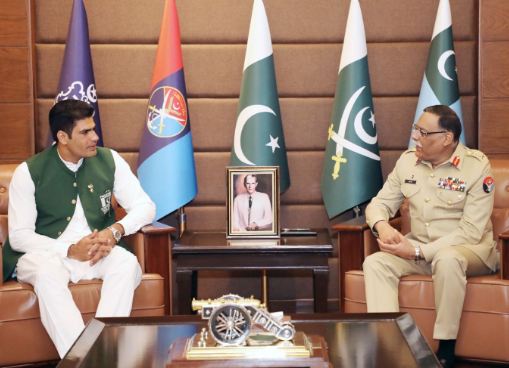
RAWALPINDI, AUG 20 /DNA/ – Arshad Nadeem, record-holder Olympian, called on General Sahir Shamshad Mirza, Chairman Joint Chiefs of Staff Committee, at Joint Staff Headquarters, Rawalpindi.


Chairman JCSC lauded Arshad Nadeem’s efforts for securing Pakistan’s first-ever Gold Medal in a singles’ event and setting up of a new Olympic record.


General Sahir Shamshad Mirza also appreciated the diligence and devotion of Arshad Nadeem in achieving a momentous milestone in Pakistan’s sport history and wished him the very best for his future endeavours.

Stay Connected

64FansLike
60FollowersFollow

Latest Reviews

Exchange Rates

USD - United States Dollar
EUR
1.17
GBP
1.35
AUD
0.67
CAD
0.72