Home Blog Page 663

NTDC Achieves Milestone with Partial Activation of SCADA-III System

NTDC Achieves Milestone with Partial Activation of SCADA-III System

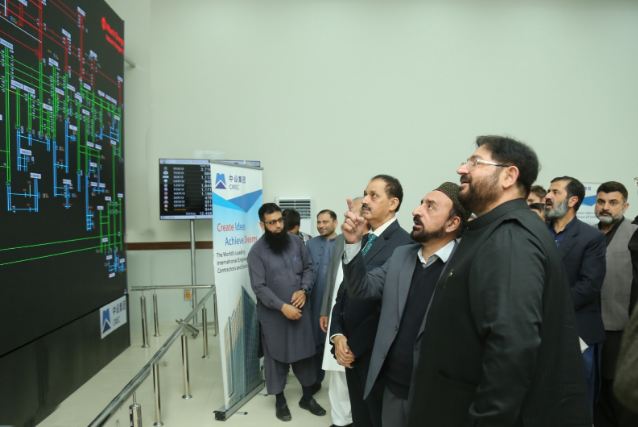
ISLAMABAD, FEB 26 /DNA/ – The National Transmission & Despatch Company (NTDC) has successfully achieved a milestone in the SCADA-III project with partial activation of the new Control Room and Supervisory Control and Data Acquisition (SCADA) system becoming partially live, installed at the National Power Control Centre (NPCC), Islamabad. The system was inaugurated by the Managing Director NTDC, Engr. Muhammad Waseem Younas and senior NTDC officers, today.

Earlier, Chief Engineer SCADA-III, Engr. Sumair Memon briefed the management about the project. It was apprised that 75% progress has been achieved so far and the remaining will be completed during the current year. The project reached to the milestone on February 20, 2025, with partial Go-Live of new SCADA system at NPCC Islamabad. This state-of-the-art SCADA system has the first 65 of 166 stations live, with the remaining stations to be integrated in the coming months as new communication links become available.

During the inauguration ceremony, Engr. Muhammad Waseem Younas said that this is a happy moments for all of us. Extending NTDC management’s heartfelt congratulations to all the teams involved in implementation of SCADA-III project, He said that SCADA-III project will bring numerous benefits to NTDC and the national grid. He said that the advanced SCADA system provides real-time monitoring and control of grid stations, enhancing the reliability and efficiency of the power transmission network. This ensures prompt detection and resolution of faults in transmission network, minimizing downtime and improving overall grid performance. He emphasized the project team to complete the remaining works within the timelines and said that the issues being faced by the project team will be resolved soon and the management will support the team in all aspects.

In addition to SCADA deployment, the project includes the implementation of an Energy Management System (EMS) and Generation Management System (GMS). These systems enable optimized energy distribution and generation management, leading to more efficient use of resources and reduced operational costs. The project also includes the installation of 3,600 km of Optical Ground Wire (OPGW), of which, installation of 3300 kms has been completed, deployment of telecom equipment such as SDH, DPLC and PABX, and the establishment of a microwave backup communication link between NPCC and the Backup Control Center (BCC). These enhancements, scheduled to be completed during 2025, will ensure robust communication and data transmission across the network.

Deputy Managing Director (P&E), Engr. Qaiser Khan, Deputy Managing Director (AD&M) Engr. Rasheed A. Bhutto, General Manager (D&E) Engr. Dr. Khawaja Riffat Hassan, General Manager (SO), Engr. Nasir Ahmed, General Manager (Media and Public Relations) Muhammad Ibrahim, Chief Engineer (Operation Planning) Engr. Muhammad Zakria, Chief Engineer (Network Operation) Engr. Ijaz Ali, Chief Engineer Asset Management (North) Islamabad, Engr. Shoaib Khan, other senior NTDC officers and representatives of Hitachi, CMEC & SAGE Automation were present on the occasion.

Govt policies aimed to achieve sustainable, inclusive economic growth: Aurangzeb

Govt policies aimed to achieve sustainable, inclusive economic growth: Aurangzeb

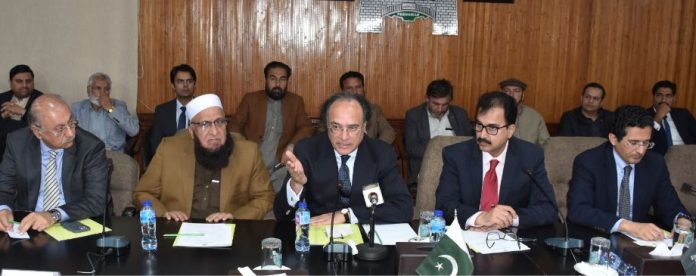
PESHAWAR, FEB 26 (APP): Federal Minister for Finance and Revenue, Senator Muhammad Aurangzeb here Wednesday said that the government was endeavouring for sustainable and inclusive economic growth imperative for progress and prosperity of the entire nation.

Addressing Sarhad Chamber of Commerce and Industry (SCCI) meeting as chief guest along with Minister of State for Finance and Revenue, Ali Pervaiz Malik, Senator Muhammad Aurangzeb said that the country have achieved economic stability after Federal Govt’s goal oriented policies and economic reforms that started positive effects on people lives.

He said that the Govt was committed to broadening its tax base and advancing with a focused approach to make Pakistan an export-led country.

The Govt has simplified the taxation process and the Tax Policy Office would be operationalized in a few days to facilitate taxpayers, industrialists and the business community. The Federal Minister said that information technology and digitalization were introduced in the Federal Board of Revenue (FBR) to save time and ensure more transparency in financial affairs.

The Minister said that Pakistan has been put in the right direction by the present elected Govt and great responsibility rests on the private sector to come forward and contribute richly in the country’s development process.

He said the private sector has to take a lead role in promotion of business and industrialization in the country especially in mineral rich Khyber Pakthunkhwa and Balochistan, adding that the Govt would facilitate business and industrialization to generate employment opportunities for youth and alleviate poverty in KP.

As a result of the Govt’s prudent economic and fiscal policies, he said that price hike has been slashed below signal digit and rice and IT exports achieved record growth during last one year that spoke volume of our commitment towards inclusive economic development. The Minister said that food inflation, current account deficit and pressure on Pakistani rupee has been significantly reduced and the country’s economy is stabilized.

He said that the business and industrialization sectors were being incentivized to generate employment opportunities for youth. The Federal Minister said that local industries and SMEs were being promoted for the people’s prosperity.

He said the Tax Policy Office would help facilitate traders and taxpayers besides take the country forward towards inclusive growth.

The Federal Minister said that he came here to personally observe and listen to the difficulties and problems of KP’s businessmen, asking the SCCI President to submit detailed workable proposals and recommendations for consideration in the upcoming budget. 

He said the height of prosperity could be achieved by creating a balance between revenue and expenditure. He said that nothing has been delayed on the side of his department and now it was between the bank and client to address their issues.

Minister of State for Finance and Revenue, Ali Pervaiz Malik said that ‘we all are Pakistanis and it was our collective duty to work for progress and prosperity of the country. He said the Govt was endeavouring to create balance between income generation and expenditure and the Govt’s economic and fiscal policies besides reforms has immensely helped in achieving economic stability despite enormous challenges.

He said the Govt has ensured financial discipline and addressed issues related to tax refund. He said that the Govt was striving hard to provide relief to poor consumers of electricity. Before Shahbaz Sharif Govt took over, he said  the country was facing an imminent economic  collapse and prices of daily commodities were soaring high.

However, the Shahbaz Sharif Govt accepted the massive economic recovery’s challenge and put the economy back on track.

Earlier, SCCI President and other members of the organization welcomed the Federal Minister and Minister of State for Revenue and highlighted problems being faced by the business community. They were also presented with traditional turbans.

Uzbek PM Aripov sees off PM Shehbaz Sharif in Tashkent

Uzbek PM Aripov sees off PM Shehbaz Sharif in Tashkent

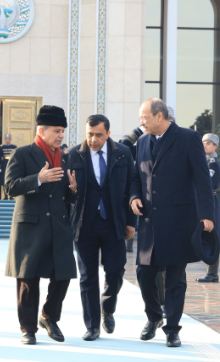
TASHKENT, FEB 26 /DNA/ – Prime Minister of Uzbekistan Abdulla Nigmatovich Aripov seeing off Prime Minister Muhammad Shehbaz Sharif upon his departure from Uzbekistan. Tashkent, 26 February 2025.

Embassy of Palestine hosts “Palestine Was and Will Remain” Photo Exhibition

Embassy of Palestine hosts

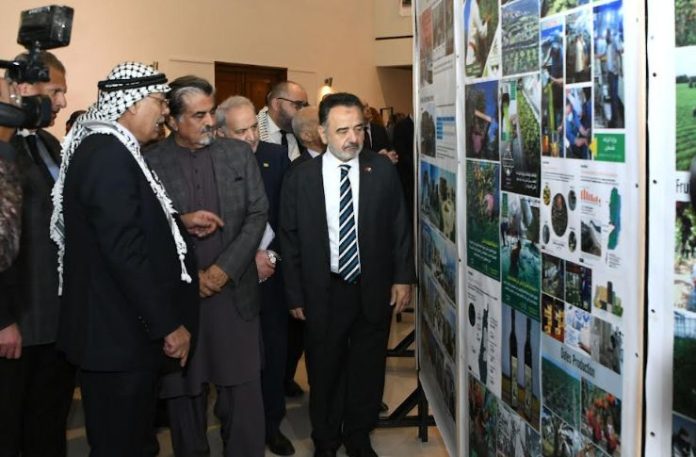
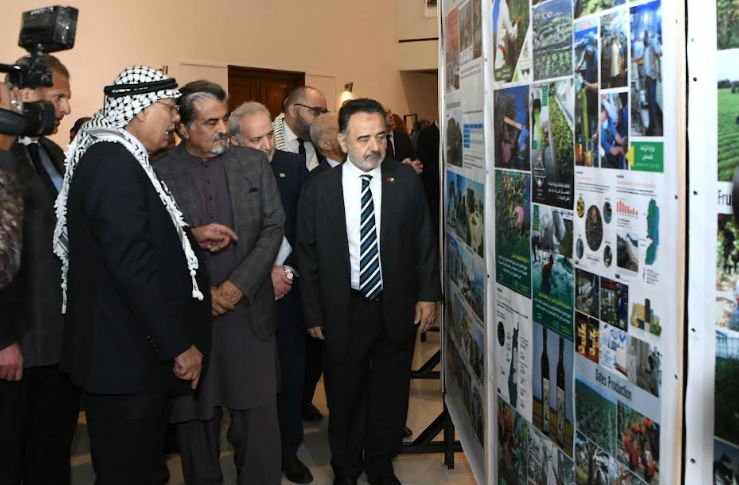
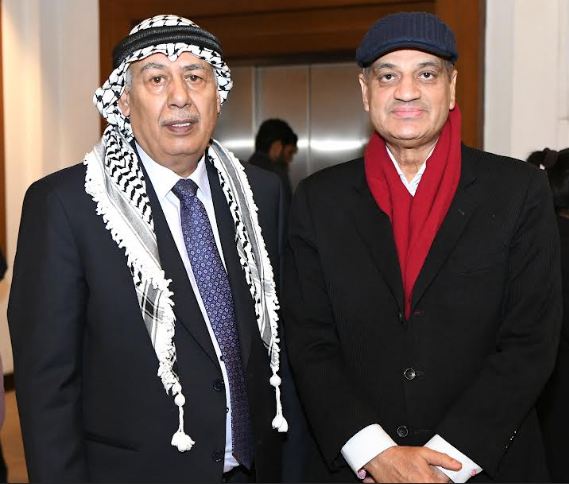
ISLAMABAD, FEB 26 /DNA/ – The Embassy of Palestine Pakistan in collaboration with the Pakistan National Council of the Arts successfully hosted a poignant photo exhibition titled “Palestine was and Will Remain” on February 25th. The exhibition showcases a compelling collection of photographs capturing the resilience, heritage, and enduring spirit of the Palestinian people.

The event was inaugurated by Mr. Jamal Shah, President and Chief Curator of Hunerkada College of Visual and Performing Arts, Islamabad. In attendance were ambassadors from numerous countries including Jordan, Portugal, Libya, Oman, Indonesia, and many others. Muhammad Ayoub Jamali and other distinguished guests were also present to witness the occasion.

H.E. Dr. Zuhair Mohammad Hamadallah Zaid, Ambassador of Palestine to Pakistan, delivered a moving welcome address, stating: “This exhibition is more than just a collection of photographs; it is proof of the existence, resilience, and spirit of the people of Palestine. It is about our history, our sufferings, and our struggle that has continued for generations.”

The ambassador emphasized that the exhibition sheds light on the ongoing Nakba, describing it as “a catastrophe that did not end in 1948 but continues to this very day.” He highlighted the exhibition’s purpose in documenting the realities faced by Palestinians, particularly in Gaza and the West Bank.

“Through this exhibition, we seek to ensure that the world does not look away, that the voices of the oppressed are heard, and that the evidence of these atrocities is observed,” Dr. Zaid remarked.

The exhibition aims to provide visitors with a firsthand view of the Palestinian experience and urges viewers to “stand on the side of justice, humanity, and truth.” The collection serves as a powerful reminder of Palestine’s historical presence and ongoing cultural significance.

Building a Smart Islamabad

Building a Smart Islamabad

Naira Eshaal

Islamabad is often considered as the most organized or perhaps the most planned city of Pakistan but now it is experiencing an urban sprawl as it is one of the fastest growing cities in the country as regards its density. This brings many costs and challenges. A study conducted spanning a decade reveals that the mega cities in Pakistan are growing at a rate of half a kilometer per year in the circumference to even one kilometer in circumference per year. This rapidly increasing size of the cities have led to both opportunities and challenges for their denizens. The geographical areas of the bigger cities are much higher. Bahawalpur, Rahim Yar Khan and Multan are growing at a very fast pace.

The need is to know why urban sprawl is taking place. One of the reasons is an accelerated population growth. Much can be learnt from regional practices. India, Bangladesh and China all have taken measures to manage the population growth. Addressing this challenge remains significant for the efficacy of urban planning and service delivery. It would be noted with concern that unless it is controlled, no service will be effective.

There are some economic questions which need attention. If we wish to address the challenges of urban sprawl then the first hinderance is the multiple jurisdictions which makes it difficult to coordinate or have a policy in urban sprawl. With the passage of time, orientation of our society has been more of the car or bike users. The walking culture is not generally encouraged. There must be a change in the thinking of the people which is very essential to deal with the challenge of urban sprawl.

A detailed cost-benefit analysis of urban expansion plans is essential. While underpasses and signal-free expressways improve traffic flow, their long-term impact on urban sprawl and green spaces should be considered. Investing in unswerving and efficient public transport could provide a maintainable alternative, reducing overcrowding and environmental damage.

There is much of an ecological imbalance which is very much visible in case of Islamabad. Poor air quality has added to the problem which is created by urban expansion and which demands immediate solutions for sustainable living. Our expansion has been horizontal instead of vertical. Scarcity of land led to increased prices of housing which eventually led to increased cost of living for the residents of Islamabad.

For ensuring a sustainable living, an integrated, and all-encompassing smart city living is possible and may conveniently be adapted for Islamabad. This can be achieved with the collective efforts of the authorities and the citizens. There is a need that the citizens are sensitized about the importance of this very vital subject. Community mobilization is essential. Those who are well off can join hands in different areas and contribute to making one or two roads in the areas where they live.

The Pakistan Environmental Protection Act (PEPA) of 1997 could be further strengthened to comprehensively address the contemporary challenges like environment integrity, climate change, urban slums and rapid urban expansion. This is possible by creating strong policies for sustainable practices which may include using the renewable energy and modern waste management disposal methods. Likewise, partnerships may be encouraged between the government sector and the public and private partnership for funding and implementation of smart city projects.

Role of CDA is but extremely important. It plays a central role in implementing these policies. Sustainable Development Goals may prove to be a guide for the urban planning and city development. For meeting the future needs focus should be upon shifting towards smart housing and developing energy efficient buildings. Already we can see that the vertical housing is much in progress in Islamabad however, the concern of environmentalist should also be kept in mind that the sufficient green areas must be reserved to retain the ecological balance.

The goal of shifting towards smart economy is very important. This goal can be attained by promoting local businesses. Economic development is a very important factor. By engendering economic growth through smart city initiatives can increase job opportunities which can be attained by business hubs and establishing technology parks and innovations as incubation centres, business centres to attract businesses. Offering of the skills development programs by offering different educational courses and trainings on the skills which can meet the requirements of the emerging industries. Smart environment can be attained by implementing renewable energy sources and water conservation measures. Inclusive communities can ensure equal access to the urban facilities and services for all residents.

Public transport systems should be evolved in such a way so as to ensure reduced traffic congestion and pollution. Some steps which are needed to implement the master plan include smart transportation by efficient traffic management systems for overcoming traffic rush. Modernizing transport may also include introducing more of the electric buses. Creating cycling lanes can ensure non motorized transport.

 Encouraging the use of solar panels in residential areas for promoting lesser dependence on fossil fuels means the use of more renewable energy and sustainable practices. The use of smart waste collection methods for waste disposal is also crucial. Effective policies are important for ensuring inclusivity and provision of equal opportunities for all the residents.

Rapid urbanization is associated with challenges like increased demand for clean drinking water and air pollution.

Integration of technology is yet another important aspect. Use of smart technology for resource management and service delivery will help a lot for dealing with the problem of urban sprawl. Offering online platforms for relegated segments of society and residents to access services, report issues and engage with local governance is significant for good urban solutions. Organizing of forums and workshops to gather input from residents on city development plans is important. Investment in infrastructure for supporting green spaces, public transport and renewable energy facilities is crucial. There is a need to identify the spaces within the city that can be utilized to the optimum. A balanced approach is required, focusing on developing new urban centers alongside managing the expansion of existing cities. We need to bring more of the towns at a level so that the people do not have to go for mass migration. If these measures are adopted and these strategies are implemented, it can be said that Islamabad may transition towards a model for integrated, democratic and inclusive smart city thereby promoting a sustainable future for its people.

Naira Eshaal | Islamabad

The writer is doing Bachelors in Psychology from NUST and can be reached at [email protected]

“Bridging Cultures: Teresa on Pakistan, Literature, and the Power of Storytelling”

Interview with Teresa Nicolau

——————

Ansar M Bhatti

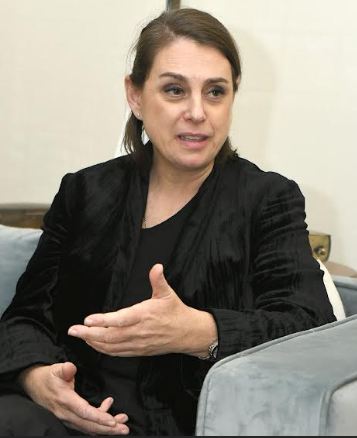
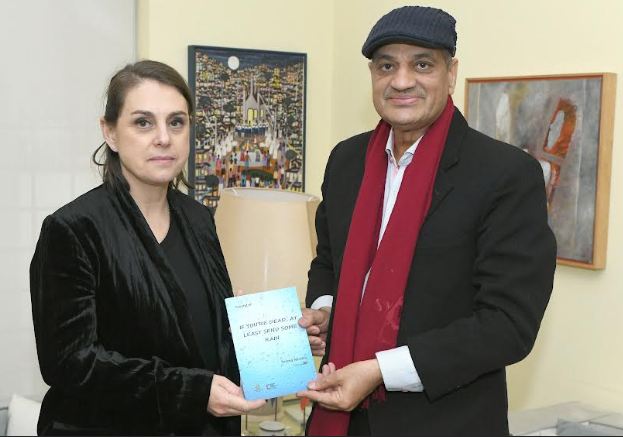
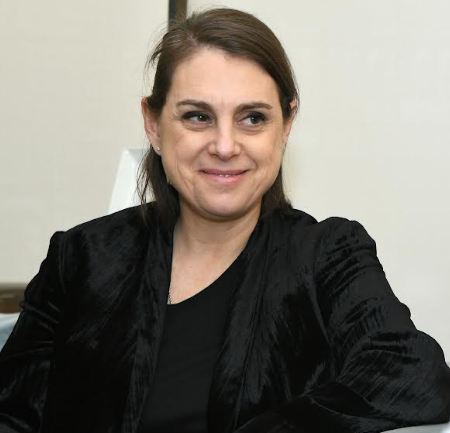
ISLAMABAD: Acclaimed Portuguese journalist and author, Teresa Nicolau, is currently visiting Pakistan at the invitation of the Portuguese Embassy. Nicolau, a distinguished journalist known for her engaging storytelling and deep insights into culture and media’s influence on public discourse, has made significant contributions to both Portuguese journalism and literature. She is currently the Director of Culture at Santa Casa da Misericórdia in Lisbon. Nicolau granted an exclusive interview to Daily Islamabad POST, Centreline magazine, and Diplomatic News Agency. Here are excerpts from her interview. The full interview will be published in the March issue of CENTRELINE.

On Her Impressions of Pakistan

“This is my first time in Pakistan, and it’s been a wonderful experience. Having traveled all over the world, I believe that what truly defines a country is its people and culture. It’s fascinating to see how a nation identifies itself through its cultural expressions, arts, and traditions.

Pakistan is a vast country with a rich, ancient history and a key center of global knowledge. I am especially fond of spicy food, and I must say, Pakistan is one of the best places I’ve visited for its flavorful cuisine—perfectly spicy!”

On Areas for Mutual Cooperation

“I see this visit as the beginning of a growing cultural exchange. The Portuguese Embassy has previously invited writers like José Luís Peixoto, an important figure in Portuguese literature, to Pakistan. This marks a step toward deeper literary and cultural understanding between our nations.

I’ve had the chance to meet with a few Pakistani writers and discuss ideas on how we can strengthen literary ties further.”

On Promoting Cultural and Literary Linkages

“As an author and journalist, I strongly believe in the power of arts and culture to foster diplomatic relations. Culture is often the first point of engagement when you visit a new country, and it is a key symbol of soft power.

Portugal also has a growing Pakistani community, which plays an important role in strengthening people-to-people relations between our two countries.”

On Her Inspiration to Become a Writer

“I’ve been telling stories for the last 30 years, and I absolutely love it—whether as a journalist or an author. Storytelling allows me to explore emotions and connect with real people. All my fiction is based on true stories, because I believe truth is another side of reality. If you write with sincerity, you’re telling an authentic story.

I am an avid reader, and reading widely has been essential to my growth as a writer.”

On the Impact of social media

“Unfortunately, social media has distanced many people from books. However, it’s crucial to adapt and embrace digital platforms for publishing. Many writers aren’t familiar with social media tools, but those who learn to use them effectively can gain wider recognition.

While I’m not personally active on social media, I understand its importance. If you want to succeed in today’s world, you must leverage these platforms. Interestingly, in Portugal, people often buy physical copies of books after reading them online, which shows the enduring love for traditional print.”

As regards translation of works in other languages, “I’ve started with a small English booklet, and I plan to translate my book into English and other languages in the future. Urdu is a language I deeply respect, and translating my books into Urdu will help readers who speak the language connect with my work.”

On Her Visit to India

“I also visited India, specifically Mumbai and Pune, because my daughter was studying there at the United World Colleges (UWC). UWC is an important global educational organization, and their Mahindra school in Pune is particularly well-known. It was a wonderful experience to visit my daughter and explore the culture there.”

The full text of the interview shall be published in the March issue of CENTRELINE.

Champions Trophy: Rain abandons Australia, South Africa match in Rawalpindi

Champions Trophy: Rain abandons Australia, South Africa match in Rawalpindi

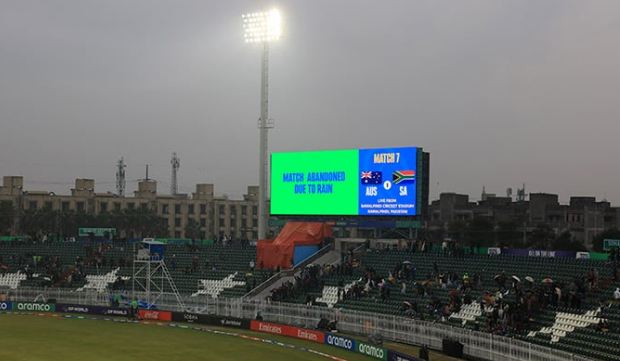
RAWALPINDI: The crucial match between Australia and South Africa has been abandoned due to relentless rain in Rawalpindi amid prediction of showers to continue throughout the day.

Despite high expectations for an exciting contest, continuous light to heavy rainfall disrupted the game, preventing even the toss from taking place.

As weather conditions worsened throughout the day, officials had no choice but to call off the match without a single ball being bowled.

Following this result, both teams remain unbeaten in the tournament and are currently at the top of the points table with three points each from two matches.

Fans are seen in the stands before officials call off the ICC Champions Trophy 2025 match between Australia and South Africa at Rawalpindi Cricket Stadium on February 25, 2025. — Reuters
South Africa holds the number one position due to a superior Net Run Rate (NRR) of +2.140, while Australia sits second with an NRR of +0.475.

England, having played one match and lost it, is in third place with zero points and an NRR of -0.475. Afghanistan, also without a win, occupies the bottom spot with zero points and the lowest NRR of -2.140.

Both teams entered this match with momentum, having won their respective opening fixtures.

Australia began their campaign with a thrilling victory over England at the Gaddafi Stadium in Lahore. England posted a record-breaking total of 351/8, the highest in Champions Trophy history, powered by Ben Duckett’s stunning 165 off 143 deliveries.

Groundstaff pull rain covers on the pitch before the match. — Reuters
However, Australia successfully chased down the target in just 47.3 overs, thanks to a dominant batting display.

Josh Inglis led the charge with a blistering 120 off 86 balls, while Alex Carey contributed 69 off 63. Glenn Maxwell provided the finishing touches with a quickfire 32 off 15 deliveries.

Meanwhile, South Africa secured a comprehensive 107-run victory over Afghanistan. The Proteas put up a strong total of 315/6 before bundling out Afghanistan for 208.

Ryan Rickelton starred with a brilliant century (103 off 106 balls), while captain Temba Bavuma, Rassie van der Dussen, and Aiden Markram added crucial half-centuries to ensure a dominant performance.

Aurangzeb stresses FATF compliance in Pakistan’s digital asset regulatory framework

Aurangzeb stresses FATF compliance in Pakistan’s digital asset regulatory framework

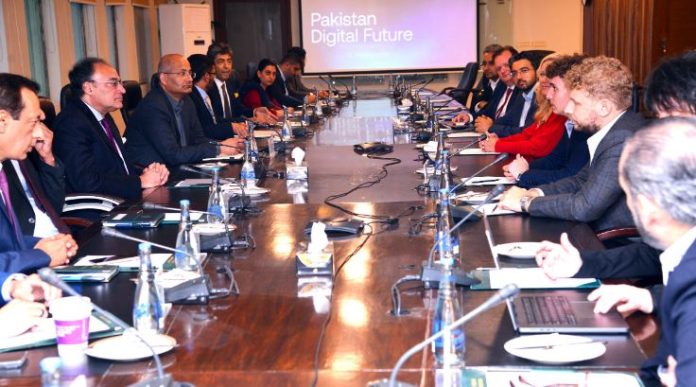
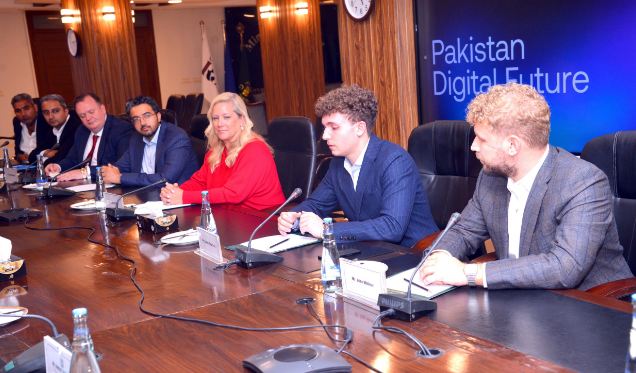
ISLAMABAD, FEB 25 /DNA/ – The Federal Minister for Finance and Revenue, Senator Muhammad Aurangzeb, chaired a high-level meeting on digital assets today. The meeting was attended by foreign delegates, including President Trump’s Advisors for Digital Assets. Minister of State for IT & Telecom, Ms. Shaza Fatima Khawaja, Governor State Bank, Secretary Finance, and Secretary IT & Telecom were also present.

Participants discussed the global evolution of cryptocurrency, its increasing adoption, and the regulatory frameworks being implemented internationally, in line with U.S. government policies. The deliberations focused on financial security, risk mitigation, and the potential impact of digital assets on Pakistan’s economy.

Senator Muhammad Aurangzeb emphasized the importance of a well-regulated digital asset framework, aligning Pakistan with international best practices and complying with Financial Action Task Force (FATF) guidelines. He highlighted the government’s commitment to exploring digital assets and integrating blockchain technology as part of its broader strategy to modernize the financial sector.

Discussions also included the tokenization of key infrastructure and state-owned enterprises (SOEs) assets, allowing for increased liquidity, broader investor participation, and greater efficiency in capital markets. It was noted that various stakeholders, including foreign and domestic investors, have already developed product-ready digital asset solutions that could be explored within a regulatory sandbox.

Pakistan currently has over 20 million active users in the digital asset market who face significant challenges, including high transaction fees. The Finance Minister reaffirmed his commitment to regulating and encouraging this industry by adopting appropriate frameworks, laws, and incentives to ensure transparency and facilitate digital business growth.

The Finance Minister directed relevant stakeholders to formulate a comprehensive framework that ensures security, transparency, regulatory compliance, and economic viability while safeguarding against financial crimes and illicit activities. He also stressed the need for a balanced approach—one that encourages innovation and investment in digital assets while maintaining strict regulatory oversight in line with international standards.

To enhance this initiative, the government will consider establishing a National Crypto Council, which will serve as a dedicated advisory body comprising key government representatives, regulatory authorities, and industry experts. This Crypto Council will oversee policy development, address regulatory challenges, and ensure that Pakistan’s digital asset ecosystem evolves in a secure, compliant, and sustainable manner. The Council will also collaborate with friendly countries to develop standardized frameworks for international digital economic engagement.

The meeting concluded with a consensus on adopting a cautious yet forward-looking approach, ensuring that future developments in the digital asset space align with national interests, FATF guidelines, and global financial standards.

Why our educational system is not productive

Why our educational system is not productive

Muhammad Irfan

A country’s progress is largely dependent on its educational system, but Pakistan’s public school system still struggles with shockingly poor learning results. Even the most fundamental abilities appear to be beyond the scope of education in Pakistan, a country have one of the youngest populations in the world. Only 44% of fifth graders can do a basic two-digit subtraction problem, and only 55% can read a novel in Urdu or recite regional dialects, according to the ASER 2021 assessment. Nearly 22.8 million children are out of school, creating an even more severe problem in terms of access to and quality of education. Various systemic problems exist, such as insufficient teacher training, lack of resources, gaps in policy implementation, and socio-economic barriers, which are among the primary reasons. According to UNESCO’s recommendation 4 to 6% is allocate for education spending but in Pakistan, which is less than 2% of GDP. Further, the urban and rural disparities, lack of teachers, and prevalence of rote learning methods contribute to an increasing learning gap, leaving students unprepared for the demands of the modern world.This column provides you with the underlying causes of low learning outcomes in Pakistan’s public schools. Which is  drawing on expert opinions and data analysis.

The first major cause is lack of focus on primary education because the primary school years are considered the foundation of a child’s educational journey, which is critically underdeveloped in Pakistan’s public school system. This foundational phase is crucial for the development of children’s reading and writing, numeracy, and critical thinking skills; yet, the education system largely ignores it. A significant factor behind this neglect is the disproportionate allocation of resources. While education, in general, is underfunded overall, primary schools are particularly underserved, with many located in rural areas lacking even the most basic infrastructure.According to the Pakistan Institute of Development Economics (PIDE), “primary schools in Pakistan face severe issues such as inadequate funding, teacher shortages, and lack of basic facilities like classrooms and learning materials.” As highlighted in the report, “students in public primary schools often face overcrowded classrooms, untrained teachers, and outdated curricula.” These deficiencies leave children unprepared for secondary education and beyond, perpetuating a cycle of poor performance and high dropout rates.

Another major cause is the education system in Pakistan has been significantly impacted by the political landscape, which has often dictated the direction of educational policies. Political instability and changes in leadership have led to a fragmented approach to education reform, with successive governments frequently abandoning initiatives put forth by their predecessors. This lack of continuity has resulted in an education system characterized by episodic and insufficiently resourced reforms, failing to establish a cohesive long term vision Moreover, external influences from political figures have perpetuated a culture of favouritism and nepotism within the educational sector, further complicating efforts for reform. These internal dynamics, coupled with bureaucratic manipulations, have hampered the establishment of a robust educational infrastructure, undermining the potential for meaningful change.

The lack of adequate resources is another critical factor affecting the education system’s productivity. Educational funding in Pakistan is insufficient, with the need for at least 4% of GDP allocated to the education sector to foster meaningful improvements. Current allocations are often mismanaged due to political instability and bureaucratic inefficiencies, which undermine the development of necessary infrastructure, teacher training, and curriculum enhancements. The resulting poor quality of education, characterized by outdated curricula and untrained teachers, fails to meet the demands of a competitive global landscape, thereby affecting the country’s socio-economic development adversely.

The Pakistani educational system also faces a multitude of structural issues that hinder its productivity and effectiveness. One of the most pressing problems is the outdatedcurriculum, which emphasizes rote memorization over critical thinking and practical skills. This approach fails to prepare students for the challenges of the 21st century and does notequip them with the necessary skills for the modern job market. The curriculum is often developed without sufficient input from teachers, leading to a disconnect between what is taught and what students actually need to learn.

The lack of effective policy implementation compounds the structural issues within the education system. Despite recognizing the need for reforms, insufficient funding, political interference, and corruption have stymied efforts to create a unified and effective educational policy. This has resulted in a fragmented system characterized by low enrolment rates, high dropout rates, and a widening gap between educational institutions and the communities they serve. Addressing these structural issues is critical to improving the productivity and overall quality of education in Pakistan.

Traditional teaching methods, which often prioritize rote memorization over critical thinking and problem-solving skills, remain prevalent. Teachers require training that promotes innovative and student-centered pedagogical approaches to enhance student engagement and learning outcomes.

Low salaries and restricted career advancement opportunities contribute to low morale among teachers. Adequate incentives and improvements in working conditions are crucial to encouraging educators to invest in their professional development.Enhancing teachers’ working conditions, increasing salaries, and providing career advancement opportunities will help improve motivation levels among educators, prompting them to engage more actively in their professional growth.

Lastly, The examination system in Pakistan is another structural issue that contributes to the education crisis. It primarily tests memory rather than understanding and analytical skills, promoting a culture of cheating and bribery. This reliance on rote learning stifles creativity and fails to measure students’ actual knowledge and abilities, Furth perpetuating the cycle of inadequate education.

The way forward to improve Pakistan’s educational system, establishing a national framework for teacher training and development is essential, outlining required skills, competencies, and ongoing professional development expectations. The creation of training centers and online platforms will provide easier access to relevant resources for teachers in remote areas, broadening their opportunities for growth. Additionally, encouraging innovative teaching methods focused on critical thinking, problem-solving, and creativity through regular workshops can transform teaching practices. Enhancing teachers’ working conditions, increasing salaries, and providing career advancement opportunities will further motivate educators to engage actively in their professional growth, ultimately enhancing educational quality.

Ambassador Jemal presides over Ethio-Pakistan Business Forum at FPCCI Lahore 

Ambassador Jemal presides over Ethio-Pakistan Business Forum at FPCCI Lahore 

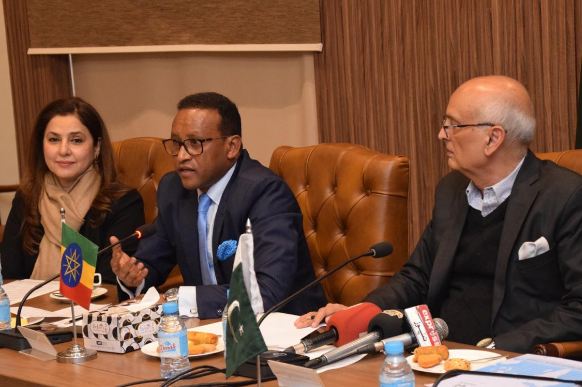
LAHORE, FEB 25 /DNA/ –Jemal Beker Abdula, Special Envoy and Ambassador Extraordinary and Plenipotentiary of the Federal Democratic Republic of Ethiopia (FDRE) to the Islamic Republic of Pakistan, presided over a Grand Ethio-Pakistan Business Forum along with the Senior Officials of the Ministry of Commerce, the Trade Development Authority of Pakistan (TDAP) and the Federation of Pakistan Chambers of Commerce and Industry (FPCCI) in Lahore.

The major business gathering that saw a presence of more than 26 business chambers of Punjab was held in the FPCCI to mobilize the traders for this year Single Country Exhibition of the Government of the Islamic Republic of Pakistan in Addis Ababa, Ethiopia in May, 2025.

The Grand Business Forum is a joint effort of the Ministry of Commerce, the Ethiopian Embassy Islamabad, FPCCI and TDAP.

H.E. Ibrahim Khalid Tawab, Chairman of the Pakistan-Ethiopia Business Council of FPCCI and the Honorary Consul of the FDR Ethiopia in Karachi, and Mr. Mokonnen Hailu, Senior Investment Promotion Team Lead at the Ethiopian Investment Commission participated in the business forum online.

Addressing the gathering, the Ambassador briefed the business community about political, legal and economic reforms undertaken by the Government of the FDR Ethiopia that has created a conducive environment for doing the business and investment in the country.

As a result of the home grown economic reforms, he said, extraordinary business, trade and investment opportunities were generated in the five major sectors including agriculture and agro processing, manufacturing, mining, tourism and ICT.

The business community of the Islamic Republic of Pakistan have comparative advantage for investment in Ethiopia especially in terms cheap, clean and green energy, a large population, skilled labour and connectivity not only with Africa but also the entire globe.

“Whatever you produce in Ethiopia can easily be sold out in the entire Africa,” he said, noting that the FDR Ethiopia is a member of the African Continental Free Trade Area, and also has the largest Airlines in Africa.

The Ambassador urged the business community to be part of the Single Country Exhibition in Addis Ababa which would eventually give a major boost to the bilateral trade between the two countries.

He appreciated the Government of Pakistan for implementation of the Look Africa and Engage Africa Policy in effective way, highlighting the critical role being played by the Ethiopian Airlines to connect the Africa with Pakistan.

He said the Ethiopian Airlines started flying from Addis Ababa to Karachi and soon its operation would be commenced from Lahore.

On the other hand, Mr. Manzoor Ul Haq Malik, Former Regional Chairman and Vice President Federation of Pakistan Chambers of Commerce and Industry appreciated the role being played by H.E. Dr. Jemal Beker in promoting the bilateral relations of the two countries.

TDAP Director General Abdul Karim Memon called the FDR Ethiopia a growth star, highlighting the country as the faster growing economies in the world.

It is high time to explore business, trade and investment opportunities in Ethiopia, he said while urging the business community to register with the TDAP for the Single Country Exhibition.

A plantation ceremony as a part of the Ethio-Pakistan Fraternity under the Green Legacy Initiative also held on the occasion.

Stay Connected

64FansLike
60FollowersFollow

Latest Reviews

Exchange Rates

USD - United States Dollar
EUR
1.17
GBP
1.35
AUD
0.72
CAD
0.73