Home Blog Page 661

Ambassador engages Pakistani community in China during interactive session

Ambassador engages Pakistani community in China during interactive session

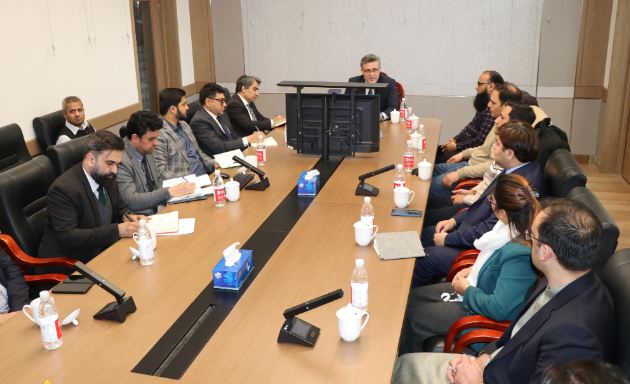
BEIJING, FEB 28 /DNA/ – Ambassador of Pakistan to China Khalil Hashmi held an interactive session with members of Pakistan Community based in China today at the Embassy premises. Community members joined the session in person and online to directly engage with the Ambassador on matters of mutual interest.

During the session, Ambassador Hashmi briefed the community members about the Embassy’s initiatives including convening of forums and B2B matchmaking events as well as on the development of a new website which was to be launched in a few weeks.

He commended members of Pakistani diaspora in China for their contribution and role in promoting and strengthening relations between the two countries.

The community members offered their views and suggestions which were discussed by the Ambassador. He also provided initial feedback on these suggestions and assured Embassy’s continued support and facilitation to community members who including students and professionals. The participants thanked the Embassy for its regular outreach and positive engagement with Pakistani diaspora in China. The Pakistan Embassy and Consulates in the country hold periodic interactions with diaspora to exchange information and views on a range of matters.

Ishaq Dar, Azerbaijan FM discuss bilateral trade and investment

Private schools barred from collecting March and April fees from matric students

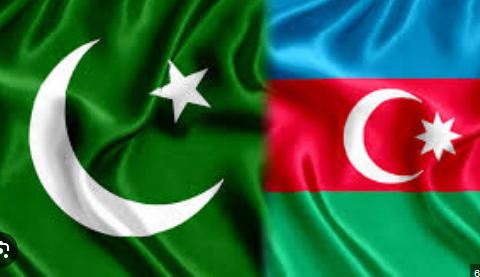
ISLAMABAD, FEB 28 /DNA/ – Deputy Prime Minister and Foreign Minister, Senator Mohammad Ishaq Dar @MIshaqDar50 had a phone call with Azerbaijan’s Foreign Minister, Jeyhun Bayramov @Bayramov_Jeyhun. DPM/FM expressed gratitude for the warm hospitality received during the recent visit of the Prime Minister of Pakistan to Azerbaijan. The two leaders agreed to work closely to accelerate the implementation of the decisions made regarding trade and investment during that visit.

Private schools barred from collecting March and April fees from matric students

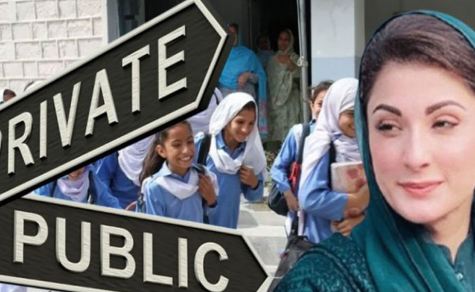
LAHORE, FEB 28: /DNA/ – Punjab Education Department has strictly prohibited private schools from collecting tuition fees for March and April from matriculation students, following complaints of unauthorized charges.

Secretary Schools Education Khalid Nazir Wattoo issued directives to all district education authorities, warning schools against demanding advance payments. “It is not permissible to ask students for March and April fees,” he stated, emphasizing that strict action will be taken against institutions found violating the orders.

Despite the instructions, reports indicate that some private schools have withheld roll number slips from students who have yet to pay their dues.

The education secretary assured that such complaints are being reviewed, and authorities will take necessary measures to ensure compliance.

With matriculation exams set to commence on March 3, Punjab Education Department aims to prevent any financial burden on students and their families. Schools found guilty of demanding additional fees will face disciplinary action.

OGRA announces decrease in LPG prices for March 2025

OGRA announces decrease in LPG prices for March 2025

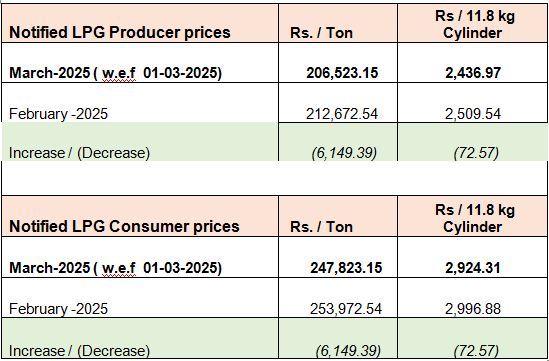
ISLAMABAD, FEB 28 /DNA/ – The Oil and Gas Regulatory Authority (OGRA) has notified the maximum Price of LPG, effective March 01 2025, as under;

Notified LPG Producer prices Rs. / Ton Rs / 11.8 kg Cylinder
March-2025 ( w.e.f  01-03-2025)     206,523.152,436.97
February -2025      212,672.542,509.54
Increase / (Decrease)      (6,149.39)            (72.57)
   
Notified LPG Consumer prices Rs. / Ton Rs / 11.8 kg Cylinder
March-2025 ( w.e.f  01-03-2025)      247,823.152,924.31
February -2025       253,972.542,996.88
Increase / (Decrease)       (6,149.39)            (72.57)

2.  The LPG price Notification for the month of March 2025 is readily available at OGRA website www.ogra.org.pk.

3. The LPG producer price is linked with Saudi Aramco-CP and US$ dollar exchange rate. As compared to previous month Saudi Aramco-CP has decreased by 3.18%. The average Dollar exchange rate has slightly increased by 0.21% resulting to decrease in LPG consumer price by Rs.72.57/11.8 kg cylinder (2.42%). The per Kg decrease in LPG consumer price is Rs.6.15

Strengthening relations with Pakistan among priorities, says Kyrgyz envoy

Kyrgyz envoy

Kyrgyzstan, Pakistan must protect common interests and increase business relations: Atif Ikram

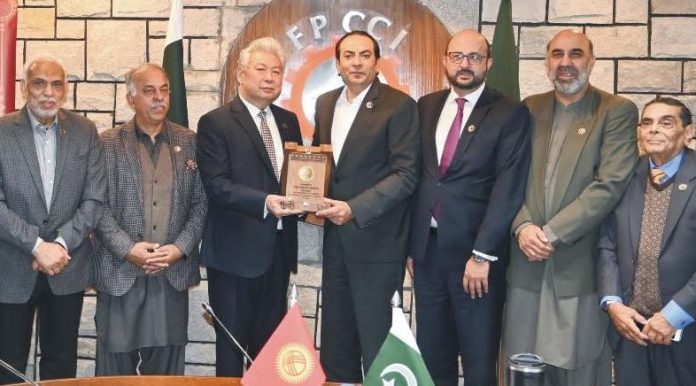
ISLAMABAD, FEB 28 /DNA/ – Awaz Baig Atakhanov, Ambassador of Kyrgyzstan, visited the Federation of Pakistan Chamber of Commerce and Industry. President FPCCI Atif Ikram Sheikh, Vice President Tariq Jadoon, Chairman Capital Office Karim Aziz Malik, Advisor to President Afshan Malik, Advisor to President Sheikh Pervez, Convenor Diplomatic Committee Muhammad Ahmed, Chairman Coordination Malik Sohail and others welcomed the Kyrgyz Ambassador.Talking about the ceremony organized on this occasion, the Kyrgyz ambassador said that strengthening relations with Pakistan is among the priorities of Kyrgyzstan, the establishment of a joint economic commission between the two countries is expected this year.Pakistan and Kyrgyzstan are brother countries, both countries are connected in culture and geographically, Pakistan and Kyrgyzstan are closer even the flight time from Islamabad to Bishkek is less than Karachi. FPCCI is playing a role in establishing relations with the international community.

The Kyrgyz Ambassador said that Pakistan and Kyrgyzstan Business Council will play a role in providing facilities to the business community of both countries. Last year, trade between the two countries was 16 million dollars, which they want to increase. Eighteen thousand Pakistani students are studying in Kyrgyzstan. We have increased the trade with China to 22 billion dollars annually.CPEC project has excellent highways CPEC will be the cheapest route for Central Asian countries. Trucks between Pakistan and Kyrgyzstan have to pass through Afghanistan. In the last 40 years, there have been several revolutions, including independence from the Soviet Union. There are direct flights between Kyrgyzstan and Pakistan, work is going on with Pakistan on CASA 1000, we have tripled the GDP rate in the last few years, Kyrgyzstan is rich in hydropower.Surplus electricity can be given to Pakistan in summer.

President Federation of Pakistan Chamber of Commerce and Industry (FPCCI) Atif Ikram Shaikh while addressing the event said that both Kyrgyzstan and Pakistan must protect common interests and increase business relations. Banking channels should be created to increase bilateral trade. There are important relations between the two countries. There is a need to increase economic ties for the prosperity of the people of both countries.

President of Pak-Kyrgyz Business Council Mubarak Rahim Khan while addressing the event said that Kyrgyz ambassadors are interested in learning Pakistani languages.It is important for both countries to promote trade and economic relations, the Kyrgyz ambassador can play an important role in promoting bilateral relations.

Embassies of Romania, Bulgaria, and Greece celebrate Ancient Spring Traditions At IMCG F 6/2 college

Embassies

DNA

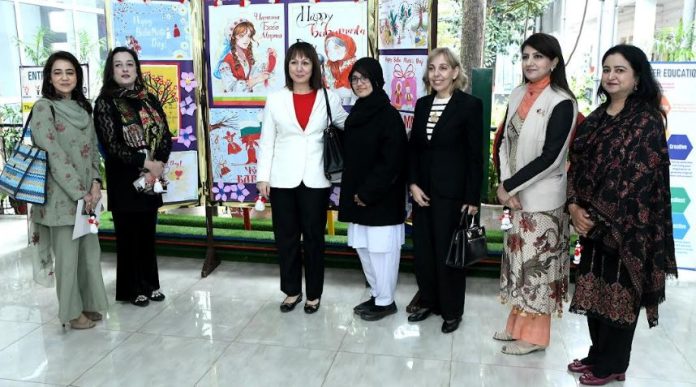
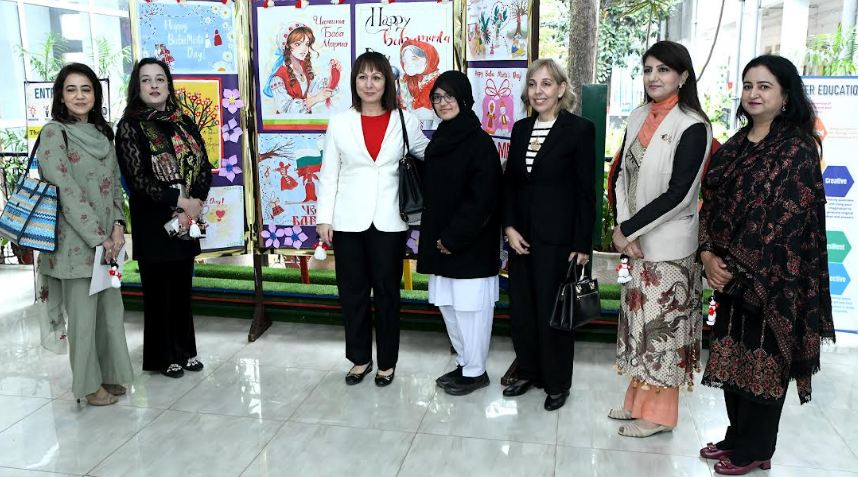
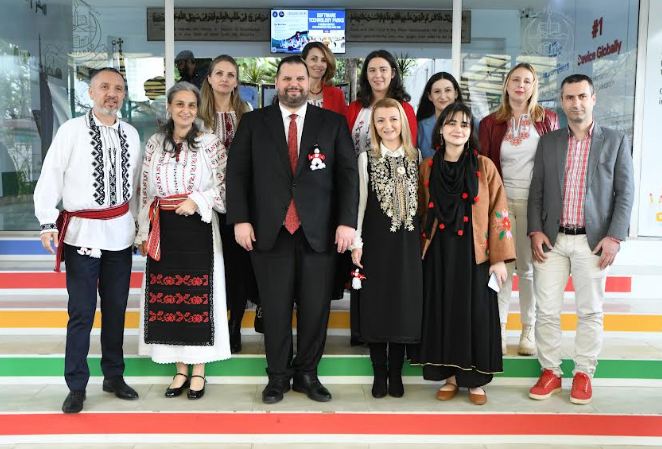
ISLAMABAD, FEB 28: The Embassies of Romania, Greece, and Bulgaria in collaboration with Ministry of Federal Education came together to celebrate the rich cultural traditions of Marţisor (Romania and Republic of Moldova), Martenitsa/мартеница (Bulgaria), and Martis/Μάρτης (Greece) at the Islamabad College for Girls, F-6/2 on 28 February 2025. This vibrant event, marking the arrival of spring, was hosted in alliance with the Ministry of Federal Education and Professional Training in the prestigious public institution of ICG.

These ancient customs, deeply rooted in the folklore of the three nations, symbolize renewal, hope, and the changing of seasons. The traditions involve the exchange of red and white woven symbols, which are worn as charms for good fortune and prosperity at the beginning of March.

Distinguished guests, faculty members, and students gathered to witness a colorful showcase of cultural performances, presentations, and interactive activities highlighting the shared heritage of Romania, Bulgaria, and Greece. Representatives from the respective embassies wearing traditional dresses delivered insightful remarks on the historical significance of these traditions, emphasizing the values of unity, friendship, and cultural appreciation.

Dr Dan Stoenescu, ambassador of Romania, added: “The red and white threads of the Marţisor symbolize rebirth, vitality and purity, strength and resilience – values deeply rooted in our culture and history – that we also share with the Pakistani people. As we wear and exchange Mărţișoare, we celebrate the spirit of unity and optimism. Marţisor’s recognition by UNESCO as part of the intangible cultural heritage of humanity, reinforces its significance beyond Romania and South-Eastern Europe.”

Ambassador of Bulgaria Irena Gancheva stated: “As we celebrate the beautiful Bulgarian and Balkan tradition of Martenitsa, we embrace a centuries-old custom that symbolizes health, happiness, and the arrival of spring. This tradition, deeply rooted in our culture, is a testament to our rich heritage and the values we cherish—friendship, unity, and renewal. As we exchange Martenitsi and wish each other ‘Chestita Baba Marta,’ we also share a piece of Bulgaria’s soul with the world. It is heartwarming to see this tradition resonate beyond our borders, connecting cultures and fostering goodwill.”

The Chargé d’Affaires of Greece Eleni Porichi also underlined: “Martis is a cherished Greek and Balkan tradition that welcomes the arrival of spring, symbolizing protection, health, and renewal. Wearing the red and white bracelet from March 1st reflects our deep connection to nature and the continuation of a custom rooted in ancient times. This simple yet meaningful tradition unites generations and reminds us of the beauty of seasonal change and new beginnings.”

The Federal Secretary for Education, Mr Mohyuddin Ahmad Wani in his message, expressed that such vibrant multicultural events bring together diverse communities to honor unity, heritage, and cultural exchange. He added that the traditions of Marţisor is a testament to the beauty of diversity and the strength of unity. Through this event, we aim to promote cross-cultural understanding and create meaningful connections among communities.

He expressed his gratitude to the embassies for fostering cultural exchange and providing students with an opportunity to experience global traditions firsthand. “Events like these not only enrich our students’ knowledge but also strengthen the bonds between Pakistan and these three European nations through shared customs and celebrations,” he said.

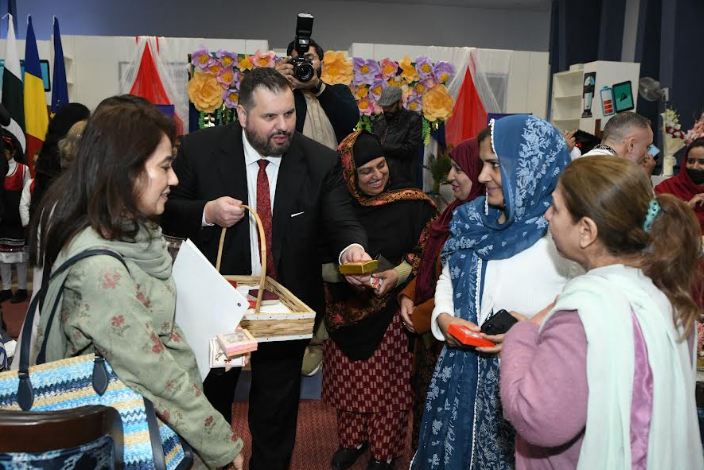
The event concluded with the symbolic distribution of Marţisor, Martenitsa, and Martis tokens among students and attendees, reinforcing the message of optimism and new beginnings that these traditions represent.

Nowshera mosque suicide blast claims at least 4 lives, injures 12

Nowshera mosque

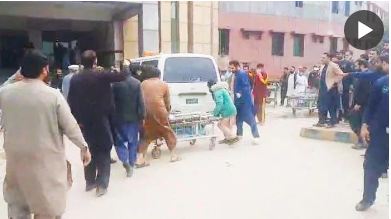
NOWSHERA: A top official of Darul Uloom Haqqania was among five people killed, while 12 others were injured in a suicide blast that targeted the historic seminary’s mosque in Nowshera, officials confirmed on Friday.

The bomb exploded in the front row after Friday prayers as worshippers were leaving the weekly congregation at the Darul Uloom Haqqania mosque in Akora Khattak, located about 60 kilometres (35 miles) east of Peshawar.

Khyber Pakhtunkhwa Inspector General Police (IGP) Zulfiqar Hameed told Geo News that Maulana Salman-ul-Haq Haqqani, the son of Maulana Anwar-ul-Haq Haqqani, was the target of the attack.

Maulana Salman, the vice chancellor of Darul Uloom Haqqania and emir of Jamiat Ulema-e-Islam-Sami (JUI-S), succumbed to his injuries as he was being given medical aid, the top cop said.

The official further said said that police teams were present at the site of explosion and a search was also underway in the surroundings. Forensics and investigation teams had been dispatched to the incident site and the district police officer was also present there, the IGP said.

This was the last Friday prayer before Ramadan, drawing a large crowd of the worshippers. The mosque is located inside the compound of the madrassa, whose students were set to go on leave, as it marked the final day of their academic year.

The sprawling campus is home to roughly 4,000 students who are fed, clothed and educated for free.

Security arrangements at the mosque include the presence of several policemen and a police mobile van, while seminary workers monitor visitors.

The mosque is situated at the centre of Darul Uloom Haqqania, with Dar-ul-Hadees adjacent to it. It is a large building where senior students pursue their studies. Nearby, there are hostels and residential quarters.

In response, the administration and medical staff of Peshawar’s Lady Reading Hospital (LRH) — which is around 45 minutes away from the blast site — were directed to remain prepared for treating the injured.

The hospital spokesperson said a high alert and emergency had been declared at the medical facility to deal with any situation.

Condemnations pour in
Khyber Pakhtunkhwa Chief Minister Ali Amin Gandapur strongly condemned the explosion, calling it a tragic and deplorable act.

He directed authorities to conduct a thorough investigation into all aspects of the incident and submit a comprehensive report.

The chief minister also instructed officials to ensure the best possible medical care for the injured.

“Targeting innocent people in a place of worship is an inhumane act,” Gandapur said, adding that no words were enough to condemn such an attack.

He emphasised that all available resources should be utilised to bring the perpetrators to justice.

In a statement, Jamiat Ulema-e-Islam-Fazl (JUI-F) spokesperson Aslam Ghauri, condemning the suicide blast, said that the incident in Akora Khattak was deeply tragic.

He urged party workers and volunteers to extend full cooperation in relief efforts. Ghauri also appealed to JUI-F members to donate as much blood as possible for the injured.

“We pray for the martyrs to be granted the highest ranks in the hereafter,” Ghauri added.

The Soaring Prices of Ramadan: A Betrayal of Islamic Values

The Soaring Prices of Ramadan: A Betrayal of Islamic Values

By: Muhammad Mohsin Iqbal

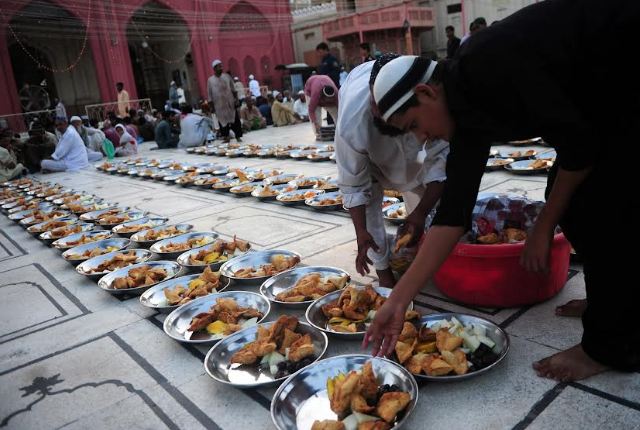
Ramadan is approaching, and even before its arrival, the prices of essential food items have already begun to soar. This phenomenon has become an annual occurrence in the Islamic Republic of Pakistan, where, instead of facilitating the people in this sacred month, market forces exploit the demand for profit. This stands in stark contrast to other Islamic countries, where governments and business communities work together to ensure that prices remain stable or even decrease in the spirit of Ramadan. Even Western nations, despite not being Muslim-majority, extend special discounts to accommodate their Muslim citizens, recognizing the importance of this Holy month. However, in Pakistan, the situation is completely reversed—rather than easing the financial burden, the cost of basic necessities doubles, making it increasingly difficult for ordinary people to afford the essentials required for Sehr and Iftar.

One may question whether boycotting these overpriced goods would resolve the crisis. While temporary boycotts can create momentary price fluctuations, they are not a long-term solution. The real problem lies deeper—within a system plagued by unchecked profiteering, weak regulation, and a lack of accountability. Shopkeepers often justify the rising prices by blaming wholesalers, who, in turn, claim that they are simply responding to market trends and supplier rates. This chain of excuses exposes a fundamental question: Who exactly is responsible? Is there no authority to regulate these behind-the-scenes forces driving inflation during Ramadan? When will this recurring issue be permanently resolved?

Islam provides a clear framework regarding fair trade and market ethics. The Holy Qur’an warns against deceit in business transactions: “Woe to those who give less [than due], who, when they take a measure from people, take in full. But if they give by measure or by weight to them, they cause loss” (Surah Al-Mutaffifin 83:1-3). The Prophet Muhammad (peace be upon him) also emphasized just dealings in trade, saying, “The merchants will be raised on the Day of Judgment as wicked except those who fear Allah, are honest, and speak the truth” (Tirmidhi). These teachings highlight that those who manipulate prices for personal gain, particularly during Ramadan, are engaging in a deeply unethical and un-Islamic practice. Islam not only discourages unfair pricing but also encourages honesty and compassion in business dealings, especially during times of religious significance.

If Islam is so explicit in condemning hoarding and price gouging, why does this practice persist in a country that claims to uphold Islamic principles? The failure to control artificial inflation during Ramadan is a collective moral and administrative failure. Administrative institutions responsible for price control either lack the enforcement capacity or are complicit in the problem. The business community, instead of embracing the spirit of generosity, sees the month as an opportunity for excessive profits. Consumers, though frustrated, often find themselves helpless, with no real alternatives.

This helplessness stems from several factors. First, there is a lack of stringent administrative oversight. Regulatory bodies often issue price control lists, but they remain ineffective due to poor enforcement and the influence of powerful business cartels. Second, the absence of consumer awareness and collective action allows this exploitation to continue. In countries where consumer rights are protected, price hikes of this nature would trigger investigations and penalties. However, in Pakistan, the common citizen rarely has the platform or resources to challenge such exploitation effectively. Additionally, the lack of coordination between government agencies, local administration, and market regulators creates loopholes that profiteers exploit without consequence.

The solution lies in a multi-pronged approach. The administration  must strengthen price control mechanisms and impose strict penalties on those who artificially inflate prices. Strict action should be taken against hoarders who withhold goods to create scarcity and drive up prices. At the same time, society must demand accountability, using consumer pressure and boycotts selectively against those businesses that engage in unethical practices. The role of religious leaders is also crucial; they should actively educate traders about their moral obligations in light of Islamic teachings and emphasize that exploiting consumers in Ramadan is not just an economic crime but a grave sin.

In addition, fostering a culture of corporate social responsibility is necessary. Businesses should be encouraged to adopt ethical pricing models and provide discounts during Ramadan rather than seeking excessive profits. The media can also play a pivotal role in exposing unjust market practices and pressuring policymakers to implement necessary reforms. Furthermore, Islamic banking and financial institutions can introduce interest-free micro-financing options to support small traders who struggle with high supplier costs, thereby reducing the need for excessive price hikes.

If Islamic values were truly upheld, the arrival of Ramadan in Pakistan would bring relief to the people rather than financial distress. Until there is a sincere effort to align economic practices with the ethical teachings of Islam, the cycle of price hikes and helplessness will continue. The question remains: When will we, as a society, rise above individual greed and embrace the true essence of Ramadan—a month of mercy, generosity, and communal well-being? Only through collective responsibility, strong governance, and adherence to Islamic principles can we hope to break free from this cycle of exploitation and create a just and equitable society for all.

Pakistan showcases maritime capabilities at Int’l Defence Exhibition 2025

Pakistan showcases maritime capabilities at Int’l Defence Exhibition 2025

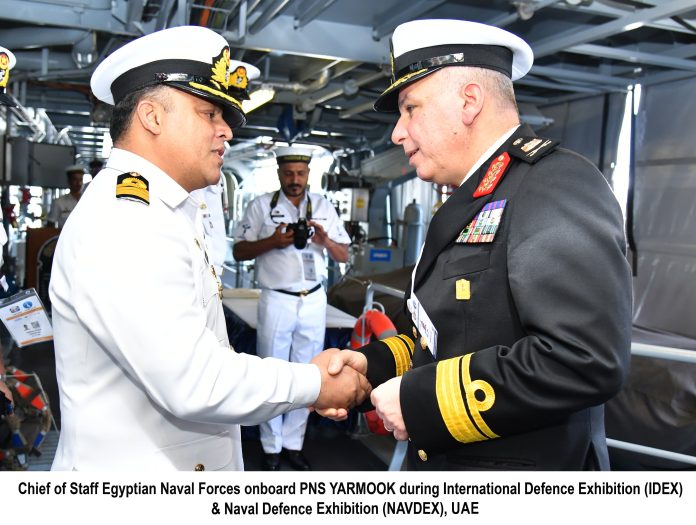
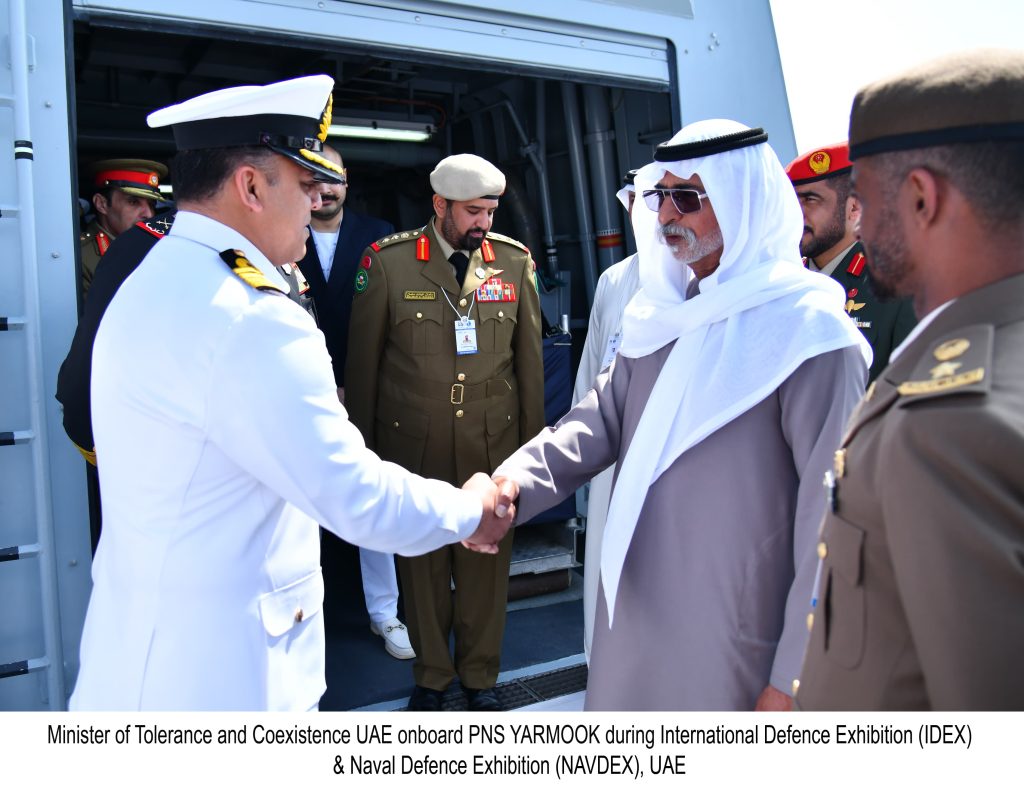
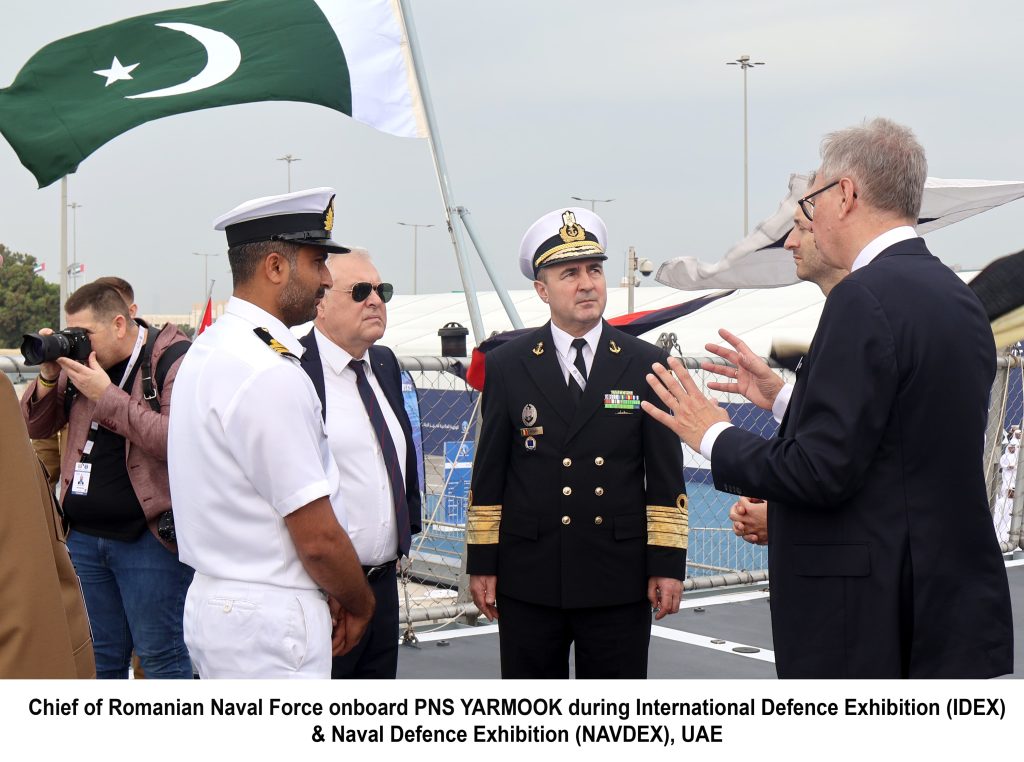
ISLAMABAD, FEB 28 /DNA/ – PNS YARMOOK, along with its embarked helicopter, visited Abu Dhabi to participate in the International Defence Exhibition (IDEX) and Naval Defence Exhibition (NAVDEX) 2025. The event saw participation from 65 countries, including naval vessels from eight nations.

Upon arrival, the ship was warmly received by the Ambassador of Pakistan to the UAE and the Head of the IDEX/NAVDEX Committee, UAE, amidst the melodious tunes of the UAE Navy Band. During the port visit, the Commanding Officer called on various dignitaries and discussed matters of mutual interest.

During its stay, PNS YARMOOK remained open to visitors and welcomed numerous officials from the armed forces, business, and corporate sectors. Distinguished visitors included the UAE’s Minister of Tolerance and Coexistence, Romania’s Minister of National Defence, Yemen’s Defence Minister, the Chief of the Romanian Naval Forces, the Chief of Staff of the Egyptian Naval Forces, the Commander of the Royal Saudi Naval Forces, the Commander of the Royal Bahrain Navy, and the CEO of DAMEN Shipyard. Additionally, the ship hosted Pakistan’s Secretary of Defence Production, the Ambassador of Pakistan to the UAE, the Deputy Chief of Naval Staff (Operations), representatives of the UAE Armed Forces, and other notable figures from the international and Pakistani communities.

Pakistan’s participation in NAVDEX 2025 highlights its strong defence ties with the UAE and its active role in global maritime security initiatives. Upon departure, PNS YARMOOK also conducted a passage exercise with the UAE Navy Ship AL EMARAT.

Trump Abandons Europe, Embraces China and Russia

Qamar Bashir

By: Qamar Bashir

After Trump, Europe seemed like an abandoned child—lost without direction and stripped of the security it once enjoyed under U.S. protection. This perception stems from my ability to read and write French, which allows me to follow discussions among French journalists, thinkers, and analysts on LinkedIn. These discussions often center on how long-standing alliances, once thought unbreakable, have crumbled while new, unexpected partnerships are taking shape.

Observing the transformation of the U.S. under Trump, both domestically and internationally has been fascinating. It was widely believed that while a U.S. president wielded influence over other nations, they had little power to challenge the entrenched bureaucracy and military establishment that truly governed the country. Likewise, it was considered unthinkable that the U.S. and Europe could diverge so significantly on both domestic and international fronts.

Trump disproved both assumptions. In his second term, he successfully dismantled key elements of the civilian and military bureaucracy—institutions that had long exercised control over both the presidency and the nation’s political landscape. Once dominant, these institutions are now struggling to maintain relevance, no longer wielding the president as a mere pawn.

He also shattered the notion that U.S.-European relations were unshakable and that hostility toward China and Russia was as ingrained as the transatlantic partnership.

In his first month, Trump alarmed Europe with threats to take over Greenland and proposed cutting aid that was fueling the Ukraine-Russia war. He accused Europe of exploiting U.S. taxpayers to sustain NATO, while failing to make its fair contribution. Simultaneously, he engaged diplomatically with President Putin in Russia, pursued economic cooperation with China, and fostered a more conciliatory approach towards President Xi. His softer stance on Taiwan signaled a significant departure from previous U.S. policies.

Trump also blamed the Biden administration for igniting the Russia-Ukraine war, asserting that Europe’s push to bring Ukraine under NATO was illogical and provoked Russian military intervention. While Europe framed the war as a fight for its survival, Trump viewed it as unnecessary and avoidable. He condemned the loss of young soldiers and civilians on both sides as tragic and committed to ending the conflict through negotiations—bypassing Europe entirely by proposing Saudi Arabia as a mediator.

Trump is known for his unpredictability and maverick nature, often shifting from one conviction to its complete opposite. However, his current stance—consistently advocating against Europe while favoring China and Russia—signals a geopolitical shift unlike anything seen in the past two centuries.

He seems to have recognized that maintaining close ties with Europe, despite its wealth, has been costly for the U.S. He believes Europe has relied on American taxpayers while fueling unnecessary wars at America’s expense. He also sees Europe losing its edge in scientific discovery, declining in global market influence, lacking control over rare earth metals—now crucial for modern industries—and experiencing economic stagnation for decades.

In contrast, Trump views the future as belonging to China, Japan, Korea, India, Singapore, the Middle East, and other emerging economies that are steadily increasing their share in global trade, investment, and business.

As of 2024, U.S. trade patterns highlight a shift toward Asia and North America, with Mexico ($505B), China ($438B), and Canada ($412B) as its top exporters, while Germany ($160B) is the only European nation in the top ten, underscoring Europe’s diminishing role in U.S. imports.

On the export side, the U.S.’s largest trade partners are Canada ($349.4B), Mexico ($334.0B), China ($143.5B), Japan ($79.7B), and Germany ($75.6B), reinforcing North America’s strong economic ties with the U.S. Despite trade tensions, China remains a key trade partner.

Meanwhile, the largest holders of U.S. dollar reserves are China ($3.2T), Japan ($1.2T), Switzerland ($953B), India ($638B), and Russia ($621B), reflecting the dollar’s continued dominance in global finance, accounting for 59% of the world’s

These trends align with Trump’s push to reshape U.S.-Europe relations, criticizing Europe’s economic dependence while pivoting toward Asia and North America as the dominant trade and investment partners.

European analysts, journalists, and thinkers are deeply concerned about the United States’ strategic pivot away from Europe, instead forging closer ties with Russia and China. This shift marks a significant departure from traditional transatlantic alliances, prompting European leaders to push for increased defense spending and a more assertive foreign policy.

Germany’s newly elected chancellor, Friedrich Merz, has stressed the urgency of strengthening Europe’s security independence, acknowledging the changing geopolitical landscape.

Likewise, the European Union is actively enhancing its defense capabilities, recognizing the necessity of self-reliance as U.S. support becomes increasingly unpredictable.

European leaders, including UK Prime Minister Keir Starmer and French President Emmanuel Macron, have taken diplomatic steps to ensure continued support for Ukraine, advocating for increased defense spending and even the potential deployment of peacekeeping troops.

These initiatives reflect a decisive shift toward European self-reliance in defense, highlighting the continent’s determination to address security challenges independently in an evolving geopolitical environment.

The honeymoon period between the USA and Europe is over. Under Trump, besides blaming Europe to exploit the USA, he blamed European nations for straying from core principles of media and religious freedom while undermining democratic values—the very foundation of the U.S.-Europe alliance. In contrast, Trump’s administration has embraced China as its preferred partner for trade, investment, business, and cultural ties while also aligning with Russia’s position on the Russia-Ukraine conflict.

China and Russia are relieved as Trump’s “America First” philosophy begins to take shape. This policy can now be fully understood: alliances, no matter how old or strong, no longer define U.S. strategy. Instead, America’s own interests take precedence. This shift signifies that the U.S. has detached itself from historical commitments and burdens, repositioning itself as a free agent on the global stage.

In this recalibrated geopolitical posture, the U.S. sees its strategic interests better served through alliances with China, Russia, and other emerging powers—rather than Europe.

By: Qamar Bashir

 Press Secretary to the President (Rtd)

 Former Press Minister at Embassy of Pakistan to France

 Former MD, SRBC

 Macomb, Detroit, Michigan

Stay Connected

64FansLike
60FollowersFollow

Latest Reviews

Exchange Rates

USD - United States Dollar
EUR
1.17
GBP
1.35
AUD
0.72
CAD
0.73