Home Blog Page 658

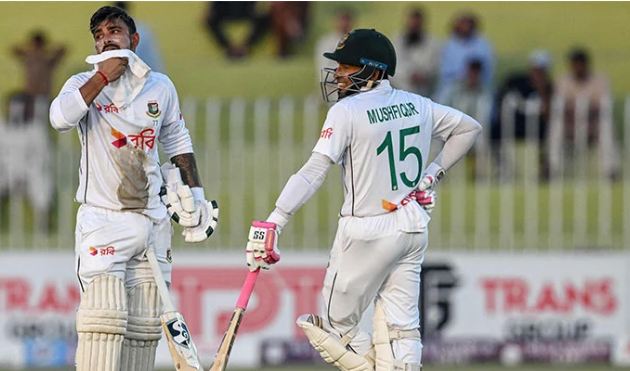
Pakistan strike early as Bangladesh close in on 448-run total on fourth day

Pakistan strike early as Bangladesh close in on 448-run total on fourth day

ISLAMABAD, AUG 24: Pakistan on Saturday got an early breakthrough after Naseem Shah bagged the wicket of Liton Das as Bangladesh strive towards reaching the national side’s 448-run total during the fourth day of the first Test being played at Rawalpindi Cricket Stadium.

Bangladesh’s veteran batter Mushfiqur Rahim (67*) and Liton Das (56) continued their innings from 316-5 today, however, the latter fell prey to Shah and was caught behind while attempting to play a shot outside off stump.

Currently, Bangladesh are at 333-6 trailing behind 115 runs in the first innings.

A day earlier, the visitors put up a valiant fight on the third day after losing two early wickets of Zakir Hasan and skipper Najmul Hossain Shanto courtesy of Shadman Islam and Mominul Haque’s partnership.

The guests began their innings at 27 for no loss at the start of the third day. However, in the fifth over of day three, which was 17th overall, Hasan tried to play a shot at cover, but he got an outside edge on Naseem Shah’s delivery and Mohammad Rizwan took a brilliant catch to end his innings.

Soon after Hasan’s dismissal, the hosts got another breakthrough with Khurram Shahzad removing skipper Shanto’s stumps, leaving the visitors at 53-2 in 27 overs.

Pakistan managed to get wickets later in the day as Shahzad removed Haque (50 off 76) while Mohammad Ali bowled Islam out for 93 runs.

Saim Ayub provided another breakthrough to Pakistan by removing the experienced Shakib Al Hasan but Rahim and Das formed a 98-run partnership which strengthened their grip on the Test.

It is to be noted that the Shaan Masood-led side had declared their innings on the second day at 448-6 while Rizwan and Shaheen Shah Afridi were still on the crease.

India’s Shikhar Dhawan retires from international, domestic cricket

India's Shikhar Dhawan retires from international, domestic cricket

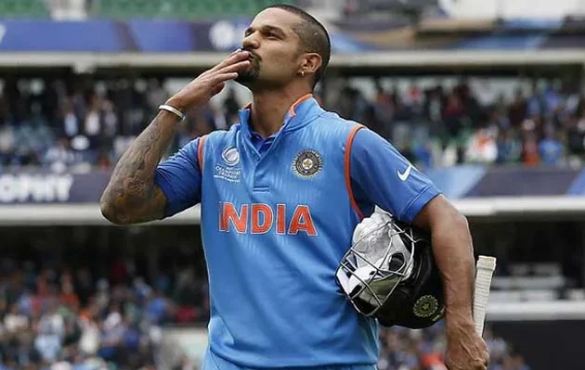
ISLAMABAD, AUG 24: Indian opening batsman Shikhar Dhawan on Saturday announced his retirement from international and domestic cricket, saying he has achieved his dream of playing for the national side.

“I only had one dream and that was to play for India and I even achieved that,” said the 38-year-old cricketer in a video message, thanking those who supported him throughout his career.

Dhawan said he was thankful to supporters including his family, his childhood coach and the team he played alongside for years.

“I would also like to thank my team with whom I have played cricket for so long. I got another family, I got name, fame and love of all the fans,” he said.

“There is a saying you need to turn the page to read the full story. That’s what I am going to do. I am announcing my retirement from international and domestic cricket,” said the batter.

Dhawan said now that he is bidding farewell to his cricket journey, his heart is at peace knowing that he played for his country.

The Indian cricketer made his debut in 2010 against Australia in Visakhapatnam and amassed over 10,000 runs in international cricket.

His impressive career includes 24 centuries — 17 in one-day internationals and seven in Tests.

Dhawan was also a part of the national squad which won the ICC Champions Trophy in 2013 under MS Dhoni’s captaincy.

He was the tournament’s leading run-scorer, accumulating 363 runs in 5 matches at an average of 90.75, with two centuries and one fifty.

Saudi Arabia to host a donor conference

Saudi Arabia to host a donor conference

JEDDAH, AUG 23 /DNA/ – In response to the acute humanitarian crisis in Nigeria, Niger, Chad, Cameroon, Burkina Faso, and Mali, the Kingdom of Saudi Arabia has announced that it will host a high-level ministerial donor conference with the support of the Organization of Islamic Cooperation (OIC) on October 26, 2024.

The United Nations estimates nearly 33 million people need humanitarian assistance and protection across the region, including around 11 million people who have been internally displaced and refugees in the Sahel and Lake Chad Region. The conference, co- hosted by the King Salman Humanitarian Aid and Relief Centre (KSrelief) and Organization of Islamic Cooperation (OIC) in cooperation with the United Nations Office for the Coordination of Humanitarian Affairs (OCHA) and the United Nations High Commissioner for Refugees (UNHCR), aims to mobilize resources and coordinate efforts to provide critical assistance to save lives, protect civilians and promote efforts to help affected people emerge from crisis.

The Sahel and Lake Chad countries have been facing a multifaceted crisis for over a decade. The region encounters significant challenges, resulting in ongoing social and economic instability, and disruption of livelihoods. Furthermore, the drying up of Lake Chad, a lifeline for millions, has exacerbated the humanitarian situation, necessitating urgent intervention.

The conference seeks to mobilize resources for humanitarian and development initiatives targeting the affected population, including displaced people and refugees, with a particular focus on UN-coordinated humanitarian response plans (HRPs). Other key goals include raising awareness of the multifaceted crisis and how to address it; building strong partnerships to promote an effective humanitarian response and greater support for longer-term solutions.

His Excellency Dr. Abdullah Al Rabeeah, Supervisor General of KSrelief, stated, “We recognize the importance of supporting the people of the Sahel and Lake Chad regions. This conference is a critical step towards mobilizing the necessary resources and forging partnerships to address the pressing humanitarian needs in these areas. Jointly, we can bring hope and relief to millions.”

“I am proud of our role in the implementation of the Resolution by the Council of Foreign Ministers of the Organization of Islamic Cooperation. This Donors’ Conference seeks to mobilize humanitarian assistance in support of refugees and displaced persons in the Sahel and Lake Chad regions. To that end, I am calling on OIC donor Member States, donor Institutions, and international partners to seize this opportunity and extend the necessary financial resources to help improve the conditions of vulnerable communities in these troubled regions”, said the OIC Secretary-General His Excellency Hissein Brahim Taha.

“The Sahel and Lake Chad Basin are facing an unprecedented crisis,” said Acting Under-Secretary-General for Humanitarian Affairs and Emergency Relief Coordinator Joyce Msuya. “This conference represents a critical opportunity for the international community and affected countries to come together to mobilize more resources and more support – not just for the immediate humanitarian response, but to help the region emerge from crisis and realize its enormous potential.”

“Conflict, instability, and violence continue to drive millions to flee their homes in the Sahel and the Lake Chad basin – an area of the world that must increasingly contend with the destabilizing effects of climate change and food insecurity. We must spare no effort to assist forcibly displaced populations and the communities that host them,” said the United Nations High Commissioner for Refugees Filippo Grandi. “We are grateful to the Kingdom of Saudi Arabia, the OIC and our partners for their efforts to mobilize attention and the resources needed to address the severe funding shortage plaguing the region, to support refugees and populations in need.”

The conference will host a high-level, facilitated discussion to address the pressing needs of vulnerable communities in the affected regions.

Khwaja Hoti moves Peshawar High Court against KP wheat scam, asks Court to direct NAB for investigation

Khwaja Hoti moves Peshawar High Court against KP wheat scam

From Our Correspondent

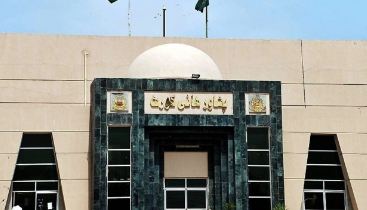
 PESHAWAR, AUG 23 /DNA/ – Former Federal Minister , Nawabzada Khawaja Muhammad Khan Hoti, Hoti filed a constitutional petition in Peshawar High Court seeking Court’s direction for probe into the KP wheat scam. The Petition filed through Saleem Shah Hoti advocate has expressed no trust over the three-member Anti-Corruption Committee and dubbed it as an attempt to protect the responsible persons.

The Petitioner has arraigned  as respondents Sardar Ali Amin Gandapur, Chief Minister KP, Zahir Shah Toru, Provincial Minister for Food Peshawar, Government of Khyber Pakhtunkhwa through Chief Secretary Civil Secretary Peshawar, Secretary Food, Brig (Retd) Musadiq Abbasi, Advisor to Chief Minister KP on Anti-Corruption, Qazi Muhammad Anwar, Senior Advocate Peshawar , Member Anti-Corruption Committee, Shah Farman, Former Governor KP and Member Anti-Corruption Committee , Shakeel Ahmad MPA , Muhammad Atif Khan PTI MNA, Junaid Akber PTI MNA, Director Food, Director General, Anti-Corruption Establishment KP, Chairman, National Accountability Bureau (NAB) , Islamabad and Director General, National Accountability Bureau (NAB), KP. 

The Petitioner said that the total population of KP has been estimated as 40.8 million and the total wheat requirement is 124 Kg/ per head per annum which comes to 5.059 million metric tons.  As per the Agriculture Department the expected local production of wheat was estimated as 1.500 million metric ton (30 %). Hence the shortfall was estimated as 3.559 million Metric tons. In order to overcome the shortfall, the KP government decided to purchase 3.5 million metric tons of wheat from open markets of Punjab and KP after the approval of Chief Minister KP, he added.

Khwaja Hoti said that in view of above the Food Department had established 21 wheat procurement centres at Peshawar, Nowshera, Swabi, Charsadda, Mardan, Malakand, Buner, Lower Dir, Upper Dir, Swat, Haripur, Abbottabad, Battagram, Kohistan, Mansehra, Kohat, Hangu, Karak, Bannu, Lakki Marwat and D.I. Khan. In order to oversee, he continued,  the procurement process, ‘Monitoring Committees’ comprising the respective Deputy Commissioners and District Food Controllers had been established. He contended that the officers of NAB and Anti-Corruption Establishment were also included; however they reportedly distanced themselves from these Committees after alleged allegations of corrupt practices and irregularities.

“ The KP government had set the price of 40 Kg of wheat at Rs 3900/- and had capped the purchase limit from each dealer and farmer at 500 tons on the pretext of transparency” he further said. Hoti said that government had to purchase 0.6 million metric tons of wheat for the years 2024-25. As such 0.3, he maintained,  million metric tons of wheat  from open markets in Punjab and KP and another 0.3 million metric tons wheat from Pakistan Agricultural Storage and Services Corporation ( PASSCO).  He alleged that market price of 100 kg wheat in Punjab was Rs 8000/- but the same quantity had been procured at Rs 9750 or more excessive prices. The brokers exploited this discrepancy in process and they with collaboration with Respondents No 1, 2 , Chief Minister and Food Minister and Food Department while buying the wheat cheaply from Punjab’s farmers sold out the same quantity at exorbitant and inflated prices to the KP Government, Which caused losses to tunes of billion rupees to the government exchequer.

He contended that in the wake of the alleged wheat scandal unearthed the four officers of Food Department have been suspended and one DFC in Kohat was removed as per reports.

Hoti accused Chief Minister and Food Minister and host of others are allegedly involved in this mega corruption scandal and the former were hell-bent to protect themselves and others from legal action through self-proclaimed Anti-Corruption Committee .He alleged KP Chief Minister for hushing up the matter through the establishment of  a three-member Anti-Corruption Committee, including Brig (Retd) Musadique Abbasi, Qazi Muhammad Anwar and Shah Farman.

The Anti-Corruption Committee members are the hard-core members of ruling PTI and handpicked persons of the Chief Minister. The Committee has recently inquired the corruption charges leveled against the a Provincial Minister Shakeel Ahmad and on the recommendations of this Committee, the Chief Minister  has de-notified the provincial Minister, Shakeel Ahmad. The Committee has recently started inquiry in ‘wheat Scandal’ and the provincial Food Minister  has been summoned to appear before it.

 He flayed that this Committee has no legal and constitutional status and it has been toeing the lines of the Chief Minister and Food Minister which is aimed at protecting the big players in the wheat scandal and as such this committee has no legal sanctity and public trust. Therefore this politicized and handpicked committee has lost its worth to inquire the matter.

The petitioner asked the Court to halt the proceedings of the anti-corruption committee  and direct the NAB to make transparent inquiry/investigation into the mega Wheat Scam.

Pakistan-Ethiopia Fraternity Park to be established in Islamabad next month

Pakistan-Ethiopia Fraternity Park to be established in Islamabad next month

ISLAMABAD, AUG 23 /DNA/ – The Governments of the Islamic Republic of Pakistan and the Federal Democratic Republic of Ethiopia on Friday announced to establish a dedicated park in Islamabad next month to foster fraternity and brotherhood between the two countries under the ongoing bilateral cooperation in the area of climate change.

The announcement to this effect was made during a press briefing jointly addressed by H.E.Jemal Beker Abdula, Special Envoy and Ambassador of Ethiopia to Pakistan, H.E. Romina Khursheed Alam, Coordinator to the Prime Minister on Climate Change, and H.E. Muhammad Ali Randhawa, Chairman of the Capital Development Authority (CDA) and Commissioner Islamabad.

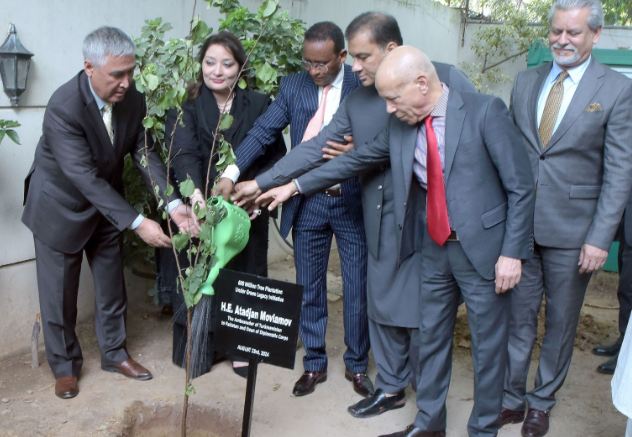
The joint press briefing was held here at the Ethiopia Embassy Islamabad, which was followed by a tree plantation ceremony which was aimed at contributing to Ethiopia’s record-breaking initiative of planting 600 million seedlings in one day under the globally recognized Green Legacy Initiative of H.E. Dr. Abiy Ahmed, Prime Minister of Ethiopia.

Individuals from all walks of life including government officials, diplomatic community, academicians, religious and business fraternity, youth, civil society and media gathered at the Ethiopia Embassy Islamabad and planted saplings of fruits, vegetables and other species under the Green Legacy Initiative.

Addressing the press briefing, H.E. Ambassador Jemal Beker Abdula expressed gratitude to the Government and the people of Pakistan for contributing to 600 million tree plantation initiative of the Government of Ethiopia.

The Ambassador recalled the launch of Ethio-Pakistan Fraternity under the Green Legacy Initiative programme across Pakistan under which not only trees were planted across the country, but also Ethio-Pakistan Fraternity Parks and Enclaves have also been established.

“Climate Change is no more a buzzword rather it is a reality and for that matter we all have to join our forces to deal with the looming threat which is taking more lives than any other global crises,” said the Ambassador while announcing the launch of the 2nd round of Ethio-Pakistan Fraternity under the Green Legacy Initiative programme in Pakistan.

He announced that a dedicated park for Ethiopia-Pakistan friendship was being established in Islamabad in collaboration with the Climate Change Ministry and the CDA. The Ethiopian Embassy would look after the park after its establishment, he added.

Coordinator the Prime Minister on Climate Change H.E. Romina Khursheed said she and the Ambassador of Ethiopia initiated a collaboration in areas of climate change and sustainable development goals since 2022.

She recalled the launch of Ethio-Pakistan Fraternity Programme last year through a collaboration between her office and the Ethiopian Embassy Islamabad under the Green Legacy Initiative of H.E. Dr. Abiy Ahmed, Prime Minister of Ethiopia, which is a laudable initiative.

“This Green Legacy initiative stands as beacon of hope for the world,” she said, adding that Pakistan was looking forward to learn from the best practices of Ethiopia.

She said the Government of Pakistan was also scaling up the Green Pakistan programme which was launched under the leadership of former Prime Minister Nawaz Sharif and received recognition globally.

The CDA Chairman appreciated Ethiopia Ambassador H.E. Jemal Beker for his efforts to tackle climate change which needed collective efforts for being a global problem.

He said the CDA would collaborate with the Ethiopian Embassy Islamabad for promoting the green initiative.

The chairman highlighted selfie with plant initiative launched by the CDA to mobilize the people for plantation.

Pakistan wants to be a part of the Asian Century, but not any conflicts: Mushahid Hussain Syed

Pakistan wants to be a part of the Asian Century, but not any conflicts: Mushahid Hussain Syed

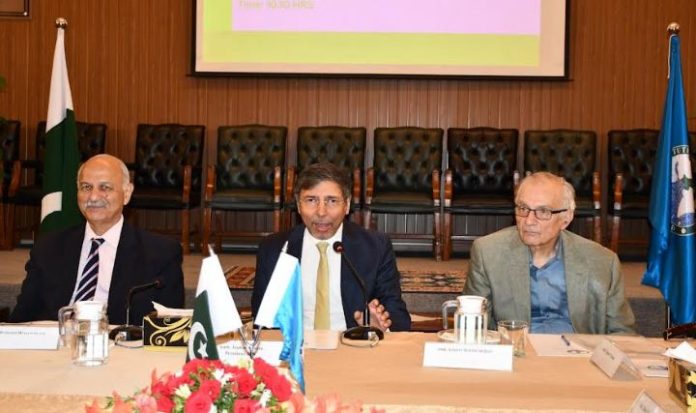
ISLAMABAD, AUG 23: /DNA/ – “Pakistan is against a regional situation similar to witnessed during Cold war years  and disagrees with joining camps to counter any country, especially against its trusted friend China”. This was stated by Senator Mushahid Hussain Sayed as a keynote speaker at an event titled, “US’ Asia-Pacific Strategy: Implications for Pakistan-India Relations”, organized by the Institute of Regional Studies (IRS). 

Another keynote speaker, Ambassador Ashraf Jehangir Qazi stressed that the change of nomenclature Asia-Pacific to Indo-Pacific for a containment strategy by the US had placed India in a central role fancying targeting China. But China was unlike the former Soviet Union, and could not be challenged and defeated, by no means through empowering India. He stressed that to avoid a dangerous global conflict, Pakistan must stay clear of any part in such hostile endeavours. He also emphasized that China had never projected itself as a super power but only emerging global power. 

Earlier, In his opening remarks, President IRS, Ambassador Jauhar Saleem, brought out how  the emerging ‘Cold War’ was fraught with grave risks for global peace and stability. He also underlined that India was misusing the western support being extended to build it as a counterweight to China to instead pursue its hegemonic policies in South Asia, and undermine Pakistan. The West was mistaken in seeing India  as a reliable partner, since India was adept at playing all sides in the name of  so called strategic autonomy. 

Ambassador Zameer Akram, adviser SPD, pointed out that under the so called Indo- Pacific strategy, many analysts believed that the US intended to act as a full-spectrum dominant power, with evident control of sea lanes to counter China’s rise. For this objective, the US had even expanded the scope of NATO from Europe to Middle East and Asia, so to contain China. He also highlighted that the US backing had emboldened India which  was emerging as an aggressor in the region.

Professor Zafar Jaspal stated that India and the US already have a threshold alliance. In view of the aggressive policies of Prime Minister Modi, capacity building of India by the US as a non-NATO ally posed a serious challenge for Pakistan. However, while India was ostensibly working for American interests and receiving assistance accordingly, its regional challenges were multiplying because of its aggressiveness which was exposing its limitations and duplicity.

Prominent security expert, Syed Muhammad Ali noted that China doesn’t seek regional and global hegemon status; rather China was economically countering US influence in regions all over the world by building mutually beneficial partnerships.  It was also noted that within the region, India’s act of aggression was witnessed in case of Pulwama, Galwan, and in IIOJ&K. Exploiting US support, India had been getting away with its aggressive actions on foreign lands, including targeted terrorism.

The event was attended by a latge number of diplomats, academicians, researchers, journalists and students.

The Road to Integration: Reviewing the progress on KP-FATA Merger Plan

The Road to Integration: Reviewing the progress on KP-FATA Merger Plan

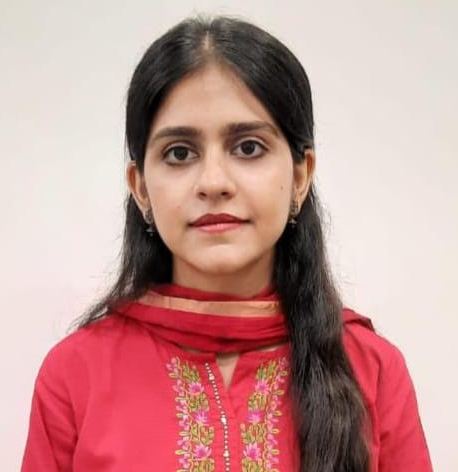
Naba Fatima

In 2018, the 25th Amendment to the Constitution of Pakistan that merged the erstwhile Federally Administered Tribal Areas (FATA) with Khyber Pakhtunkhwa (KP) was heralded as a milestone for inclusive governance and regional development. This ambitious plan was aimed to integrate the tribal areas into the mainstream political and administrative structure. It promised democratic reforms, economic development, and improved security against extremism.However, the recent surge of violence in Parachinar, sparked by a seemingly minor land disputethat escalated into a sectarian strife, casts a dark shadow over these promises. This incident shifts attention towards the original agenda defined during the constitutional amendment and its execution over the years.

The FATA-KP merger plan was initially aimed to address the severe economic challenges faced by the tribal region, where the poverty ration stands at 73.7 percent with most of the people lacking basic health and education facilities. The plan required PKR 121 billion annually to support a comprehensive socio-economic development agenda. However, the lack of commitment from the federal government and provinces to implement necessary budget adjustments in the National Finance Commission (NFC) Award created financial uncertainty. This led to distrust and tension among the people of erstwhile FATA, who feared losing their economic independence without seeing the promised development.

Additionally, FATA’s status as an open market for smuggled goods has been disrupted withafter the execution of merger plan. Traditionally, due to limited development and employment opportunities, smuggling became an important source of income for most of the people of these tribal areas. The locals, unfamiliar with state laws, considered smuggling as Tijarat, viewing it as a legitimate mean of income. However, the regulation of borders and intensified crackdowns against smuggling without adequate development projects has escalated tensions in the region, halting its complete integration.

Aggravating these economic issues are the challenges surrounding land ownership that are rifting sectarian tensions in the region. The tribal areas have a unique land tenure system, which ischaracterised by collective tribal ownership anddiffers markedly from the rest of Pakistan. The imposition of KP’s laws on a region with deeply entrenched tribal land ownership practices has led to confusion and conflict. Local administrators are struggling to reconcile these differences, resulting in disputes over land rights and bureaucratic inefficiencies. The transition from collective to individual land ownership is disrupting longstanding tribal balances. The economic constraints, accompanied with the disruption of traditional income sources like smuggling and unresolved land ownership issues are exacerbating tensions and security threats in the region.

To address these issues, the stakeholdersincluding tribal leaders, local government officials, and Non-Governmental Organisations (NGOs) need to be engaged through an inclusive approach. To mitigate economic challenges, high-impact development projects in the territory could be prioritised. For instance, Pakistan could prioritise western corridor of China Pakistan Economic Corridor (CPEC) and incentivise local Small and Medium Enterprises (SMEs) in the tribal area’s Special Economic Zones (SEZs). Meanwhile, instead of budget cuts in NFC Awards, provinces could be encouraged to participate in the development of erstwhile FATA through capacity-building initiatives. For instance, Punjab’s Education Ministry could send teams and staff to support underdeveloped schools in tribal areas. Such initiatives could acceleratedevelopment and foster national integration.

For a better land ownership model, the cultural significance of Pakhtoonwali could be adhered to and a hybrid model be introduced by mapping traditional land use and defining zones for individual ownership. The transition from tribal to individual ownership could be implemented in selected pilot areas with community agreements. A regular assessment and feedback mechanism could also be regularised to monitor the model’s impact and guide its gradual expansion.

In conclusion, the FATA-KP merger’s promise of inclusive governance and development continues tobe marred by significant challenges. To address these issues,prioritising high-impact development projects and encouraging provincial involvement can enhance national integration and ensure the merger’s success.  A hybrid land ownership model is also required that respects tribal customs and state laws for fulfilling the region’s aspirations for stability and prosperity.

Naba Fatima is a researcher at the Centre for Aerospace and Security Studies (CASS), Lahore. She can be reached at [email protected]

PDMAs and coastal communities strengthen disaster risk management with support from the Government of Japan and UNDP

PDMAs and coastal communities strengthen disaster risk management with support from the Government of Japan and UNDP

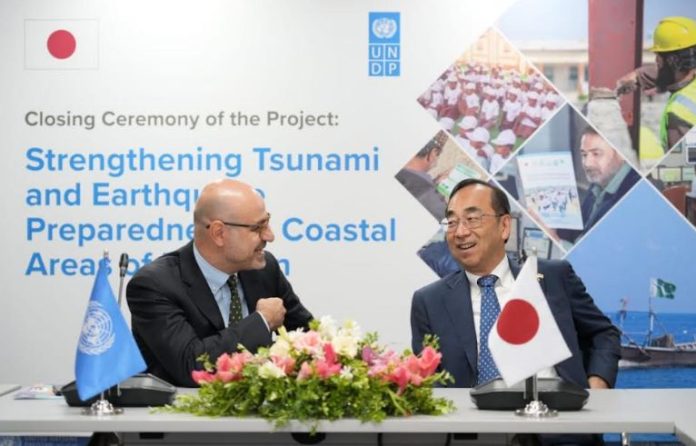
ISLAMABAD, AUG 23 /DNA/ – Supported by the Government of Japan and in partnership with the Economic Affairs Division and PDMAs in Sindh and Balochistan, UNDP has jointly conducted a closing ceremony to commemorate the successful completion of USD 3.7 Million project ‘Strengthening Tsunami and Earthquake Preparedness in Coastal Areas of Pakistan’ in Islamabad today.

The project has concluded, but resilient empowered, knowledgeable communities and institutions remain, marking the start of a new chapter in Tsunami & Earthquake Preparedness in Coastal Areas in Pakistan. The project’s success in strengthening disaster preparedness and response has laid a foundation for continued resilience in Pakistan’s coastal communities..

Through this project, the UNDP has addressed a critical development challenge in the coastal districts of Malir, West/Keamari Karachi, and Gwadar in the provinces of Sindh and Balochistan, by reducing tsunami risks and their potential impact on coastal communities in Pakistan. This was achieved through the revision of guidelines for tsunami and earthquake preparedness and enhancing the disaster response and preparedness capacity of vulnerable coastal communities. The project also prioritized gender equity in its approach to mitigate coastal hazards.

Mr. Wajahat Ahmed, Assistant Director (Civil), PDMA, Sindh, “This project marks a significant milestone in our collective efforts to enhance disaster resilience. It has testified to the power of collaboration, expertise, and a shared commitment to saving lives. Let us take the lessons learned and apply them to further develop the resilience of vulnerable communities in the Coastal Belt, making them more resilient to natural disasters.”

Addressing the ceremony, the Ambassador of Japan to Pakistan, H.E Mr. Mitsuhiro Wada, underlined, “With its historical frequency of natural disasters, Japan has gained significant knowledge and experience in climate and disaster risk management, preparedness, and response. Japan’s Development Cooperation Charter highlights the importance of disaster risk reduction for realizing poverty eradication and sustainable development. Japan is committed to promoting these efforts that leverage Japan’s expertise in this area.”

UNDP Pakistan Resident Representative Dr. Samuel Rizk said on the occasion, “The project has concluded, but the resilient, empowered, and knowledgeable communities and institutions it leaves behind will continue to make a difference. Our collaboration with Japan has been instrumental in building a more resilient future.”

Pak-Afghan liaison committee demands extension in TAD implementation allow trucks clearance

Pak-Afghan liaison committee demands extension in TAD implementation allow trucks clearance

From Our Correspondent 

PESHAWAR, AUG 23 /DNA/ – Businessmen dealing in Pak-Afghan trade have demanded a two months delay in implementation of recently enforced Temporary Admission Documentation (TAD) policy to allow clearance of long queue of trucks standing on both side of the border in wait of permission for goods delivery. 

The demand was made during a meeting of Pak-Afghan Liaison Committee held at Directorate of Transit Trade Model Custom Collectorate with Additional Director Transit Trade, Dr. Tahir Iqbal Khattak. 

According to a press release issued here on Friday, the meeting was attended by Coordinator Pak-Afghan Joint Chamber of Commerce and Industry (PAJCCI), Zia-ul-Haq Sarhadi, Former SVP SCCI, Engr Manzoor Elahi, President Khyber Chamber of Commerce and Industry, Syed Jawad Hussain Kazmi, VP Frontier Custom Agents Association, Imtiaz Ahmad Ali, All Pakistan Customs Clearing Agents Association Vice Chairman Farooq Ahmed, Commercial Attache Afghan Consulate, Waheedullah Himat, Transport Attache, Syed Muhammad Faiz, President North Waziristan Chamber of Commerce and Industry, Qadirullah and others. 

Speaking at the meeting, Coordinator PAJCCI, Zia-ul-Haq Sarhadi said the biggest issue faced by businessmen dealing in Pak-Afghan trade is difficulties being caused by implementation of TAD policy. 

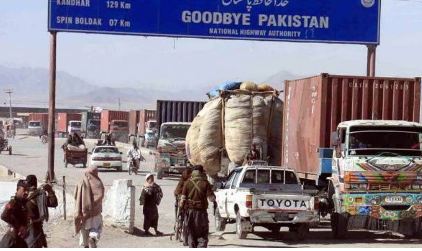
The Temporary Admission Documentation has caused sever sluggishness in the bilateral trade, creating long queues of goods laden heavy vehicles on both sides of the border, Zia added. 

Giving a reference of a letter sent by President PAJCCI, Qazi Zahid Hussain to Federal Secretary Commerce, Sarhadi said Pakistan embassy in Kabul is receiving additional fee than US dollar 100, but still issuance of TAD takes a lot of time, inflicting losses on businessmen whose consignment remained stranded at border points. 

The same practice of delay in issuance of TAD at Afghan Consulate in Kabul is also being observed, Zia continued. 

Due to negative impacts caused by delay in clearance of trucks at border points due to TAD, Pak-Afghan trade is registering reduction and even shifting to Chabahar port in Iran, warns Coordinator PAJCCI.

He also mentioned shortage of officials from relevant government departments in liaison committee, impacting its functioning and effectiveness.

During the meeting, the participants also raised the issue of checking of goods by different departments including NLC, Frontier Corps and others which also causes slow processing of the vehicle clearance. 

Replying todemands made in the meeting, Additional Director Transit Trade, Dr. Tahir Iqbal Khattak assured the participants of taking action with mutual coordination and consultation with business community for resolution of all problems.

UK expands eVisas to new biometric customers

UK expands eVisas to new biometric customers

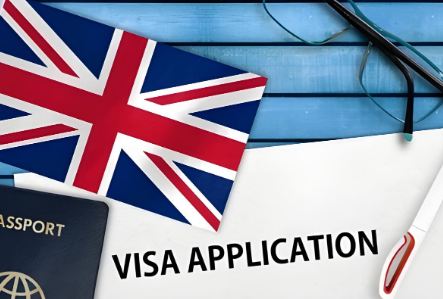
ISLAMABAD, AUG 23 /DNA/ – The UK immigration system is going digital, meaning physical documents will be replaced with an online immigration status.

Biometric Residence Permits (BRPs), vignette stickers in passports or ‘wet ink stamps’ are among some of the physical documents that will no longer be needed. If you are granted a visa to stay in the UK for longer than 6 months – for example to work or study – you will now need to create a UKVI online account to access your eVisa. The account acts as an online record of your immigration status. For those granted a visa to stay in the UK for less than 6 months, for example as a tourist, you do not need to create a UKVI account.

High Commissioner Jane Marriott CMB OBE said:

“We are constantly innovating to make it easier for Pakistanis to travel to the UK. This new use of technology will streamline a key part of the visa process, make it more secure and reduce the dependence on paper documents.”

The process is free, secure, and straightforward. You can find out more, including how to create an account, on our website: gov.uk/eVisa. You must not travel to the UK until you have received your passport and valid UK visa back from the Visa Application Centre (VAC). Updating a physical document to an eVisa does not affect your immigration status or the conditions of your permission to enter or stay in the UK.

Upon arrival in the UK you will still be required to collect a BRP. All BRP cards are valid until 31 December 2024, but the expiry of your BRP card does not affect your immigration status. You can use your BRP card to create your UKVI account and access your eVisa. You should continue to carry your BRP until it expires, and take your BRP and your passport when travelling overseas to prove your permission to return to the UK.

Stay Connected

64FansLike
60FollowersFollow

Latest Reviews

Exchange Rates

USD - United States Dollar
EUR
1.17
GBP
1.35
AUD
0.67
CAD
0.72